Tracing Worksheets
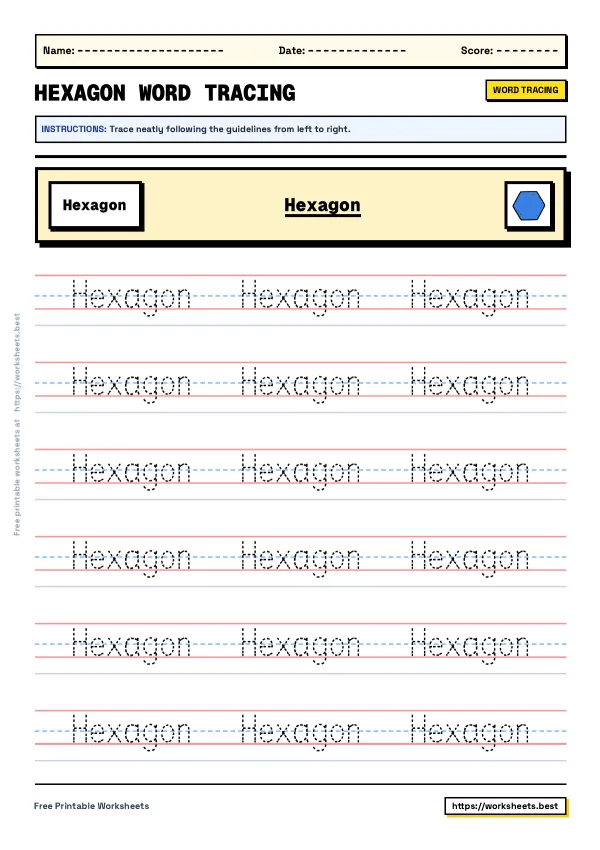
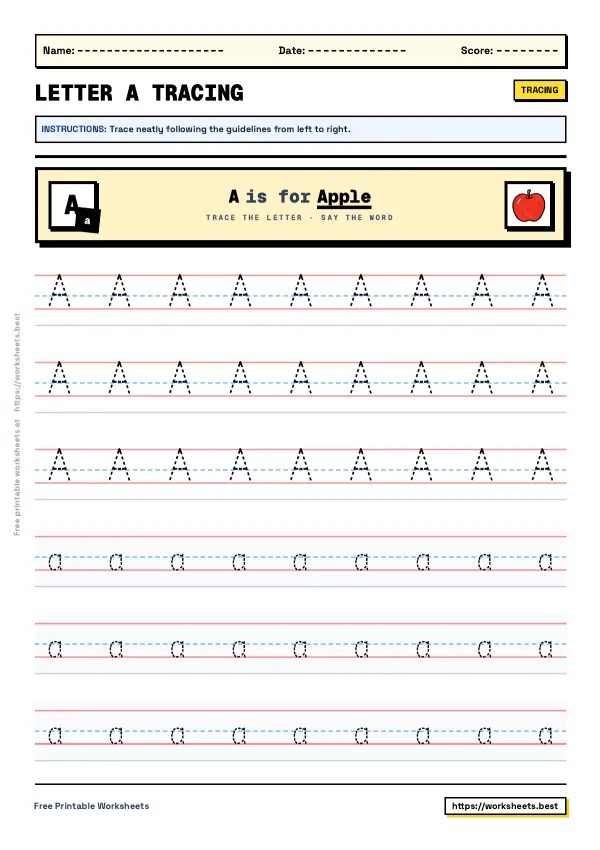
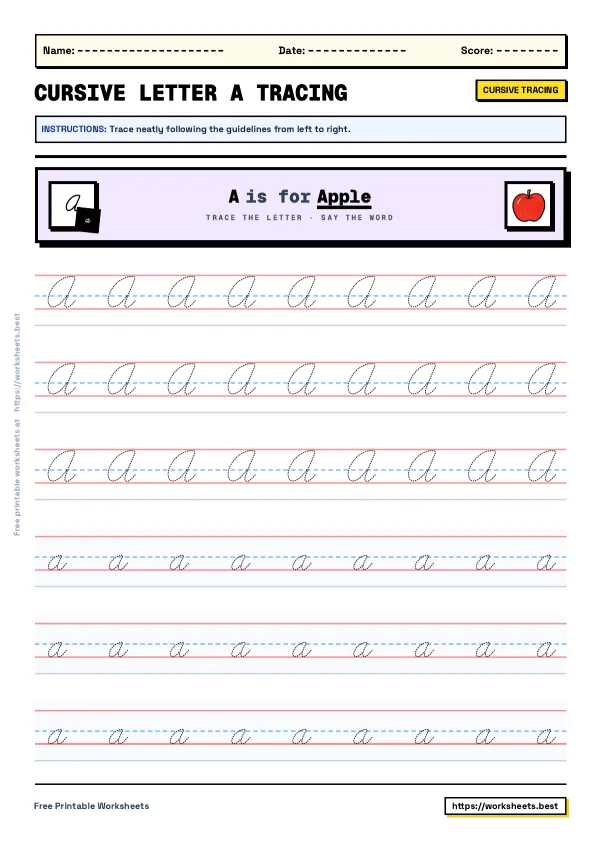
A child's first pencil strokes often begin with simple lines and loops, and our Tracing Worksheets give that practice a clear place to start. Children trace letters, numbers, words and cursive models to build fine motor control, letter formation, number formation and handwriting confidence.
Read more +
The collection covers word tracing, cursive writing, letter tracing and number tracing for Pre-K through 3rd grade. Younger children can begin with letter and number tracing; older students can move into cursive writing and longer words. An alphabet set gives practice forming each letter, while a number set focuses on forming 0 through 9. Themed word sheets draw on animals, fruits, vegetables, shapes, people, birds, body parts and clothes, so children trace familiar vocabulary such as apple, bear and cat while noticing spelling and word recognition.
Use the sheets at home for a short daily warm-up, or in class as a handwriting center, morning work or small-group practice. Tracing models let a grown-up watch pencil grip and starting points, and a dry-erase sleeve lets a child repeat a page. Some tracing practice supports Common Core skills such as L.K.1.A, RF.K.1.D and K.CC.A.3.
every sheet
All Tracing worksheets
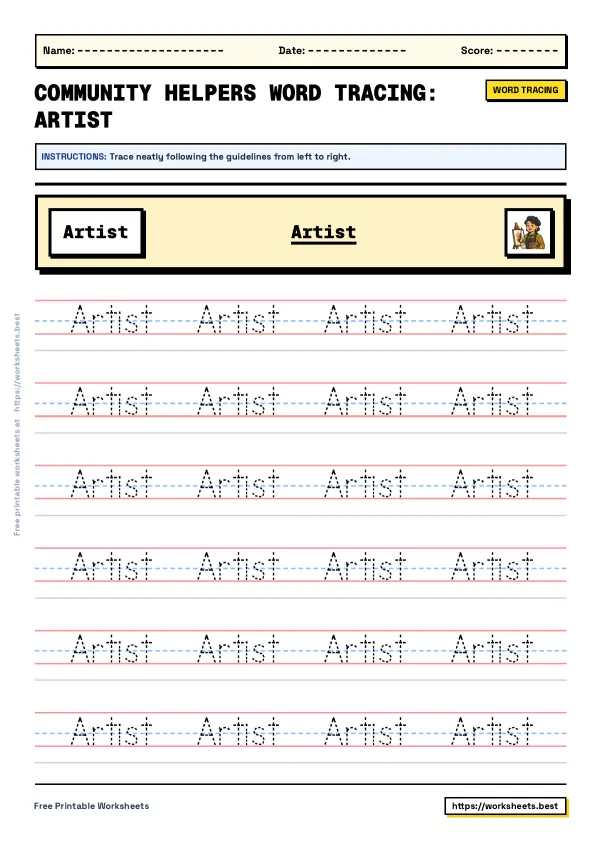
Community Helpers Word Tracing: Artist
K–1st GradeTracing
Word Tracing: Ginger
1st GradeTracing
Sea Animals Word Tracing: Coral
K–1st GradeTracing
Word Tracing: Donkey
1st GradeTracing
Letter B Tracing
Pre-K–KTracing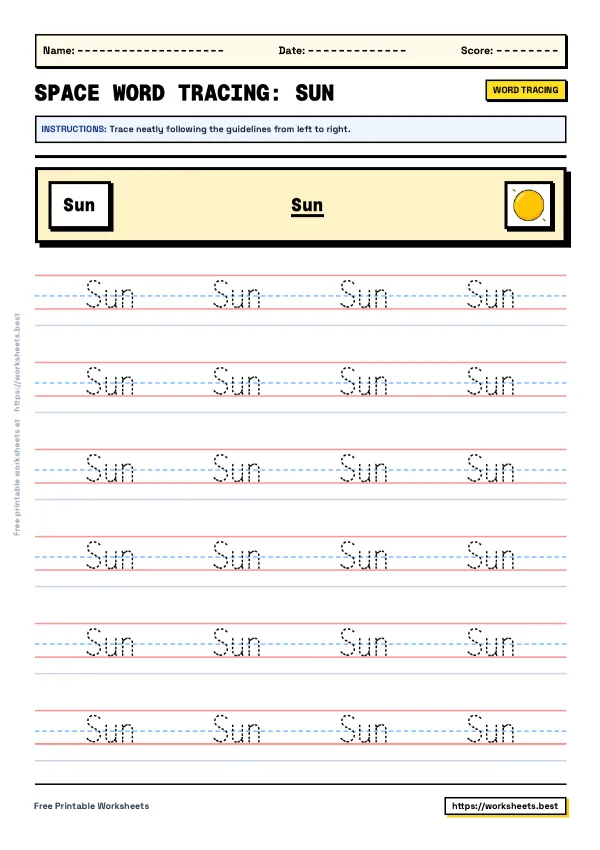
Space Word Tracing: Sun
K–1st GradeTracing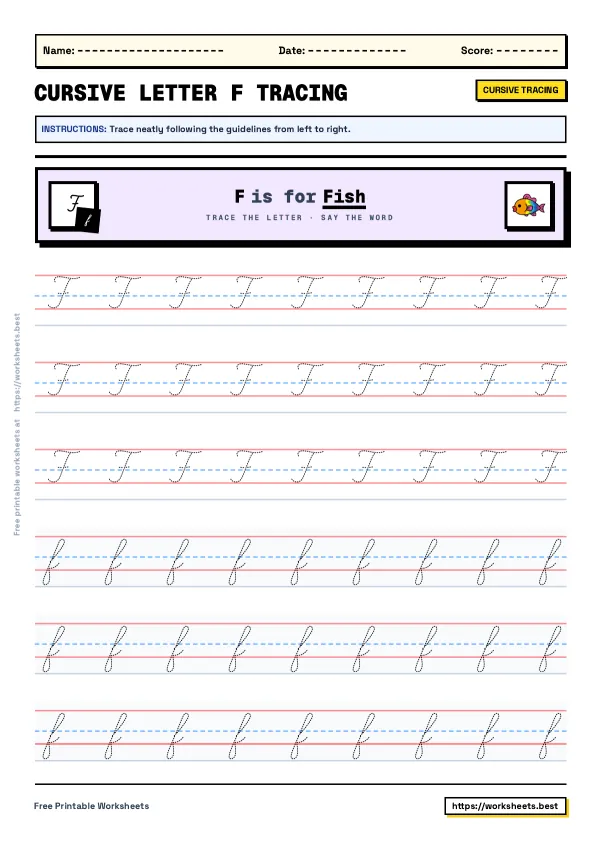
Cursive Letter F Tracing
2nd–3rd GradeTracing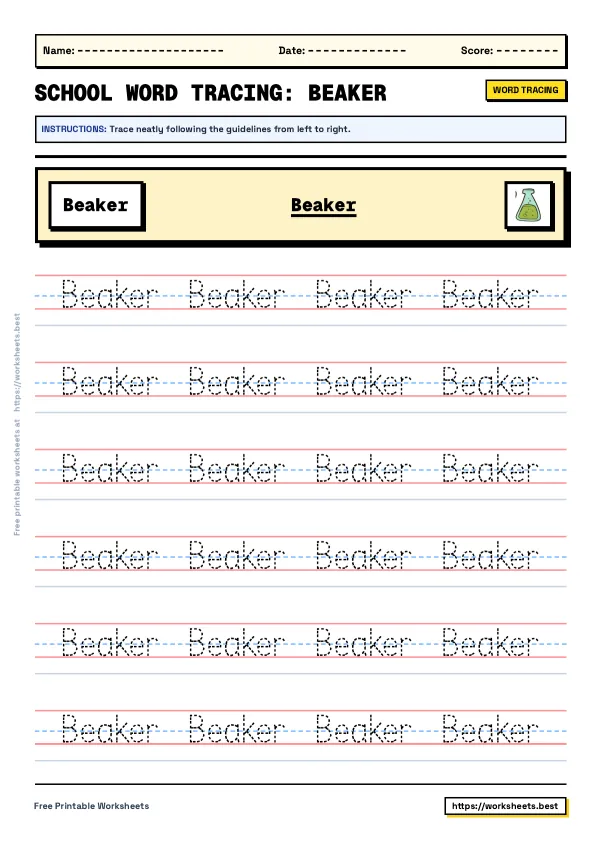
School Word Tracing: Beaker
K–1st GradeTracing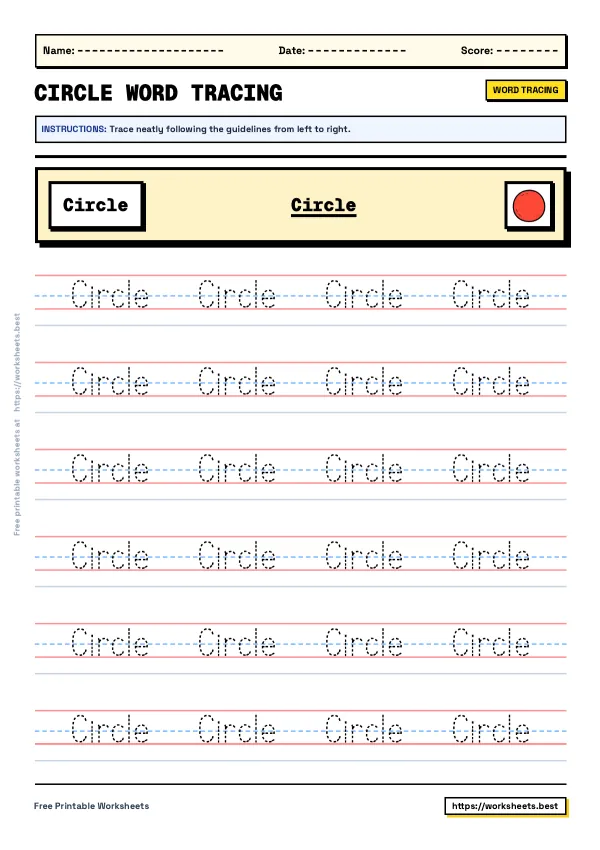
Circle Word Tracing
K–1st GradeTracing
Body Parts Word Tracing: Lip
K–1st GradeTracing
Fruit Word Tracing: Banana
Pre-KTracing
Bear Word Tracing
KindergartenTracing
Word Tracing: Lettuce
1st GradeTracing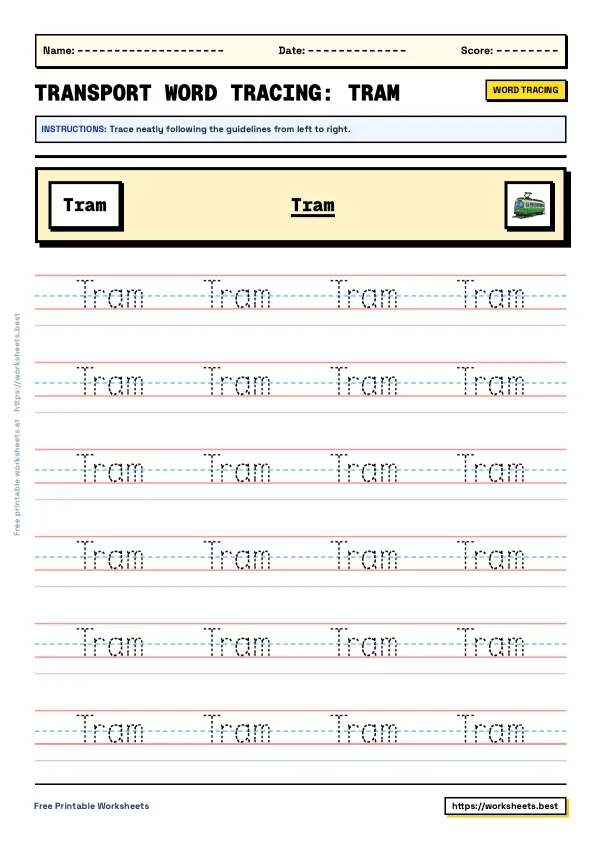
Transport Word Tracing: Tram
K–1st GradeTracing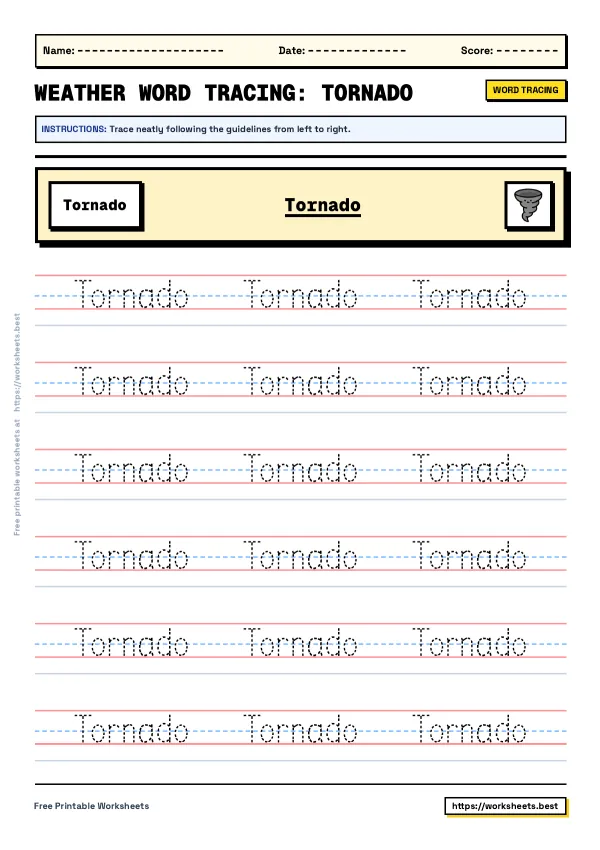
Weather Word Tracing: Tornado
K–1st GradeTracing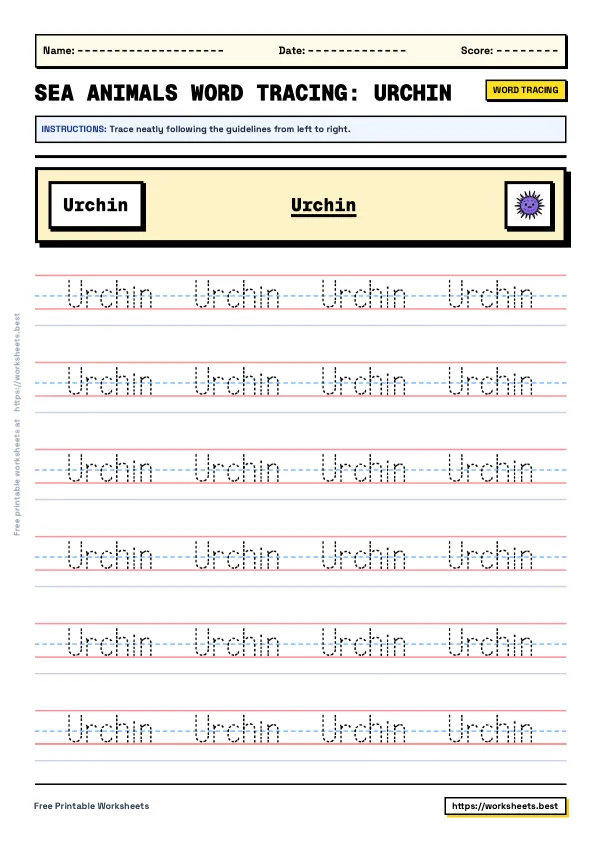
Sea Animals Word Tracing: Urchin
K–1st GradeTracing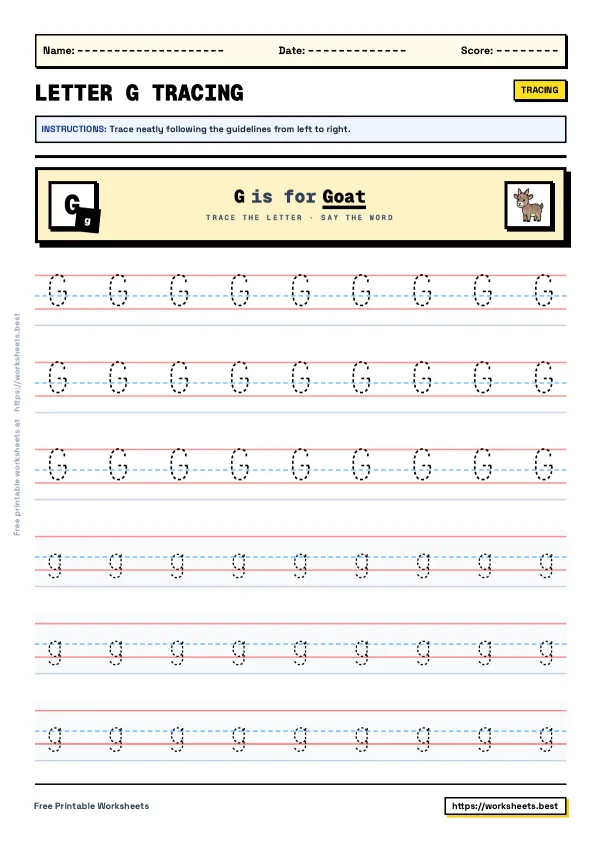
Letter G Tracing
Pre-K–KTracing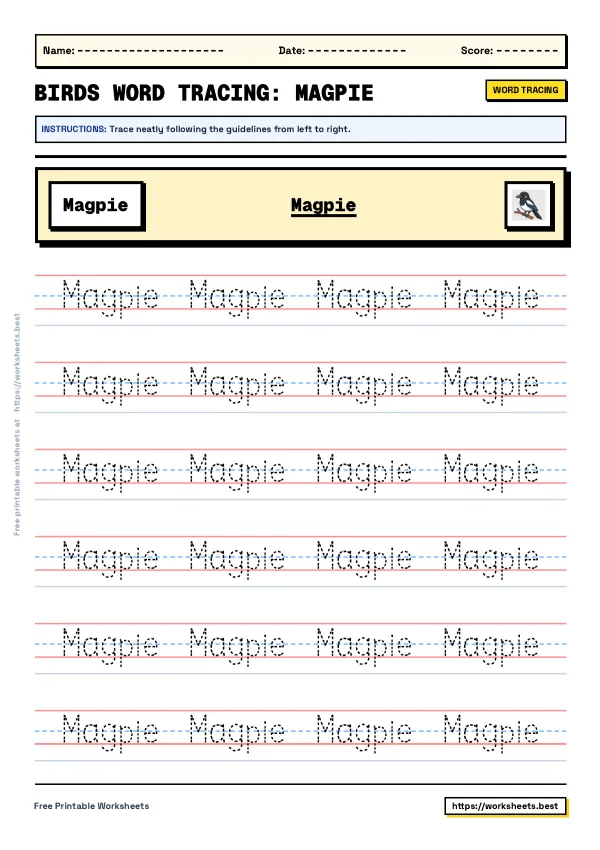
Birds Word Tracing: Magpie
K–1st GradeTracing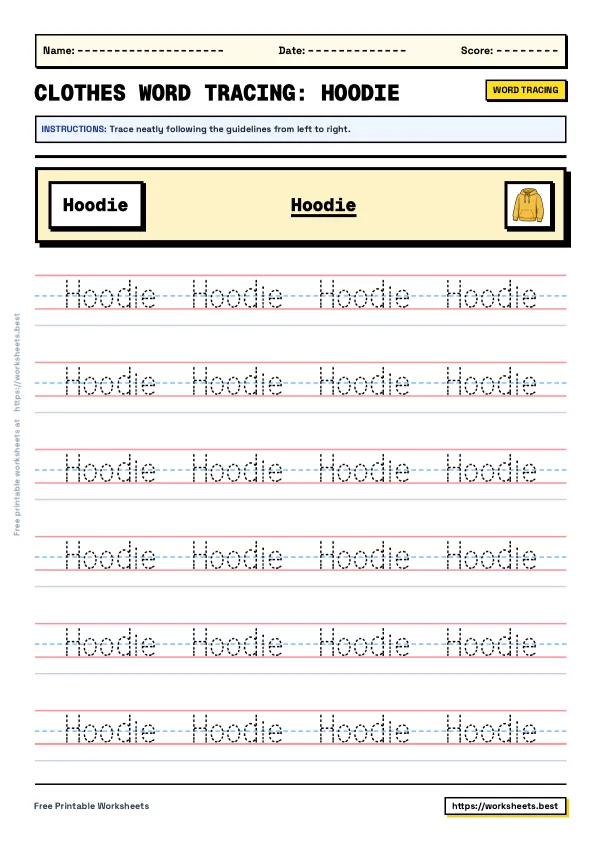
Clothes Word Tracing: Hoodie
K–1st GradeTracing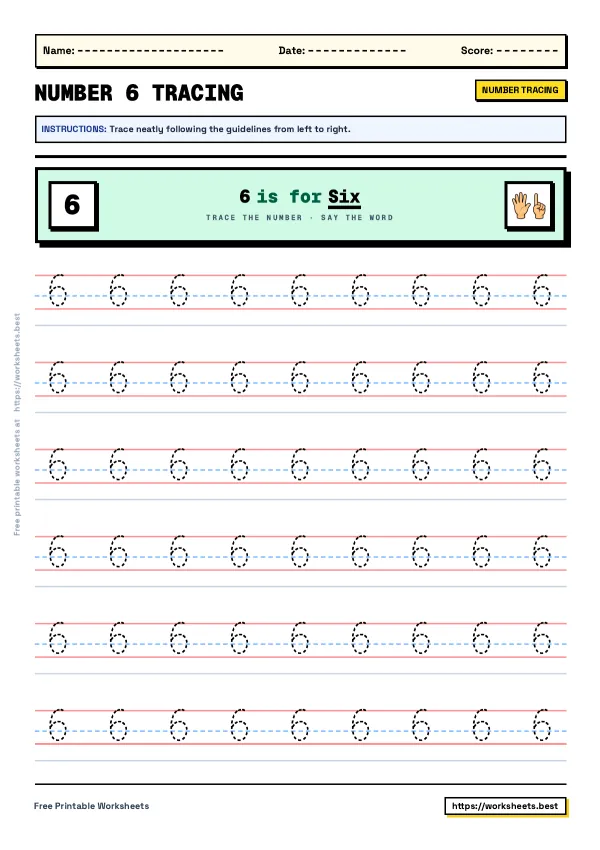
Number 6 Tracing
Pre-K–KTracing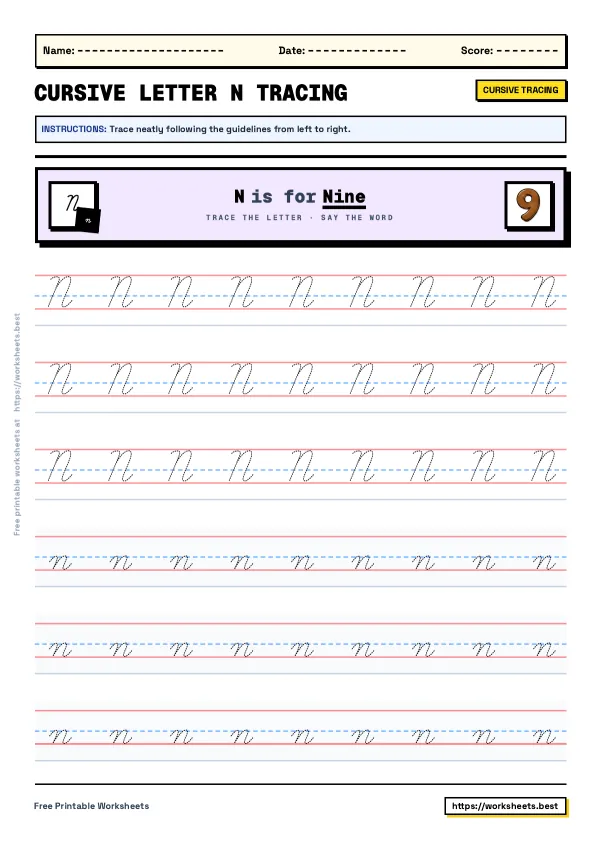
Cursive Letter N Tracing
2nd–3rd GradeTracing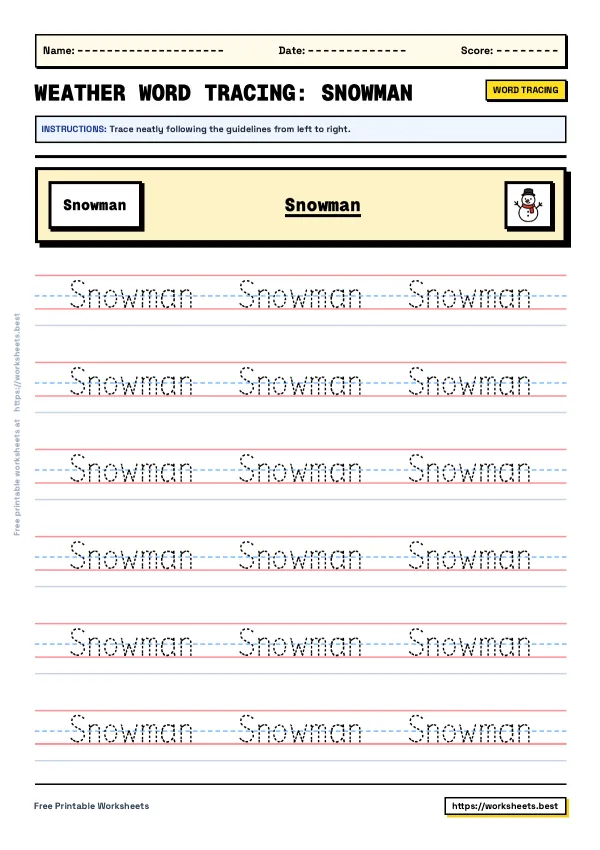
Weather Word Tracing: Snowman
K–1st GradeTracing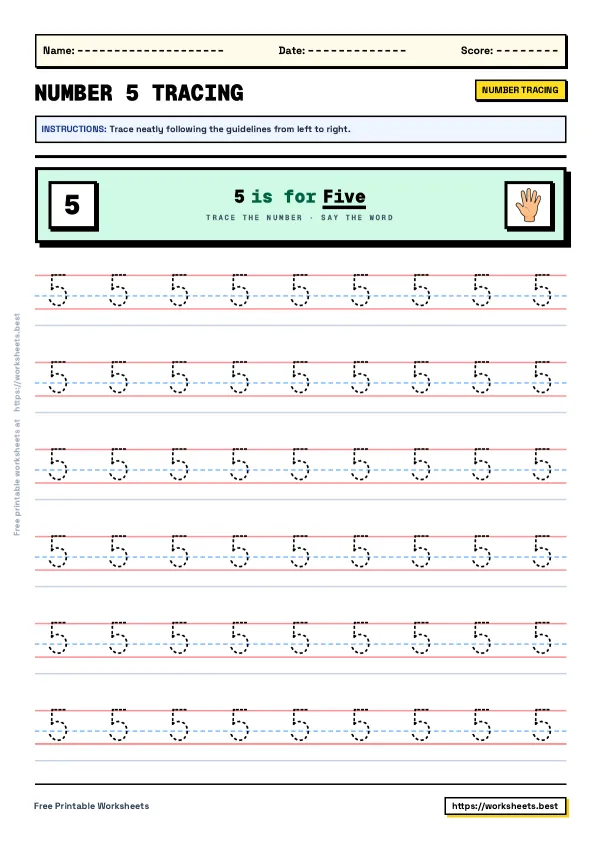
Number 5 Tracing
Pre-K–KTracing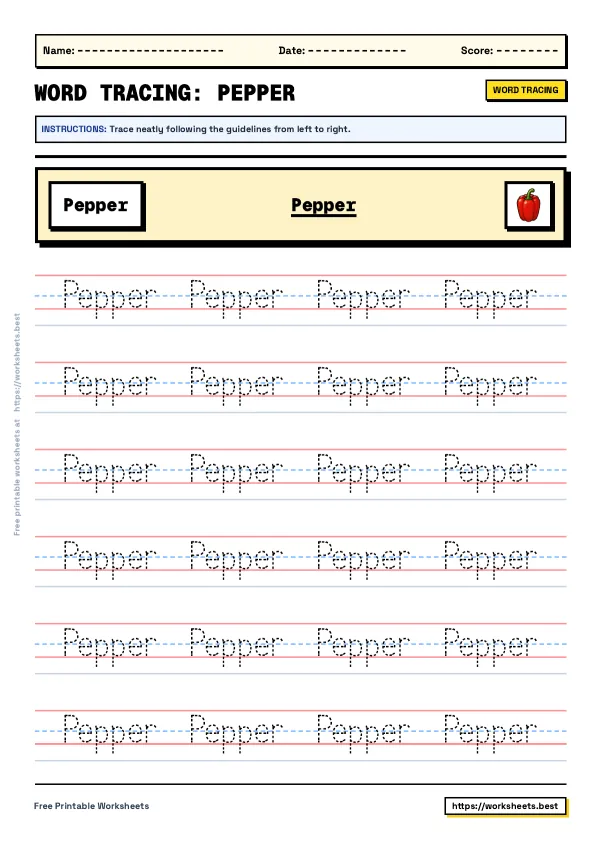
Word Tracing: Pepper
1st GradeTracing
dig deeper
More Tracing worksheets
from teachers
Tips for parents and teachers
- Keep tracing sessions short, around five to ten minutes for younger children, and finish while their hand still feels steady.
- Model the starting point and stroke direction before your child traces a letter or number, then have them say the direction aloud as they go.
- Use a dry-erase sleeve or laminating pouch for a favorite page so children can repeat a letter, number or word without needing a fresh copy.
- For children in 2nd or 3rd grade, follow a traced word with a blank line where they write it from memory, then compare the model and the copy.
Questions parents ask
At what age can a child start tracing worksheets?
Many children are ready in Pre-K, when they can hold a crayon or pencil with some control. Start with simple lines, shapes and letters, and keep sessions short.
Should my child trace uppercase or lowercase letters first?
Uppercase letters are often easier to form because they use straighter lines and fewer changes in direction. Once those feel comfortable, add lowercase letters and compare shapes that look alike.
How long should a tracing session be?
Five to ten minutes is usually enough for young children, especially when tracing takes focus. A short session done regularly builds more control than a long session that ends in fatigue.
What if my child grips the pencil too tightly while tracing?
Try a shorter pencil or a pencil grip, and remind your child to pause and shake out their hand. Praise slow, steady tracing rather than speed.
When should a child begin cursive tracing?
Cursive tracing often fits 2nd or 3rd grade, after print letters feel comfortable. Begin with simple joins and short words, and keep the models clear at first.