Vegetable Tracing Worksheets
Tracing vegetable words gives young children a hands-on way to build early writing skills. Vegetable Tracing Worksheets offer a small set of sheets for Pre-K, kindergarten, and 1st grade students. Each page focuses on word tracing, with simple outlines that guide little hands through letters. Children practice fine motor skills, handwriting, spelling, and word recognition as they trace vegetable names. The tracing lines are wide and clear, making them easy for beginners to follow.
Read more +
The set includes a Pre-K sheet where children trace the word carrot, and a 1st grade sheet that uses longer words like cabbage and bean. The words vary in length, so children can start with short names like peas and corn before moving to longer ones. Use these worksheets at home for morning work or after-school practice, or in the classroom as part of a literacy center. They also work well for quiet independent time or as a warm-up before a writing lesson.
start with these
Featured worksheets
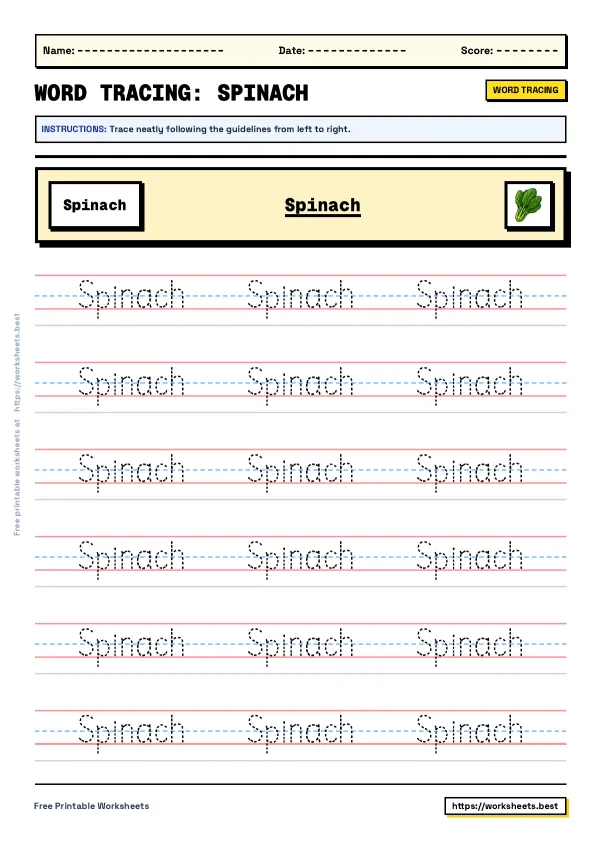
Word Tracing: Spinach
1st GradeTracing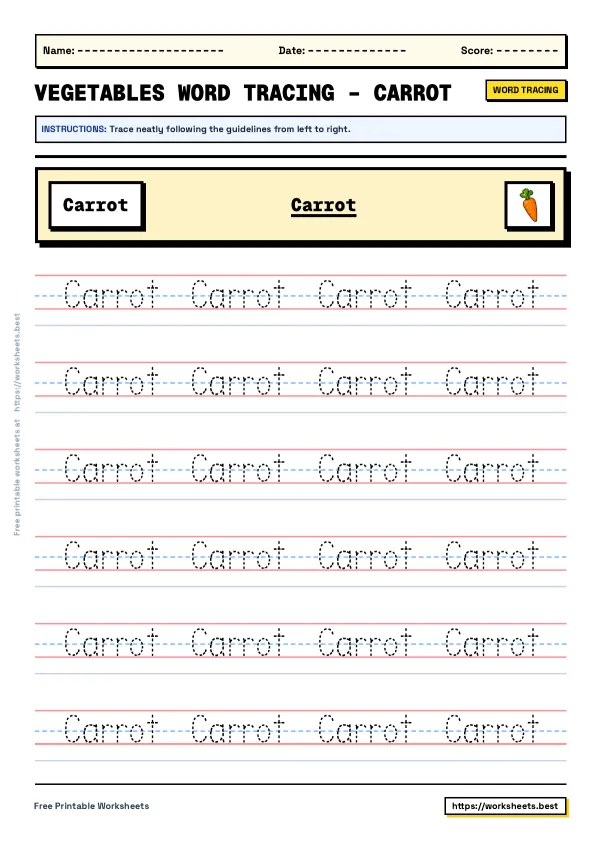
Vegetables Word Tracing – Carrot
Pre-K–KTracing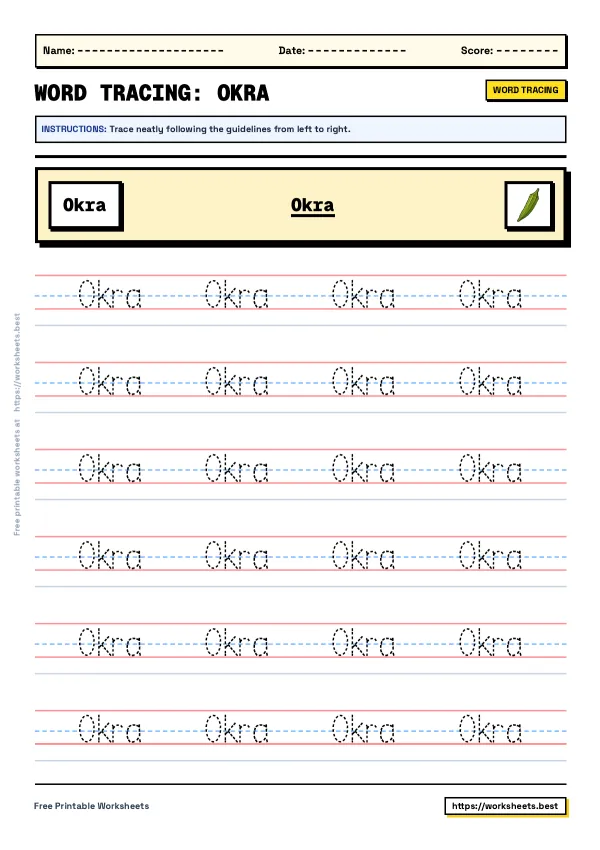
Word Tracing: Okra
KindergartenTracing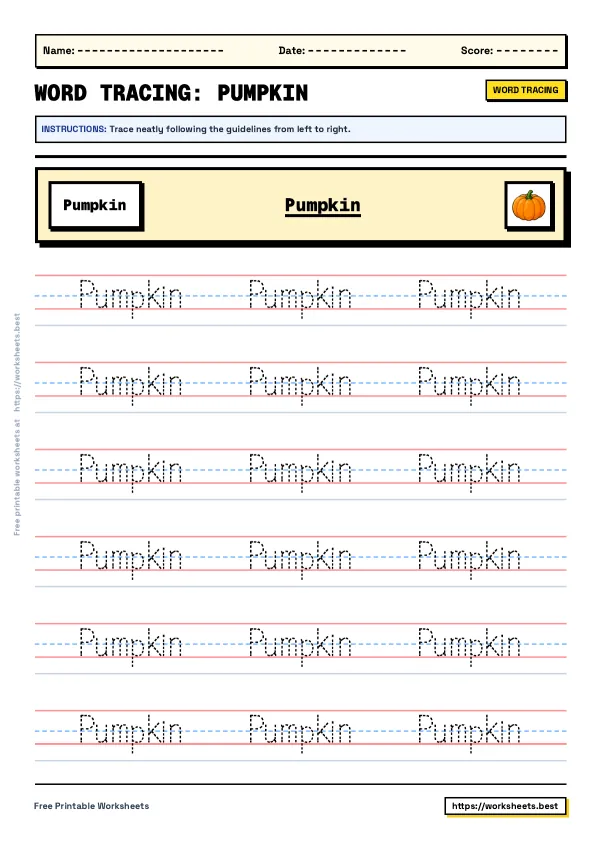
Word Tracing: Pumpkin
1st GradeTracing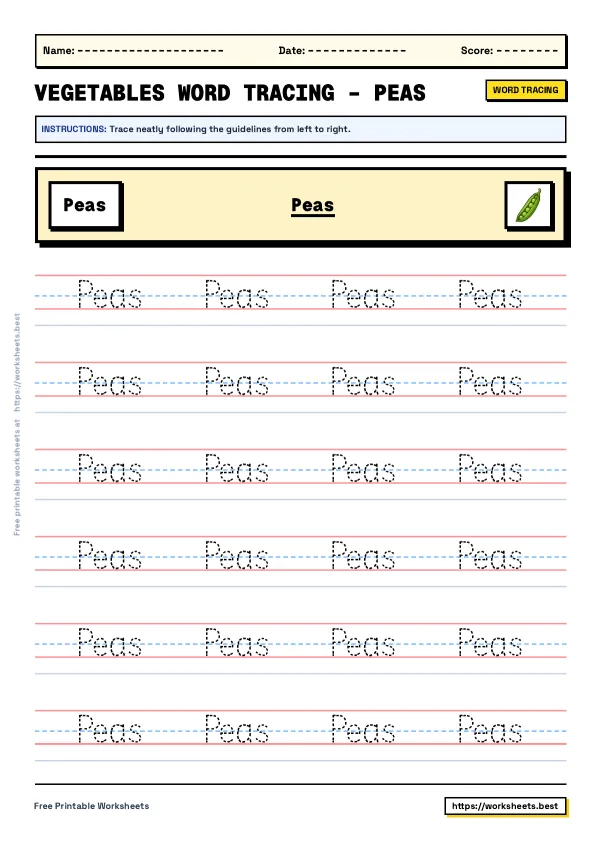
Vegetables Word Tracing – Peas
Pre-K–KTracing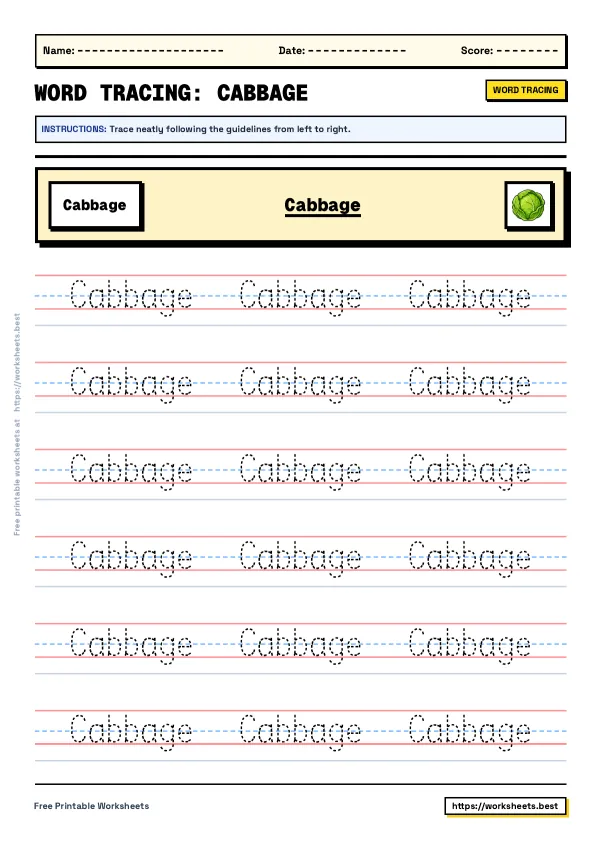
Word Tracing: Cabbage
KindergartenTracing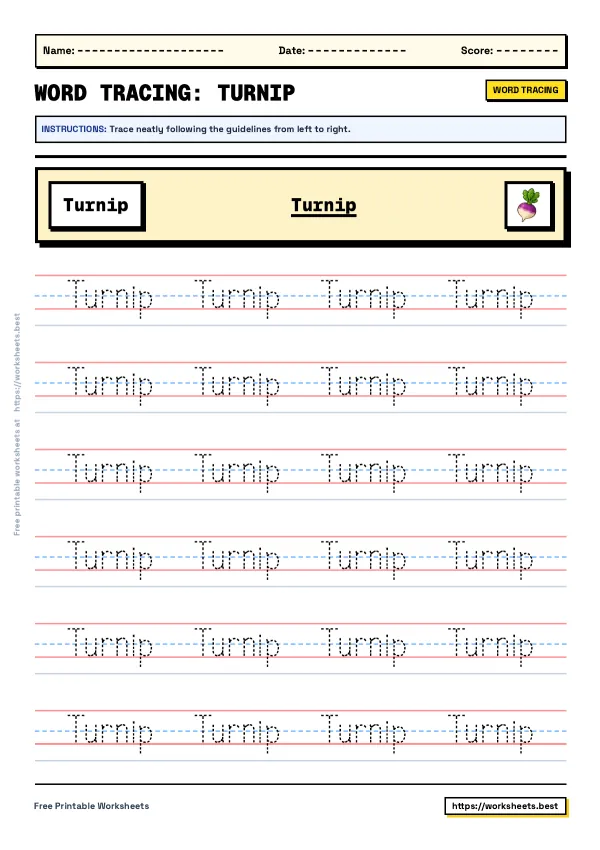
Word Tracing: Turnip
1st GradeTracing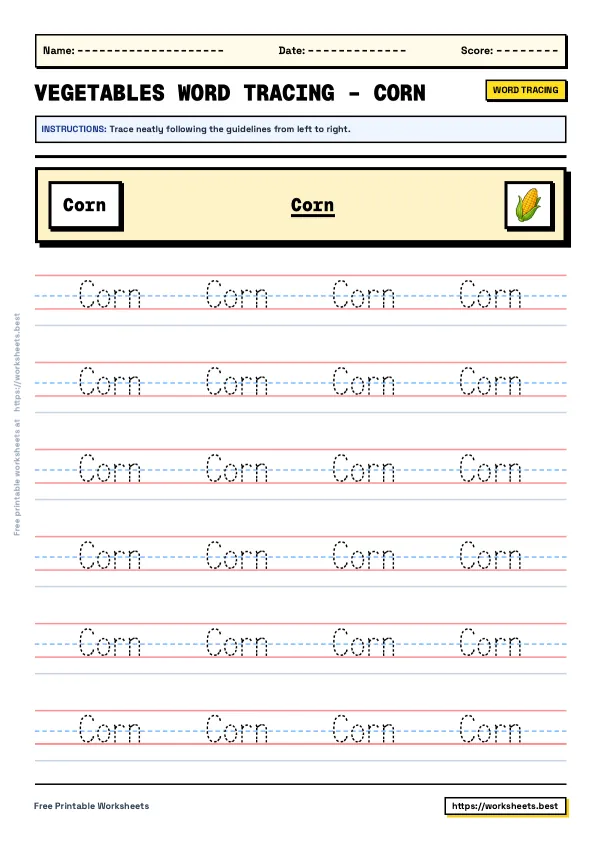
Vegetables Word Tracing – Corn
Pre-K–KTracing
every sheet
All Vegetable Tracing worksheets
Vegetables Word Tracing – Peas
Pre-K–KTracing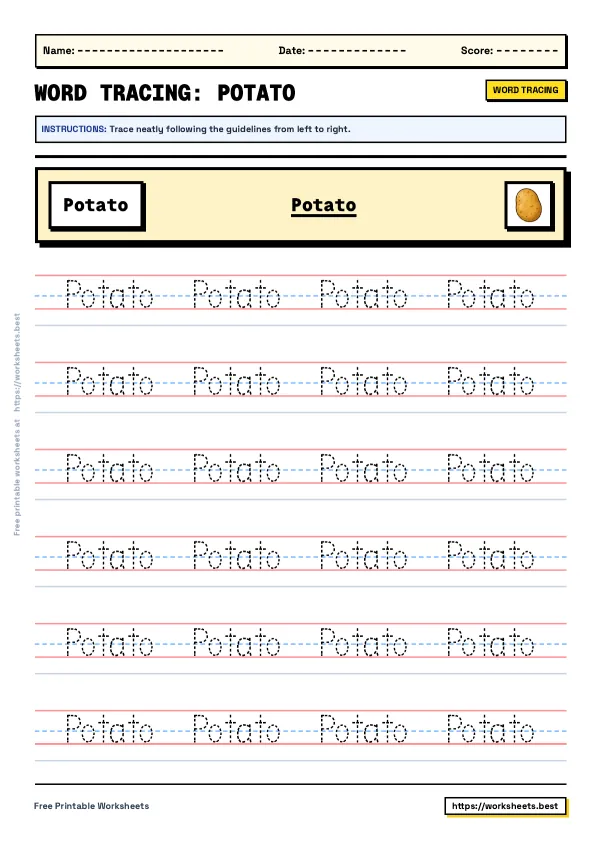
Word Tracing: Potato
KindergartenTracing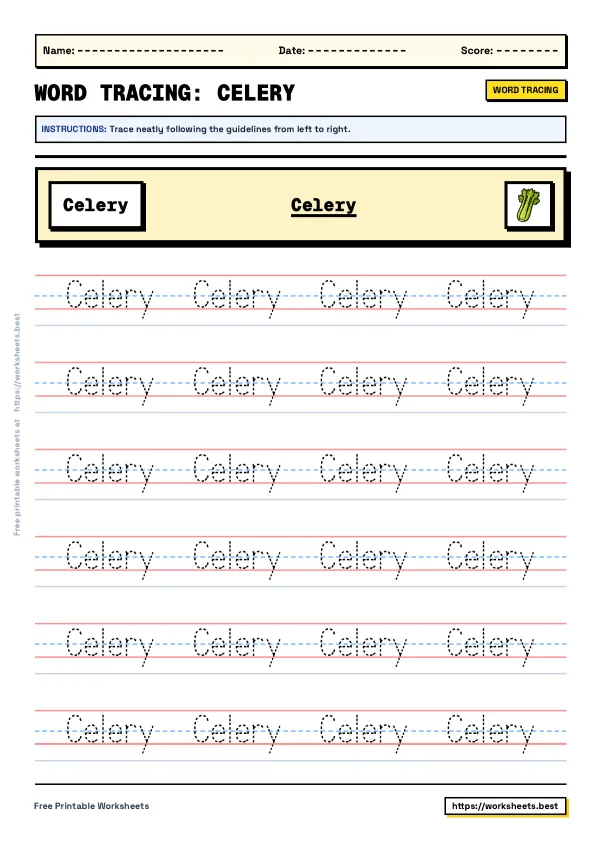
Word Tracing: Celery
1st GradeTracingVegetables Word Tracing – Corn
Pre-K–KTracing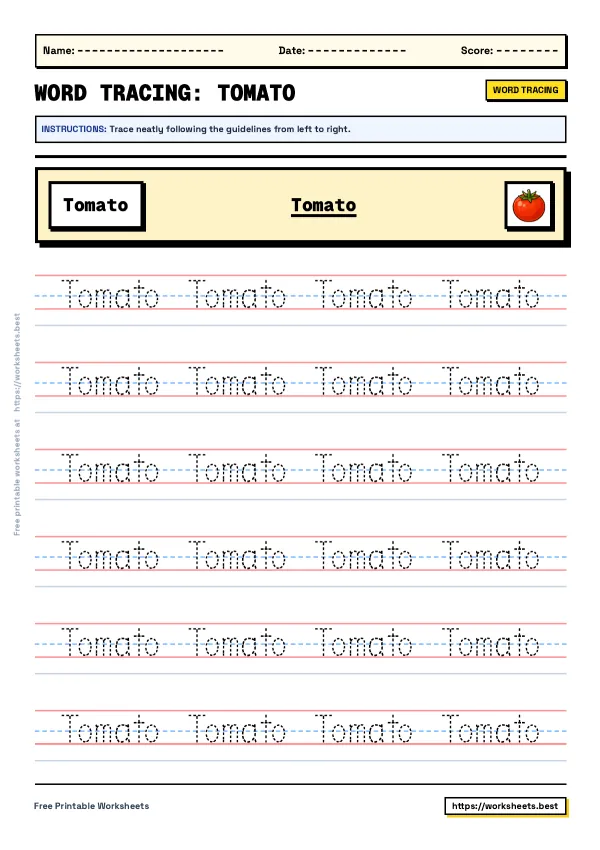
Word Tracing: Tomato
KindergartenTracing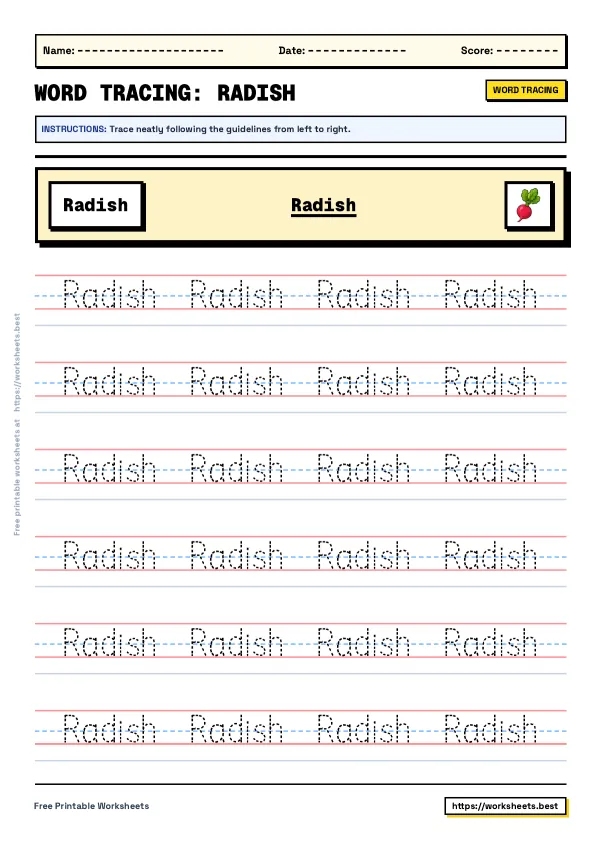
Word Tracing: Radish
KindergartenTracingWord Tracing: Okra
KindergartenTracingWord Tracing: Cabbage
KindergartenTracing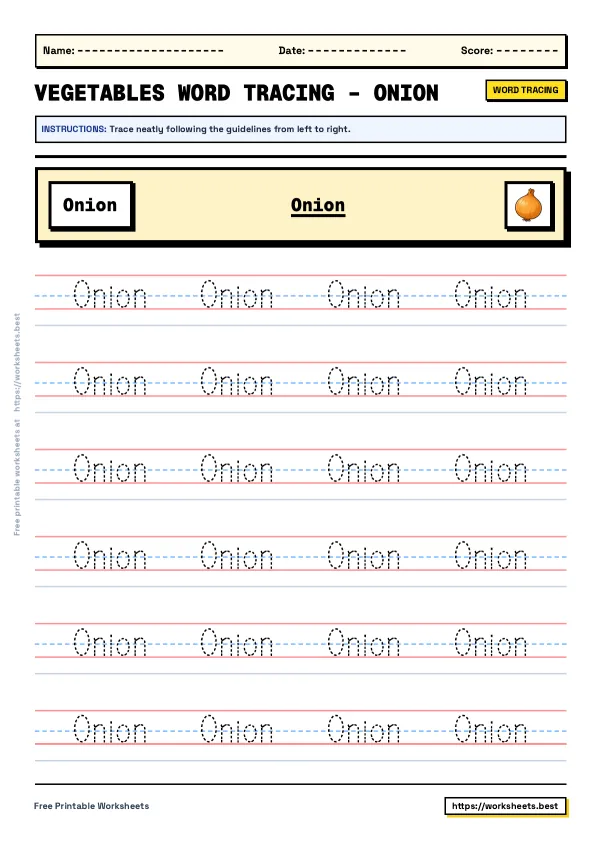
Vegetables Word Tracing – Onion
Pre-K–KTracing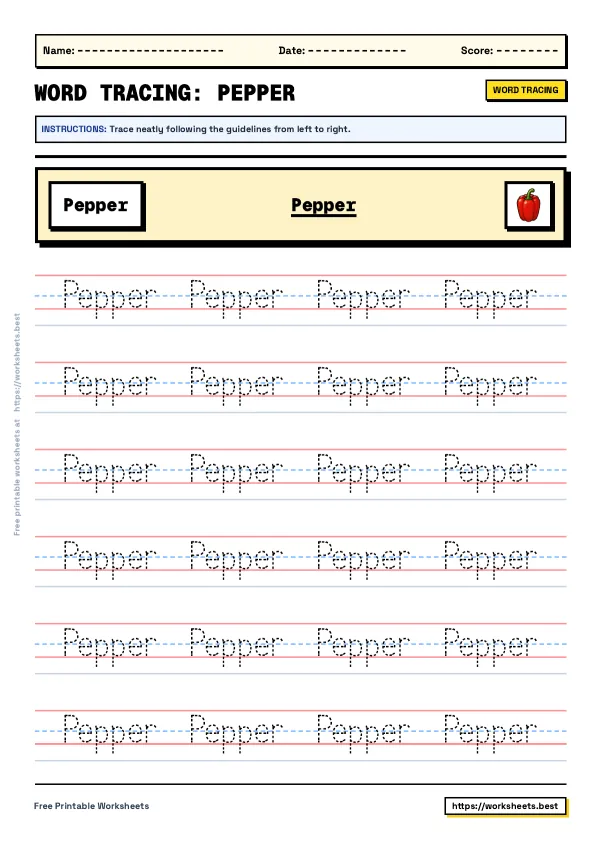
Word Tracing: Pepper
1st GradeTracing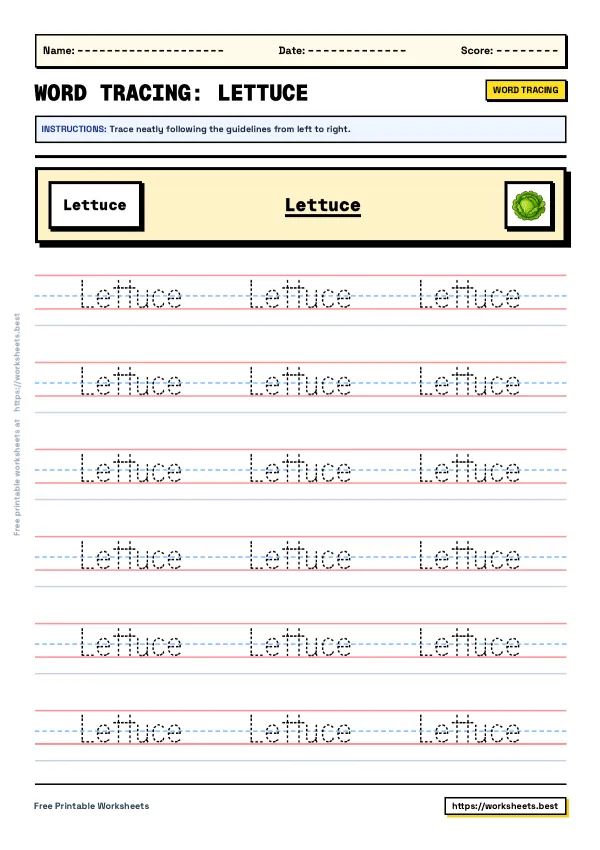
Word Tracing: Lettuce
1st GradeTracing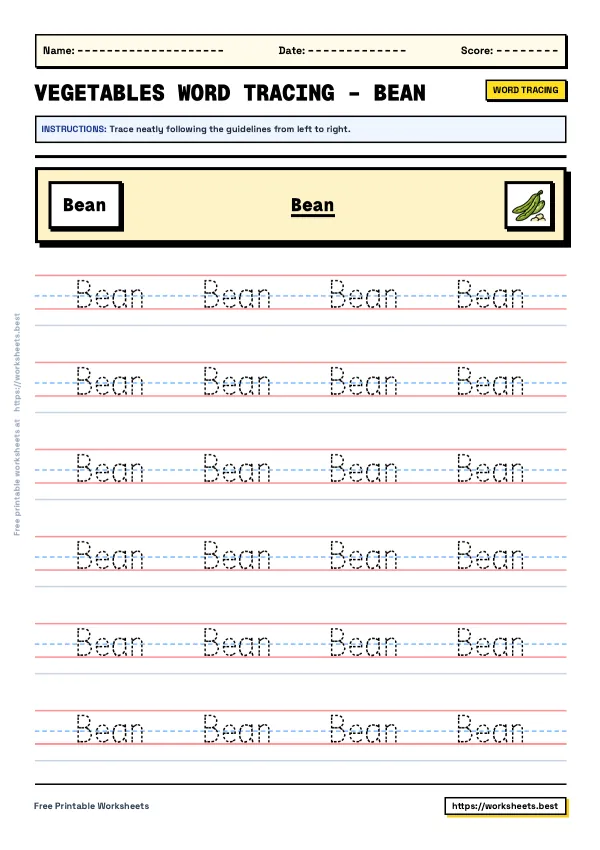
Vegetables Word Tracing – Bean
Pre-K–KTracingWord Tracing: Turnip
1st GradeTracingVegetables Word Tracing – Carrot
Pre-K–KTracing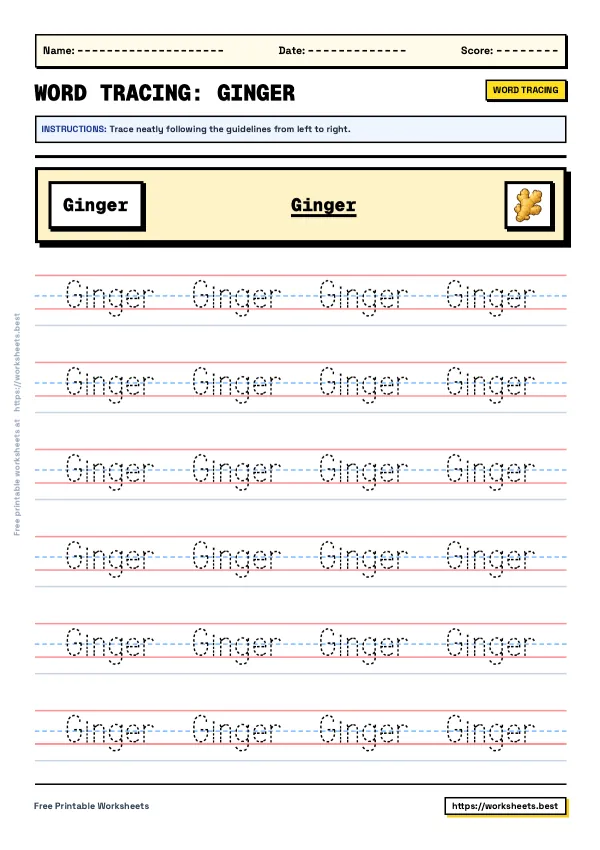
Word Tracing: Ginger
1st GradeTracing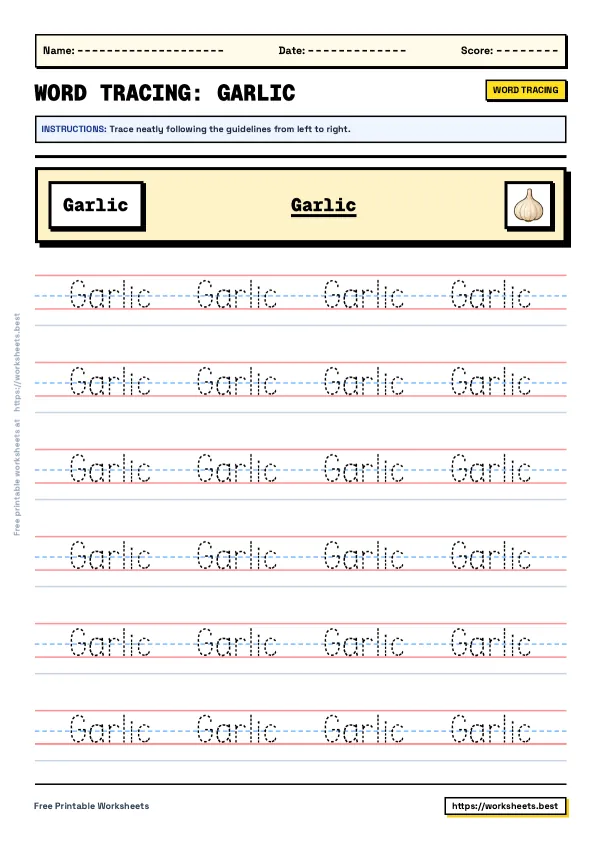
Word Tracing: Garlic
1st GradeTracingWord Tracing: Pumpkin
1st GradeTracingWord Tracing: Spinach
1st GradeTracing
from teachers
Tips for parents and teachers
- Have children say each letter sound as they trace the word. This connects the physical act of writing to phonics and spelling.
- Offer a variety of writing tools, such as crayons, thin markers, or golf pencils, to build different hand muscles.
- Encourage children to trace slowly and carefully, then try writing the word on their own on a separate sheet. Praise their effort, not just perfect letters.
- For extra practice, ask children to find the same word in a book or on a seed packet. This helps word recognition in real contexts.
Questions parents ask
What ages are these vegetable tracing worksheets for?
They are designed for Pre-K, kindergarten, and 1st grade children, typically ages 4 to 7. Younger children may need help holding a pencil, while older ones can work independently.
What skills do tracing worksheets develop?
Tracing builds fine motor skills, handwriting, spelling, and word recognition. The repeated motion helps children remember letter shapes and sequences.
How can I help a child who struggles with tracing?
Start with shorter words like peas or corn and use a highlighter to create thicker lines. Let the child trace with a finger first, then a pencil.
Can these worksheets help with spelling?
Yes, tracing vegetable words reinforces letter order and common spelling patterns. Say the word aloud as your child traces to connect sounds to letters.
What vegetables are included in the set?
The set covers common vegetables, including carrot, peas, corn, and cabbage. Children trace names of different lengths.