Shape Tracing Worksheets
A shape tracing worksheet gives a child two jobs on one page: follow the outline of a shape, then print the word that names it. The Shape Tracing Worksheets in this small set are built for kindergarten and 1st grade, with dotted outlines to trace and word lines underneath, so the same pencil stroke that follows a circle turns into practice with handwriting, fine motor skills, spelling and word recognition. Children meet the flat shapes they are learning to name, starting with circle, diamond and heart and moving on to square, triangle and longer words that give them more letters to work through.
Read more +
Each page follows the same order: trace the shape first, then trace the shape word, then try writing it on the blank line beside it. Because the words are short and familiar, the sheets fit a shapes unit in math, a handwriting warm-up, or a quiet task at the start of the day.
At home, print a few sheets at a time and let your child pick the shape to begin with. Ten minutes at the kitchen table is usually enough at this age. In class, the pages work in a handwriting center or a shapes lesson, and a sheet protector plus a dry-erase marker lets one copy serve several children.
start with these
Featured worksheets
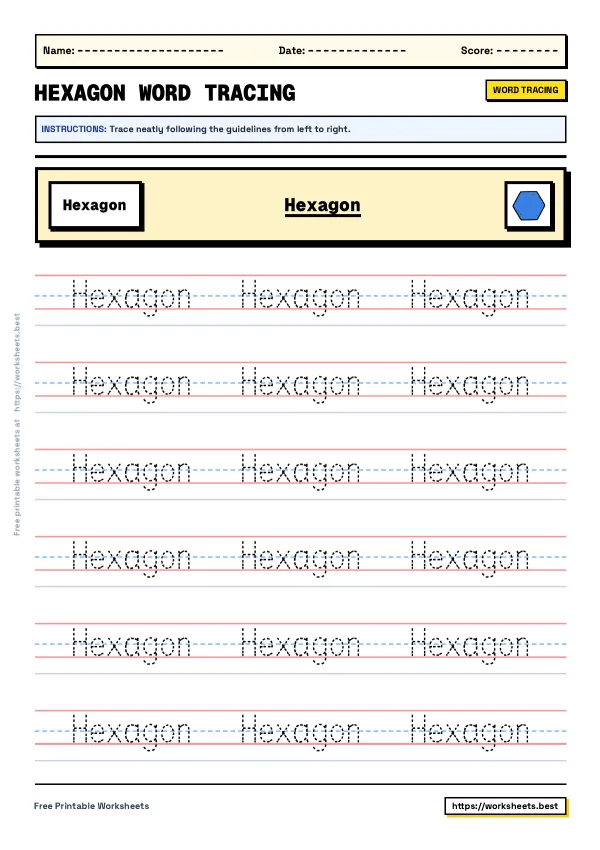
Hexagon Word Tracing
K–1st GradeTracing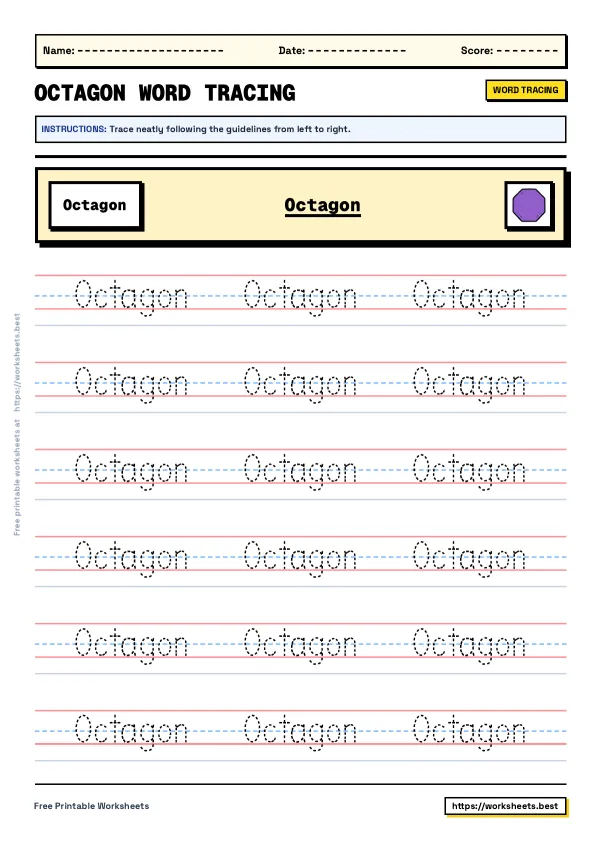
Octagon Word Tracing
K–1st GradeTracing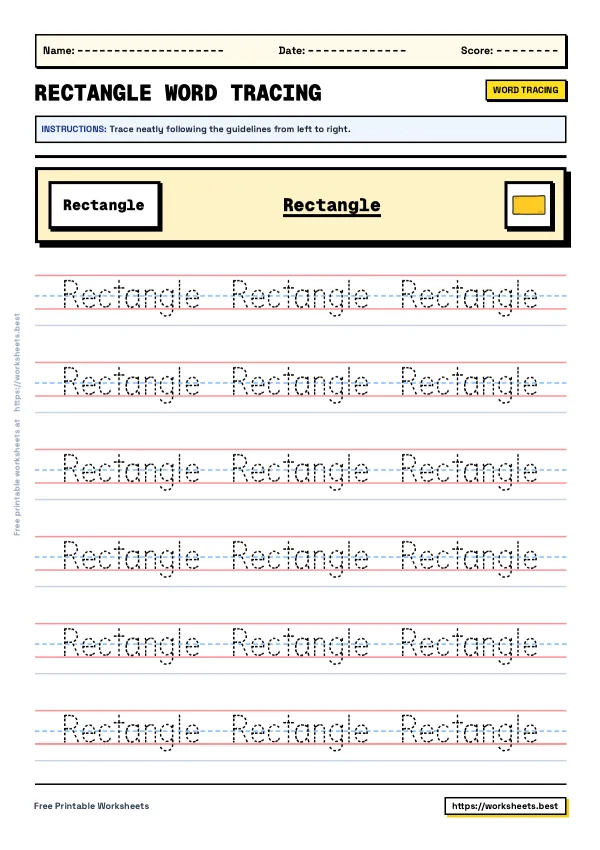
Rectangle Word Tracing
K–1st GradeTracing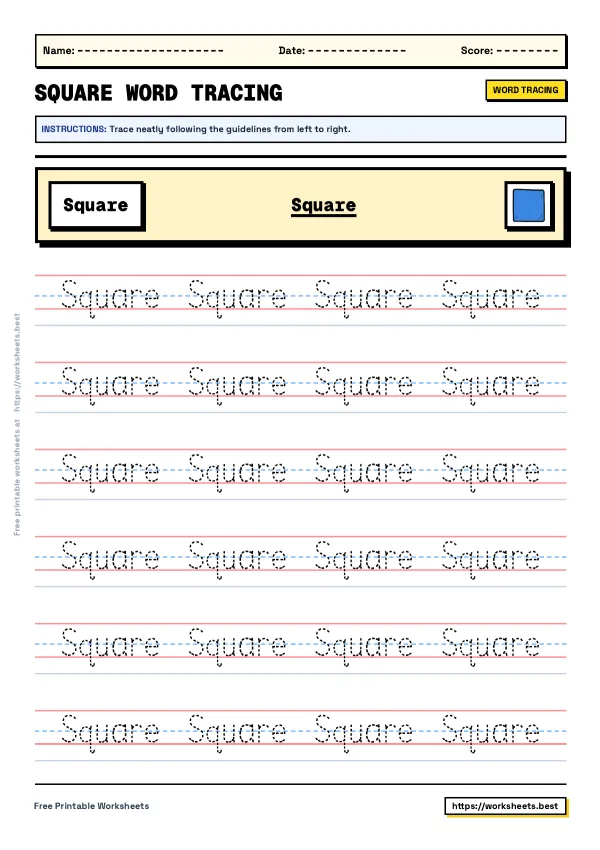
Square Word Tracing
K–1st GradeTracing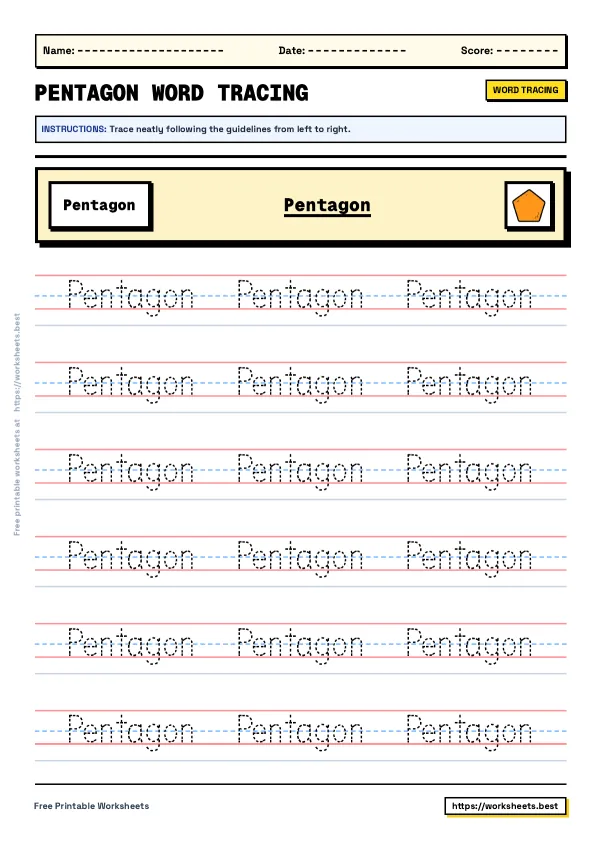
Pentagon Word Tracing
K–1st GradeTracing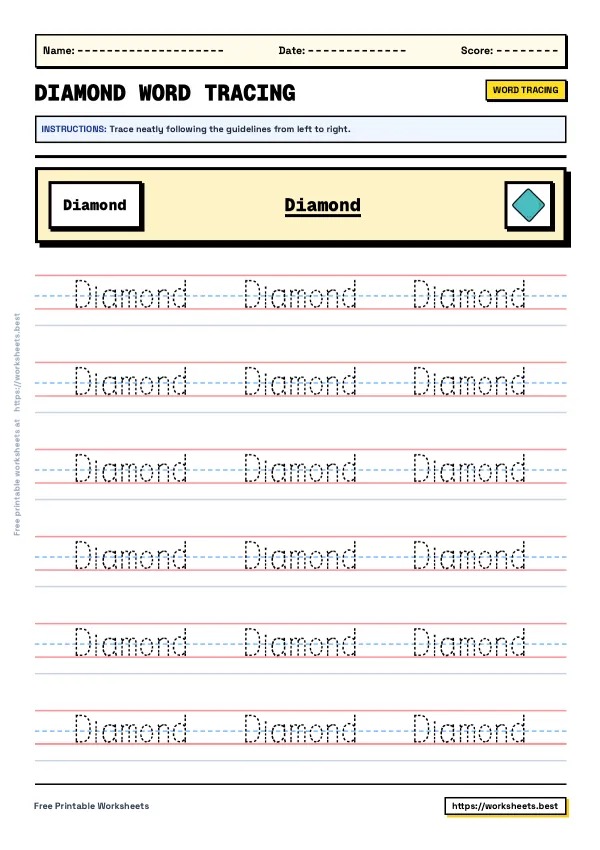
Diamond Word Tracing
K–1st GradeTracing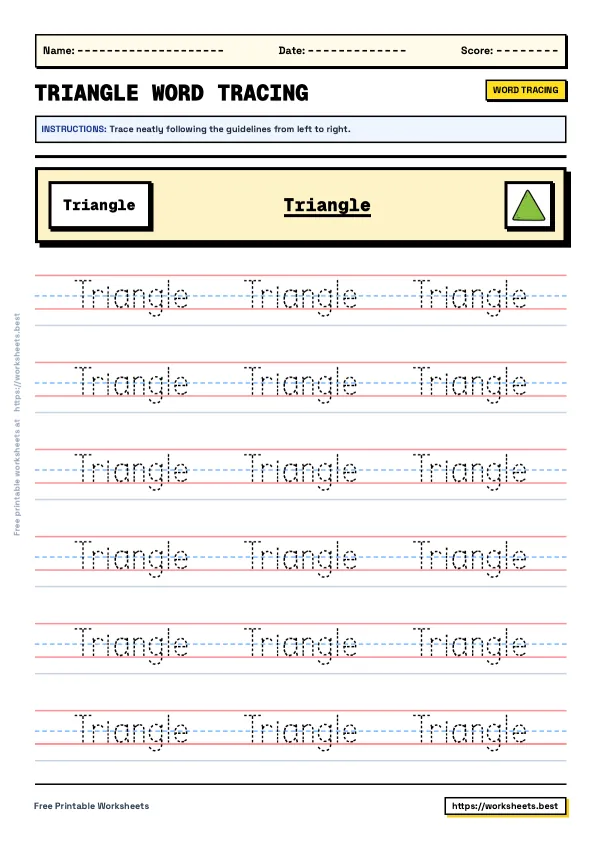
Triangle Word Tracing
K–1st GradeTracing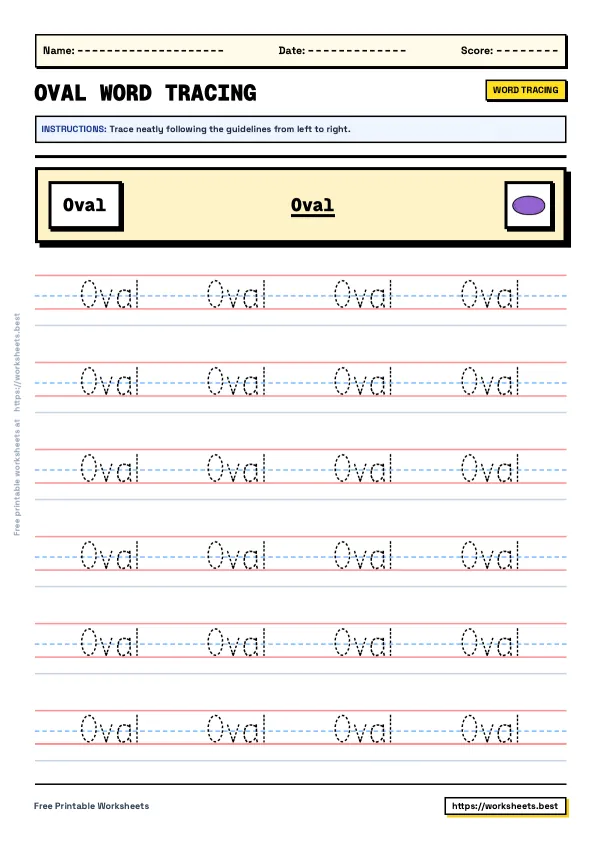
Oval Word Tracing
K–1st GradeTracing
every sheet
All Shape Tracing worksheets
Square Word Tracing
K–1st GradeTracingOctagon Word Tracing
K–1st GradeTracingOval Word Tracing
K–1st GradeTracingDiamond Word Tracing
K–1st GradeTracing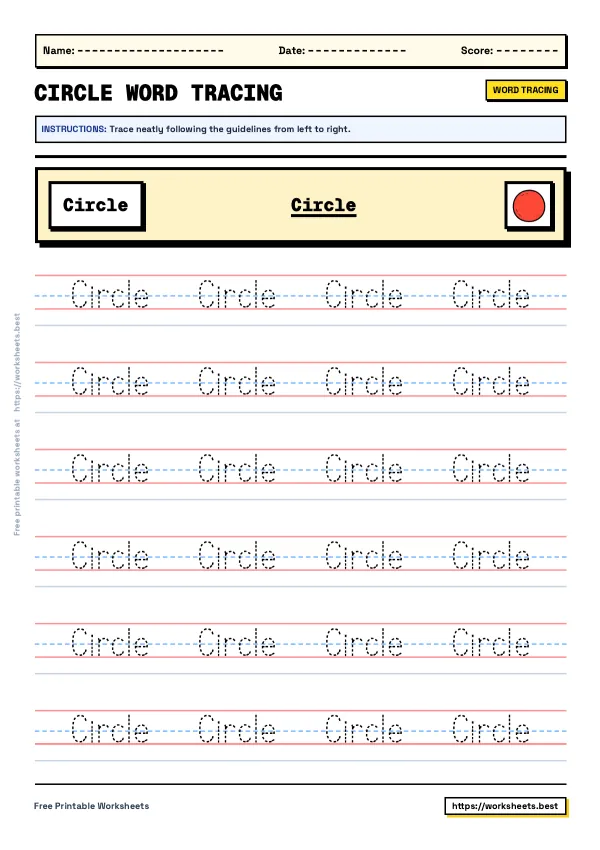
Circle Word Tracing
K–1st GradeTracingRectangle Word Tracing
K–1st GradeTracingTriangle Word Tracing
K–1st GradeTracingHexagon Word Tracing
K–1st GradeTracingPentagon Word Tracing
K–1st GradeTracing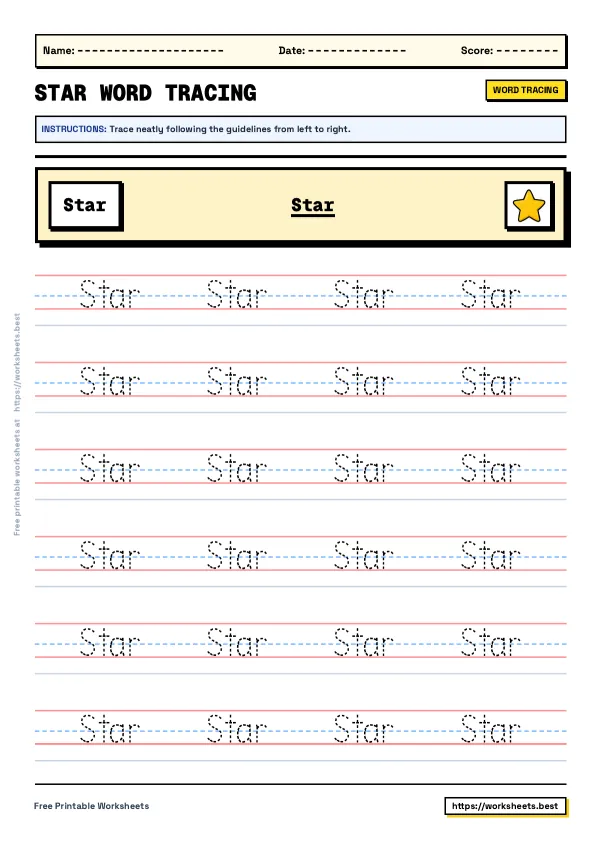
Star Word Tracing
K–1st GradeTracing
from teachers
Tips for parents and teachers
- Begin with a crayon or a chunky pencil if your child's grip tires quickly, then move to a standard pencil once the outlines feel easy to follow.
- Say each shape name out loud as your child traces it, and have them repeat it, so the word on the page stays tied to the shape instead of becoming a separate copying job.
- Point out where the tracing should start, usually at the top, since many children set off from the middle or bottom of a shape and then struggle with the word line below.
- Stop after a few traced shapes and words; a short, careful session builds more fine motor control than a whole page rushed through.
Questions parents ask
What age are shape tracing worksheets good for?
They suit kindergarten and 1st grade, roughly ages five to seven. Younger children can still trace the shape outlines with a crayon and leave the words for later.
Do tracing sheets really help with handwriting?
Yes. Following a dotted outline builds the hand control and pencil direction that letter formation needs, and tracing the shape word adds practice with the letters themselves.
Should my child trace the shape or the word first?
Start with the shape. It is a simple warm-up for the hand, and by the time your child reaches the word line, the pencil is already moving in a controlled way.
How can I use these with several children at once?
Slip a page into a sheet protector and hand out dry-erase markers so the same sheet can be traced again and again. They also work as a quiet task while you set up a shapes lesson.