People Tracing Worksheets
People tracing worksheets give children a simple way to practice handwriting while the words they copy are ones they already hear at home. The set pairs a people theme with word tracing practice, so a child traces a family word in dotted letters and then writes it again on their own. Each sheet works on fine motor skills, letter formation and word recognition at the same time, and the repeated vocabulary gives early spellers a head start.
Read more +
The collection is meant for Pre-K and 1st Grade. A Pre-K page might ask a child to trace the word boy in large dotted letters, while a page from the grade 1 series follows the same tracing format with a word such as aunt. Because the layout stays the same across the set, a child who has finished one sheet knows exactly what to do on the next one.
Print a few sheets for a morning warm-up, a handwriting center or a quiet activity at the kitchen table. A grown-up can sit alongside and say each word aloud as the child traces it, which links the printed word to the spoken one. Crayons, pencils and markers all work, and the pages slip easily into a folder for repeated practice. The sheets suit Pre-K and 1st Grade classrooms as well as home practice, and children can manage them with a little help at first.
start with these
Featured worksheets
every sheet
All People Tracing worksheets
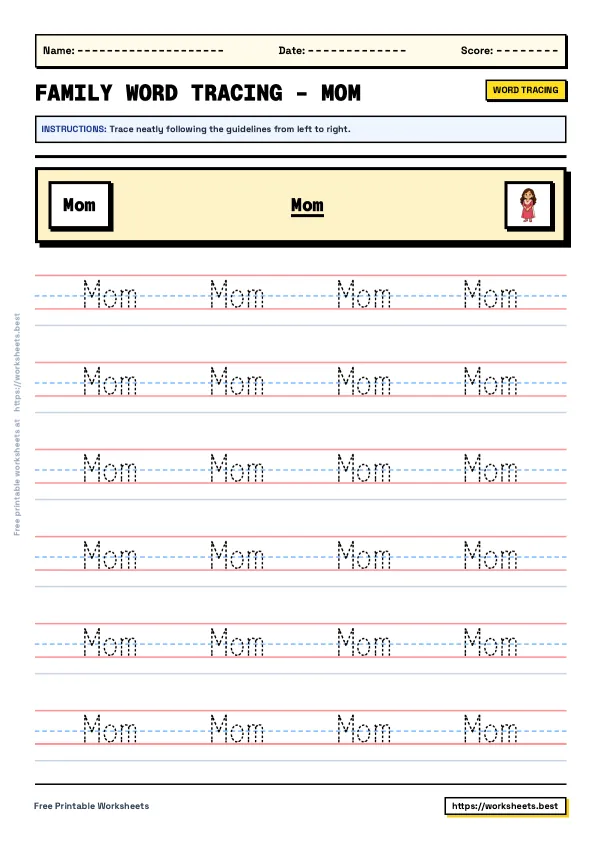
Family Word Tracing – Mom
Pre-KTracing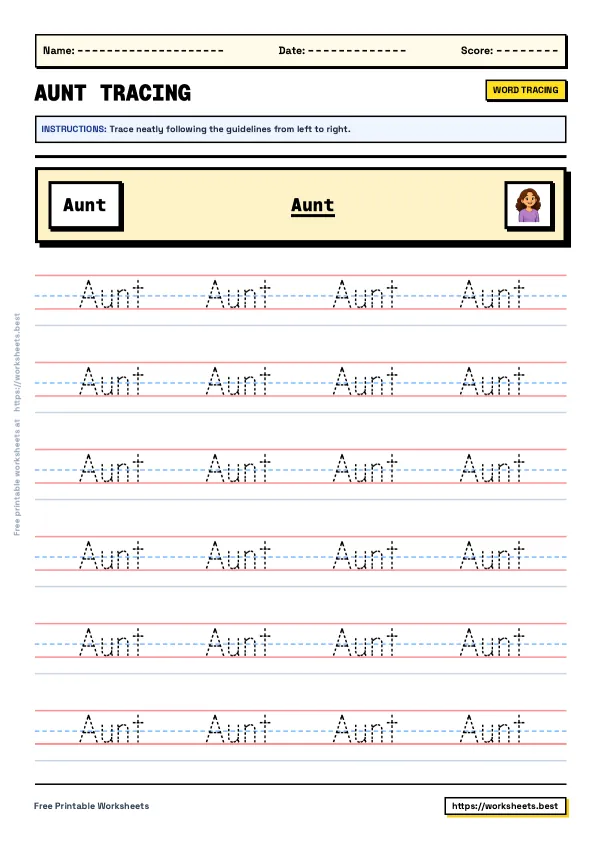
Aunt Tracing
1st GradeTracing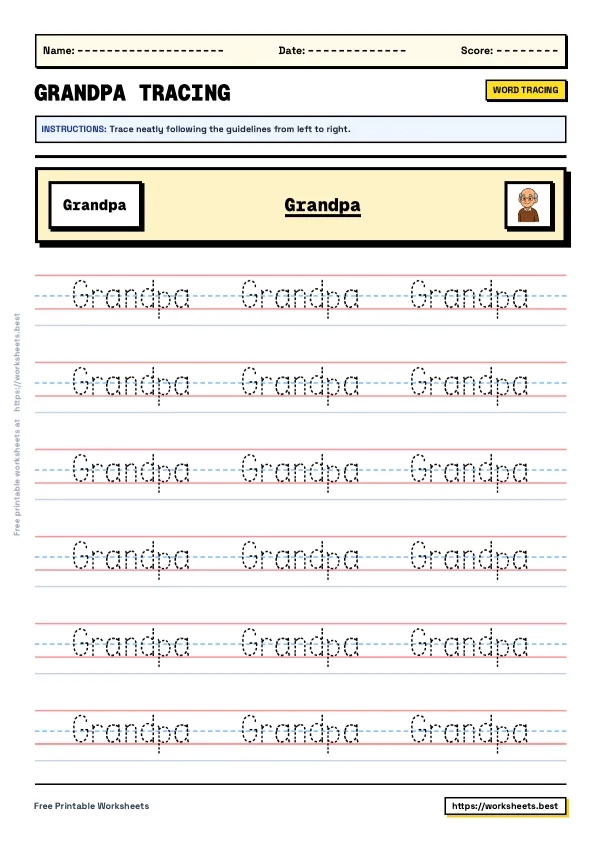
Grandpa Tracing
1st GradeTracing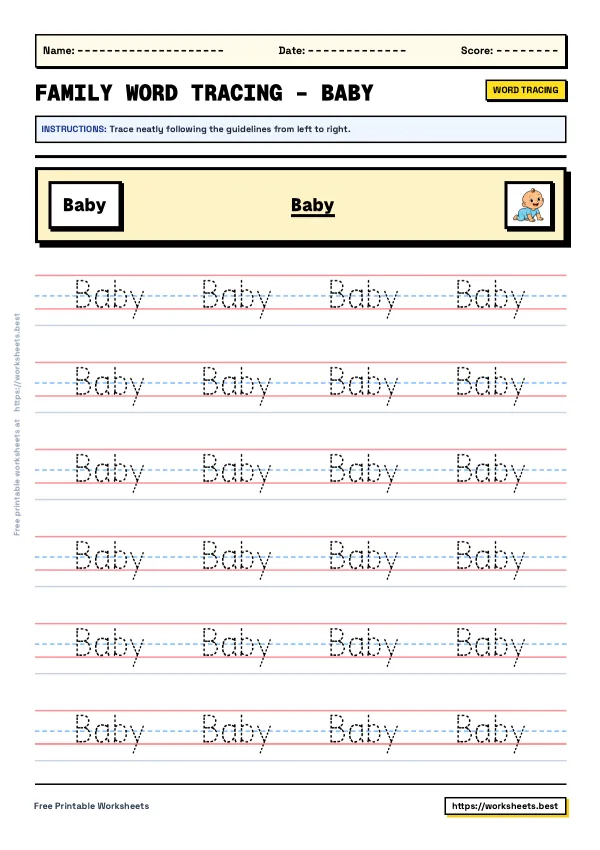
Family Word Tracing – Baby
Pre-KTracing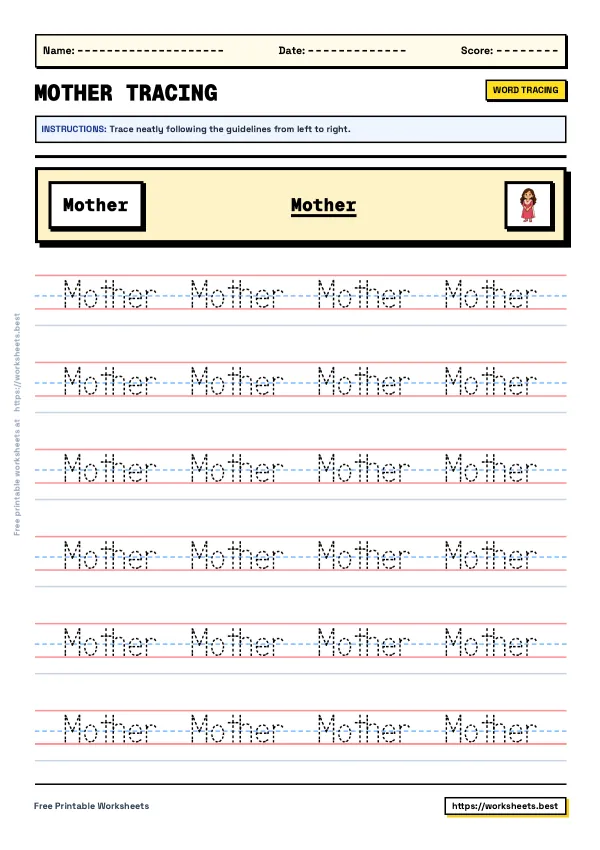
Mother Tracing
1st GradeTracing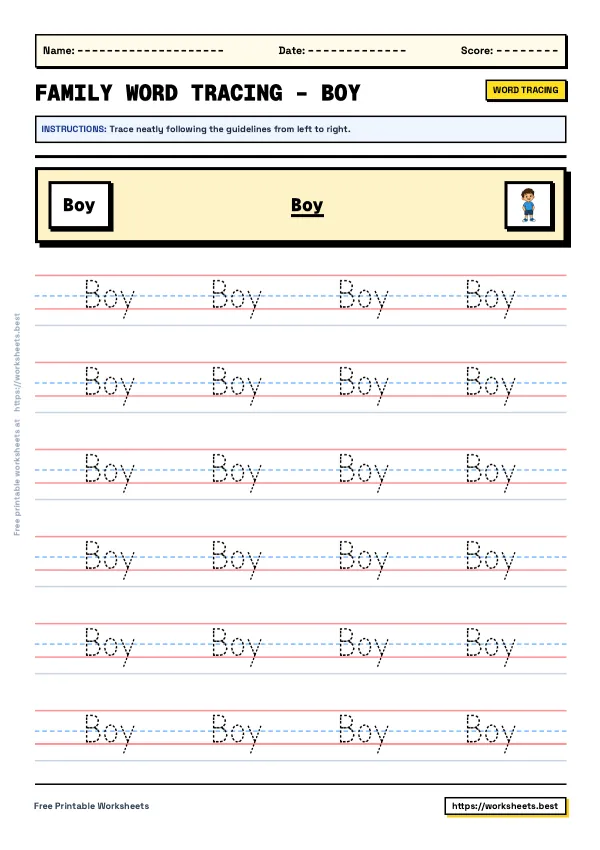
Family Word Tracing – Boy
Pre-KTracing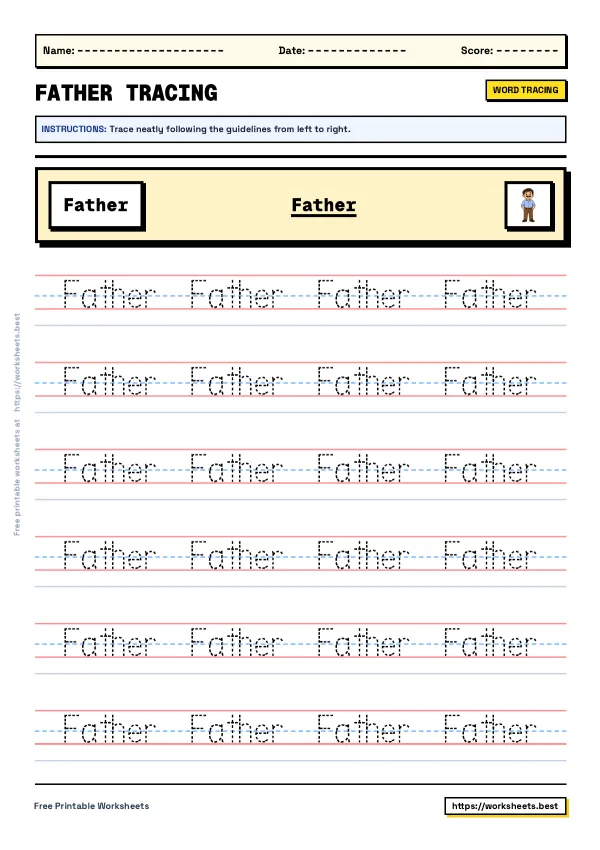
Father Tracing
1st GradeTracing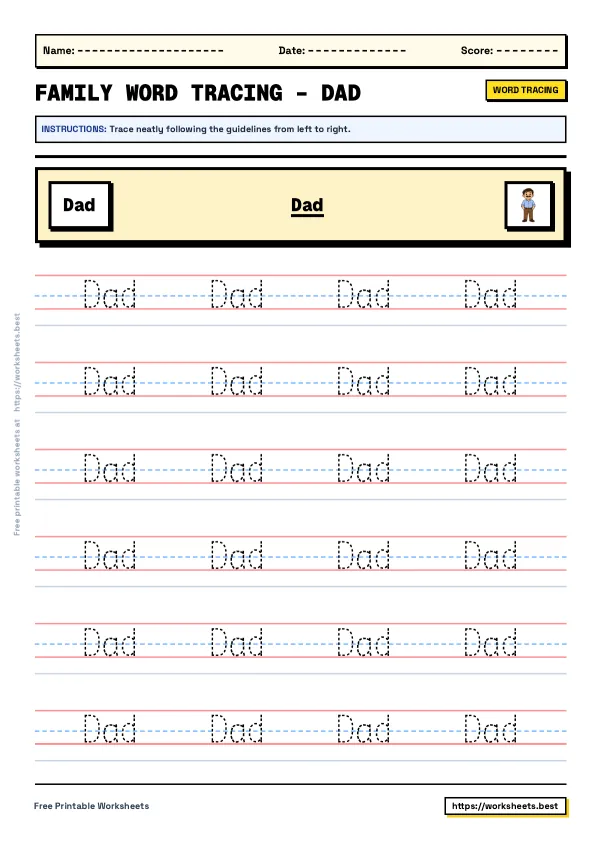
Family Word Tracing – Dad
Pre-KTracing
Uncle Tracing
1st GradeTracing
Family Word Tracing – Girl
Pre-KTracing
from teachers
Tips for parents and teachers
- Trace the first word with your finger before your child picks up a pencil, so they feel the shape of the letters without worrying about grip.
- Say each word out loud as it is traced; hearing the word while writing it strengthens word recognition and early spelling.
- Keep sessions to one or two sheets at a time, since the small muscle work of tracing tires young hands quickly.
- Watch the pencil grip and the paper position; if letters come out shaky, try a thicker crayon or a shorter pencil.
Questions parents ask
What ages are these people tracing worksheets for?
They are designed for Pre-K and 1st Grade, so most children using them are roughly four to seven years old. The Pre-K sheets focus on single short words, and the grade 1 series keeps the same tracing format.
Do tracing worksheets actually help with handwriting?
Yes. Following a dotted model builds fine motor control and teaches letter formation, and repeating a whole word supports word recognition and early spelling at the same time.
How long should a tracing session last?
Five to ten minutes is plenty for a Pre-K child, and stopping before they get tired makes it easier to come back the next day. A short session most days works better than one long sitting.
My child is left-handed. Does that change anything?
Not much. Let them angle the paper so the writing hand sits below the line being traced rather than hooked over it, and keep the pencil sharp so they do not have to press hard.