Animal Tracing Worksheets
A small set of animal tracing worksheets gives young children a calm way to practice letter shapes and word writing while they name familiar animals. It covers Pre-K, kindergarten and 1st grade, with a tracing format that asks children to follow dotted lines and then write the word on their own. The animal theme keeps attention on the page: a child might trace bear, cat or dog, then read the word back. The tracing practice builds fine motor skills, handwriting, spelling and word recognition at the same time.
Read more +
Pre-K children work with short, simple animal words, while kindergarten and 1st grade sets move to longer names and more independent writing. The range is clear in an easy Pre-K page with short words such as cat and dog, and in a Grade 1 page with longer words like rabbit and donkey. Each page pairs a picture or animal cue with a word to trace, so children connect meaning, spelling and letter formation. Because the set is small, you can print sheets for a morning warm-up, a literacy center or a quiet after-school task.
At home, sit beside your child and trace a few letters together before letting them try alone. In class, use the sheets during small-group handwriting practice or as an independent station after a phonics lesson. Children can trace with a finger, then a pencil, then copy the word on a separate line. Keep sessions short and celebrate careful letter shapes rather than speed.
start with these
Featured worksheets
every sheet
All Animal Tracing worksheets
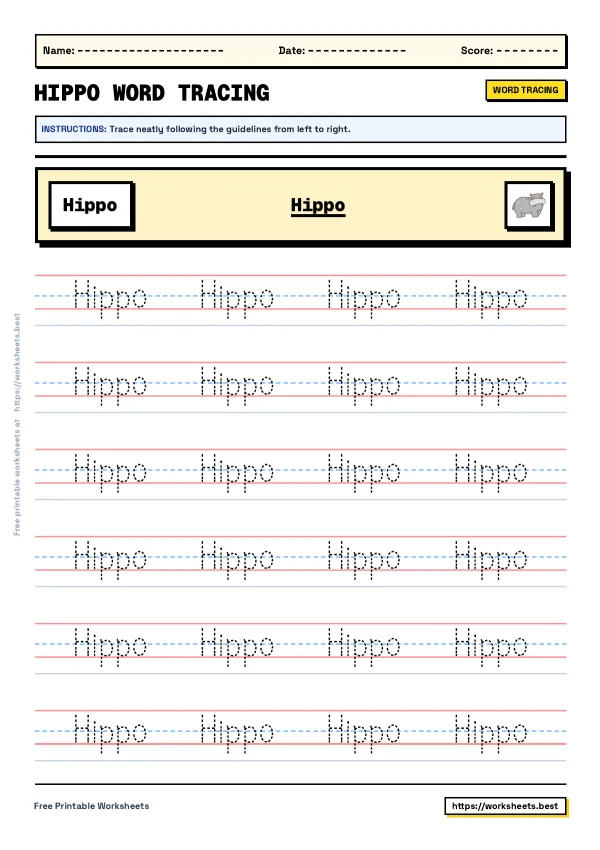
Hippo Word Tracing
KindergartenTracing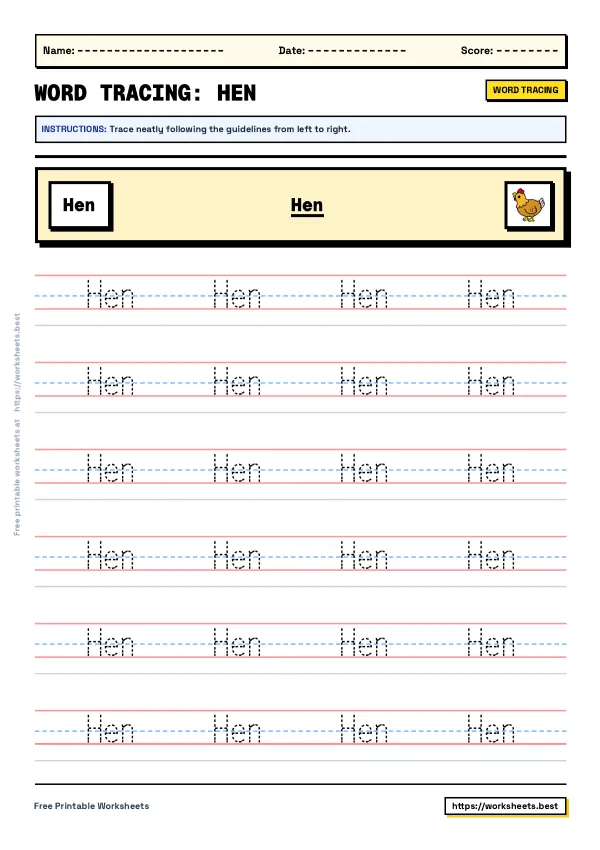
Word Tracing: Hen
Pre-KTracing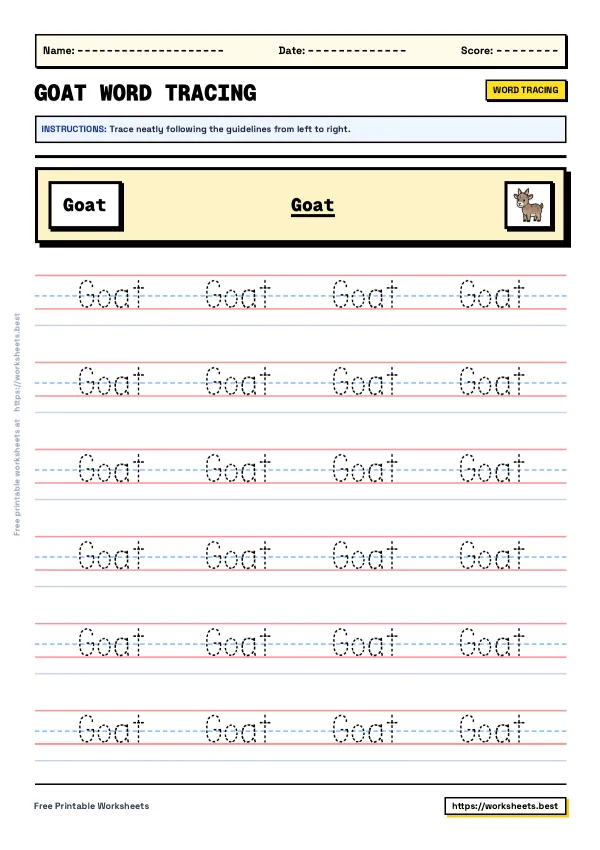
Goat Word Tracing
KindergartenTracing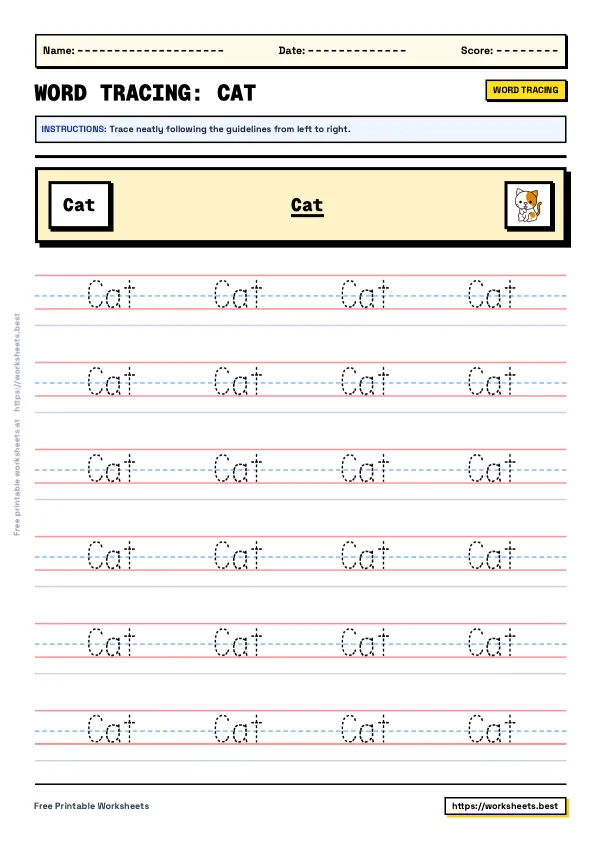
Word Tracing: Cat
Pre-KTracing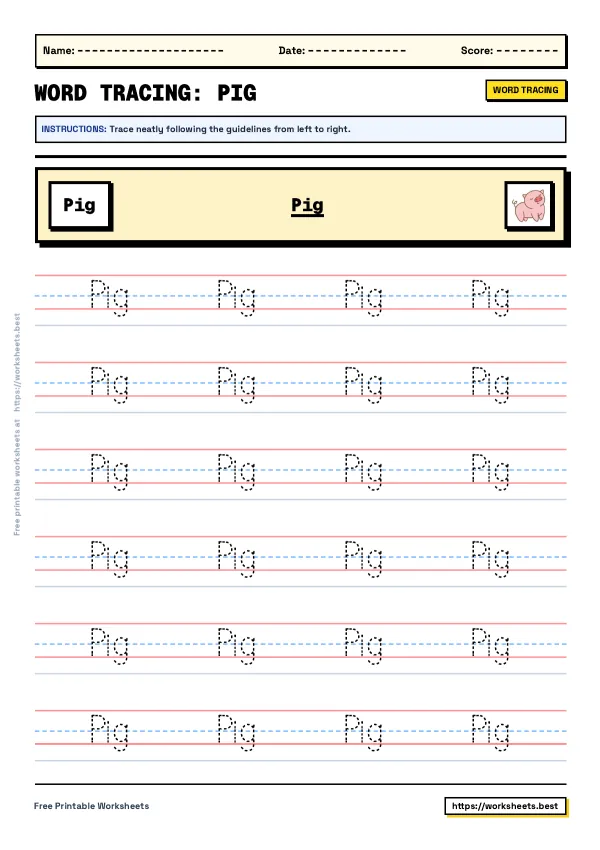
Word Tracing: Pig
Pre-KTracing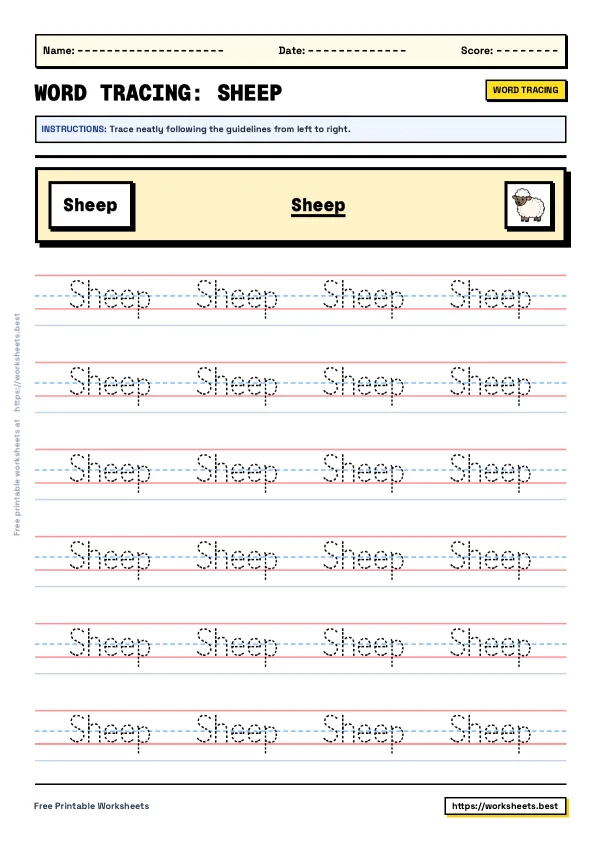
Word Tracing: Sheep
1st GradeTracing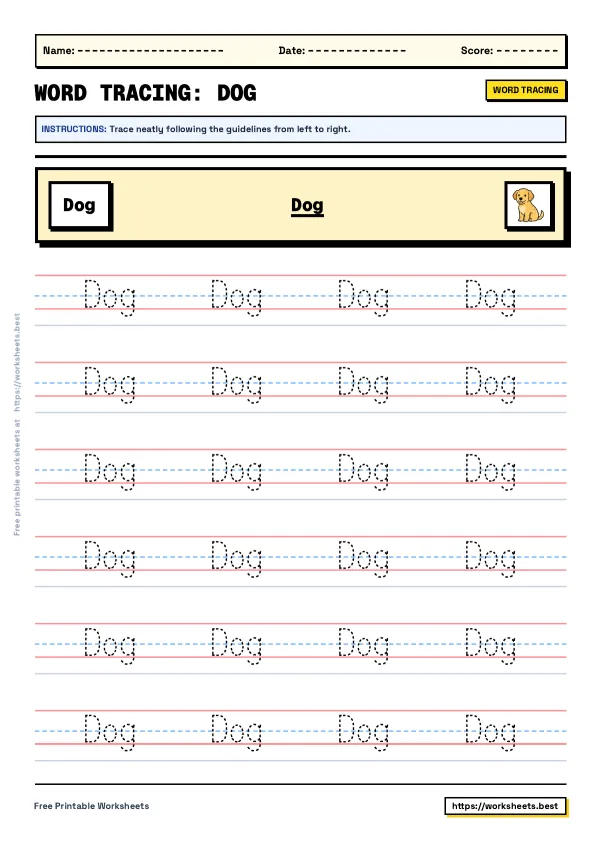
Word Tracing: Dog
Pre-KTracing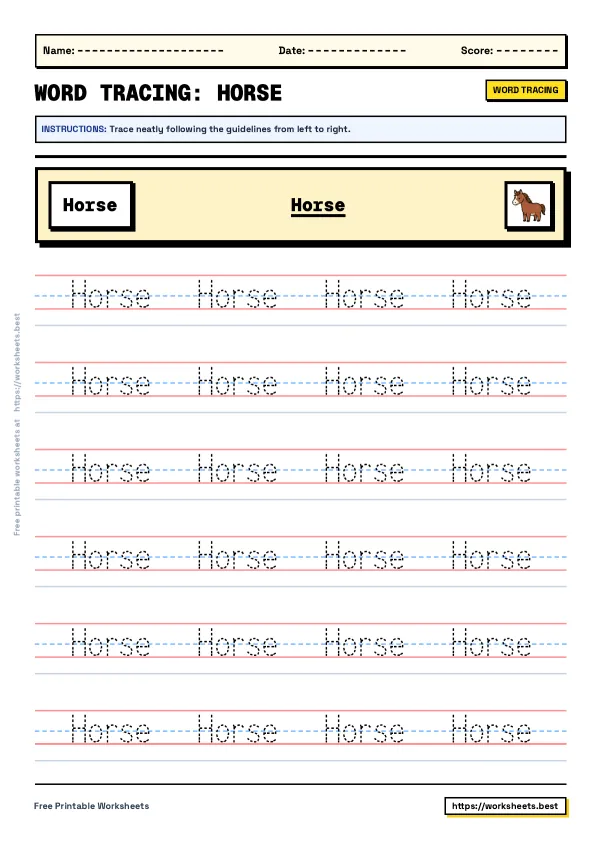
Word Tracing: Horse
1st GradeTracing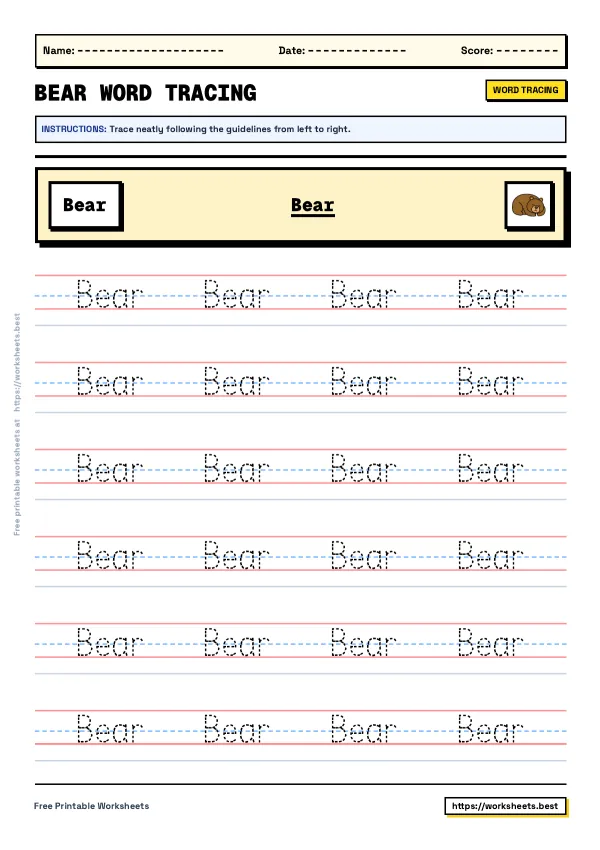
Bear Word Tracing
KindergartenTracing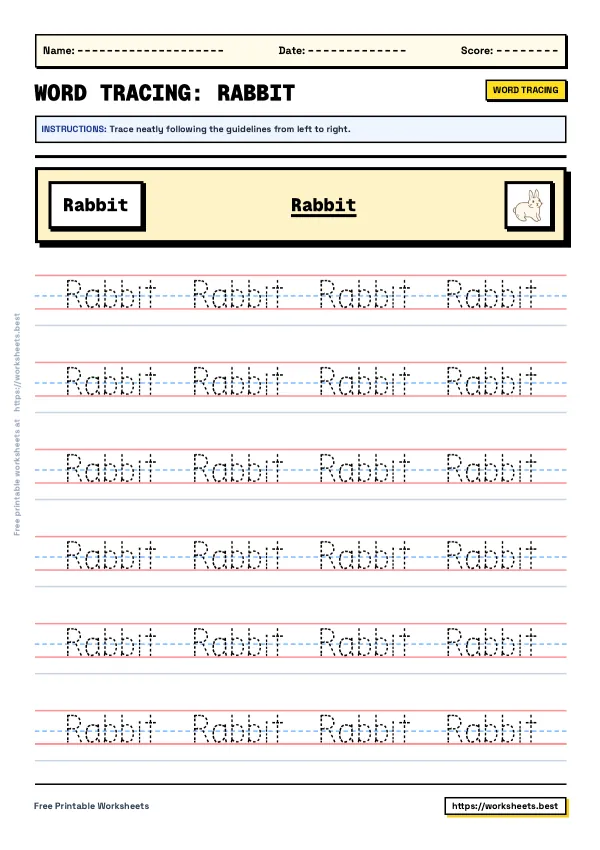
Word Tracing: Rabbit
1st GradeTracing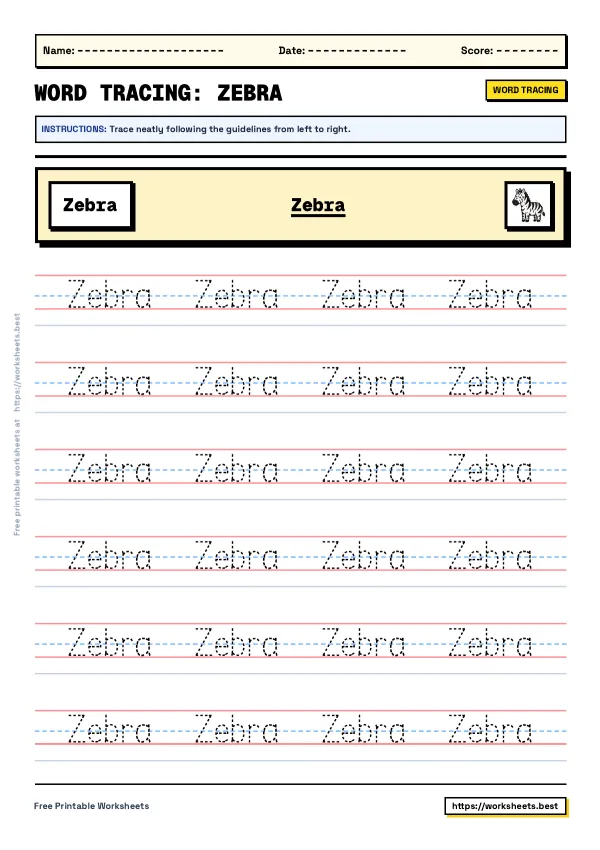
Word Tracing: Zebra
1st GradeTracing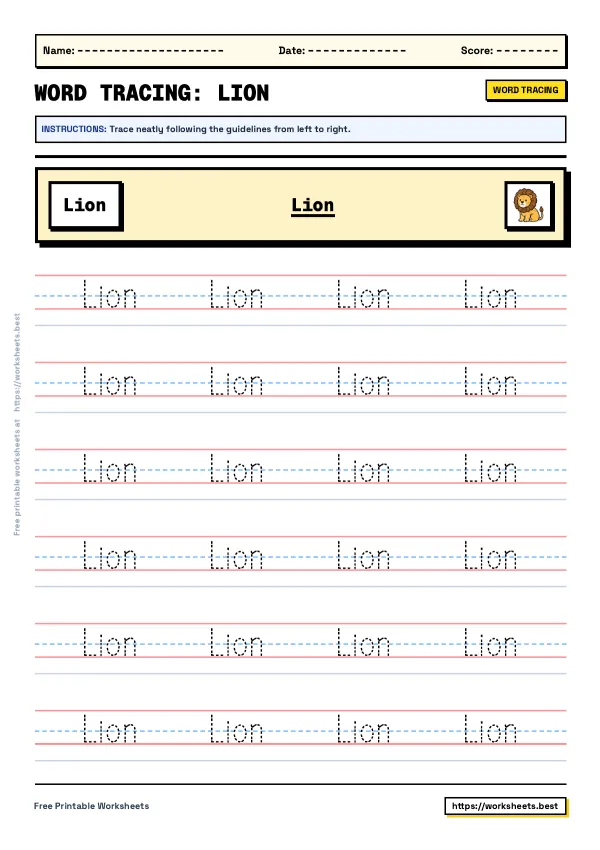
Word Tracing: Lion
1st GradeTracing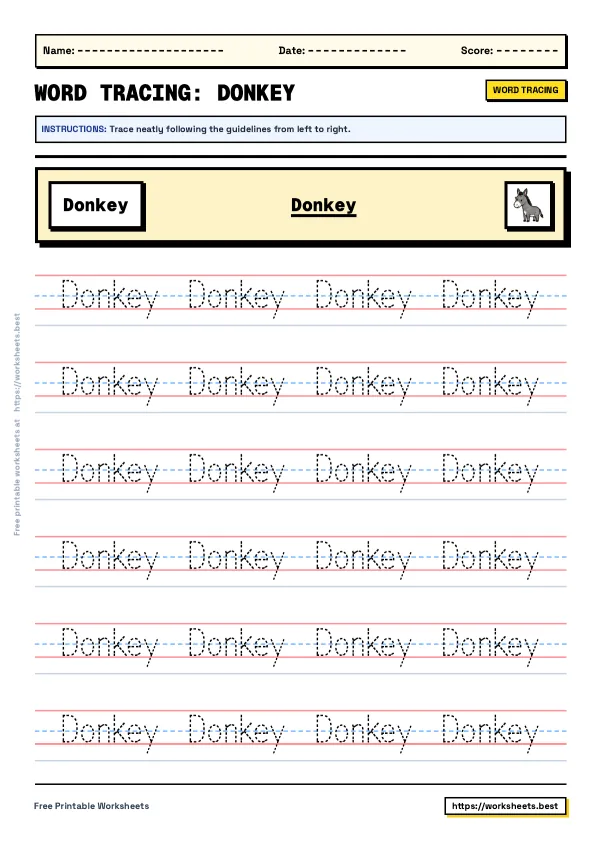
Word Tracing: Donkey
1st GradeTracing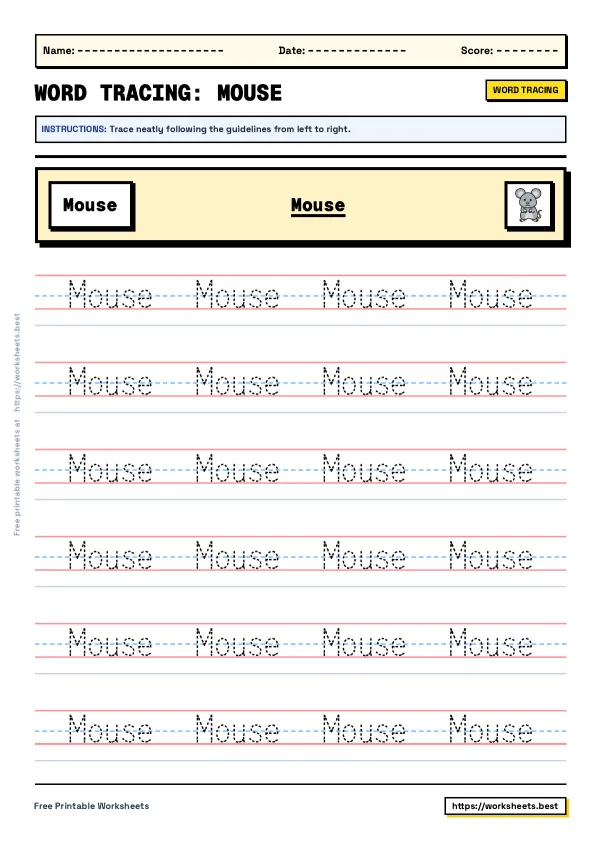
Word Tracing: Mouse
1st GradeTracing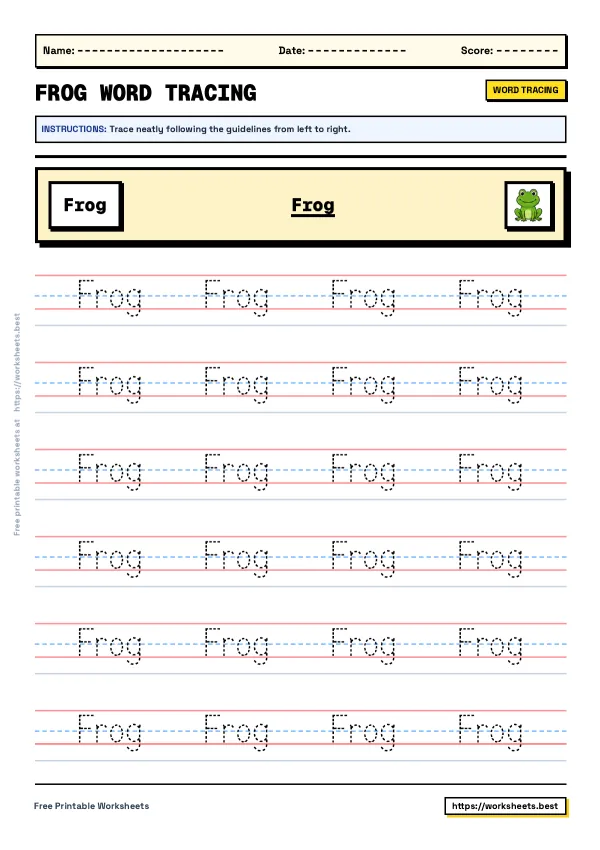
Frog Word Tracing
KindergartenTracing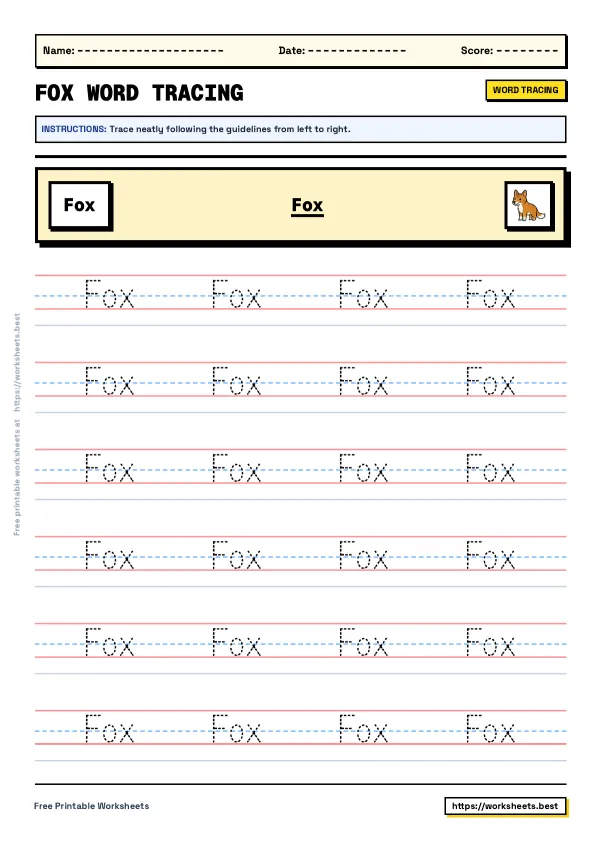
Fox Word Tracing
KindergartenTracing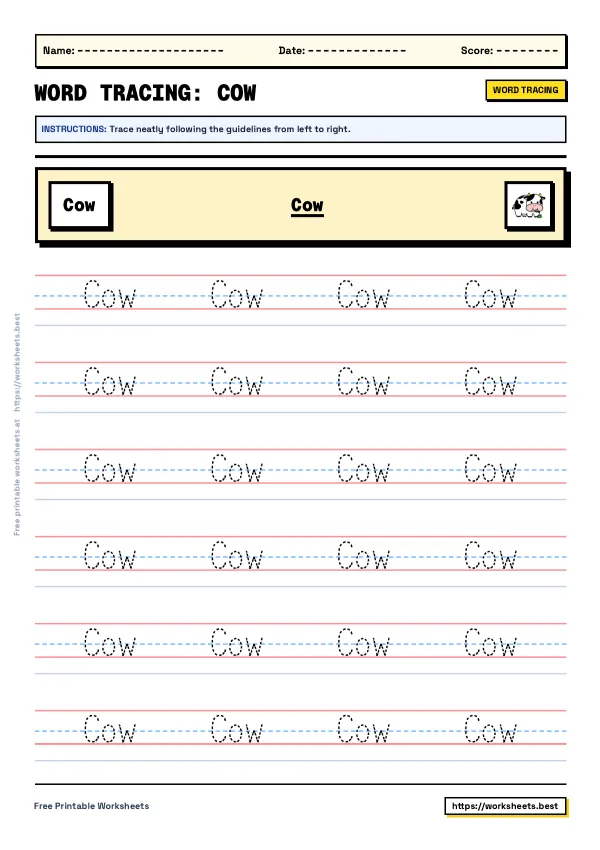
Word Tracing: Cow
Pre-KTracing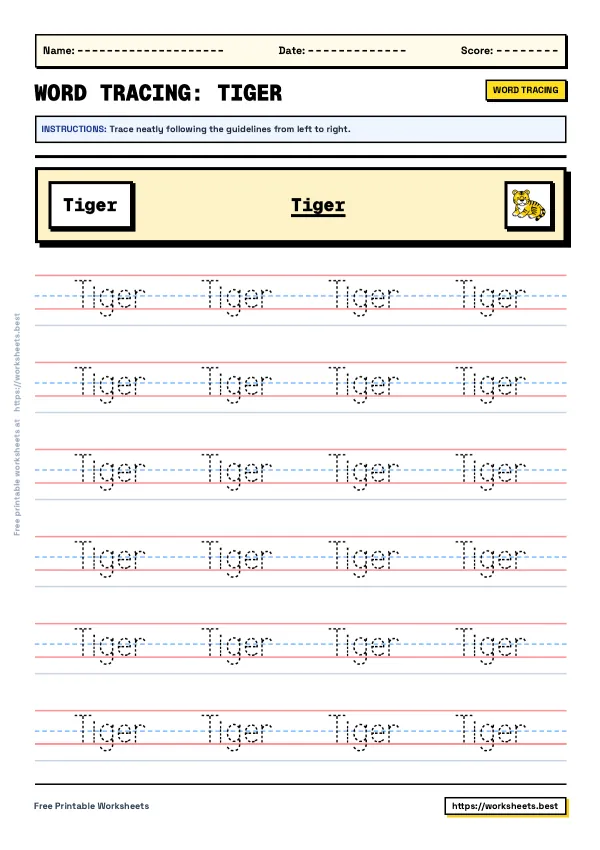
Word Tracing: Tiger
1st GradeTracing
from teachers
Tips for parents and teachers
- Start with a finger trace before handing over a pencil. This helps children feel the letter path and build muscle memory without worrying about the mark on the page.
- Say the animal word aloud as your child traces each letter. Hearing the sounds while forming the letters links spelling, word recognition and handwriting.
- Keep sessions to five or ten minutes for Pre-K and kindergarten. Short, regular practice is more useful than one long tracing session.
- For 1st graders, cover the model word after tracing and ask them to write it from memory. Then let them check their own work against the traced version.
Questions parents ask
What ages are animal tracing worksheets best for?
They are made for Pre-K, kindergarten and 1st grade. Younger children usually start with short animal words, while older children can handle longer words and more independent writing.
What skills do animal word tracing worksheets build?
Children practice fine motor skills, handwriting, spelling and word recognition. Tracing letters also supports the hand control needed for everyday writing.
How can I help a child who struggles with tracing?
Try tracing with a highlighter first, then let the child follow the same lines with a pencil. A finger trace before pencil work can also make the path clearer.
Should my child trace the whole word or one letter at a time?
For Pre-K and kindergarten, one letter at a time is often easier because it keeps the task manageable. By 1st grade, many children can trace the whole animal word and then copy it.
Can tracing animal words help with spelling?
Yes. Saying each animal word while tracing its letters connects the sounds to the written form, which supports early spelling and word recognition.