Addition Worksheets
Addition worksheets give children from kindergarten through 3rd grade a steady way to build math facts, starting with sums within 5 and moving up to two- and three-digit problems. The collection on this page is built around short math drills, so a child can work through a small stack of facts in one sitting and come back the next day for another round.
Read more +
Younger children meet a within-5 sheet first, then pages where every sum stays at 10 or below, and later within-20 practice that asks them to recall facts rather than count on fingers. Older students move to column work with two-digit and three-digit problems, lining up place values and carrying as they go. Every sheet comes with an answer key, so a parent or teacher can check a page quickly and spot the facts a child keeps missing.
Use a single drill as a warm-up before a math lesson, as a quiet morning task, or as take-home practice. In class, the same pages work for small groups, centers, or a quick fact check; at home, a few minutes a day with one drill keeps addition facts fresh, and the answer keys let you review together without working every problem yourself.
start with these
Featured worksheets
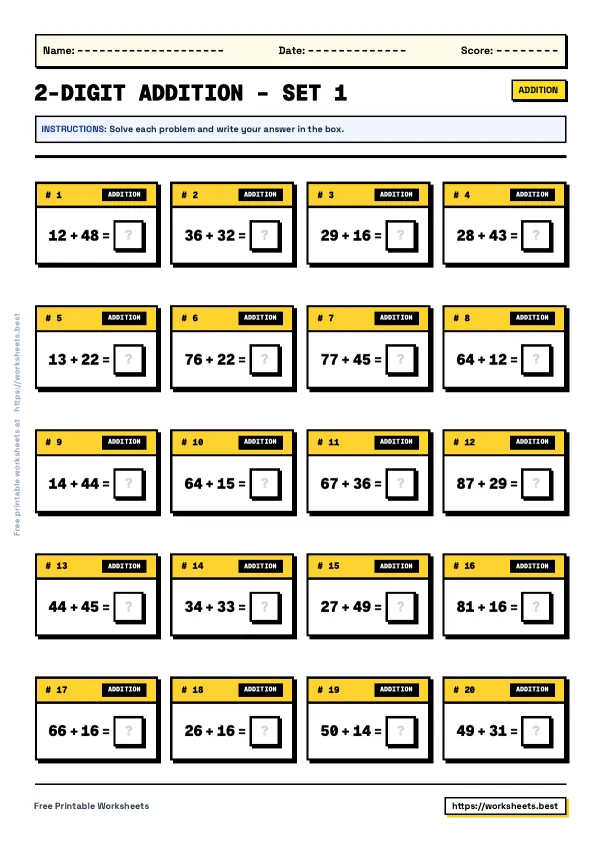
2-Digit Addition – Set 1
2nd GradeMath Drills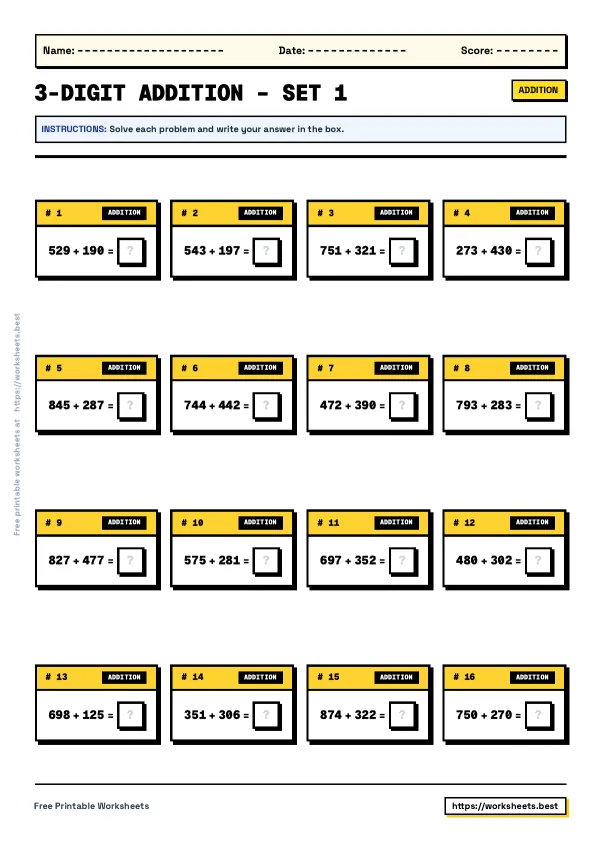
3-Digit Addition – Set 1
2nd–3rd GradeMath Drills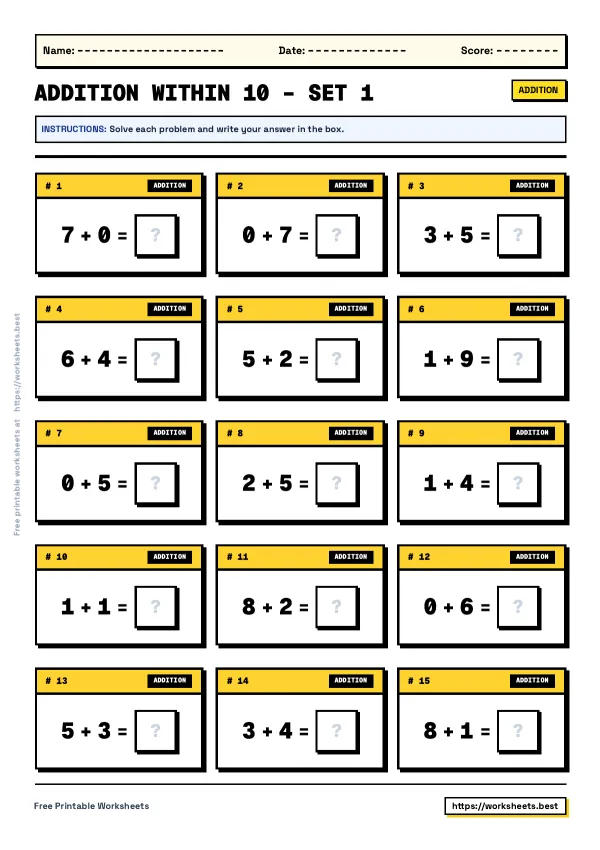
Addition Within 10 – Set 1
K–1st GradeMath Drills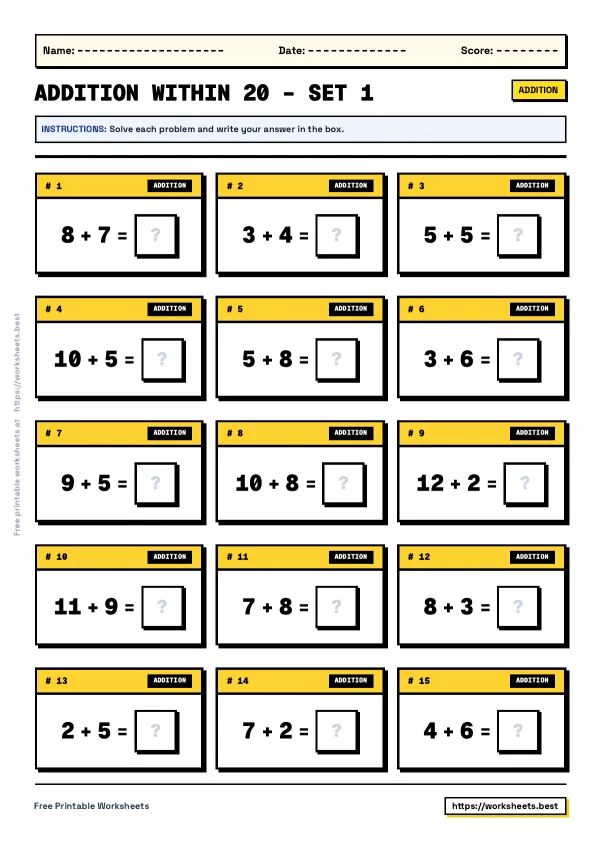
Addition Within 20 – Set 1
1st–2nd GradeMath Drills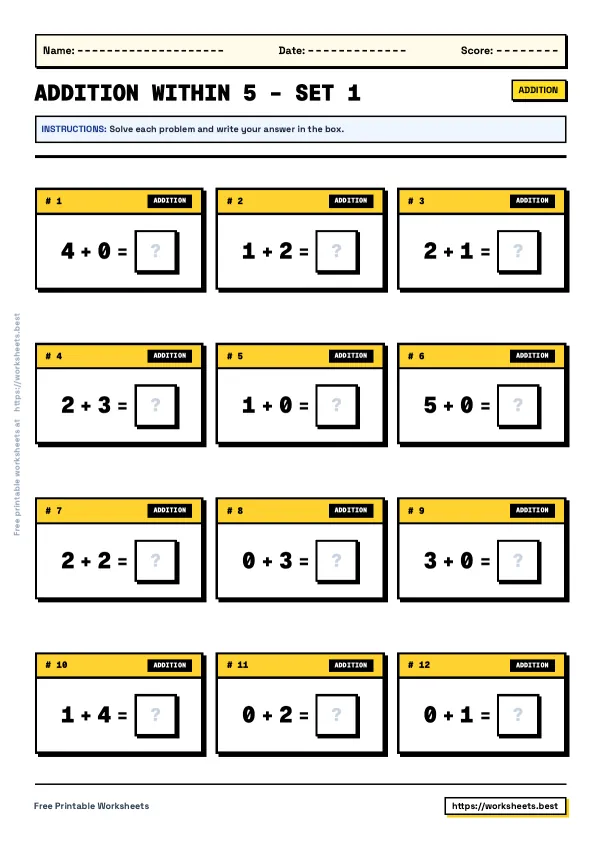
Addition Within 5 – Set 1
KindergartenMath Drills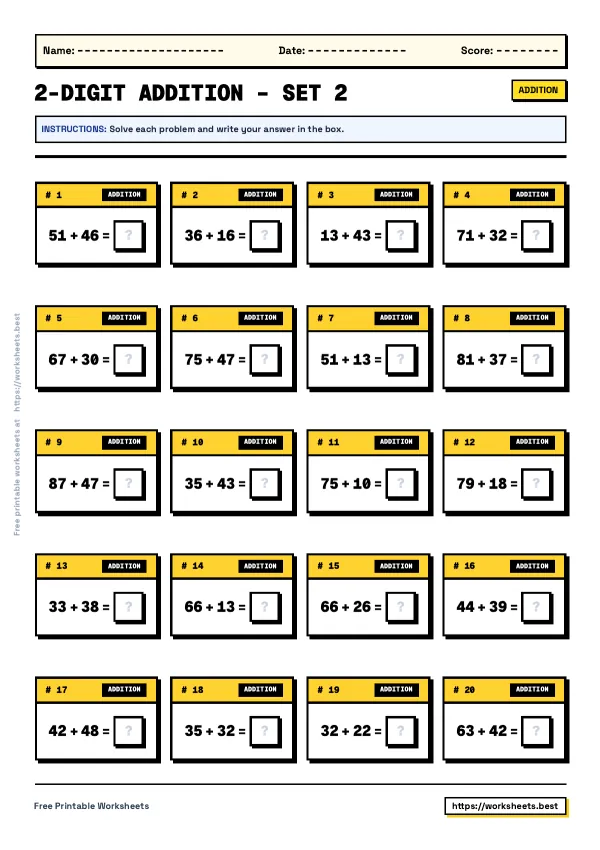
2-Digit Addition – Set 2
2nd GradeMath Drills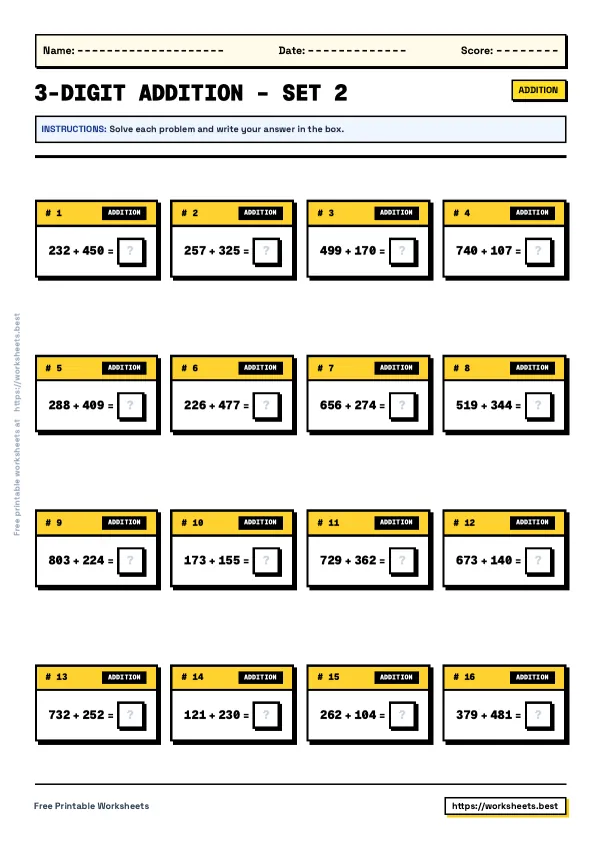
3-Digit Addition – Set 2
2nd–3rd GradeMath Drills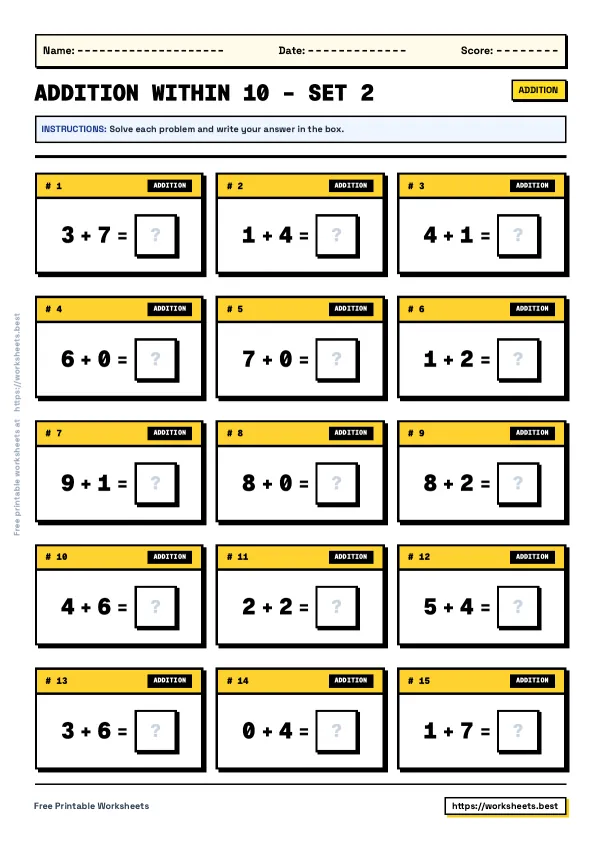
Addition Within 10 – Set 2
K–1st GradeMath Drills
every sheet
All Addition worksheets
Addition Within 10 – Set 2
K–1st GradeMath Drills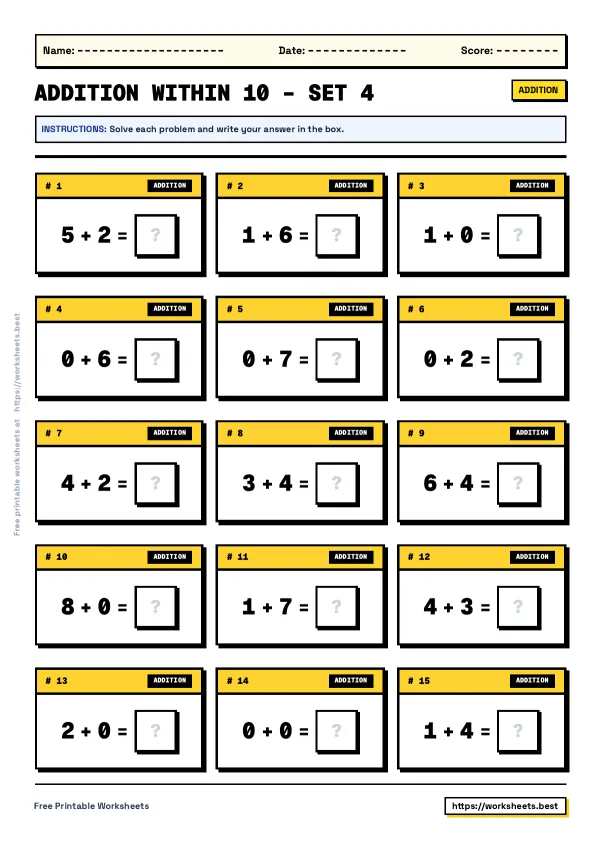
Addition Within 10 – Set 4
K–1st GradeMath Drills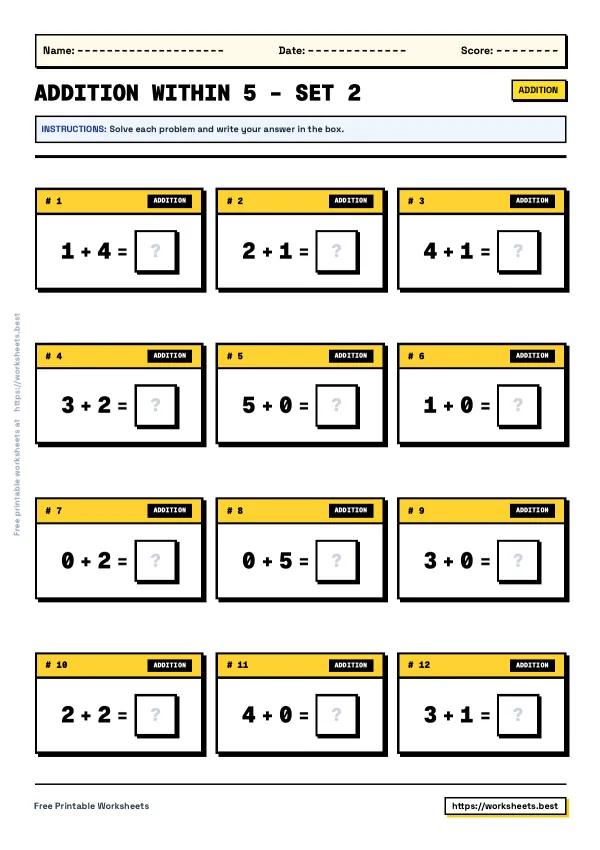
Addition Within 5 – Set 2
KindergartenMath Drills2-Digit Addition – Set 1
2nd GradeMath Drills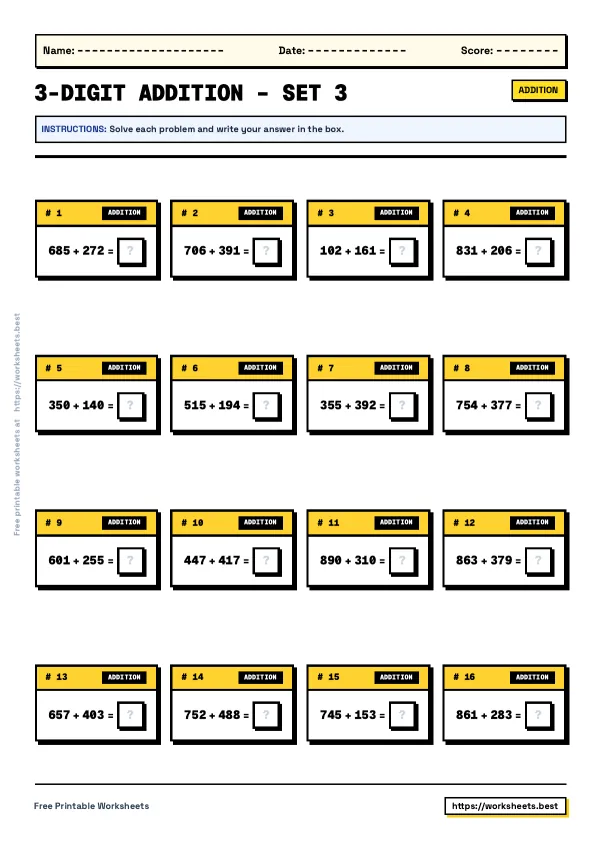
3-Digit Addition – Set 3
2nd–3rd GradeMath Drills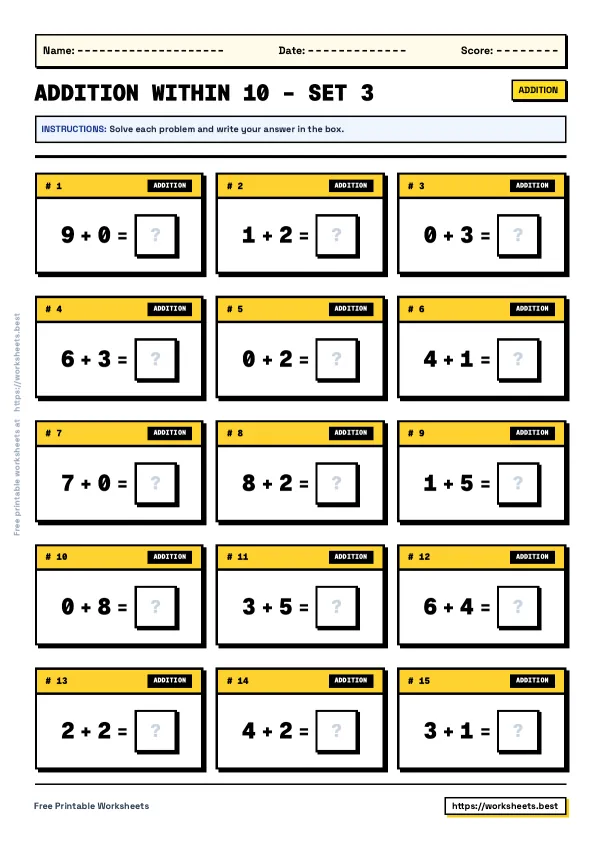
Addition Within 10 – Set 3
K–1st GradeMath Drills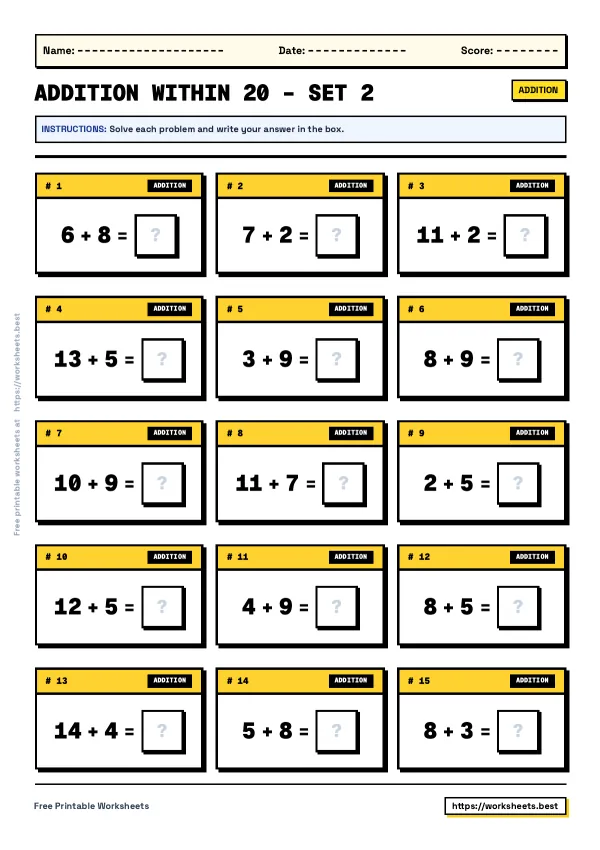
Addition Within 20 – Set 2
1st–2nd GradeMath DrillsAddition Within 5 – Set 1
KindergartenMath Drills2-Digit Addition – Set 2
2nd GradeMath Drills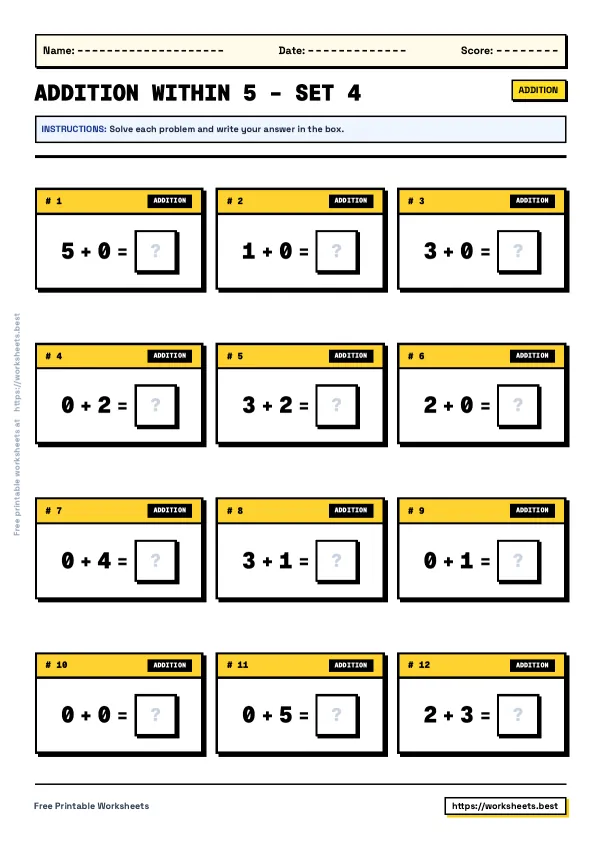
Addition Within 5 – Set 4
KindergartenMath Drills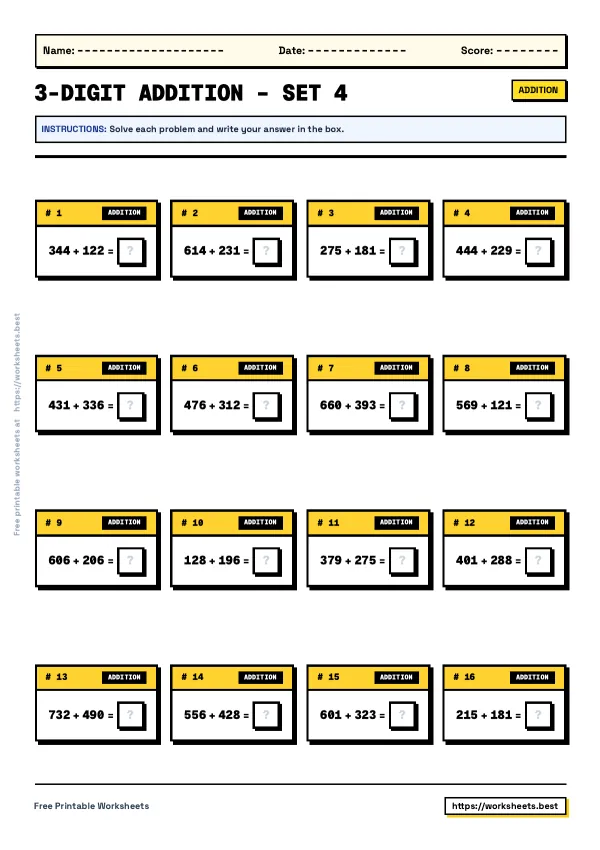
3-Digit Addition – Set 4
2nd–3rd GradeMath DrillsAddition Within 20 – Set 1
1st–2nd GradeMath Drills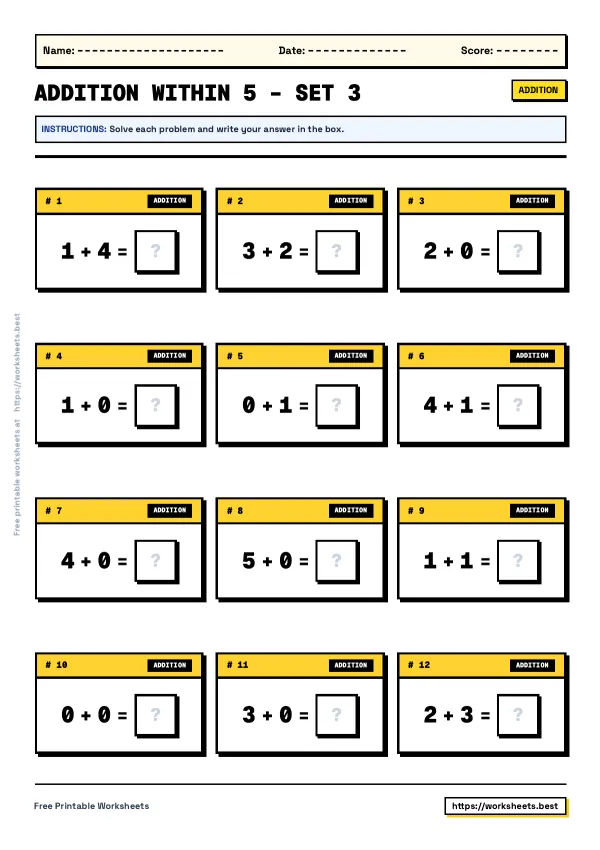
Addition Within 5 – Set 3
KindergartenMath Drills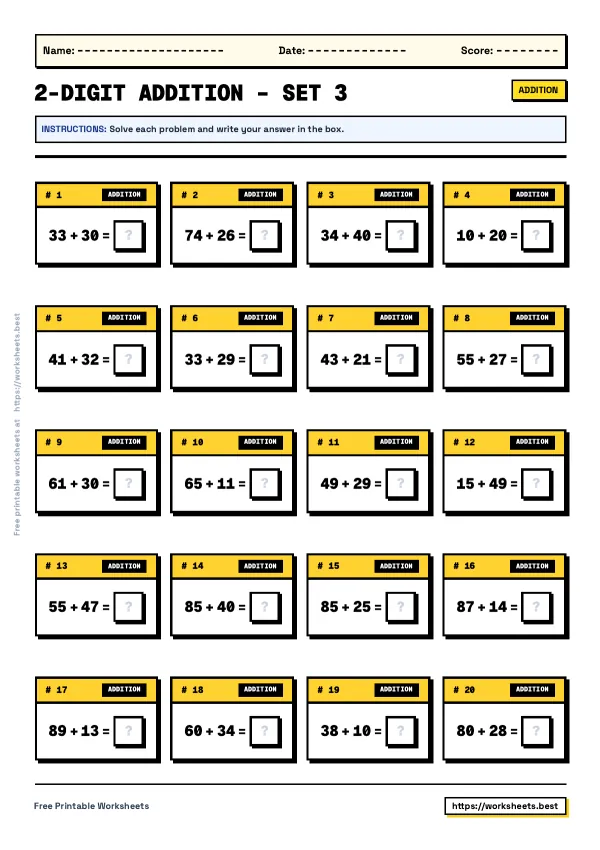
2-Digit Addition – Set 3
2nd GradeMath Drills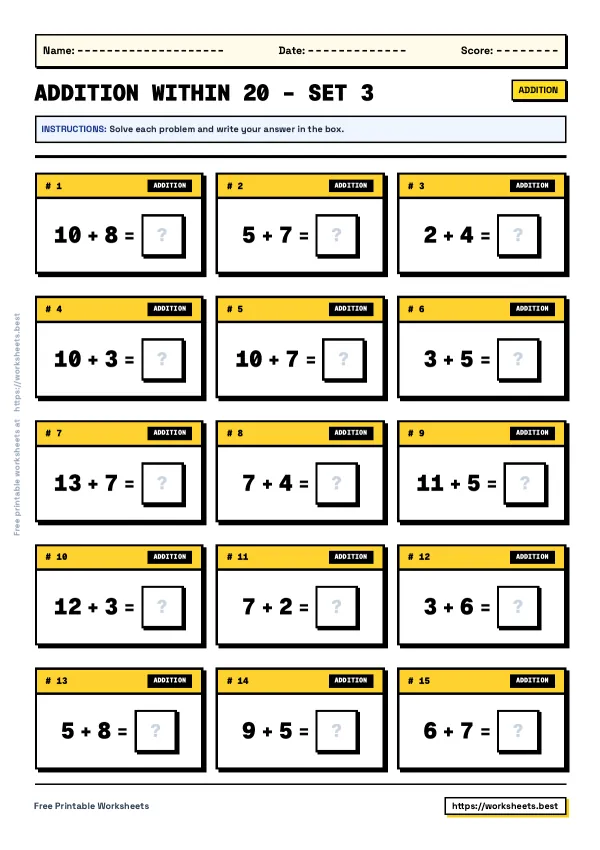
Addition Within 20 – Set 3
1st–2nd GradeMath Drills3-Digit Addition – Set 2
2nd–3rd GradeMath Drills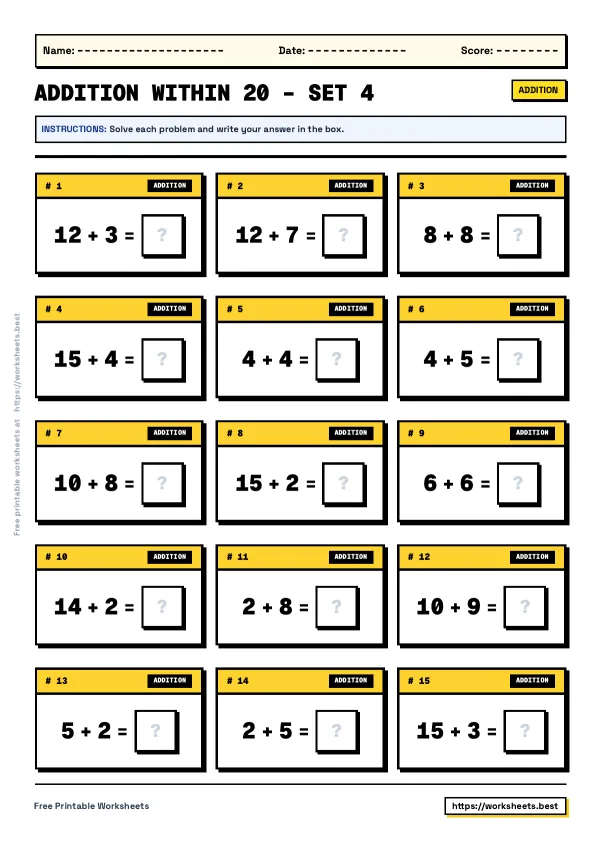
Addition Within 20 – Set 4
1st–2nd GradeMath DrillsAddition Within 10 – Set 1
K–1st GradeMath Drills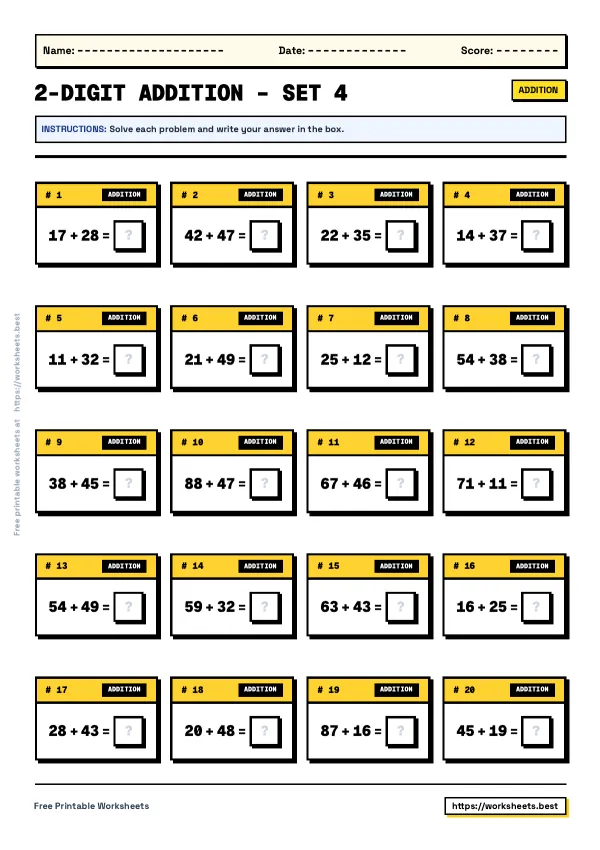
2-Digit Addition – Set 4
2nd GradeMath Drills3-Digit Addition – Set 1
2nd–3rd GradeMath Drills
dig deeper
More Addition worksheets
from teachers
Tips for parents and teachers
- Start where the child is fluent rather than where the grade label points. A quick run through a page of sums within 10 shows whether to stay there a while longer or move on to within-20 facts.
- Keep drills short. Five to ten minutes of math facts practice, timed or untimed, does more for recall than a long page finished in frustration.
- Say the facts aloud together while checking the answer key. Hearing "eight plus seven equals fifteen" as they see it helps children hold the fact in memory.
- On two- and three-digit pages, have children name the place values before adding, such as "three tens plus four tens," so column work stays about numbers rather than digits.
Questions parents ask
What age should a child start addition worksheets?
Kindergarten is a comfortable starting point, when children are adding within 5 and within 10 using fingers, counters or small pictures. First and 2nd grade then move into math facts within 20 and two-digit column addition, and 3rd grade takes on three-digit problems.
How do I help a child who still counts on their fingers?
Let them keep counting for now, but pair it with short daily practice on facts within 5 and within 10 so the answers start coming automatically. Once a few facts are instant, encourage them to build from those, such as using 5 + 5 to reach 5 + 6.
What is the difference between addition within 10 and addition within 20?
Within-10 pages keep every sum at ten or less, which suits children just learning to combine groups. Within-20 pages use larger addends and are meant to build recall of math facts, including the doubles and near-doubles that come up constantly in later grades.
Do these pages match grade-level math standards?
Many of the drills line up with Common Core expectations such as 1.OA.C.6 and 2.NBT.B.5, which cover adding within 20 and two-digit addition. Check your own grade-level standards if you need a precise match.
Should addition drills be timed?
Timing helps only after a child can already answer the facts correctly and just needs speed. For a child still learning, untimed practice with the answer key nearby builds accuracy first, and short timed rounds can come later.