2nd Grade Math Worksheets
Children in 2nd grade build number sense, read analog clocks, and practice addition, subtraction, and multiplication with the 2nd Grade Math Worksheets collection. The many worksheets cover number sense, skip counting, comparing numbers, telling time, and math facts. Children work through math drills, number sense exercises, and clock reading tasks, so practice stays varied without leaving grade-level skills behind.
Read more +
One sheet asks children to read analog clocks to the nearest five minutes; another gives practice comparing three-digit numbers. Other pages in the set focus on skip counting by 2s, 5s, or 100s, missing numbers from 100 to 1000, and two- or three-digit addition and subtraction. The mix helps 2nd graders move from simply recognizing numbers to using them with more confidence.
Use the sheets at home for a short daily practice session, or in class for centers, review, and homework. Answer keys are included for all pages, which makes checking quick for parents and teachers alike. A few minutes with a clock or addition page can turn a routine into useful reinforcement.
start with these
Featured worksheets
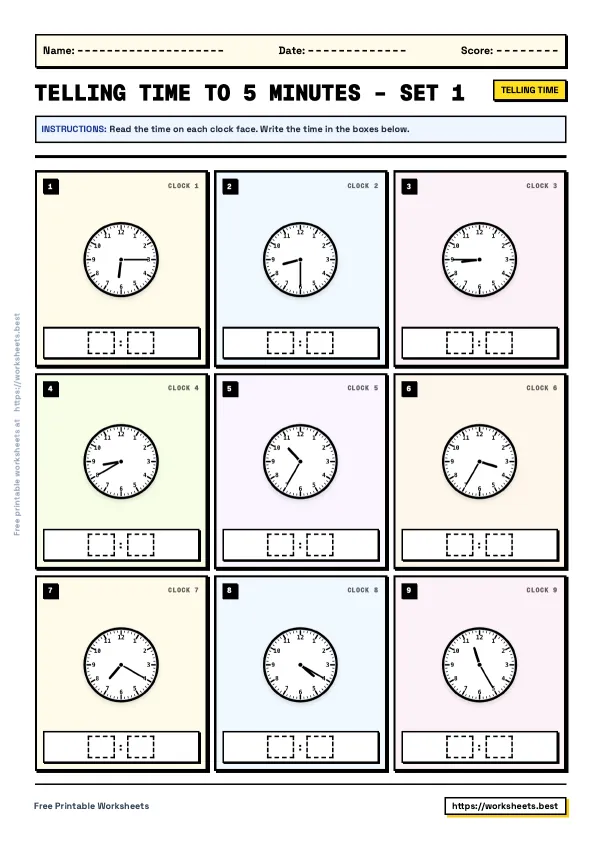
Telling Time to 5 Minutes – Set 1
2nd–3rd GradeClock Reading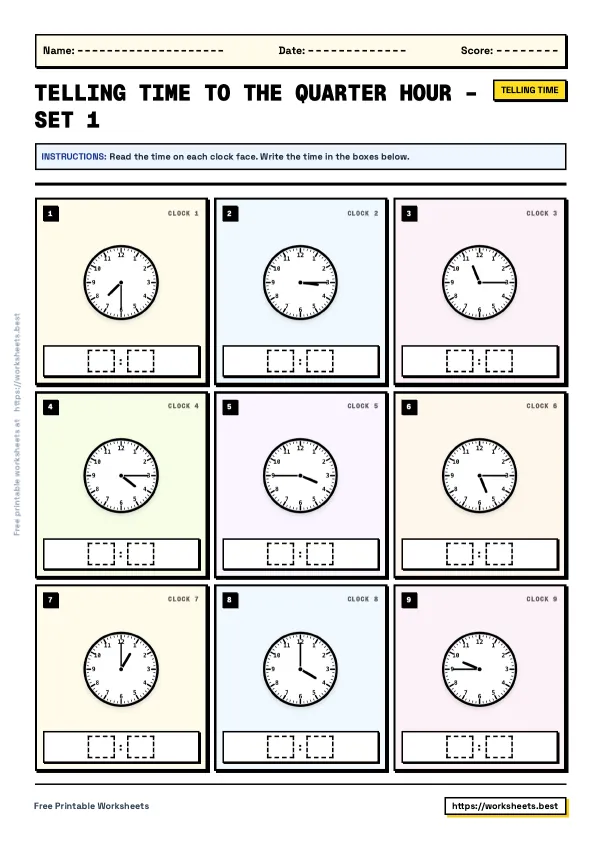
Telling Time to the Quarter Hour – Set 1
2nd GradeClock Reading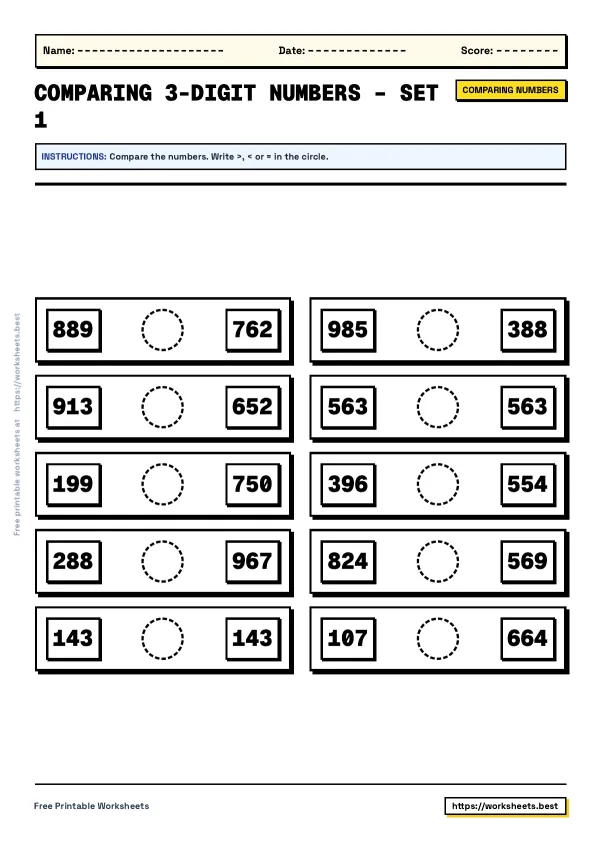
Comparing 3-Digit Numbers – Set 1
2nd GradeNumber Sense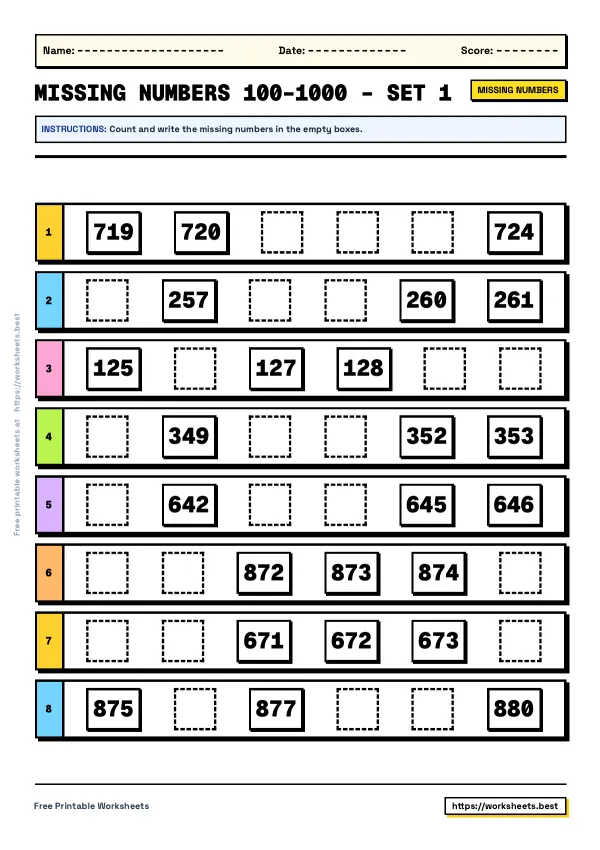
Missing Numbers 100–1000 – Set 1
2nd GradeNumber Sense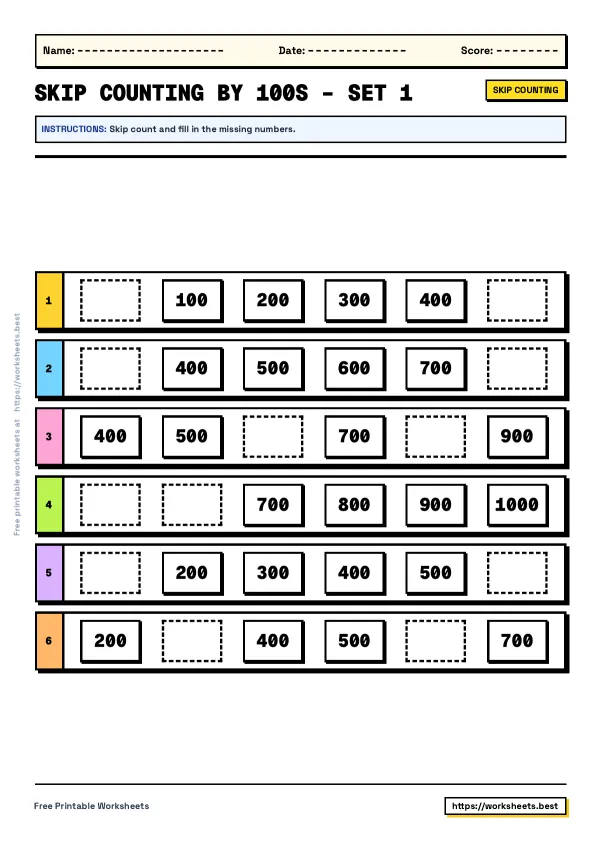
Skip Counting by 100s – Set 1
2nd GradeNumber Sense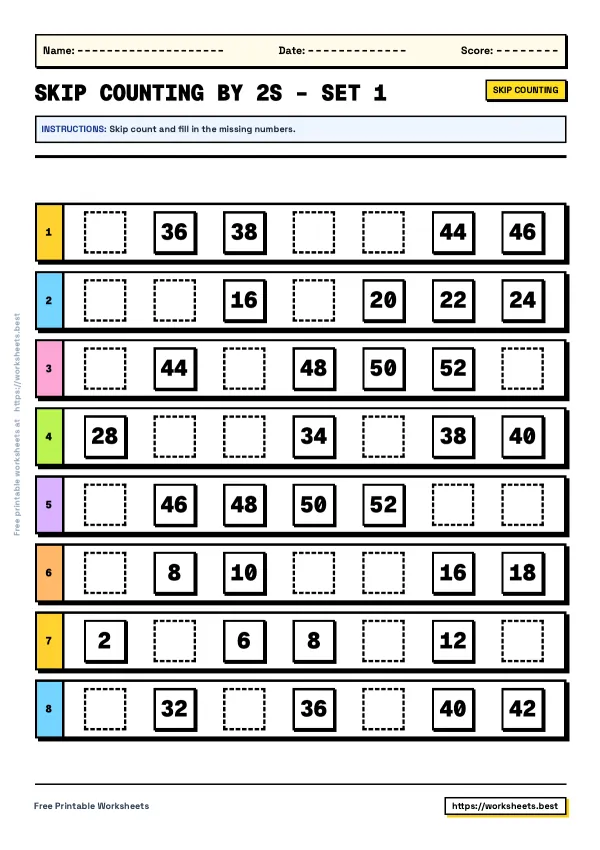
Skip Counting by 2s – Set 1
1st–2nd GradeNumber Sense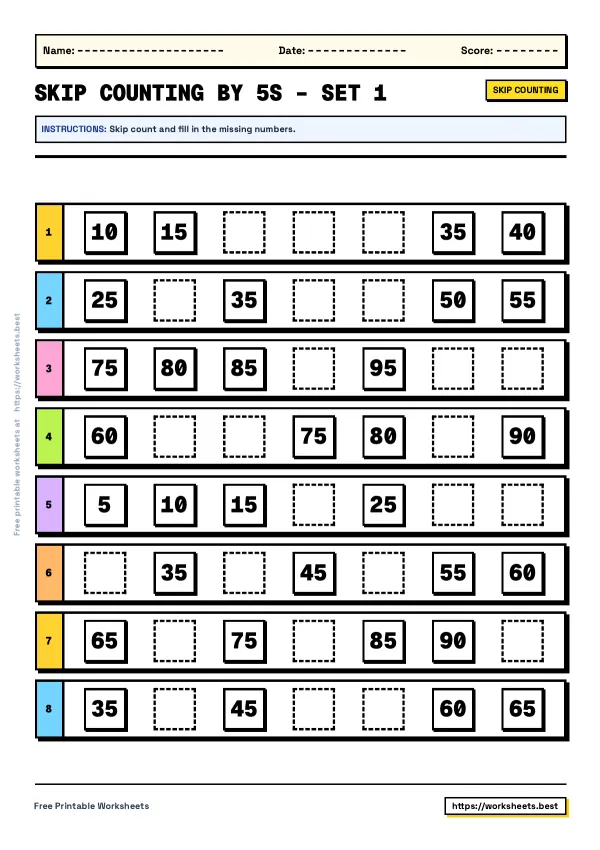
Skip Counting by 5s – Set 1
1st–2nd GradeNumber Sense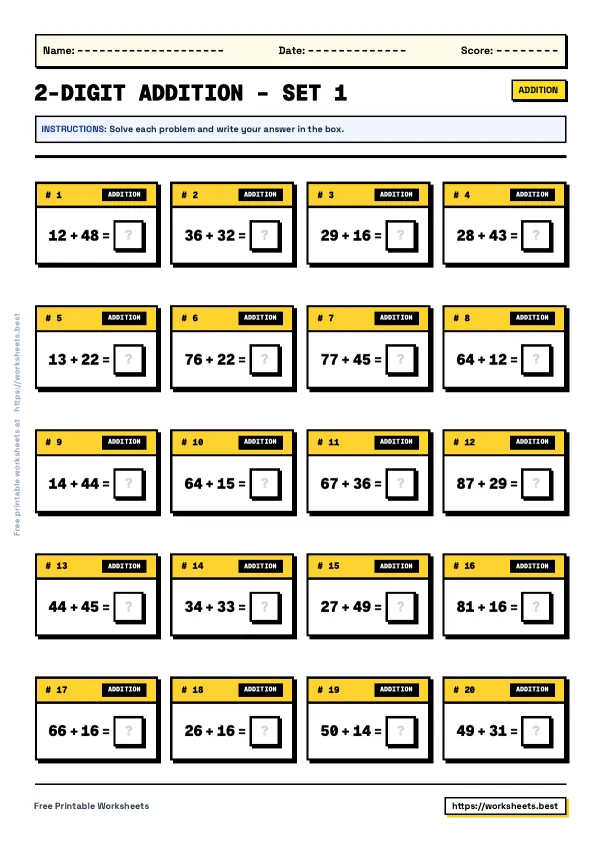
2-Digit Addition – Set 1
2nd GradeMath Drills
every sheet
All 2nd Grade Math worksheets
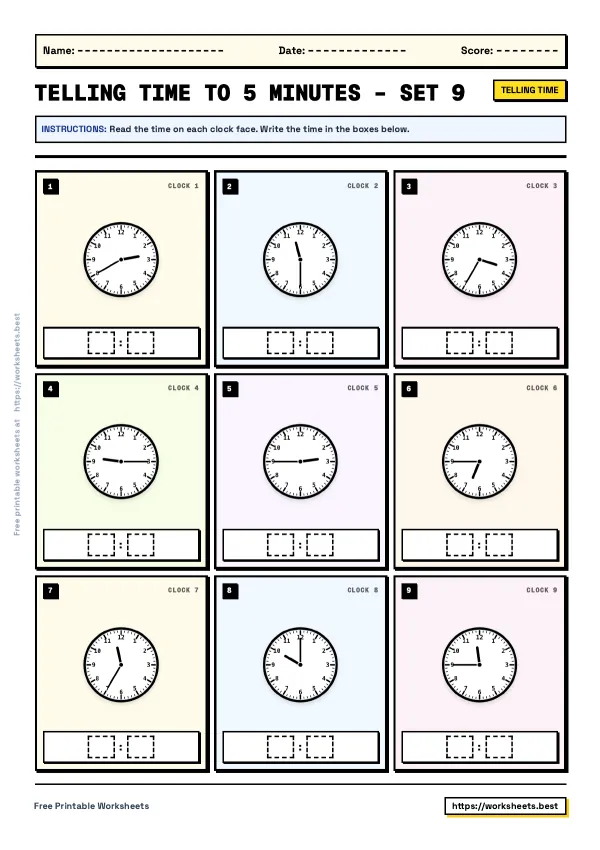
Telling Time to 5 Minutes – Set 9
2nd–3rd GradeClock Reading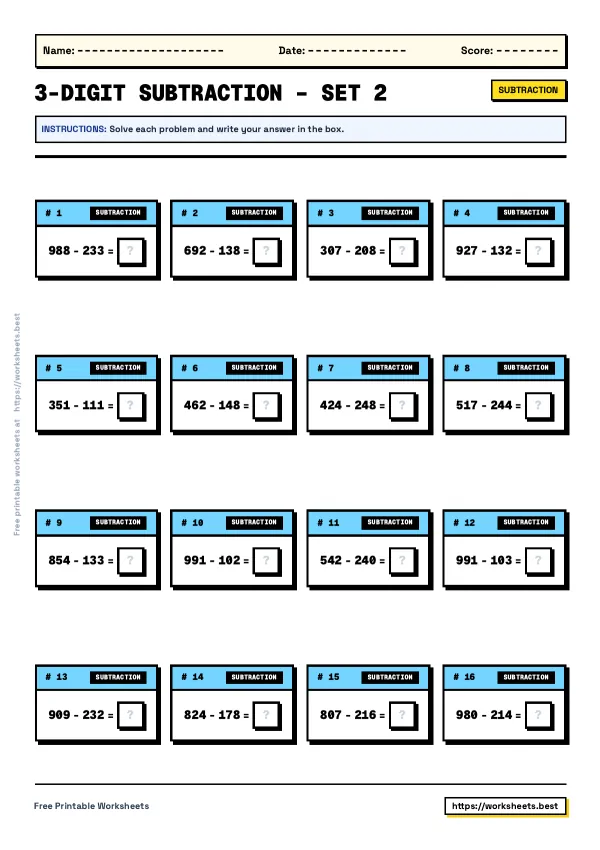
3-Digit Subtraction – Set 2
2nd–3rd GradeMath Drills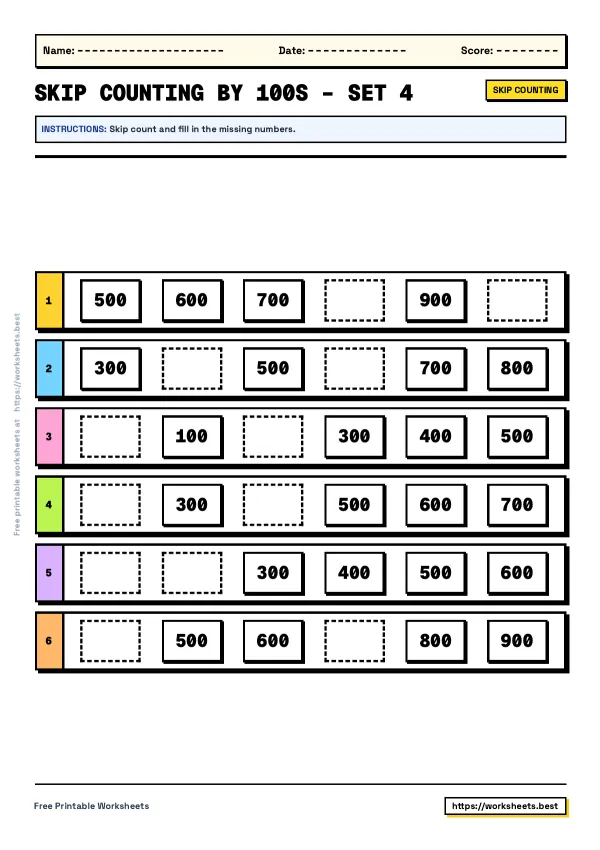
Skip Counting by 100s – Set 4
2nd GradeNumber Sense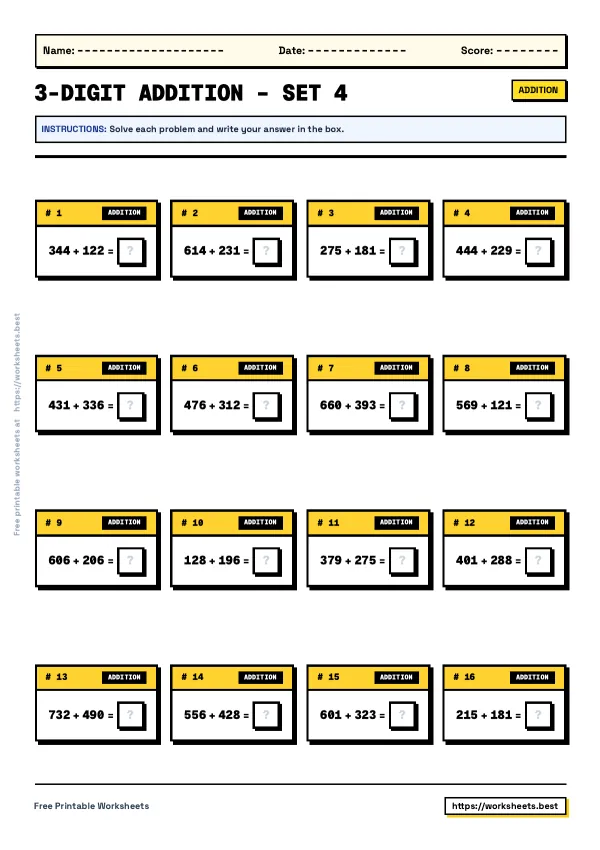
3-Digit Addition – Set 4
2nd–3rd GradeMath Drills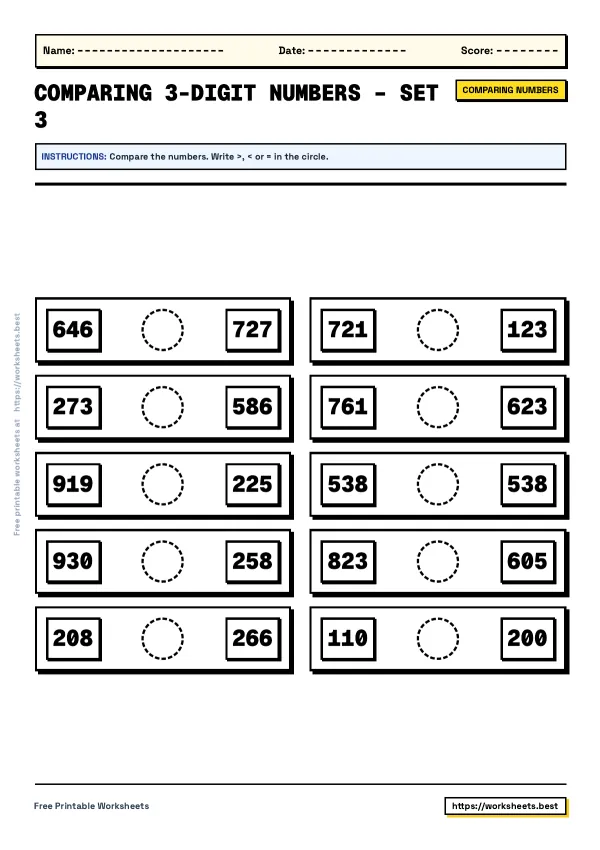
Comparing 3-Digit Numbers – Set 3
2nd GradeNumber SenseTelling Time to the Quarter Hour – Set 1
2nd GradeClock Reading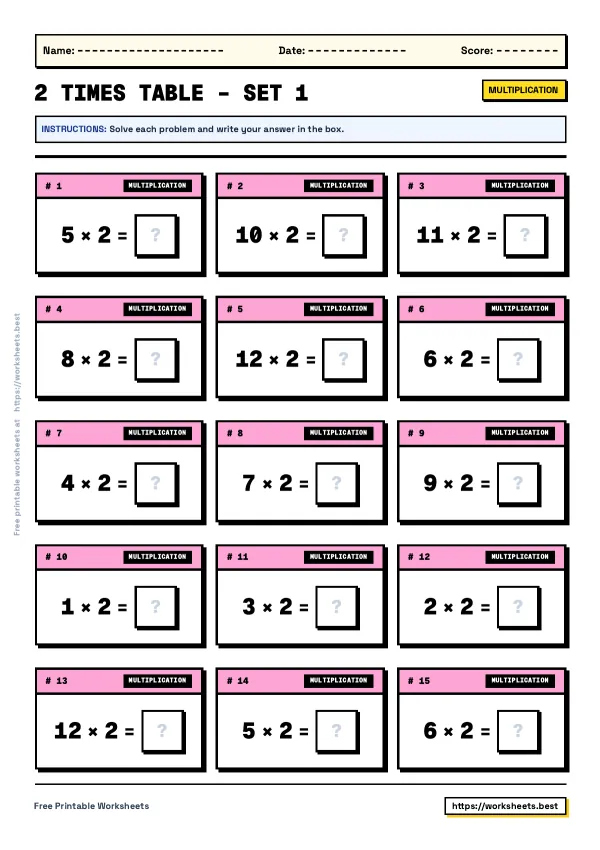
2 Times Table – Set 1
2nd–3rd GradeMath Drills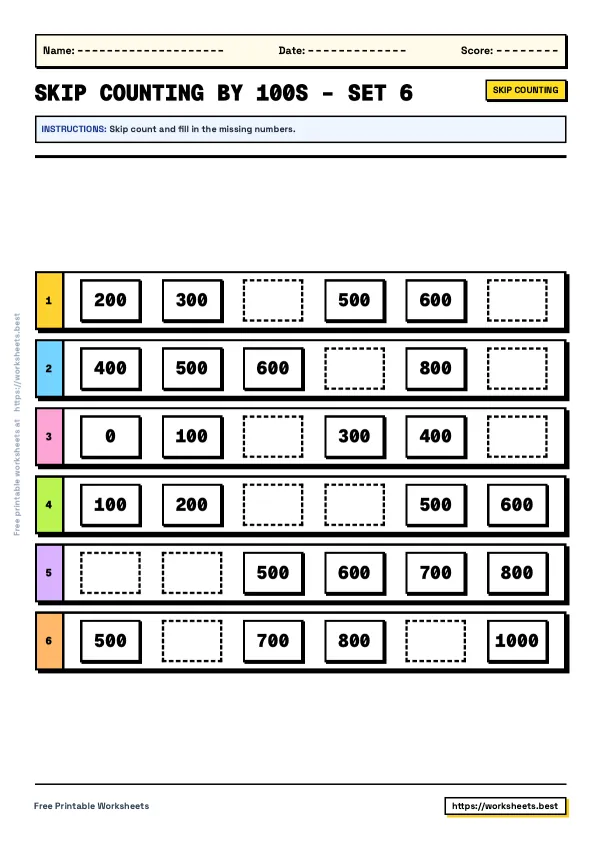
Skip Counting by 100s – Set 6
2nd GradeNumber Sense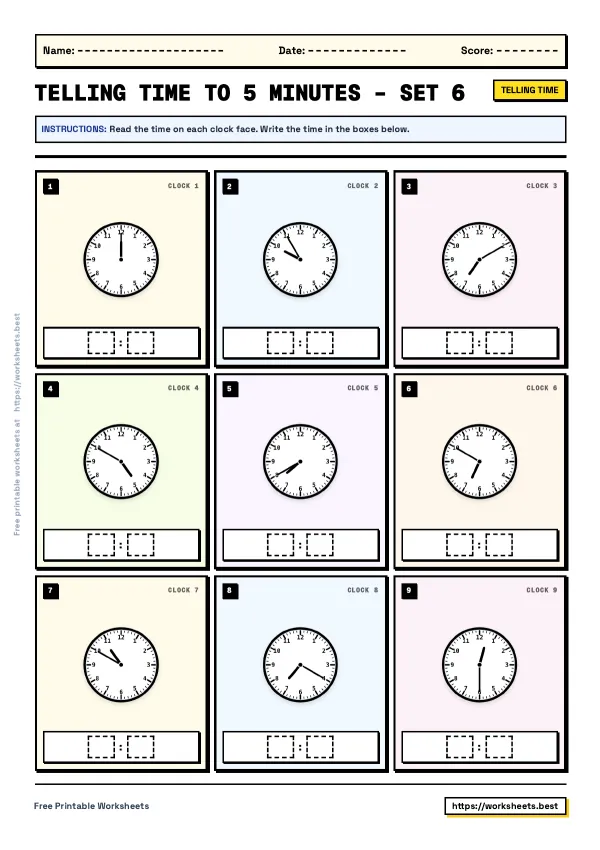
Telling Time to 5 Minutes – Set 6
2nd–3rd GradeClock Reading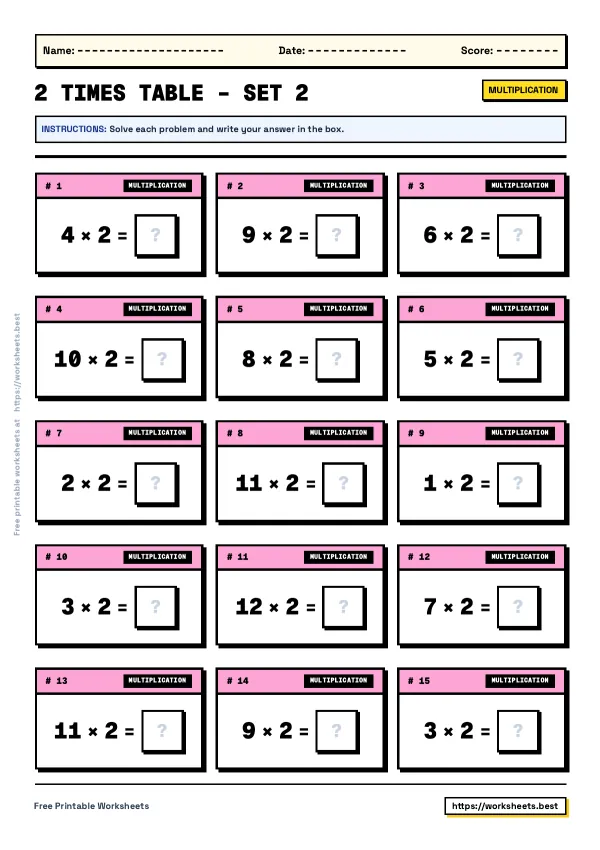
2 Times Table – Set 2
2nd–3rd GradeMath Drills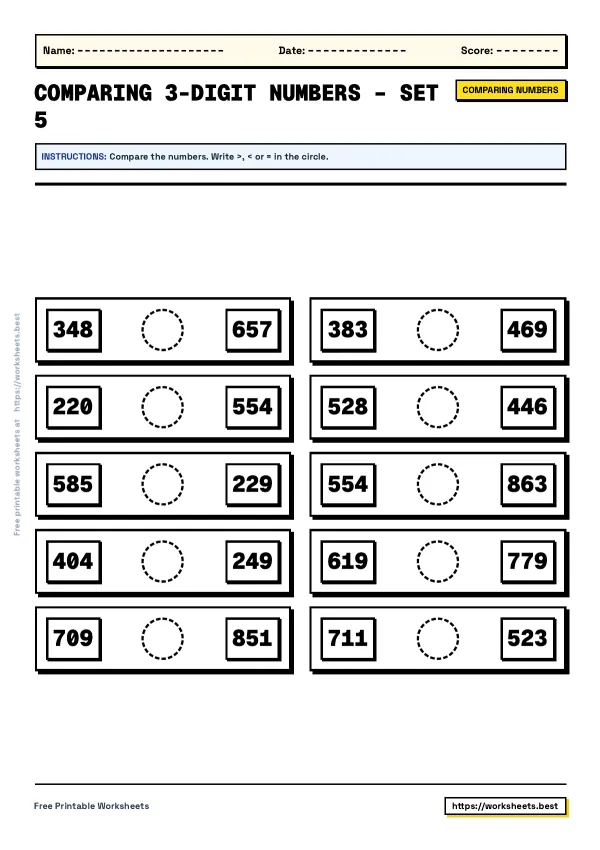
Comparing 3-Digit Numbers – Set 5
2nd GradeNumber Sense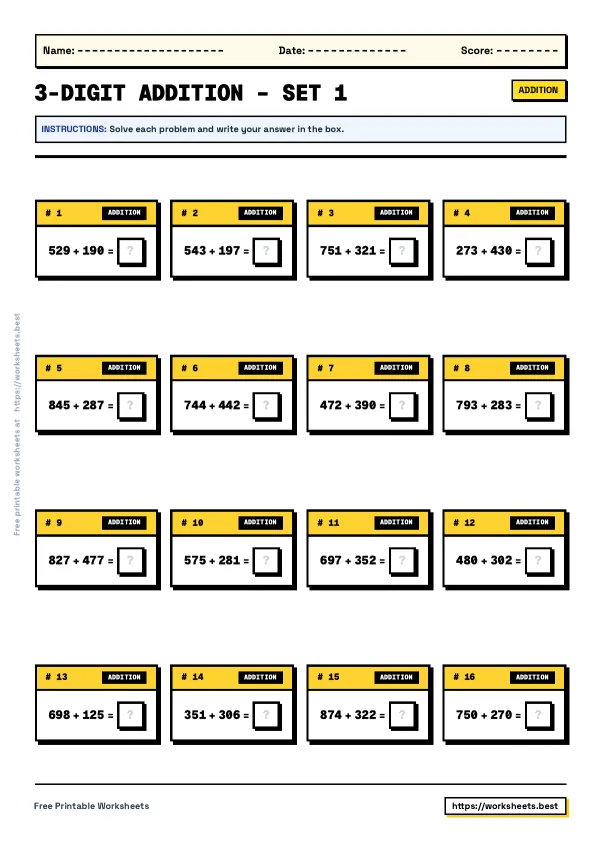
3-Digit Addition – Set 1
2nd–3rd GradeMath Drills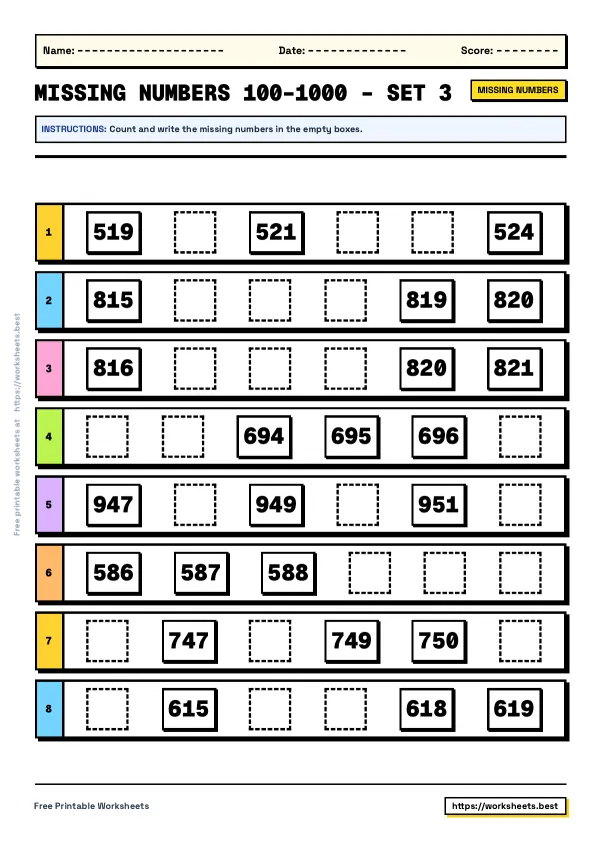
Missing Numbers 100–1000 – Set 3
2nd GradeNumber Sense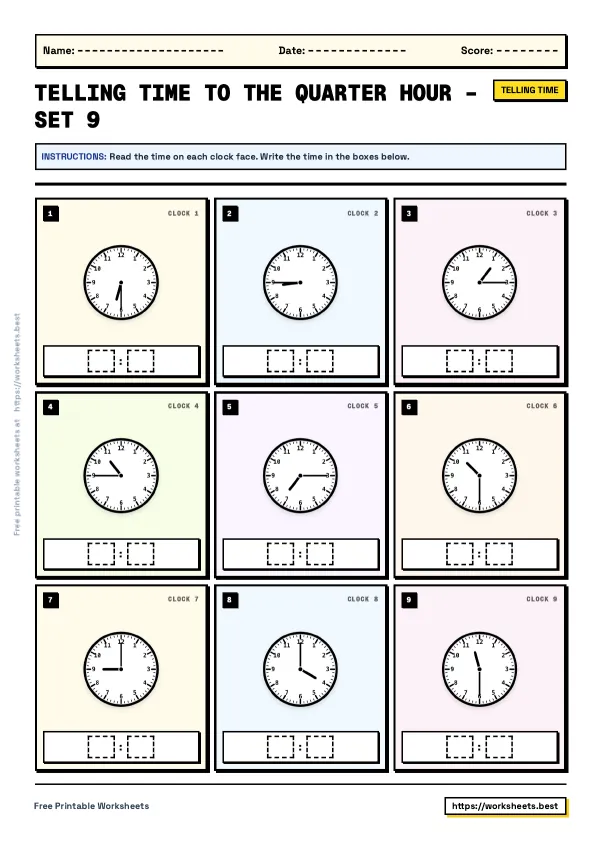
Telling Time to the Quarter Hour – Set 9
2nd GradeClock Reading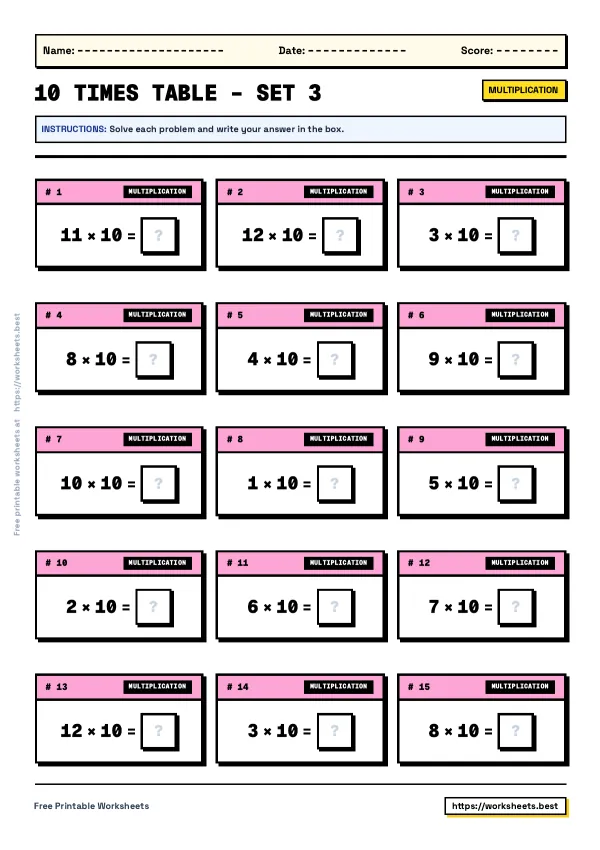
10 Times Table – Set 3
2nd–3rd GradeMath Drills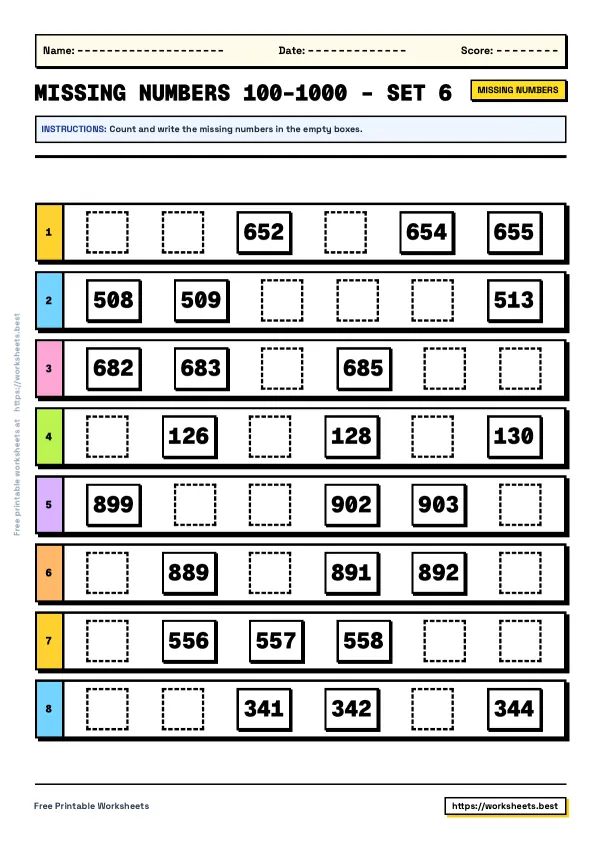
Missing Numbers 100–1000 – Set 6
2nd GradeNumber Sense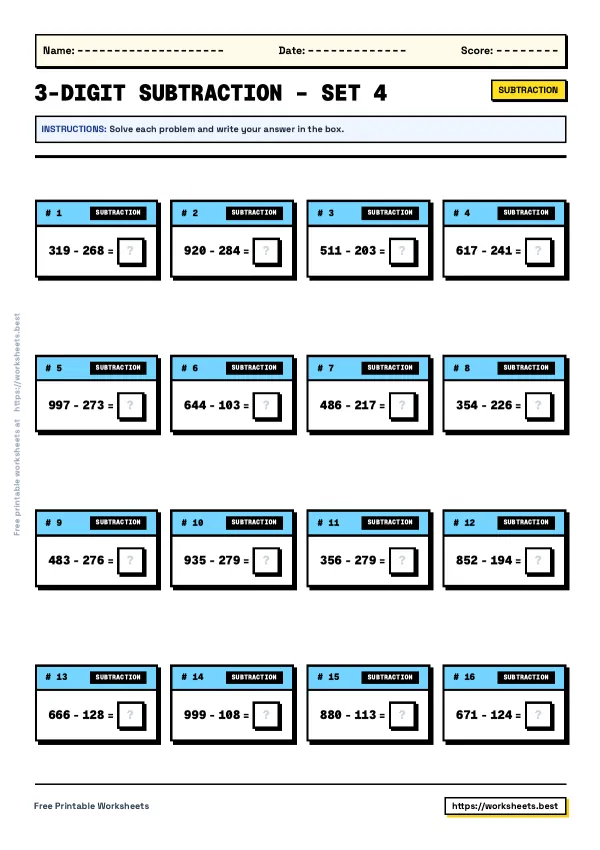
3-Digit Subtraction – Set 4
2nd–3rd GradeMath DrillsTelling Time to 5 Minutes – Set 1
2nd–3rd GradeClock Reading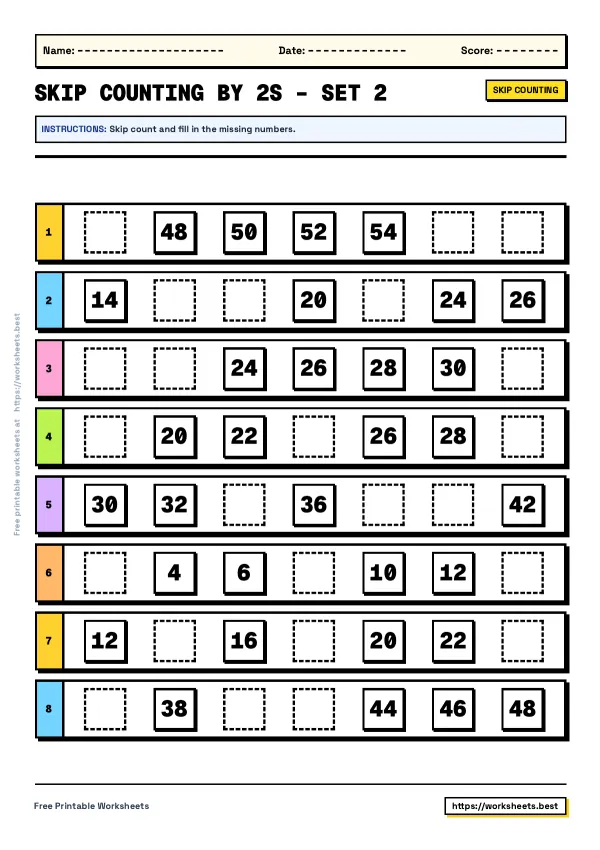
Skip Counting by 2s – Set 2
1st–2nd GradeNumber Sense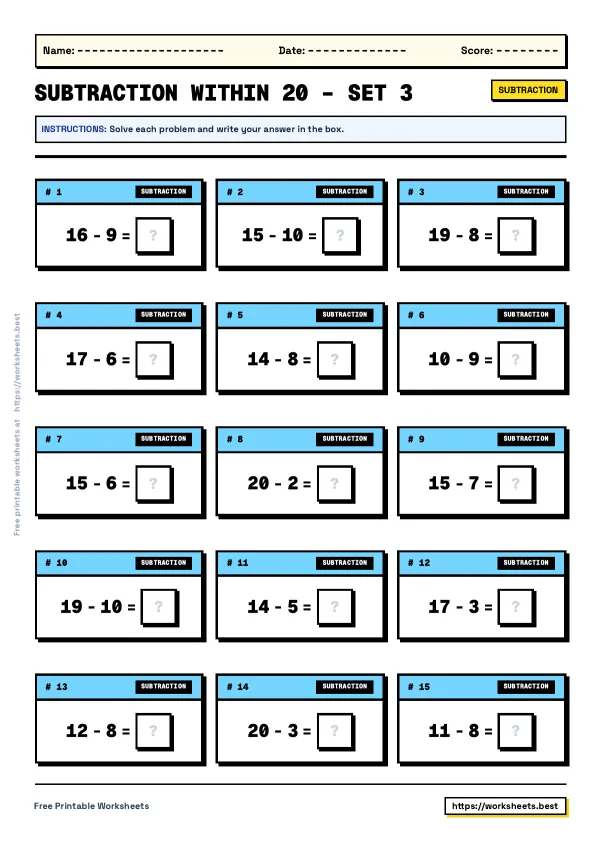
Subtraction Within 20 – Set 3
1st–2nd GradeMath Drills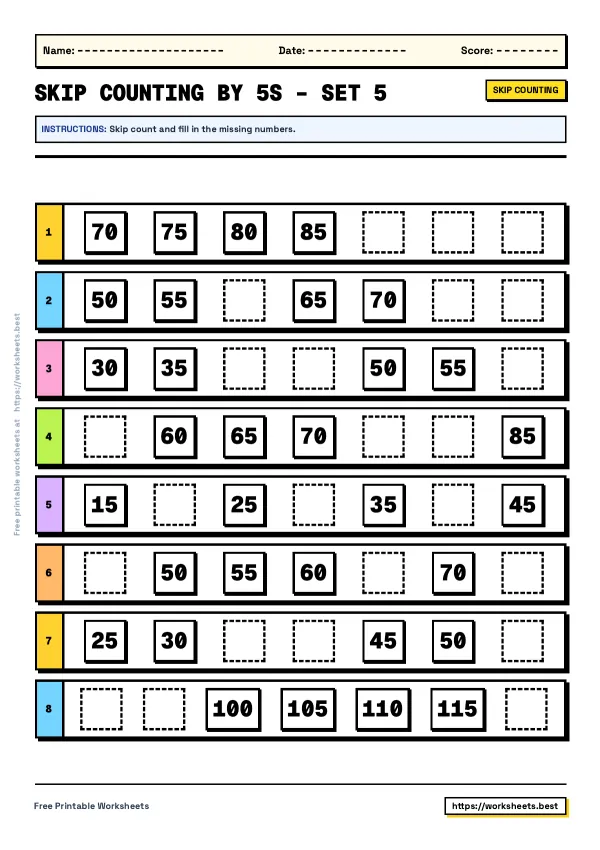
Skip Counting by 5s – Set 5
1st–2nd GradeNumber Sense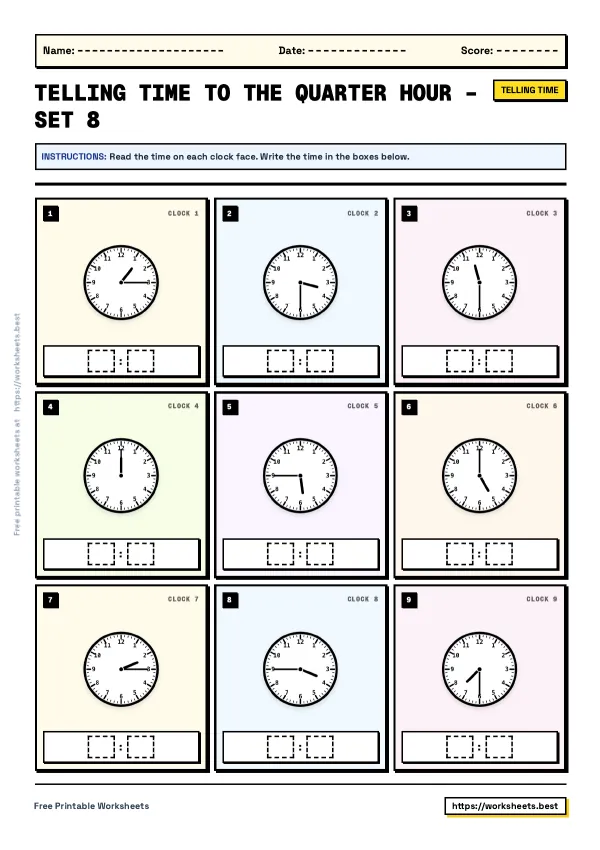
Telling Time to the Quarter Hour – Set 8
2nd GradeClock Reading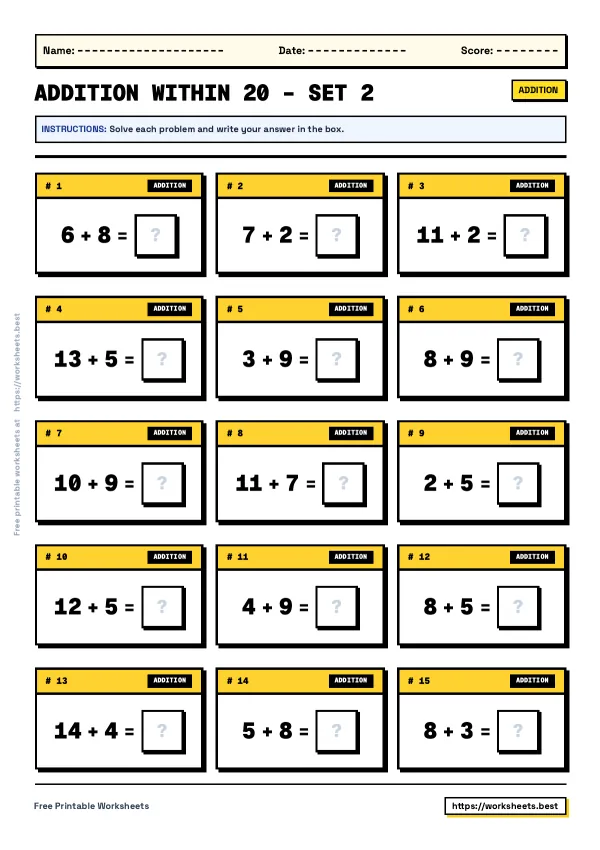
Addition Within 20 – Set 2
1st–2nd GradeMath Drills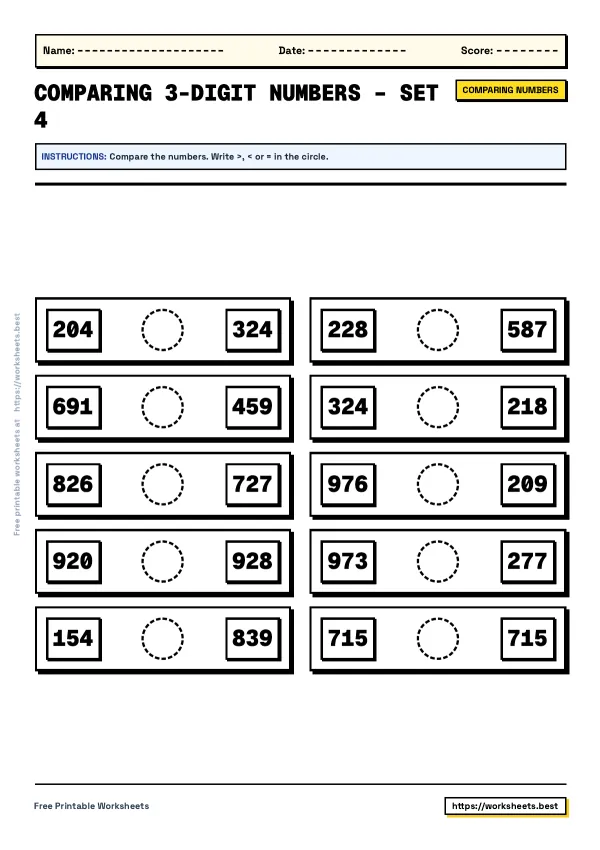
Comparing 3-Digit Numbers – Set 4
2nd GradeNumber Sense
dig deeper
More 2nd Grade Math worksheets
from teachers
Tips for parents and teachers
- For clock reading, cover the minute hand and ask your child to name the hour first, then count the minute marks by fives before saying the full time aloud.
- For skip counting, use a hundred chart and have children point to each jump by 2s, 5s, or 100s before they write the next number on the page.
- When comparing three-digit numbers, ask children to underline the hundreds digit, then the tens digit, and explain which place value decides the answer.
- Keep addition and subtraction drills short: a minute of spoken math facts, then a few written problems, with accuracy valued over speed.
Questions parents ask
What math skills should a 2nd grader practice at home?
Number sense, comparing numbers, skip counting, telling time, addition, subtraction, and multiplication are all useful. A short session with math facts, a clock, or a number chart can fit easily into a weekday.
How can I help my child learn to read an analog clock?
Start with the hour hand, then show how the minute hand counts by fives around the clock face. Practice times to five minutes first, then move on to 15-minute marks.
How do I teach skip counting by 2s, 5s, and 100s?
Use a hundred chart and point to each jump as your child says the pattern aloud. Once the pattern feels steady, let them fill in the missing numbers on a skip-counting page.
What is a simple way to explain comparing 3-digit numbers?
Compare the hundreds digits first; if they match, move to the tens, then the ones. Have your child say which number is greater and why before writing the symbol.
Should 2nd graders try multiplication?
Multiplication can be introduced through equal groups and repeated addition alongside addition and subtraction practice. Keep it visual and brief, and let accuracy with smaller facts come first.