Word Tracing Worksheets
A pencil, a starting dot and a short word are all it takes to begin with word tracing worksheets. Children in Pre-K, kindergarten and 1st grade trace whole words letter by letter, which builds fine motor skills, handwriting, spelling and word recognition at the same time. The pages cover familiar themes such as animals, vegetables, fruits, shapes, people, birds, body parts and clothes, so a child can practice words that already mean something to them. Dozens of worksheets are ready to print, and the collection keeps growing.
Read more +
Each page uses a tracing format: a dotted or outlined word to follow, with room to write it again underneath. One set follows shape names, and another follows bird names, so the words stay short and readable for small hands. Other themes include farm animals, body parts, bugs and clothes, and short words such as apple, bear, bee and arm turn up across the sets.
At home, print a page and sit beside your child for five or ten minutes: say the word, trace it together, then let them copy it alone. In class, the same sheets fit a literacy center, a morning warm-up or a quiet task for children who finish early. Start with themes your child already knows, such as fruit or farm animals, and add new ones as tracing becomes easier.
start with these
Featured worksheets
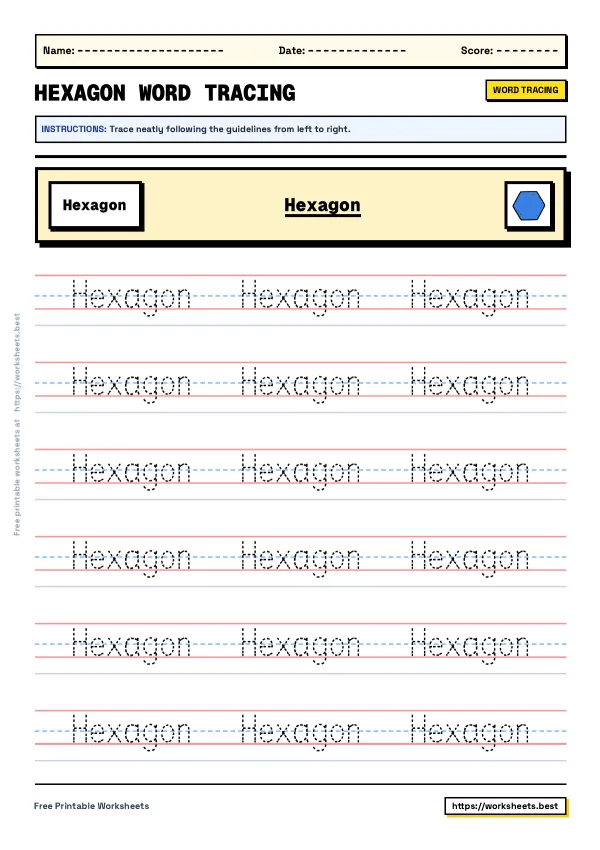
Hexagon Word Tracing
K–1st GradeTracing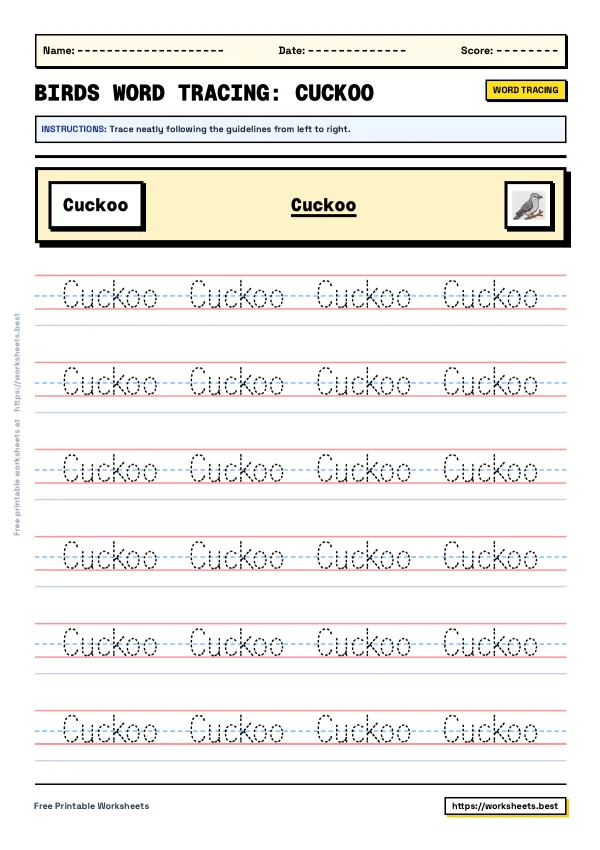
Birds Word Tracing: Cuckoo
K–1st GradeTracing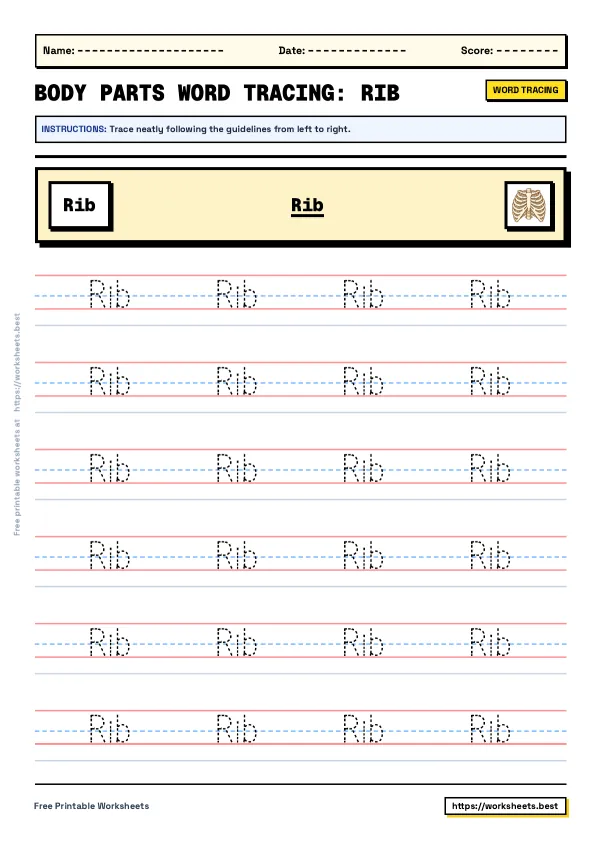
Body Parts Word Tracing: Rib
K–1st GradeTracing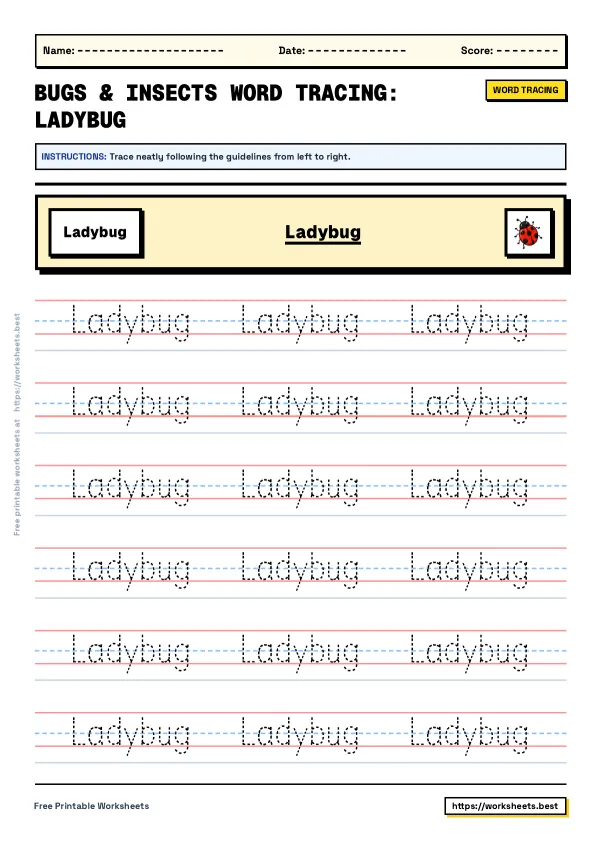
Bugs & Insects Word Tracing: Ladybug
K–1st GradeTracing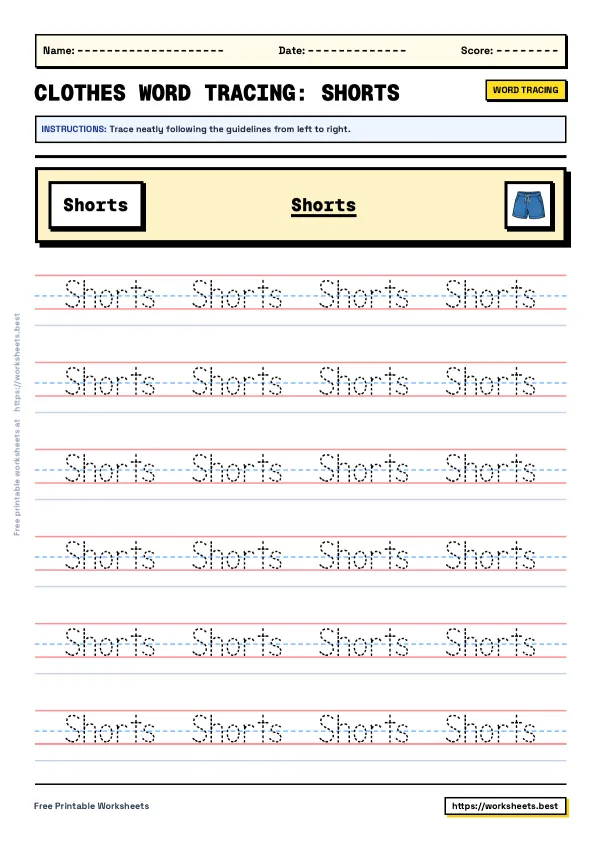
Clothes Word Tracing: Shorts
K–1st GradeTracing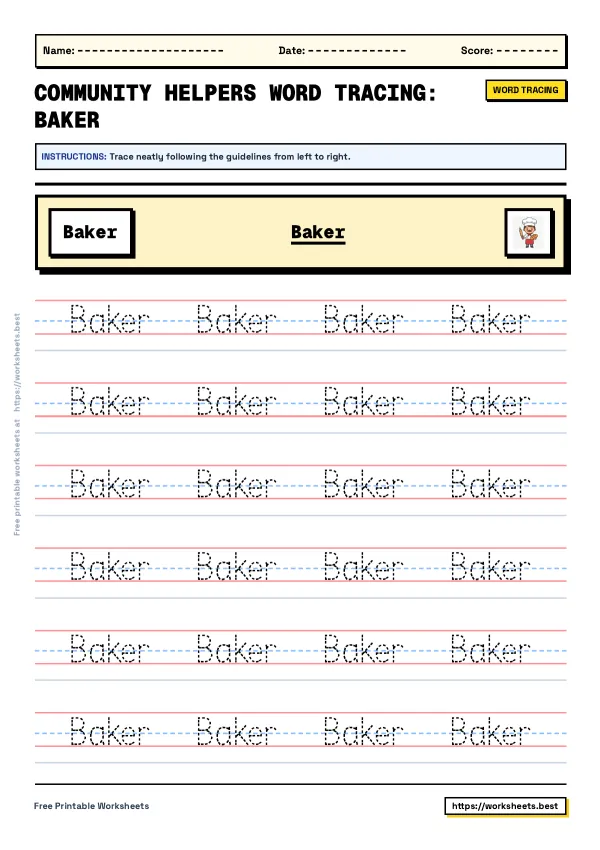
Community Helpers Word Tracing: Baker
K–1st GradeTracing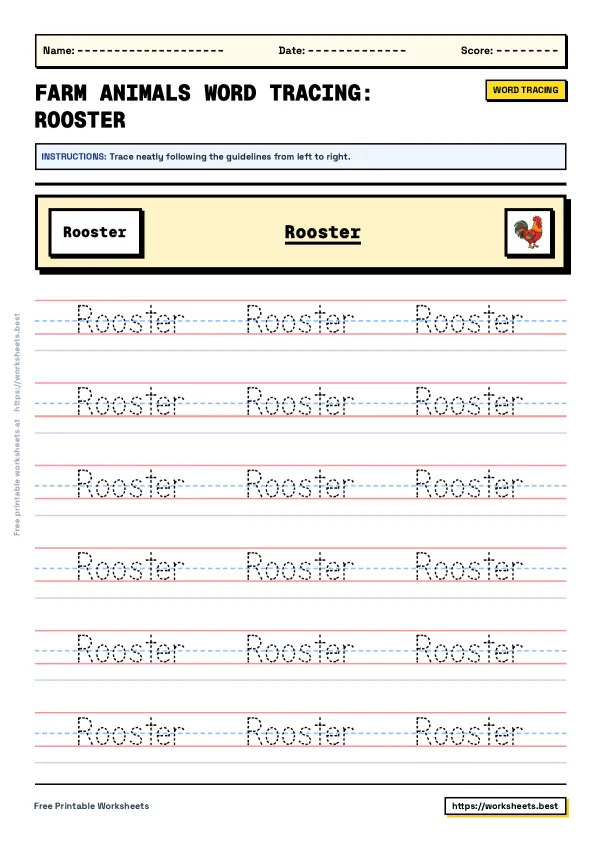
Farm Animals Word Tracing: Rooster
K–1st GradeTracing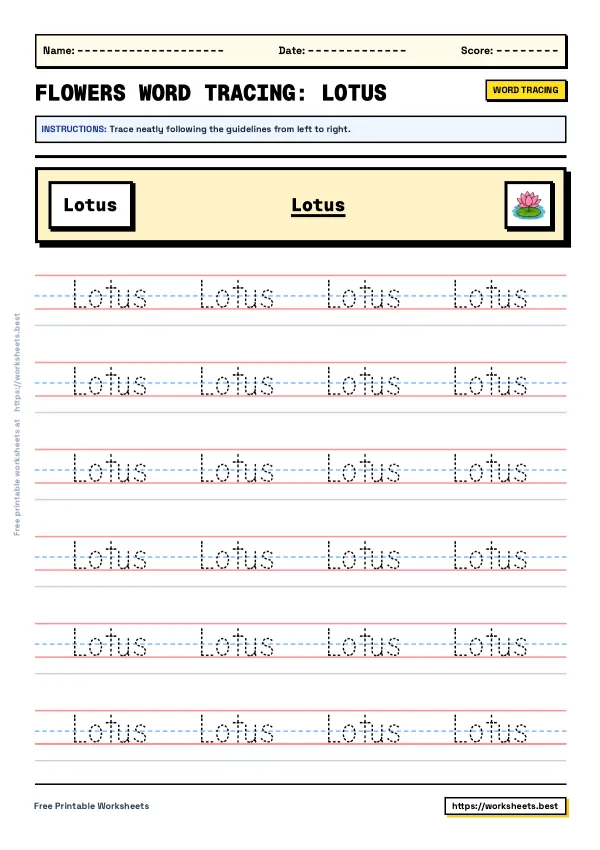
Flowers Word Tracing: Lotus
K–1st GradeTracing
every sheet
All Word Tracing worksheets
Farm Animals Word Tracing: Rooster
K–1st GradeTracing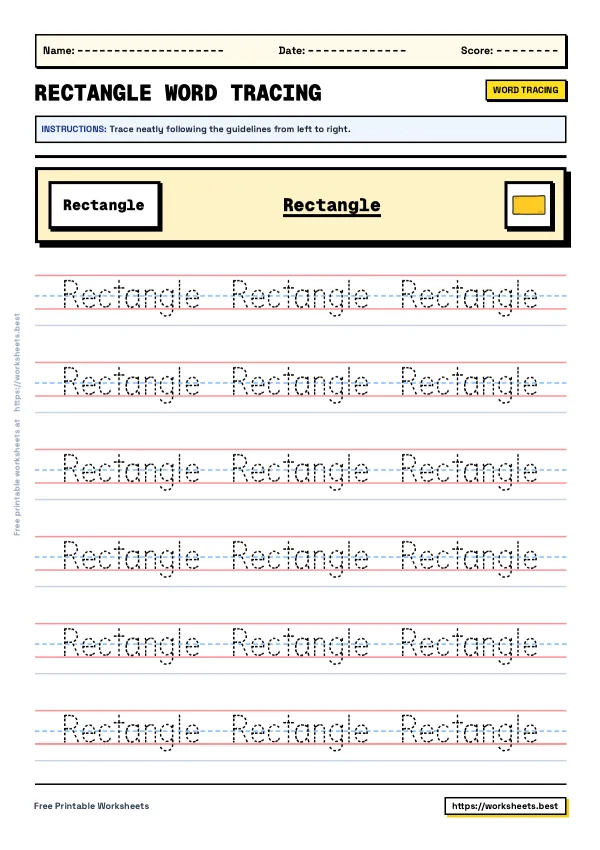
Rectangle Word Tracing
K–1st GradeTracing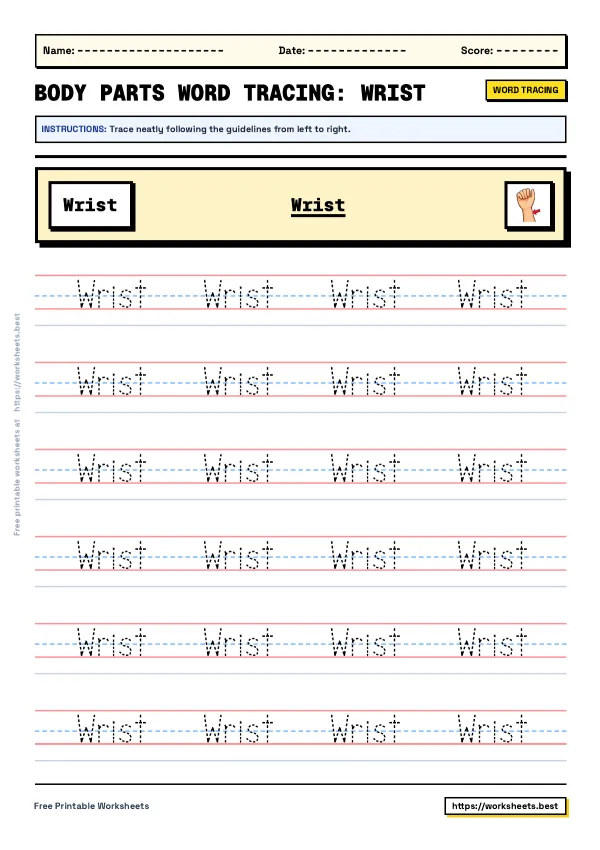
Body Parts Word Tracing: Wrist
K–1st GradeTracing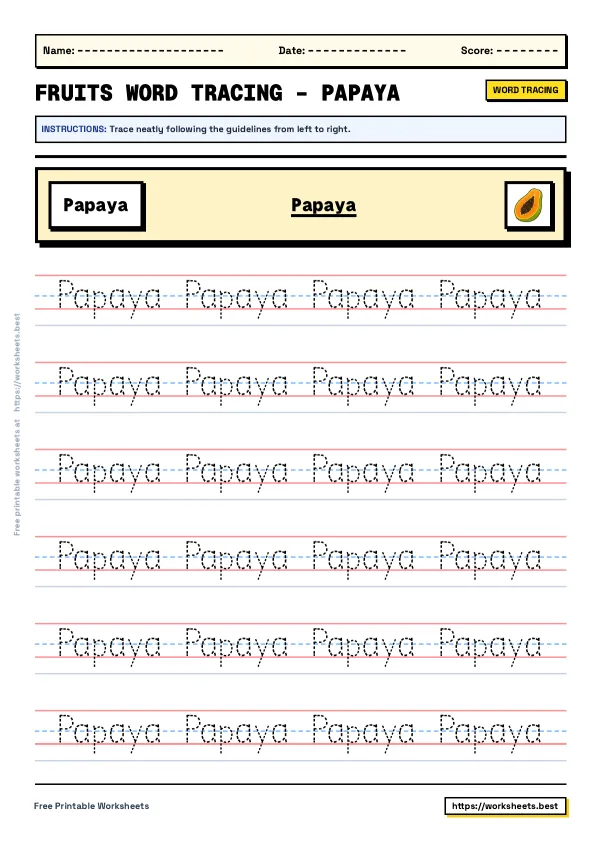
Fruits Word Tracing – Papaya
1st GradeTracing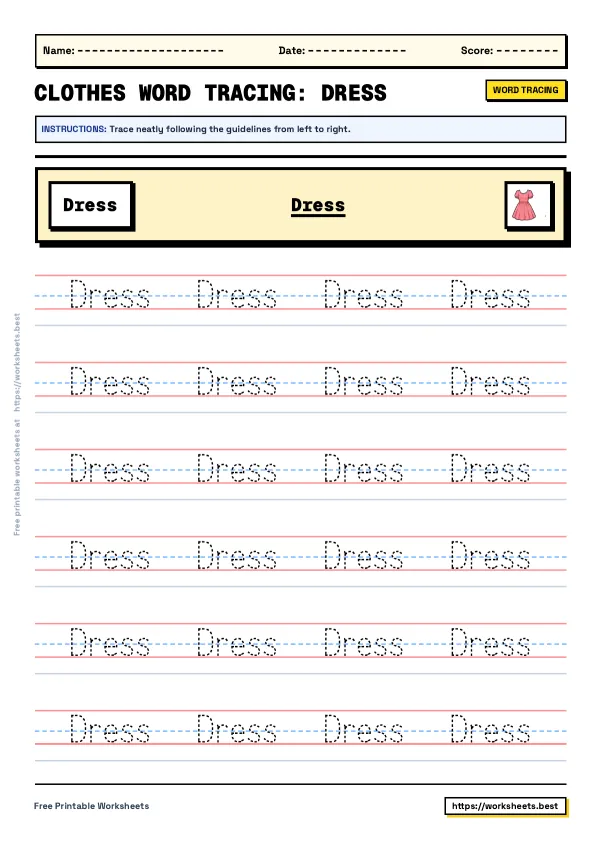
Clothes Word Tracing: Dress
K–1st GradeTracing
Square Word Tracing
K–1st GradeTracing
Grandpa Tracing
1st GradeTracing
Fruit Word Tracing: Fig
Pre-KTracing
Community Helpers Word Tracing: Vet
K–1st GradeTracing
Weather Word Tracing: Sunny
K–1st GradeTracingHexagon Word Tracing
K–1st GradeTracing
Word Tracing: Hen
Pre-KTracing
Weather Word Tracing: Cloud
K–1st GradeTracing
Cherry Tracing
KindergartenTracing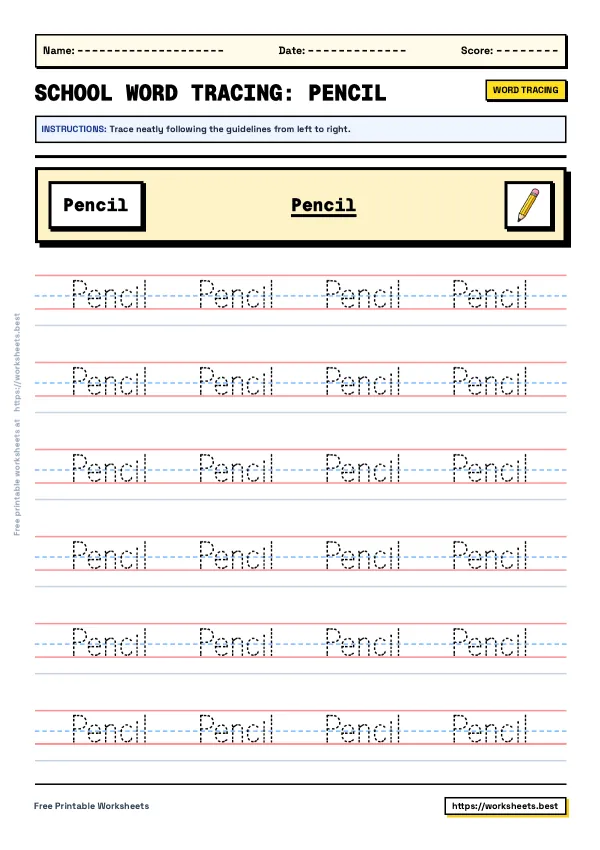
School Word Tracing: Pencil
K–1st GradeTracing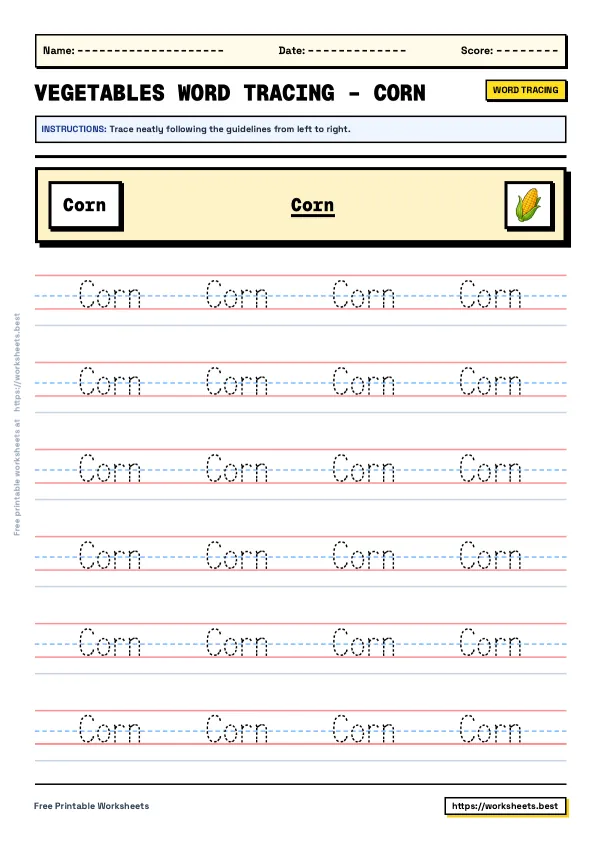
Vegetables Word Tracing – Corn
Pre-K–KTracing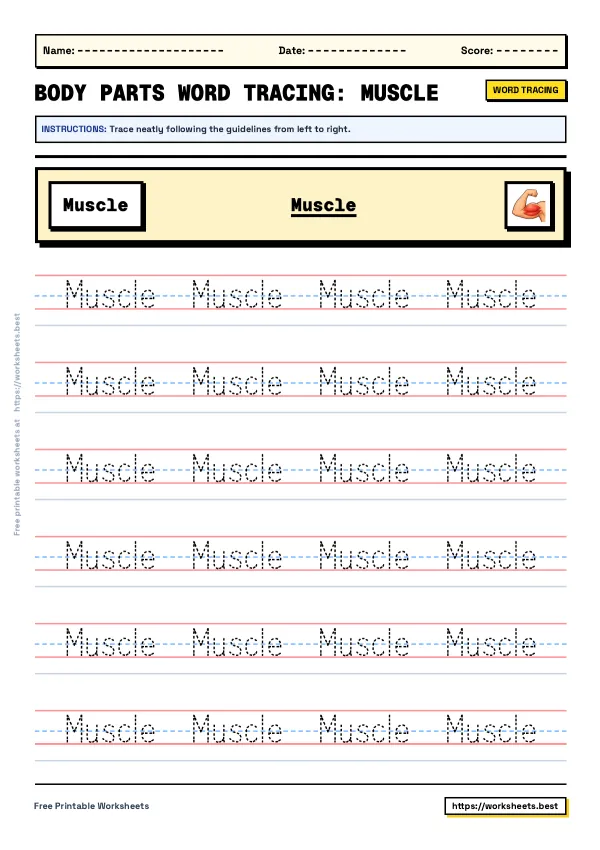
Body Parts Word Tracing: Muscle
K–1st GradeTracing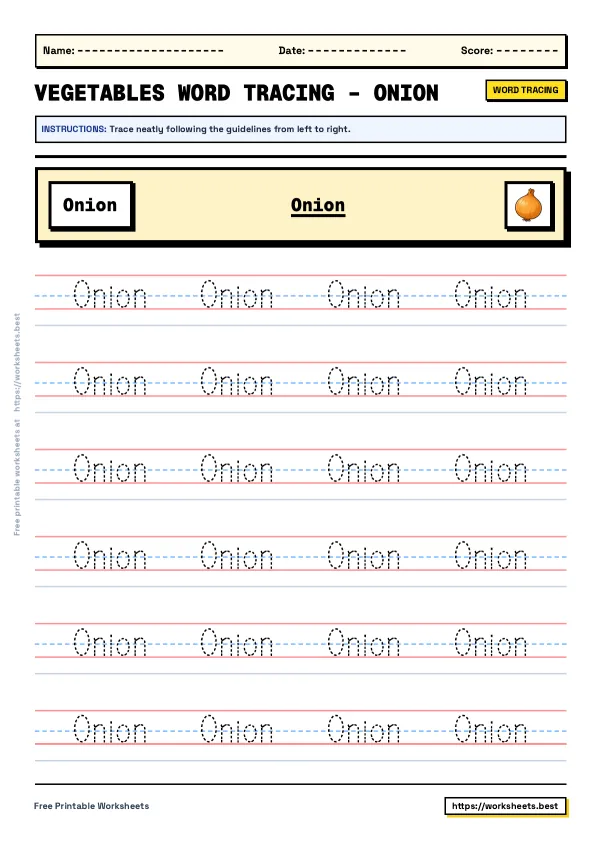
Vegetables Word Tracing – Onion
Pre-K–KTracing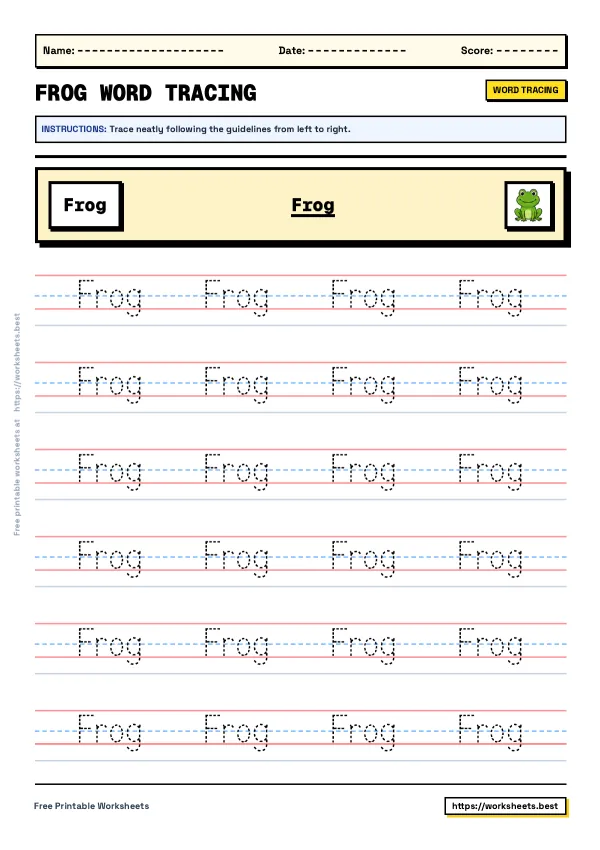
Frog Word Tracing
KindergartenTracing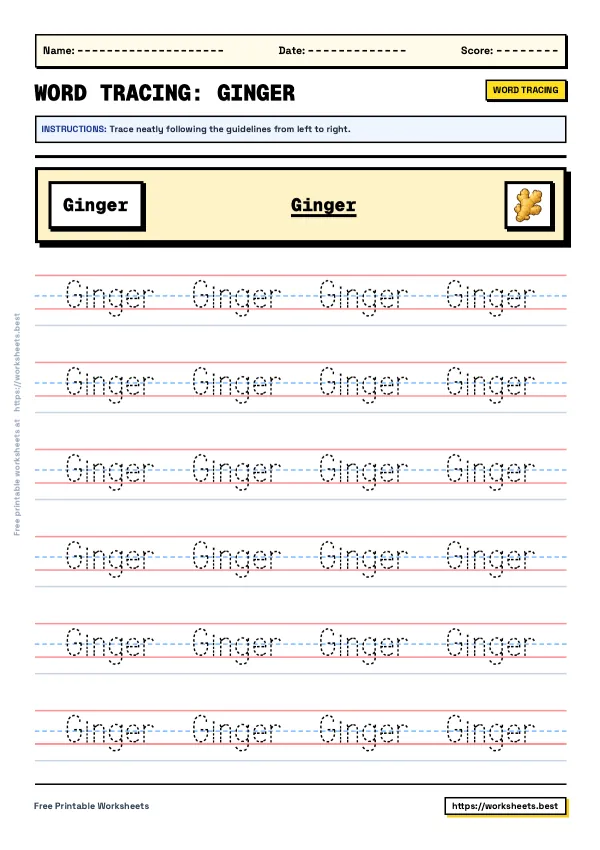
Word Tracing: Ginger
1st GradeTracing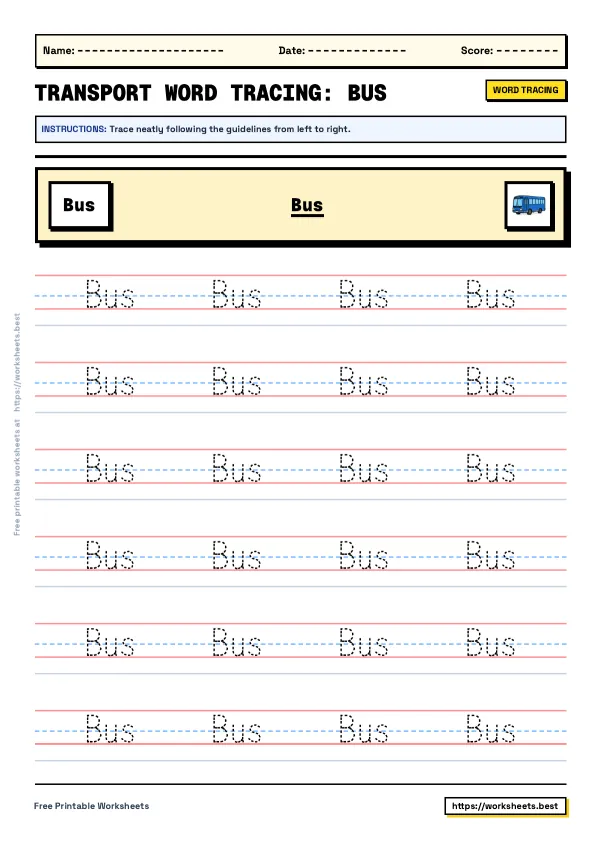
Transport Word Tracing: Bus
K–1st GradeTracing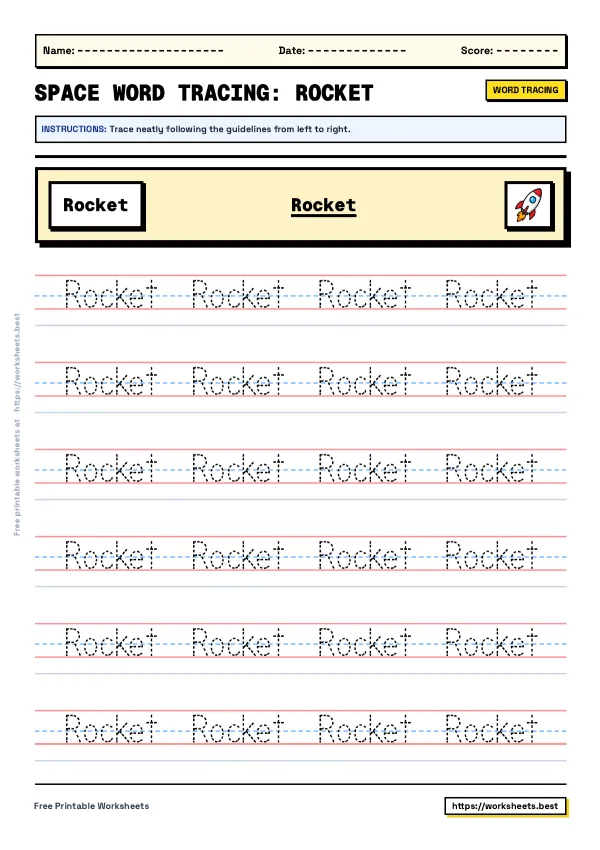
Space Word Tracing: Rocket
K–1st GradeTracing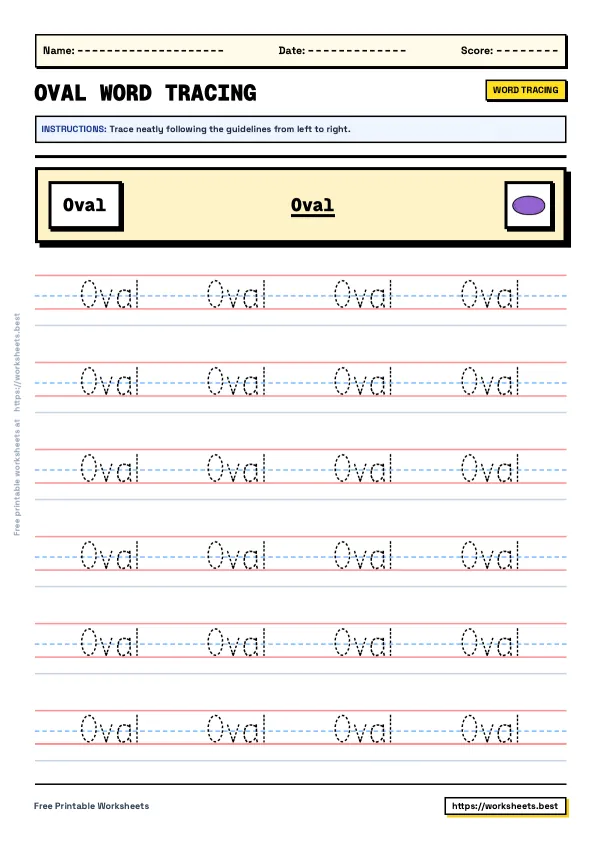
Oval Word Tracing
K–1st GradeTracing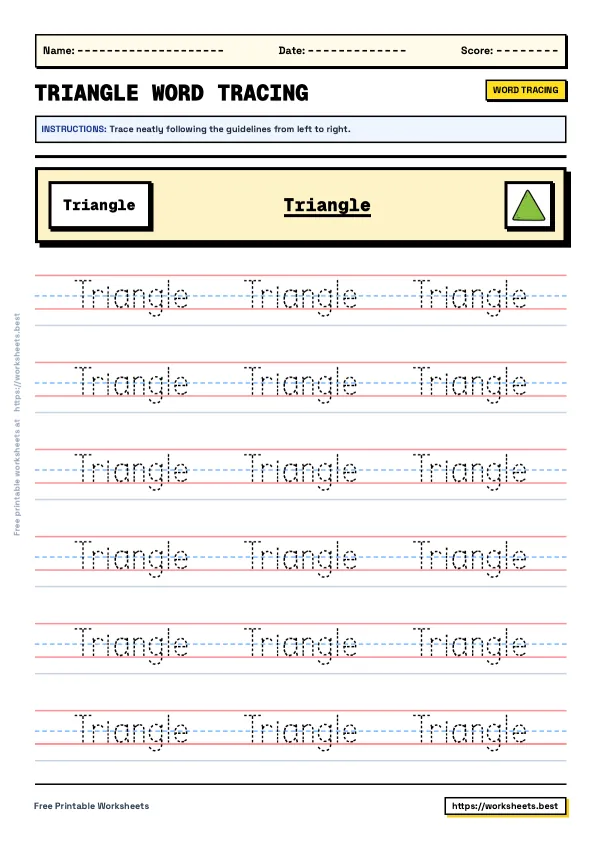
Triangle Word Tracing
K–1st GradeTracing
dig deeper
More Word Tracing worksheets
from teachers
Tips for parents and teachers
- Trace the word with a finger first, then with a pencil. Saying the word aloud before tracing helps children connect the letters they see to the sounds they hear.
- Keep sessions short: five to ten minutes is plenty for Pre-K and kindergarten hands, and stopping while the tracing still looks careful builds better habits than filling a whole page.
- Watch the grip. Short, thick pencils and crayons are easier for small fingers, and a child who curls their fingers around the shaft may find a triangular grip helpful.
- Move from tracing to copying once a word feels easy. Fold the page or cover the model and ask the child to write the word from memory, which strengthens spelling and word recognition.
Questions parents ask
What age should a child start tracing words?
Word tracing usually starts in Pre-K, around age four, when children can hold a pencil and follow a line. Kindergarten and 1st grade children keep using it to firm up letter formation and spelling.
Should my child trace with a pencil or a crayon?
Either works. Crayons and short, thick pencils suit Pre-K hands, while a standard pencil fits kindergarten and 1st grade children who are working on pressure and control.
My child writes letters backwards. Should I worry?
Letter reversals are common in Pre-K, kindergarten and even early 1st grade. Tracing a word from left to right while saying it aloud gives children a steady model to compare their writing against.
Does tracing words help with reading?
Yes. Tracing a word while saying it aloud supports word recognition, because children see the letters, feel the shape of the word and hear it at the same time.
How long should a tracing session last?
Five to ten minutes of careful tracing is enough for young children, since fine motor muscles tire quickly. A short session most days works better than one long one.