Sea Animal Tracing Worksheets
Tracing sea animal words gives young children a calm way to practice letter shapes and spelling. Our sea animal tracing worksheets offer a small set of pages for kindergarten and 1st grade. Each page features a sea animal word printed in dotted letters, and children trace over the letters to build fine motor skills and handwriting confidence. They also practice word recognition by reading the word before and after tracing. The set includes a word tracing worksheet where children trace names like coral, squid, tuna, and walrus.
Read more +
These tracing sheets are designed for children in kindergarten and 1st grade, roughly ages 5 to 7. The simple format works well at home or in the classroom. At home, you can print a page and let your child trace while you say the word aloud. In class, teachers can use them as a quiet center activity, morning work, or extra practice for students who need help with handwriting. Because the words are sea animal names, children also build vocabulary and spelling as they trace.
start with these
Featured worksheets
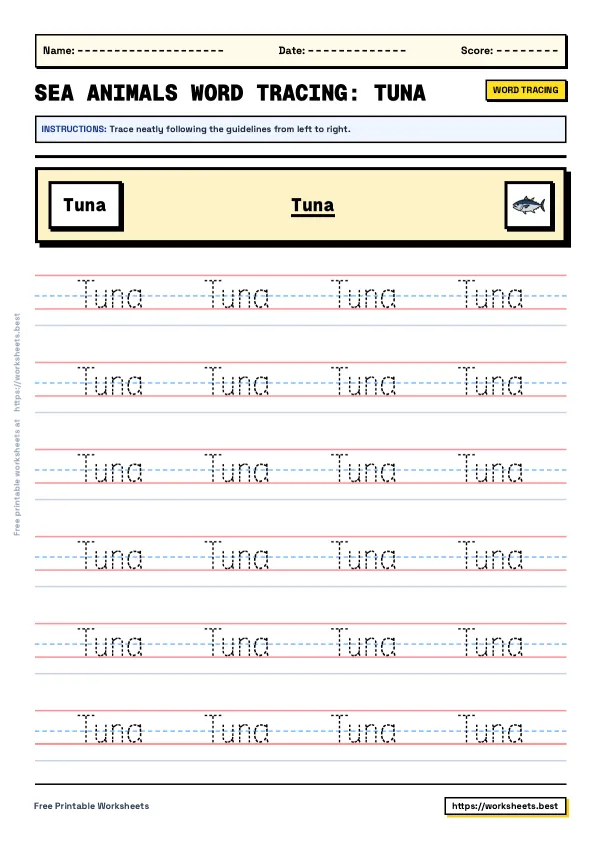
Sea Animals Word Tracing: Tuna
K–1st GradeTracing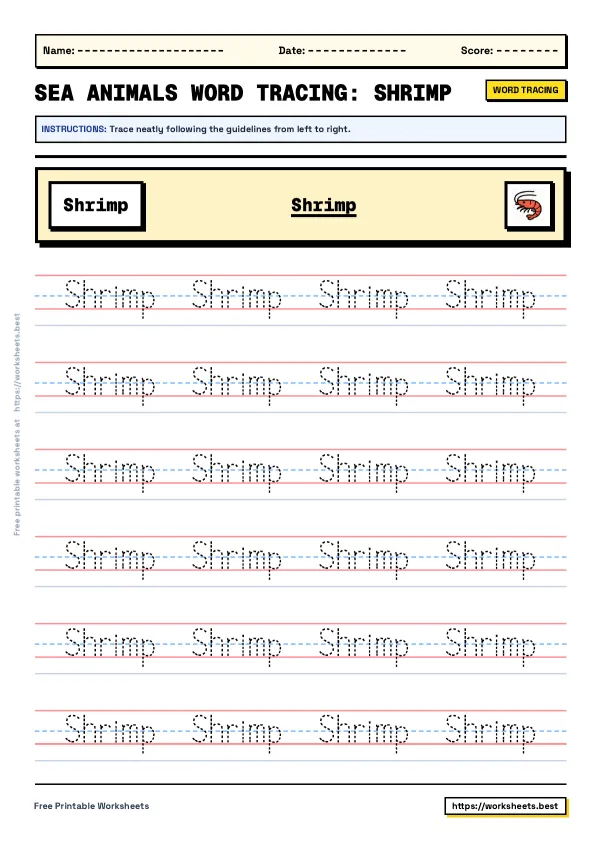
Sea Animals Word Tracing: Shrimp
K–1st GradeTracing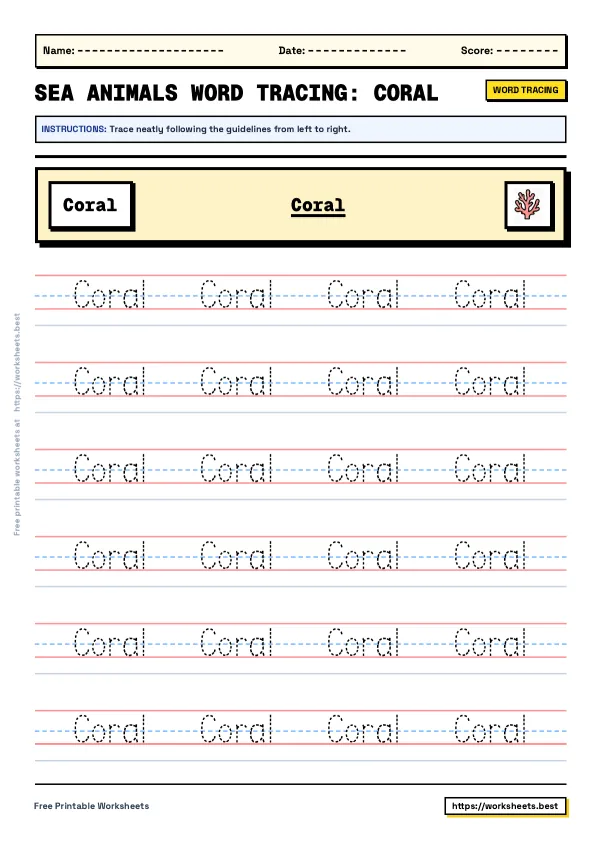
Sea Animals Word Tracing: Coral
K–1st GradeTracing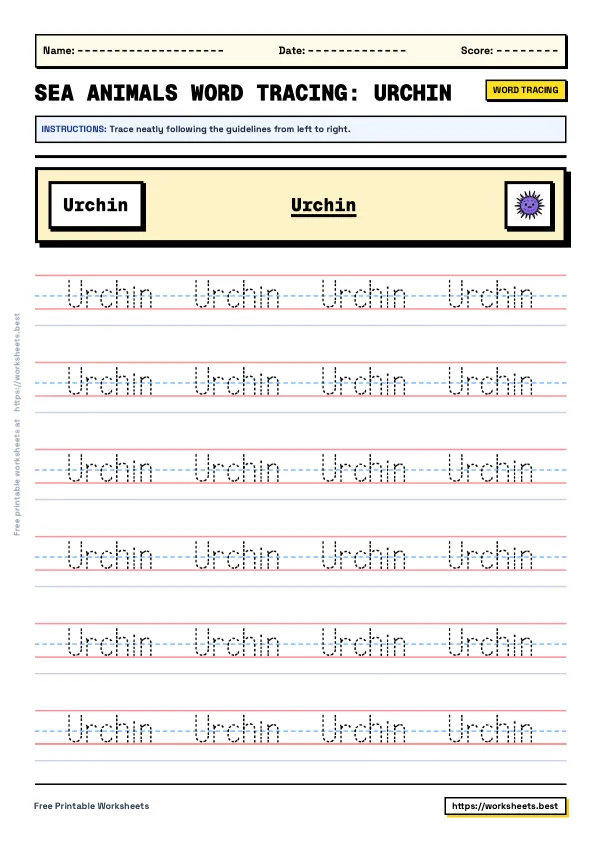
Sea Animals Word Tracing: Urchin
K–1st GradeTracing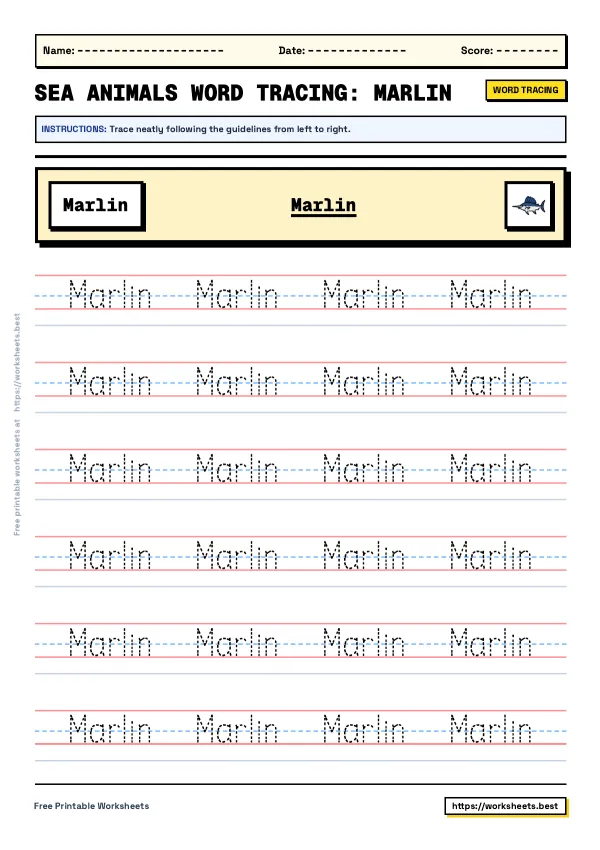
Sea Animals Word Tracing: Marlin
K–1st GradeTracing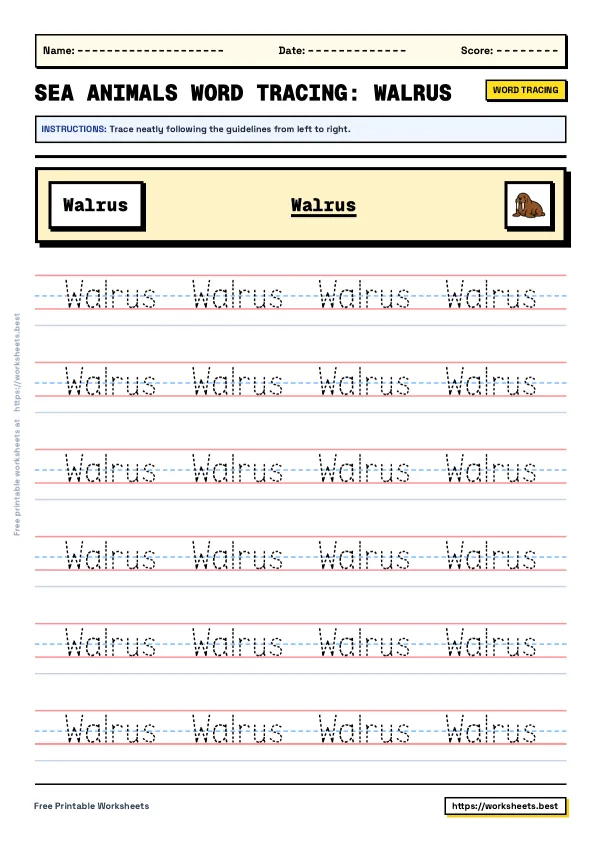
Sea Animals Word Tracing: Walrus
K–1st GradeTracing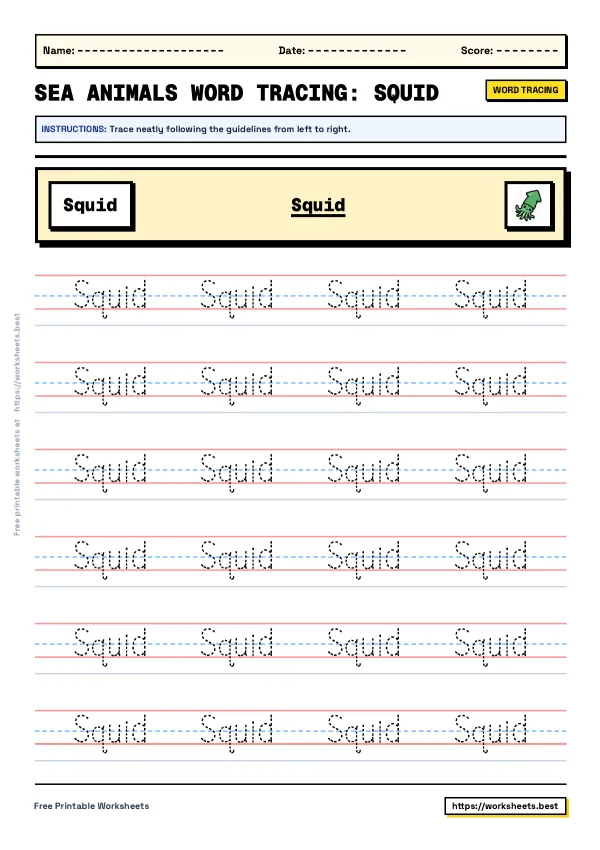
Sea Animals Word Tracing: Squid
K–1st GradeTracing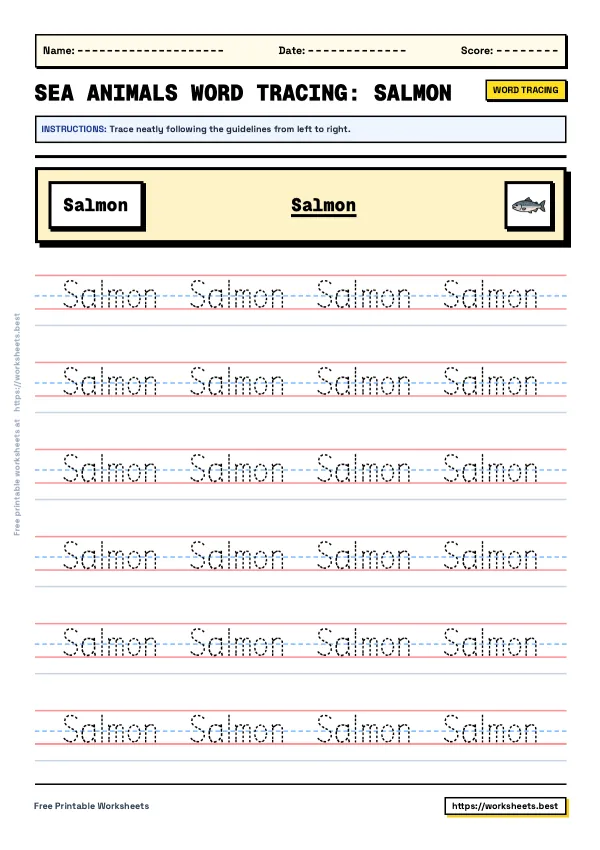
Sea Animals Word Tracing: Salmon
K–1st GradeTracing
every sheet
All Sea Animal Tracing worksheets
Sea Animals Word Tracing: Walrus
K–1st GradeTracingSea Animals Word Tracing: Squid
K–1st GradeTracingSea Animals Word Tracing: Marlin
K–1st GradeTracingSea Animals Word Tracing: Coral
K–1st GradeTracingSea Animals Word Tracing: Tuna
K–1st GradeTracingSea Animals Word Tracing: Salmon
K–1st GradeTracingSea Animals Word Tracing: Urchin
K–1st GradeTracingSea Animals Word Tracing: Shrimp
K–1st GradeTracing
from teachers
Tips for parents and teachers
- Start with a finger trace before using a pencil. Let your child trace the word with a finger first, then with a pencil, so they feel the letter shapes without worrying about grip.
- Say each word aloud as your child traces it. Hearing the word while writing helps link spelling to sound, which builds word recognition and spelling.
- Keep sessions short—five to ten minutes is plenty for kindergarten and 1st grade. A few traced words with full attention beats a whole page done in a hurry.
- Use a thick pencil or crayon for beginners. A chunky tool is easier for small hands to control, and it makes tracing less tiring as fine motor skills develop.
Questions parents ask
What ages are these sea animal tracing worksheets for?
They are made for kindergarten and 1st grade, so typically children ages 5 to 7. Younger children may enjoy tracing with help, and older children can use them for handwriting review.
Do these worksheets help with spelling?
Yes. Tracing the words helps children remember the order of letters and their shapes, which supports spelling. Saying each word aloud as they trace strengthens the connection between letters and sounds.
How can I use these tracing pages in a classroom?
They work well as a quiet center activity, morning work, or a handwriting station. Print a few copies and let children choose a sea animal word to trace, then read it to a partner.
What skills do children practice with these tracing sheets?
Children practice fine motor skills, handwriting, spelling, and word recognition. The tracing format helps them build control and confidence before writing words on their own.