Number Sense Worksheets
Children build a feel for numbers long before they meet multiplication facts, and that ease grows out of repetition. The number sense worksheets here give Pre-K through 3rd grade children steady practice with what a number means, where it sits in the counting sequence, and how it compares with the numbers around it. The collection holds dozens of printables that begin with pictures and small numbers and build toward three-digit work.
Read more +
Most sheets take only a few minutes and need little explanation. One asks a child to write the number that comes just before and just after a number you give, starting within 20 and later within 100. Another shows two groups of pictures to count and compare, up to 10 at first. Later sheets move to written numerals, past 100 and into the hundreds, so the same kind of task grows with the child. Alongside these, children get counting and skip counting practice, and the format stays plain so their effort goes into the thinking.
Print a couple of sheets for a morning warm-up, a math center, or a quiet ten minutes after school. Answer keys are included for all of the worksheets, so a parent or classroom helper can check the work quickly. The tasks line up with early standards such as K.CC.A.2, which makes it easy to match a sheet to what a child is already doing in class.
start with these
Featured worksheets
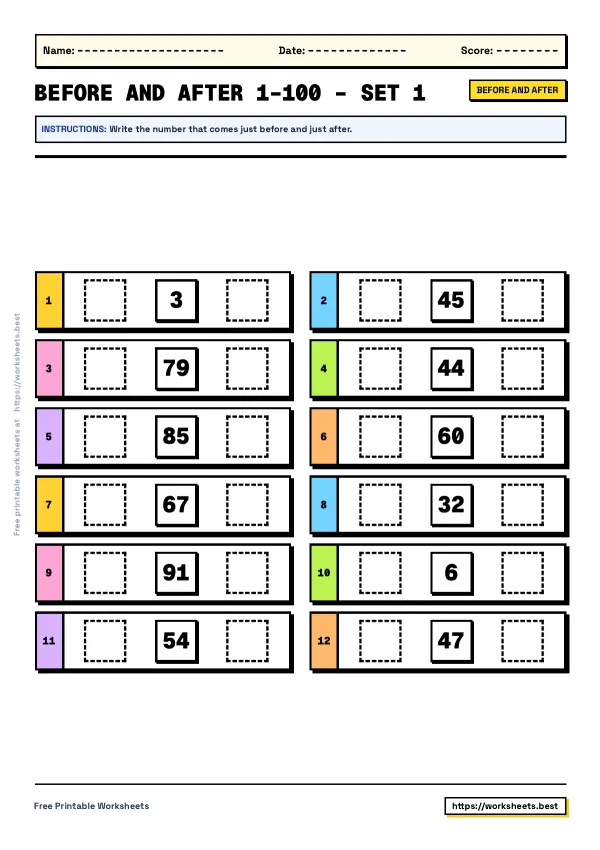
Before and After 1–100 – Set 1
1st GradeNumber Sense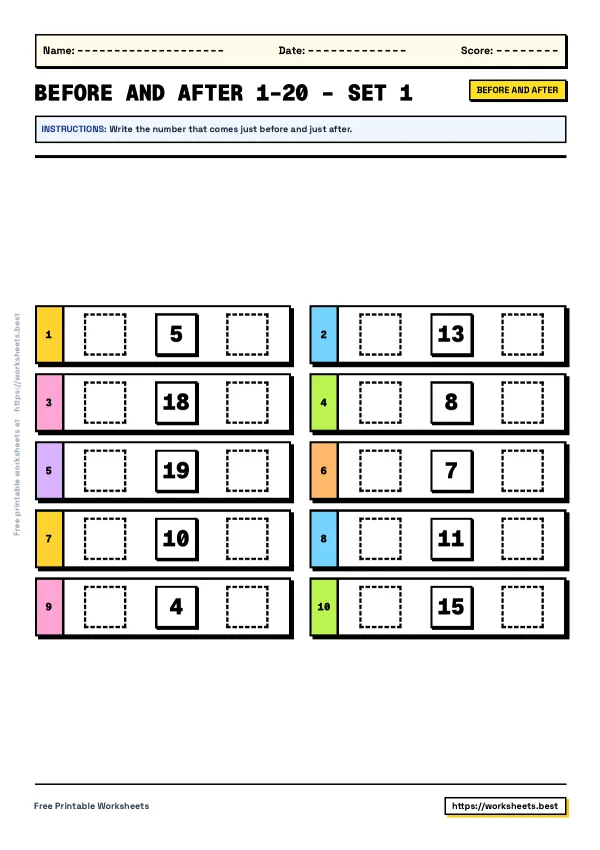
Before and After 1–20 – Set 1
KindergartenNumber Sense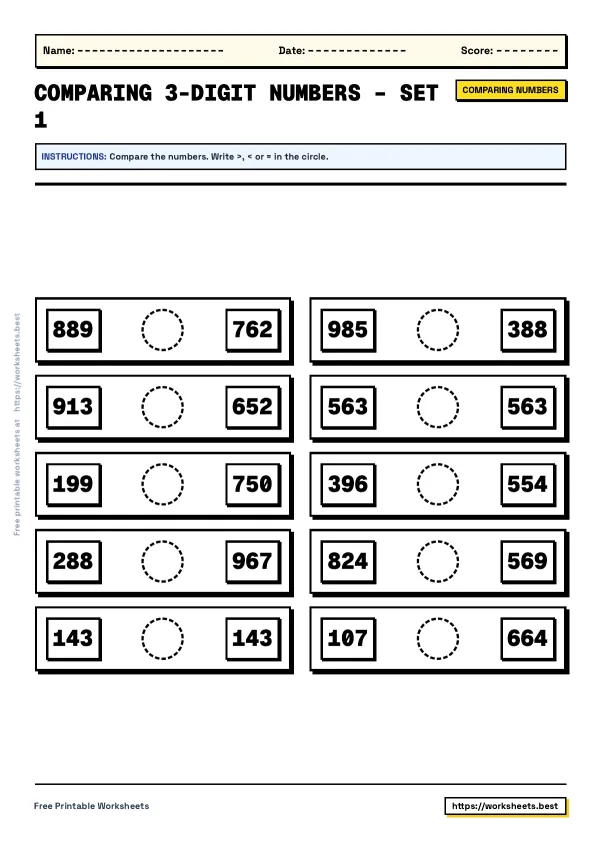
Comparing 3-Digit Numbers – Set 1
2nd GradeNumber Sense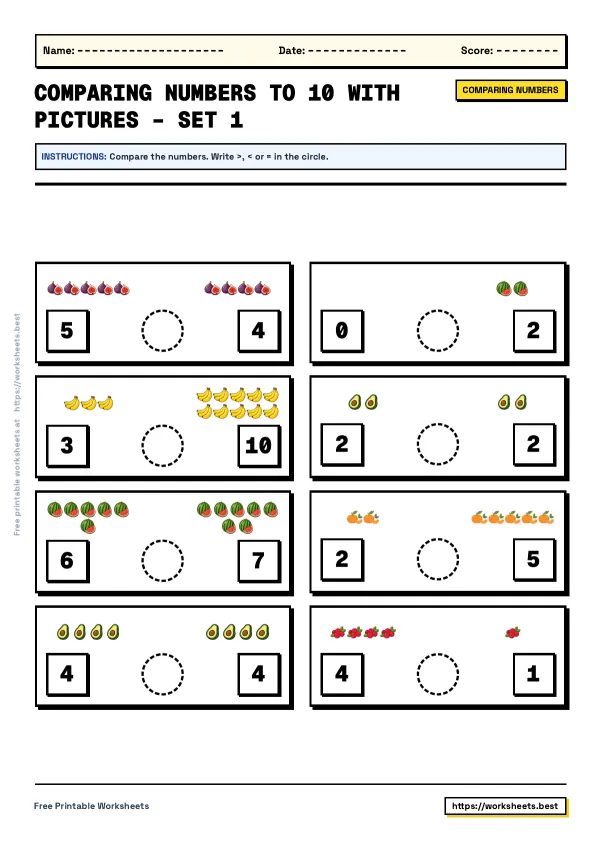
Comparing Numbers to 10 with Pictures – Set 1
Pre-K–KNumber Sense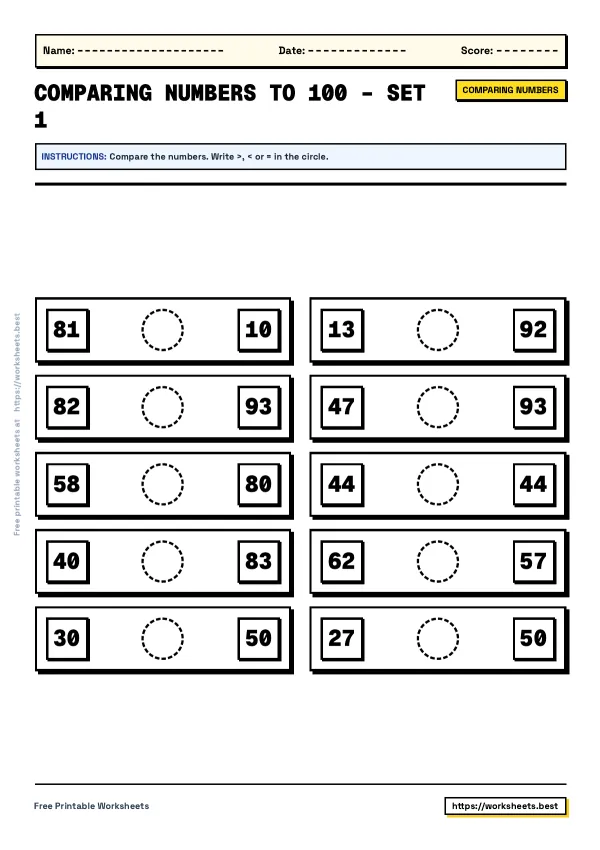
Comparing Numbers to 100 – Set 1
1st GradeNumber Sense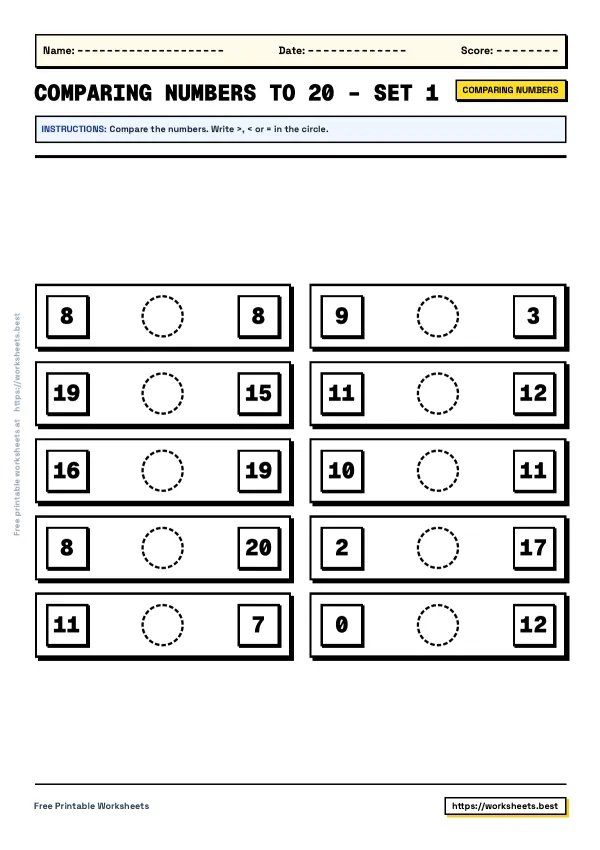
Comparing Numbers to 20 – Set 1
1st GradeNumber Sense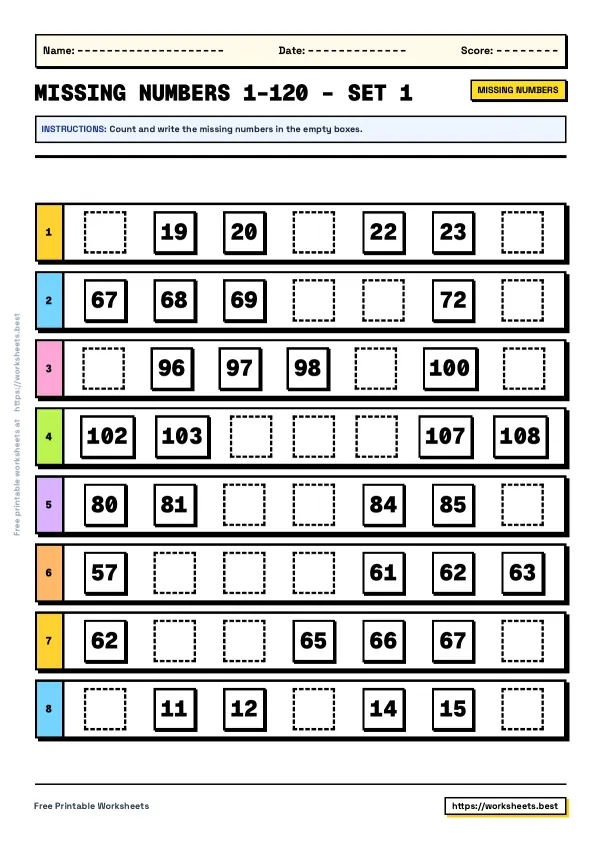
Missing Numbers 1–120 – Set 1
1st GradeNumber Sense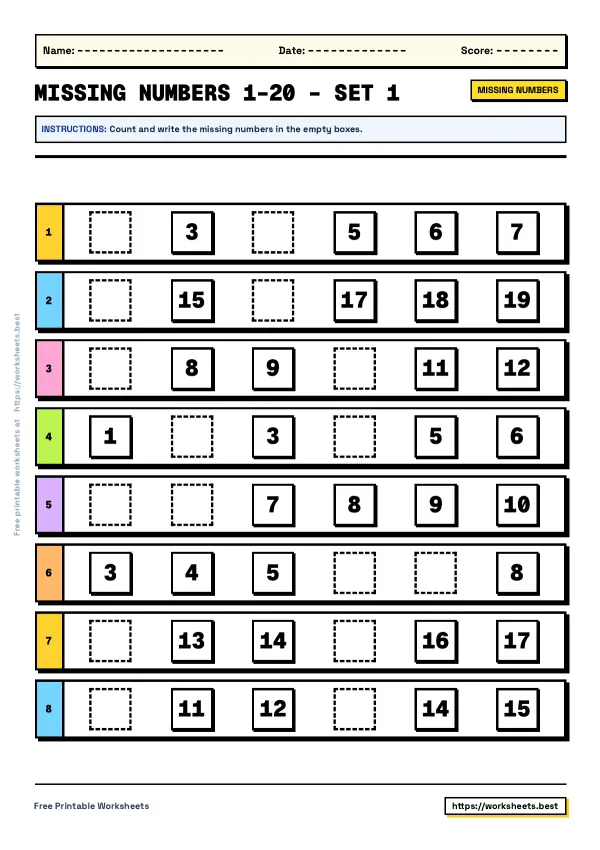
Missing Numbers 1–20 – Set 1
KindergartenNumber Sense
every sheet
All Number Sense worksheets
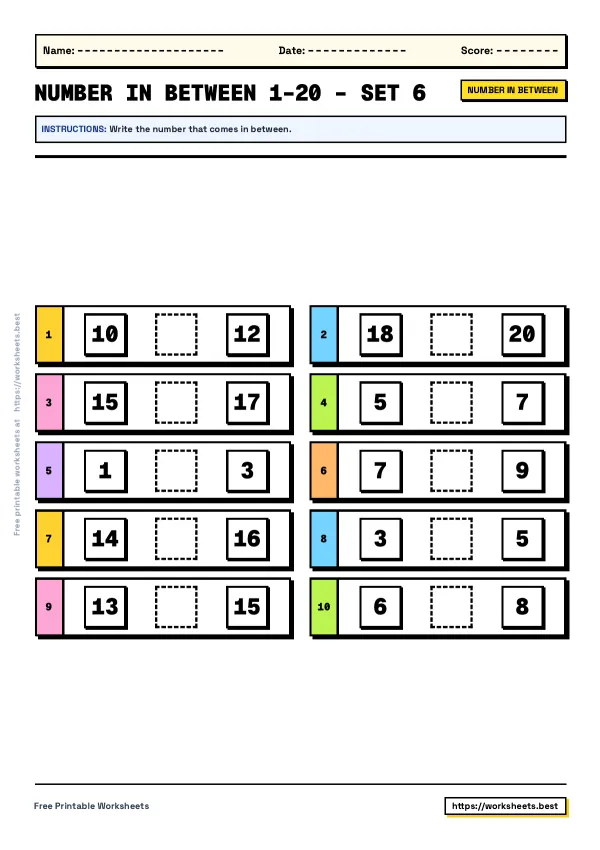
Number in Between 1–20 – Set 6
KindergartenNumber Sense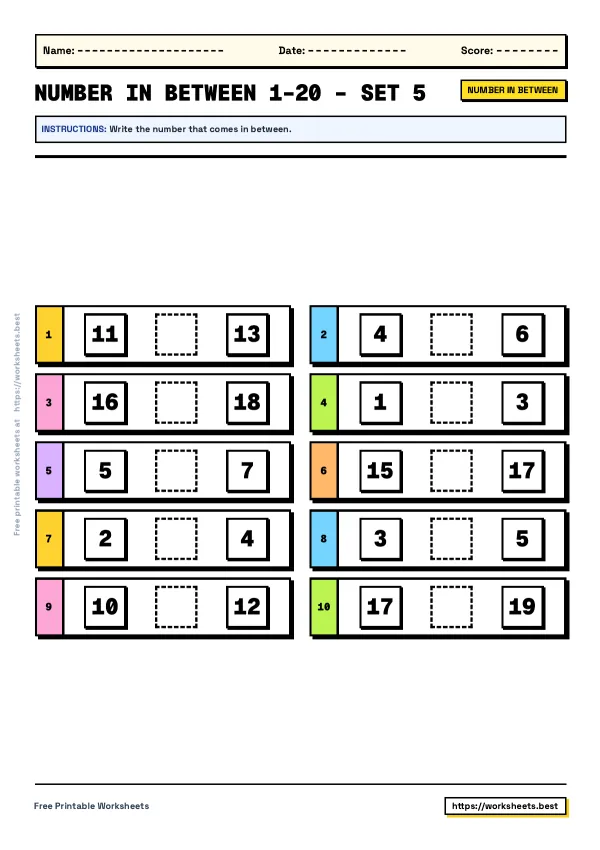
Number in Between 1–20 – Set 5
KindergartenNumber Sense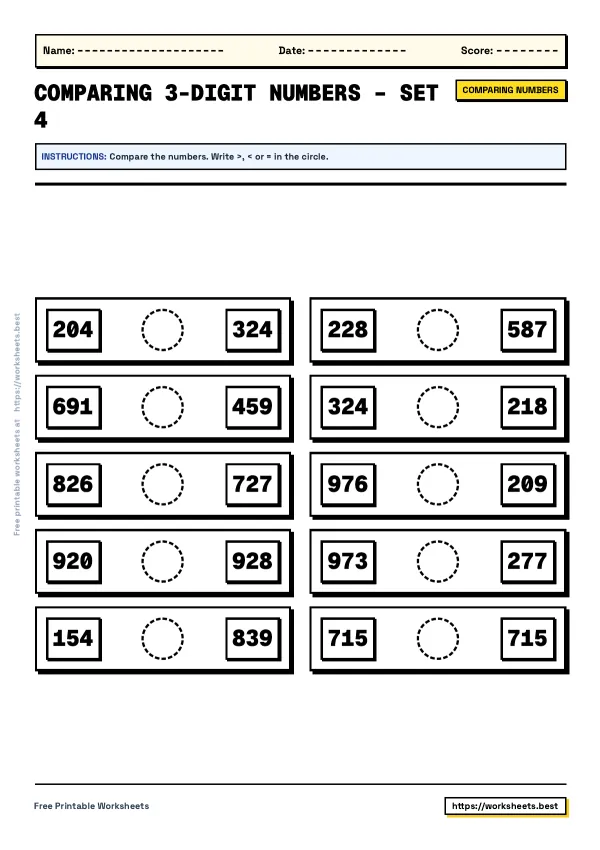
Comparing 3-Digit Numbers – Set 4
2nd GradeNumber Sense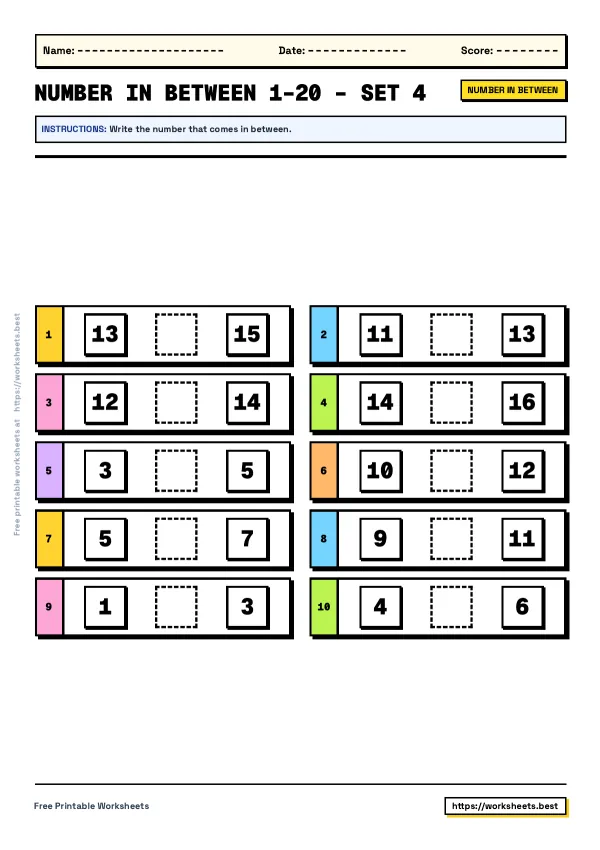
Number in Between 1–20 – Set 4
KindergartenNumber Sense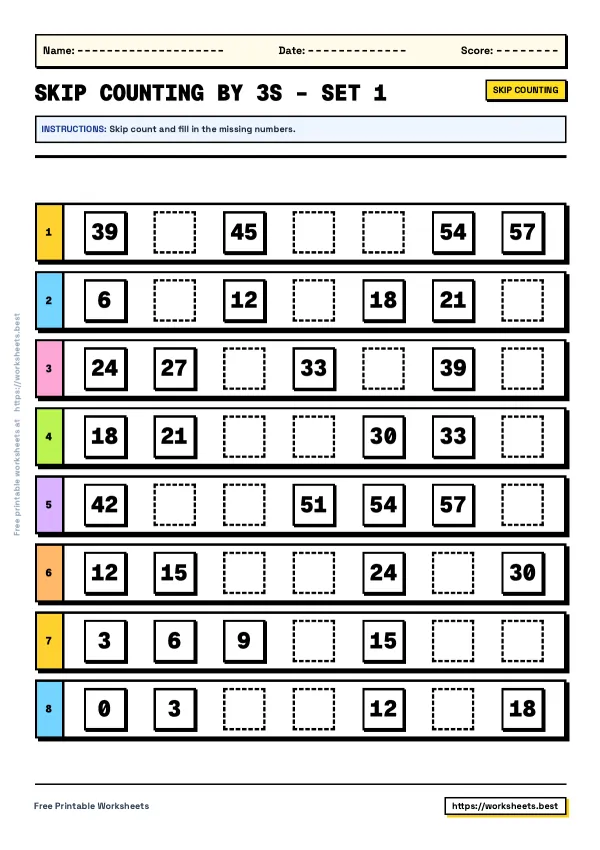
Skip Counting by 3s – Set 1
3rd GradeNumber Sense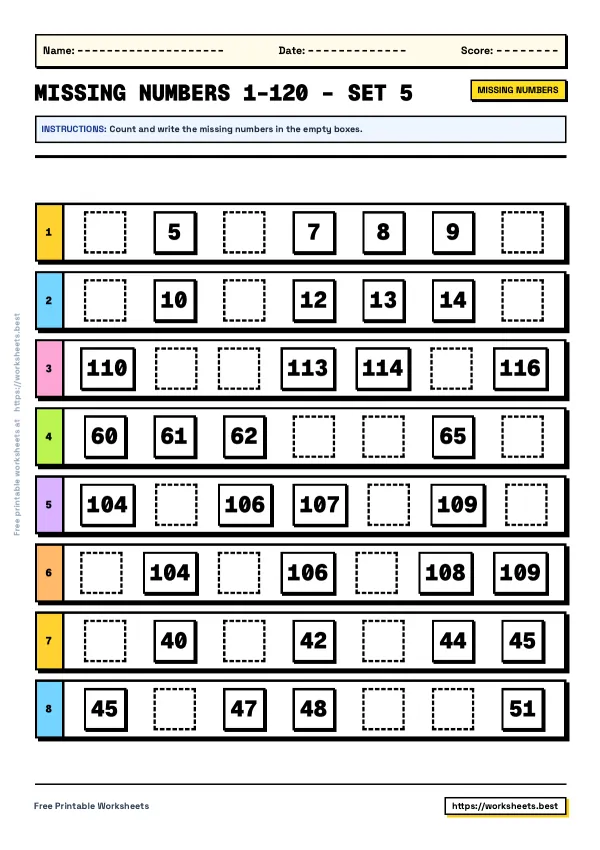
Missing Numbers 1–120 – Set 5
1st GradeNumber Sense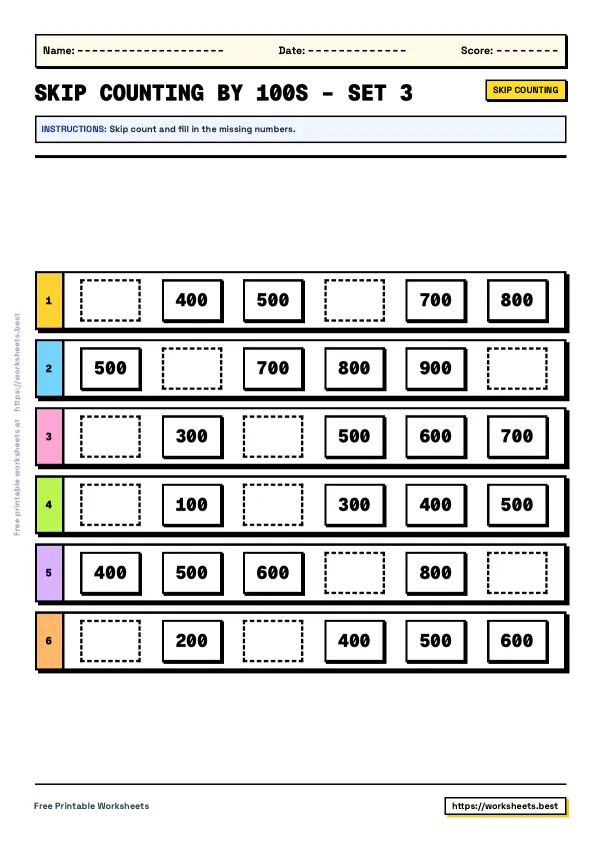
Skip Counting by 100s – Set 3
2nd GradeNumber Sense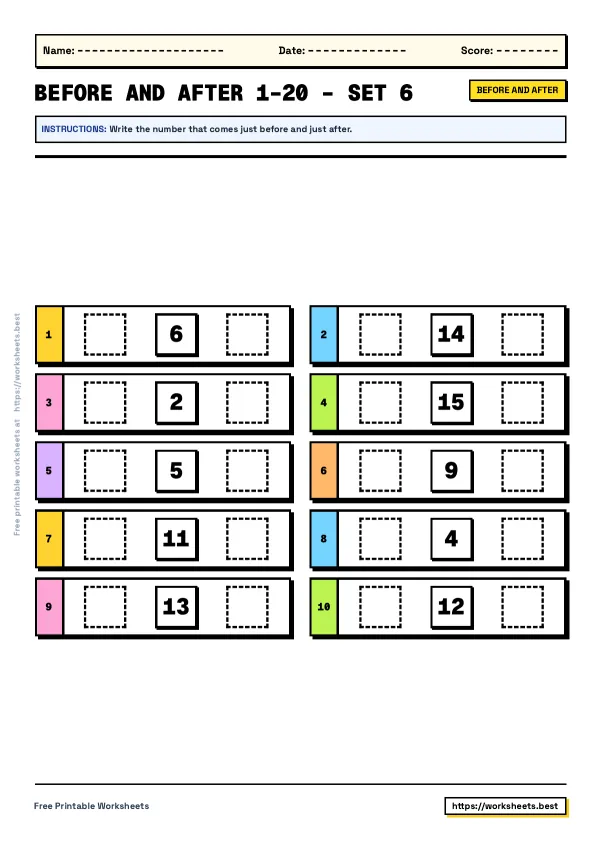
Before and After 1–20 – Set 6
KindergartenNumber Sense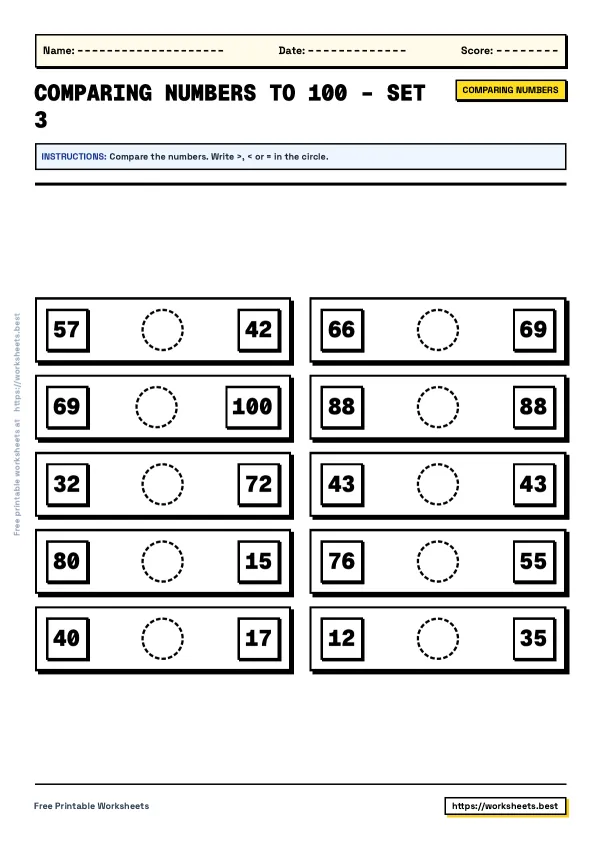
Comparing Numbers to 100 – Set 3
1st GradeNumber Sense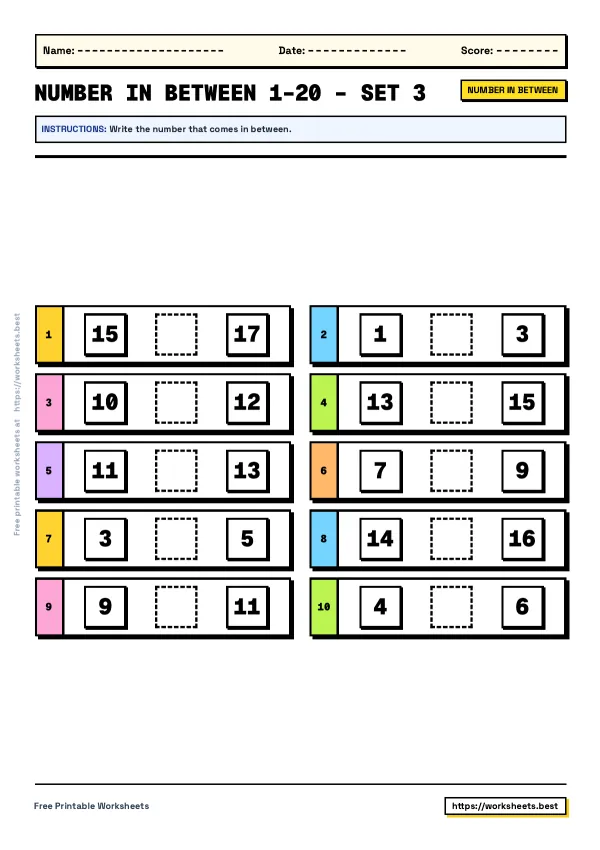
Number in Between 1–20 – Set 3
KindergartenNumber Sense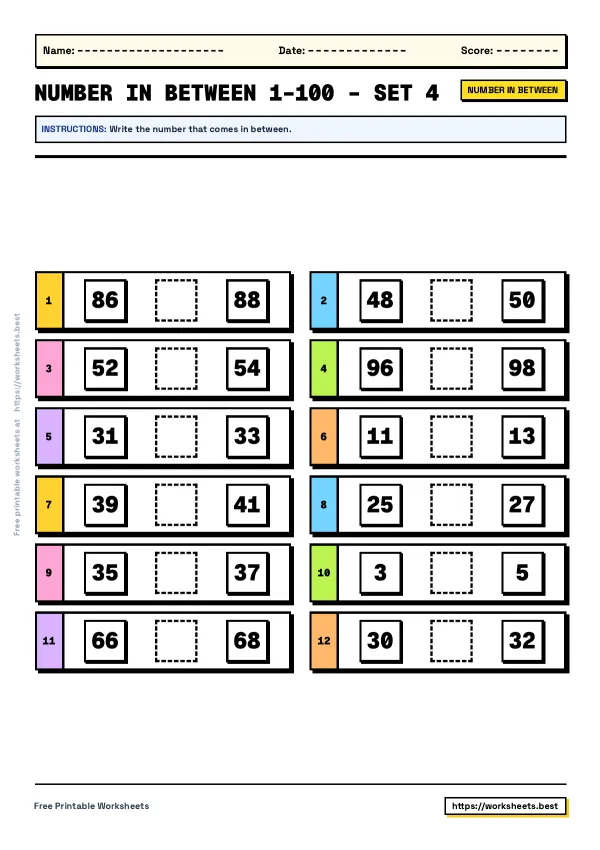
Number in Between 1–100 – Set 4
1st GradeNumber Sense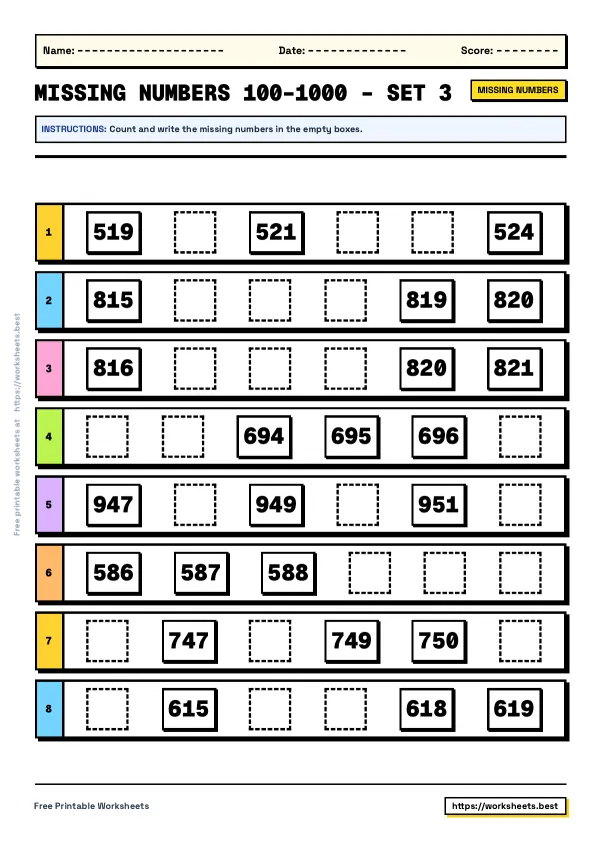
Missing Numbers 100–1000 – Set 3
2nd GradeNumber Sense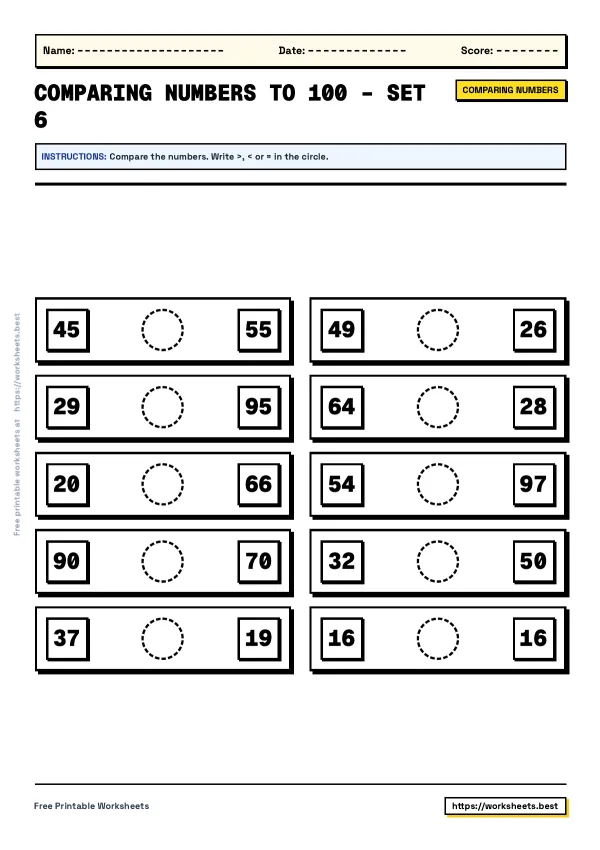
Comparing Numbers to 100 – Set 6
1st GradeNumber Sense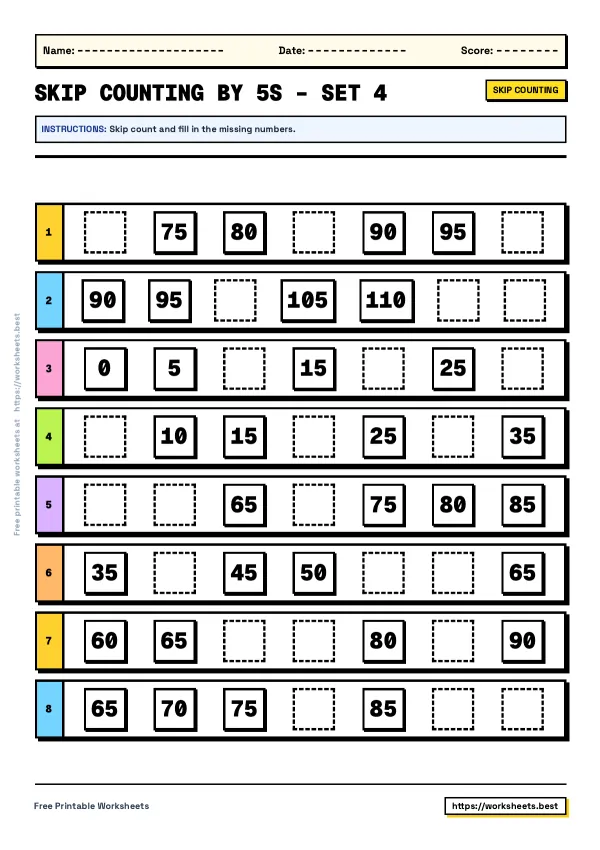
Skip Counting by 5s – Set 4
1st–2nd GradeNumber Sense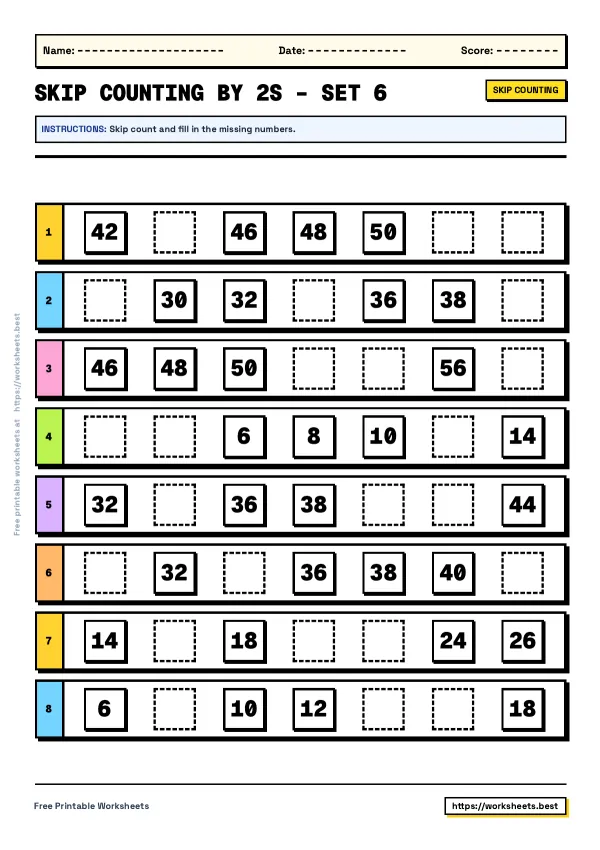
Skip Counting by 2s – Set 6
1st–2nd GradeNumber Sense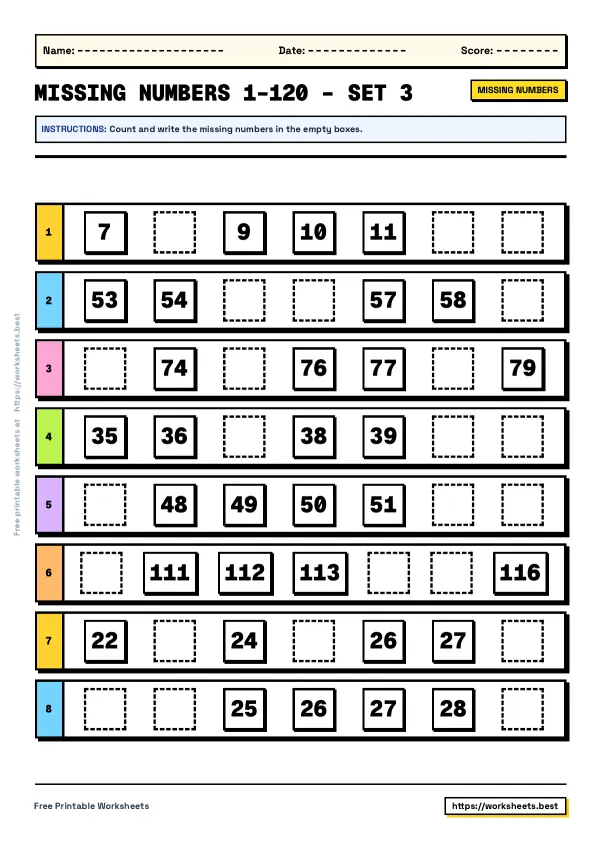
Missing Numbers 1–120 – Set 3
1st GradeNumber Sense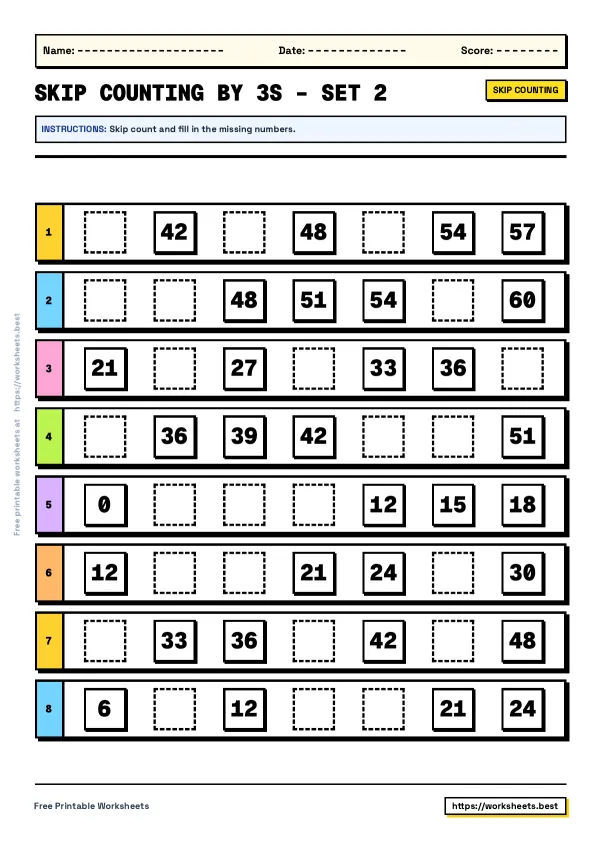
Skip Counting by 3s – Set 2
3rd GradeNumber Sense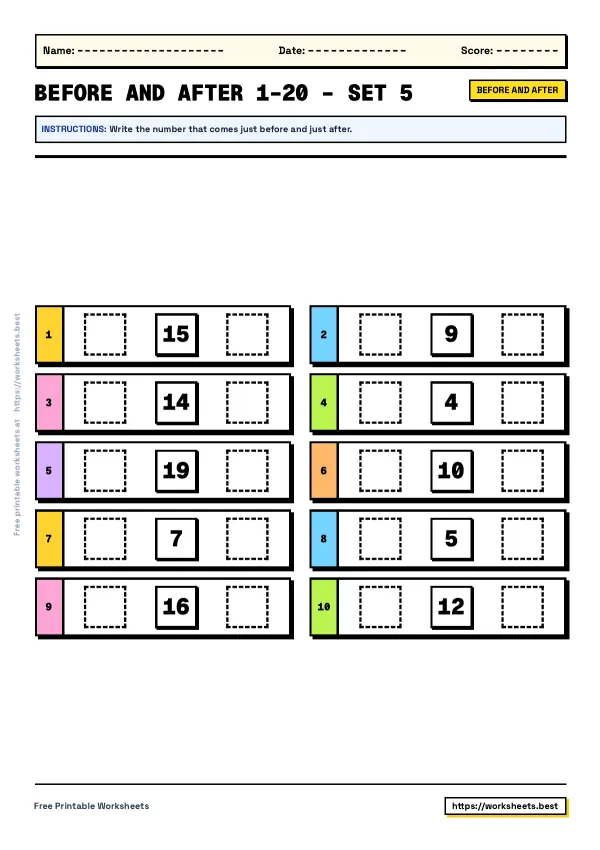
Before and After 1–20 – Set 5
KindergartenNumber Sense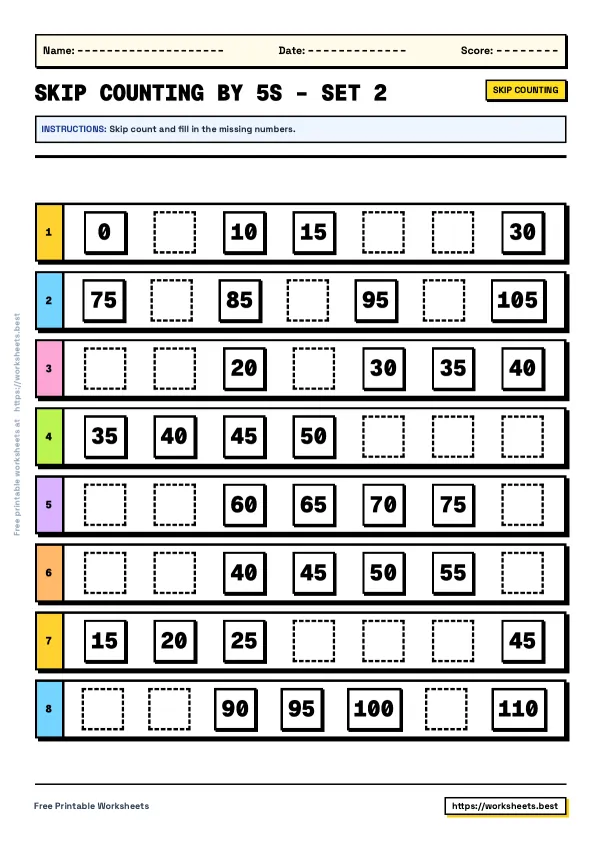
Skip Counting by 5s – Set 2
1st–2nd GradeNumber Sense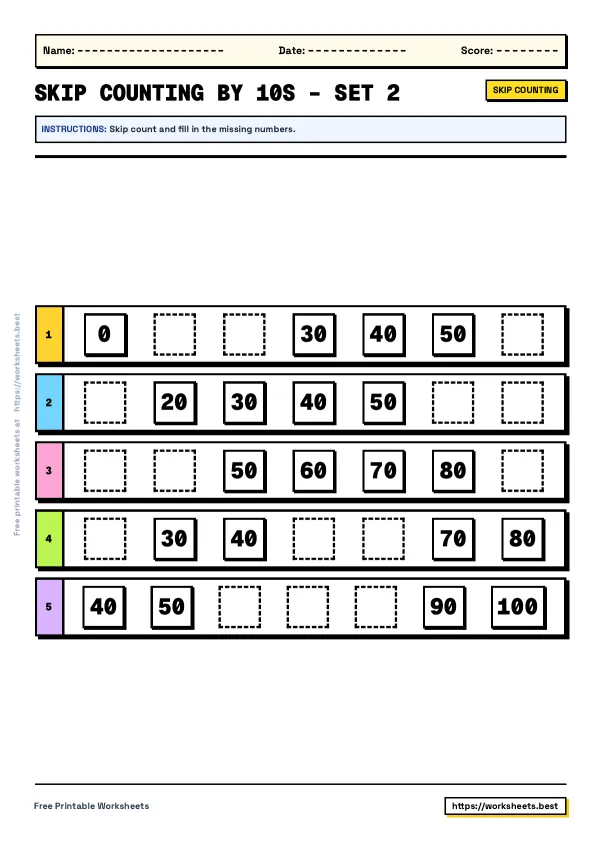
Skip Counting by 10s – Set 2
K–1st GradeNumber Sense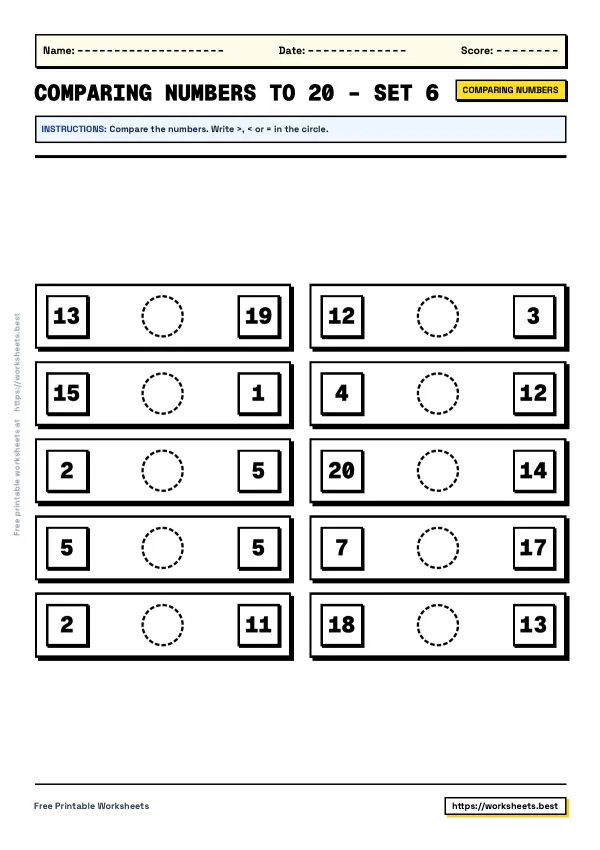
Comparing Numbers to 20 – Set 6
1st GradeNumber Sense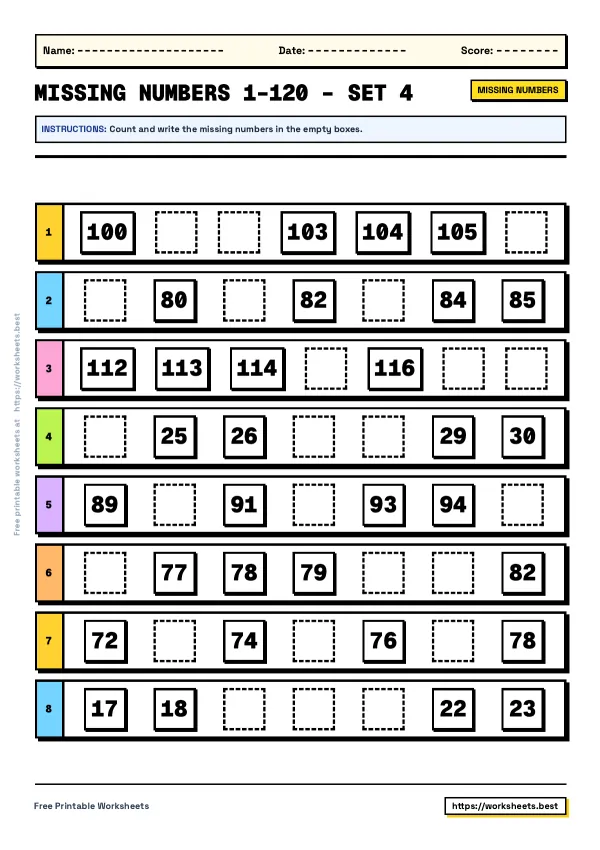
Missing Numbers 1–120 – Set 4
1st GradeNumber Sense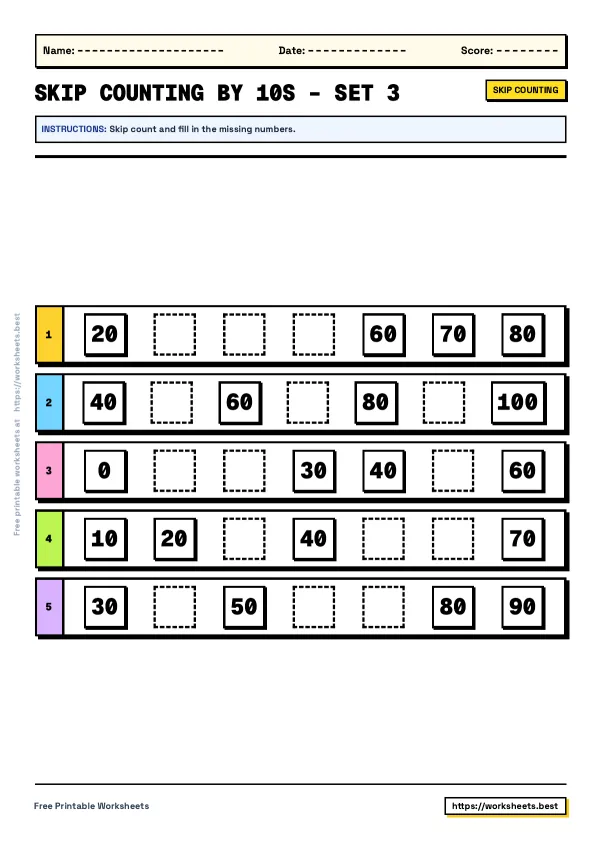
Skip Counting by 10s – Set 3
K–1st GradeNumber Sense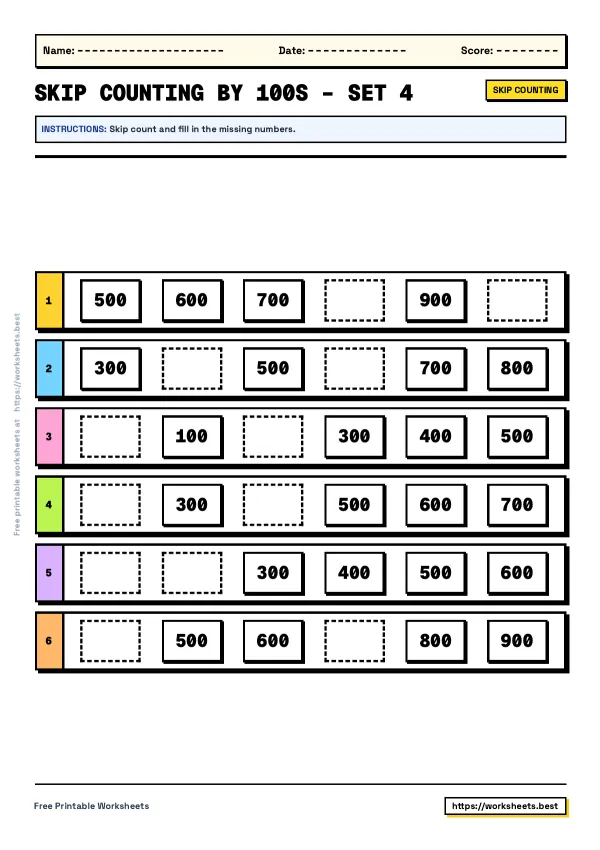
Skip Counting by 100s – Set 4
2nd GradeNumber Sense
dig deeper
More Number Sense worksheets
from teachers
Tips for parents and teachers
- Say the counting sequence out loud together before anything is written; hearing seventeen, eighteen, nineteen makes the empty box on a before-and-after sheet much easier to fill.
- Keep a hundred chart or a simple number line on the table so children can check a missing or neighboring number themselves instead of waiting for you.
- For comparing sheets, have children build each group with counters or draw a line from one picture to one picture, then talk about which side has leftovers.
- Five or ten minutes is usually enough, and coming back to the same number range a few days later helps the order settle into memory.
Questions parents ask
What is number sense, and why does it matter in the early grades?
It is a child's working understanding of what numbers mean, how they are ordered, and how they relate to one another. Counting, number order and comparing are the parts children lean on most, and they support later work with addition and place value.
Which sheets suit a child who is just learning to count?
Begin with the comparing sheets that use pictures of up to ten objects, and the before-and-after pages that stay within 20. Both let a child count real groups or short runs instead of juggling a long column of numerals.
My kindergartner mixes up 12 and 21. What can help?
Have your child find both numbers on a hundred chart and say each one slowly, noting that 12 comes before 20 and 21 comes after. A few minutes of this, a couple of times a week, sticks better than one long session.
When is a child ready to compare three-digit numbers?
Usually once they can read and order numbers past 100 with confidence, which many children manage in 2nd grade. Comparing the hundreds first, then the tens, then the ones gives them a method they can repeat.
How long should one sheet take?
Most children finish a page in five to ten minutes. If a sheet is taking much longer, drop back to a smaller number range for a while and return to the harder one later.