Division Worksheets
Division Worksheets give children in 3rd, 4th and 5th grade a steady way to build fact fluency and then move into longer problems. The collection is a small set of math drill pages, so a child works through short, repeated practice rather than one long, crowded sheet.
Read more +
The first pages cover division facts, starting with dividing by 2 through 5 and later moving to 6 through 10, so answers become quick through repetition. A 3-digit division page then asks children to work through longer problems step by step, and the practice adds remainders once a child is ready for the idea that not every number divides evenly.
Use a single drill as a warm-up at the start of a math lesson, or set one page for ten minutes at the kitchen table after school. Answer keys are included for all of the worksheets, so a parent or teacher can check work quickly and see exactly where a step went wrong. The pages build the skills named in Common Core standards 3.OA.C.7 and 4.NBT.B.6, with third graders concentrating on facts and older children moving to multi-digit work.
start with these
Featured worksheets
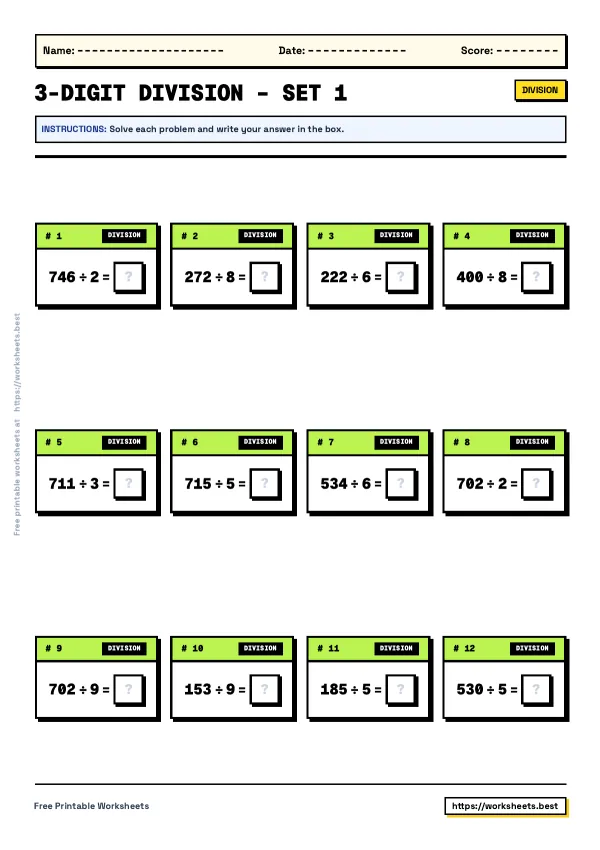
3-Digit Division – Set 1
4th–5th GradeMath Drills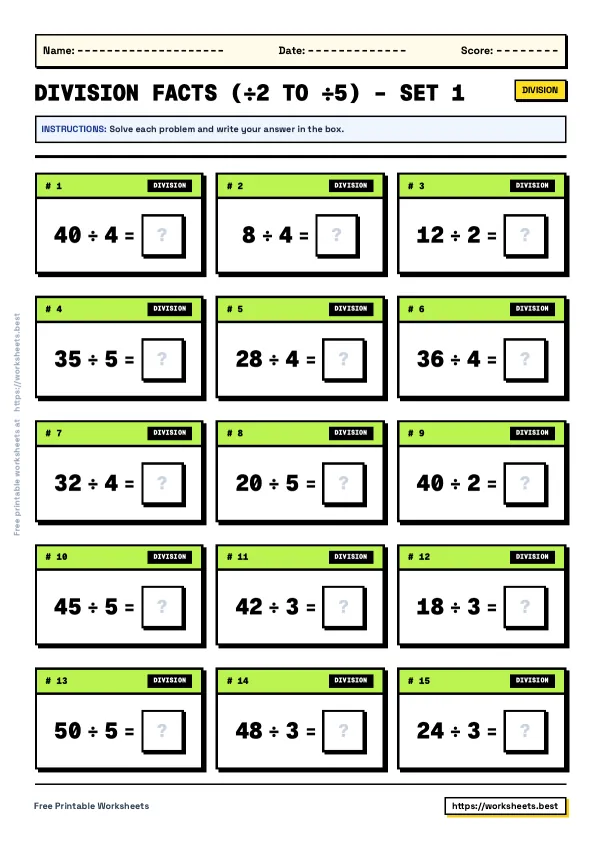
Division Facts (÷2 to ÷5) – Set 1
3rd GradeMath Drills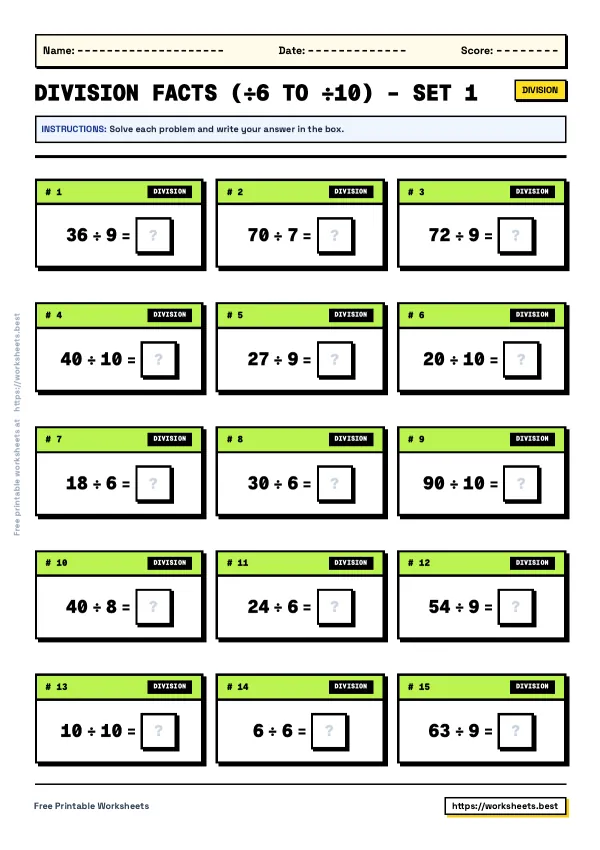
Division Facts (÷6 to ÷10) – Set 1
3rd–4th GradeMath Drills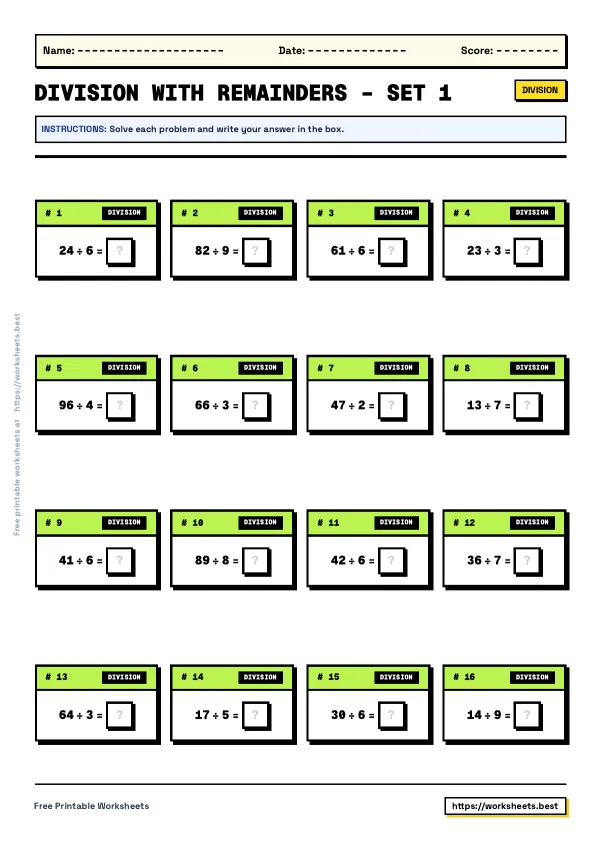
Division With Remainders – Set 1
4th GradeMath Drills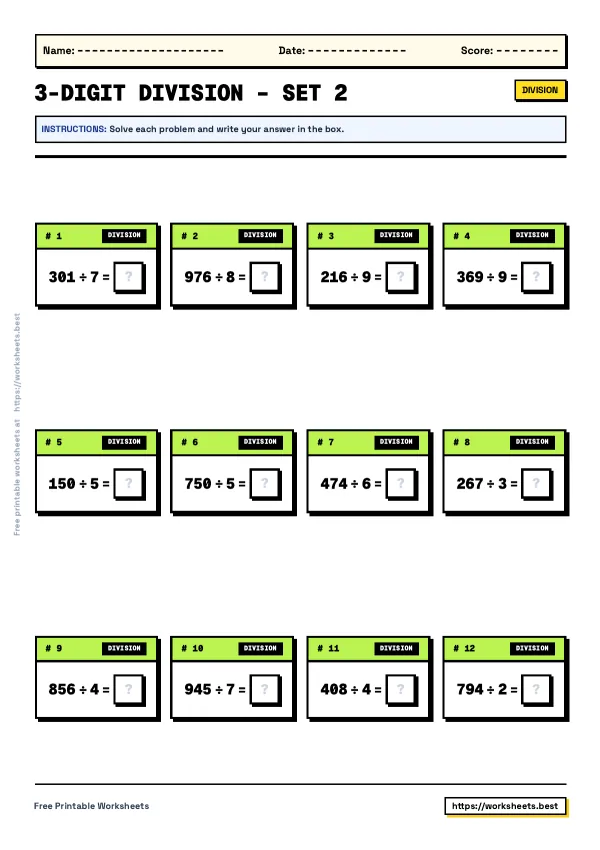
3-Digit Division – Set 2
4th–5th GradeMath Drills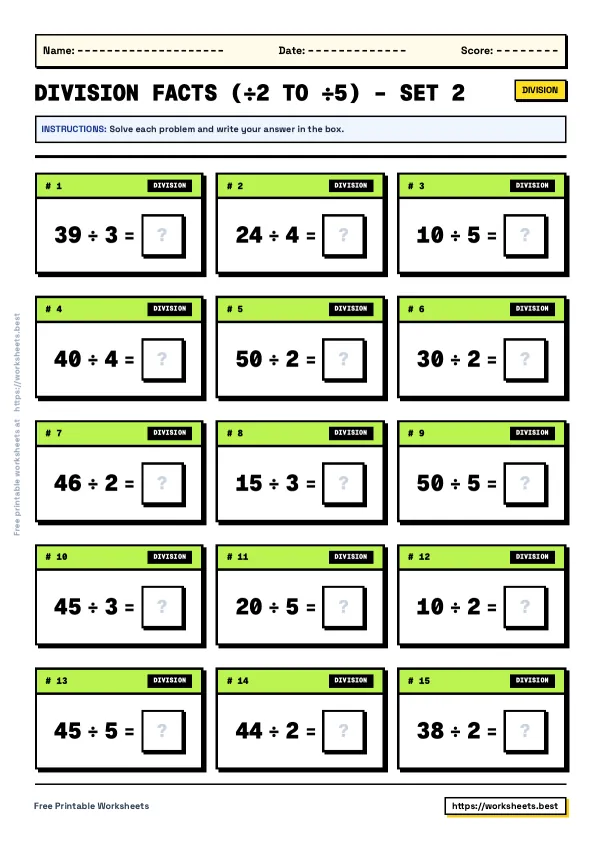
Division Facts (÷2 to ÷5) – Set 2
3rd GradeMath Drills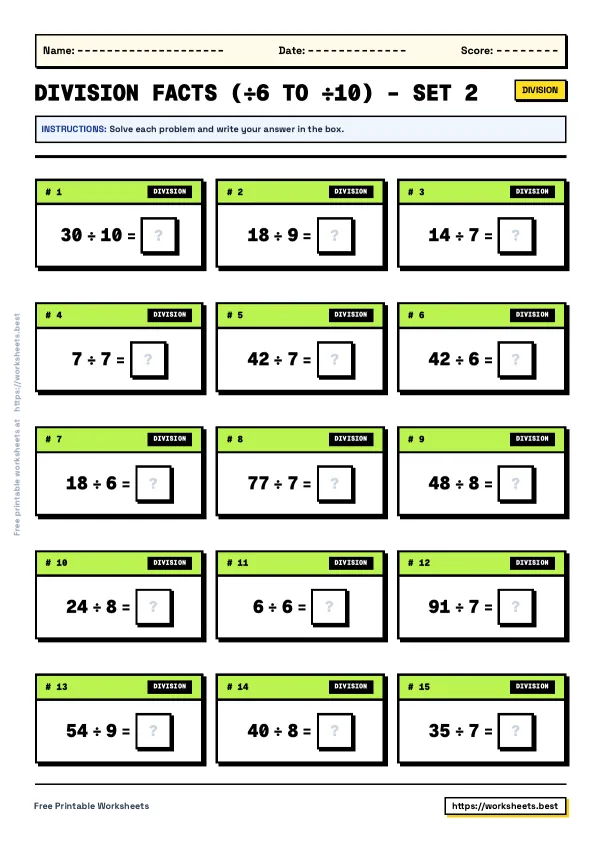
Division Facts (÷6 to ÷10) – Set 2
3rd–4th GradeMath Drills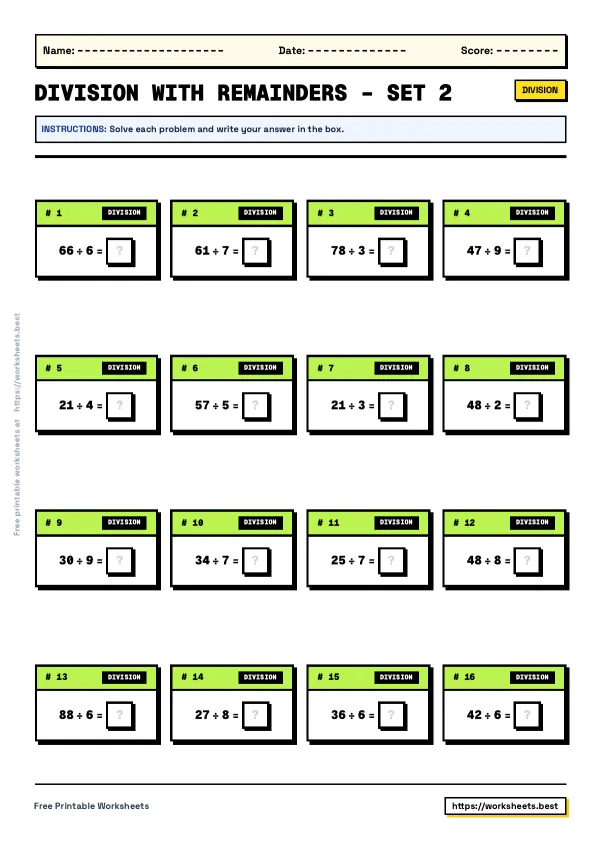
Division With Remainders – Set 2
4th GradeMath Drills
every sheet
All Division worksheets
Division Facts (÷6 to ÷10) – Set 2
3rd–4th GradeMath DrillsDivision Facts (÷6 to ÷10) – Set 1
3rd–4th GradeMath Drills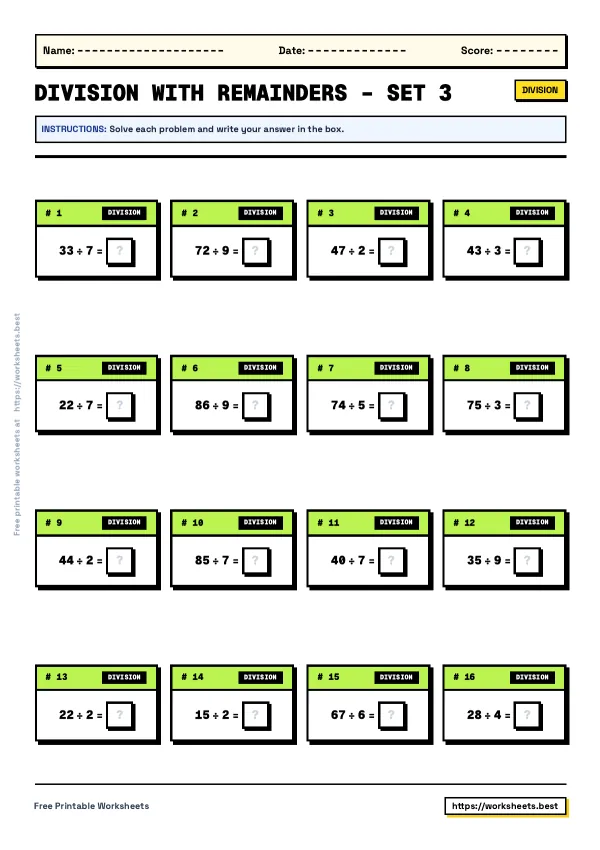
Division With Remainders – Set 3
4th GradeMath Drills3-Digit Division – Set 2
4th–5th GradeMath Drills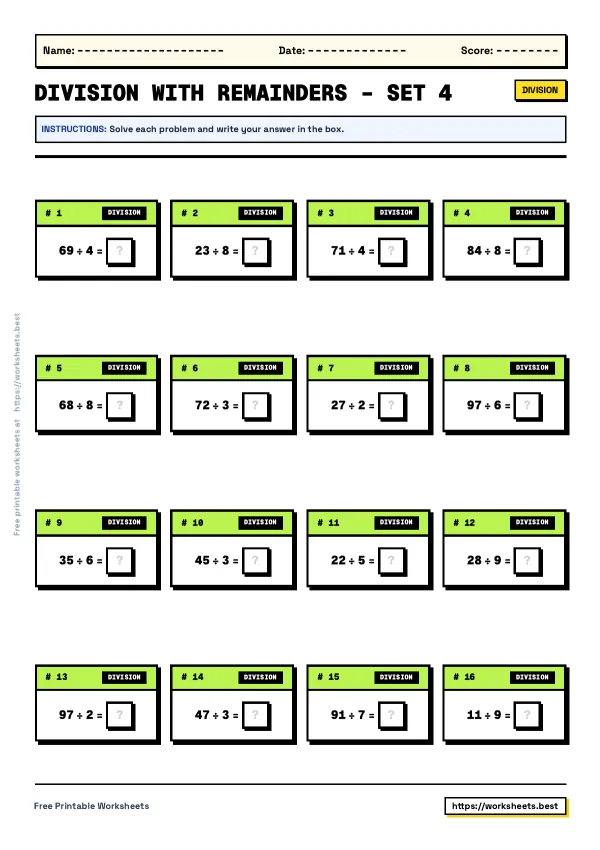
Division With Remainders – Set 4
4th GradeMath DrillsDivision Facts (÷2 to ÷5) – Set 2
3rd GradeMath Drills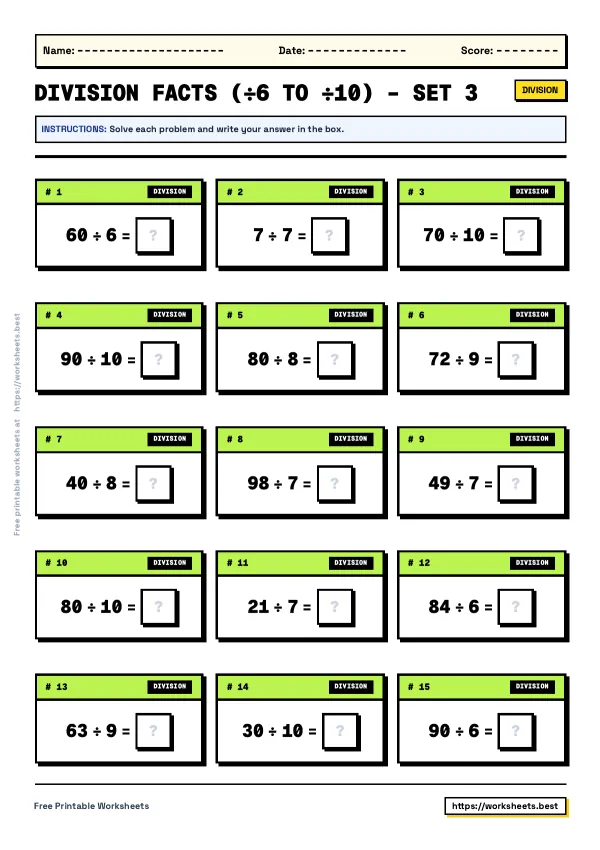
Division Facts (÷6 to ÷10) – Set 3
3rd–4th GradeMath Drills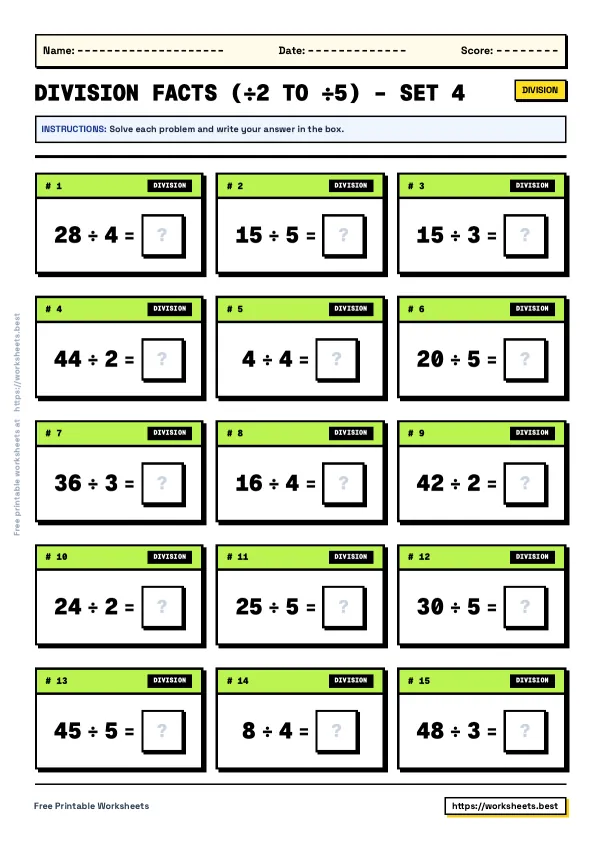
Division Facts (÷2 to ÷5) – Set 4
3rd GradeMath Drills3-Digit Division – Set 1
4th–5th GradeMath Drills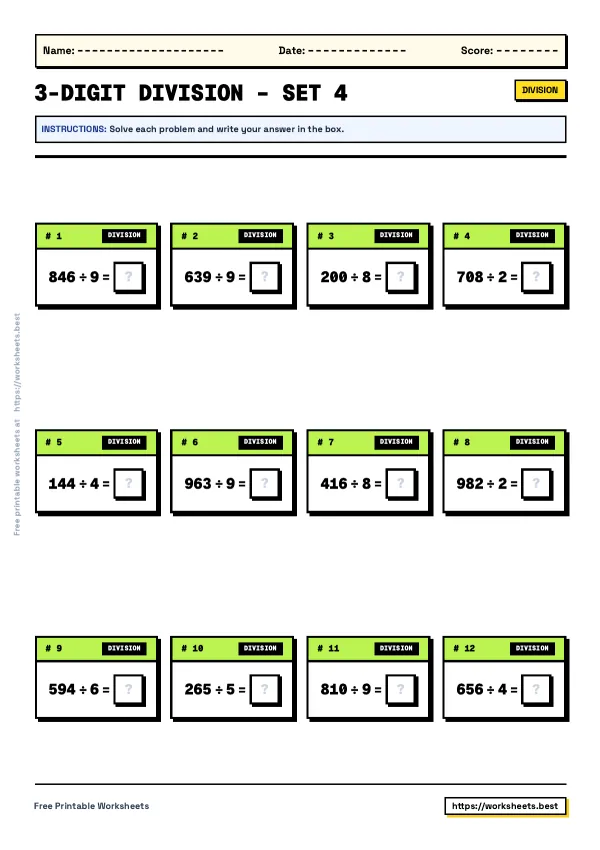
3-Digit Division – Set 4
4th–5th GradeMath DrillsDivision With Remainders – Set 1
4th GradeMath Drills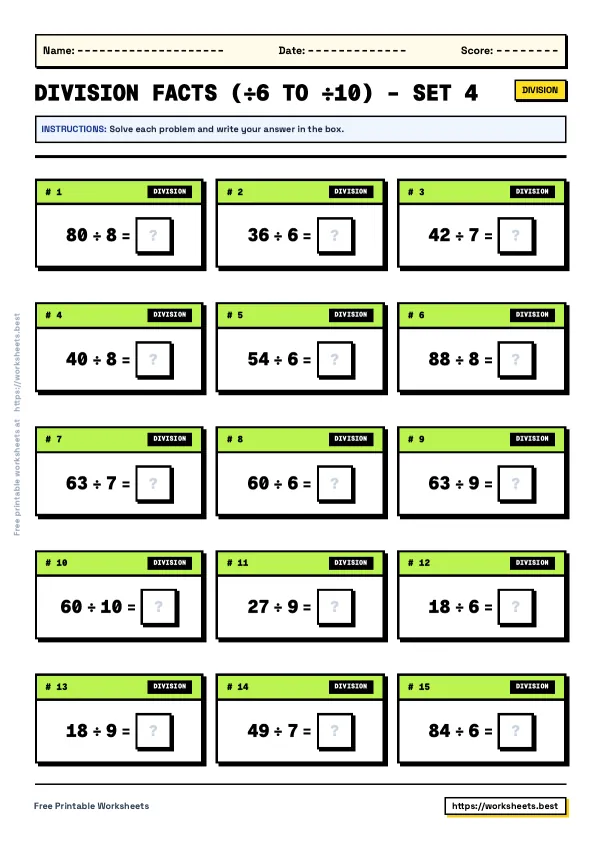
Division Facts (÷6 to ÷10) – Set 4
3rd–4th GradeMath DrillsDivision With Remainders – Set 2
4th GradeMath Drills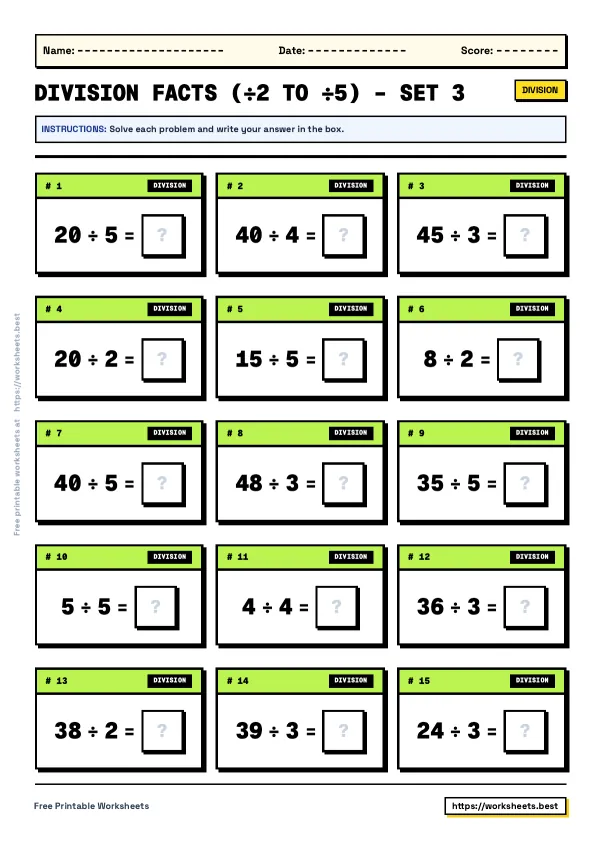
Division Facts (÷2 to ÷5) – Set 3
3rd GradeMath DrillsDivision Facts (÷2 to ÷5) – Set 1
3rd GradeMath Drills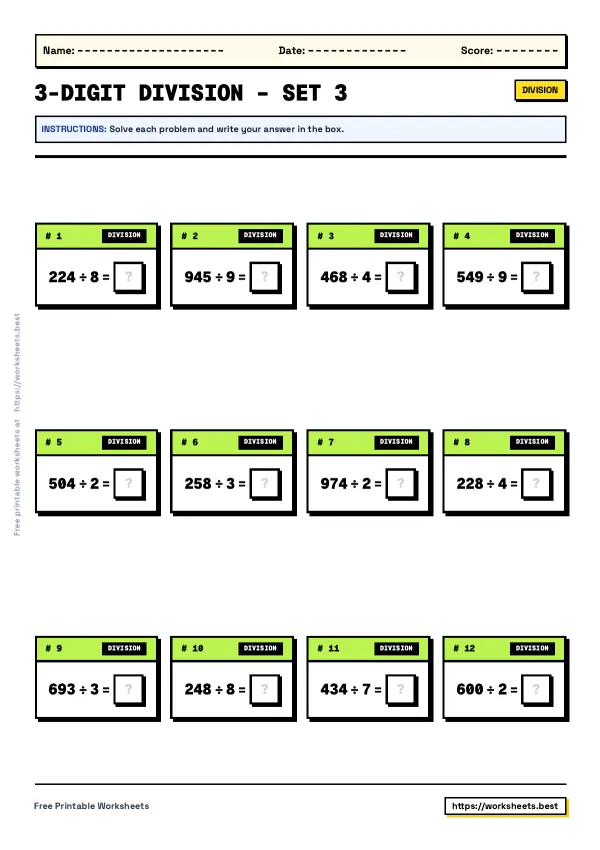
3-Digit Division – Set 3
4th–5th GradeMath Drills
dig deeper
More Division worksheets
By grade
from teachers
Tips for parents and teachers
- Start with the divisors your child already knows and add one new set at a time, such as moving from dividing by 2 through 5 on to 6 through 10 once the first answers come without counting.
- Have your child say the fact aloud as it is written, for example "twenty-four divided by six is four," so the drill builds recall instead of finger counting.
- For 3-digit problems, ask for the steps in order every time: divide, multiply, subtract, bring down. Slowing down at the start prevents most small errors later.
- When a problem leaves something over, ask what that leftover means in the situation, such as three left with two more needed, so the answer is more than a letter beside a number.
Questions parents ask
What grade do children learn division?
Most children meet division facts in 3rd grade, where division is tied to multiplication within 100. Longer work with 3-digit numbers and remainders usually comes in 4th and 5th grade.
How can I help my child remember division facts?
Link each fact to multiplication, since 24 divided by 6 is 4 because 6 times 4 is 24. A few minutes of short, daily practice works better than one long session each week.
What does division with remainders mean?
A remainder is what is left when a number does not divide evenly, as in 17 divided by 5, which gives 3 with 2 left over. Children often write it as an r next to the quotient.
How long should a division drill take?
Five to ten minutes is plenty for one page at this age. Stop while your child is still working briskly, and go over any misses together right away while the steps are fresh.
Should my child use a multiplication chart during division practice?
A chart can help at first because it shows how division connects to multiplication facts. Once a set of facts is familiar, put the chart away so the drill builds memory rather than lookup.