Subtraction Worksheets
Take-away practice gets plenty of room here: these Subtraction Worksheets cover kindergarten through 3rd grade, with math drills that move from small numbers to regrouping across two and three digits. Children begin with facts within 5 and within 10, build speed within 20, then work up to 2-digit and 3-digit problems where lining up tens and ones matters.
Read more +
Each sheet is a straightforward drill page, so a child can settle in and work a column of problems without extra instructions to decode. A within-10 page keeps the numbers small enough for a kindergartener to count back on fingers or a number line, while a 2-digit page gives 2nd and 3rd graders steady practice before subtracting with borrowing. Answer keys come with all of the sheets, which makes checking quick for a parent at the kitchen table or a teacher marking a stack after school.
Use one drill as a warm-up before a math lesson, as morning work, or as a five-minute fact review at home. Pages note the Common Core standards they match, such as 1.OA.C.6 and 2.NBT.B.5, so you can pair a sheet with what a child is doing in class.
start with these
Featured worksheets
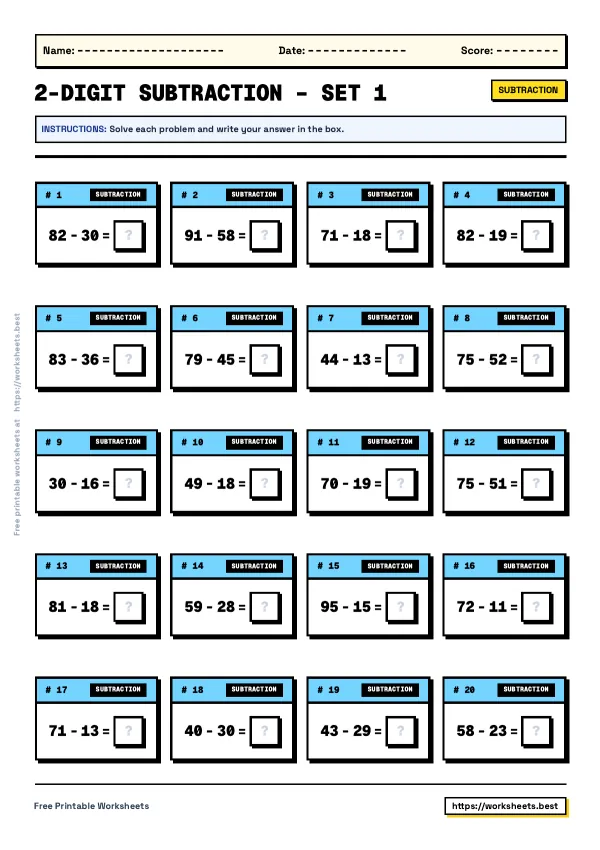
2-Digit Subtraction – Set 1
2nd GradeMath Drills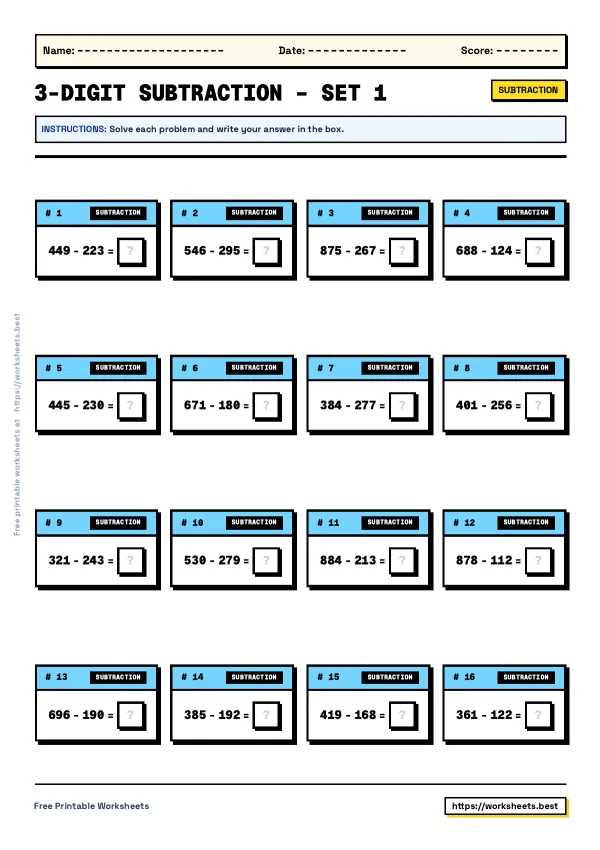
3-Digit Subtraction – Set 1
2nd–3rd GradeMath Drills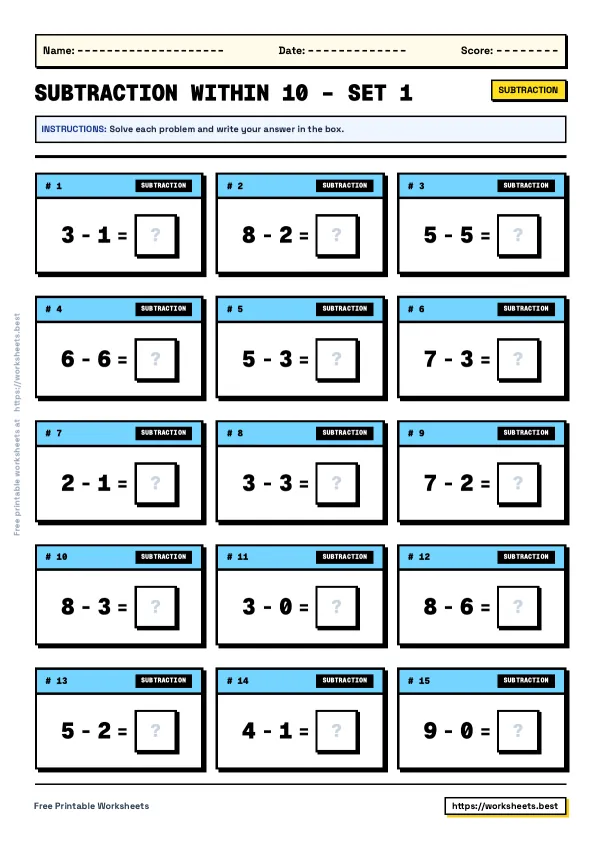
Subtraction Within 10 – Set 1
K–1st GradeMath Drills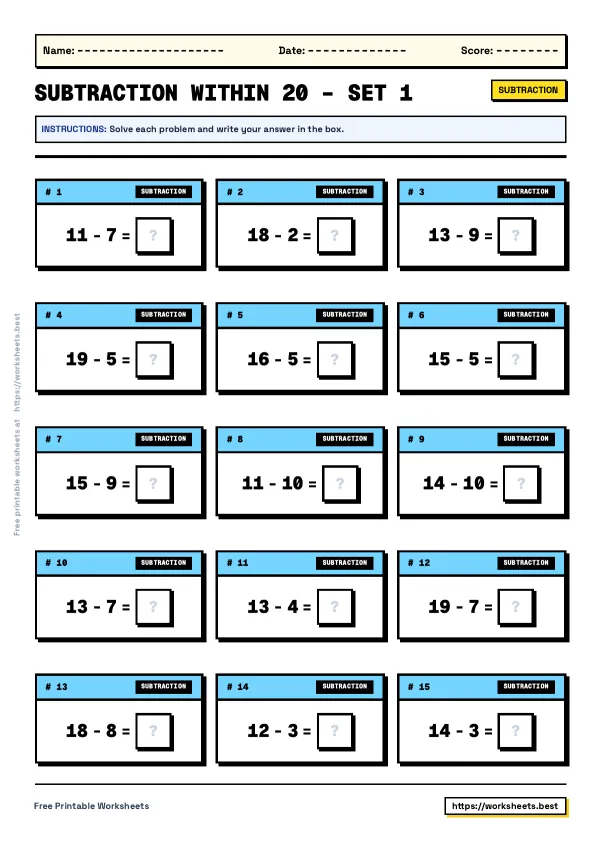
Subtraction Within 20 – Set 1
1st–2nd GradeMath Drills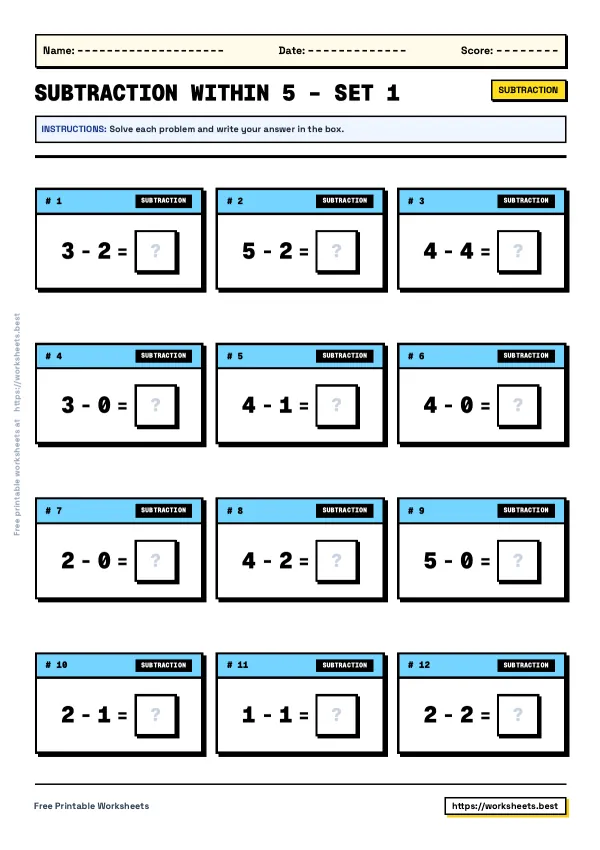
Subtraction Within 5 – Set 1
KindergartenMath Drills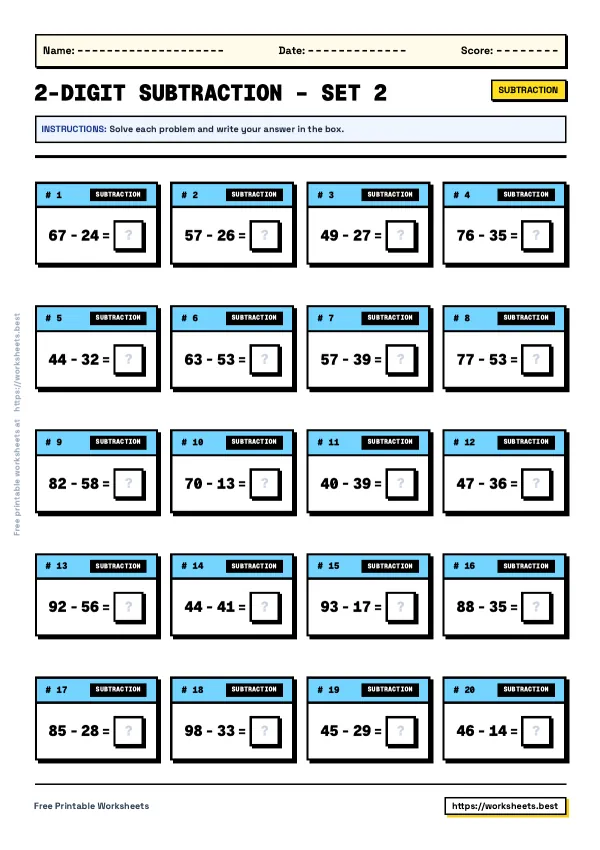
2-Digit Subtraction – Set 2
2nd GradeMath Drills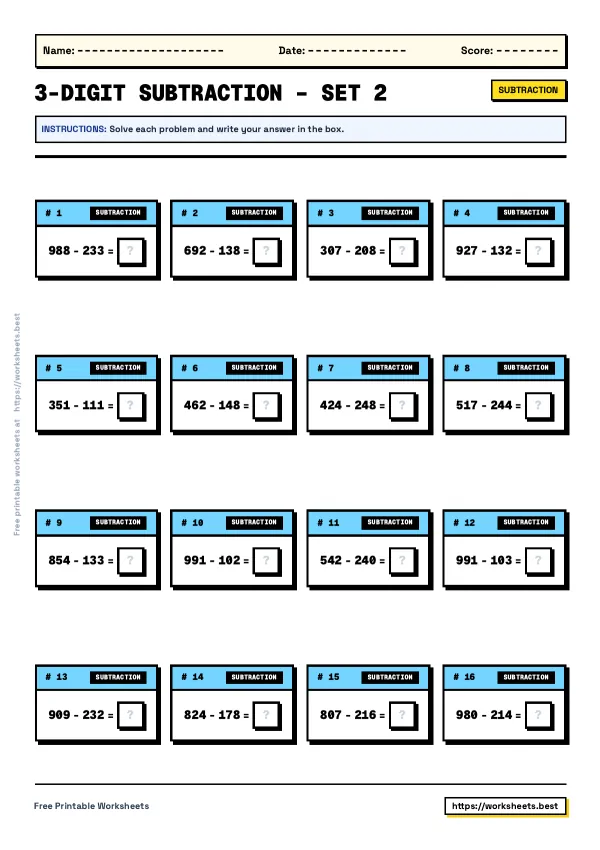
3-Digit Subtraction – Set 2
2nd–3rd GradeMath Drills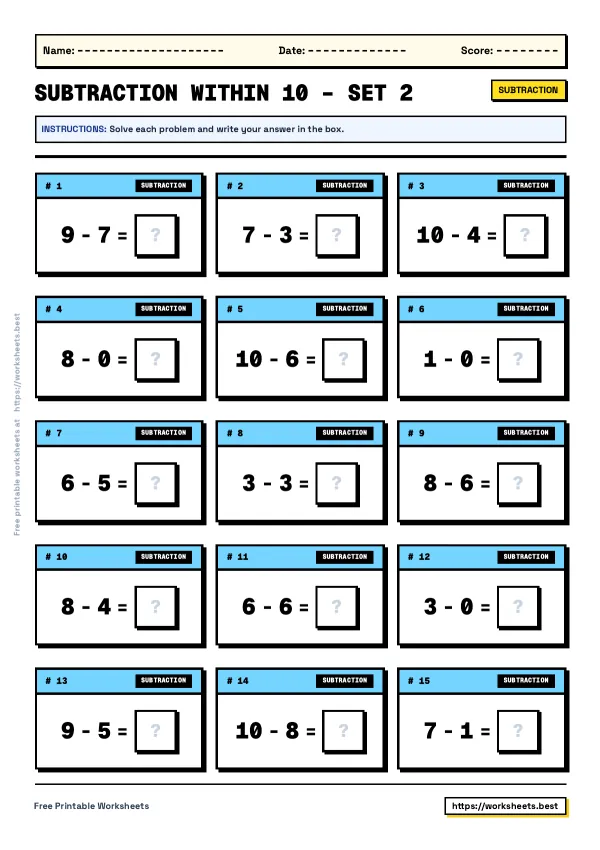
Subtraction Within 10 – Set 2
K–1st GradeMath Drills
every sheet
All Subtraction worksheets
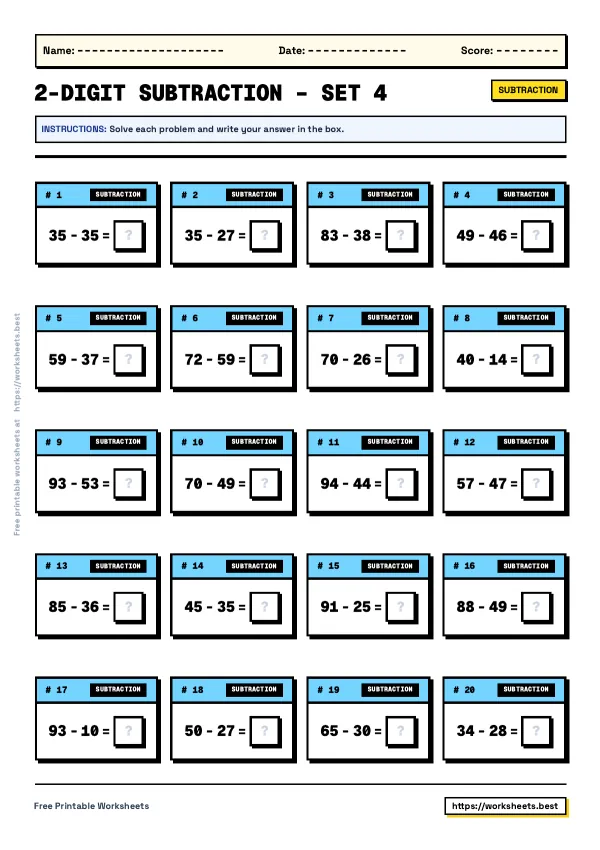
2-Digit Subtraction – Set 4
2nd GradeMath DrillsSubtraction Within 10 – Set 2
K–1st GradeMath Drills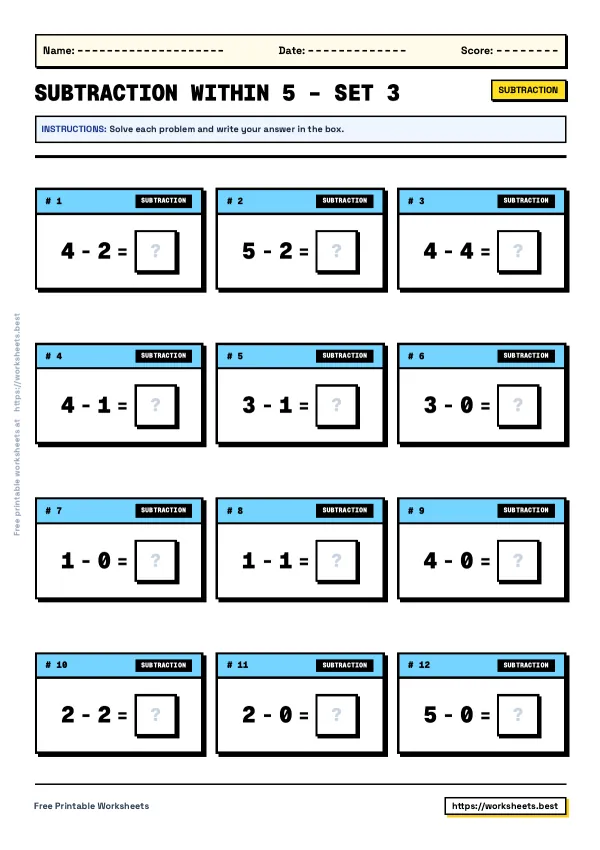
Subtraction Within 5 – Set 3
KindergartenMath DrillsSubtraction Within 5 – Set 1
KindergartenMath DrillsSubtraction Within 20 – Set 1
1st–2nd GradeMath DrillsSubtraction Within 10 – Set 1
K–1st GradeMath Drills2-Digit Subtraction – Set 1
2nd GradeMath Drills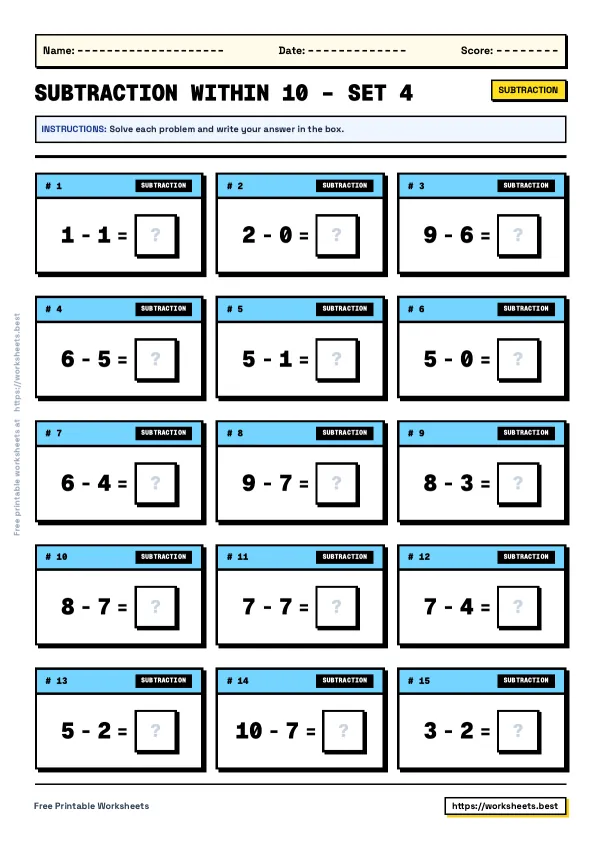
Subtraction Within 10 – Set 4
K–1st GradeMath Drills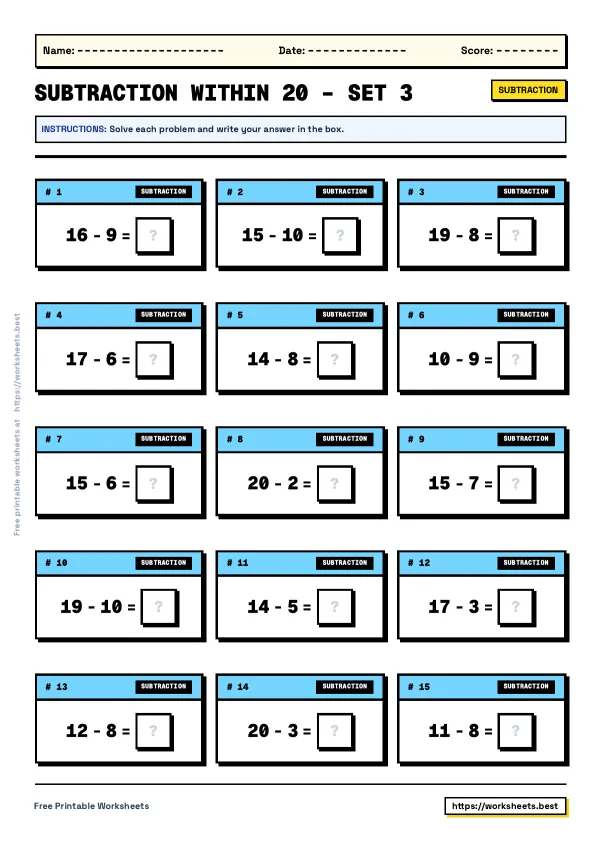
Subtraction Within 20 – Set 3
1st–2nd GradeMath Drills2-Digit Subtraction – Set 2
2nd GradeMath Drills3-Digit Subtraction – Set 2
2nd–3rd GradeMath Drills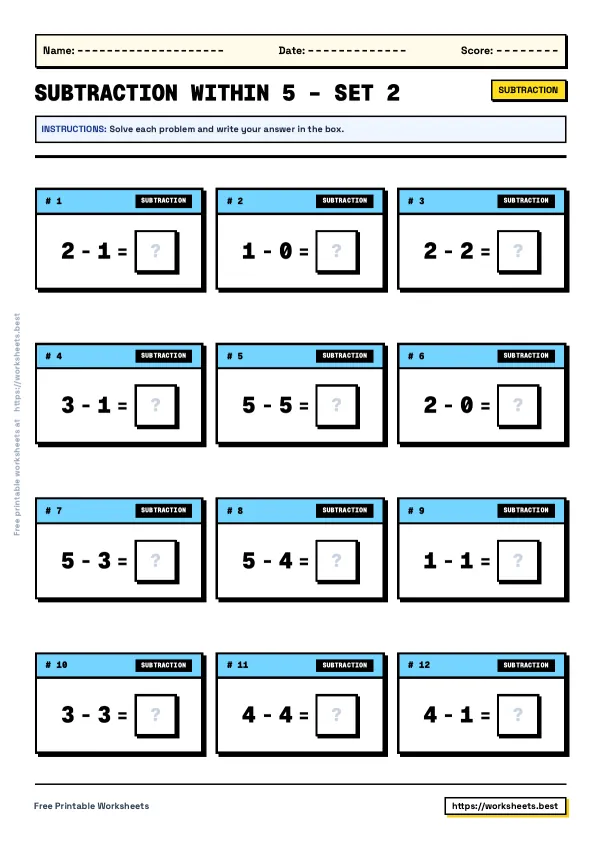
Subtraction Within 5 – Set 2
KindergartenMath Drills3-Digit Subtraction – Set 1
2nd–3rd GradeMath Drills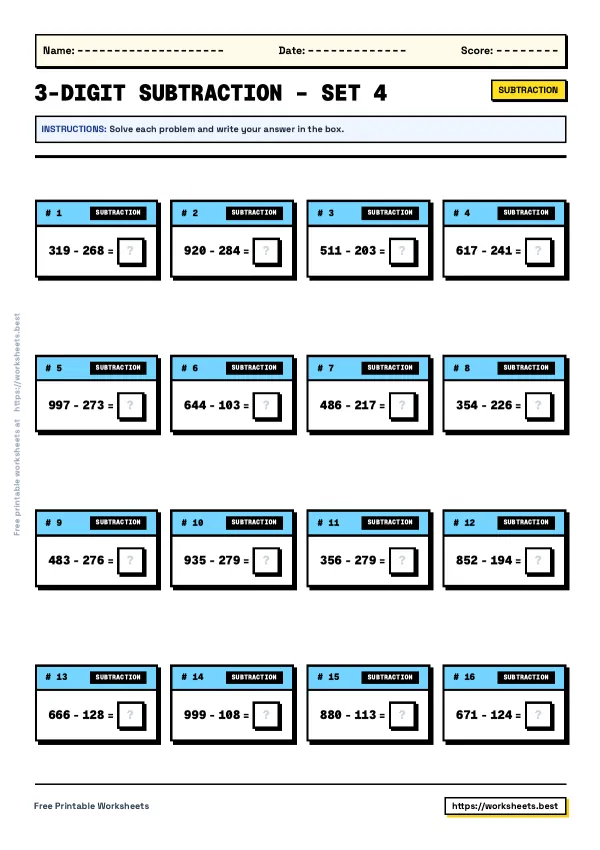
3-Digit Subtraction – Set 4
2nd–3rd GradeMath Drills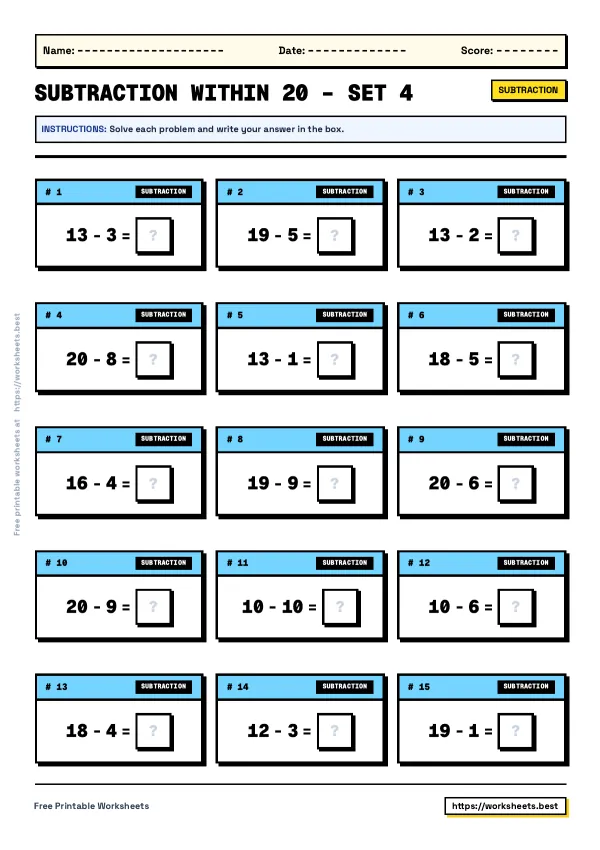
Subtraction Within 20 – Set 4
1st–2nd GradeMath Drills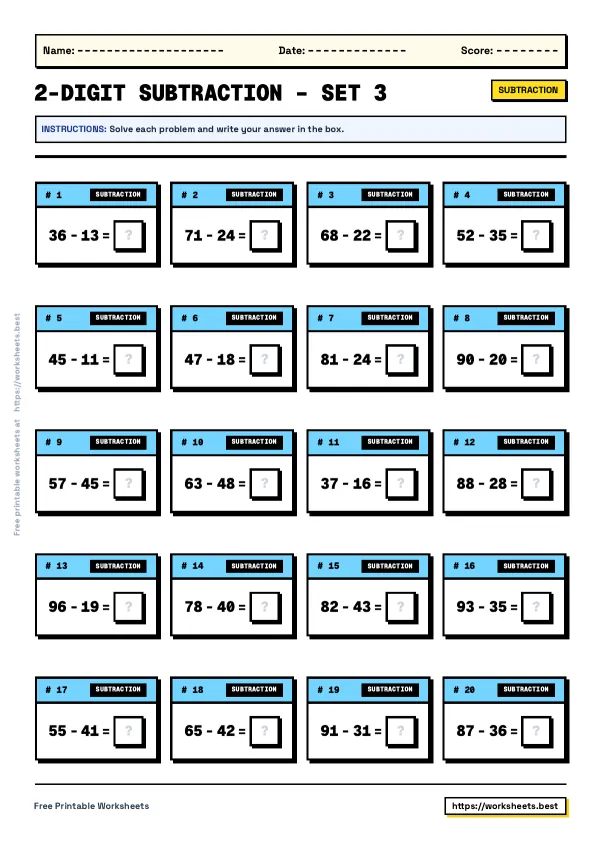
2-Digit Subtraction – Set 3
2nd GradeMath Drills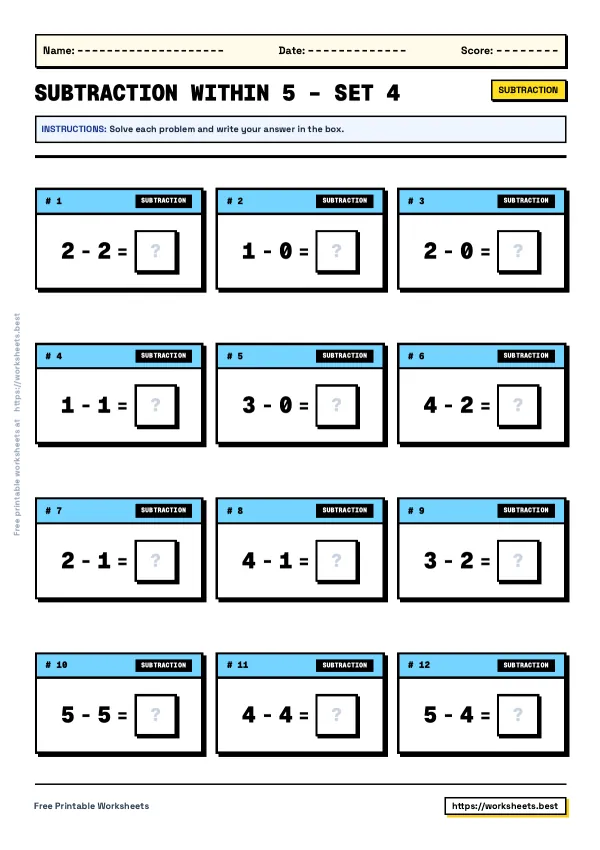
Subtraction Within 5 – Set 4
KindergartenMath Drills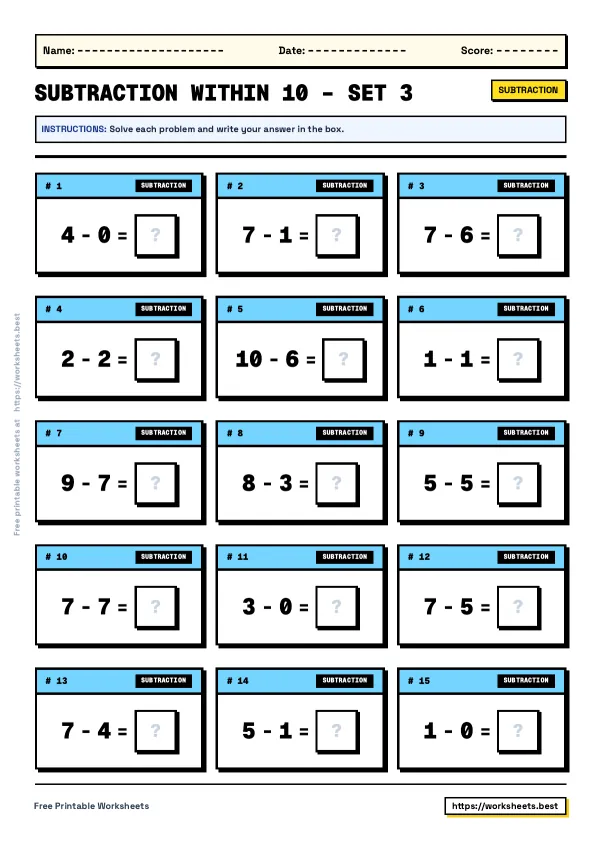
Subtraction Within 10 – Set 3
K–1st GradeMath Drills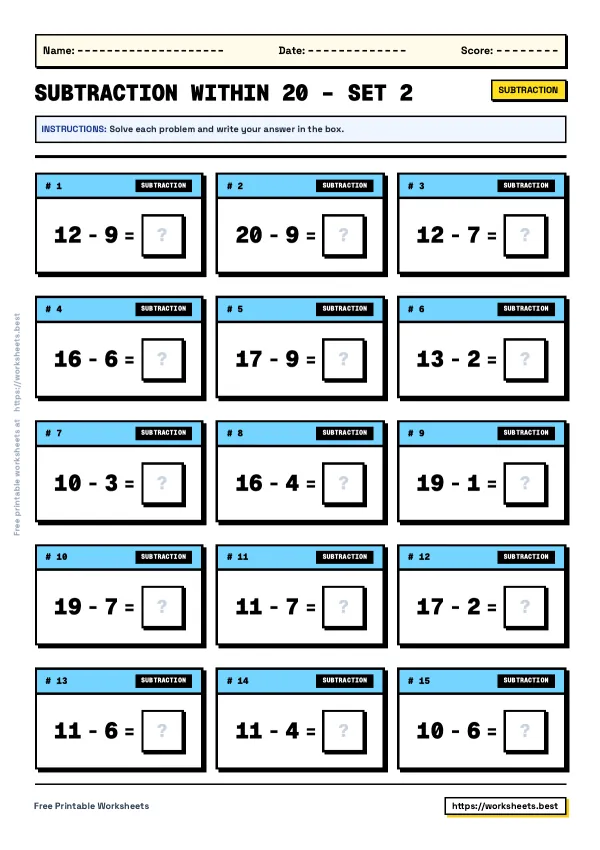
Subtraction Within 20 – Set 2
1st–2nd GradeMath Drills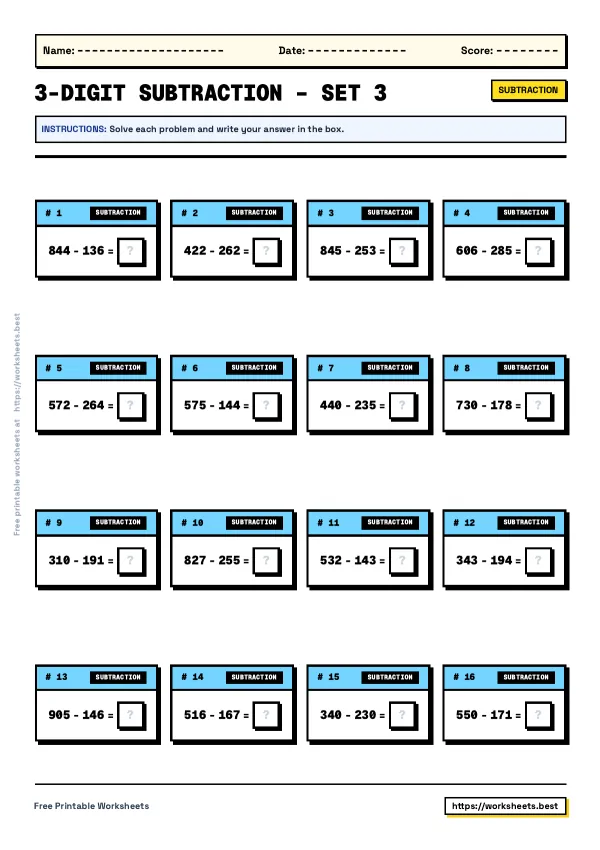
3-Digit Subtraction – Set 3
2nd–3rd GradeMath Drills
dig deeper
More Subtraction worksheets
from teachers
Tips for parents and teachers
- Keep kindergartners on facts within 5 and within 10 until they can answer without counting on fingers, then move to within 20 a little at a time.
- Let younger children use counters, a number line or a hundreds chart beside the drill page; the goal is a correct answer they can explain, not speed at first.
- For 2-digit and 3-digit sheets, have children circle each problem that needs regrouping before they solve anything, so borrowing becomes a decision rather than a surprise.
- Run one timed drill a week and compare it with the same drill a month later, which shows a child their own progress better than a daily stopwatch.
Questions parents ask
What subtraction facts should a kindergartener know?
Most kindergarteners work on subtracting within 5 and then within 10, usually with objects, fingers or drawings to support them. Small-number facts like these build the base for the within-20 work that comes in 1st grade.
When do children learn subtraction with regrouping?
Regrouping, or borrowing, usually appears once children are comfortable with place value and are subtracting 2-digit numbers, often in 2nd grade. By 3rd grade most are applying it to 3-digit problems.
How long should a subtraction drill take?
A short drill of about five to ten minutes is enough for most children in these grades, and stopping while they are still accurate matters more than finishing the page. If a child slows down and starts guessing, split the drill across two sittings.
My 1st grader still counts on fingers. Is that a problem?
No. Counting back on fingers is a normal step toward remembering facts, and it fades as children get repeated practice with the same small sets of numbers. Short, frequent drills within 10 or 20 help that shift along.
What is the difference between subtraction within 10 and within 20?
Within 10 means every answer stays at 10 or below, so children can check with counters or a number line. Within 20 uses larger totals and asks them to hold a number in their head while counting back, which is a step closer to mental math.