Vocabulary Worksheets
A crossword, a word search and a picture matching page all ask a child to do the same thing: hold a word in mind and put it to use. Vocabulary Worksheets build on that idea for children in kindergarten through 3rd grade, with hundreds of worksheets that move between the three formats so a topic can be practiced more than one way.
Read more +
Themes follow the school year and then fan out: holidays and festivals, weather and seasons, animals, birds, food, sea animals, home and vegetables. A Thanksgiving picture crossword asks a child to read a small drawing and write the word for a deer or a barn, while an easy animals word search hides camel, lamb and cat among the letters. Picture matching suits the youngest children, who can join a picture to a word before they can spell it, crosswords ask for the spelling itself, and word searches train the eye to sweep steadily across a grid.
Pages run from easy to medium, so a kindergartener and a 3rd grader can sit at the same table with sheets that fit them. Use them for morning work, a quiet literacy center, homework, or a filler during a holiday week. Answer keys are included for all of the worksheets, which makes checking quick at home and in class and gives children fast feedback on spelling as well as meaning.
Reading, word recognition, spelling and problem solving all get a turn, so a child is rarely just copying letters. Hand out a sheet after a read-aloud on the same theme, and the words will already sound familiar when they appear in the puzzle.
start with these
Featured worksheets
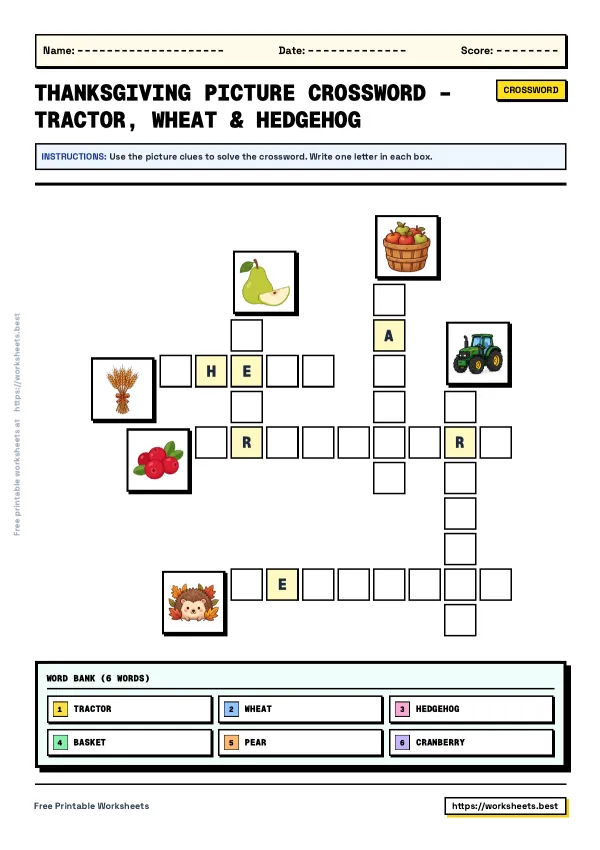
Thanksgiving Picture Crossword – Tractor, Wheat & Hedgehog
2nd–3rd GradeCrossword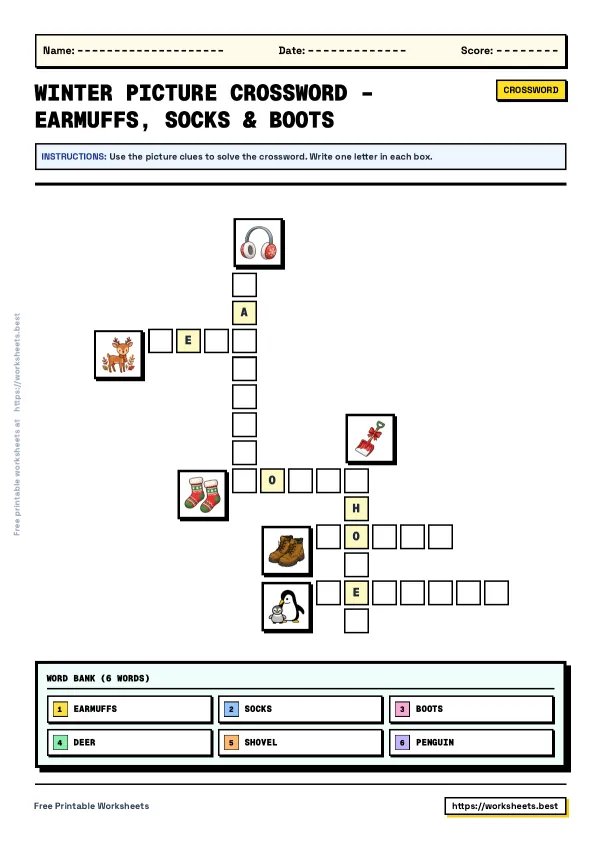
Winter Picture Crossword – Earmuffs, Socks & Boots
2nd–3rd GradeCrossword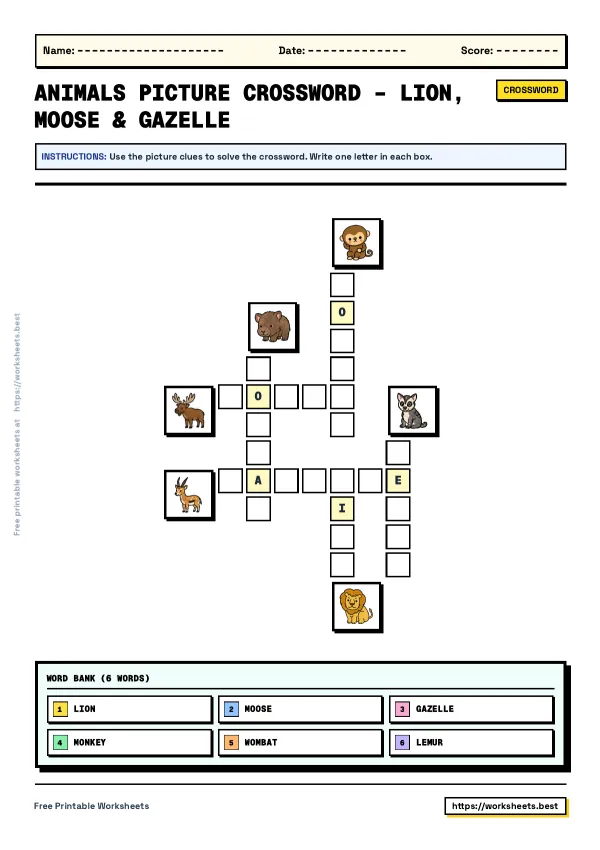
Animals Picture Crossword – Lion, Moose & Gazelle
1st–2nd GradeCrossword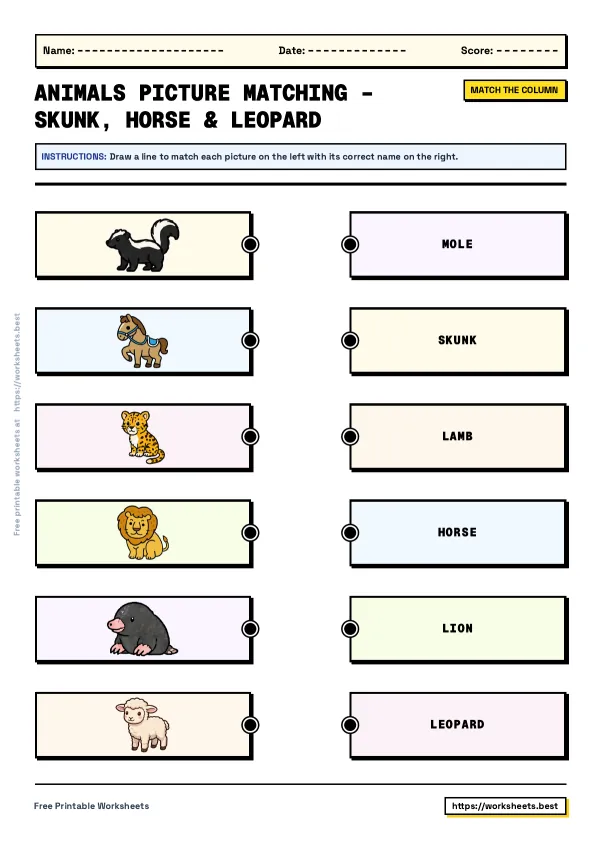
Animals Picture Matching – Skunk, Horse & Leopard
K–1st GradePicture Matching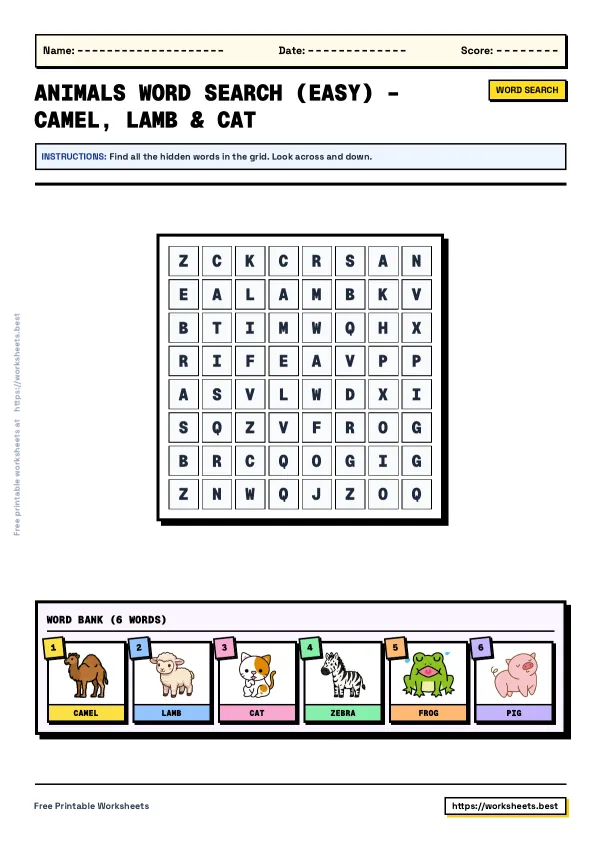
Animals Word Search (Easy) – Camel, Lamb & Cat
K–1st GradeWord Search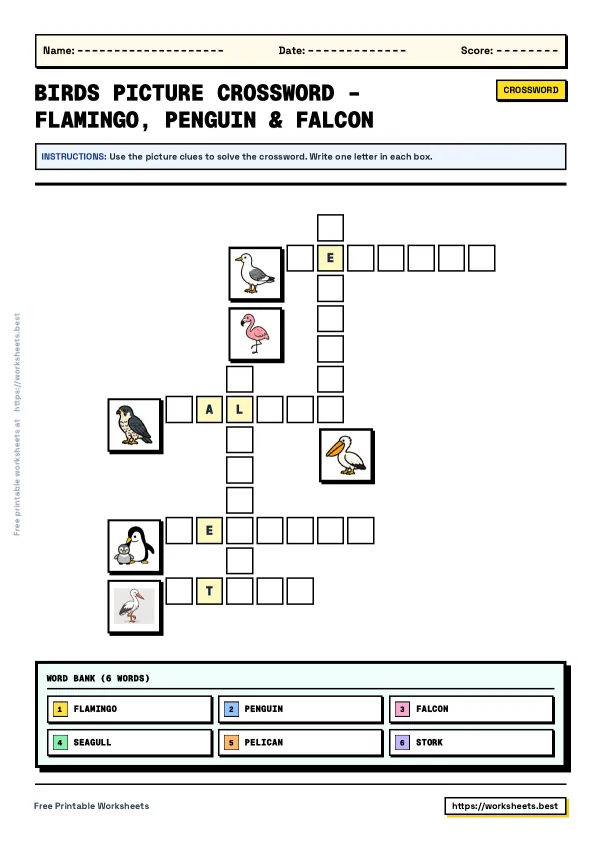
Birds Picture Crossword – Flamingo, Penguin & Falcon
2nd–3rd GradeCrossword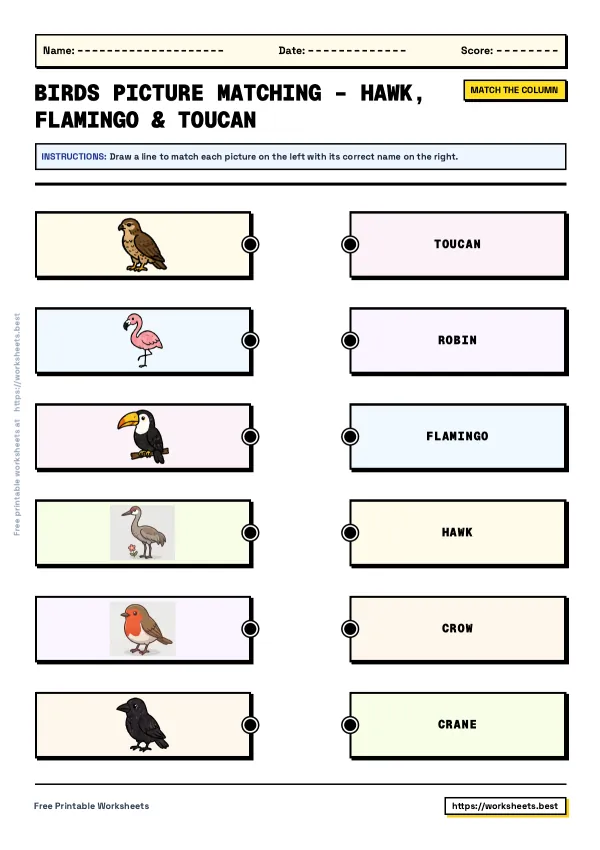
Birds Picture Matching – Hawk, Flamingo & Toucan
K–1st GradePicture Matching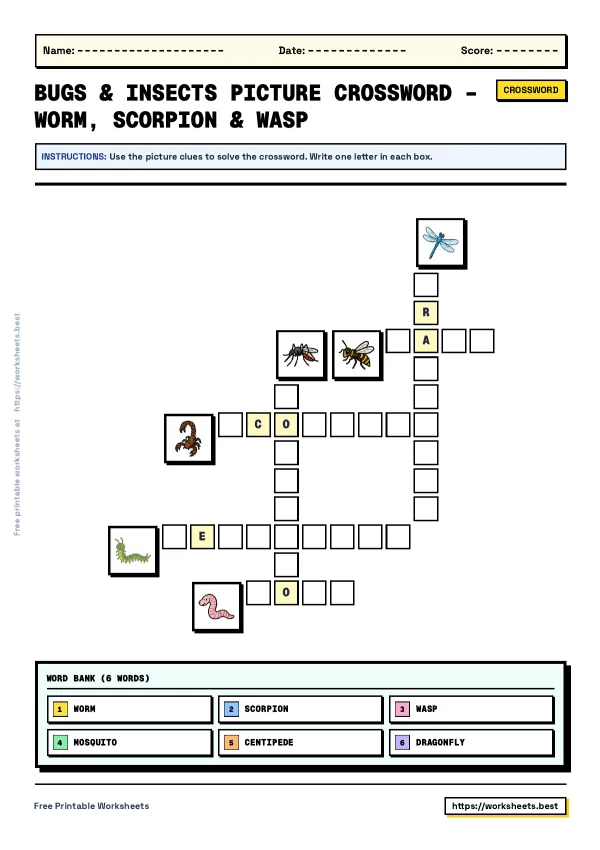
Bugs & Insects Picture Crossword – Worm, Scorpion & Wasp
2nd–3rd GradeCrossword
every sheet
All Vocabulary worksheets
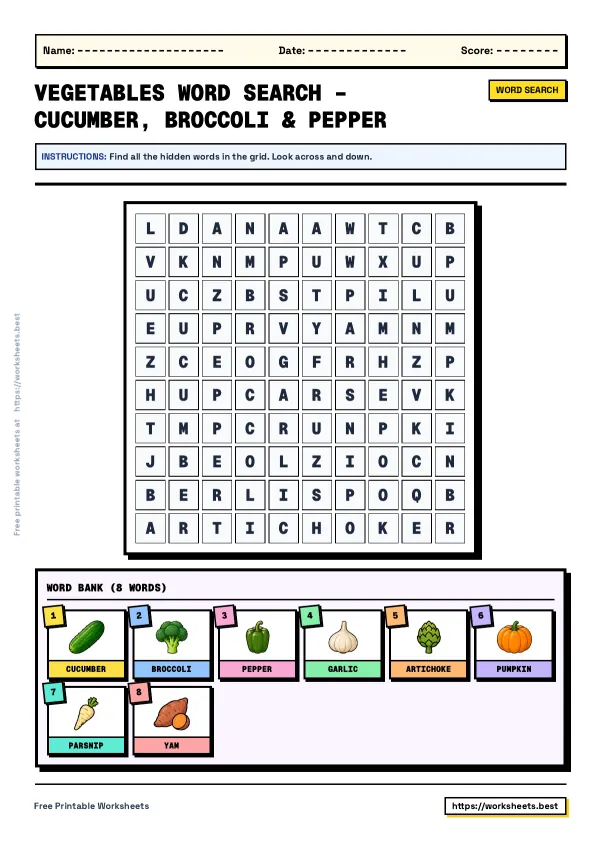
Vegetables Word Search – Cucumber, Broccoli & Pepper
1st–2nd GradeWord Search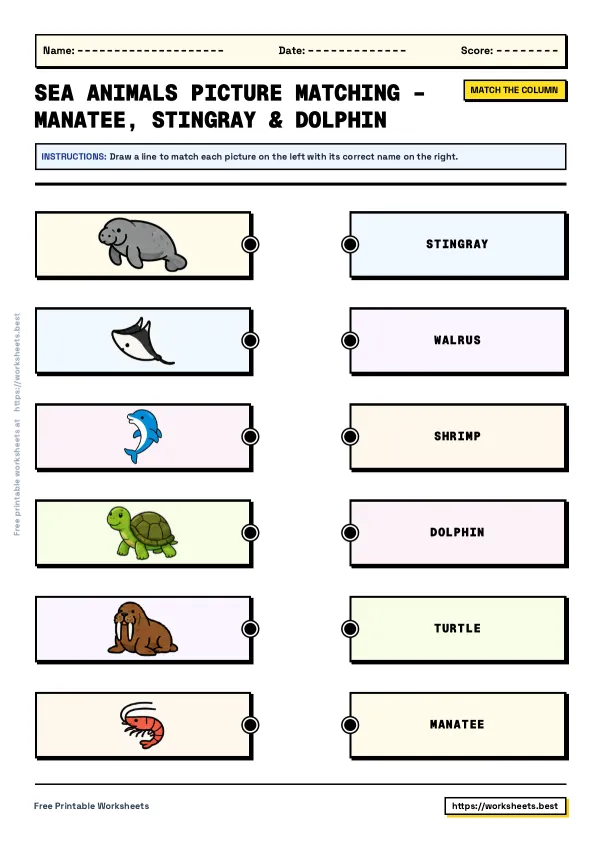
Sea Animals Picture Matching – Manatee, Stingray & Dolphin
K–1st GradePicture Matching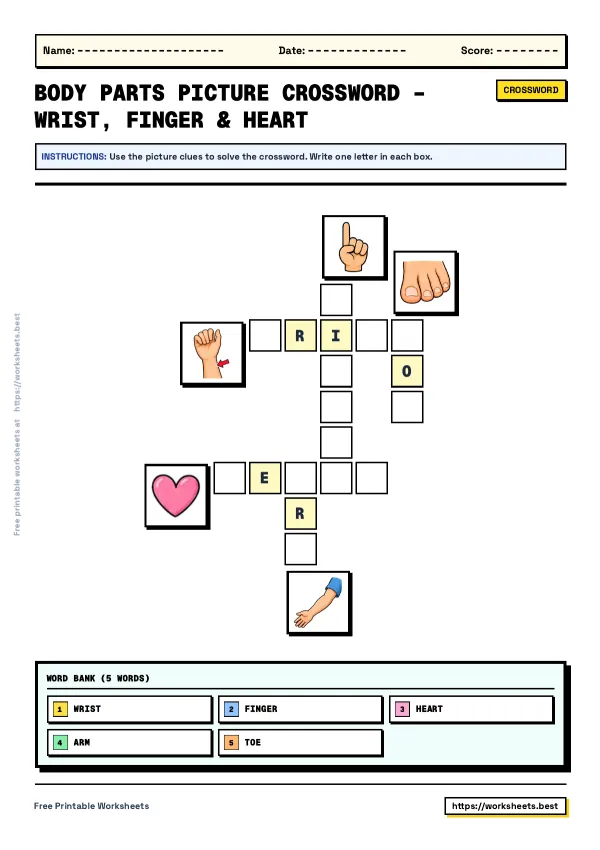
Body Parts Picture Crossword – Wrist, Finger & Heart
1st–2nd GradeCrossword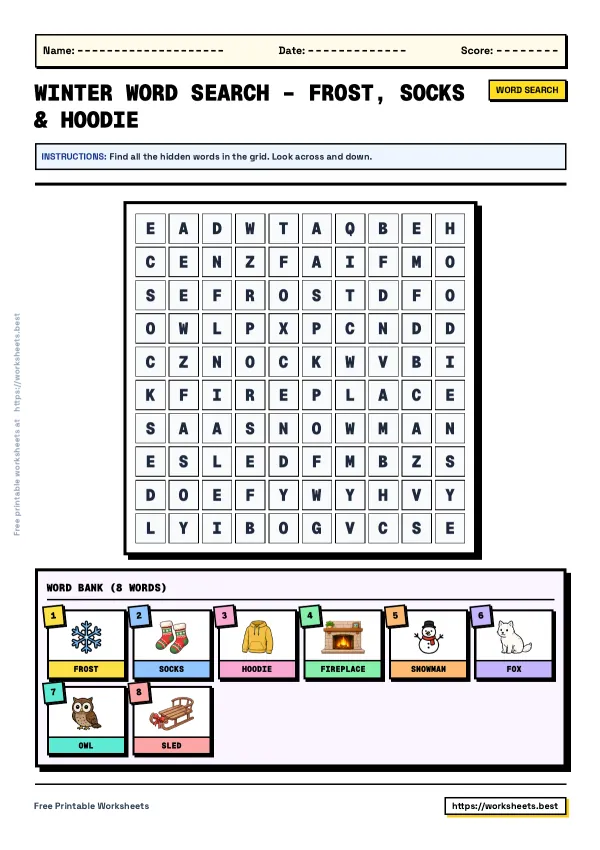
Winter Word Search – Frost, Socks & Hoodie
1st–2nd GradeWord Search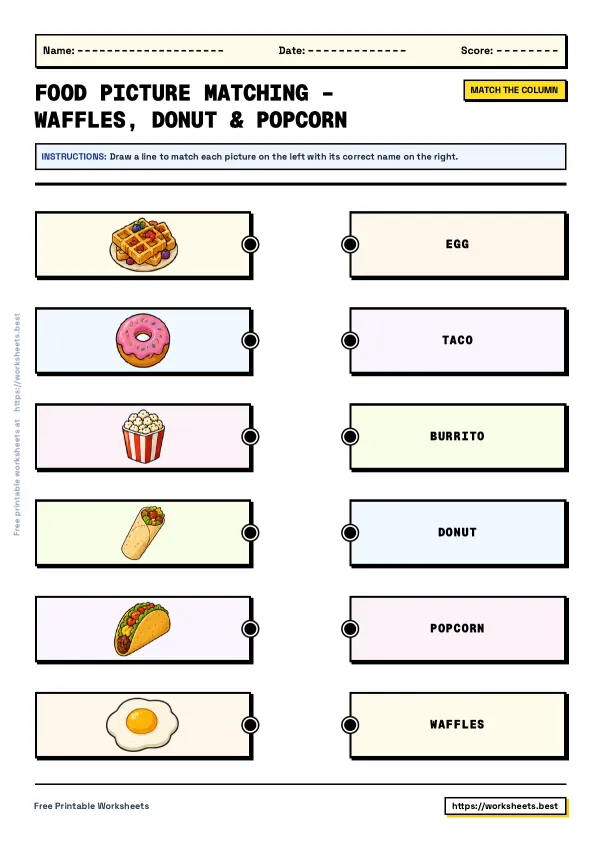
Food Picture Matching – Waffles, Donut & Popcorn
K–1st GradePicture Matching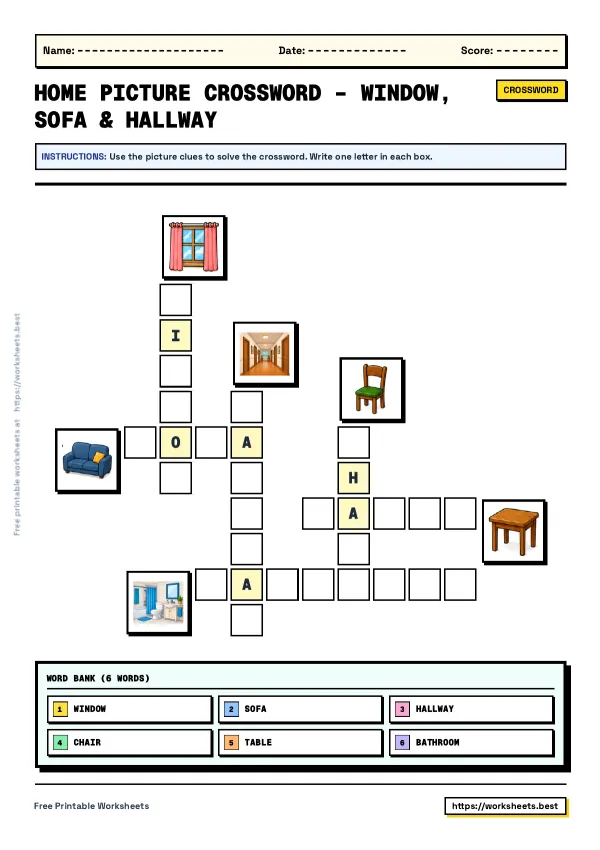
Home Picture Crossword – Window, Sofa & Hallway
2nd–3rd GradeCrossword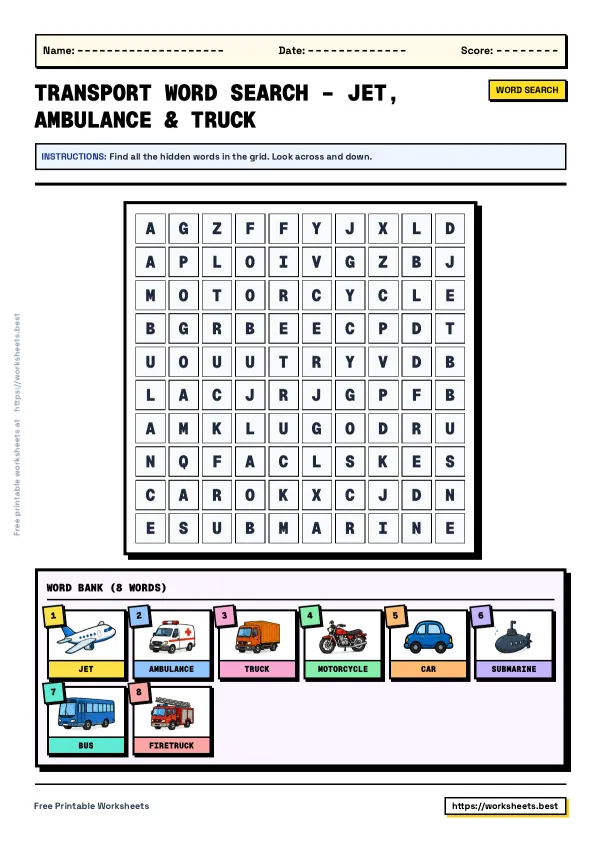
Transport Word Search – Jet, Ambulance & Truck
1st–2nd GradeWord Search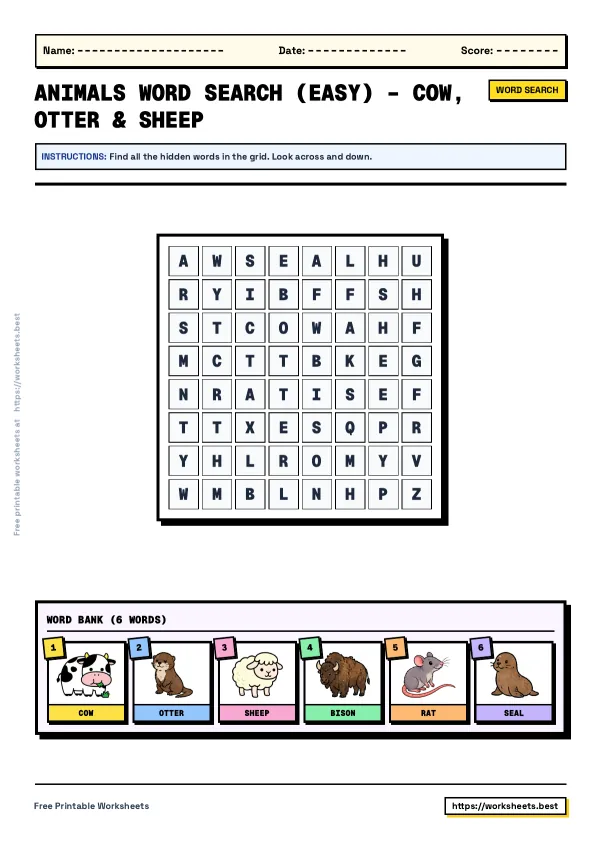
Animals Word Search (Easy) – Cow, Otter & Sheep
K–1st GradeWord Search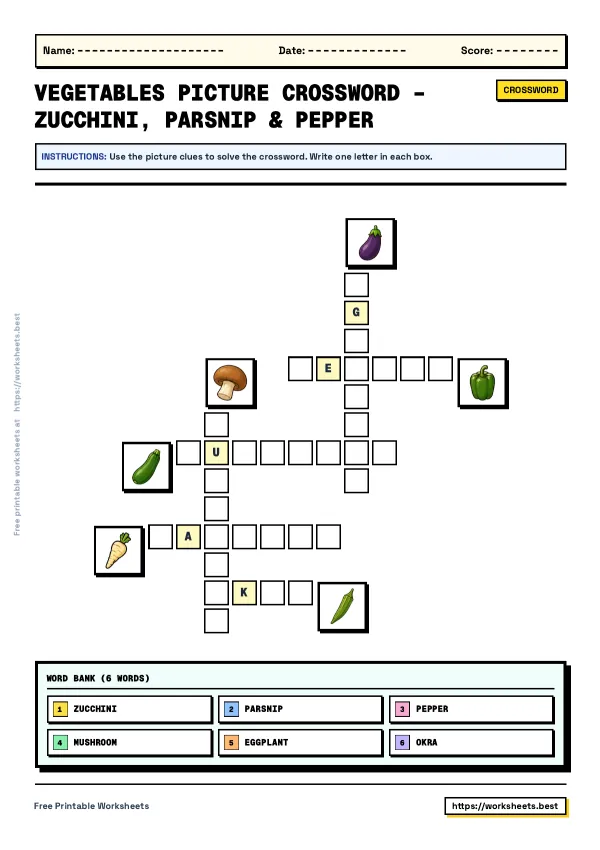
Vegetables Picture Crossword – Zucchini, Parsnip & Pepper
2nd–3rd GradeCrossword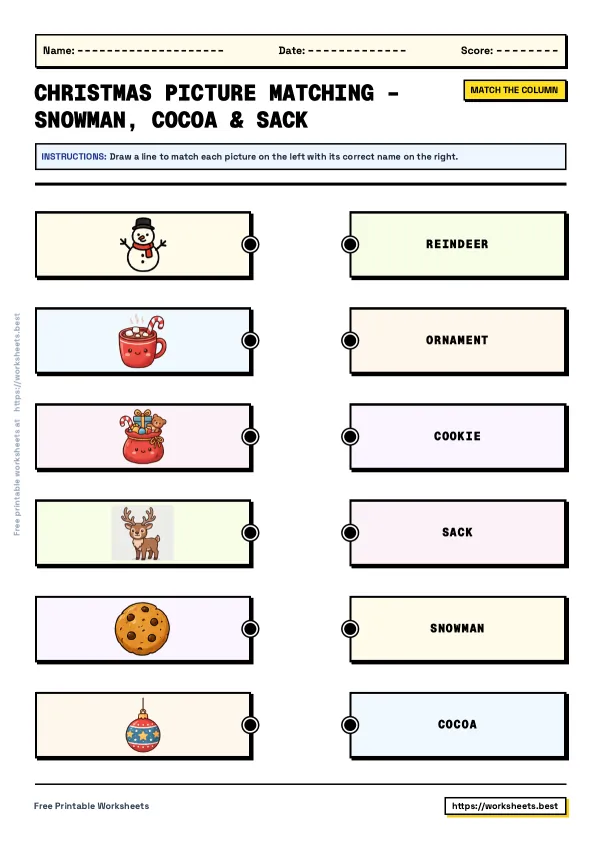
Christmas Picture Matching – Snowman, Cocoa & Sack
K–1st GradePicture Matching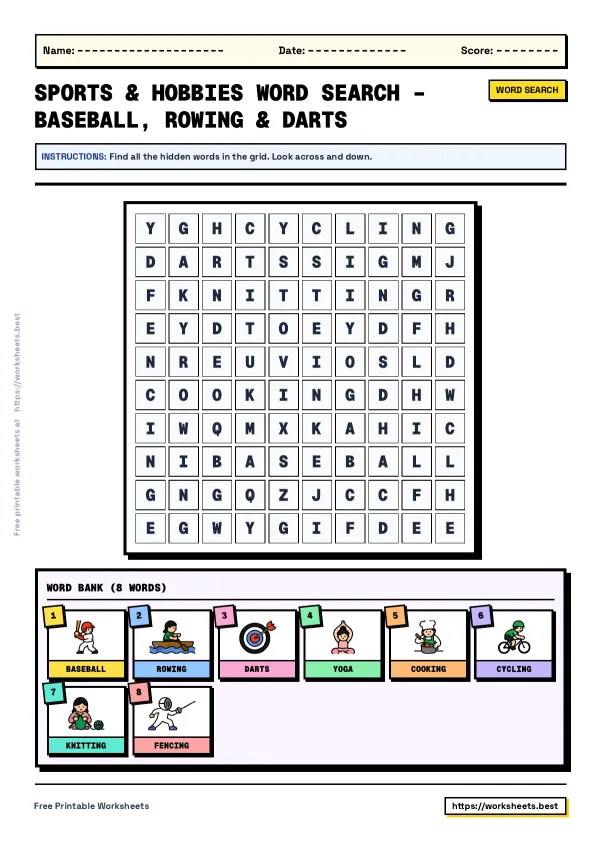
Sports & Hobbies Word Search – Baseball, Rowing & Darts
1st–2nd GradeWord Search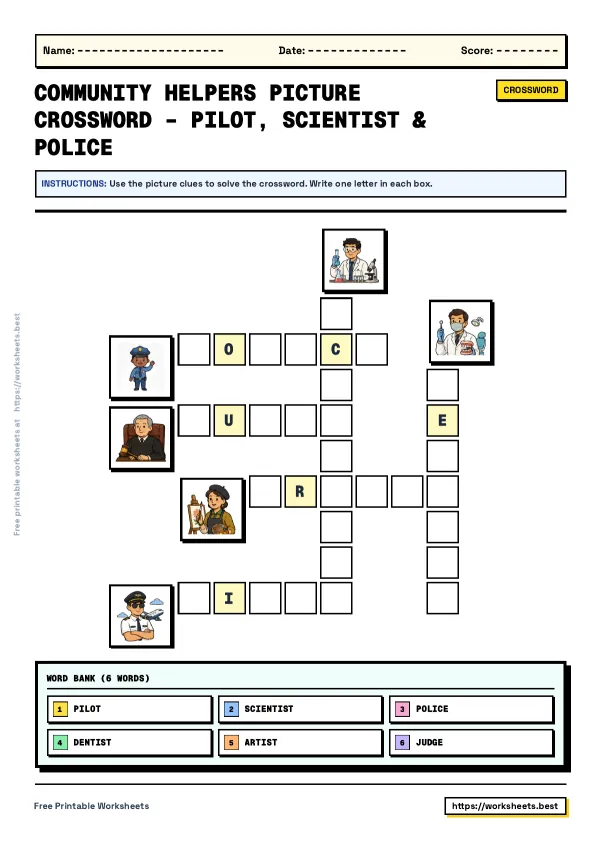
Community Helpers Picture Crossword – Pilot, Scientist & Police
2nd–3rd GradeCrossword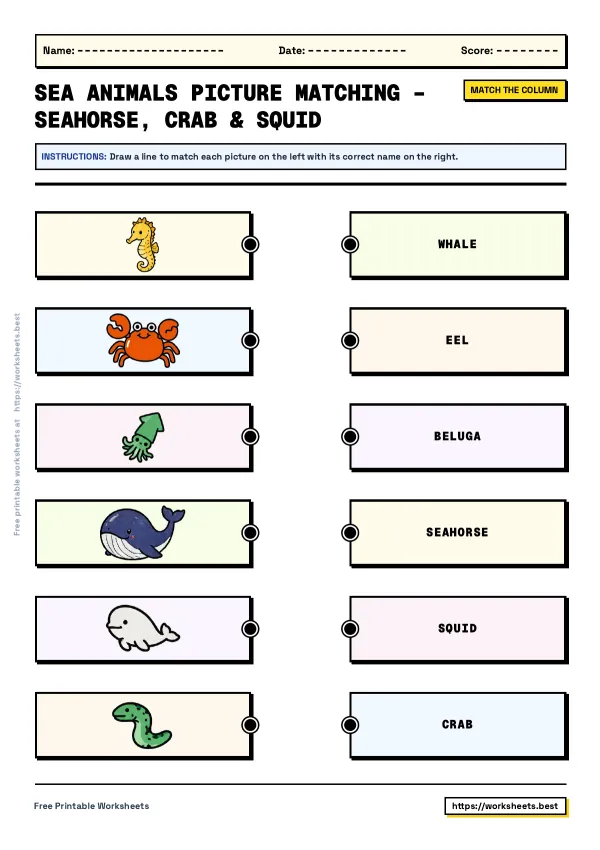
Sea Animals Picture Matching – Seahorse, Crab & Squid
K–1st GradePicture Matching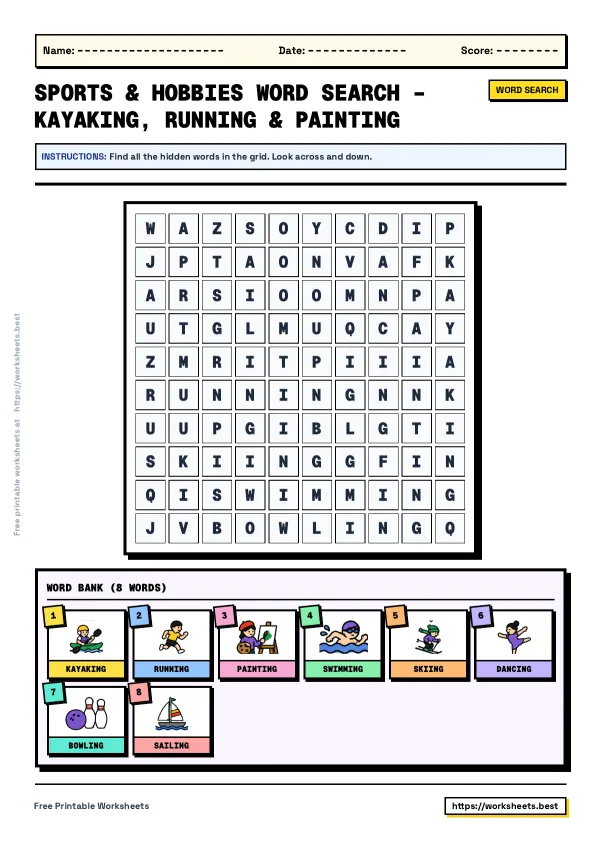
Sports & Hobbies Word Search – Kayaking, Running & Painting
1st–2nd GradeWord Search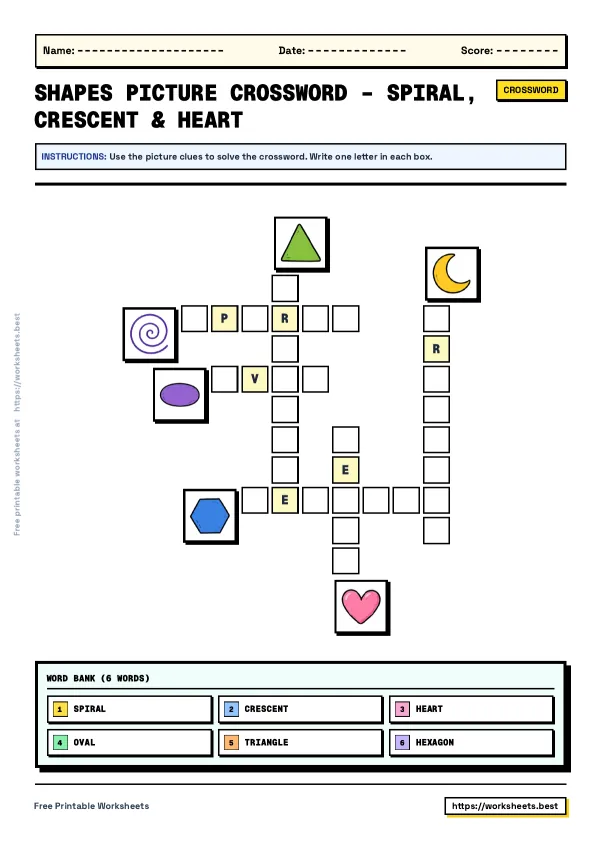
Shapes Picture Crossword – Spiral, Crescent & Heart
2nd–3rd GradeCrossword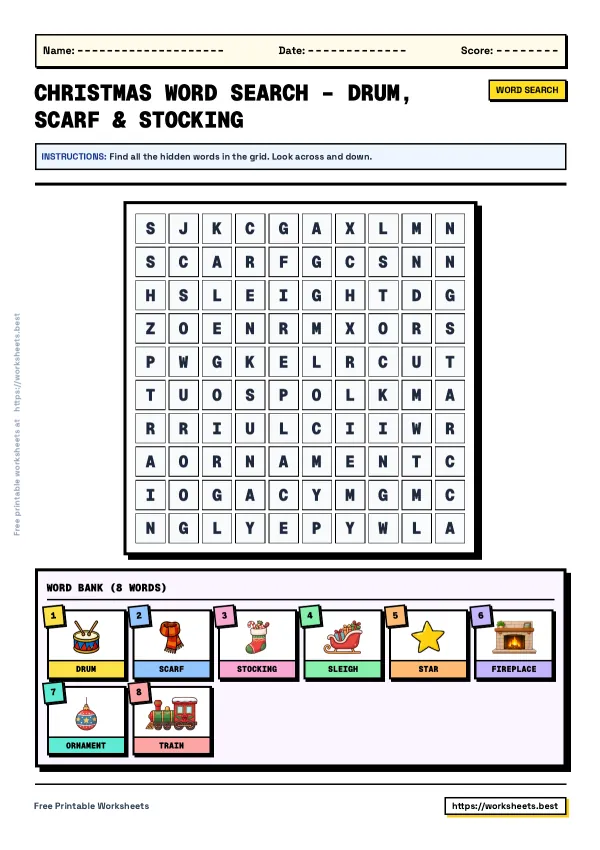
Christmas Word Search – Drum, Scarf & Stocking
1st–2nd GradeWord Search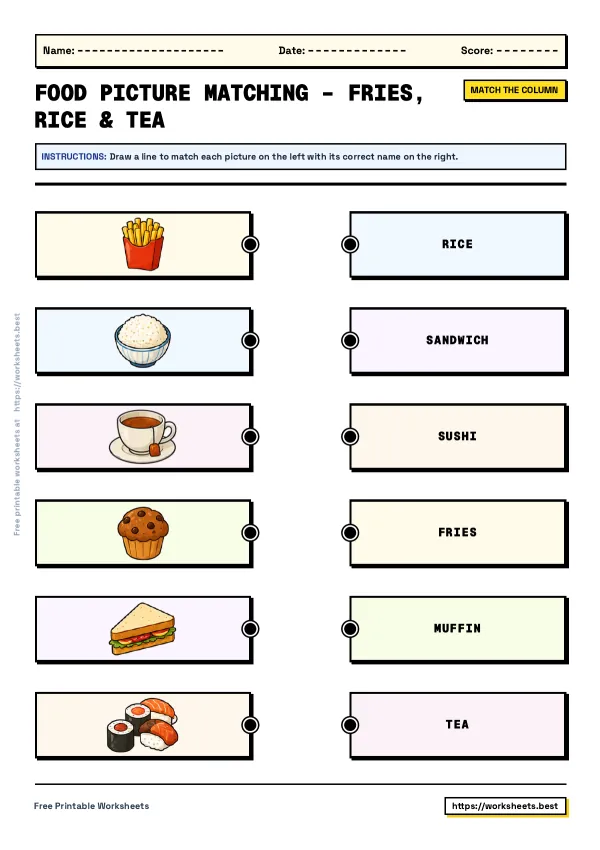
Food Picture Matching – Fries, Rice & Tea
K–1st GradePicture Matching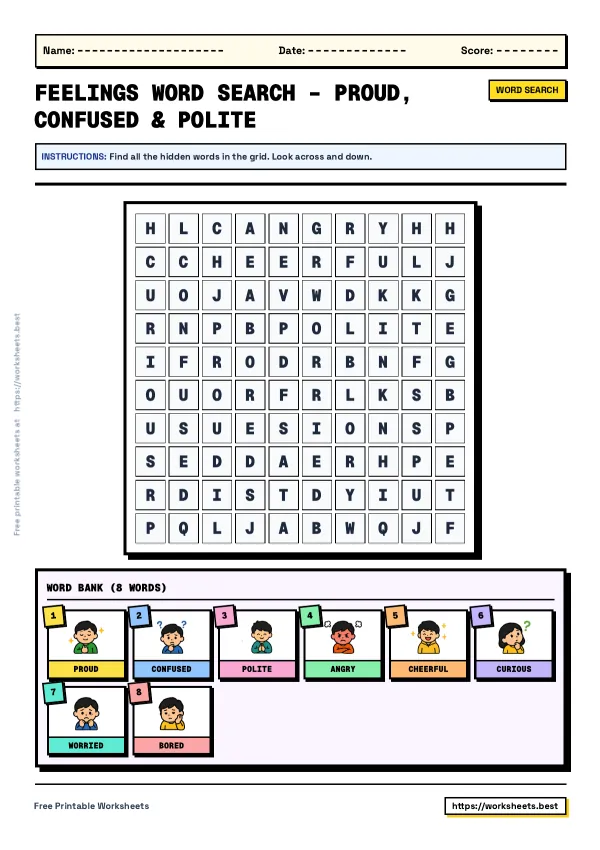
Feelings Word Search – Proud, Confused & Polite
1st–2nd GradeWord Search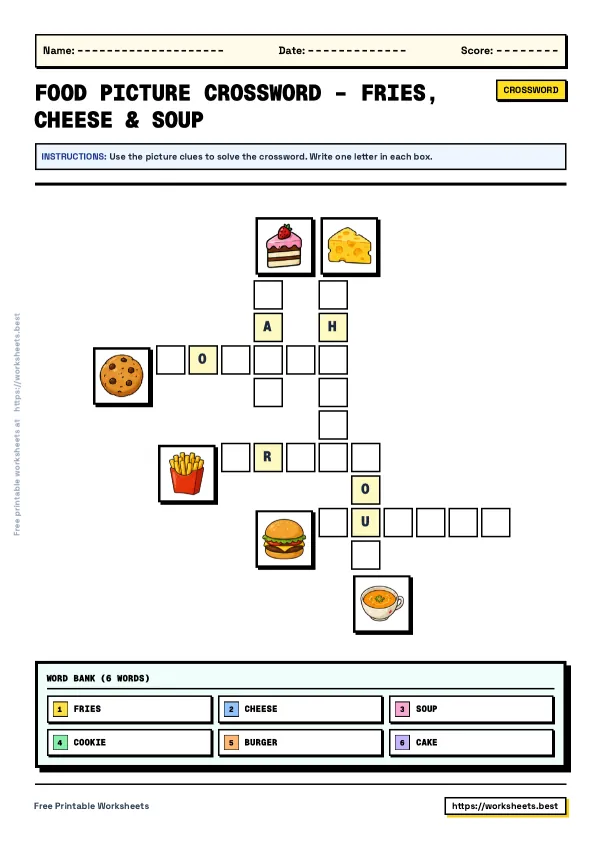
Food Picture Crossword – Fries, Cheese & Soup
2nd–3rd GradeCrossword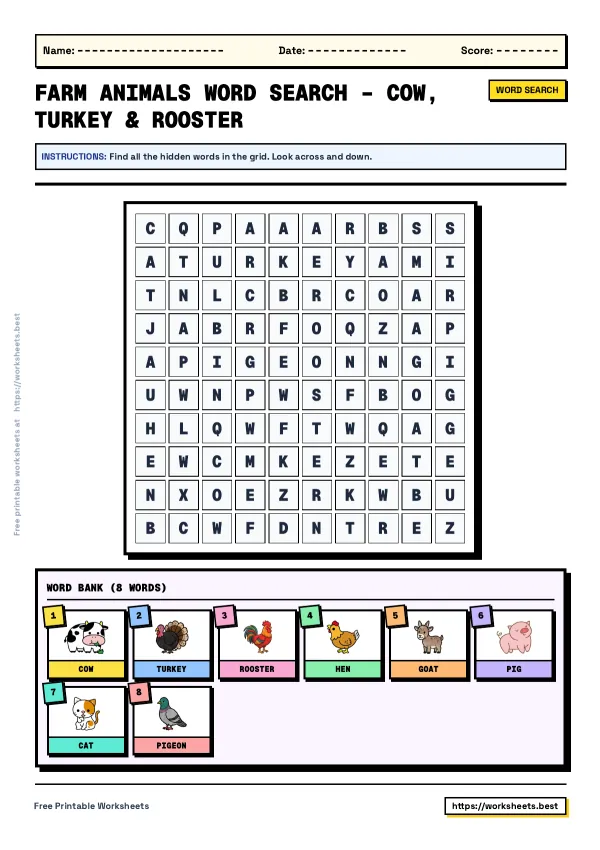
Farm Animals Word Search – Cow, Turkey & Rooster
1st–2nd GradeWord Search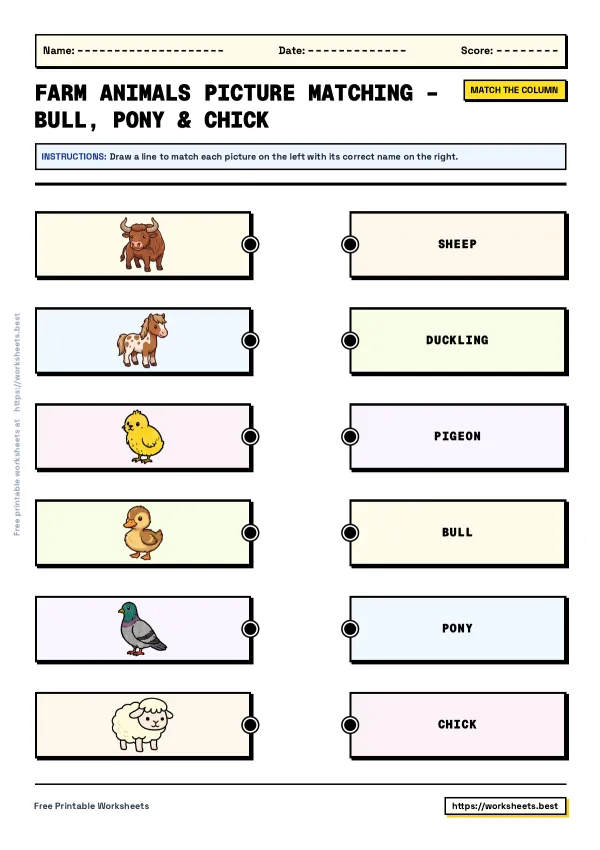
Farm Animals Picture Matching – Bull, Pony & Chick
K–1st GradePicture Matching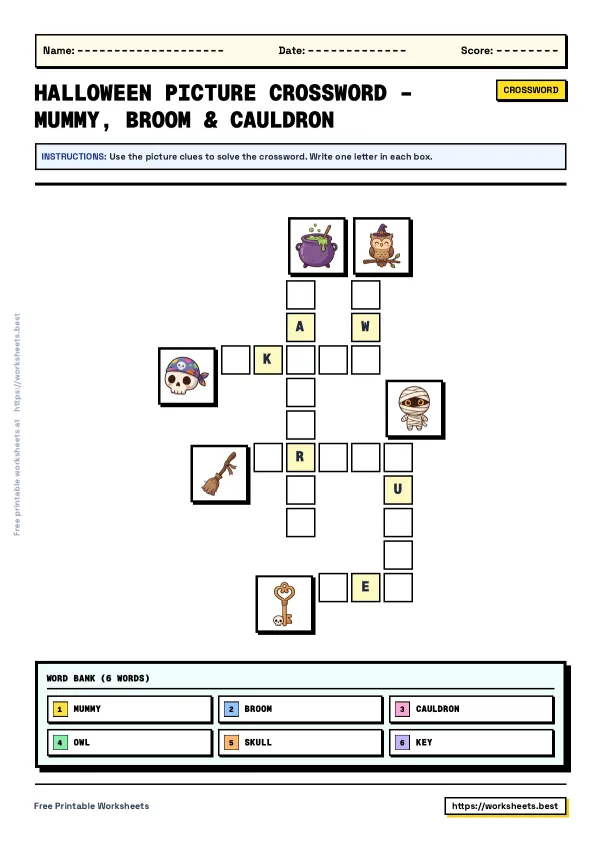
Halloween Picture Crossword – Mummy, Broom & Cauldron
2nd–3rd GradeCrossword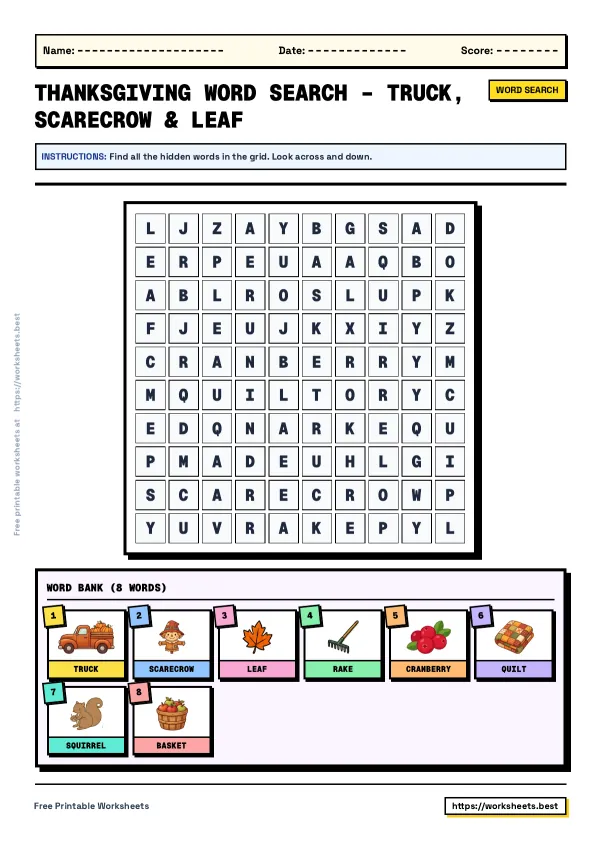
Thanksgiving Word Search – Truck, Scarecrow & Leaf
1st–2nd GradeWord Search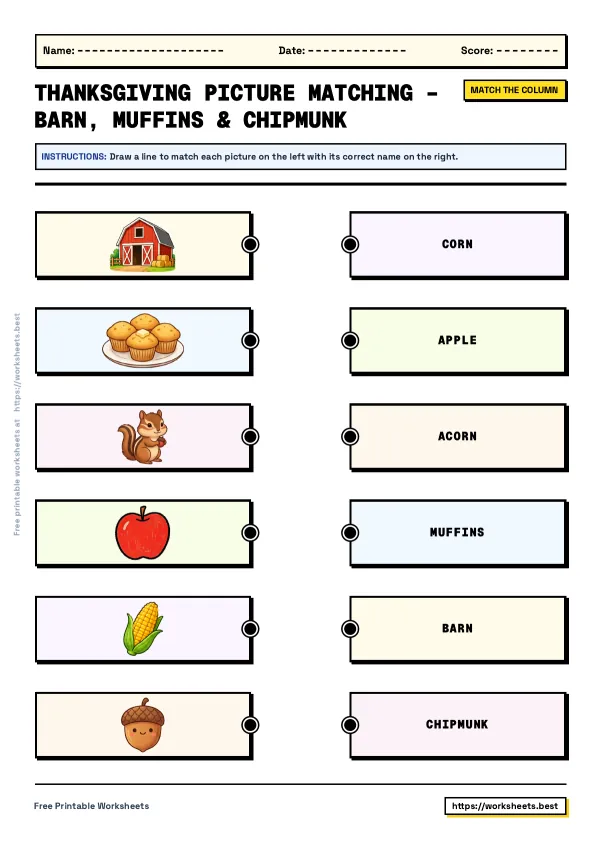
Thanksgiving Picture Matching – Barn, Muffins & Chipmunk
K–1st GradePicture Matching
dig deeper
More Vocabulary worksheets
from teachers
Tips for parents and teachers
- Say the words aloud together before anyone picks up a pencil, and have the child name each picture first. Naming the picture separates the thinking from the spelling and gives a shy writer a running start.
- In crosswords, ask children to count the boxes before writing a letter, since matching a word to its length catches most slips early. Let them erase freely — the point is the word, not a clean page.
- For word searches, have children trace a finger along each row from left to right before hunting for a match. That steady sweep is what builds visual scanning, and it stops the random hunting that tires young children out.
- Finish by using two or three of the words in a spoken sentence, or sort the finished words by theme. A minute of talk about the words does more for later recall than a second copy of the same page.
Questions parents ask
Which vocabulary words should a kindergartener know?
Children this age do best with words they can picture: animal names, weather words, foods, and things around the house. The picture-based formats here lean on exactly those categories, so the meaning is clear before the spelling is.
Are crosswords too hard for kindergarten and 1st grade?
A picture crossword with short words and a word bank is manageable for many kindergartners, especially with an adult reading the clues aloud. Start with the easy sheets and let the child write only the first letter of each word if that is where they are.
How do word searches help with reading?
Finding a word in a grid means holding its letters in mind while scanning, which is the same skill children use when they check a word on a page. It also teaches left-to-right movement and attention to letter order, not just letter names.
Should my child spell every word correctly on a picture matching sheet?
Picture matching is mainly about meaning, so a child who connects the drawing to the right word has done the work. Use the answer key to talk about the spelling afterward, and save strict spelling practice for the crossword sheets.
How can I use these at home during holidays?
Thanksgiving, winter, Christmas and Halloween themes each have their own sheets, which makes them easy to set out during a school break or a long weekend. A page or two at the kitchen table keeps reading and word recognition going without feeling like homework.