Math Drill Worksheets
Math drill worksheets give children short, repeated practice with the facts and procedures they need to recall quickly. The collection covers multiplication first, then addition, subtraction and division, with sets for kindergarten through 5th grade. Children work through focused math drills that build speed and accuracy with math facts, including multiplication and division facts and addition and subtraction within 5, 10 and 20 as well as larger two- and three-digit problems.
Read more +
Adding two-digit numbers gives children practice with larger sums, while multiplying a two-digit number by a single digit builds accuracy with multiplication facts. Many sets progress from smaller facts to two-digit and three-digit work, and some division practice includes remainders. Answer keys are included. Use the sheets for a short daily warm-up, a quick practice round, or a review at home or in class. They suit kindergarten, 1st grade, 2nd grade, 3rd grade, 4th grade and 5th grade, and teachers can choose the level that matches the skill a child is learning.
start with these
Featured worksheets
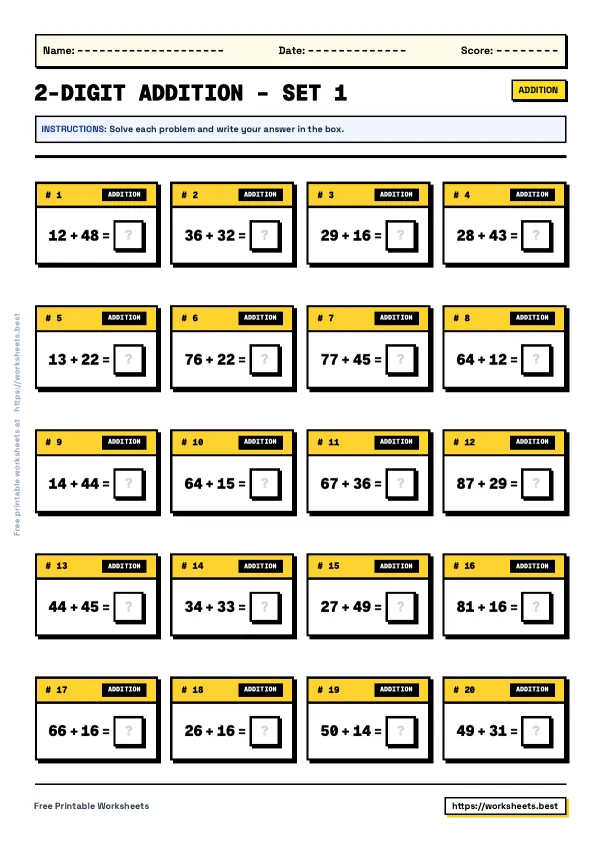
2-Digit Addition – Set 1
2nd GradeMath Drills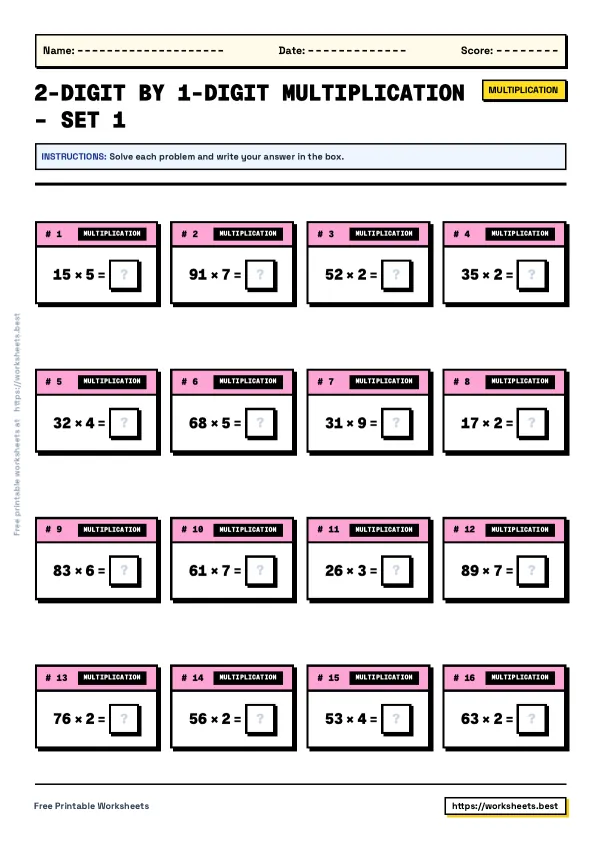
2-Digit by 1-Digit Multiplication – Set 1
4th GradeMath Drills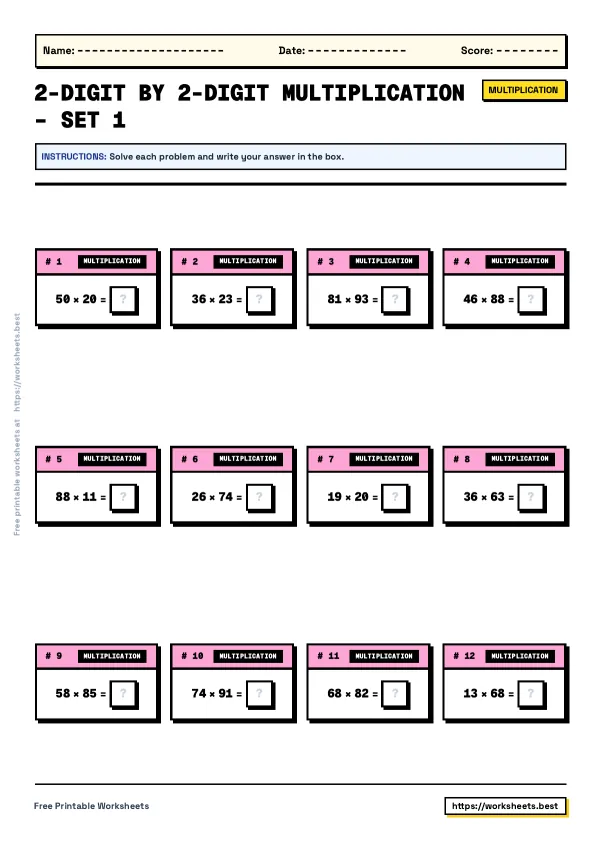
2-Digit by 2-Digit Multiplication – Set 1
4th–5th GradeMath Drills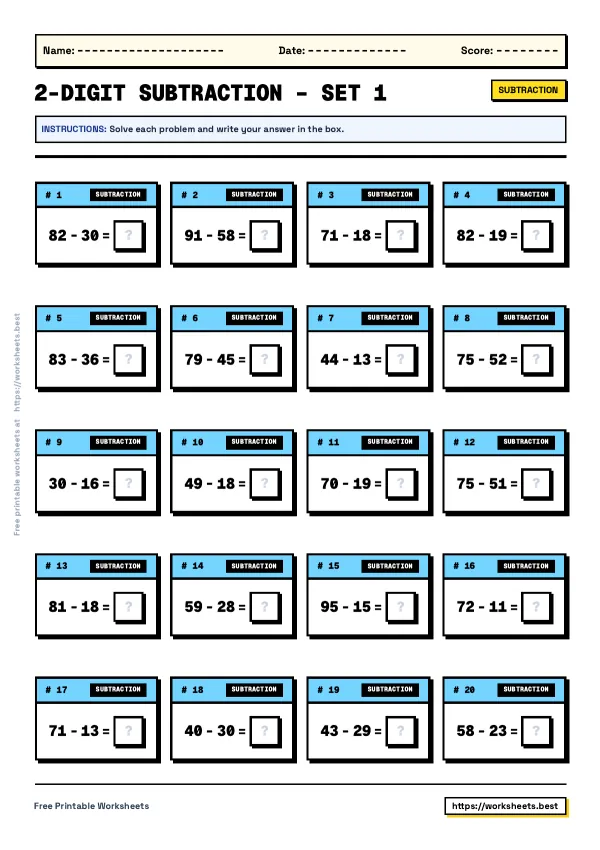
2-Digit Subtraction – Set 1
2nd GradeMath Drills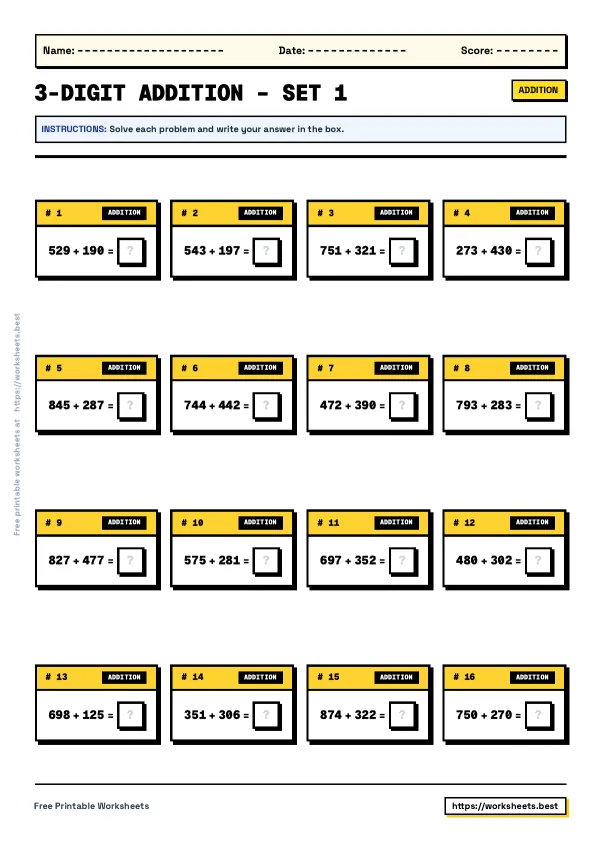
3-Digit Addition – Set 1
2nd–3rd GradeMath Drills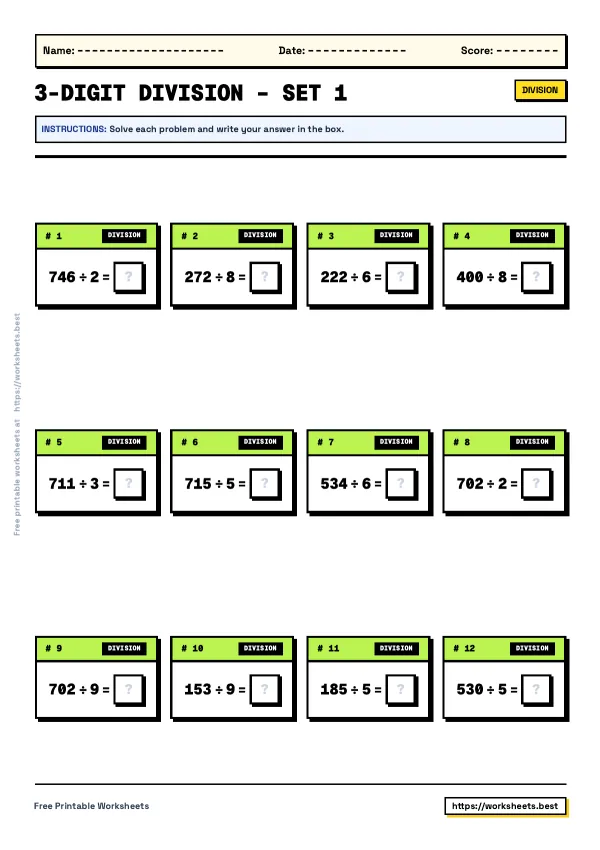
3-Digit Division – Set 1
4th–5th GradeMath Drills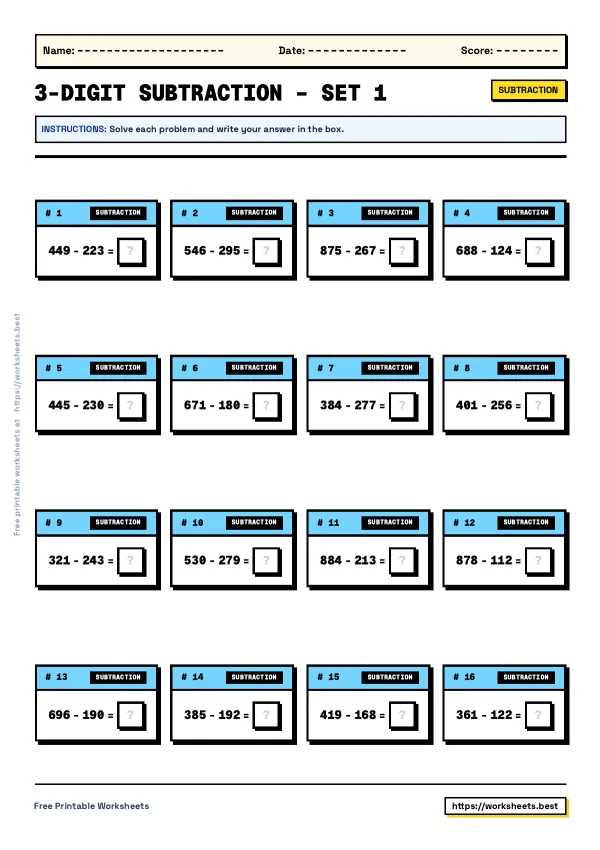
3-Digit Subtraction – Set 1
2nd–3rd GradeMath Drills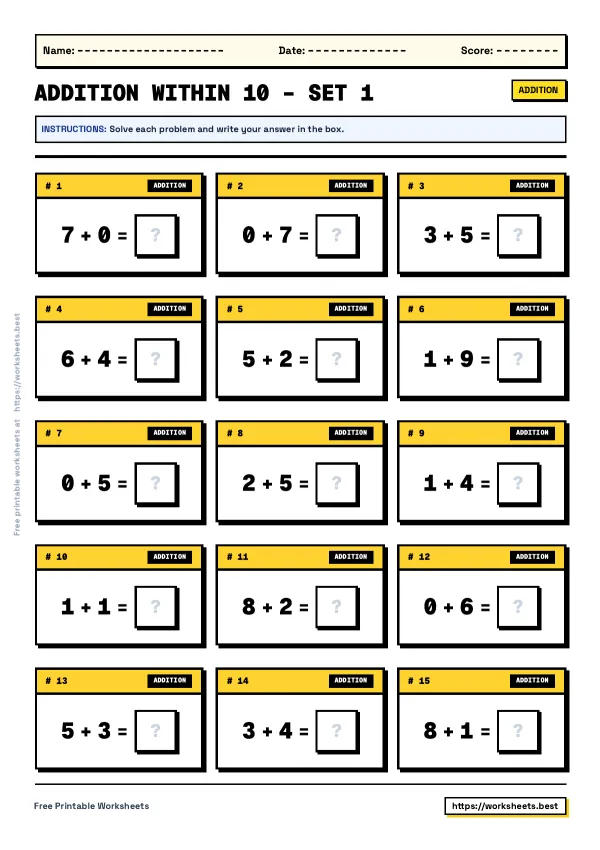
Addition Within 10 – Set 1
K–1st GradeMath Drills
every sheet
All Math Drill worksheets
3-Digit Subtraction – Set 1
2nd–3rd GradeMath Drills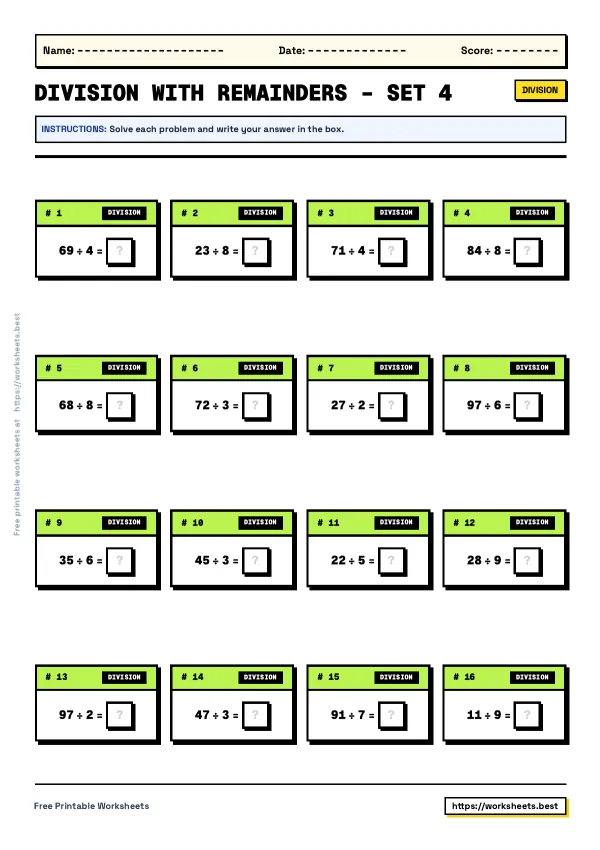
Division With Remainders – Set 4
4th GradeMath Drills2-Digit Addition – Set 1
2nd GradeMath Drills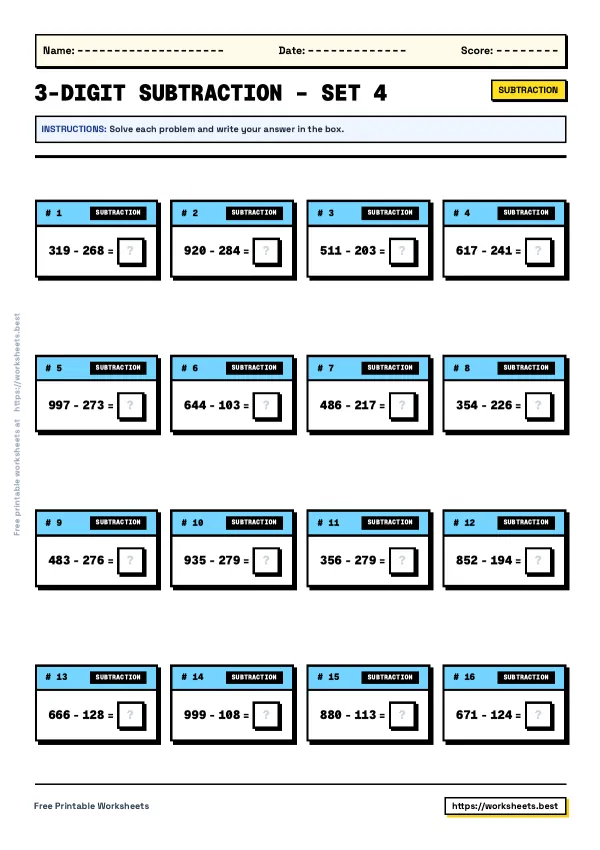
3-Digit Subtraction – Set 4
2nd–3rd GradeMath Drills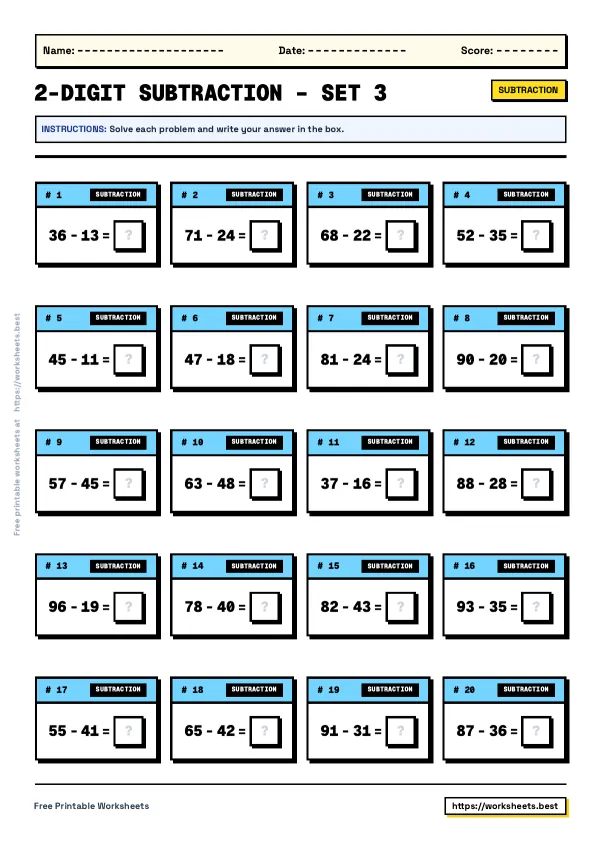
2-Digit Subtraction – Set 3
2nd GradeMath Drills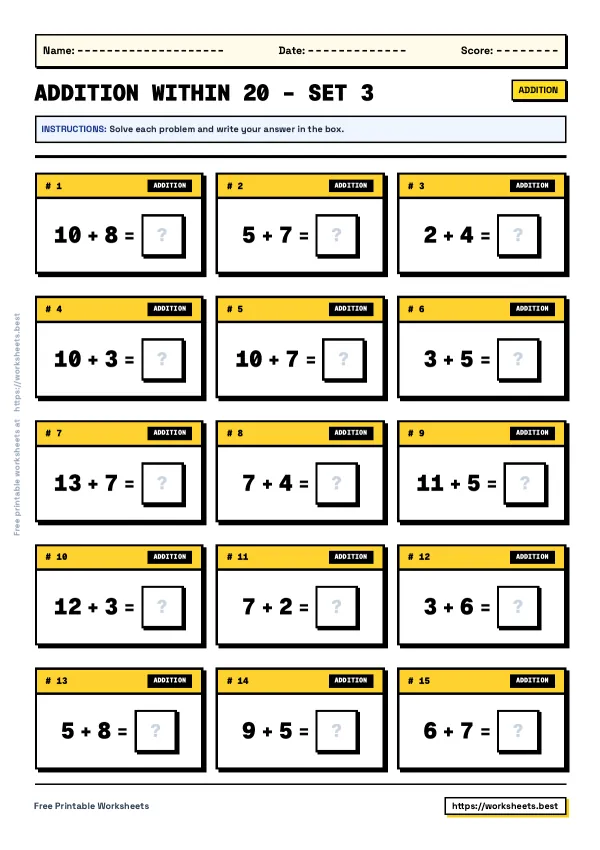
Addition Within 20 – Set 3
1st–2nd GradeMath Drills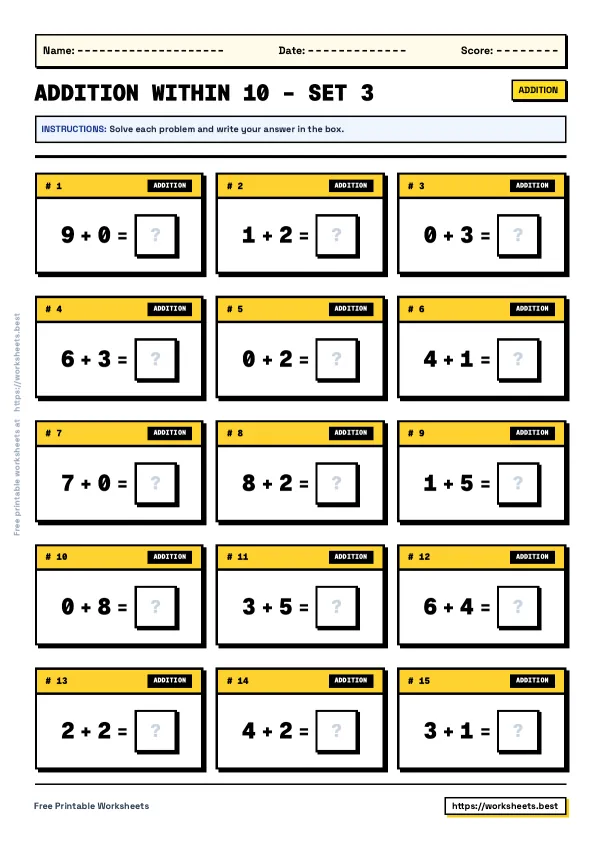
Addition Within 10 – Set 3
K–1st GradeMath Drills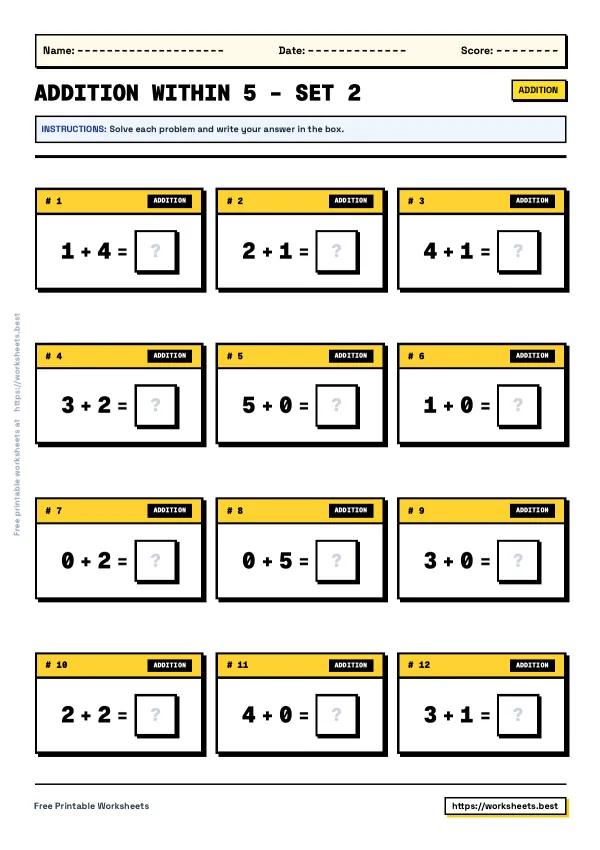
Addition Within 5 – Set 2
KindergartenMath Drills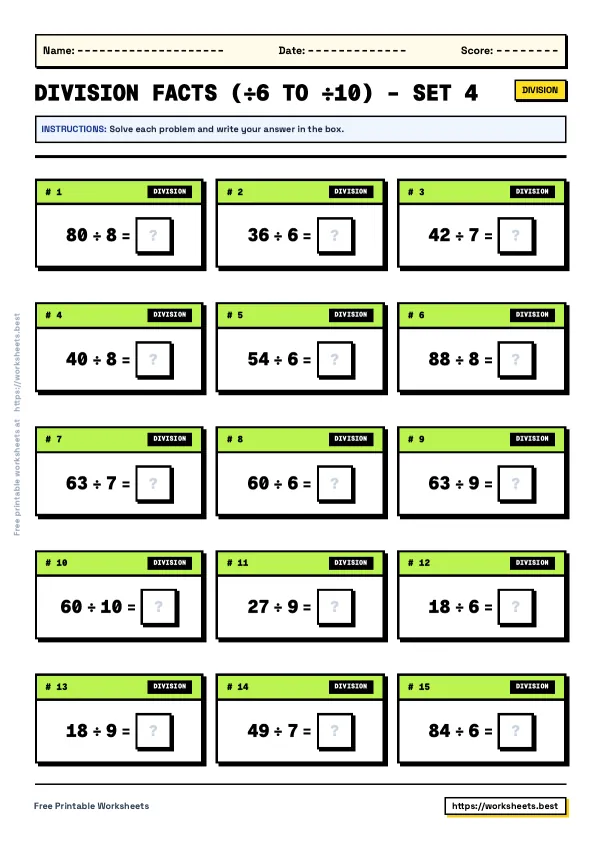
Division Facts (÷6 to ÷10) – Set 4
3rd–4th GradeMath Drills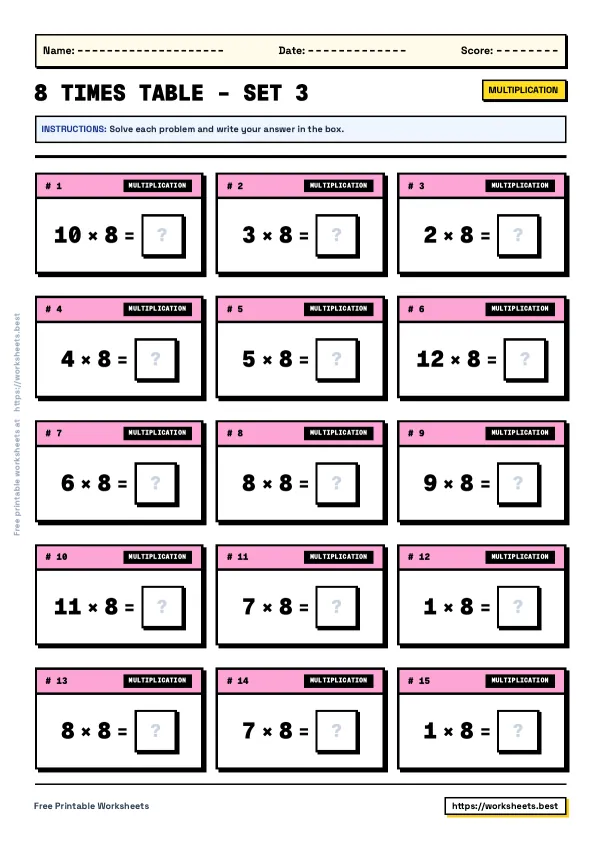
8 Times Table – Set 3
3rd GradeMath Drills2-Digit by 1-Digit Multiplication – Set 1
4th GradeMath Drills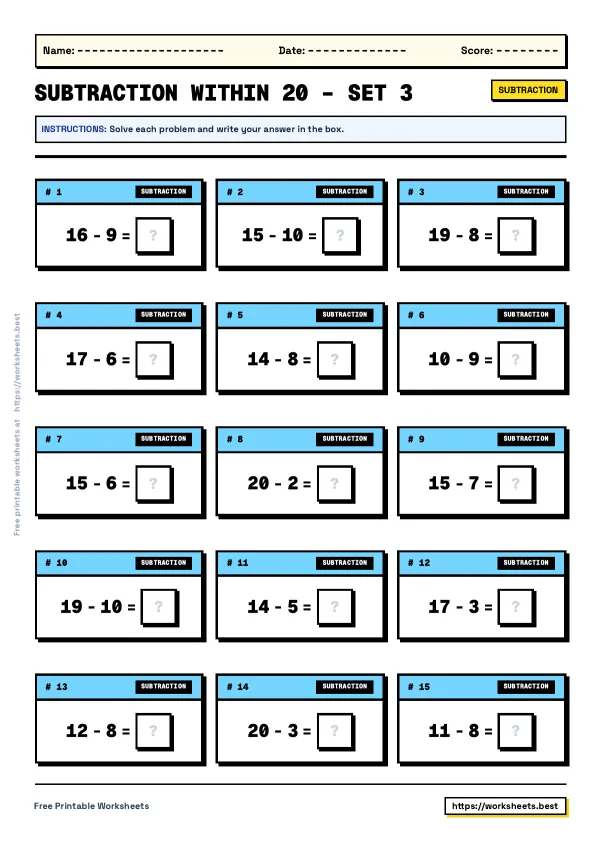
Subtraction Within 20 – Set 3
1st–2nd GradeMath Drills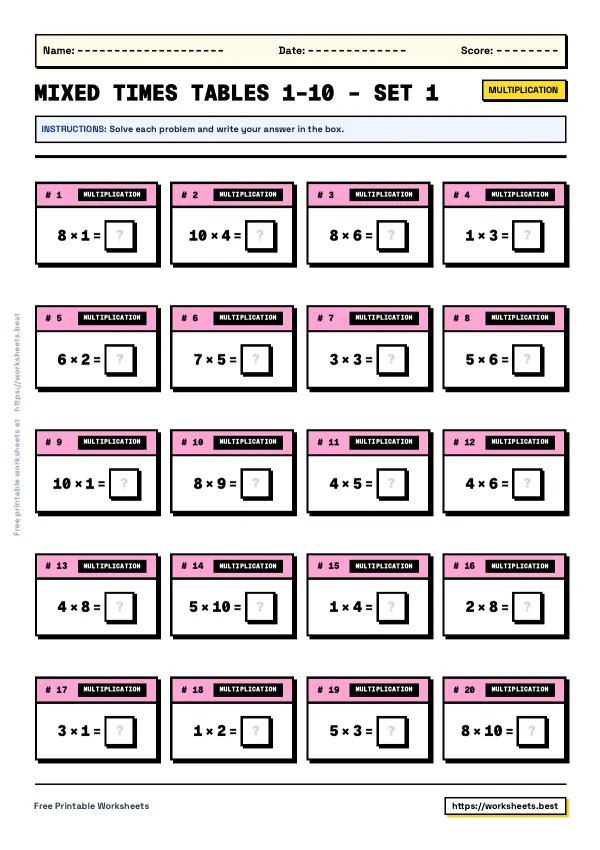
Mixed Times Tables 1–10 – Set 1
3rd GradeMath Drills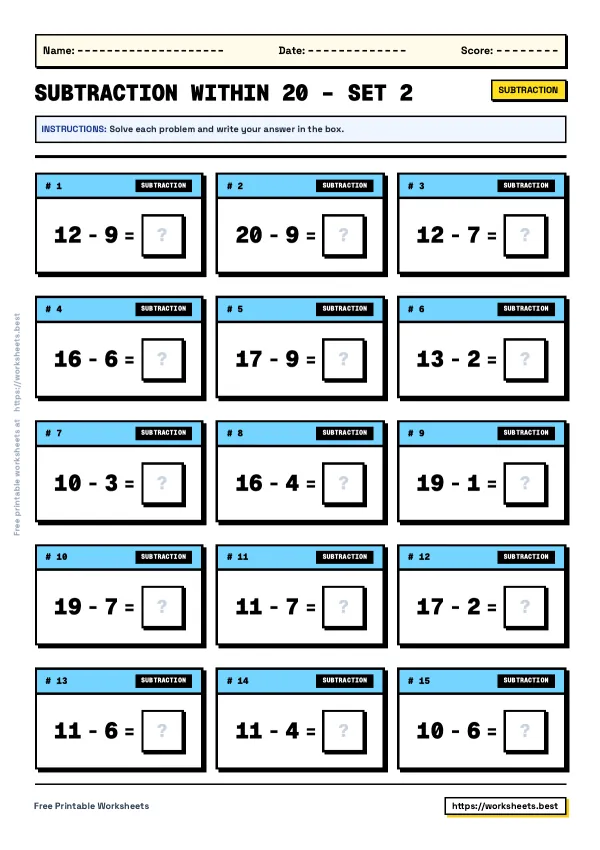
Subtraction Within 20 – Set 2
1st–2nd GradeMath Drills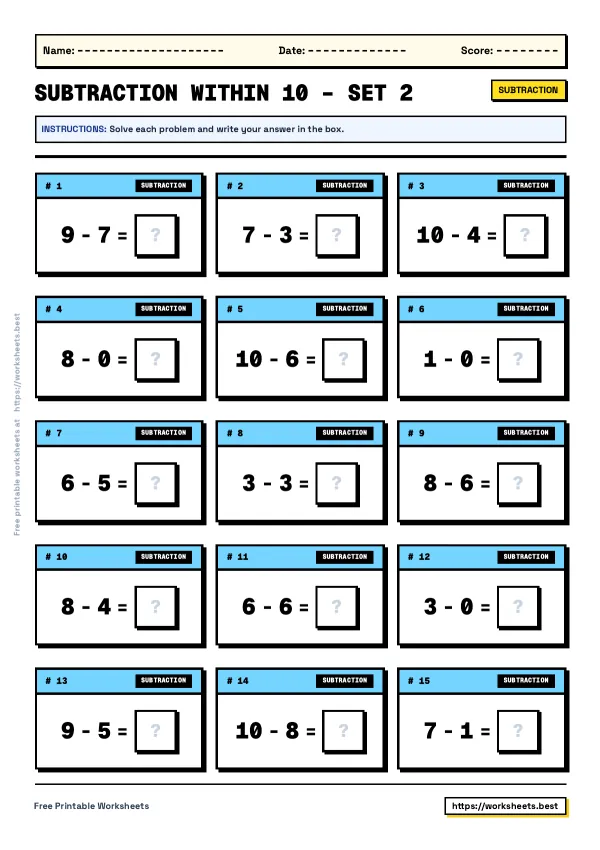
Subtraction Within 10 – Set 2
K–1st GradeMath Drills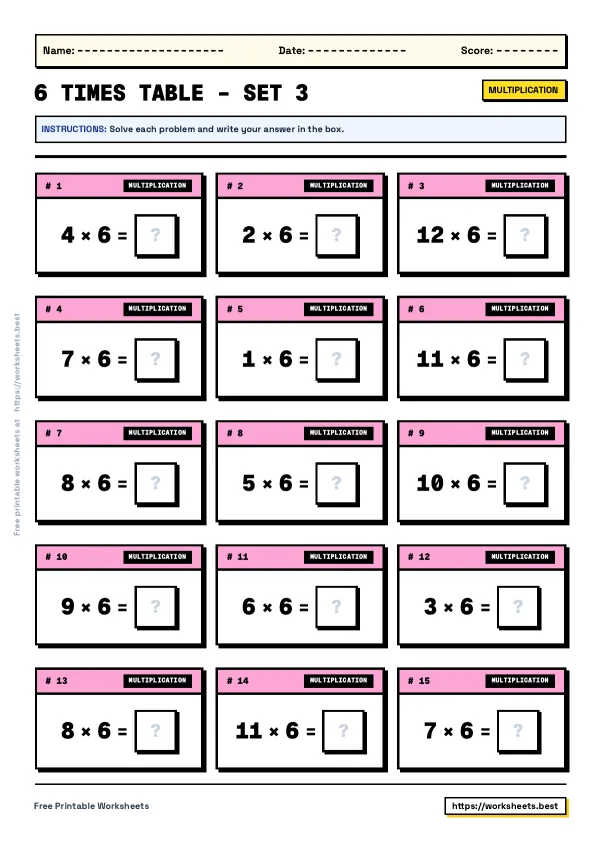
6 Times Table – Set 3
3rd GradeMath Drills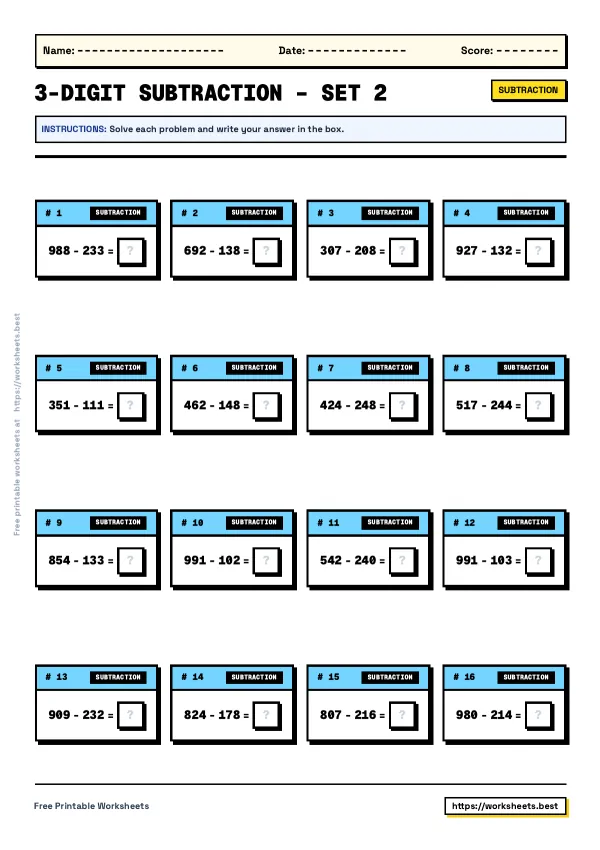
3-Digit Subtraction – Set 2
2nd–3rd GradeMath Drills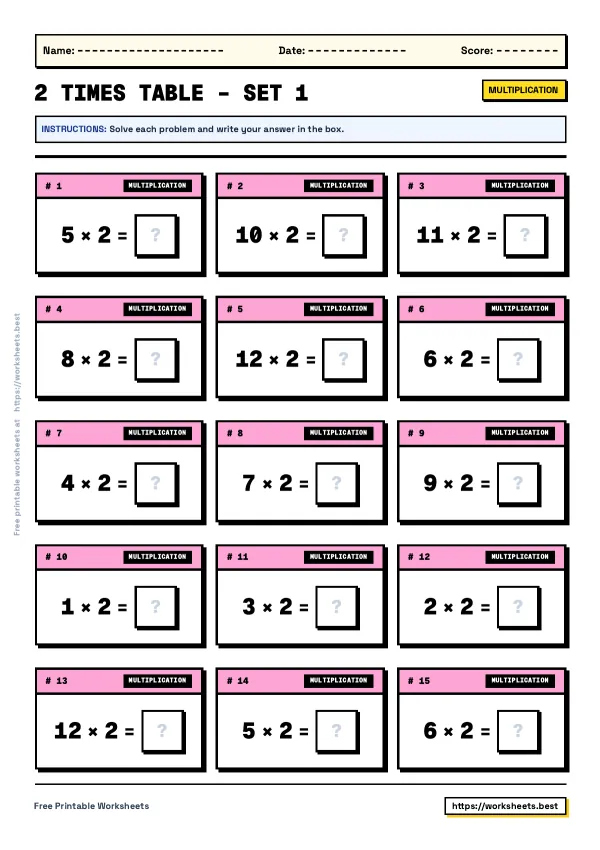
2 Times Table – Set 1
2nd–3rd GradeMath Drills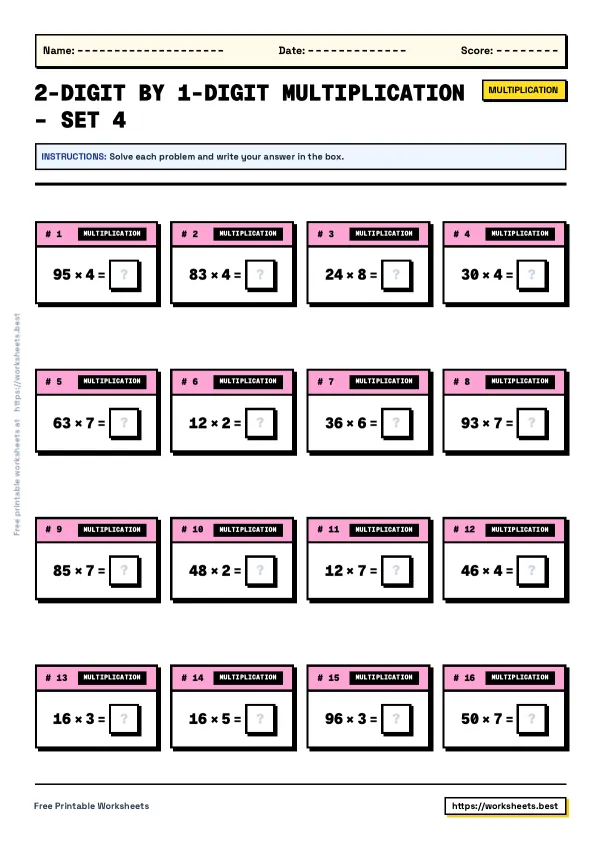
2-Digit by 1-Digit Multiplication – Set 4
4th GradeMath Drills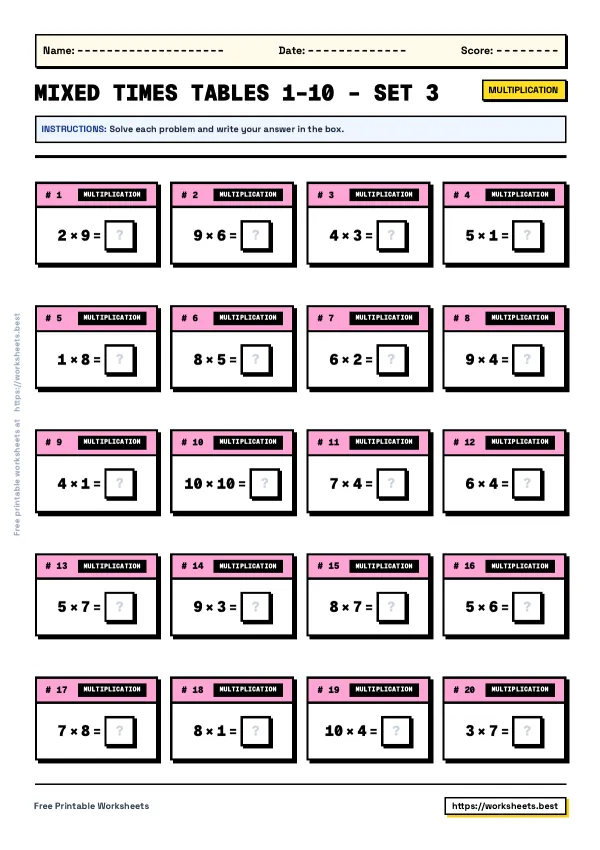
Mixed Times Tables 1–10 – Set 3
3rd GradeMath Drills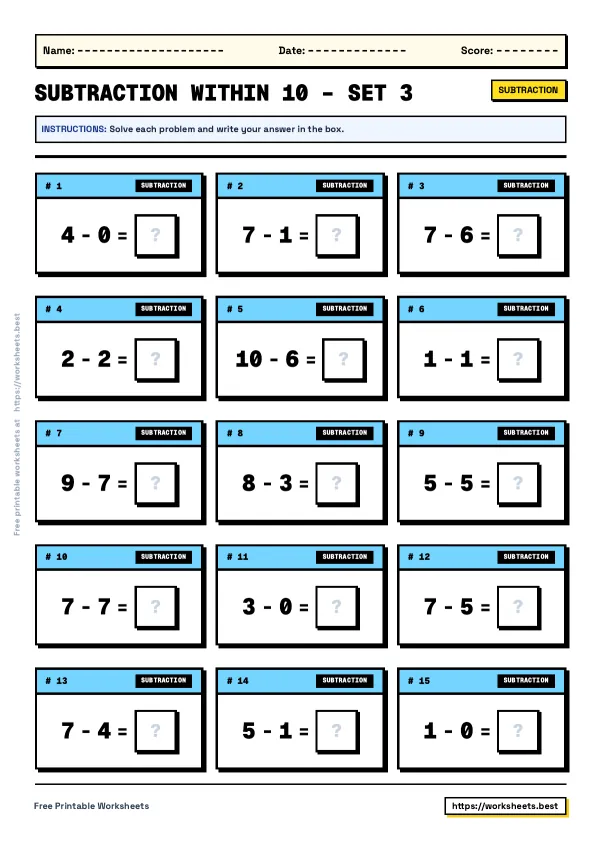
Subtraction Within 10 – Set 3
K–1st GradeMath Drills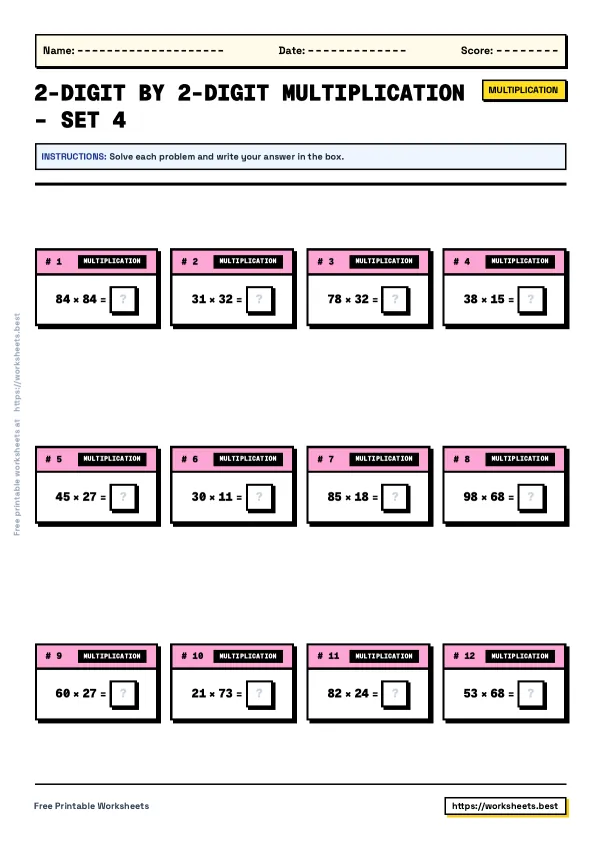
2-Digit by 2-Digit Multiplication – Set 4
4th–5th GradeMath Drills2-Digit by 2-Digit Multiplication – Set 1
4th–5th GradeMath Drills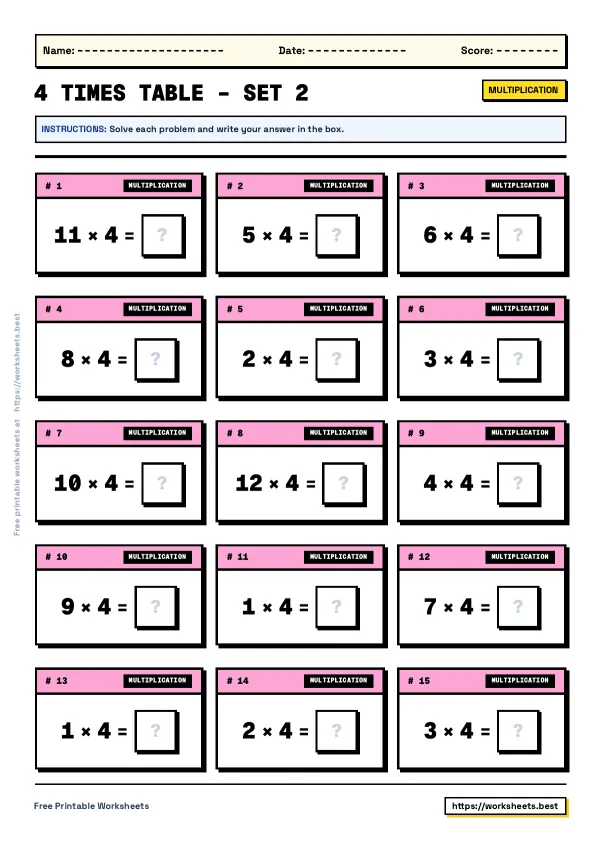
4 Times Table – Set 2
3rd GradeMath Drills
from teachers
Tips for parents and teachers
- Keep drill sessions short, about five to ten minutes, and stop while the child is still focused so speed practice does not become tiring.
- Choose one skill at a time, such as addition facts within 10 or multiplying a two-digit number by a one-digit number, so the child can see progress clearly.
- Review missed problems together and ask the child to explain the steps aloud; this turns a quick drill into a correction and reteaching moment.
- Revisit a few missed facts in the next session instead of assigning a whole new set, and mix in a different operation once the first skill feels secure.
Questions parents ask
What are math drill worksheets?
They are short practice pages that focus on facts and procedures children need to recall quickly. This collection covers multiplication, addition, subtraction and division for kindergarten through 5th grade.
How long should a math drill session last?
A short session of about five to ten minutes is usually enough, especially for young children. Several brief sessions across the week tend to work better than one long sitting.
What math facts should a kindergartner practice?
Kindergarteners can begin with addition facts within 5 and 10, using counters or fingers when needed. Keep the written part simple and praise careful work as much as speed.
When should a child start division drills?
Division drills make the most sense after a child has some multiplication facts in place. Start with division facts for 2 through 5, then move on to facts for 6 through 10 when the child is ready.
Are math drills aligned with Common Core?
The collection lists Common Core standards such as 3.OA.C.7 and 1.OA.C.6, so you can match a drill to the skill you are teaching. Check the skill on each sheet rather than the grade label alone.