1st Grade Worksheets
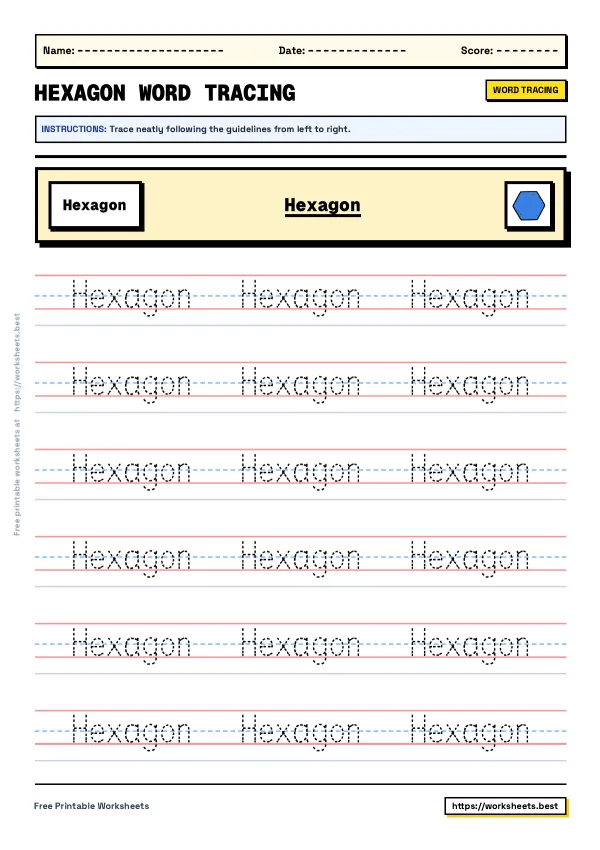
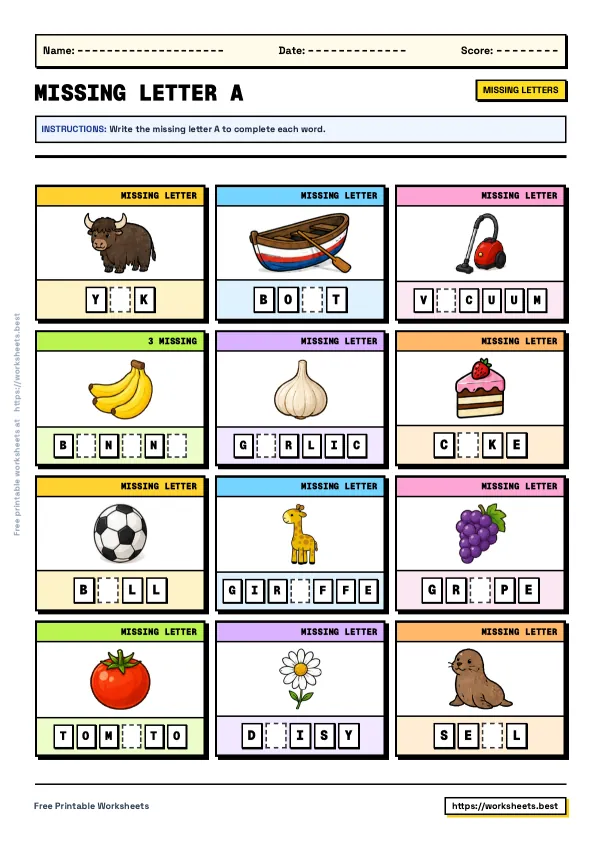
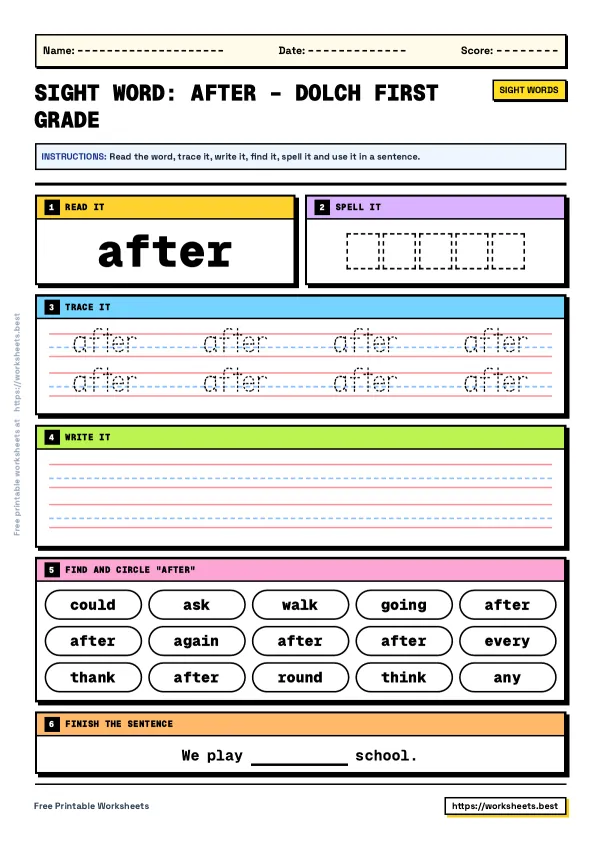
First grade is the year letters turn into words and numbers start falling into order. The 1st Grade Worksheets collection gathers hundreds of printable pages for that stretch, built around tracing, matching and puzzle formats that fit inside a short chunk of the school day. Children trace and write sight words, spell from picture clues, fill in missing letters, and practice number sense next to early reading skills.
Read more +
Formats stay simple so a six- or seven-year-old can work mostly alone. A tracing page asks for slow, careful letters; a picture matching sheet pairs a word with its image; a word search or scramble turns a spelling list into a hunt. Two examples: a medium maze that leads from a toucan to a woodpecker, and a clock sheet where the hands land on the hour or the half hour. Themes run through animals, birds, sea animals, vegetables, weather and the major holidays, so the vocabulary stays familiar.
Use a page for morning work, a center rotation, or quiet practice at the kitchen table. Most sheets come with an answer key, so a grown-up can check quickly. Difficulty runs from easy to medium, which makes it simple to start a child where they are and move up.
every sheet
All 1st Grade worksheets
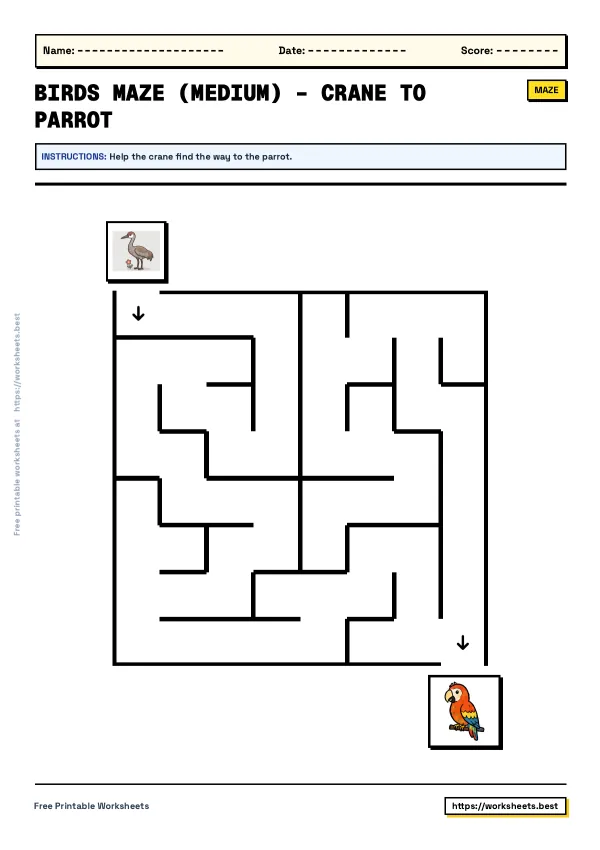
Birds Maze (Medium) – Crane to Parrot
1st–2nd GradeMazes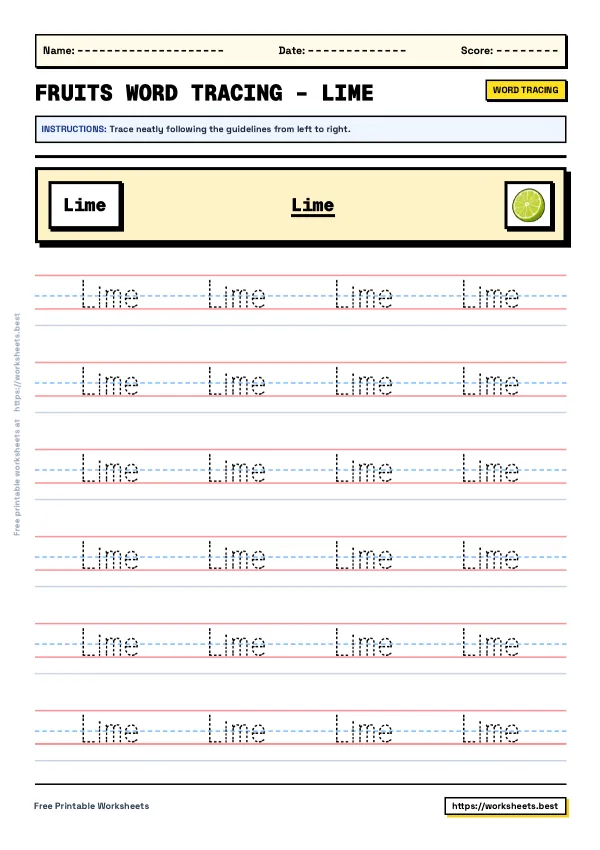
Fruits Word Tracing – Lime
1st GradeTracing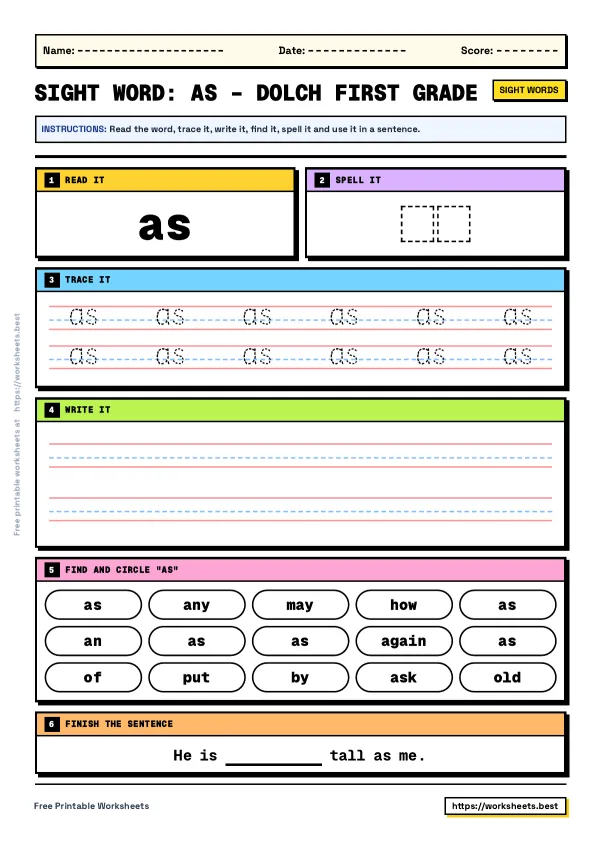
Sight Word: As – Dolch First Grade
1st GradeSight Words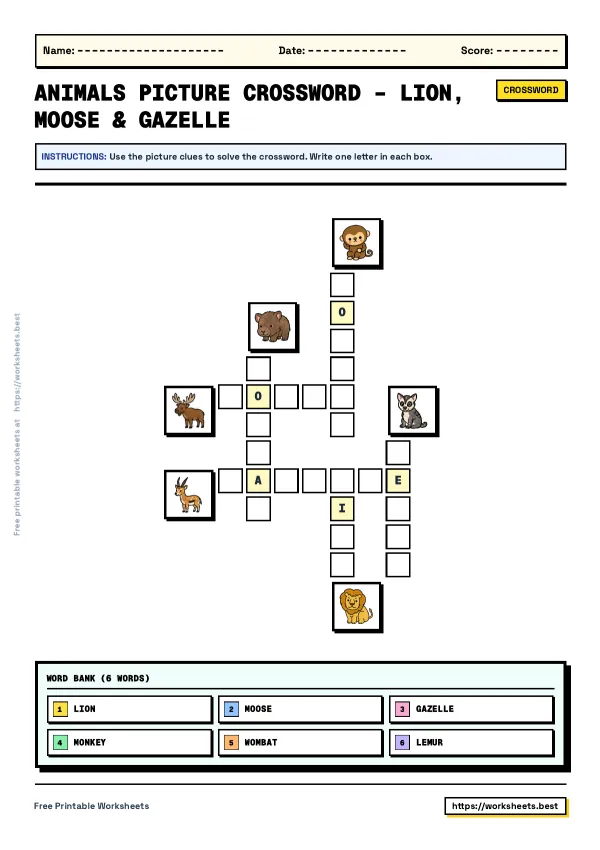
Animals Picture Crossword – Lion, Moose & Gazelle
1st–2nd GradeCrossword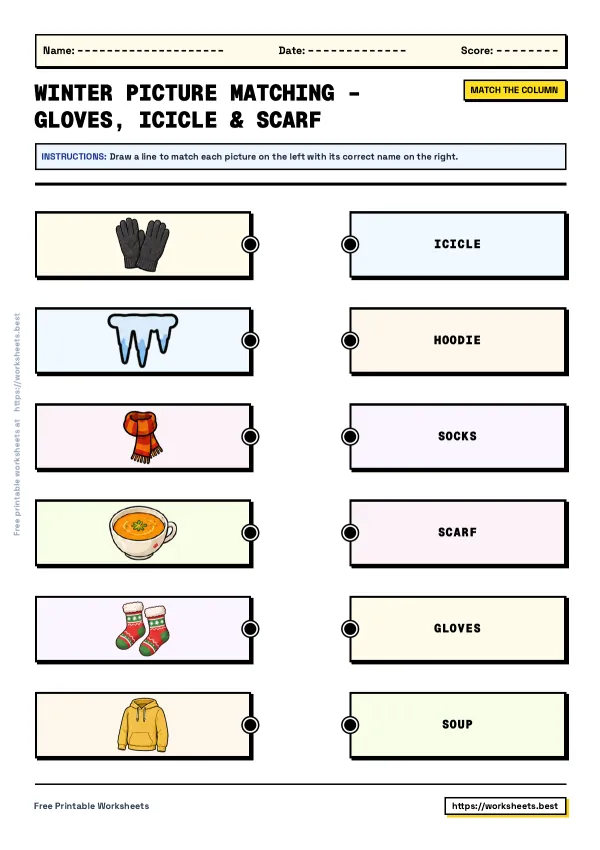
Winter Picture Matching – Gloves, Icicle & Scarf
K–1st GradePicture Matching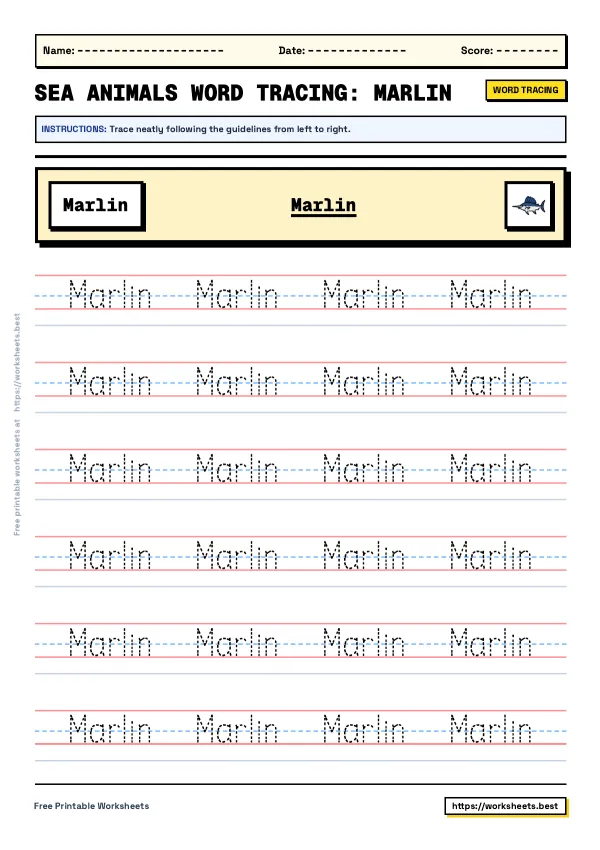
Sea Animals Word Tracing: Marlin
K–1st GradeTracing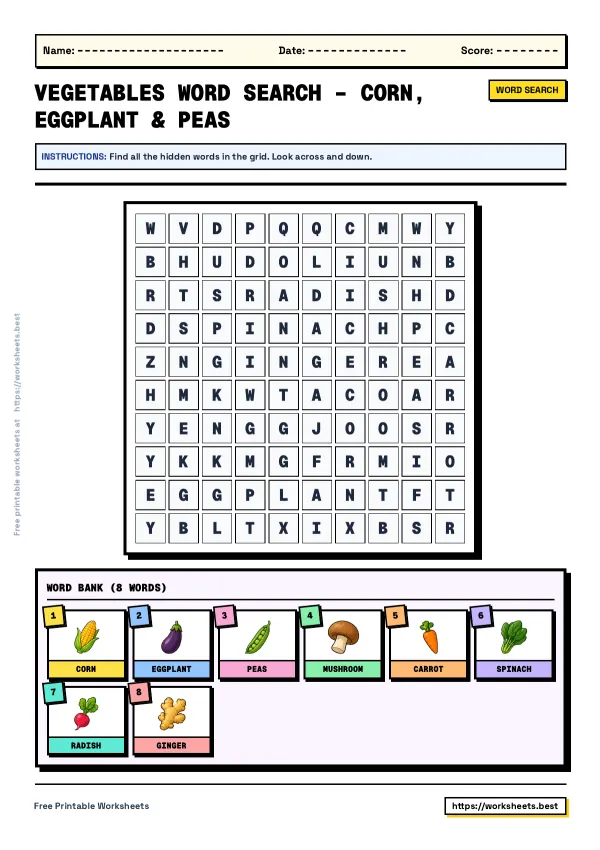
Vegetables Word Search – Corn, Eggplant & Peas
1st–2nd GradeWord Search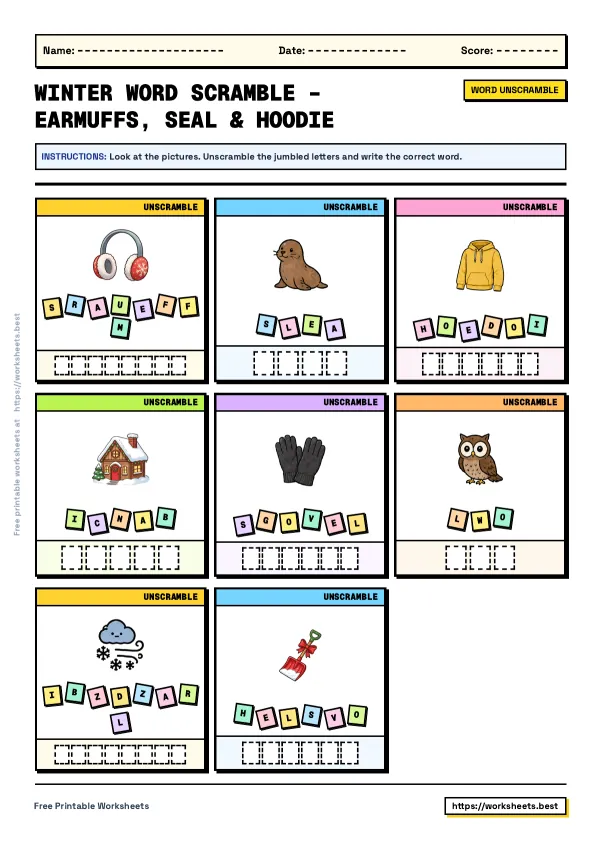
Winter Word Scramble – Earmuffs, Seal & Hoodie
1st–2nd GradeWord Scramble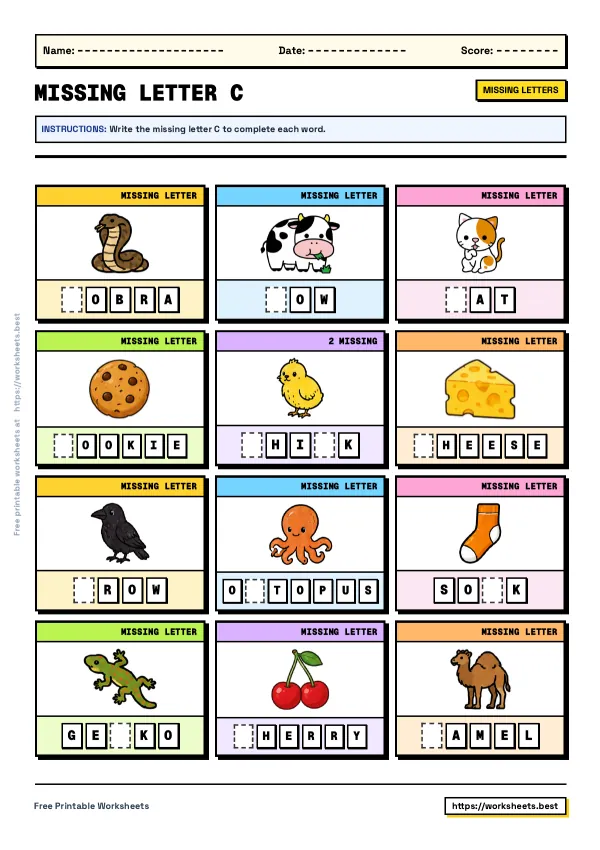
Missing Letter C
K–1st GradeMissing Letters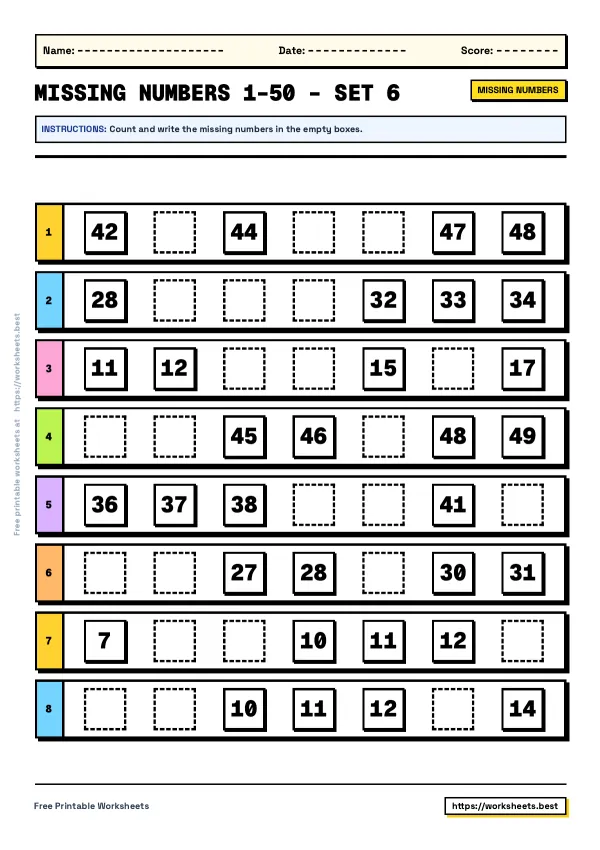
Missing Numbers 1–50 – Set 6
K–1st GradeNumber Sense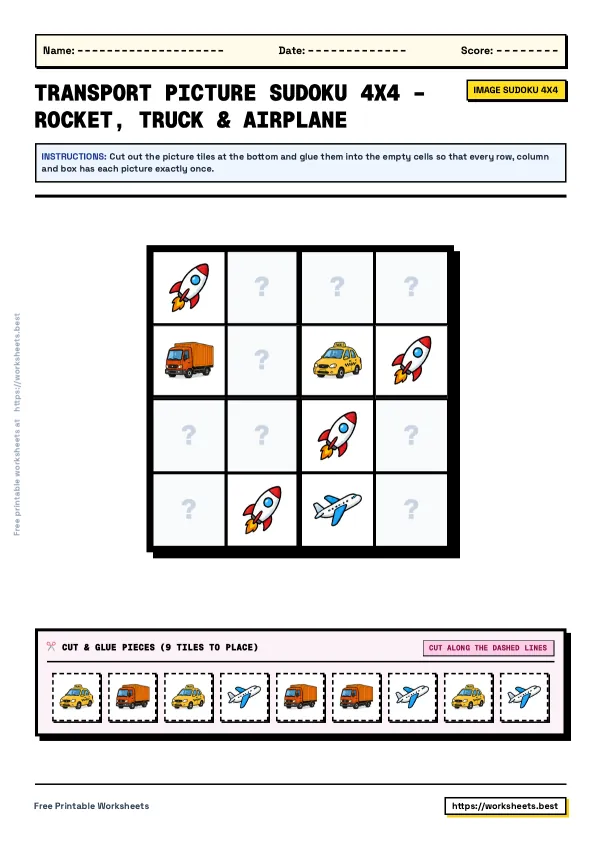
Transport Picture Sudoku 4x4 – Rocket, Truck & Airplane
K–1st GradePicture Sudoku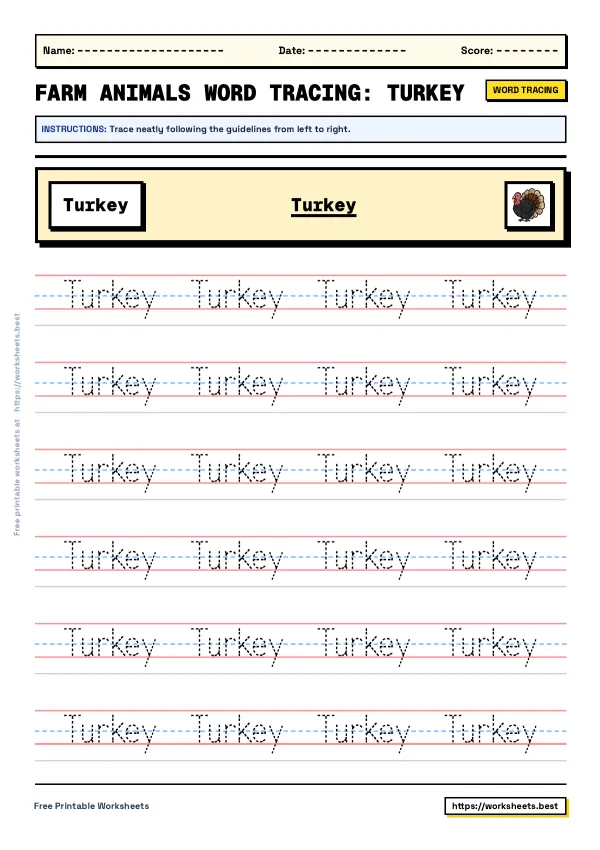
Farm Animals Word Tracing: Turkey
K–1st GradeTracing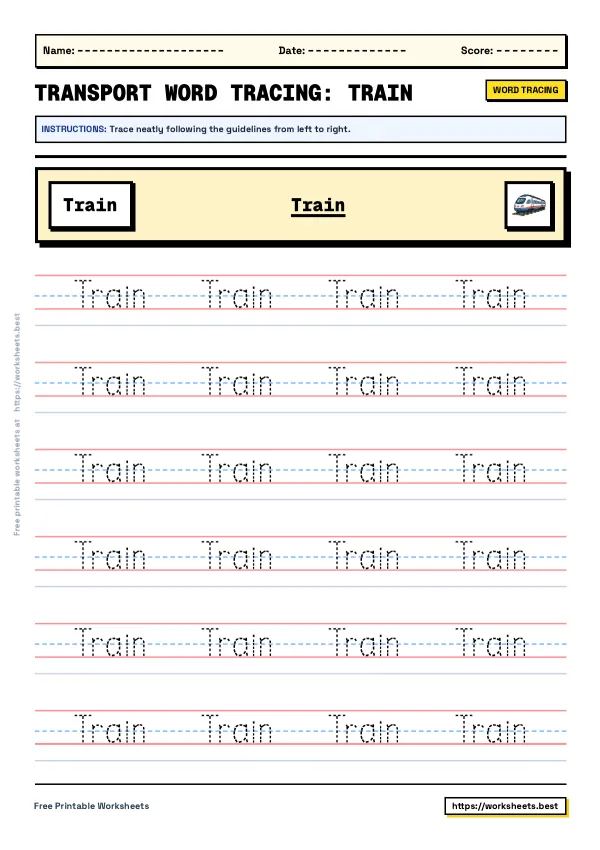
Transport Word Tracing: Train
K–1st GradeTracing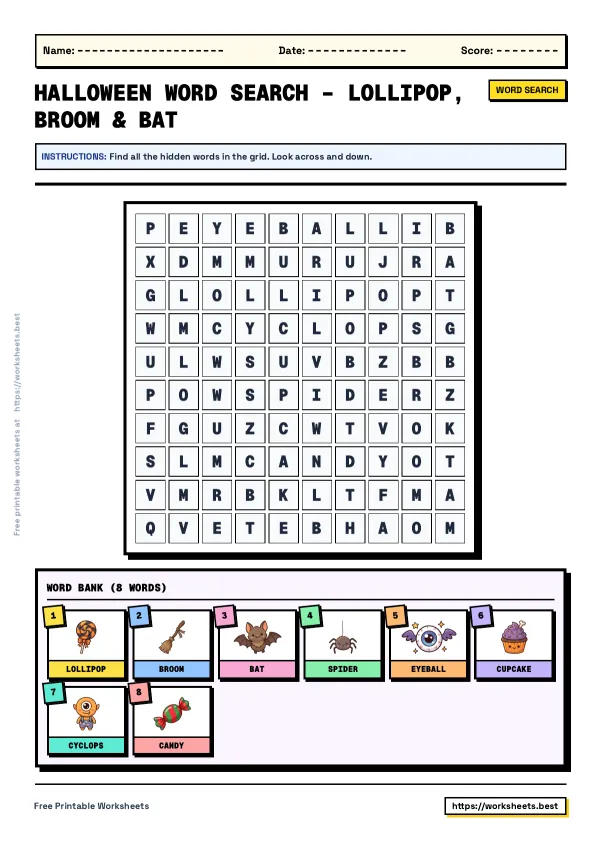
Halloween Word Search – Lollipop, Broom & Bat
1st–2nd GradeWord Search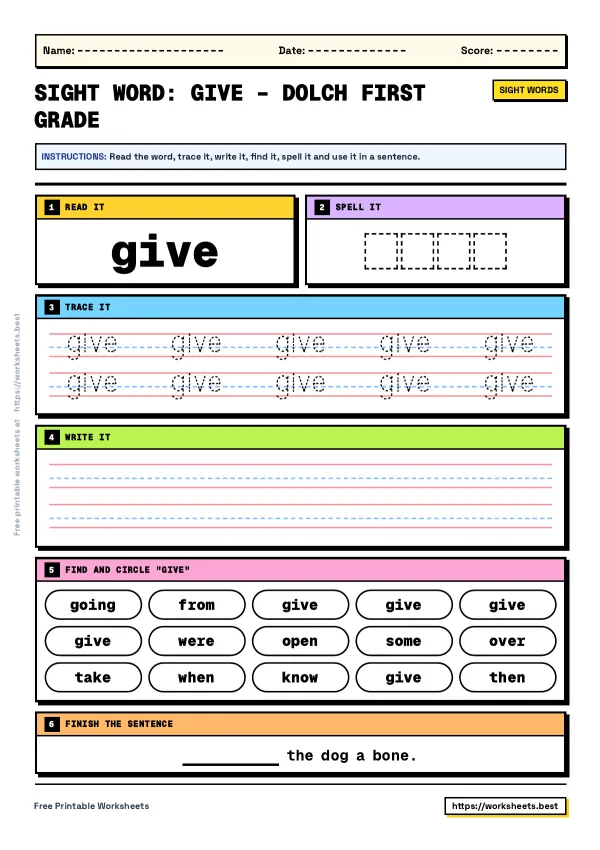
Sight Word: Give – Dolch First Grade
1st GradeSight Words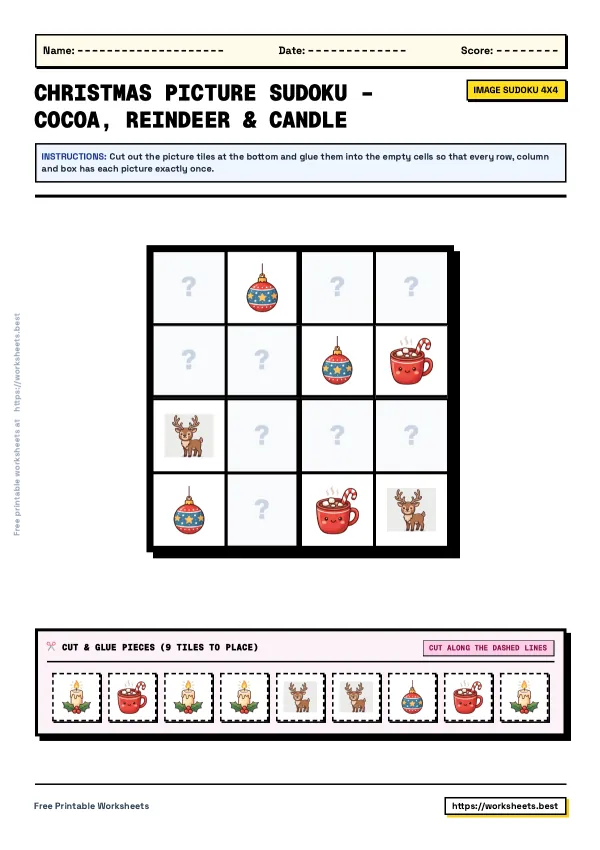
Christmas Picture Sudoku – Cocoa, Reindeer & Candle
K–1st GradePicture Sudoku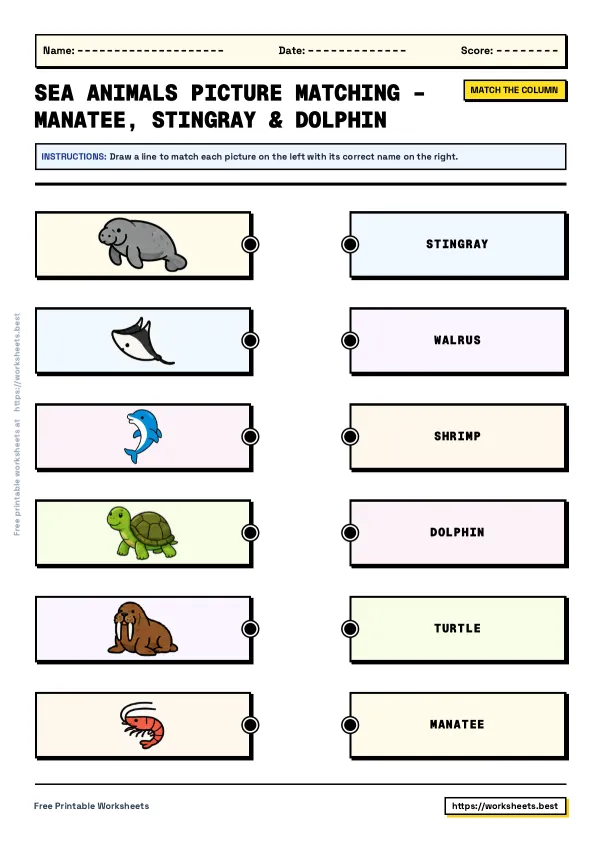
Sea Animals Picture Matching – Manatee, Stingray & Dolphin
K–1st GradePicture Matching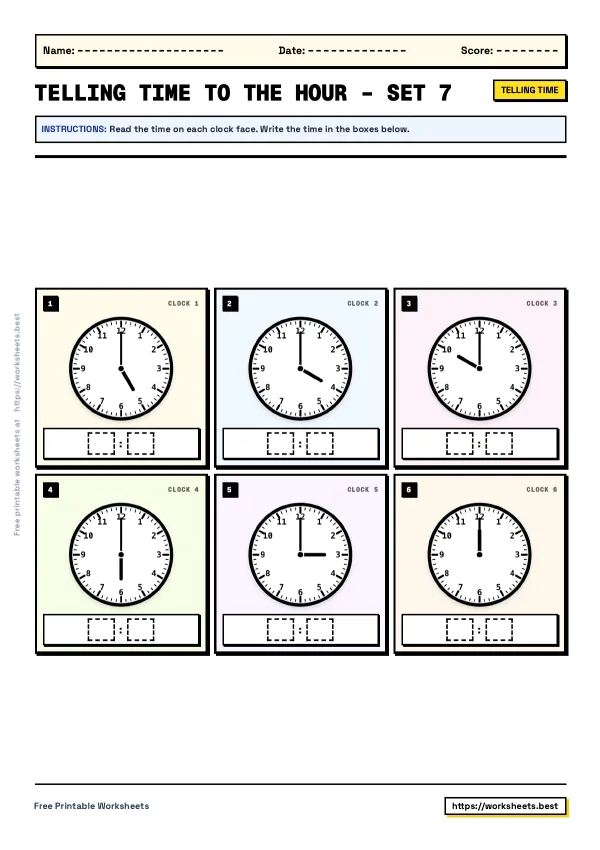
Telling Time to the Hour – Set 7
1st GradeClock Reading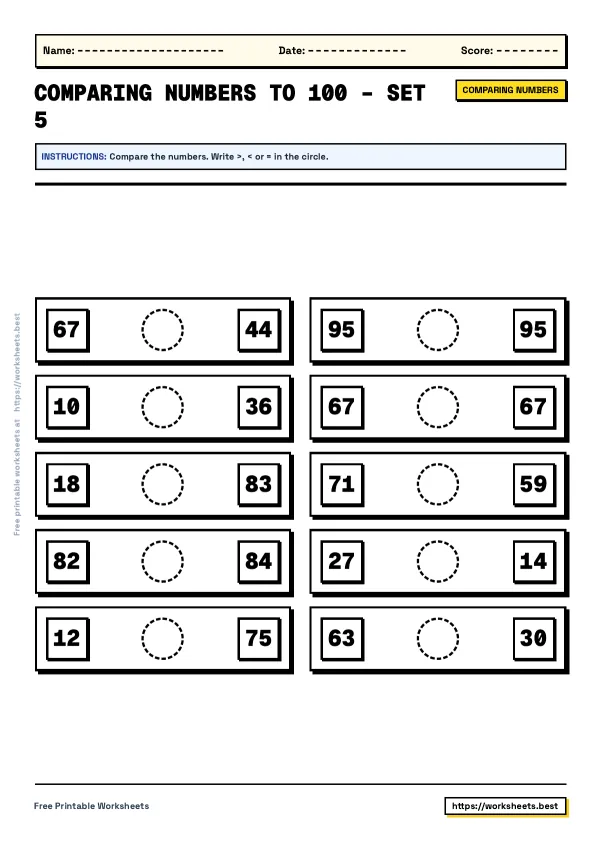
Comparing Numbers to 100 – Set 5
1st GradeNumber Sense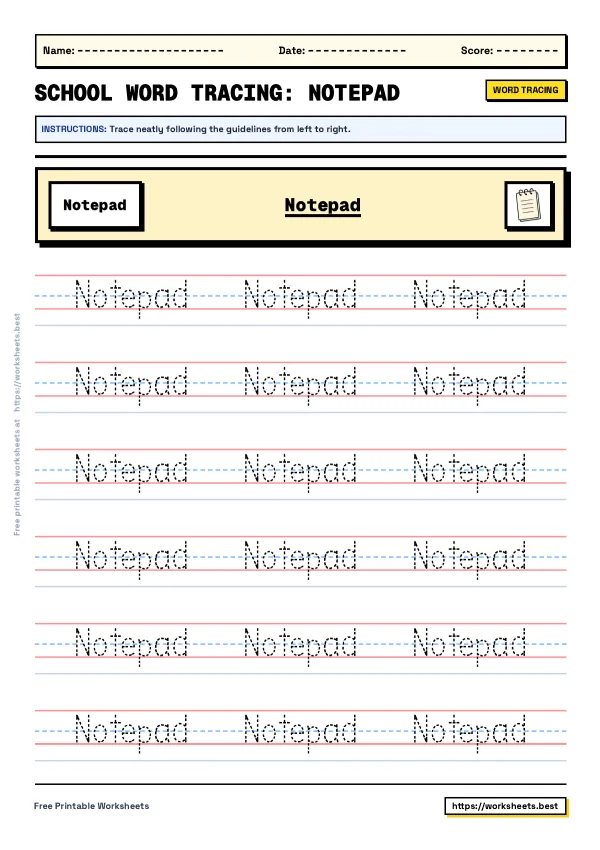
School Word Tracing: Notepad
K–1st GradeTracing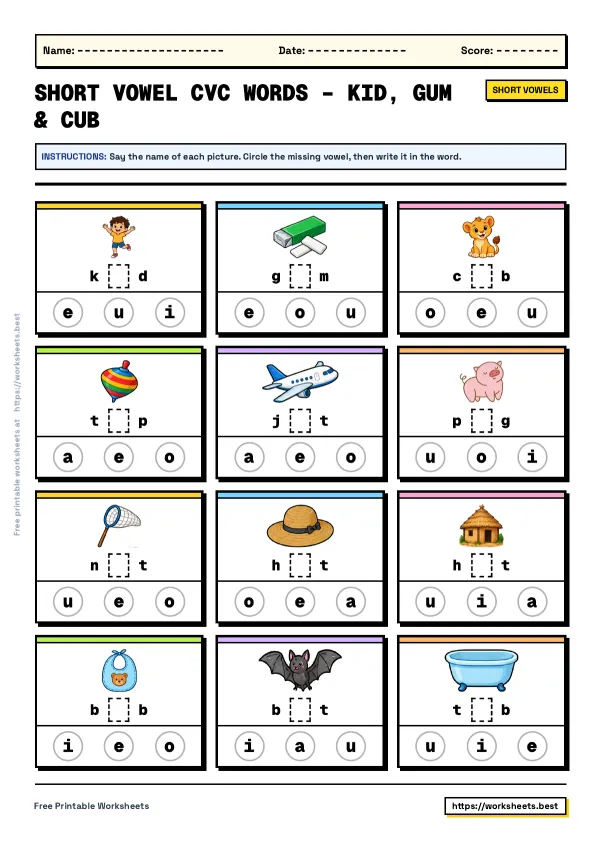
Short Vowel CVC Words – Kid, Gum & Cub
K–1st GradeLetter Sounds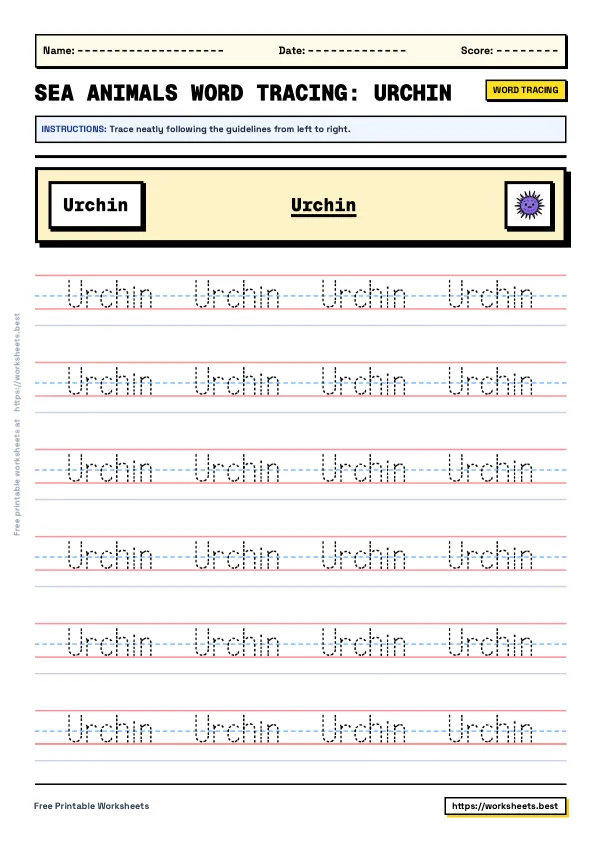
Sea Animals Word Tracing: Urchin
K–1st GradeTracing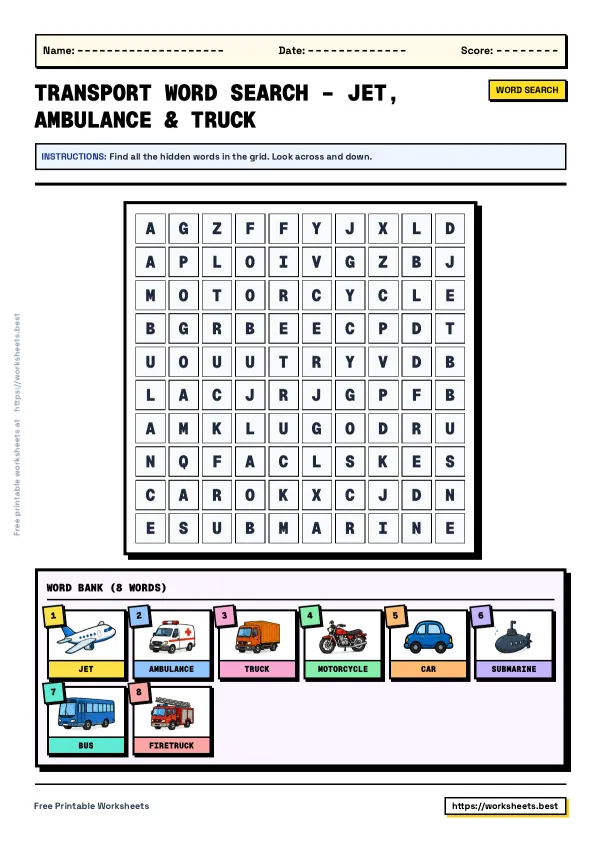
Transport Word Search – Jet, Ambulance & Truck
1st–2nd GradeWord Search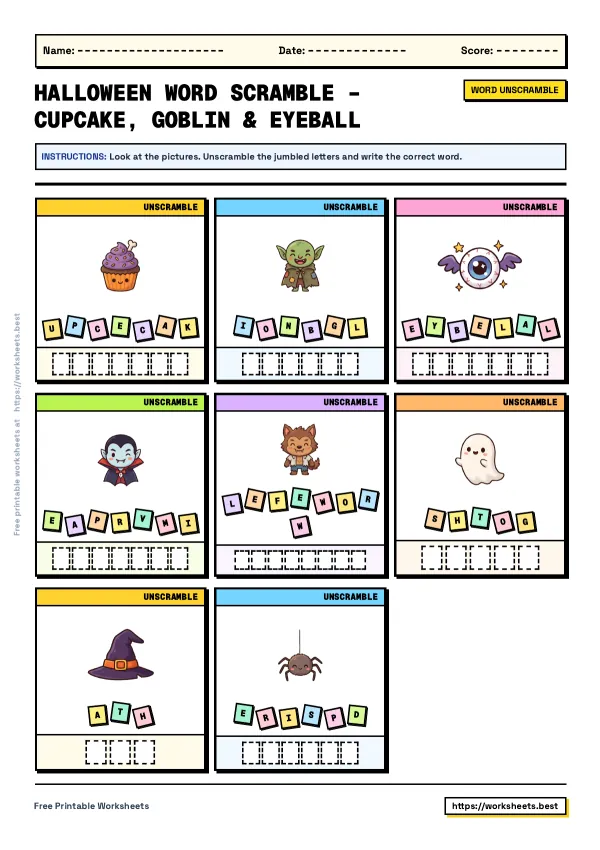
Halloween Word Scramble – Cupcake, Goblin & Eyeball
1st–2nd GradeWord Scramble
dig deeper
More 1st Grade worksheets
from teachers
Tips for parents and teachers
- Trace the word with a finger first, then a pencil, then write it once unaided on the back of the sheet. The three passes build the muscle memory handwriting needs.
- On missing-letter and spelling pages, have your child say the word aloud and stretch the sounds before writing anything. Naming the sound that is absent is the step that carries over into independent writing.
- In mazes, ask for a finger path before the pencil and a name for each picture along the way. It turns visual scanning into vocabulary practice.
- On clock sheets, cover the written answer and ask what the hands show before your child writes it down. A real analog clock on the wall makes the same question easier to answer.
Questions parents ask
What sight words should a first grader be able to read?
The Dolch first grade list is the usual starting point, and the sight word sheets work through it a word at a time. Five to ten minutes of daily review, reading the word and then writing it, does more than one long session each week.
How long should a 1st grader spend on one worksheet?
Ten to fifteen minutes is plenty for most first graders, since each page is meant as one short sitting rather than a whole lesson. If a child is still working after that, stop and finish another day.
What do picture sudoku and mazes teach a six-year-old?
Both ask a child to scan carefully, hold a rule in mind and check their work, which is early reasoning and problem solving. The mazes also build the pencil control that handwriting depends on.
How do I help my child tell time to the hour and half hour?
Begin with the hour pages, where the minute hand points straight up, then move to the half hour pages where it points down to the six. This matches 1.MD.B.3 and pairs well with a real clock in the room.
Should my child trace words or write them freehand first?
Tracing first, freehand second. Tracing shows the shape and direction of each letter, and copying the same word on a blank line afterward shows whether the pattern stuck.