1st Grade Telling Time Worksheets
First grade is a natural time to learn how a clock face shows the hour and the half hour. These 1st grade telling time worksheets give children repeated practice reading analog clocks and saying and writing the time they see. The pages use a clear clock-reading format: children look at an analog clock, notice where the hands point, and record the time. One set focuses on clocks at the whole hour, and another moves to clocks at the half hour, so children can build from simpler readings to slightly more careful ones. The words hour and half hour come up often, helping children connect the numbers on the clock face with everyday language. The worksheets suit 1st grade and work well for a short lesson, a math center, or a calm practice session at home.
Read more +
Use a page as a morning warm-up, a quick check after a time lesson, or a quiet task while other children finish work. Answer keys are included, so an adult can review the responses and talk through any clock that caused trouble. The activities support Common Core standard 1.MD.B.3. With short practice sessions, children can practice reading the hands, saying the time aloud, and writing the matching time until the hour and half hour become familiar.
start with these
Featured worksheets
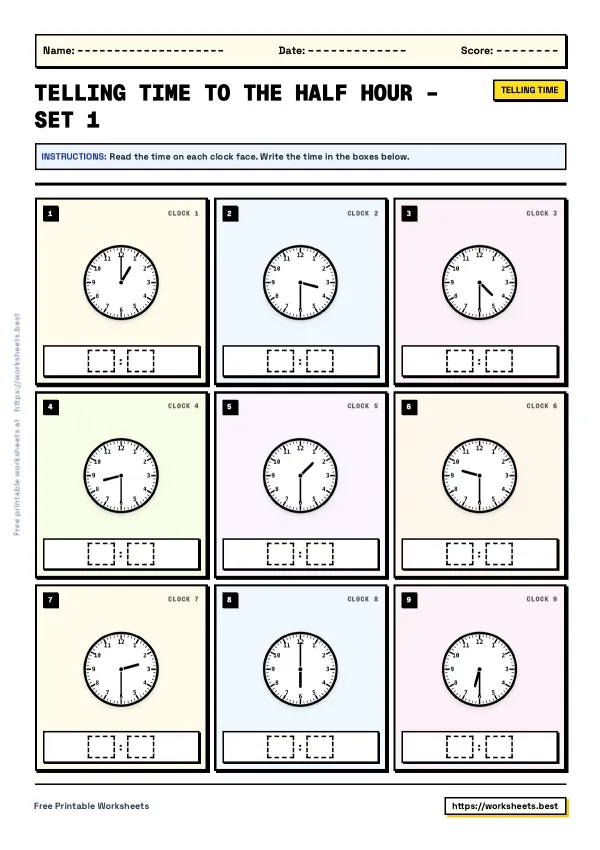
Telling Time to the Half Hour – Set 1
1st GradeClock Reading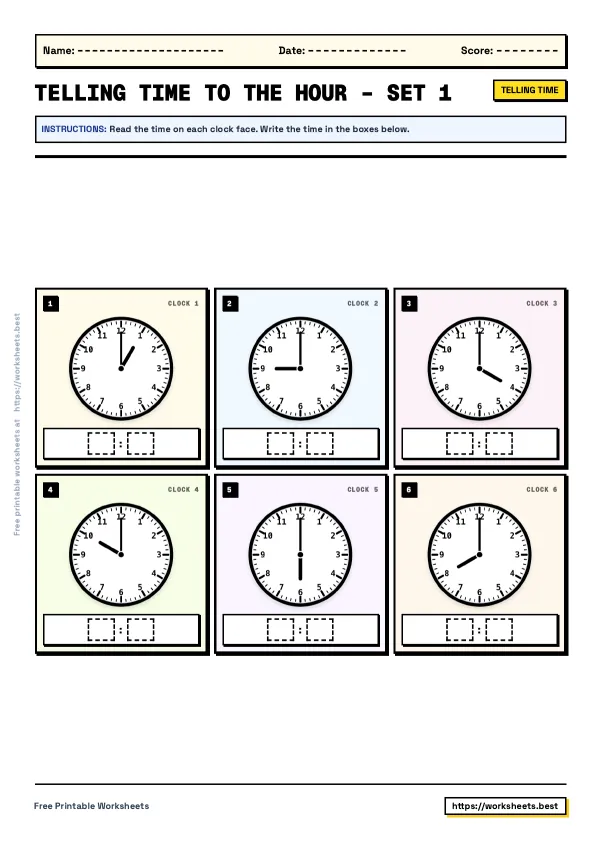
Telling Time to the Hour – Set 1
1st GradeClock Reading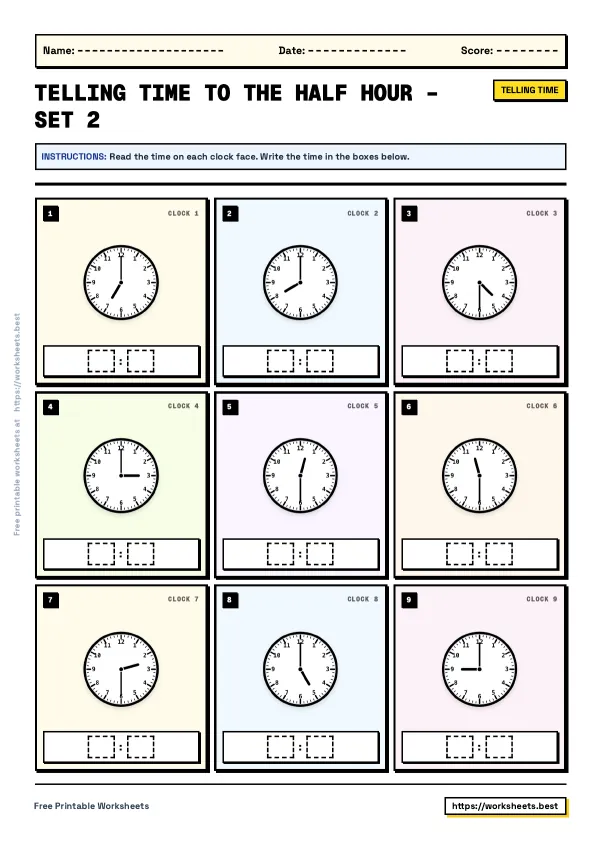
Telling Time to the Half Hour – Set 2
1st GradeClock Reading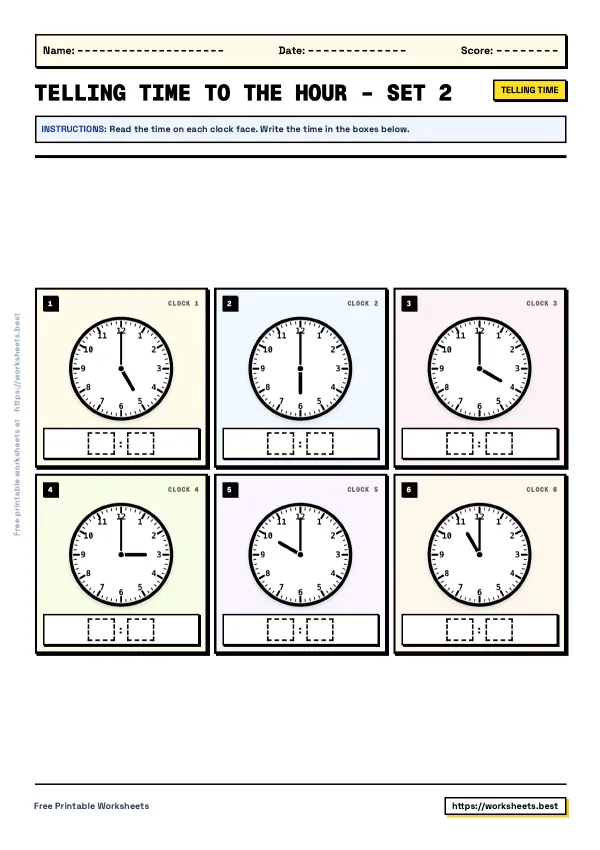
Telling Time to the Hour – Set 2
1st GradeClock Reading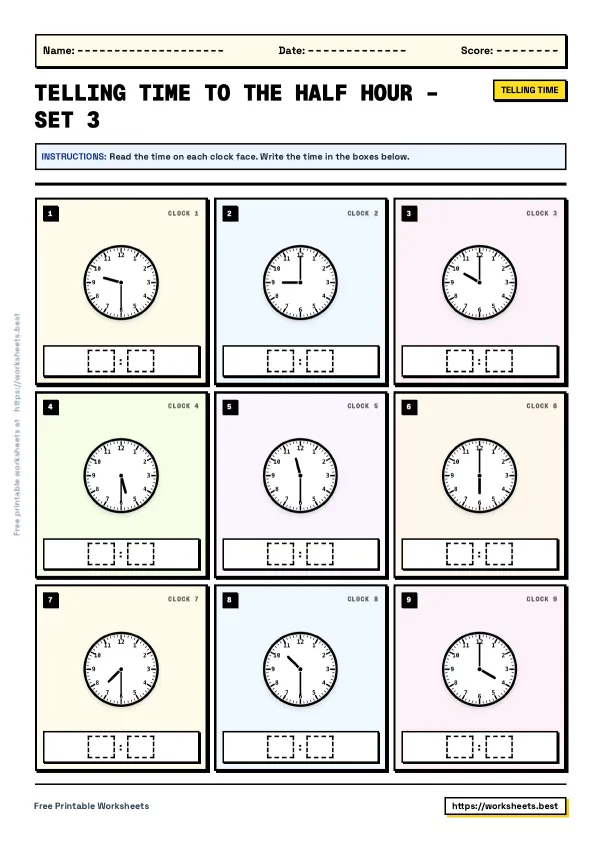
Telling Time to the Half Hour – Set 3
1st GradeClock Reading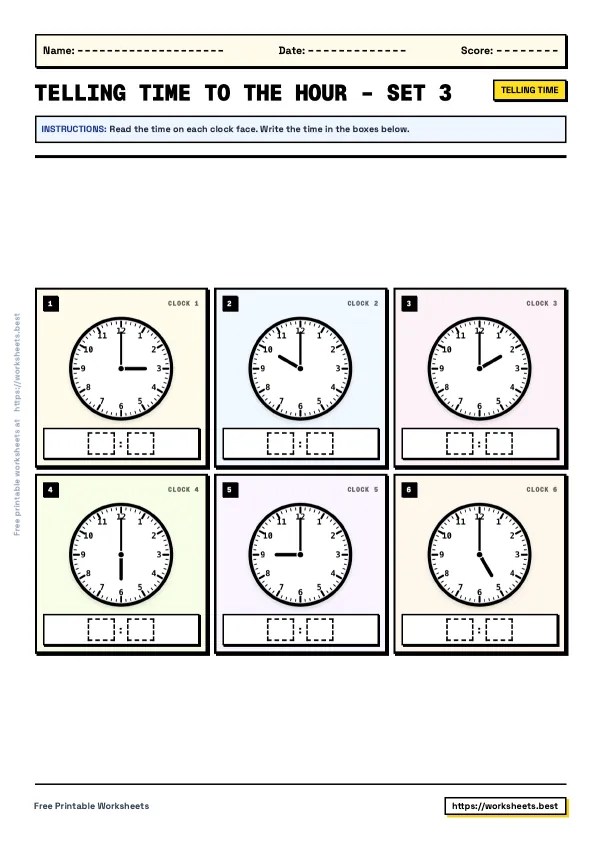
Telling Time to the Hour – Set 3
1st GradeClock Reading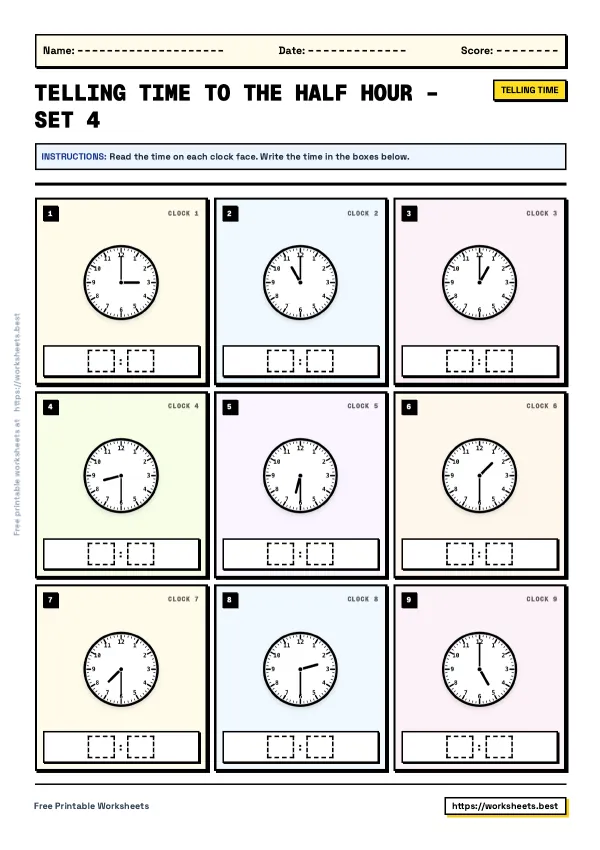
Telling Time to the Half Hour – Set 4
1st GradeClock Reading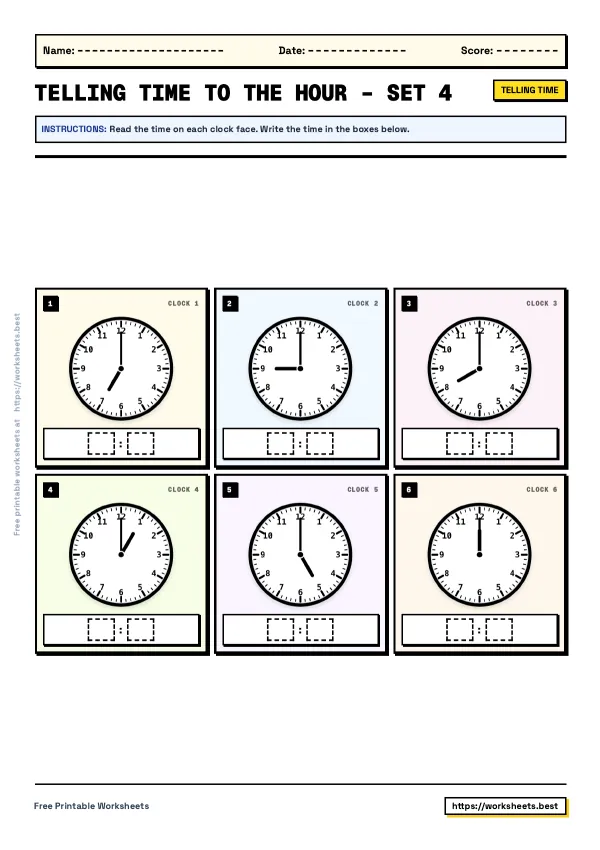
Telling Time to the Hour – Set 4
1st GradeClock Reading
every sheet
All 1st Grade Telling Time worksheets
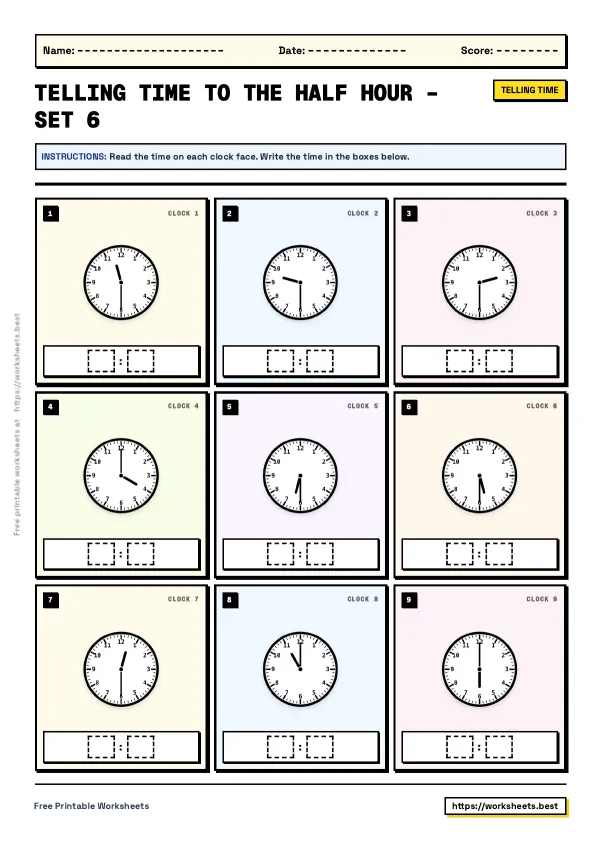
Telling Time to the Half Hour – Set 6
1st GradeClock ReadingTelling Time to the Half Hour – Set 4
1st GradeClock Reading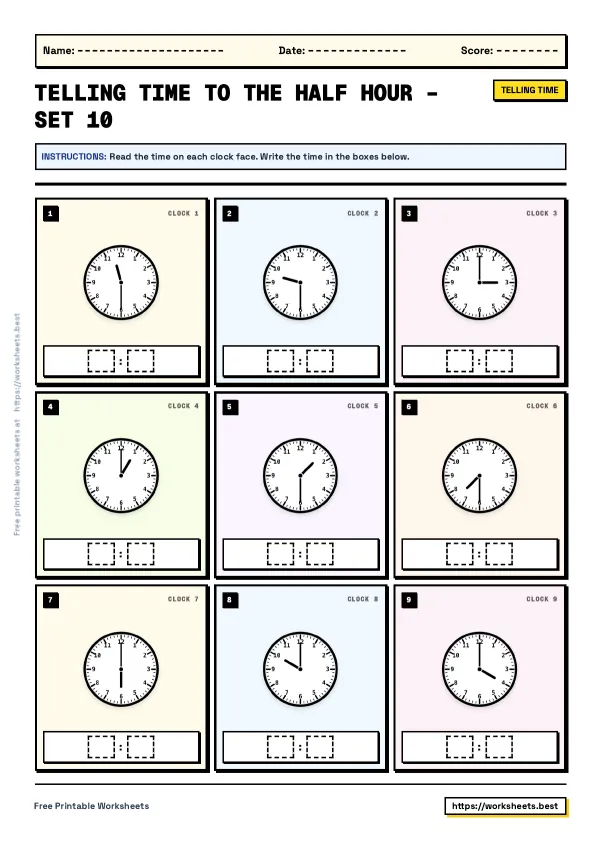
Telling Time to the Half Hour – Set 10
1st GradeClock ReadingTelling Time to the Hour – Set 3
1st GradeClock Reading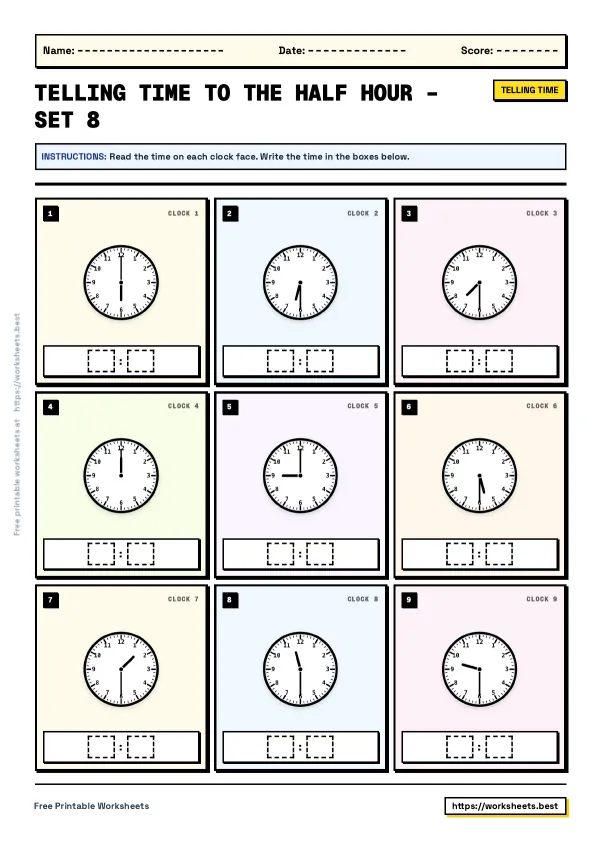
Telling Time to the Half Hour – Set 8
1st GradeClock Reading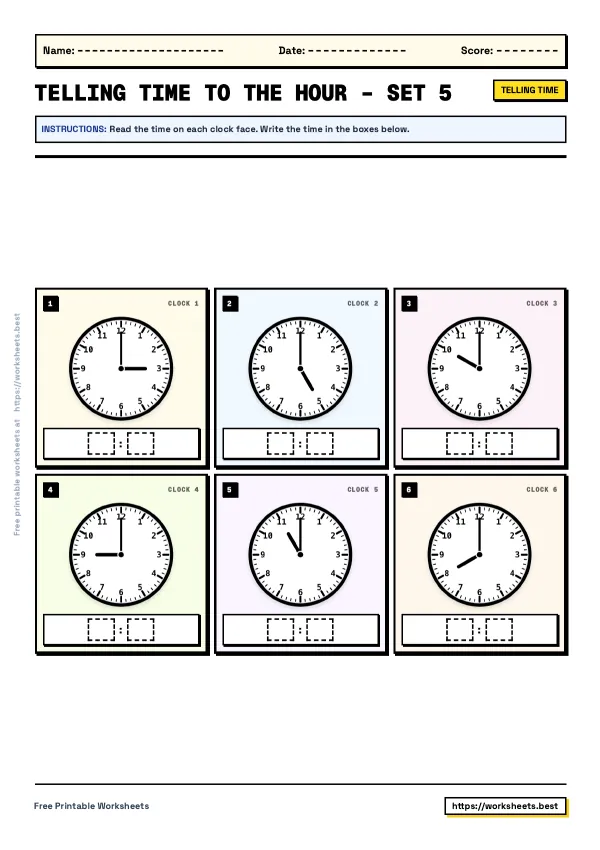
Telling Time to the Hour – Set 5
1st GradeClock ReadingTelling Time to the Hour – Set 1
1st GradeClock Reading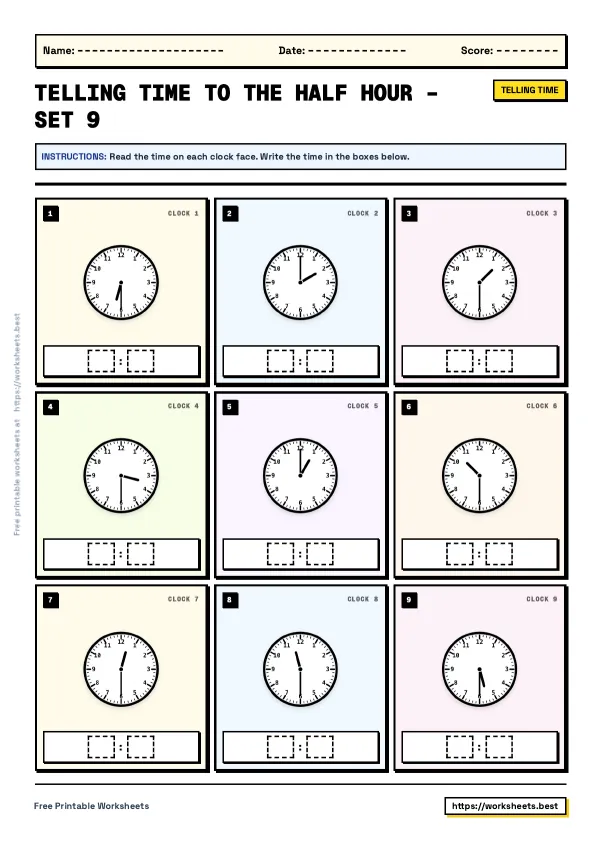
Telling Time to the Half Hour – Set 9
1st GradeClock ReadingTelling Time to the Half Hour – Set 1
1st GradeClock ReadingTelling Time to the Half Hour – Set 2
1st GradeClock Reading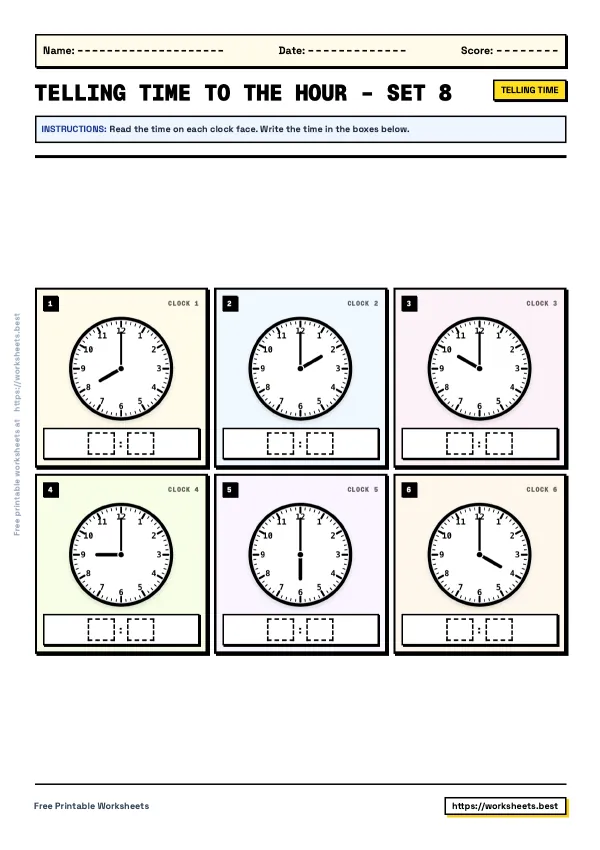
Telling Time to the Hour – Set 8
1st GradeClock ReadingTelling Time to the Hour – Set 2
1st GradeClock Reading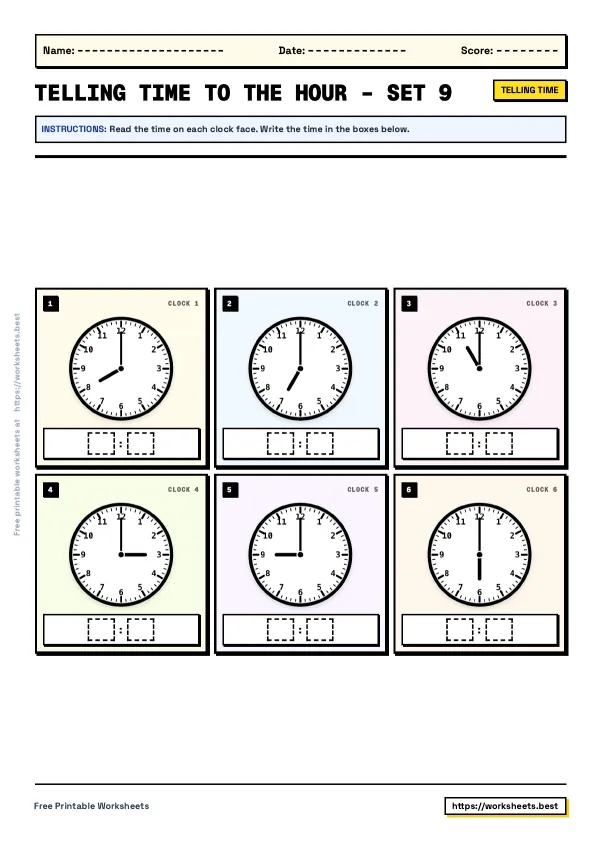
Telling Time to the Hour – Set 9
1st GradeClock Reading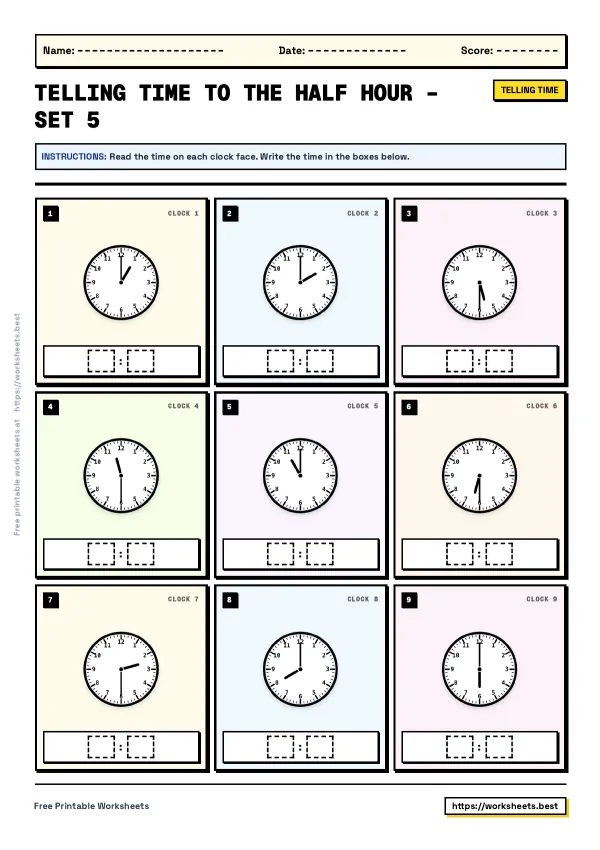
Telling Time to the Half Hour – Set 5
1st GradeClock Reading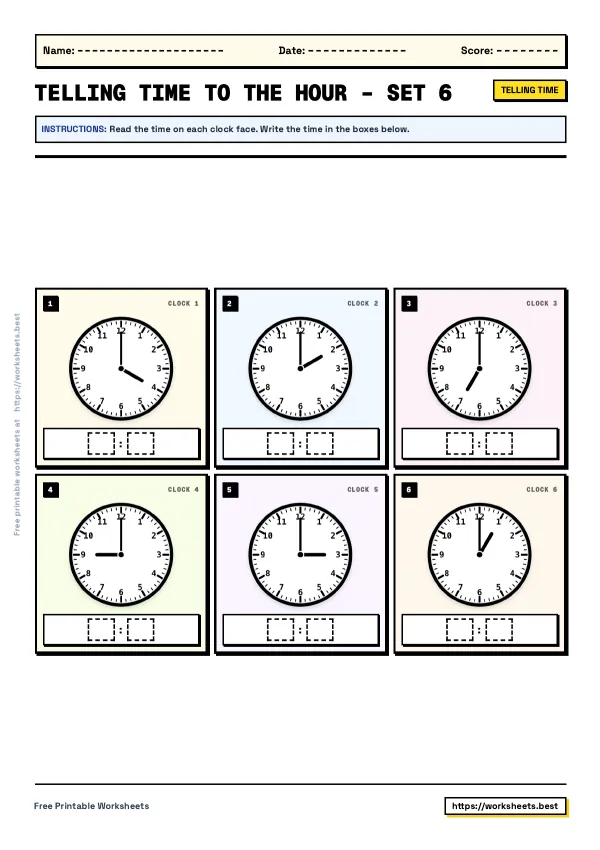
Telling Time to the Hour – Set 6
1st GradeClock ReadingTelling Time to the Hour – Set 4
1st GradeClock ReadingTelling Time to the Half Hour – Set 3
1st GradeClock Reading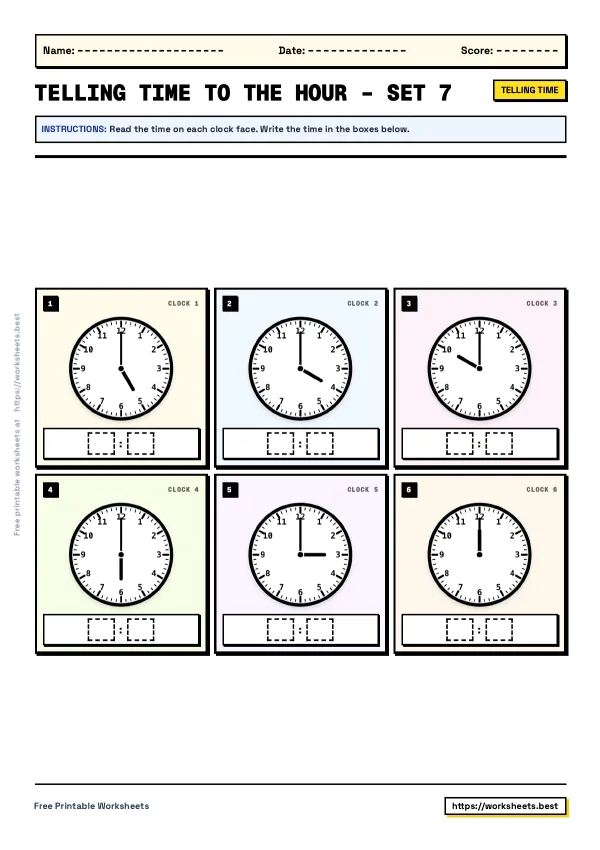
Telling Time to the Hour – Set 7
1st GradeClock Reading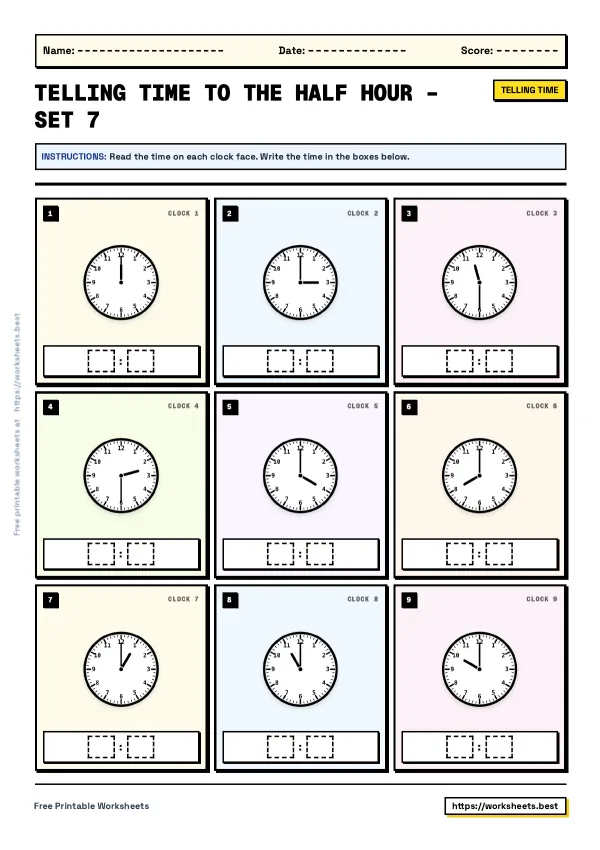
Telling Time to the Half Hour – Set 7
1st GradeClock Reading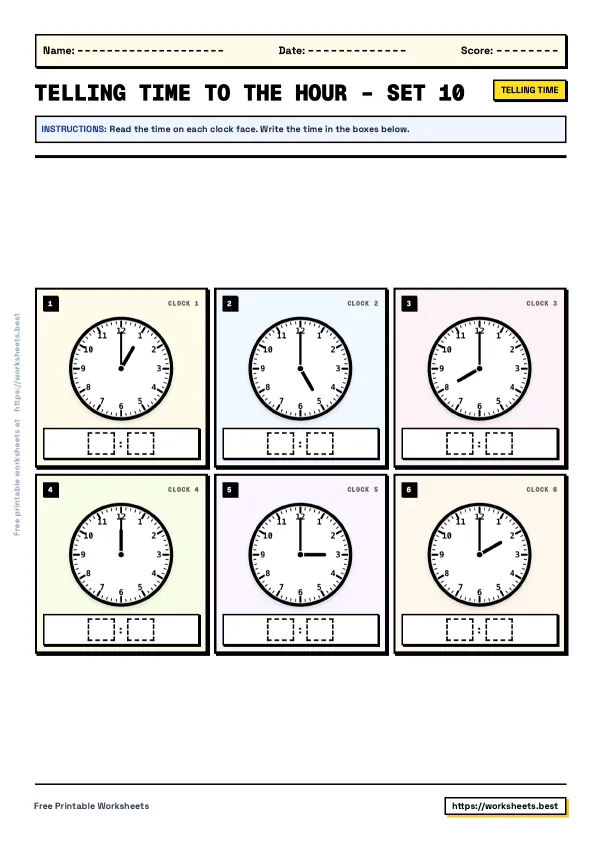
Telling Time to the Hour – Set 10
1st GradeClock Reading
from teachers
Tips for parents and teachers
- Begin with the whole-hour pages and ask your child to point to the hour hand and minute hand before reading the clock. Say the time aloud together, then let the child write it.
- For half-hour practice, remind your child that the minute hand points to the 6 and the hour hand sits between two numbers. Ask them to explain where each hand is before they write the time.
- Connect the sheets to daily routines: pause at breakfast, lunch, or bedtime and ask your child to read a nearby analog clock. Keep the question simple, such as what hour or half hour it shows.
- Keep sessions short and check a few answers together using the answer key. If a clock is tricky, cover the minute hand and read the hour first, then look at the full face again.
Questions parents ask
What time-telling skills should a 1st grader learn?
In 1st grade, children usually learn to read analog clocks to the hour and half hour and to write the matching time. They also practice using the words hour and half hour when they describe what a clock shows.
How can I help my child tell time to the half hour?
Point out that the minute hand is on the 6 and the hour hand is halfway between two numbers. Ask your child to say the time aloud before writing it, and practice with a few clocks at a time.
Why does the hour hand sit between numbers at half past?
At half past, the hour hand has moved halfway toward the next hour, so it no longer points directly at a number. Looking at both hands together helps children see that the clock is showing a half hour.
Should my child practice with an analog clock or a digital clock first?
An analog clock lets children see the hour hand and minute hand move, which makes the hour and half hour easier to notice. After they can read a clock face, compare it with a digital clock to reinforce the same time.
How long should a 1st grader spend on one telling time worksheet?
A short session of about 10 to 15 minutes is usually enough for a 1st grader to stay focused and successful. Stop while the child is still doing well, and return to another clock-reading page later.