1st Grade Maze Worksheets
A pencil path from one animal to another is the whole idea behind the 1st Grade Maze Worksheets, and that simple task carries plenty of practice inside it. Each sheet asks a child to find a route through a medium-level maze, keeping the pencil line inside the corridors while scanning ahead for dead ends and open turns. Fine motor skills, problem solving and visual planning all happen at once, and most 1st graders can settle into a page with only a little adult help.
Read more +
The collection runs to dozens of worksheets across three themes: animals, birds, and bugs and insects. In one, a kangaroo needs a clear way across to a goat; in another, a bee works its way through to a hornet. Difficulty holds steady at medium throughout, so the challenge feels familiar from page to page rather than jumping around. Every maze comes with an answer key, which makes it quick to check a child's route or to let them compare their own path afterward.
Use a sheet as a quiet morning warm-up, a center rotation during class, or a calm ten-minute task at the kitchen table. Hand a child a pencil rather than a marker at first so slips can be erased, and ask them to trace the route with a finger before drawing it.
start with these
Featured worksheets
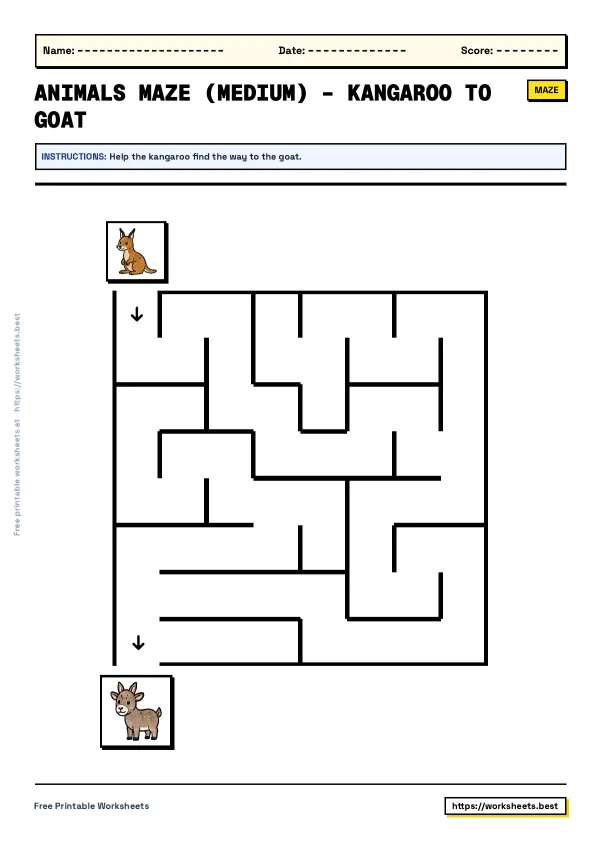
Animals Maze (Medium) – Kangaroo to Goat
1st–2nd GradeMazes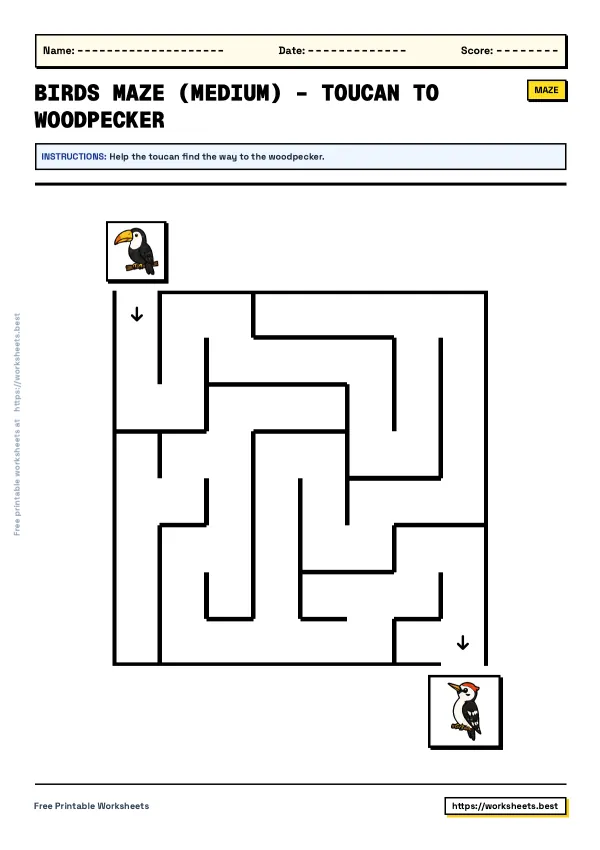
Birds Maze (Medium) – Toucan to Woodpecker
1st–2nd GradeMazes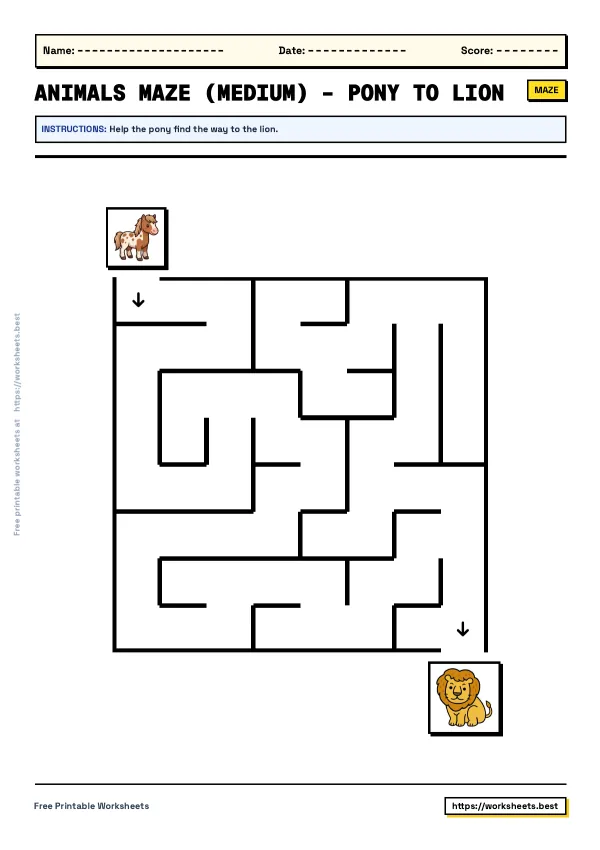
Animals Maze (Medium) – Pony to Lion
1st–2nd GradeMazes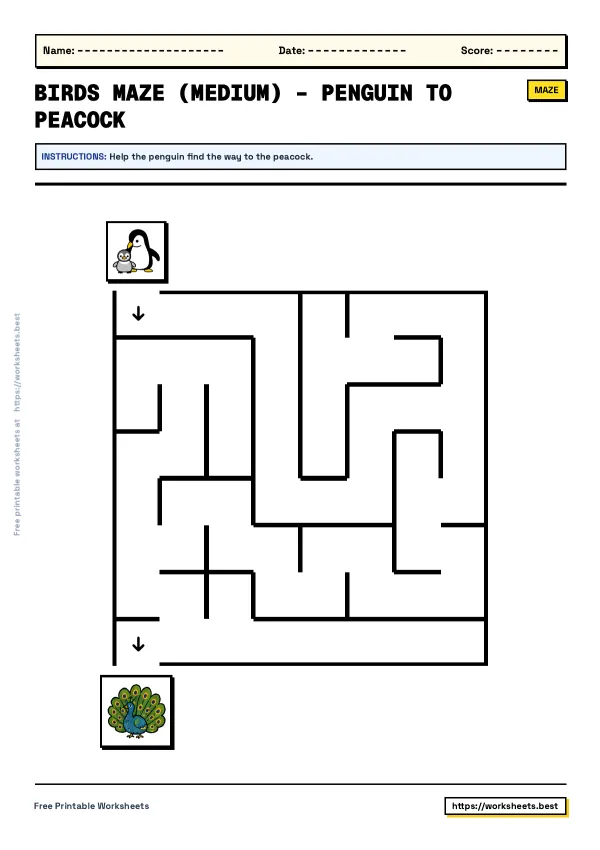
Birds Maze (Medium) – Penguin to Peacock
1st–2nd GradeMazes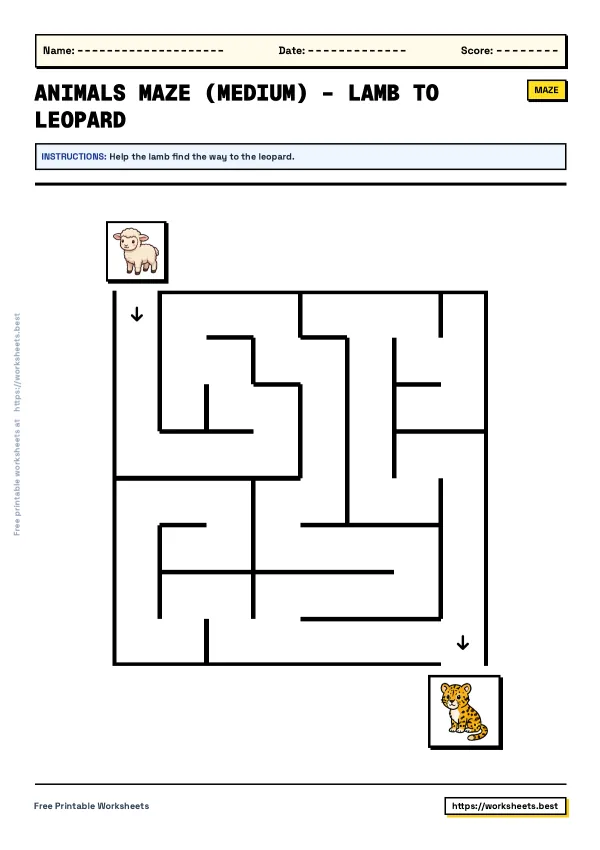
Animals Maze (Medium) – Lamb to Leopard
1st–2nd GradeMazes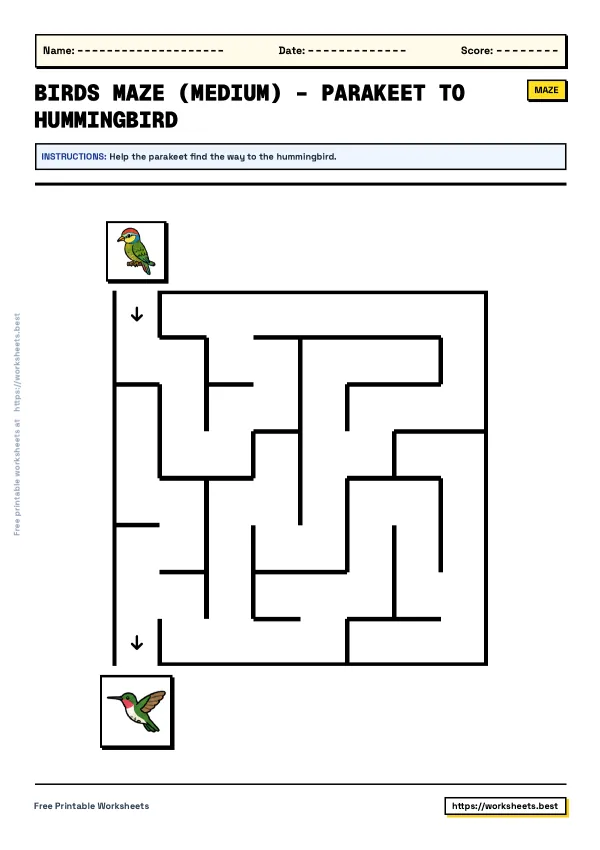
Birds Maze (Medium) – Parakeet to Hummingbird
1st–2nd GradeMazes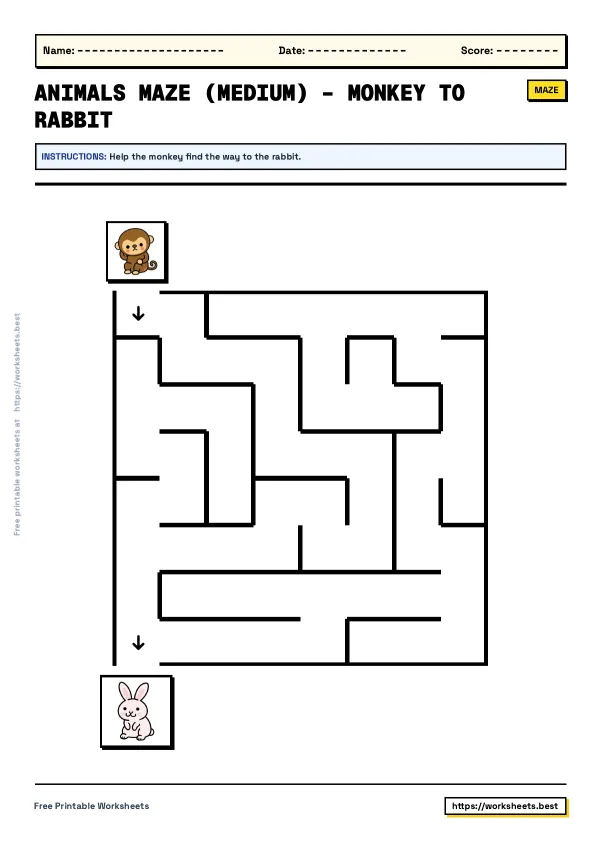
Animals Maze (Medium) – Monkey to Rabbit
1st–2nd GradeMazes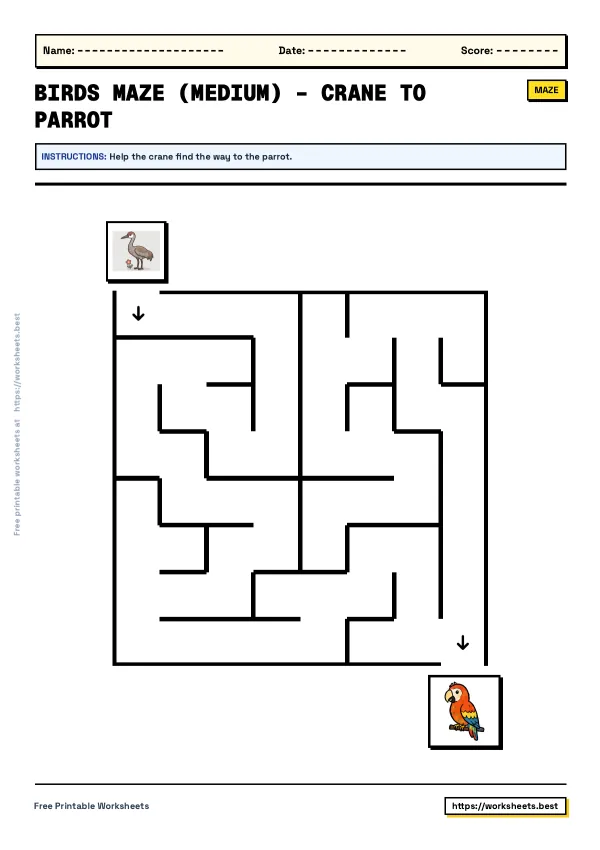
Birds Maze (Medium) – Crane to Parrot
1st–2nd GradeMazes
every sheet
All 1st Grade Maze worksheets
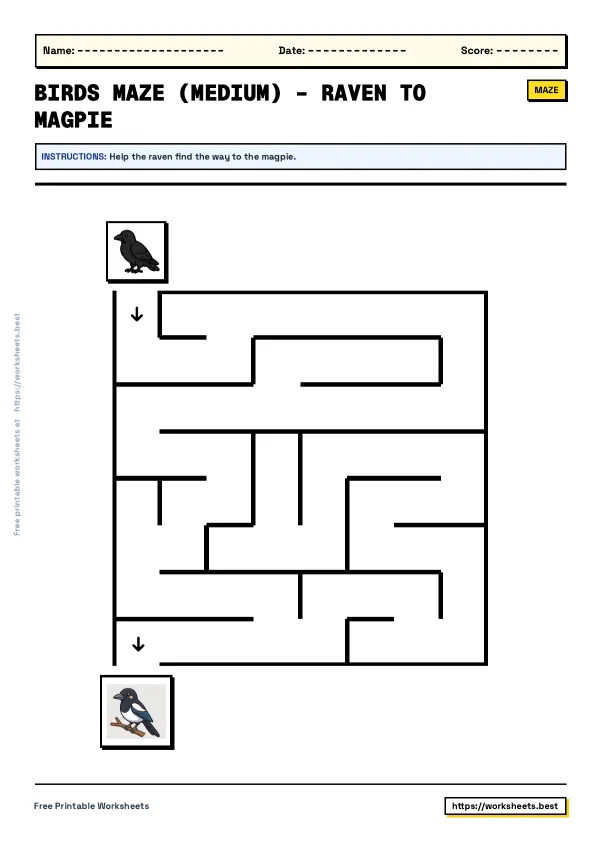
Birds Maze (Medium) – Raven to Magpie
1st–2nd GradeMazesBirds Maze (Medium) – Parakeet to Hummingbird
1st–2nd GradeMazes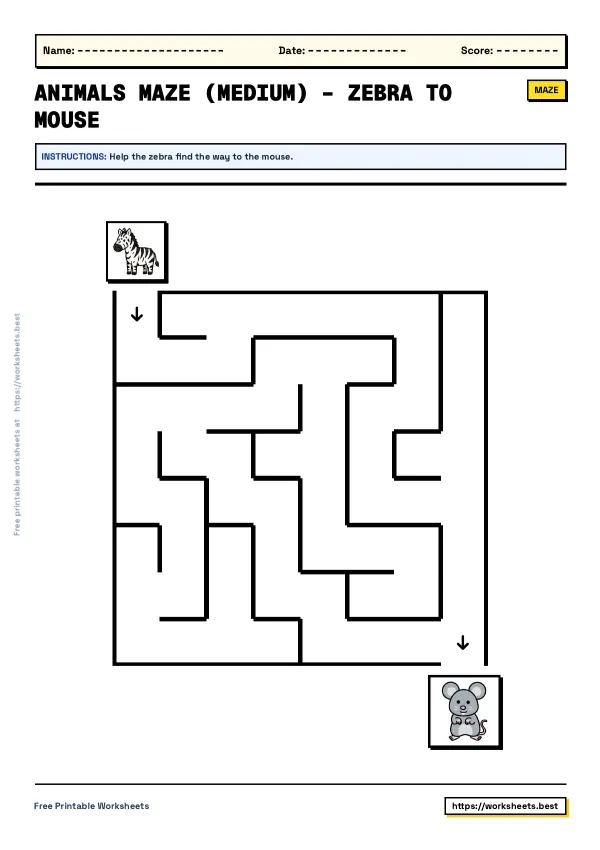
Animals Maze (Medium) – Zebra to Mouse
1st–2nd GradeMazes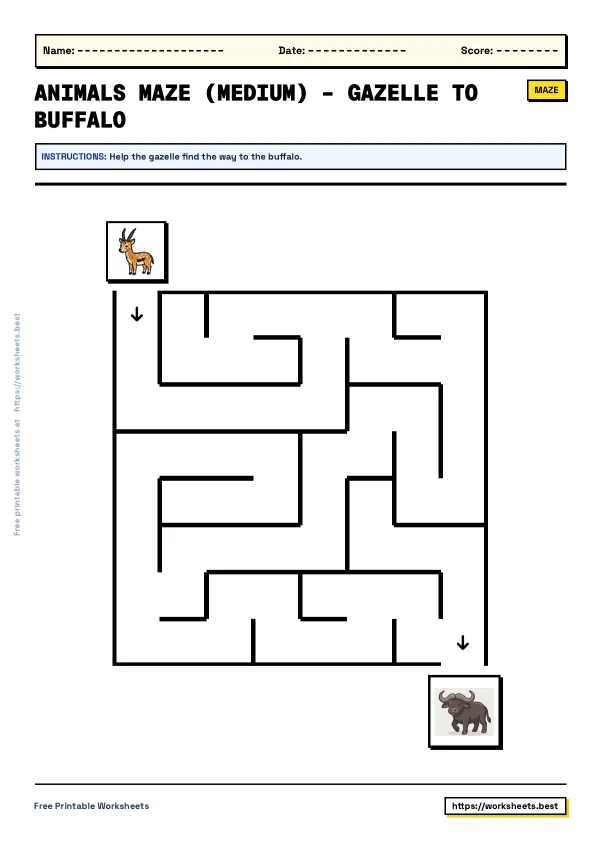
Animals Maze (Medium) – Gazelle to Buffalo
1st–2nd GradeMazesAnimals Maze (Medium) – Pony to Lion
1st–2nd GradeMazesBirds Maze (Medium) – Penguin to Peacock
1st–2nd GradeMazes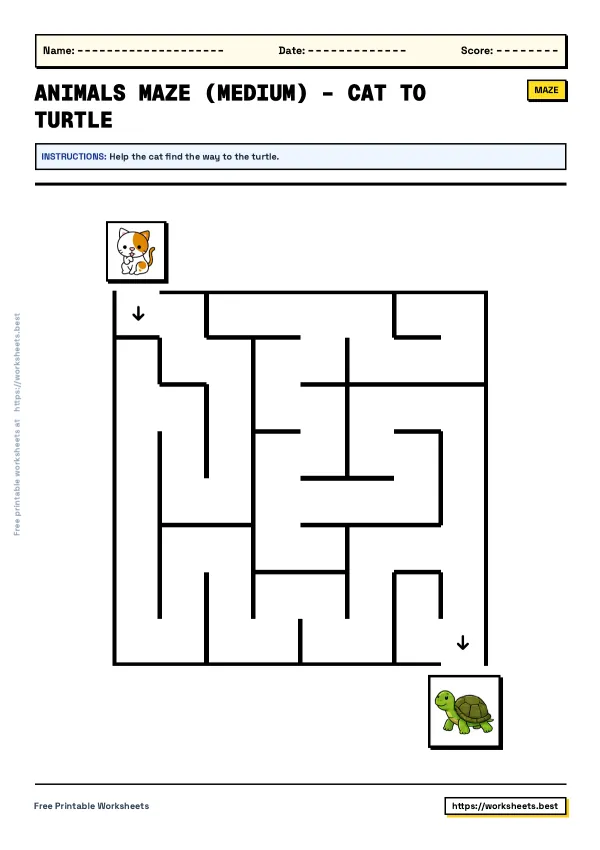
Animals Maze (Medium) – Cat to Turtle
1st–2nd GradeMazes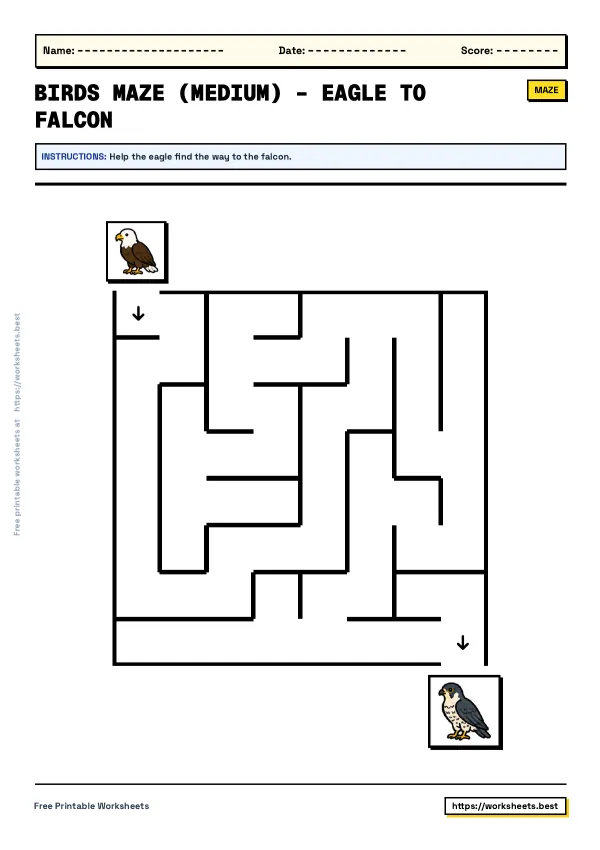
Birds Maze (Medium) – Eagle to Falcon
1st–2nd GradeMazesAnimals Maze (Medium) – Kangaroo to Goat
1st–2nd GradeMazesAnimals Maze (Medium) – Monkey to Rabbit
1st–2nd GradeMazesBirds Maze (Medium) – Crane to Parrot
1st–2nd GradeMazes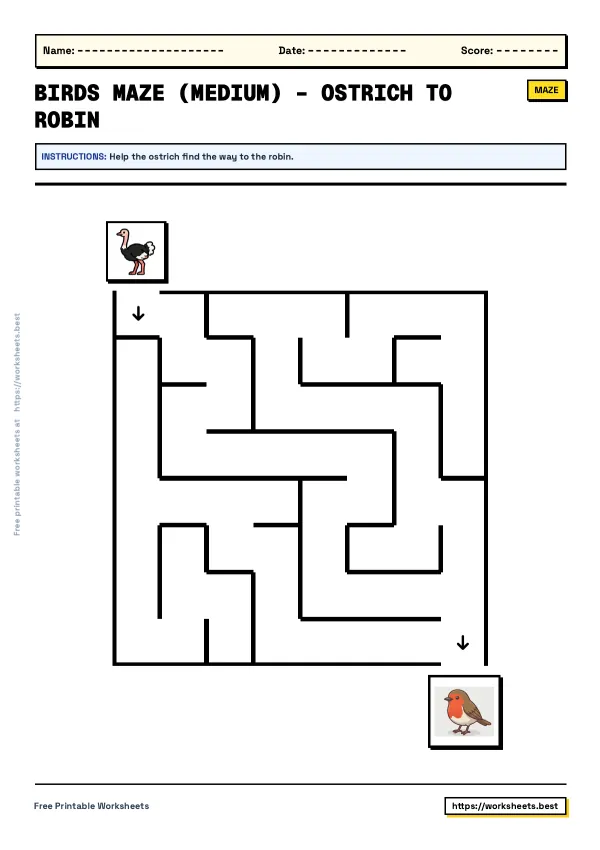
Birds Maze (Medium) – Ostrich to Robin
1st–2nd GradeMazes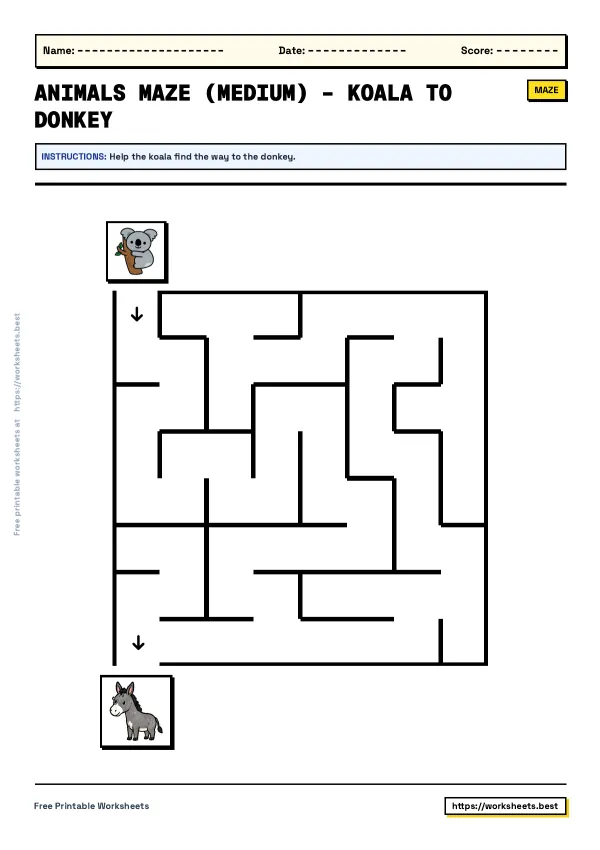
Animals Maze (Medium) – Koala to Donkey
1st–2nd GradeMazesAnimals Maze (Medium) – Lamb to Leopard
1st–2nd GradeMazesBirds Maze (Medium) – Toucan to Woodpecker
1st–2nd GradeMazes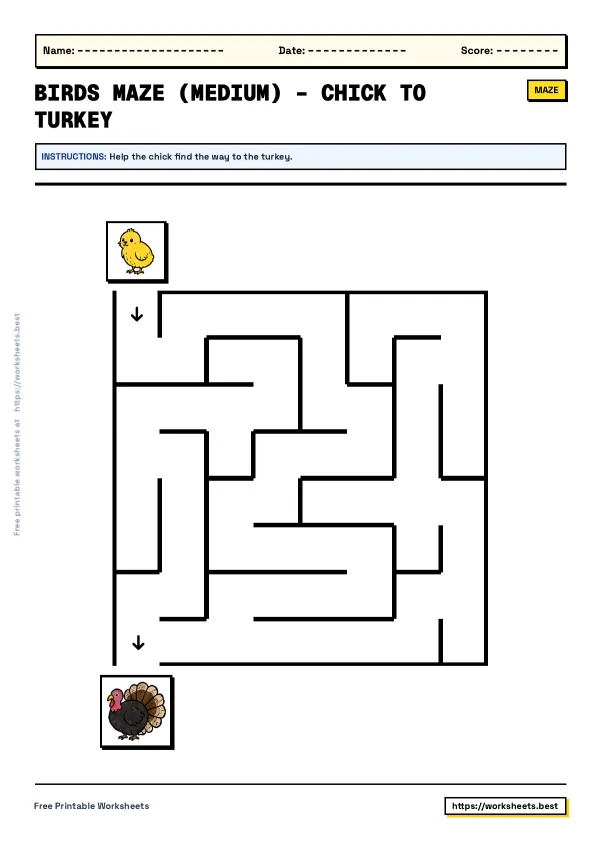
Birds Maze (Medium) – Chick to Turkey
1st–2nd GradeMazes
from teachers
Tips for parents and teachers
- Have the child trace the route with an index finger before picking up a pencil; planning the path first cuts down on erasing and frustration.
- Teach a look-ahead habit at each junction: pause, scan for dead ends, then commit. This is where visual planning and problem solving get their workout.
- Encourage short, controlled pencil strokes and a comfortable grip rather than long sweeping lines, since the narrow corridors are what build fine motor control.
- If a child gets stuck, suggest working backward from the ending animal to the start; seeing the path in reverse often makes the route obvious.
Questions parents ask
What age are 1st grade maze worksheets right for?
They fit children around six and seven years old, which is the typical 1st grade range. The medium difficulty means a child can usually work independently after one demonstration, and the animal, bird and insect themes keep the interest level up.
Do mazes help with handwriting and pencil control?
Yes. Staying inside a narrow corridor requires steady hand control and short, deliberate strokes, which are the same movements children use when forming letters. The difference is that a maze feels like a puzzle rather than handwriting practice.
How do I help my child when they get stuck in a maze?
Avoid drawing the answer for them. Instead, ask them to trace backward from the ending animal to the start, or to point at the dead ends they can already see. Both moves shift the task back to problem solving instead of guessing.
Can a first grader complete these mazes on their own?
Most can, since the mazes stay at a medium level and the goal is simply a path from one animal to another. An answer key is included with each one, so a child can check their own route and try again without waiting for an adult.
What themes are the mazes available in?
There are three: animals, birds, and bugs and insects. Children might lead a pony to a lion, a penguin to a peacock, or a beetle to a housefly, so there is usually a theme that matches what a class is reading about.