1st Grade Addition Worksheets
First Grade Addition Worksheets give young learners a focused way to practice addition and build math facts recall through short math drills. Children work through a small set of worksheets that begin with sums within ten and move to sums within twenty, so they can strengthen counting on, fact fluency, and confidence with written equations.
Read more +
The sheets suit children in 1st grade who are learning to add accurately and with increasing speed. Each drill presents straightforward equations, giving kids repeated practice with math facts rather than a long mix of unrelated tasks. Answer keys are included for all worksheets, which makes it easy for a parent to check work at the kitchen table or for a teacher to place a set in a math center. The format also works well for a short morning warm-up, a quiet independent practice block, or a quick review before moving on to new addition strategies.
At home, you can sit beside your child for the first few facts, then let them finish a row on their own and talk through any mistakes. In class, the drills can follow a hands-on lesson with counters or number lines, helping children connect the written equation to a model they already understand. The practice supports fluency toward Common Core standard 1.OA.C.6, and the two levels let you choose the range that matches the child’s current comfort with math facts.
start with these
Featured worksheets
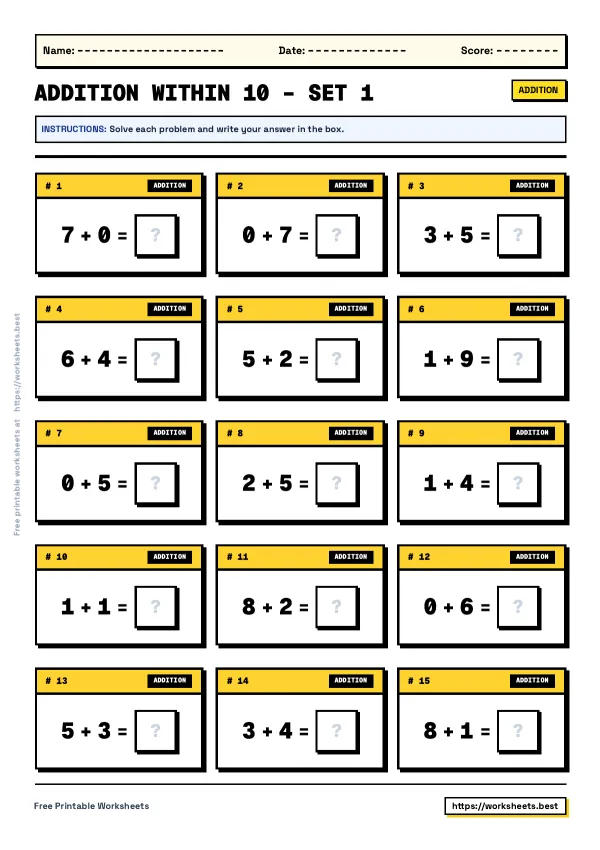
Addition Within 10 – Set 1
K–1st GradeMath Drills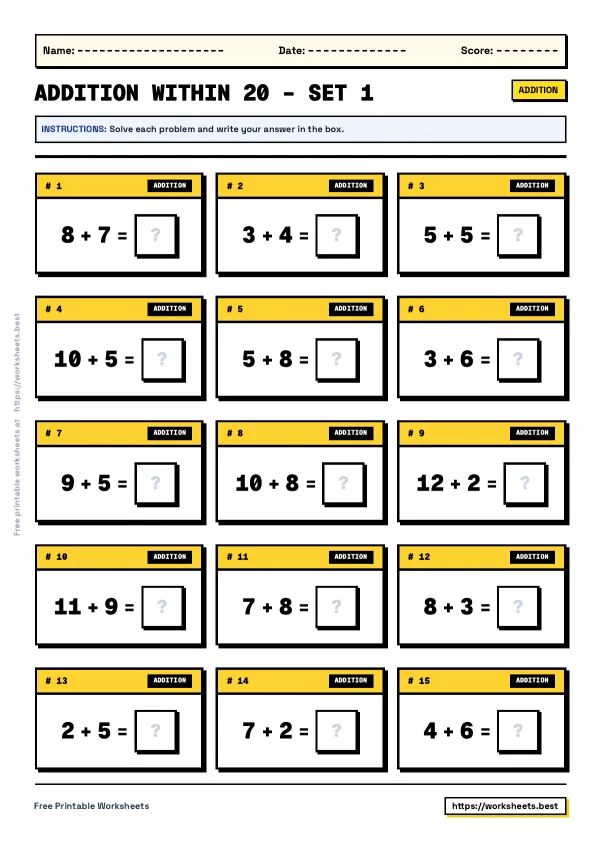
Addition Within 20 – Set 1
1st–2nd GradeMath Drills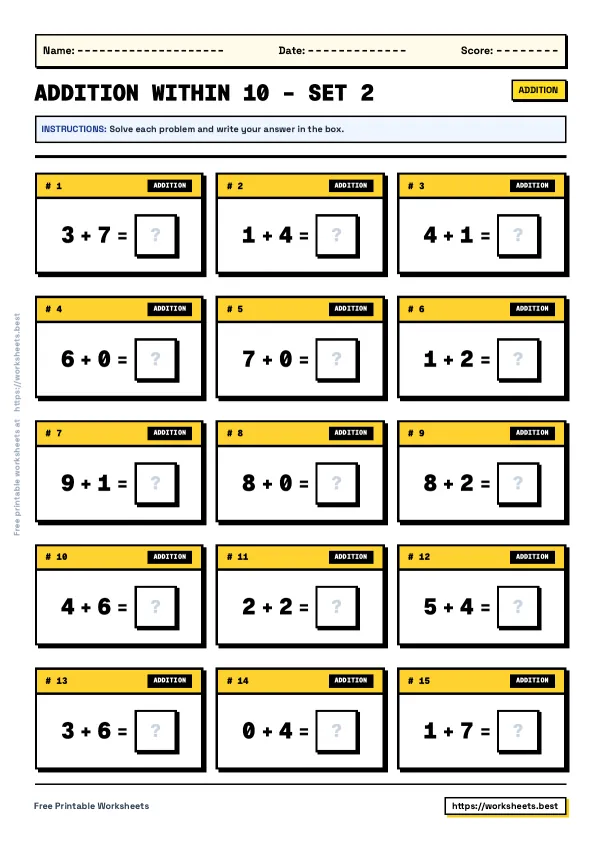
Addition Within 10 – Set 2
K–1st GradeMath Drills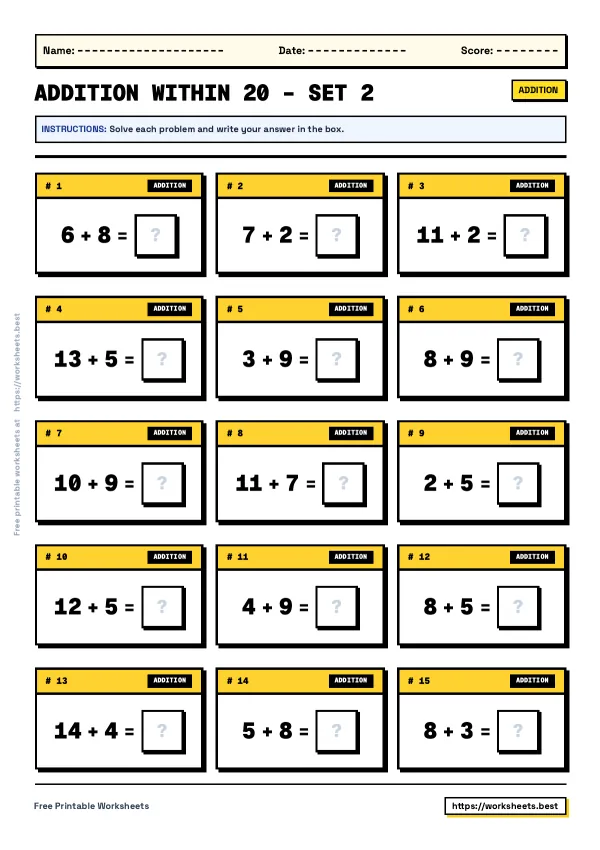
Addition Within 20 – Set 2
1st–2nd GradeMath Drills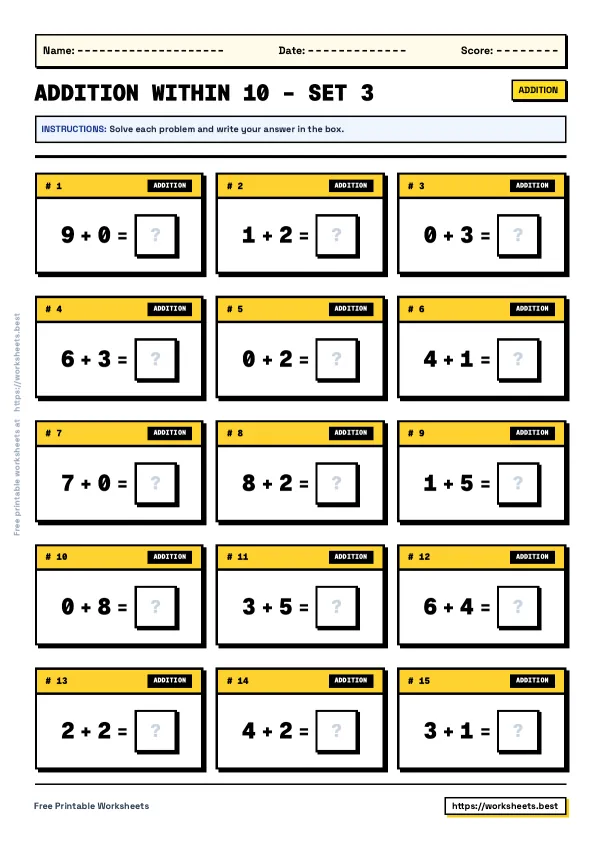
Addition Within 10 – Set 3
K–1st GradeMath Drills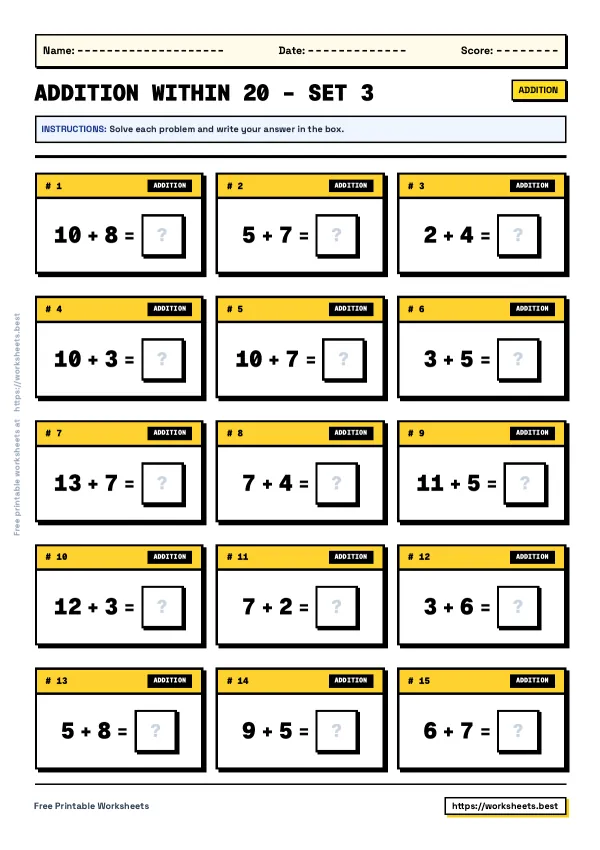
Addition Within 20 – Set 3
1st–2nd GradeMath Drills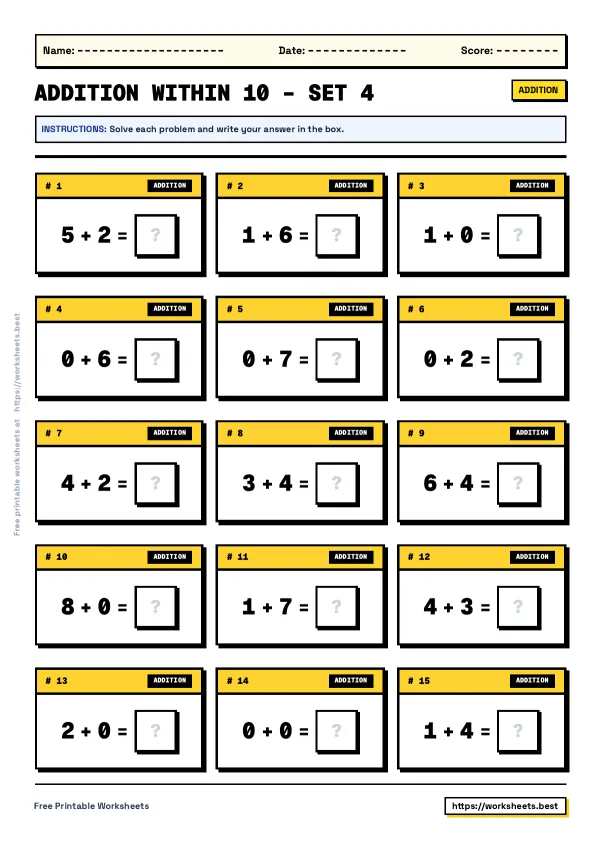
Addition Within 10 – Set 4
K–1st GradeMath Drills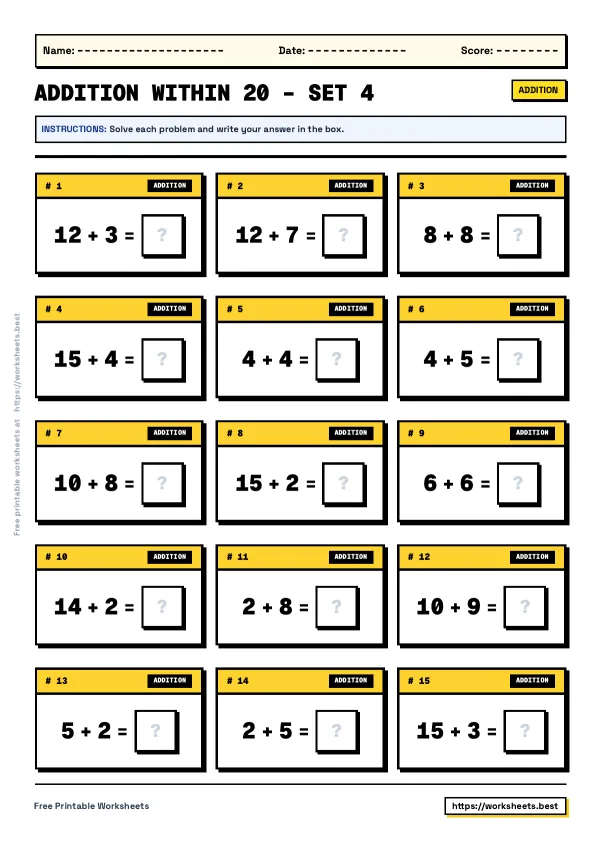
Addition Within 20 – Set 4
1st–2nd GradeMath Drills
every sheet
All 1st Grade Addition worksheets
Addition Within 20 – Set 1
1st–2nd GradeMath DrillsAddition Within 10 – Set 1
K–1st GradeMath DrillsAddition Within 10 – Set 4
K–1st GradeMath DrillsAddition Within 20 – Set 4
1st–2nd GradeMath DrillsAddition Within 10 – Set 3
K–1st GradeMath DrillsAddition Within 20 – Set 2
1st–2nd GradeMath DrillsAddition Within 20 – Set 3
1st–2nd GradeMath DrillsAddition Within 10 – Set 2
K–1st GradeMath Drills
from teachers
Tips for parents and teachers
- Start with the sums within ten sheets and keep the first sessions short, so your child can finish a row and feel successful.
- Say the fact aloud before writing the answer; hearing “8 plus 5” while seeing it helps children link the spoken and written equation.
- Use counters or a number line for facts that stall, then have the child write the answer and say the fact again.
- Review a few completed facts later the same day or the next day, focusing on any sums that were slow or incorrect.
Questions parents ask
What addition facts should a 1st grader know?
Most 1st grade addition work centers on sums within 10 and then within 20, including facts such as 7 + 3 and 9 + 6. Children should also understand what the plus sign means and be able to show a fact with objects or a drawing.
How can I help my child stop counting on their fingers?
Short, repeated practice with a small range of facts helps children move toward recall. Pair each fact with a visual model, such as counters or a number line, and revisit the same facts over several days rather than in one long session.
Are timed math drills useful for 1st graders?
Brief timed drills can help children build speed with facts they already understand, but they should not replace hands-on work with counters or number lines. Keep timing light and focus on accuracy first, then gradual speed.
What is the difference between addition within 10 and addition within 20?
Addition within 10 uses facts whose sums are 10 or less, such as 4 + 5. Addition within 20 includes larger sums, such as 8 + 7, and asks children to apply strategies like making ten or counting on.
How often should a 1st grader practice addition facts?
A few short sessions each week work better than one long session, especially for young children. Five to ten minutes of focused practice, followed by a quick review of missed facts, can fit easily into a home routine or classroom warm-up.