1st Grade Math Worksheets
First grade math worksheets give six- and seven-year-olds paper practice with the ideas they meet in class: counting and number order, comparing numbers, adding and subtracting, and reading an analog clock. The collection runs to dozens of worksheets in three formats — number sense pages, clock reading pages and short math drills — so a child can meet the same skill more than one way.
Read more +
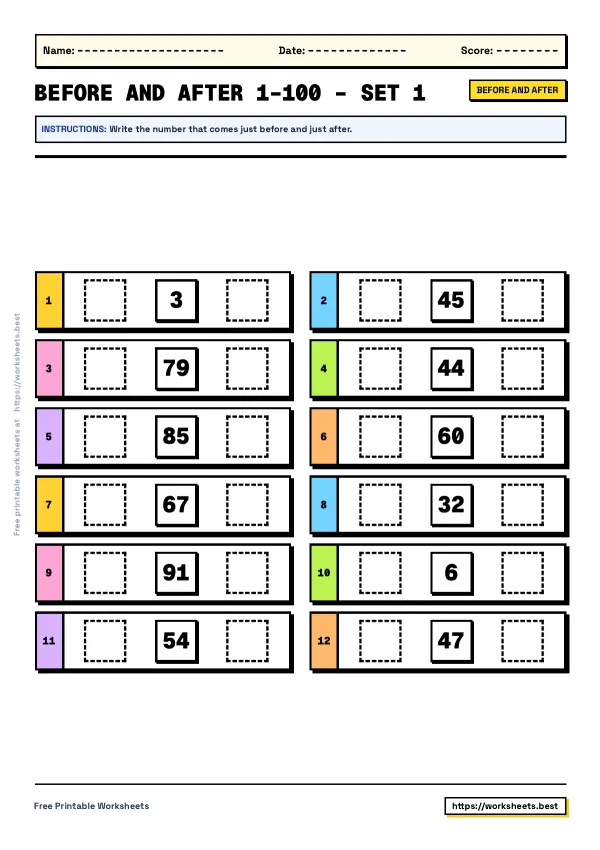
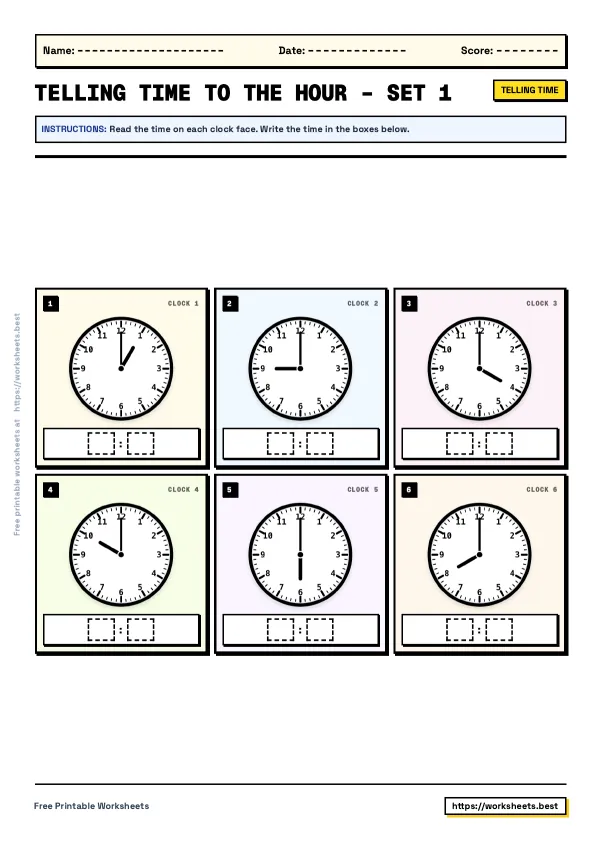
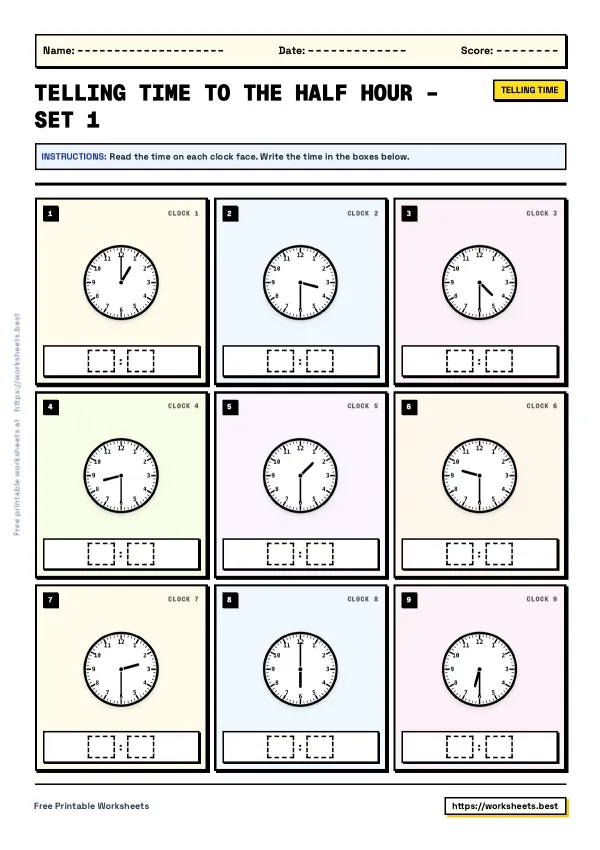
The number sense pages work on counting, number order and comparing numbers, often with a hundred chart or a row of empty boxes to fill. Two examples show the range: a telling time sheet where a row of analog clocks each waits for the hour to be written on a blank line, and a before-and-after page that asks for the number just before and just after values up to 100. Every sheet comes with an answer key, so checking is quick at the kitchen table or in a stack of papers after school.
Use one page as morning work, a warm-up before a math lesson, or quiet practice while you work with another group. Keep a few clock reading pages in a math center with a real clock nearby so children can check their answers against it, and repeat a drill later in the year to see how much faster the facts come back.
every sheet
All 1st Grade Math worksheets
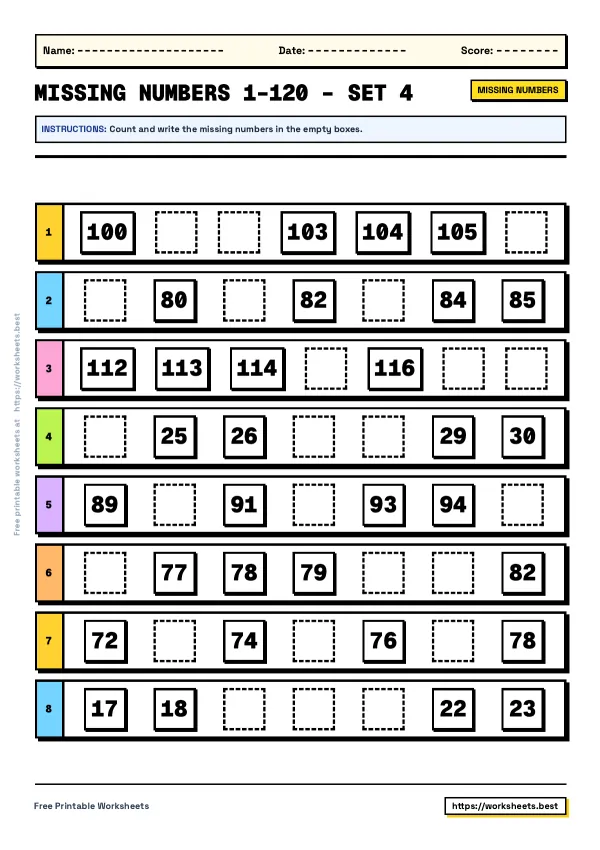
Missing Numbers 1–120 – Set 4
1st GradeNumber Sense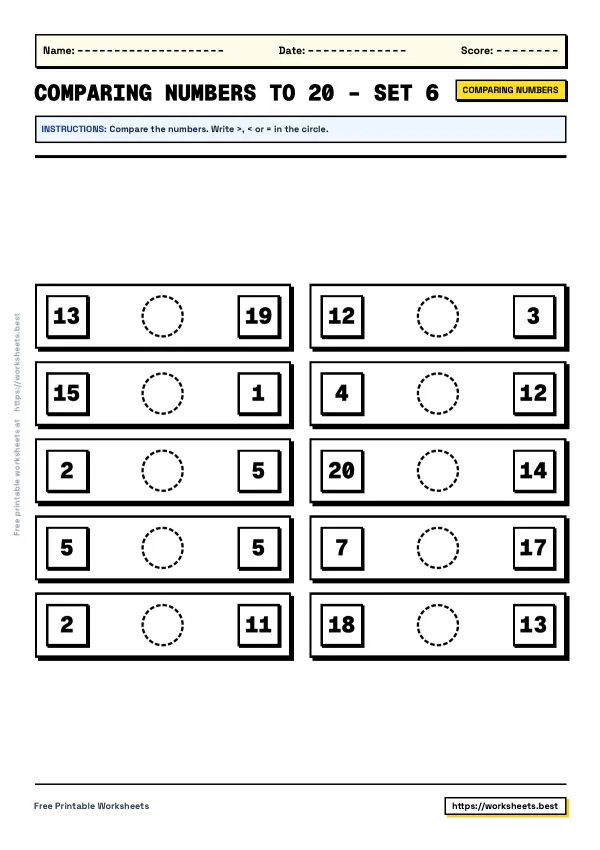
Comparing Numbers to 20 – Set 6
1st GradeNumber Sense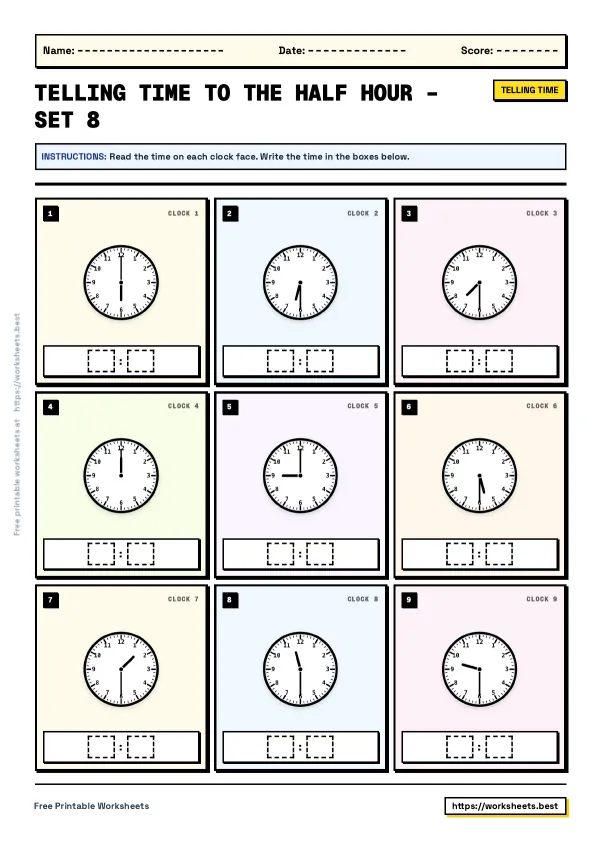
Telling Time to the Half Hour – Set 8
1st GradeClock Reading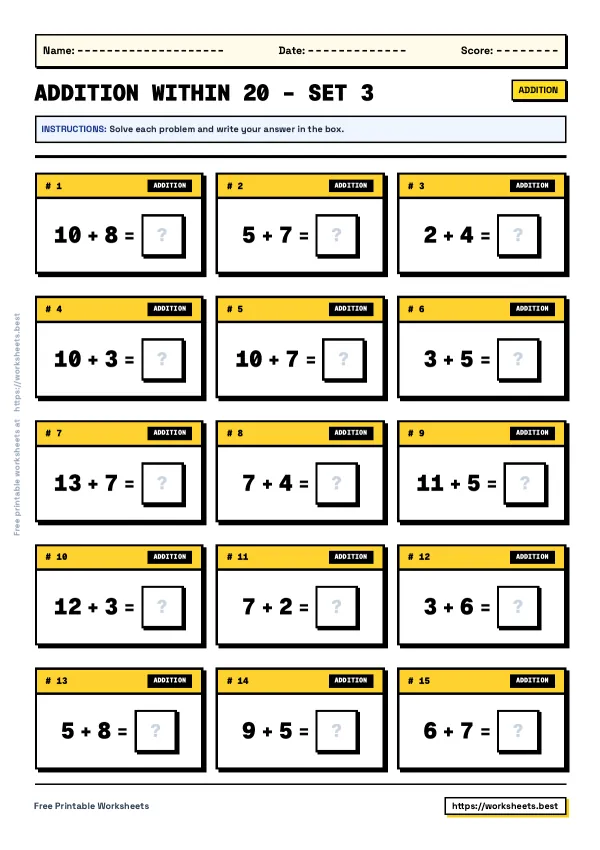
Addition Within 20 – Set 3
1st–2nd GradeMath Drills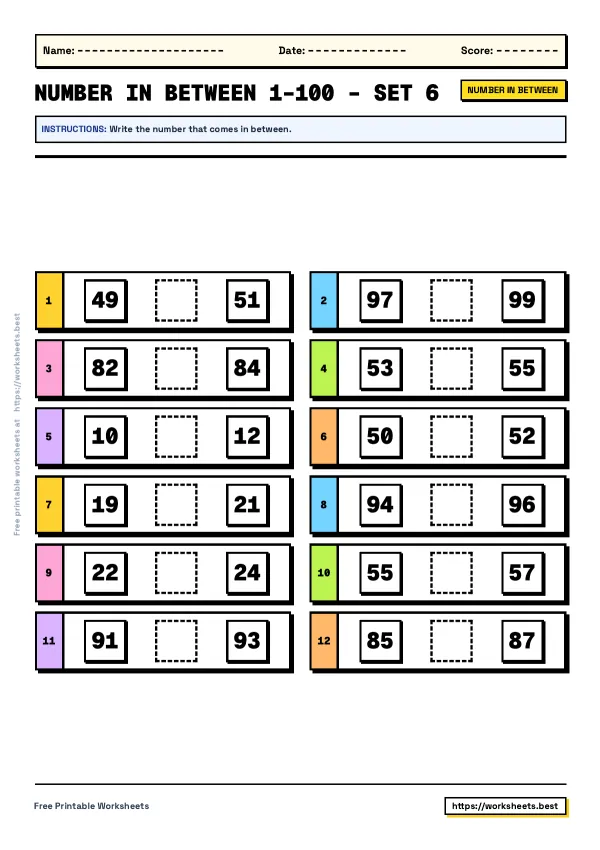
Number in Between 1–100 – Set 6
1st GradeNumber Sense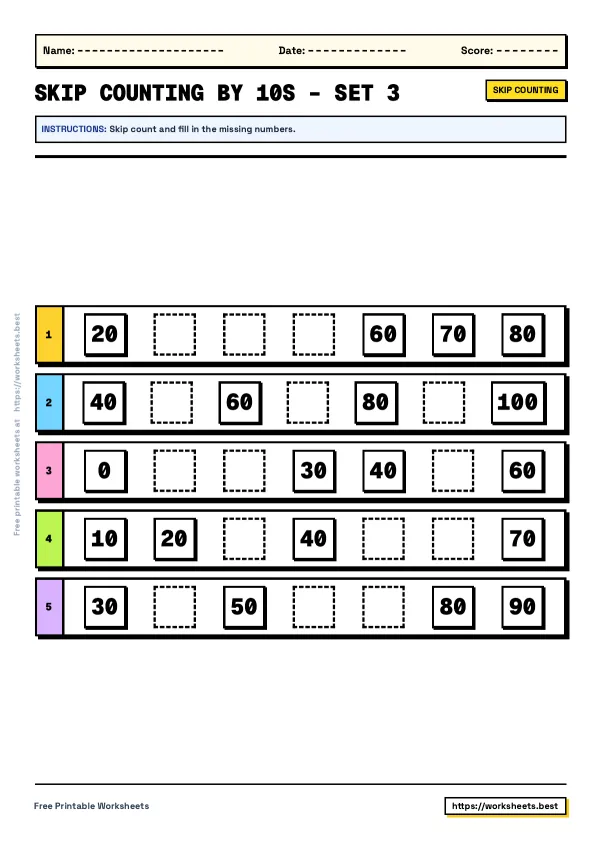
Skip Counting by 10s – Set 3
K–1st GradeNumber Sense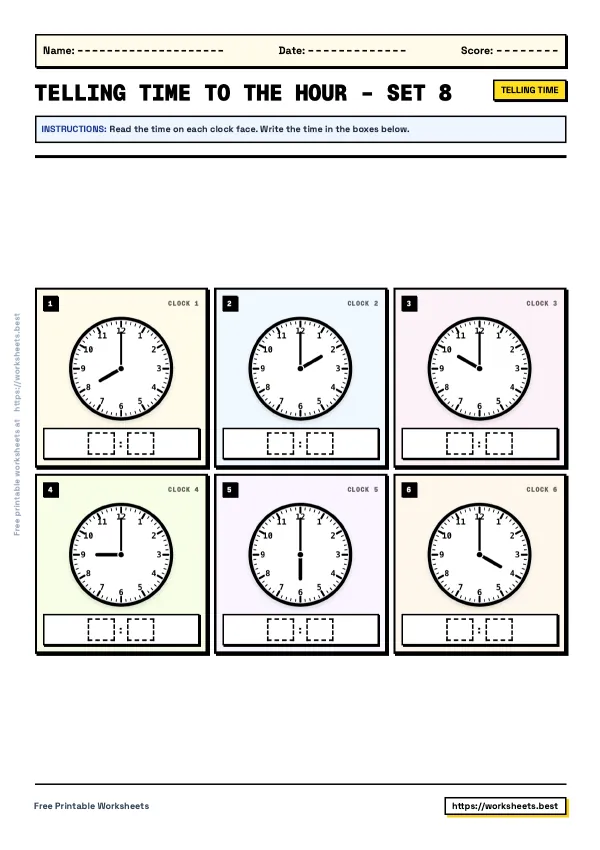
Telling Time to the Hour – Set 8
1st GradeClock Reading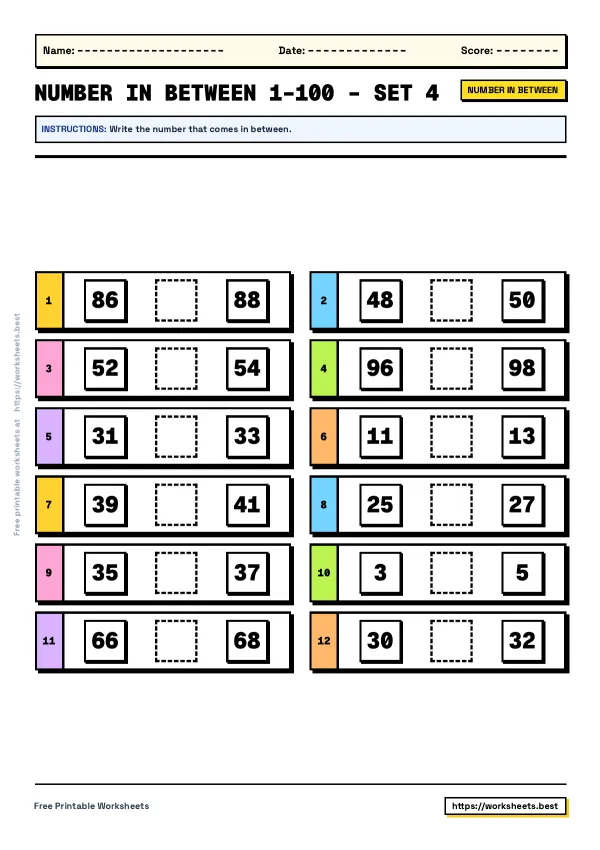
Number in Between 1–100 – Set 4
1st GradeNumber Sense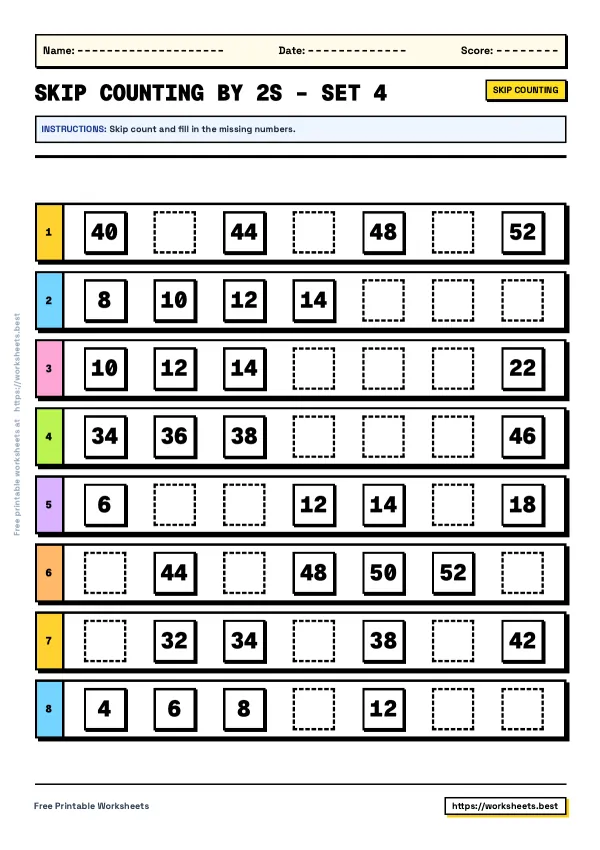
Skip Counting by 2s – Set 4
1st–2nd GradeNumber Sense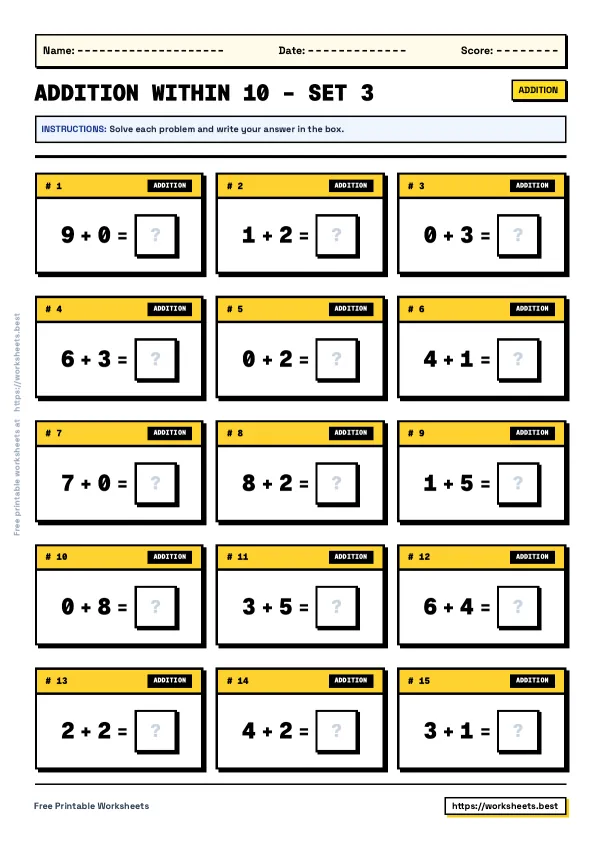
Addition Within 10 – Set 3
K–1st GradeMath Drills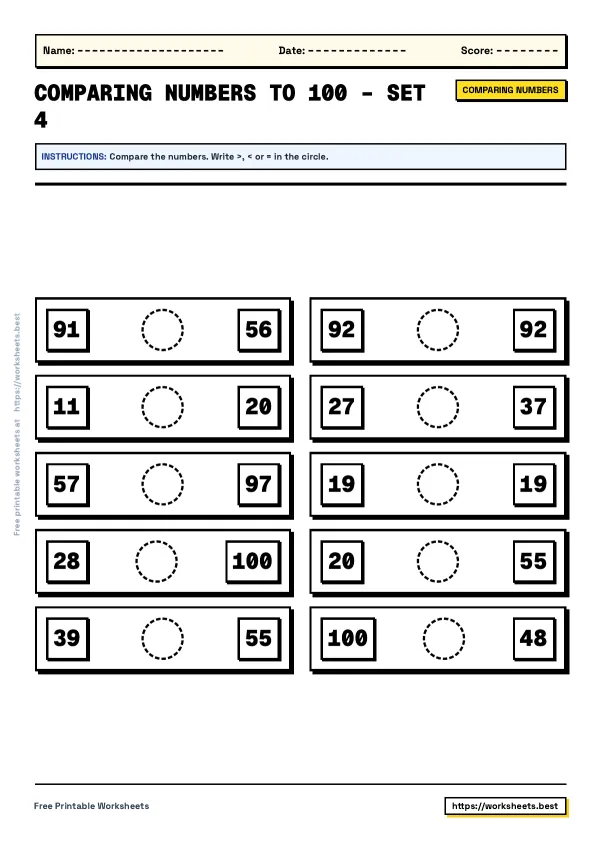
Comparing Numbers to 100 – Set 4
1st GradeNumber Sense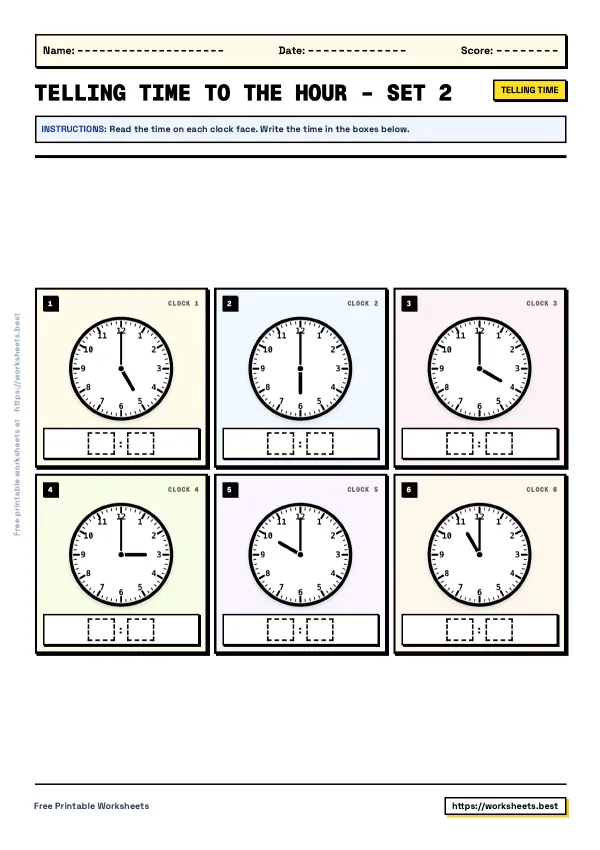
Telling Time to the Hour – Set 2
1st GradeClock Reading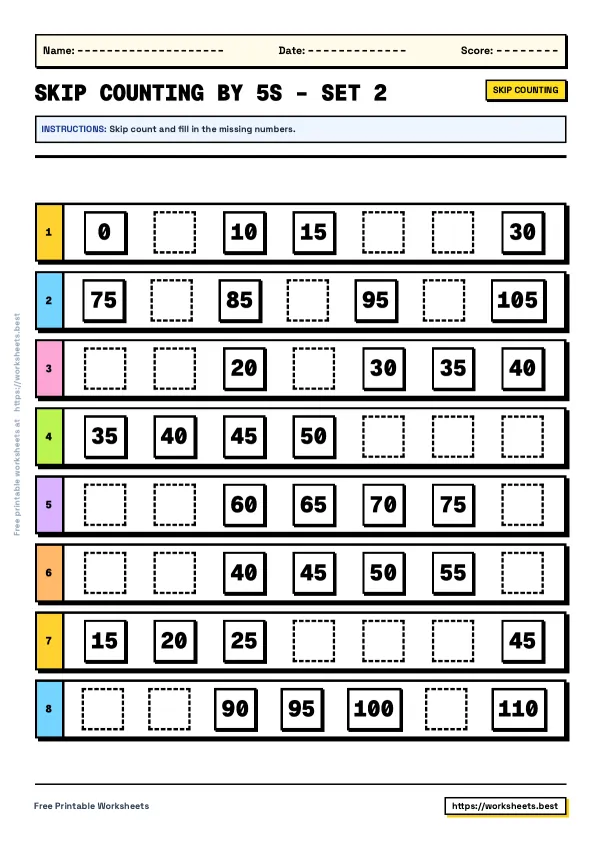
Skip Counting by 5s – Set 2
1st–2nd GradeNumber Sense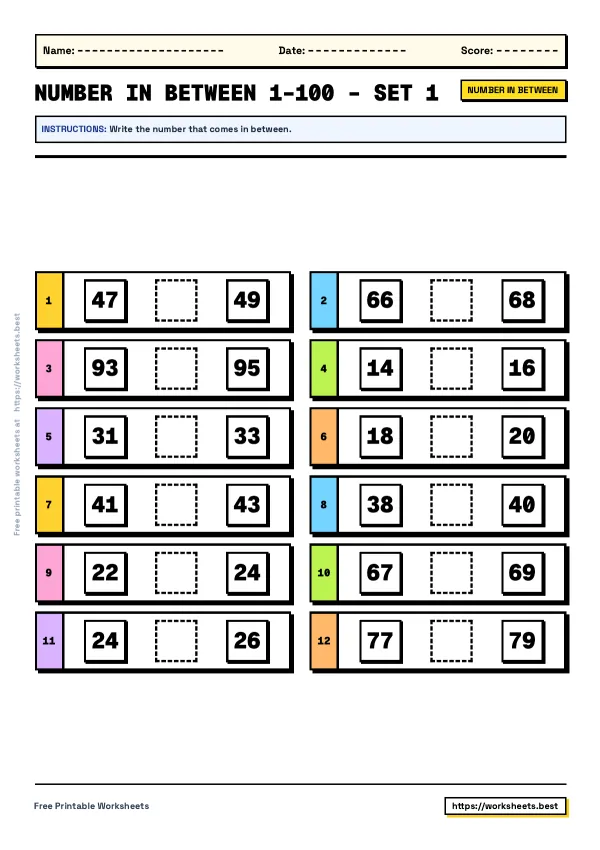
Number in Between 1–100 – Set 1
1st GradeNumber Sense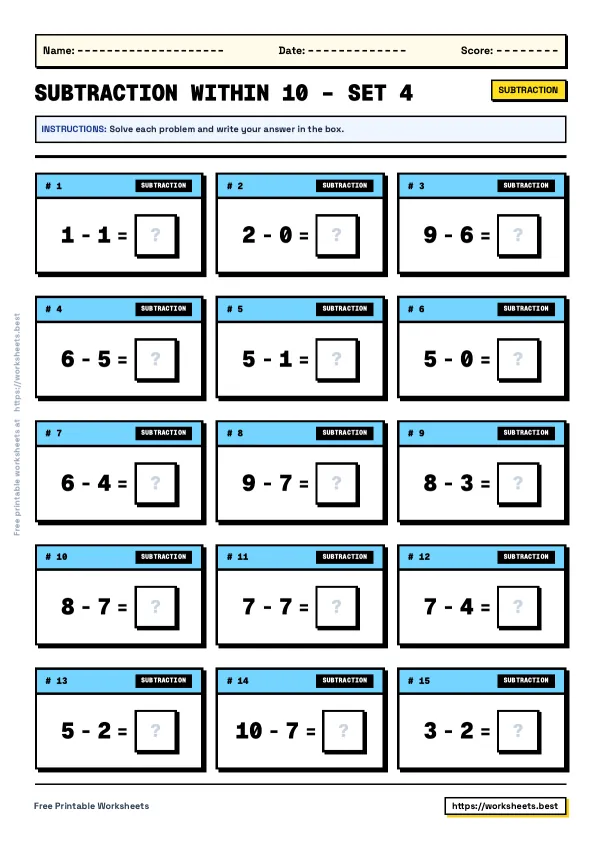
Subtraction Within 10 – Set 4
K–1st GradeMath Drills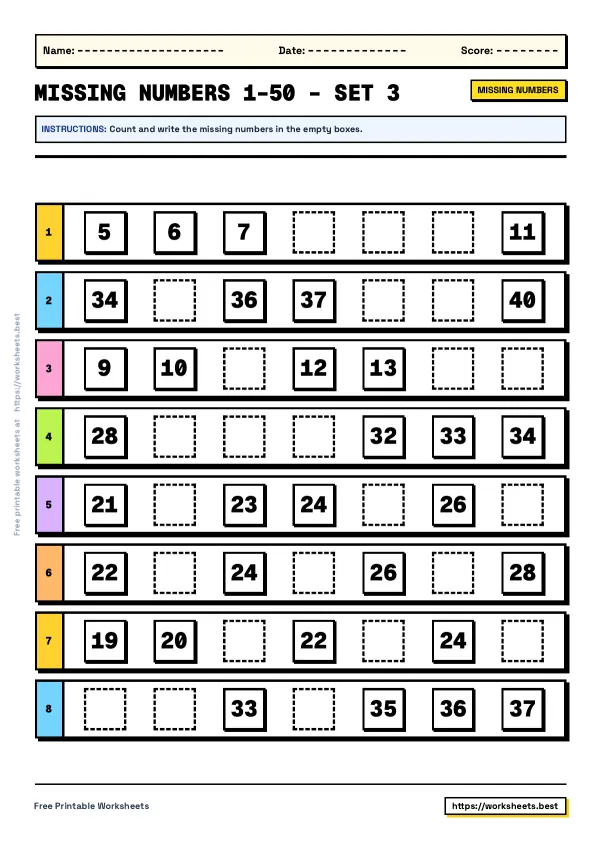
Missing Numbers 1–50 – Set 3
K–1st GradeNumber Sense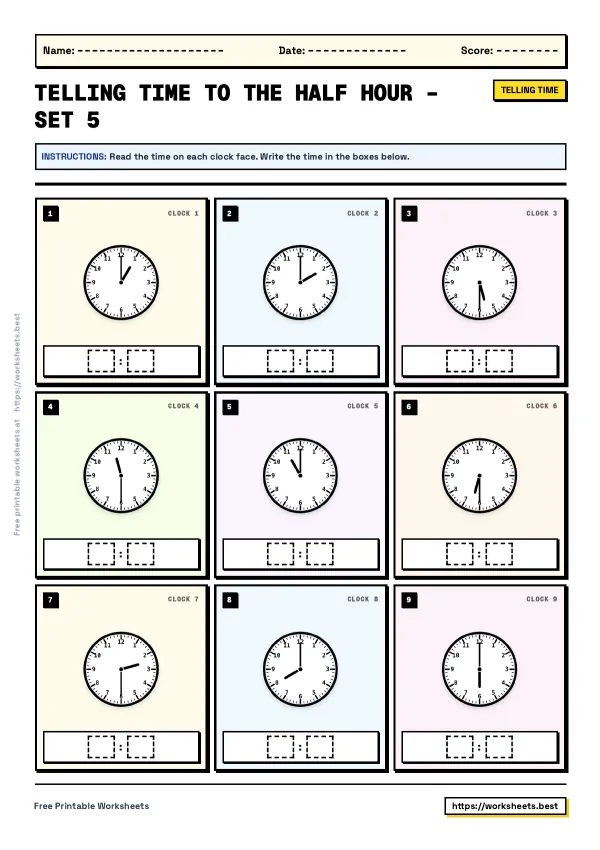
Telling Time to the Half Hour – Set 5
1st GradeClock Reading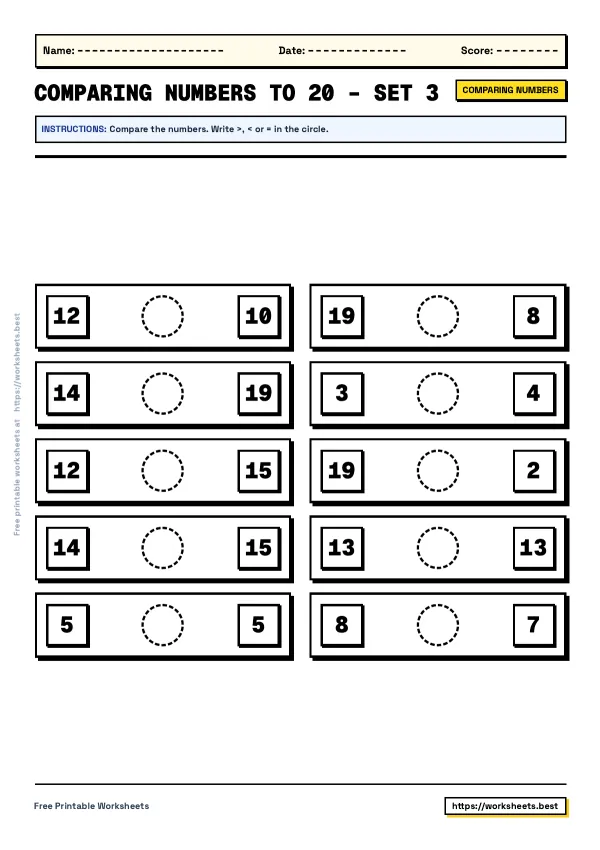
Comparing Numbers to 20 – Set 3
1st GradeNumber Sense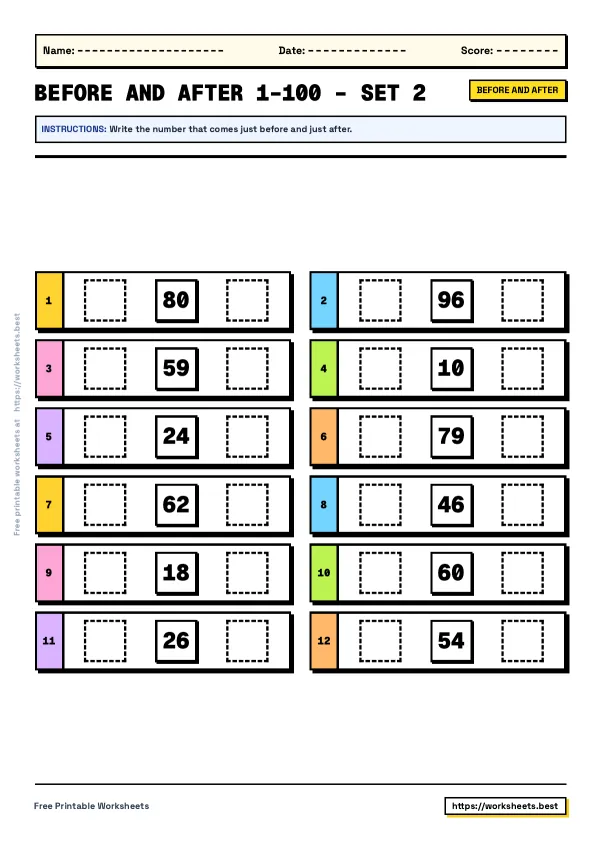
Before and After 1–100 – Set 2
1st GradeNumber Sense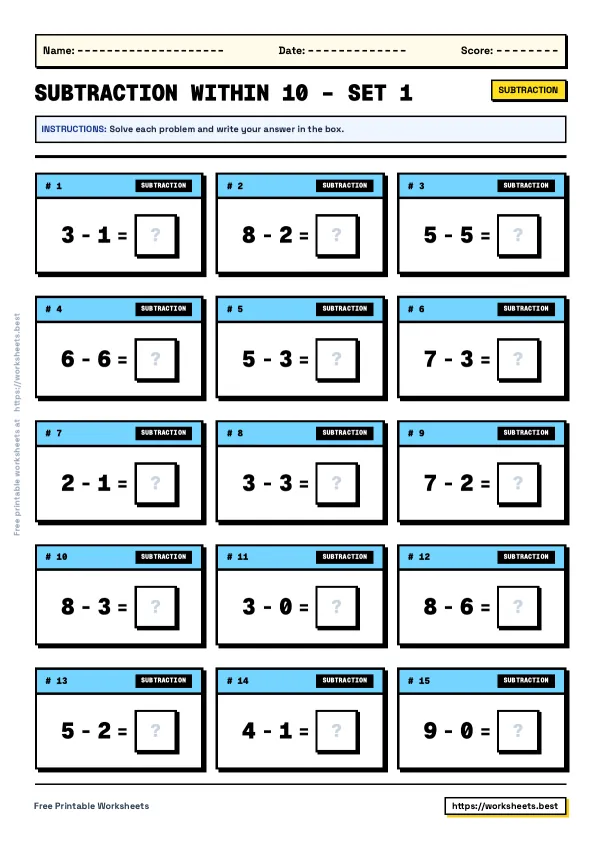
Subtraction Within 10 – Set 1
K–1st GradeMath Drills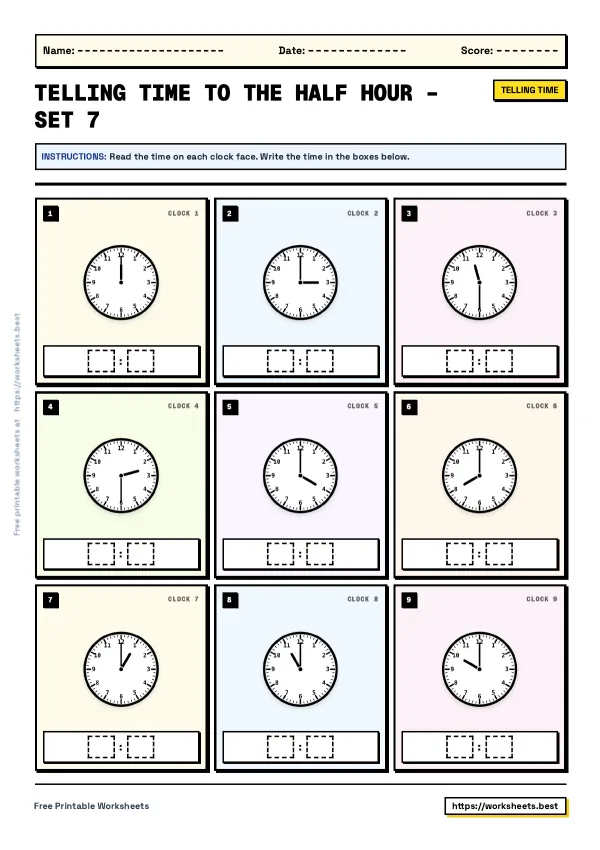
Telling Time to the Half Hour – Set 7
1st GradeClock Reading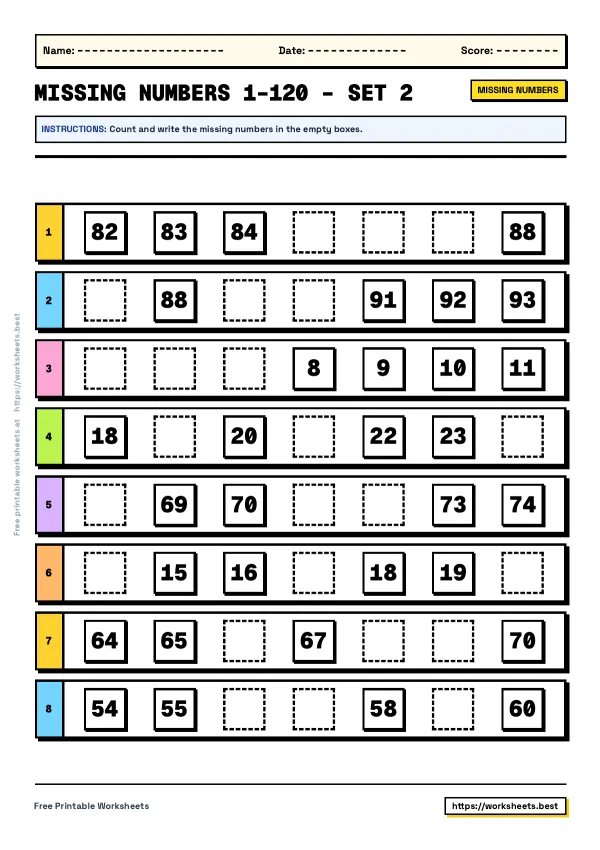
Missing Numbers 1–120 – Set 2
1st GradeNumber Sense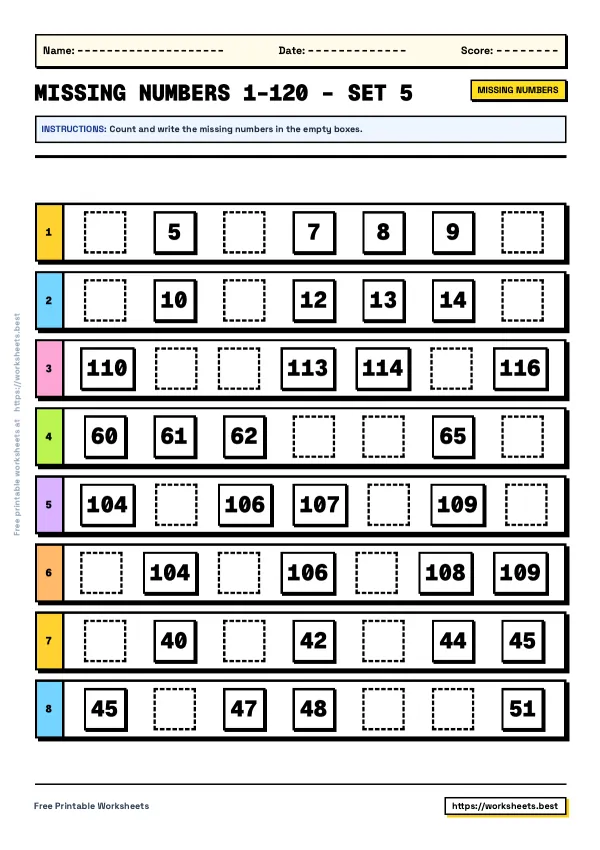
Missing Numbers 1–120 – Set 5
1st GradeNumber Sense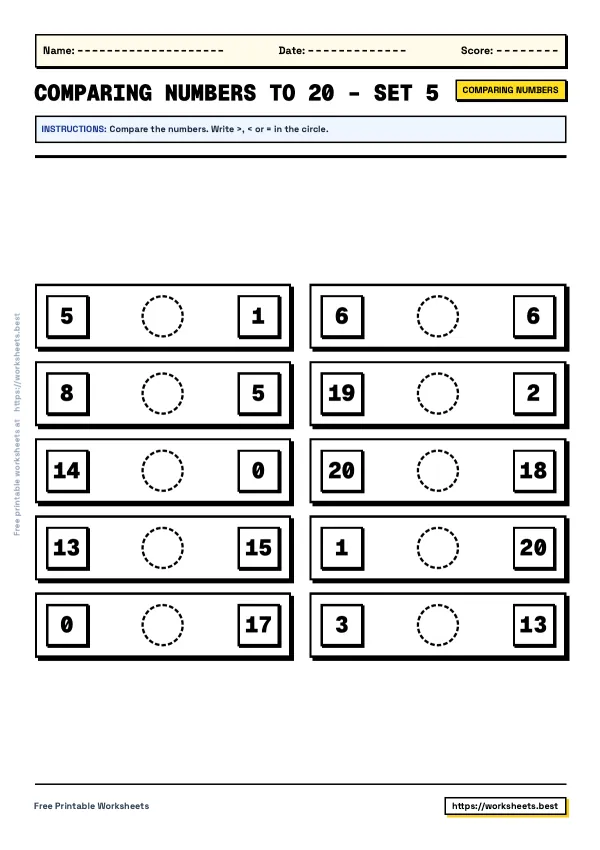
Comparing Numbers to 20 – Set 5
1st GradeNumber Sense
dig deeper
More 1st Grade Math worksheets
from teachers
Tips for parents and teachers
- Say the numbers aloud together before your child writes anything. Counting along a hundred chart in a whisper, then pointing to the same numbers on paper, helps number order stick.
- Keep a real analog clock or a paper plate clock nearby for telling time pages. Ask your child to set the hands to match each answer, so reading a clock becomes something they do rather than a picture to decode.
- Treat math drills as short sprints: five minutes, then stop while it still feels easy. Repeat the same drill a week later and compare the two sheets together.
- For comparing numbers, draw a small number line above the problem so your child can see which number sits further along. Fade the line away after a few sheets.
Questions parents ask
What math skills should a 1st grader practice at home?
Most first grade math time goes to counting and number order up to 120, comparing two-digit numbers, addition and subtraction facts, and reading an analog clock. Ten minutes on one of these a few times a week is plenty alongside what happens in class.
How can I help my child tell time on an analog clock?
Start with whole hours before moving to half hours, since the hour hand is easier to read when it points straight at a number. Point out clocks around the house at the times your child cares about, like breakfast or the start of a favorite show.
Are the pages matched to what my child learns in school?
Many pages map to Common Core standards such as 1.NBT.A.1 and 1.MD.B.3, which cover counting to 120 and telling time to the hour and half hour. That said, a page only helps if it matches the skill your child is working on right now.
My child still counts on fingers. Is that a problem?
Finger counting is normal in first grade and usually fades as facts become automatic. Short, repeated practice with addition within 10 builds the recall that replaces it, so keep the drills brief and frequent.
What is skip counting, and why does it matter?
Skip counting means counting by 2s, 5s or 10s instead of one at a time, and it lays the groundwork for adding groups and for multiplication later. A hundred chart and a number line both make the pattern visible.