Telling Time Worksheets
Reading an analog clock takes patience, and telling time worksheets give children the repeated practice that makes hand positions click. The collection covers clock reading for 1st grade, 2nd grade and 3rd grade, starting with whole hours and moving through half hour and quarter hour times to the five-minute intervals that second and third graders meet. Every sheet comes with an answer key, so a parent or teacher can check work quickly or hand the key to a child for self-checking.
Read more +
A first sheet might show a dial with the minute hand straight up and ask a child to write the hour it shows; a later one sends them counting around the dial in fives to record times such as 3:45. The steady format lets children focus on the hands rather than on new instructions each time. In class, a few sheets work well as a math center or a warm-up before a lesson on elapsed time; at home, ten minutes after school keeps the skill fresh without turning into a long session. First and second grade teachers can also align practice with 1.MD.B.3 and 2.MD.C.7.
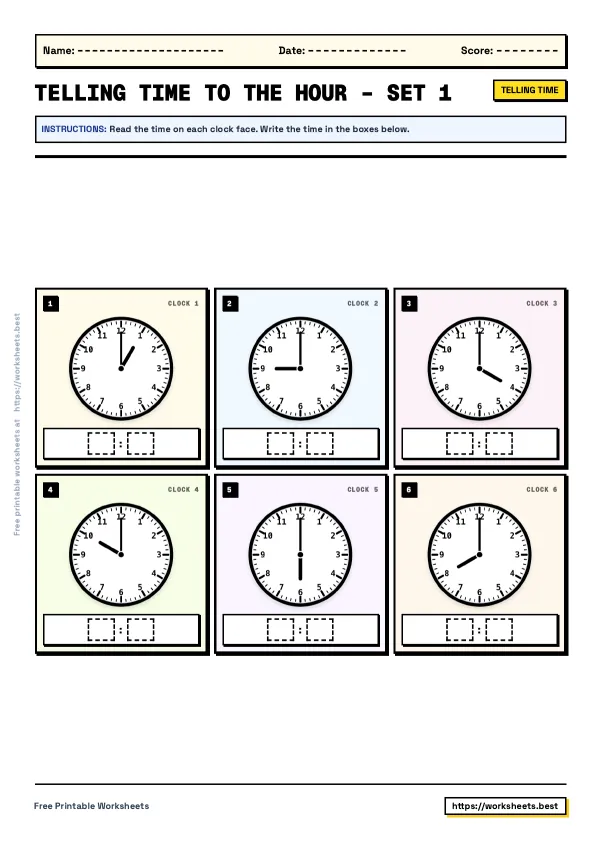
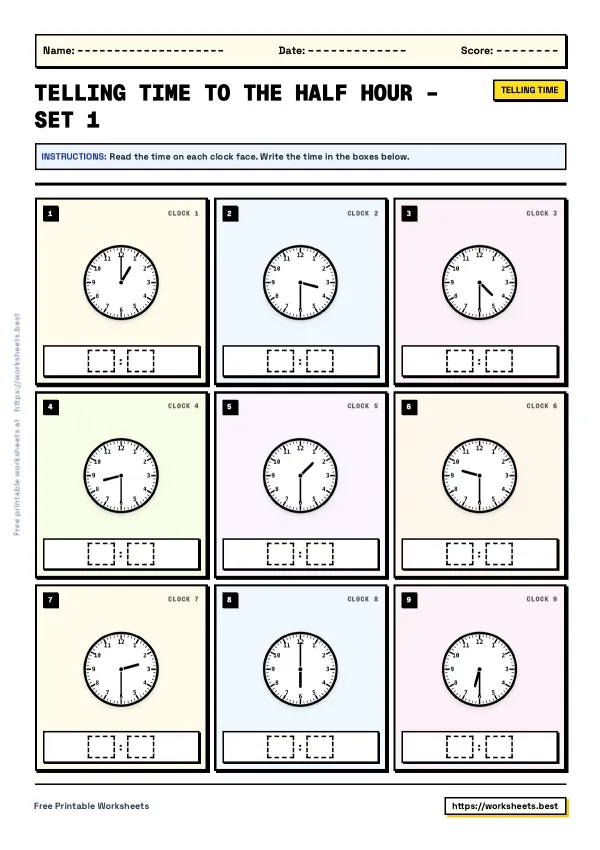
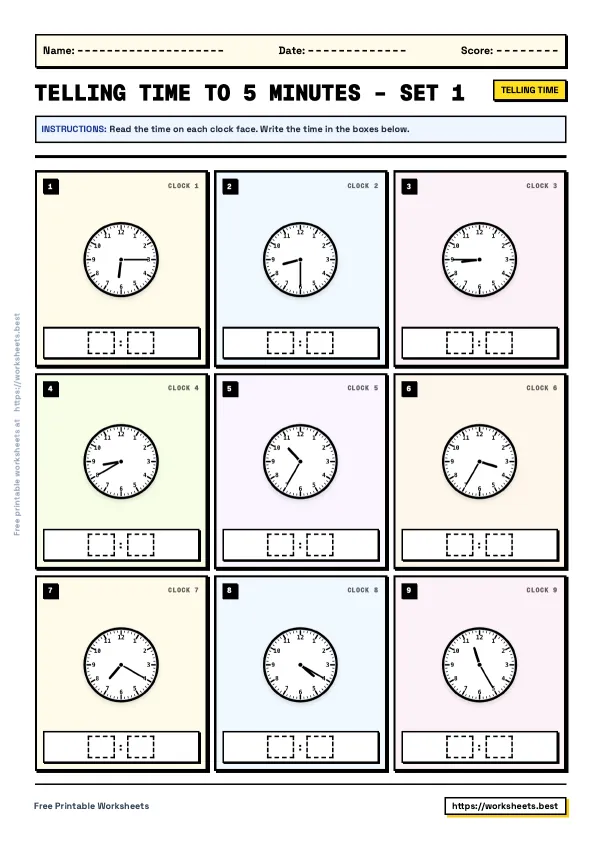
every sheet
All Telling Time worksheets
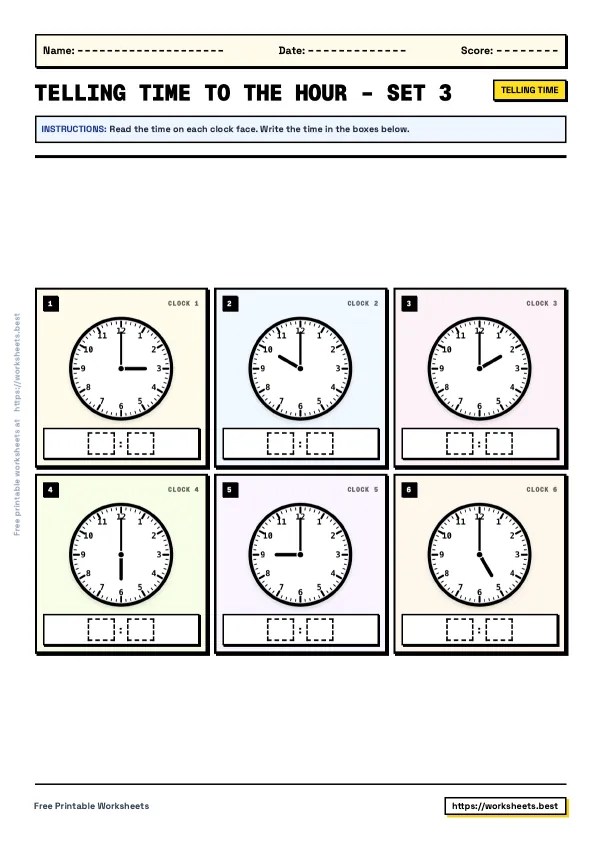
Telling Time to the Hour – Set 3
1st GradeClock Reading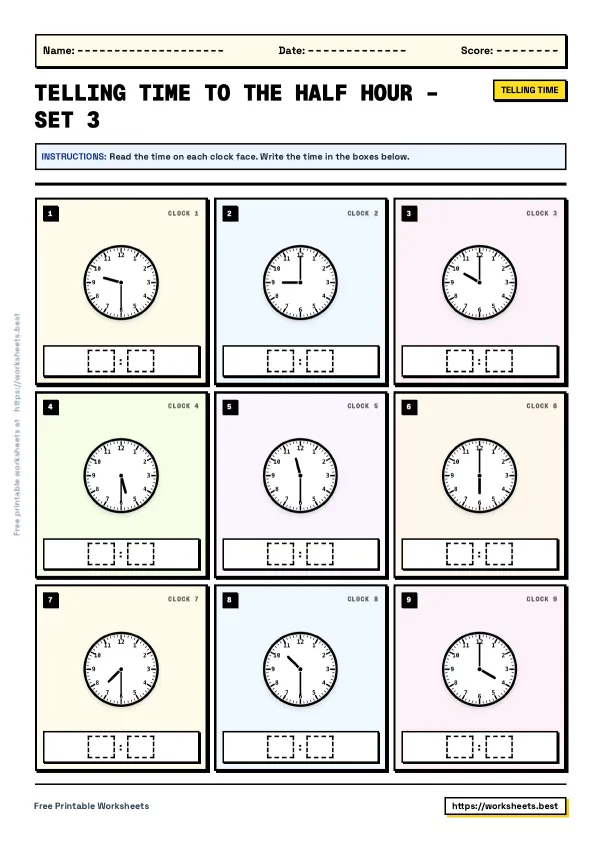
Telling Time to the Half Hour – Set 3
1st GradeClock Reading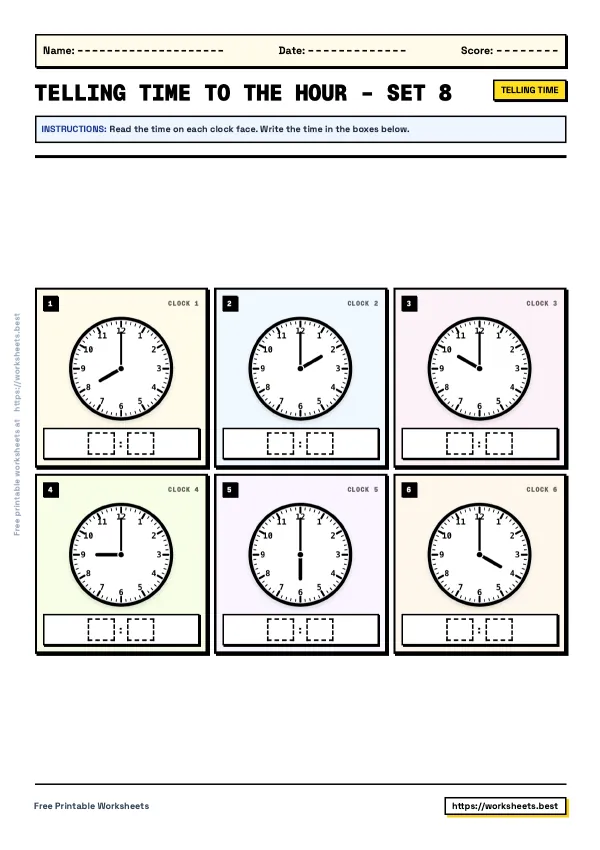
Telling Time to the Hour – Set 8
1st GradeClock Reading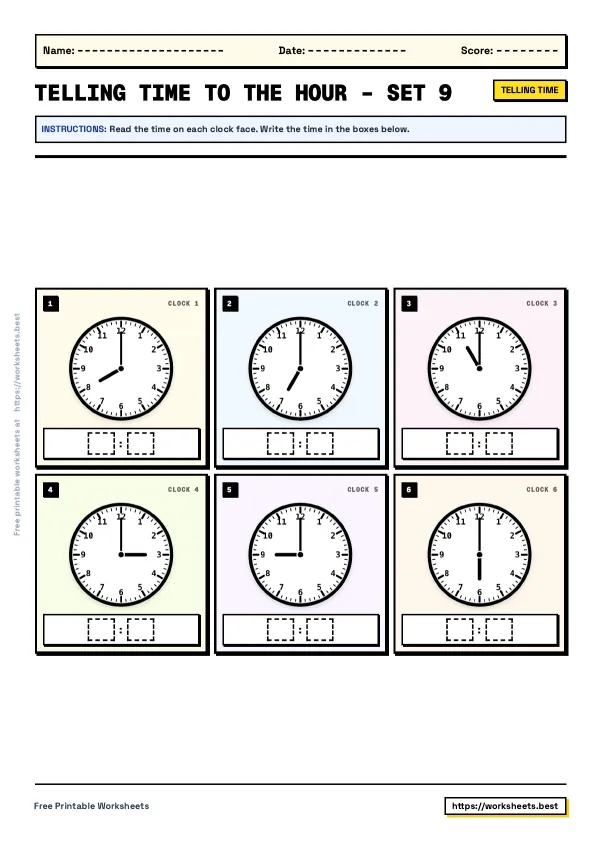
Telling Time to the Hour – Set 9
1st GradeClock Reading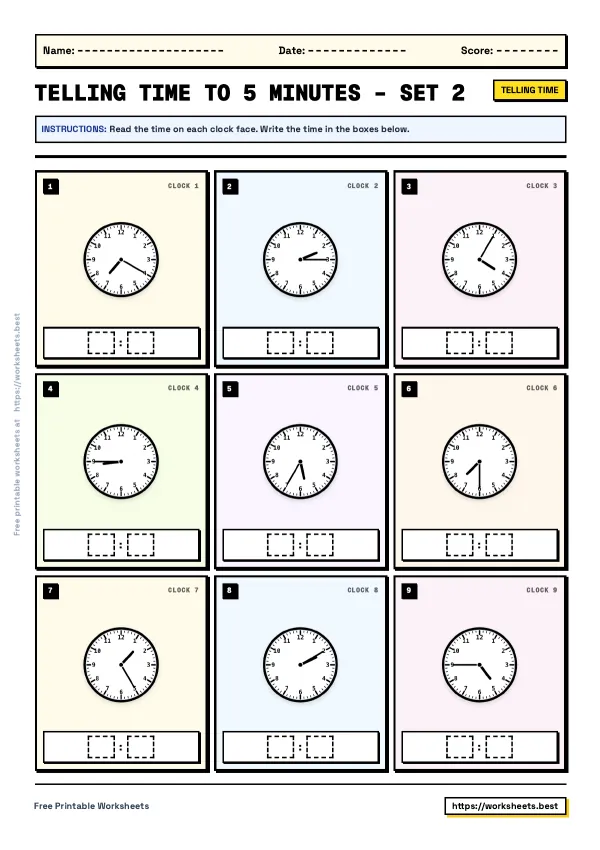
Telling Time to 5 Minutes – Set 2
2nd–3rd GradeClock Reading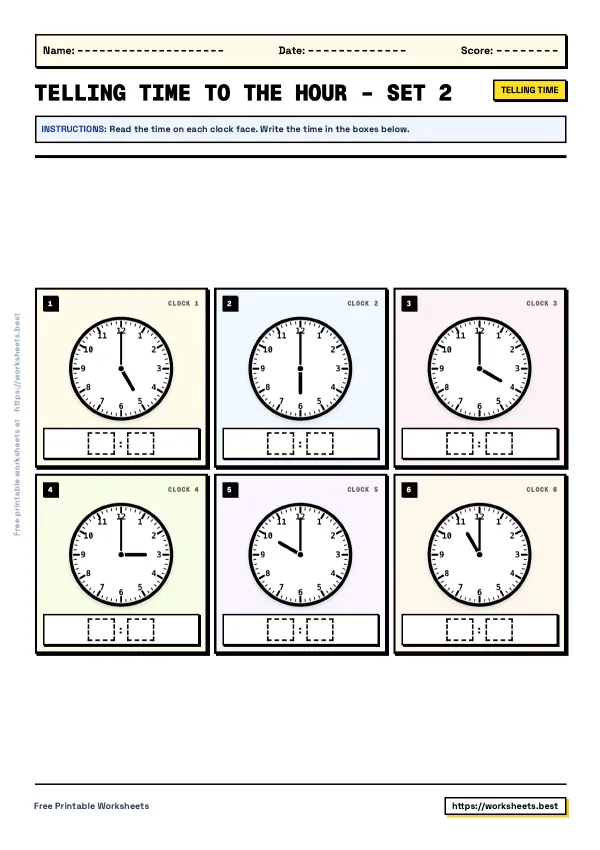
Telling Time to the Hour – Set 2
1st GradeClock Reading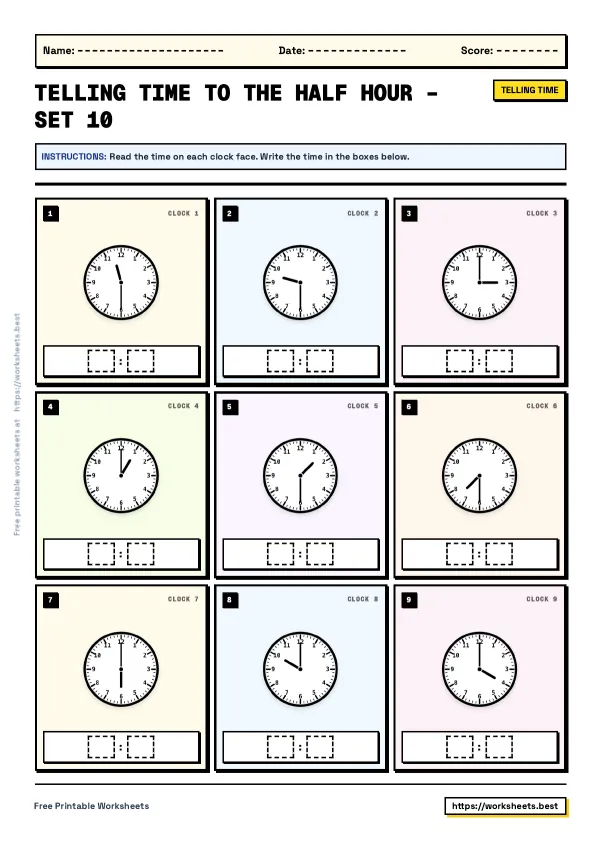
Telling Time to the Half Hour – Set 10
1st GradeClock Reading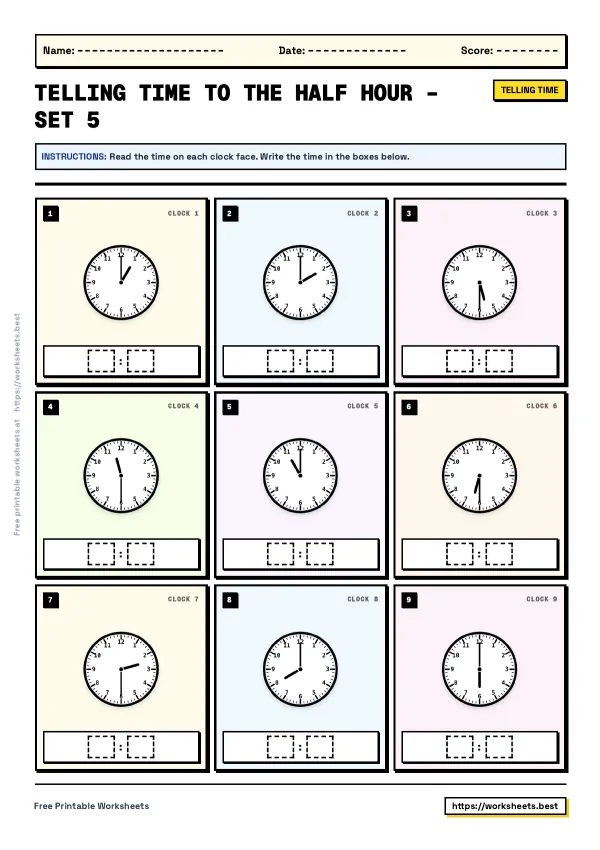
Telling Time to the Half Hour – Set 5
1st GradeClock Reading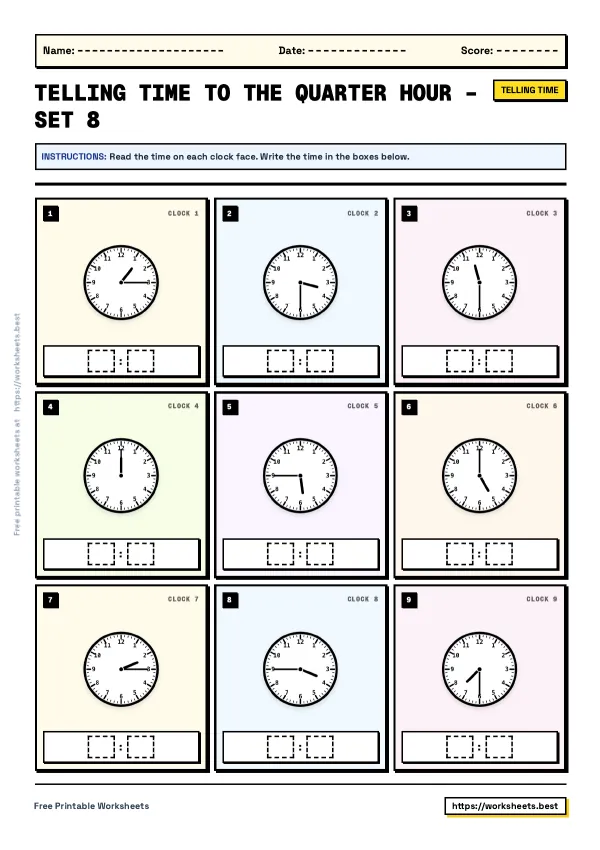
Telling Time to the Quarter Hour – Set 8
2nd GradeClock Reading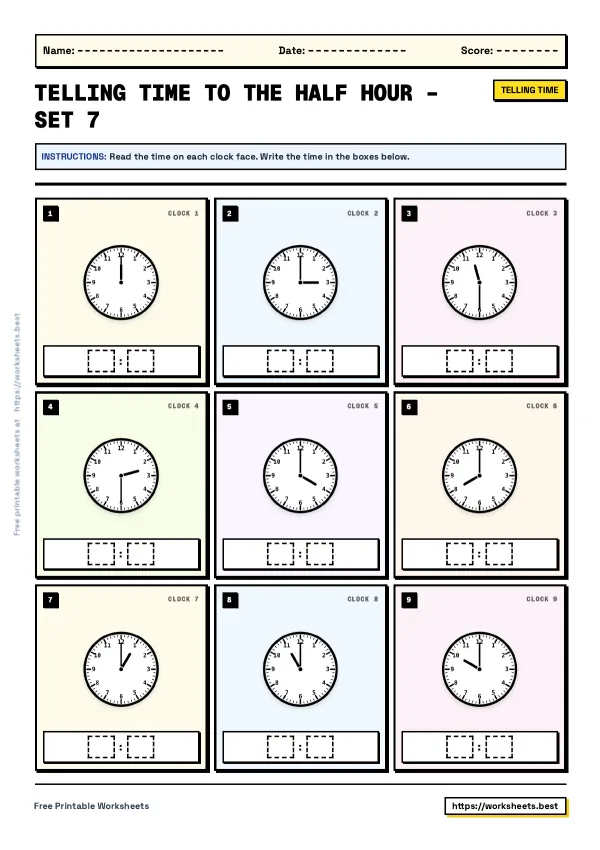
Telling Time to the Half Hour – Set 7
1st GradeClock Reading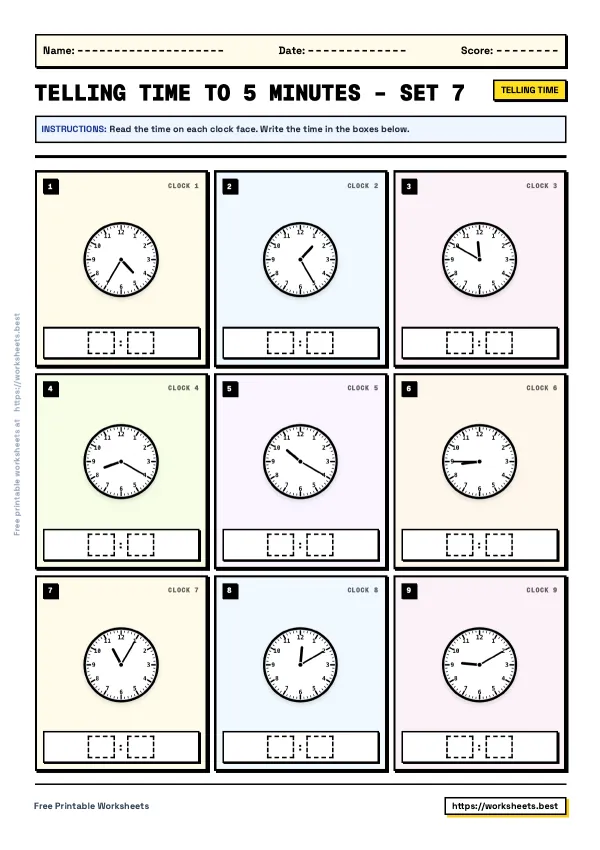
Telling Time to 5 Minutes – Set 7
2nd–3rd GradeClock Reading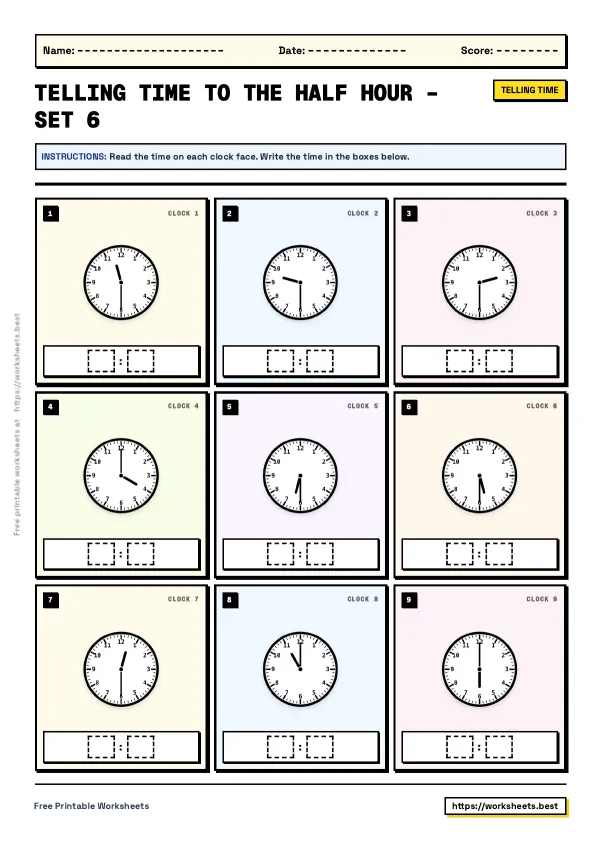
Telling Time to the Half Hour – Set 6
1st GradeClock Reading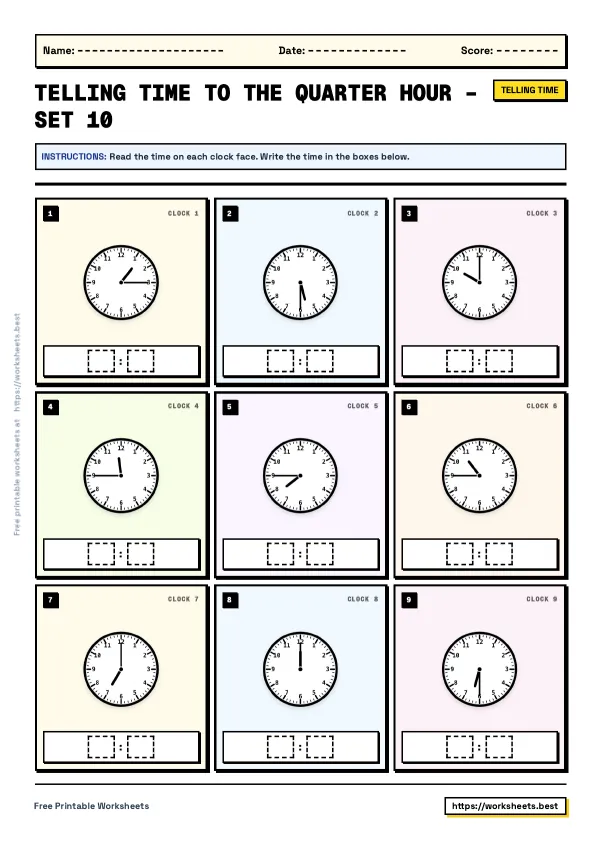
Telling Time to the Quarter Hour – Set 10
2nd GradeClock Reading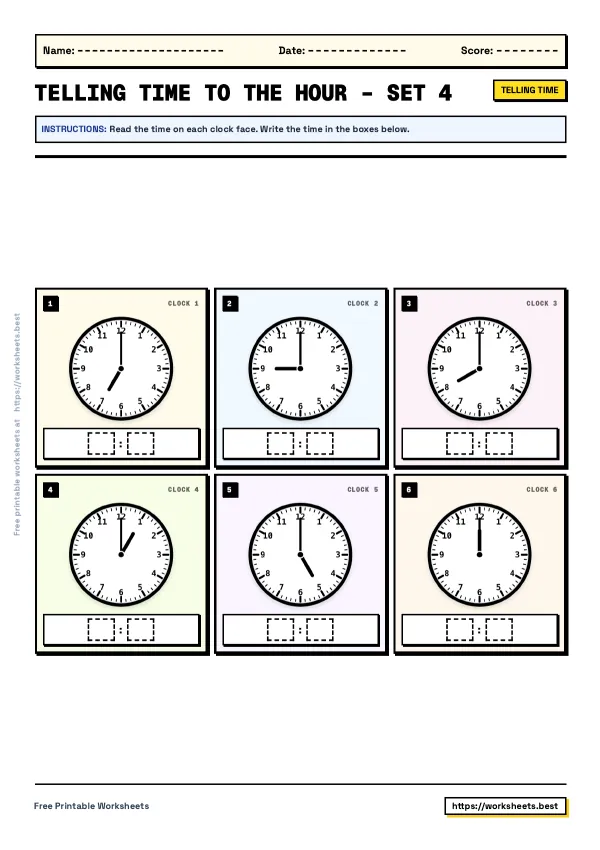
Telling Time to the Hour – Set 4
1st GradeClock Reading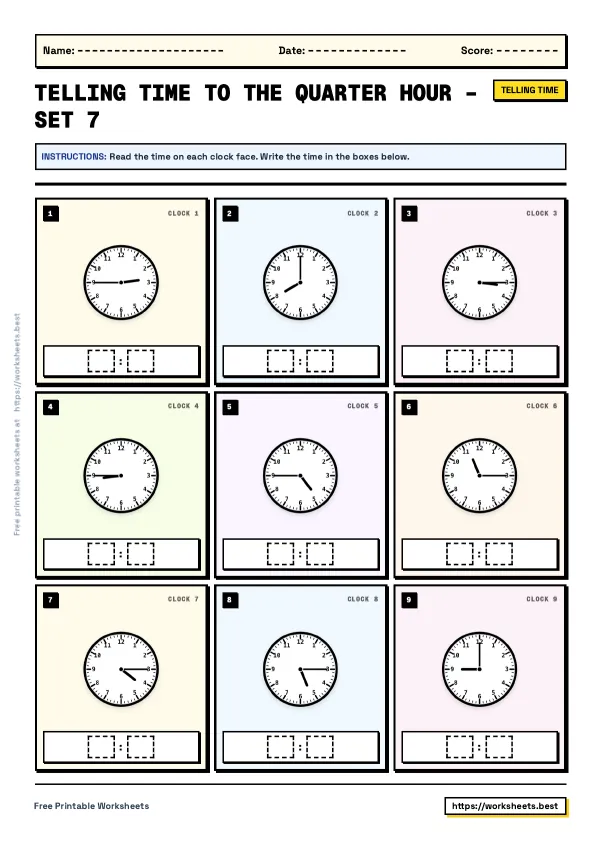
Telling Time to the Quarter Hour – Set 7
2nd GradeClock Reading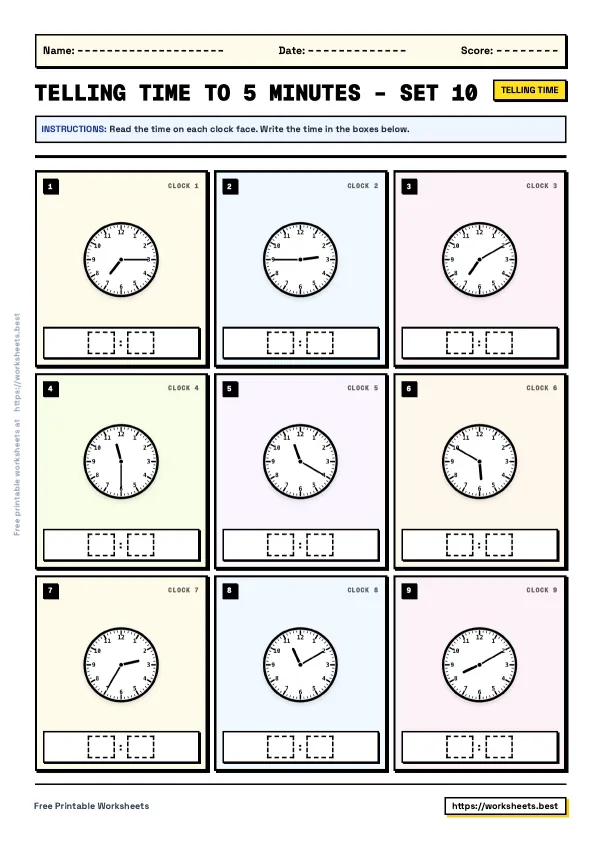
Telling Time to 5 Minutes – Set 10
2nd–3rd GradeClock Reading
dig deeper
More Telling Time worksheets
from teachers
Tips for parents and teachers
- Begin with the hour hand. Ask your child which number the short hand has passed, not which number it points to, since the hour hand sits between numbers for most of the hour.
- Before five-minute sheets, have children count around the dial by fives out loud a few times. The 5, 10, 15 marks become landmarks they read at a glance instead of counting tiny tick marks.
- Point out that at half hour the minute hand points to the 6 while the hour hand sits halfway between two numbers, a spot children often misread as the earlier hour.
- Tie each sheet back to the day by asking what the clock shows at snack, recess or bedtime. Naming real moments makes the dial mean something beyond the paper.
Questions parents ask
At what age do children learn to tell time?
Most US children begin reading analog clocks in 1st grade, where whole hours and half hours come first. Five-minute intervals usually arrive in 2nd grade, and 3rd grade builds on that with elapsed time work.
Why does my child mix up the hour and minute hands?
Both hands point at numbers, so children often read the long hand as the hour. Asking which number the short hand has passed, rather than which one it points to, clears up most of these mix-ups.
What does telling time to the quarter hour mean?
Quarter hour times land exactly on the 12, 3, 6 and 9, so the minute hand sits on a number instead of between them. Children who can read half hours usually move to quarter hours next, then to five-minute intervals.
How long should a child practice telling time each day?
Ten to fifteen minutes is plenty for young children, and short sessions spread across several days stick better than one long sitting. One sheet plus a question about the clock on the wall keeps it light.
Should children learn digital clocks before analog ones?
Digital time is quicker to read, but an analog dial builds a sense of how much time has passed. Reading it also reinforces counting by fives and the idea of half of a whole.