2nd Grade Telling Time Worksheets
A second grader who can read an analog clock gains a useful bit of independence, from knowing when a favorite show starts to tracking how long until recess. The 2nd Grade Telling Time Worksheets give children that practice with clear clock faces and simple written prompts. The collection covers reading analog clocks and telling time, with dozens of worksheets organized around five-minute intervals and quarter-hour positions.
Read more +
One set asks children to read a clock and record the time shown; another moves to the quarter hour, where the minute hand points to 3, 6, 9, or 12. These sheets suit children in 2nd grade who are ready to move beyond hour and half-hour reading. They work well as a short morning warm-up, a math center task, or a quiet homework page. Teachers can print a few sheets for small-group review, while parents can use one page at a time at the kitchen table. Every worksheet includes an answer key, so checking work is quick and children can see where they need another try. The activities support Common Core standard 2.MD.C.7. For more practice, the broader 2nd Grade Worksheets and Telling Time Worksheets collections are also available.
start with these
Featured worksheets
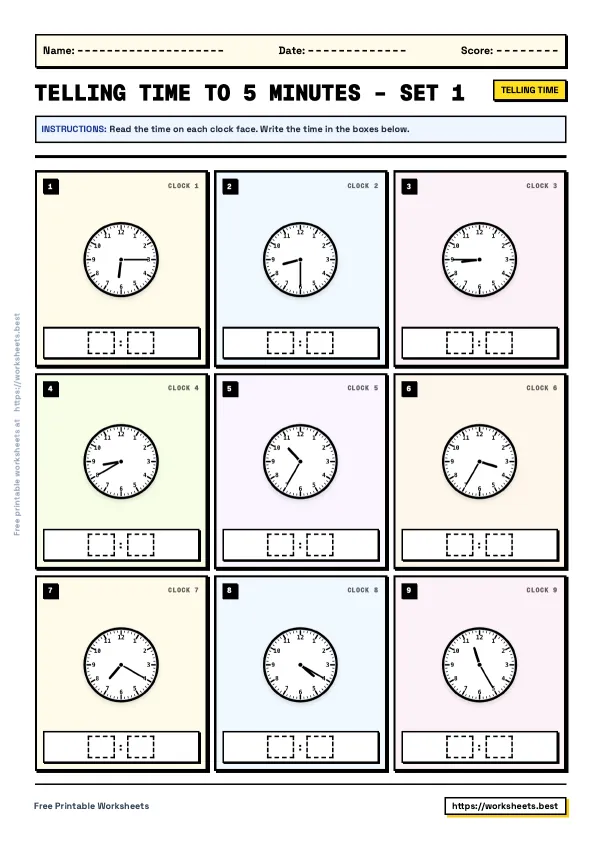
Telling Time to 5 Minutes – Set 1
2nd–3rd GradeClock Reading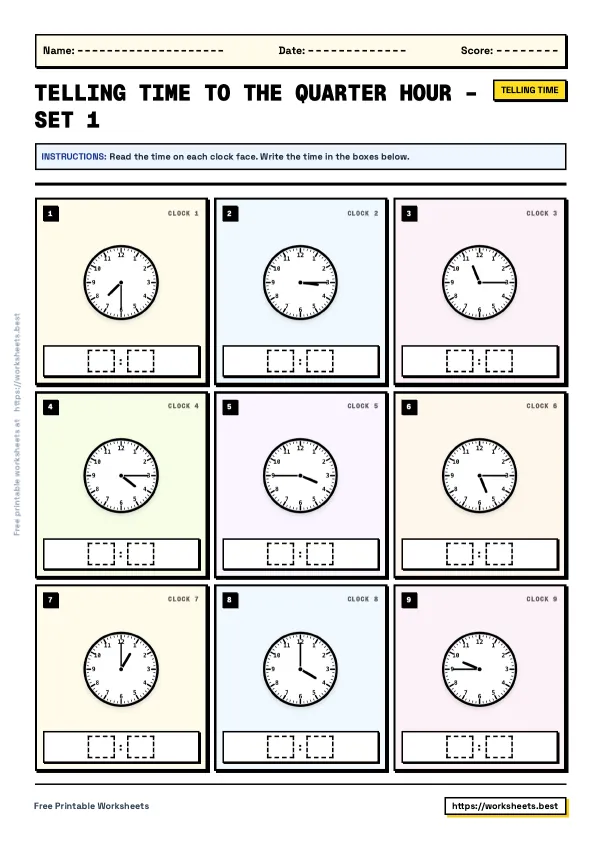
Telling Time to the Quarter Hour – Set 1
2nd GradeClock Reading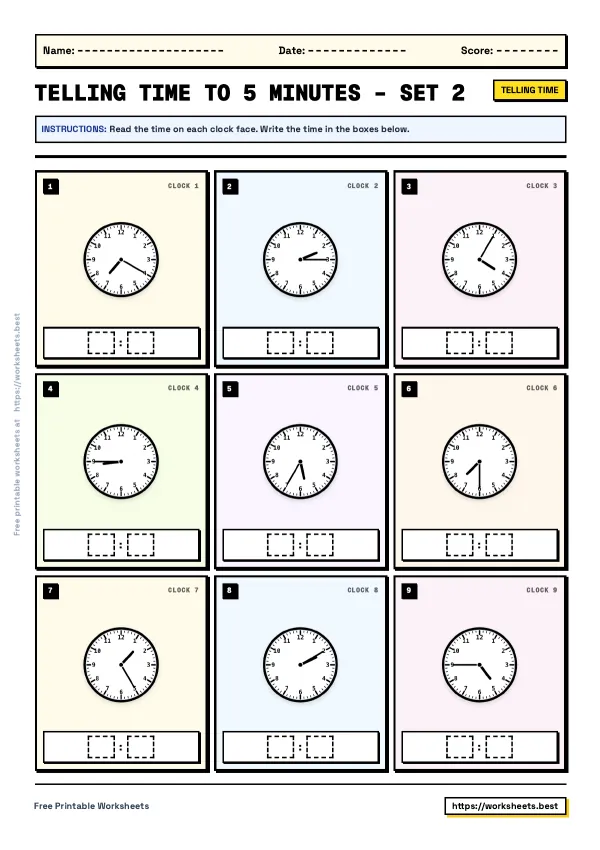
Telling Time to 5 Minutes – Set 2
2nd–3rd GradeClock Reading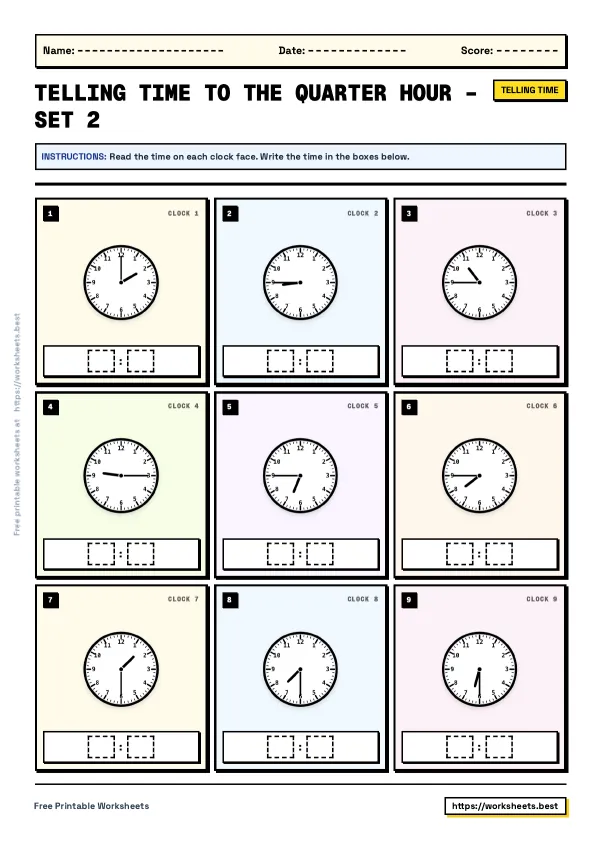
Telling Time to the Quarter Hour – Set 2
2nd GradeClock Reading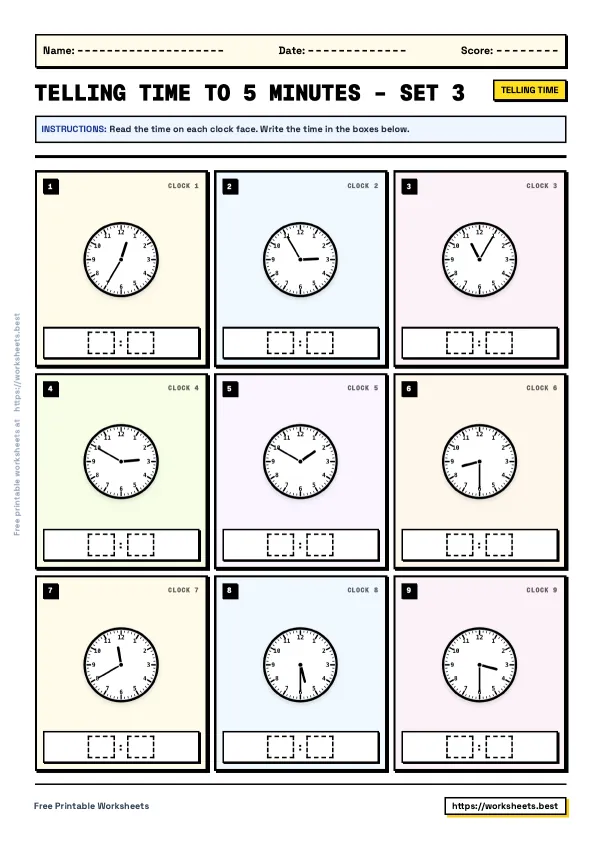
Telling Time to 5 Minutes – Set 3
2nd–3rd GradeClock Reading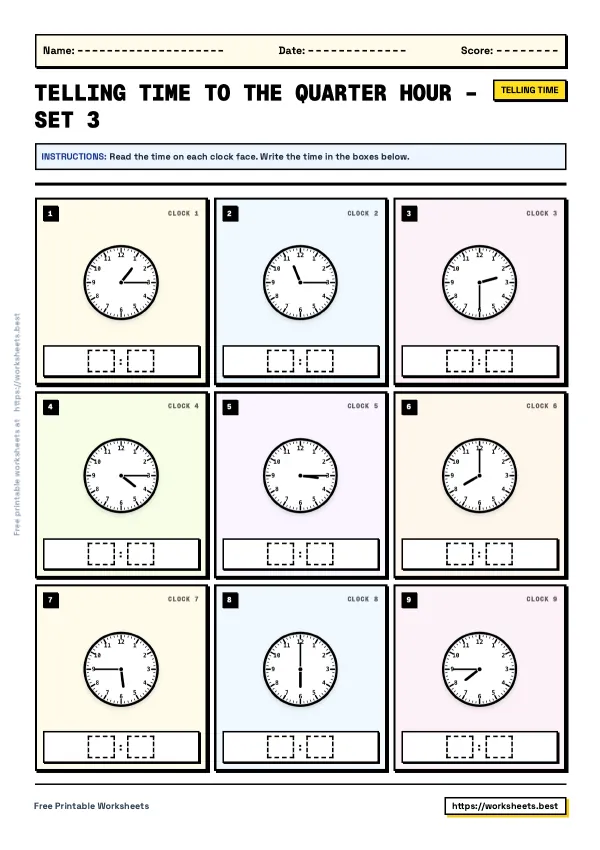
Telling Time to the Quarter Hour – Set 3
2nd GradeClock Reading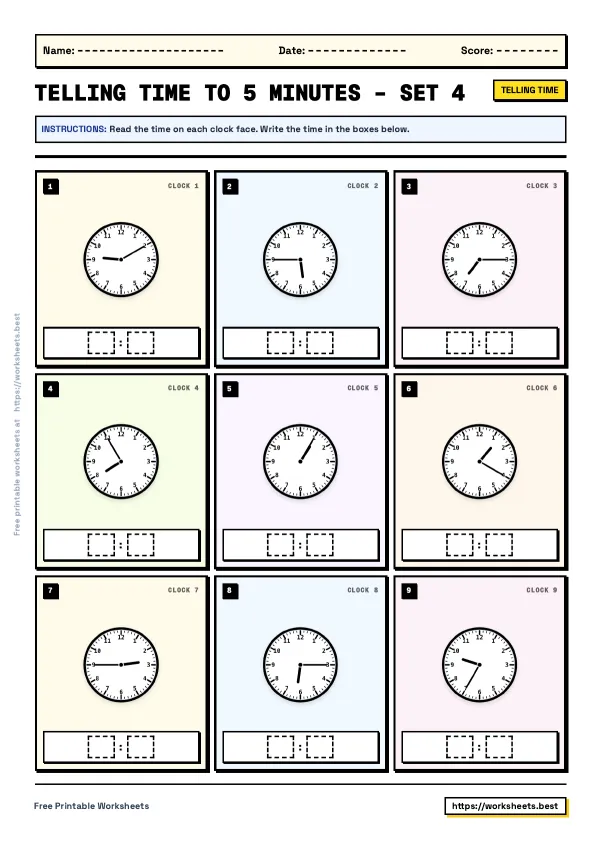
Telling Time to 5 Minutes – Set 4
2nd–3rd GradeClock Reading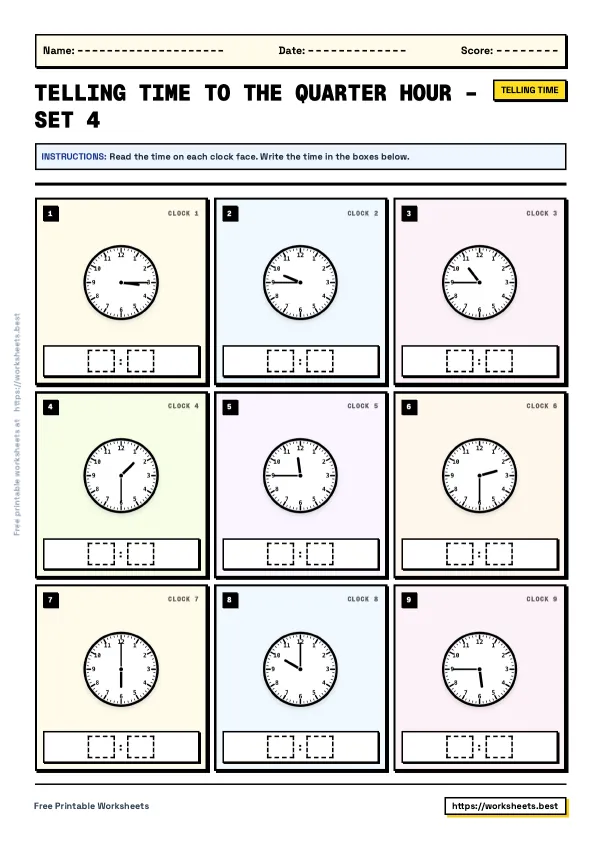
Telling Time to the Quarter Hour – Set 4
2nd GradeClock Reading
every sheet
All 2nd Grade Telling Time worksheets
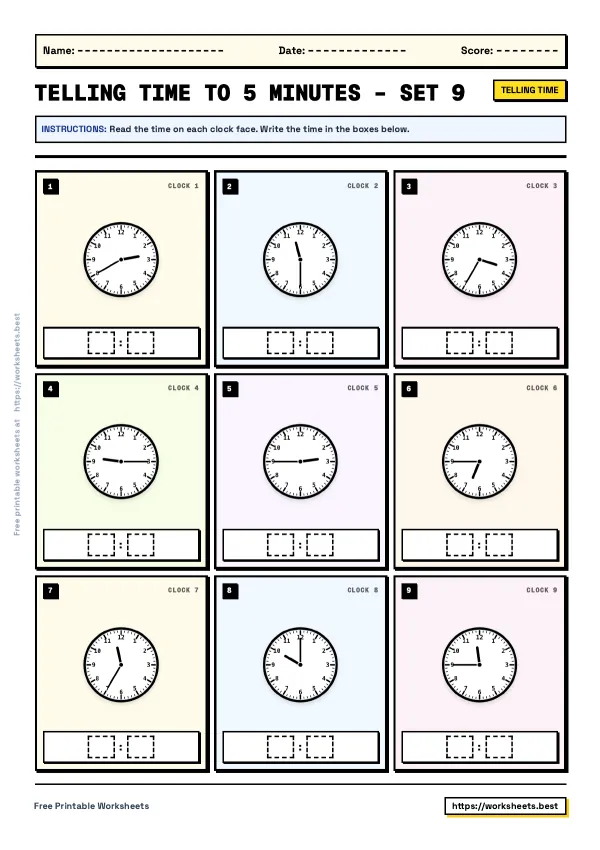
Telling Time to 5 Minutes – Set 9
2nd–3rd GradeClock Reading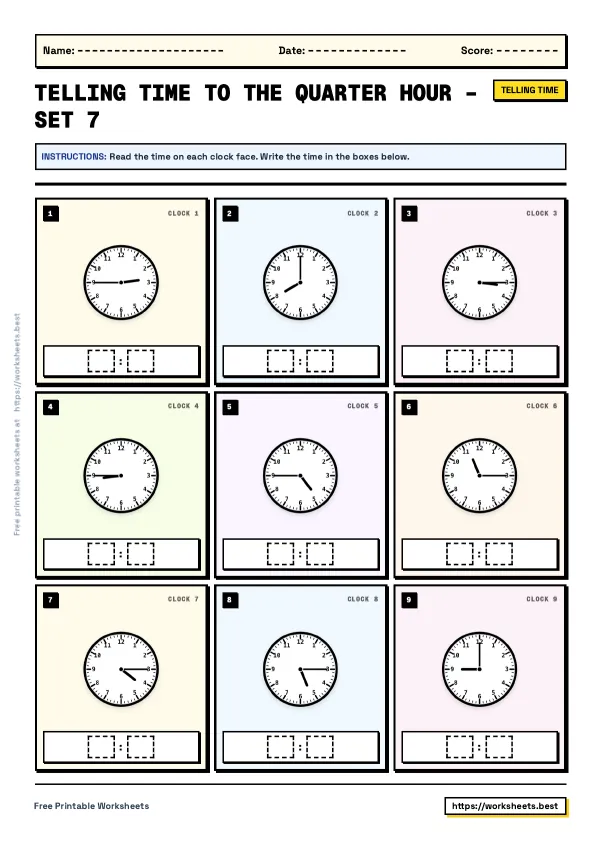
Telling Time to the Quarter Hour – Set 7
2nd GradeClock ReadingTelling Time to the Quarter Hour – Set 2
2nd GradeClock Reading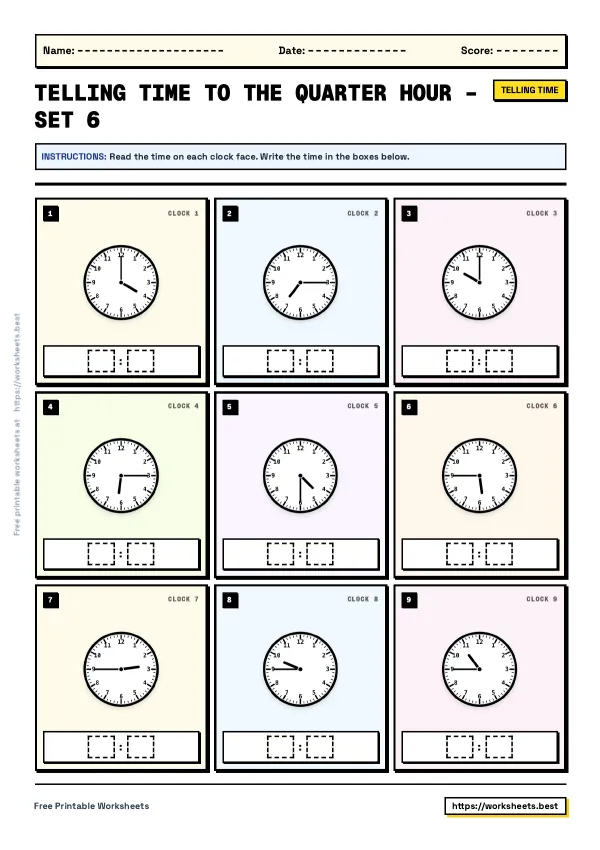
Telling Time to the Quarter Hour – Set 6
2nd GradeClock ReadingTelling Time to 5 Minutes – Set 2
2nd–3rd GradeClock Reading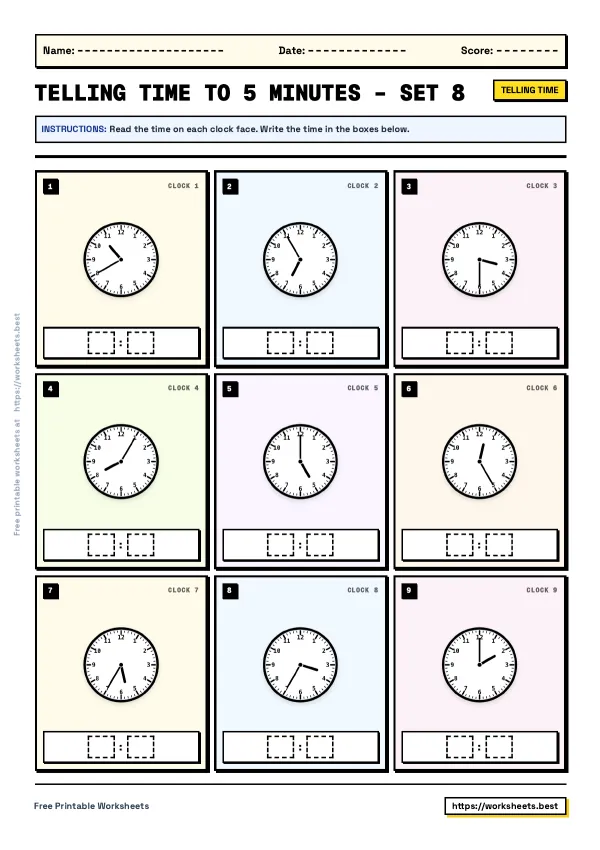
Telling Time to 5 Minutes – Set 8
2nd–3rd GradeClock Reading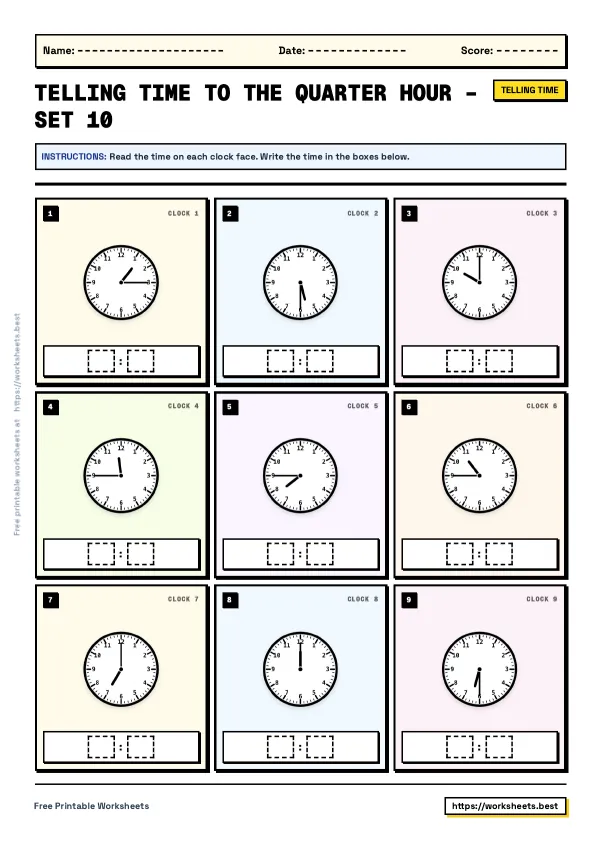
Telling Time to the Quarter Hour – Set 10
2nd GradeClock ReadingTelling Time to 5 Minutes – Set 3
2nd–3rd GradeClock Reading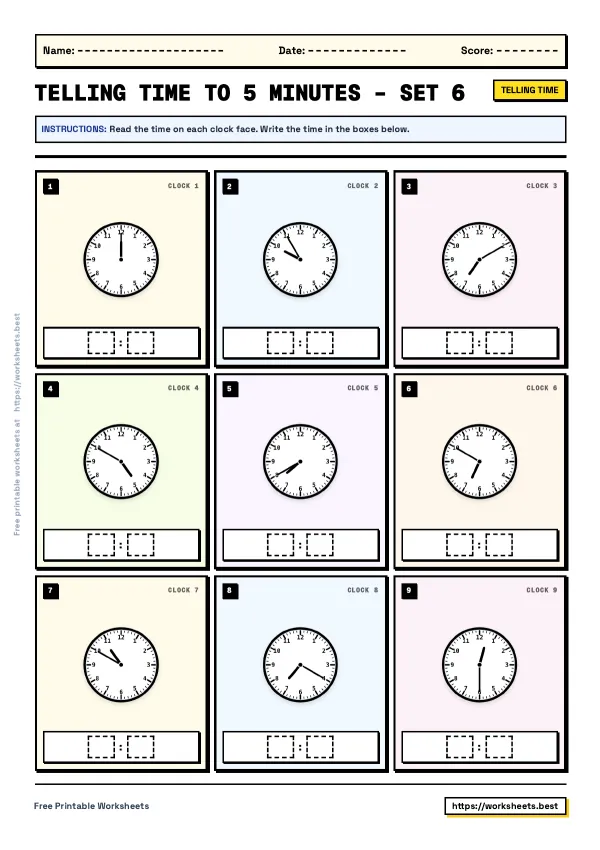
Telling Time to 5 Minutes – Set 6
2nd–3rd GradeClock ReadingTelling Time to the Quarter Hour – Set 4
2nd GradeClock Reading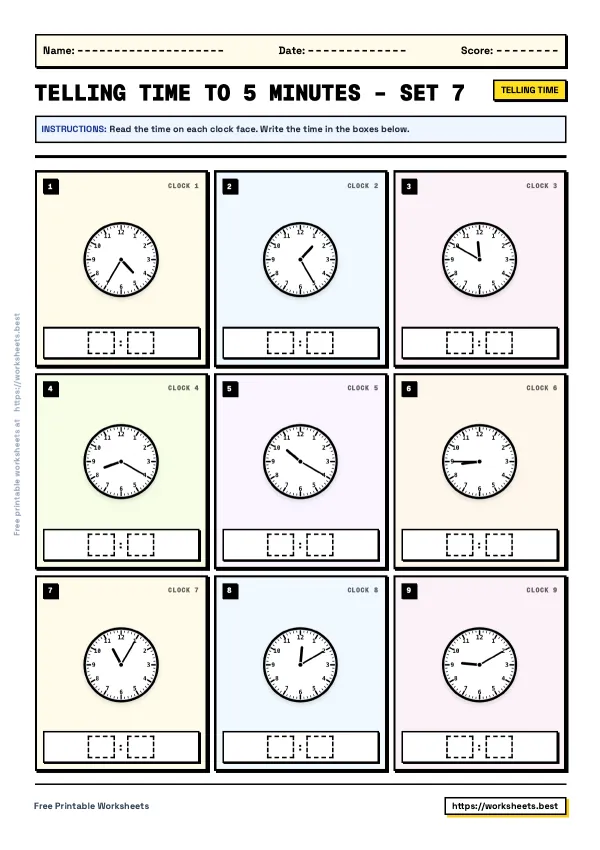
Telling Time to 5 Minutes – Set 7
2nd–3rd GradeClock Reading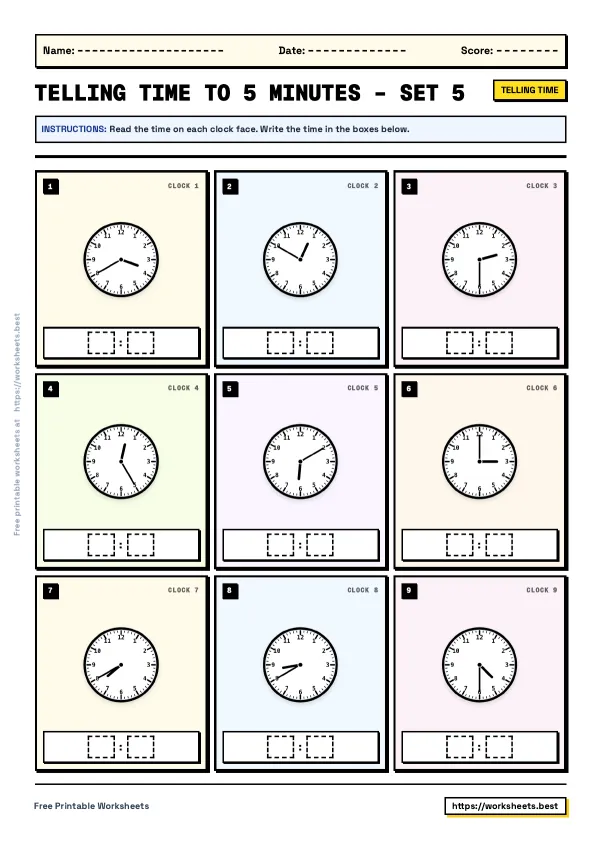
Telling Time to 5 Minutes – Set 5
2nd–3rd GradeClock ReadingTelling Time to the Quarter Hour – Set 3
2nd GradeClock ReadingTelling Time to 5 Minutes – Set 4
2nd–3rd GradeClock Reading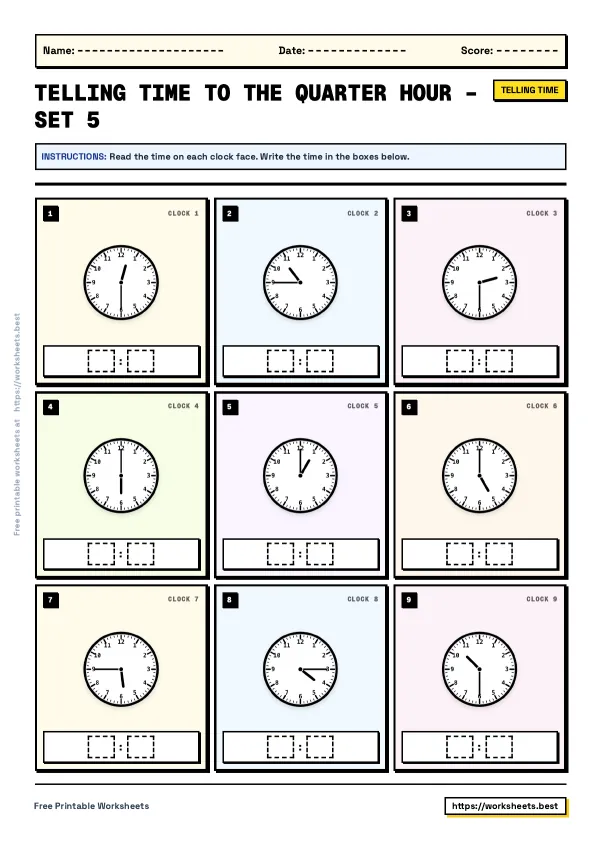
Telling Time to the Quarter Hour – Set 5
2nd GradeClock Reading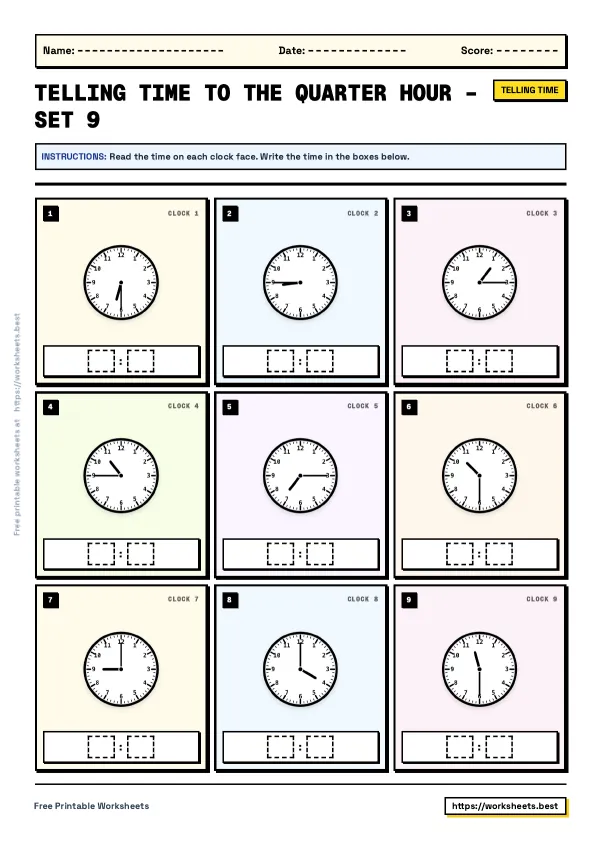
Telling Time to the Quarter Hour – Set 9
2nd GradeClock Reading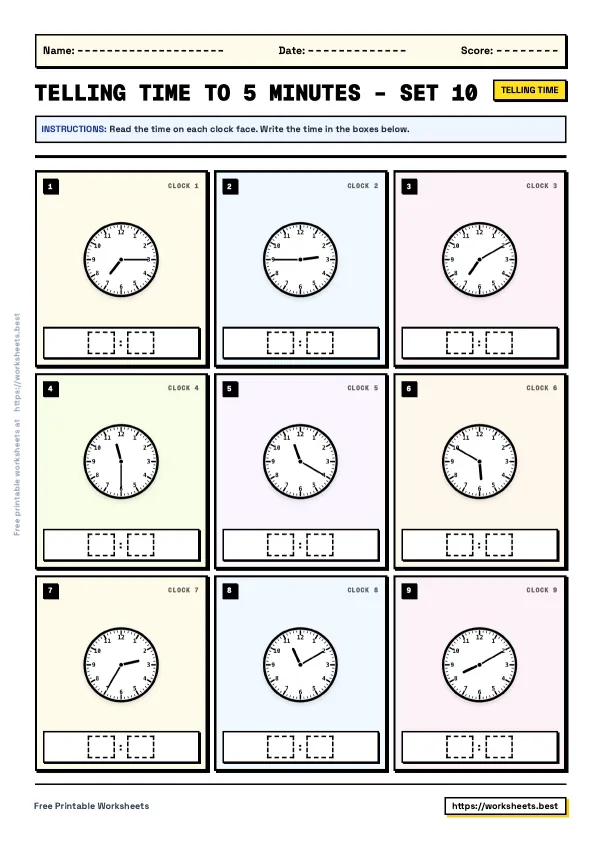
Telling Time to 5 Minutes – Set 10
2nd–3rd GradeClock Reading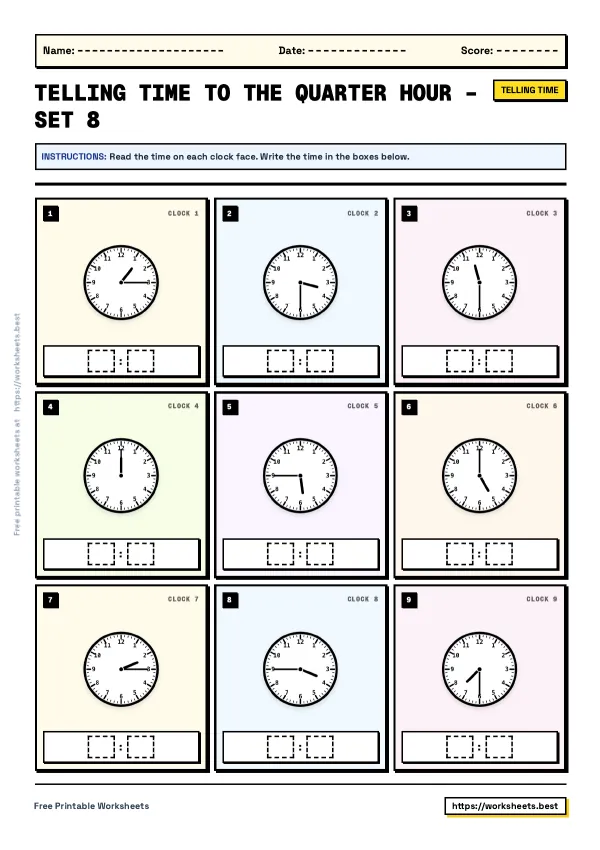
Telling Time to the Quarter Hour – Set 8
2nd GradeClock ReadingTelling Time to the Quarter Hour – Set 1
2nd GradeClock ReadingTelling Time to 5 Minutes – Set 1
2nd–3rd GradeClock Reading
from teachers
Tips for parents and teachers
- Keep a real analog clock nearby while children work. Ask them to touch the hour hand first, then count by fives from the 12 to find the minutes, and compare their answer to the printed clock face.
- For five-minute practice, have children say the time aloud before writing it. Hearing "seven twenty-five" helps them connect the minute hand position to the number they record.
- Use the quarter-hour pages to point out the four anchor positions: 12 for o'clock, 3 for a quarter past, 6 for half past, and 9 for a quarter to. Ask children to explain why the minute hand cannot be at 8 when the time is a quarter hour.
- If a child mixes up the hour and minute hands, cover the minute hand with a finger and read the hour first. Then uncover the minute hand and count by fives, checking the answer key together only after the child has tried.
Questions parents ask
What time skills should a 2nd grader practice?
In 2nd grade, children build on hour and half-hour reading by telling time to the nearest five minutes and to the quarter hour. They also practice matching an analog clock face to the time written in numbers.
How can I help my child read an analog clock at home?
Start by naming the hour hand and the minute hand, then count the minute marks by fives together. A kitchen clock or a paper clock face can give children extra practice without a screen.
Are these worksheets useful for classroom centers?
Yes. A short set of clock-reading pages works well as an independent center task, and the included answer keys let students check their work or let a helper review it. Teachers can also use one page as a quick warm-up before math.
What order should I use the worksheets in?
Begin with the five-minute interval pages, because they ask children to count minutes in a steady pattern. Move to the quarter-hour pages once your child can read the minute hand at 3, 6, 9, and 12 with confidence.