Kindergarten Subtraction Worksheets
A child who can count to ten is ready for the kindergarten subtraction worksheets on this page. The sheets focus on early subtraction math facts, with math drills that ask children to solve simple differences and write each answer. One set keeps differences within 10, while another stays within 5, so you can choose a comfortable starting point and move on when your child is ready. Every page comes with an answer key, which makes checking quick for a parent, teacher aide or classroom volunteer.
Read more +
The practice suits kindergartners who are learning to count objects, take some away and connect that action to a number sentence. The drills are short and repeatable, so a child can work through one sheet at home after school or use a page in class during a math warm-up, small-group lesson or independent practice time. The practice supports Common Core standards K.OA.A.2, K.OA.A.5 and 1.OA.C.6, and the simple format keeps attention on subtraction rather than on instructions.
Keep the first sessions oral and concrete: count five buttons, remove two, and ask how many are left before moving to pencil work. Then let your child complete a few problems on a printed page and check the answer key together. A short, calm session is more useful than a long one, especially when a young child is still learning to hold a pencil and form numerals. Use the sheets as a quick review, a quiet center activity or a confidence-building step toward larger numbers.
start with these
Featured worksheets
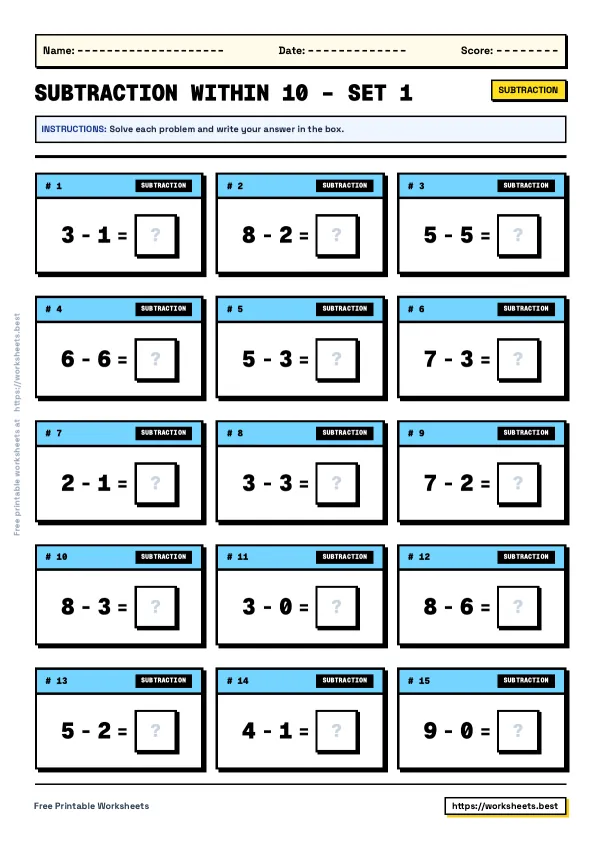
Subtraction Within 10 – Set 1
K–1st GradeMath Drills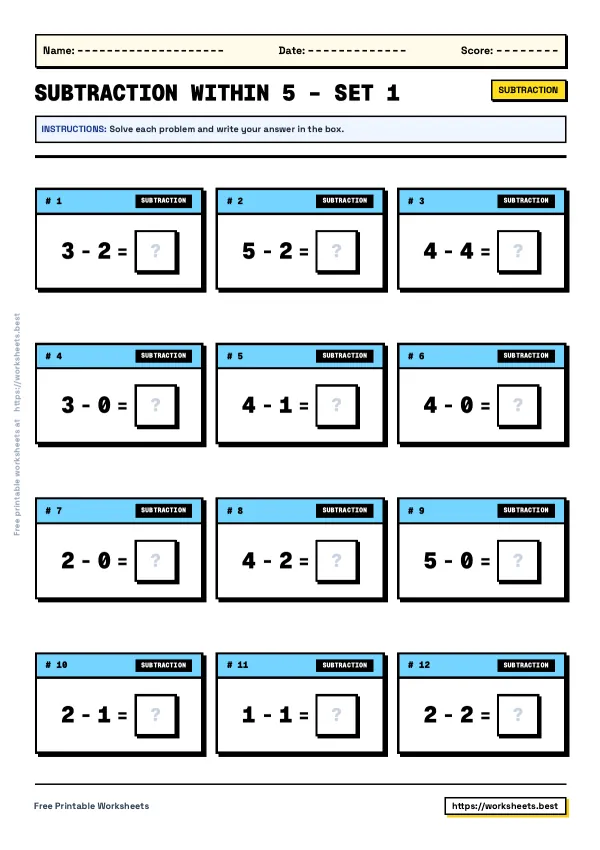
Subtraction Within 5 – Set 1
KindergartenMath Drills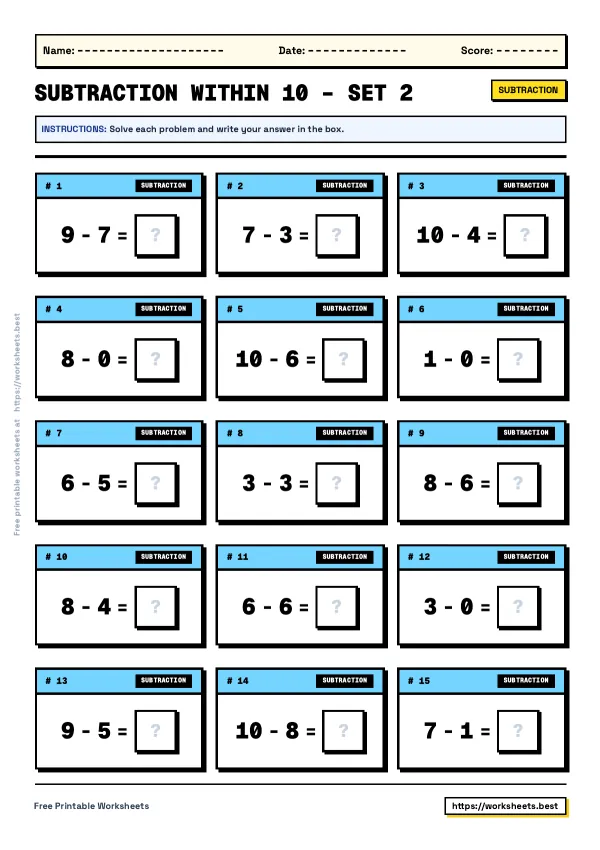
Subtraction Within 10 – Set 2
K–1st GradeMath Drills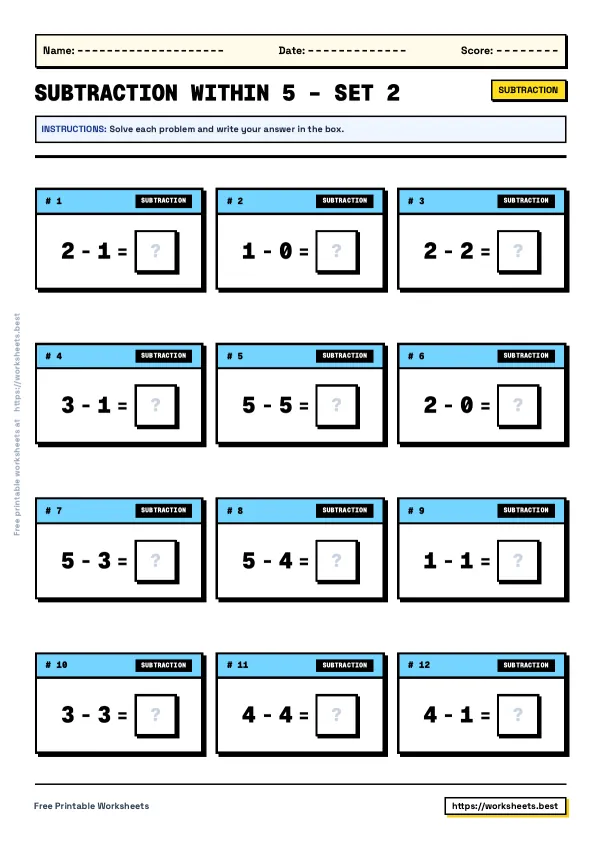
Subtraction Within 5 – Set 2
KindergartenMath Drills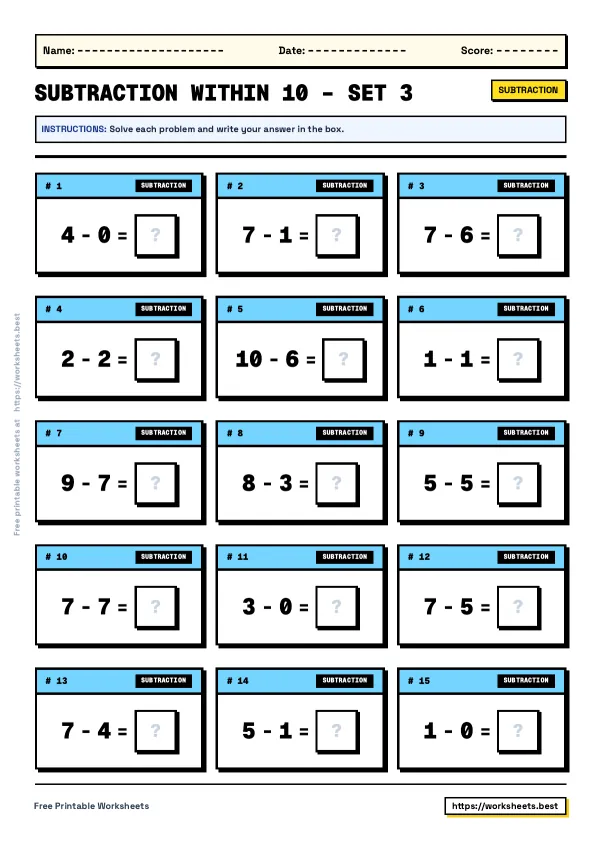
Subtraction Within 10 – Set 3
K–1st GradeMath Drills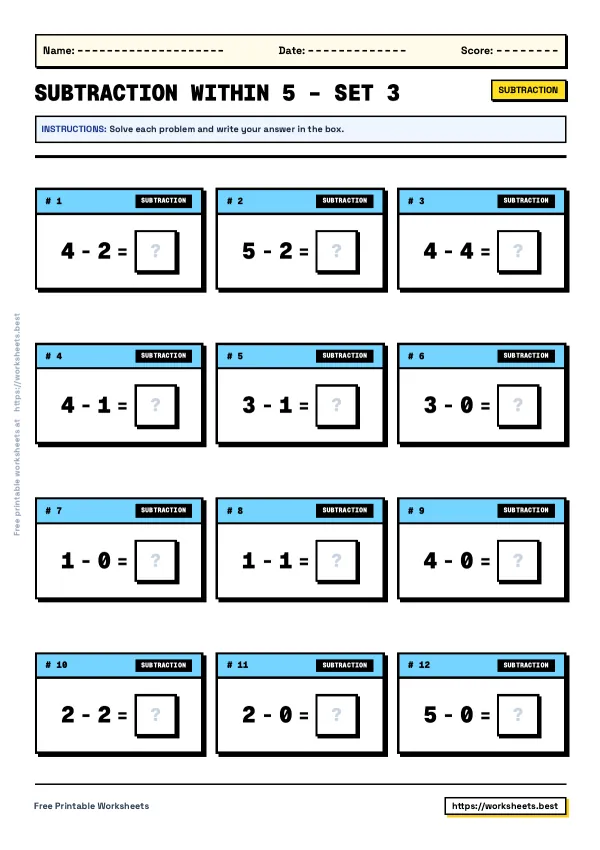
Subtraction Within 5 – Set 3
KindergartenMath Drills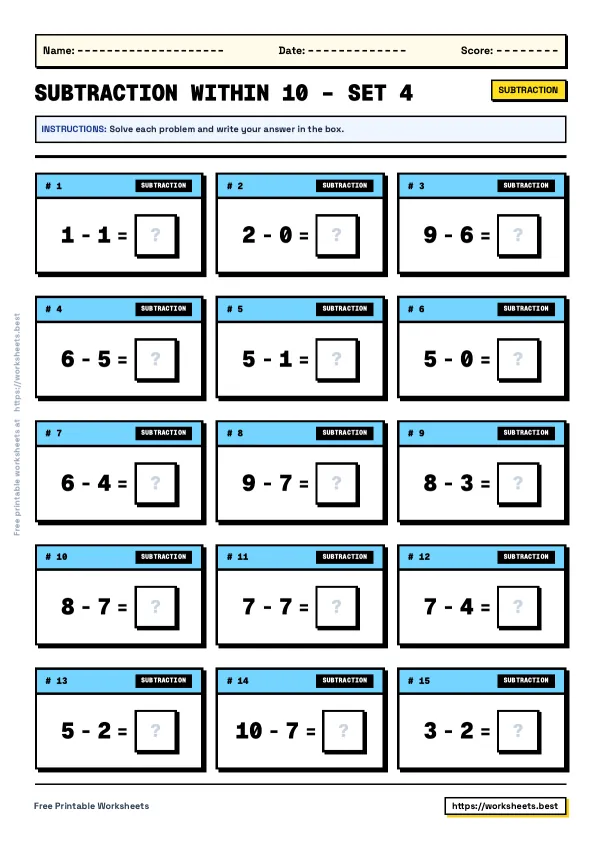
Subtraction Within 10 – Set 4
K–1st GradeMath Drills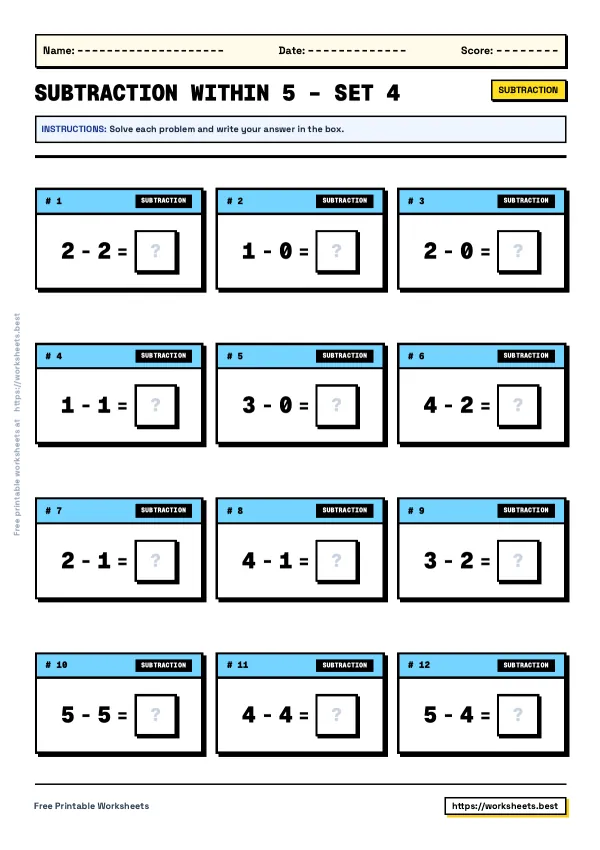
Subtraction Within 5 – Set 4
KindergartenMath Drills
every sheet
All Kindergarten Subtraction worksheets
Subtraction Within 5 – Set 4
KindergartenMath DrillsSubtraction Within 10 – Set 2
K–1st GradeMath DrillsSubtraction Within 10 – Set 3
K–1st GradeMath DrillsSubtraction Within 10 – Set 4
K–1st GradeMath DrillsSubtraction Within 5 – Set 1
KindergartenMath DrillsSubtraction Within 10 – Set 1
K–1st GradeMath DrillsSubtraction Within 5 – Set 3
KindergartenMath DrillsSubtraction Within 5 – Set 2
KindergartenMath Drills
from teachers
Tips for parents and teachers
- Begin with the differences within 10 page when your child is comfortable counting to 10, and use the within 5 page with blocks or buttons if they need a gentler start.
- Say each number sentence aloud before your child writes the answer, for example “eight take away three,” so the symbols connect to spoken math.
- Keep practice to five or ten minutes and stop while your child is still successful; short, repeated sessions build math facts better than one long sitting.
- Check the answer key together and ask your child to explain one answer; a quick explanation shows whether they counted correctly or guessed.
Questions parents ask
What subtraction facts should a kindergartner know?
Most kindergartners work toward facts within 10, beginning with smaller differences within 5. Objects, fingers and drawings help children see the take-away before they recall answers.
Is subtraction taught in kindergarten?
Yes. Kindergarten math introduces subtraction through real objects, pictures and simple number sentences, and many children work toward facts within 10.
How do I explain subtraction to a 5-year-old?
Put five small toys on the table, take two away and count what is left. Say the matching sentence aloud, then invite your child to set up a similar take-away problem with buttons or blocks.
What if my child still uses fingers to subtract?
Finger counting is a normal early strategy. Let your child use fingers or objects while learning, then gradually encourage quick recall of facts within 5 and 10 as confidence grows.
Should kindergartners do subtraction drills?
Short drills can reinforce facts a child has already met through hands-on play. Keep them brief and follow up by asking your child to explain one answer in their own words.