Vegetable Worksheets
From a carrot traced in dotted letters to a row of vegetable pictures waiting to be sorted, this vegetable worksheets collection gives children in Pre-K through 3rd grade plenty of themed practice in reading, spelling and counting. Children trace vegetable words, hunt for them in a word search, fit pictures into a 4x4 sudoku grid and count what they spot, building vocabulary, word recognition and fine motor control along the way.
Read more +
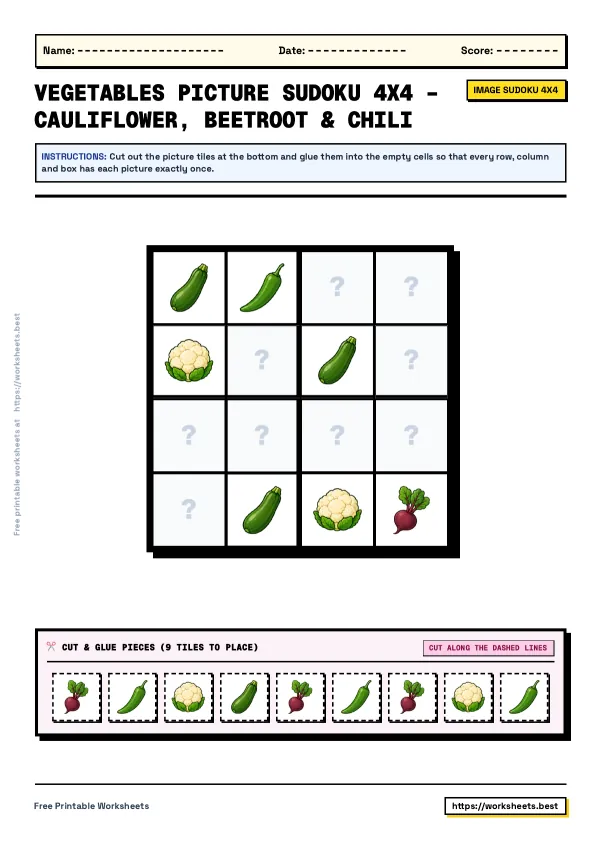
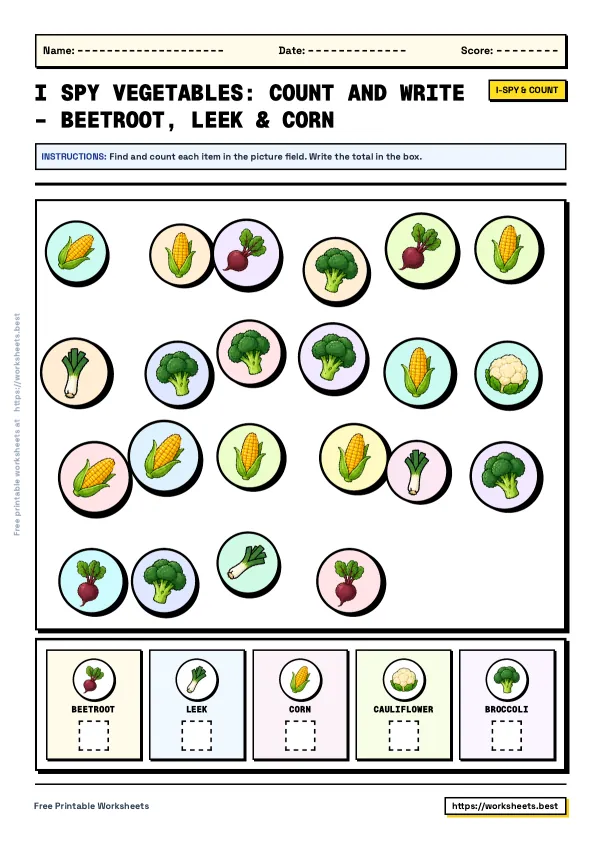
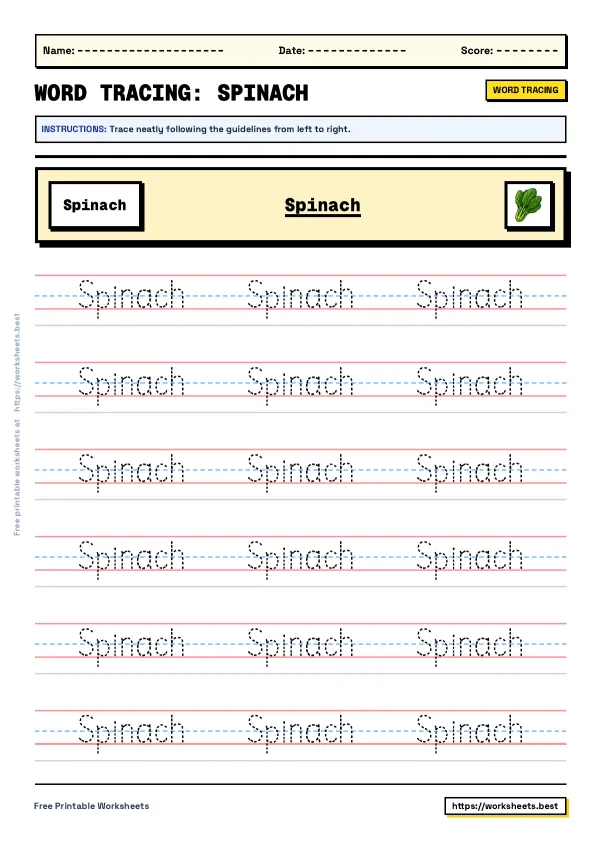
An easy tracing page for Pre-K has a child follow dotted letters to write the word carrot, and the pictures beside it give that word meaning. A 4x4 picture sudoku is a quiet logic task: four vegetable pictures, one per square, with no repeats in a row or column. Older children work with a crossword, a word scramble, a word search and a missing letters page built from words such as lettuce, pumpkin and corn, which stretches spelling and letter-sound knowledge. Counting pages ask children to tally and record how many of each item they spot, with early counting standards such as K.CC.B.5 in mind.
Use a single sheet as morning work, a center rotation or a quiet task after school. Print only the pages a child needs, talk through the pictures first, and let them check their own work with the answer keys that come with some of the sheets.
every sheet
All Vegetable worksheets
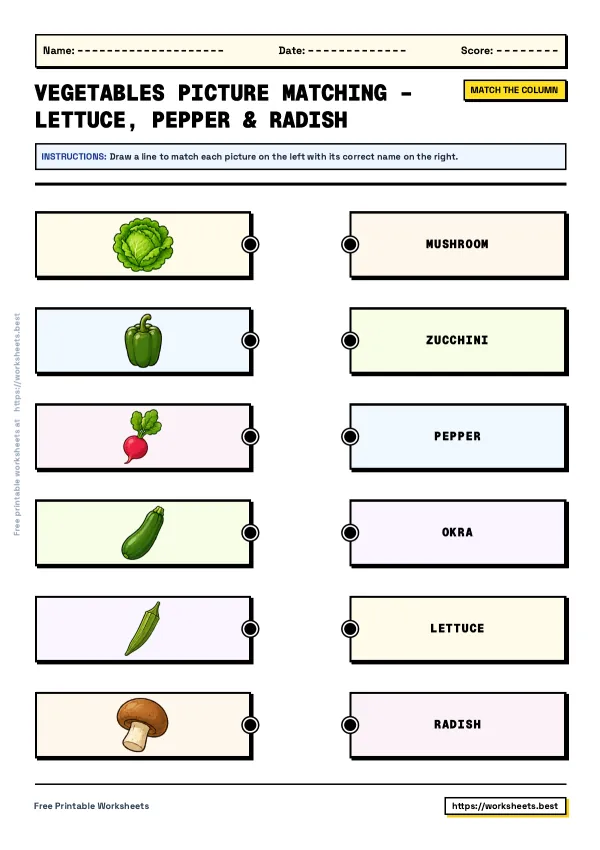
Vegetables Picture Matching – Lettuce, Pepper & Radish
K–1st GradePicture Matching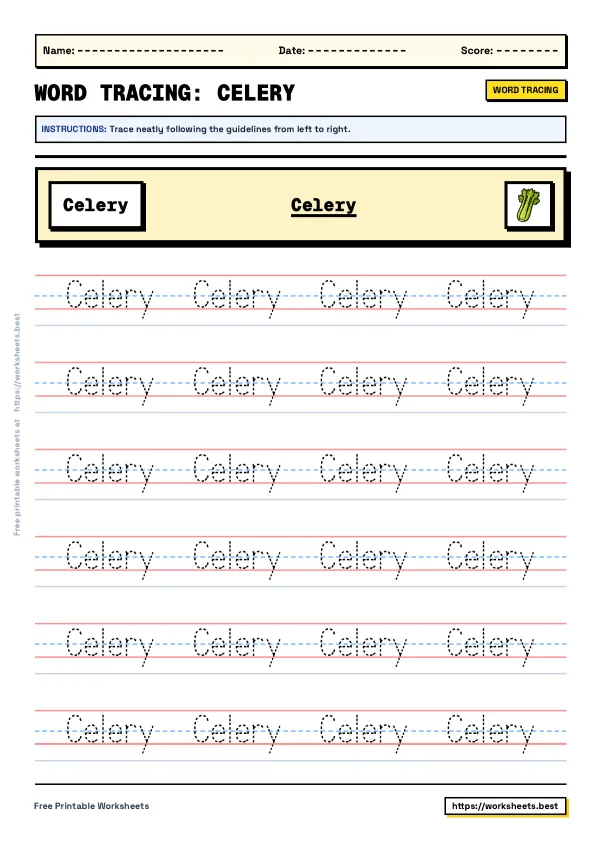
Word Tracing: Celery
1st GradeTracing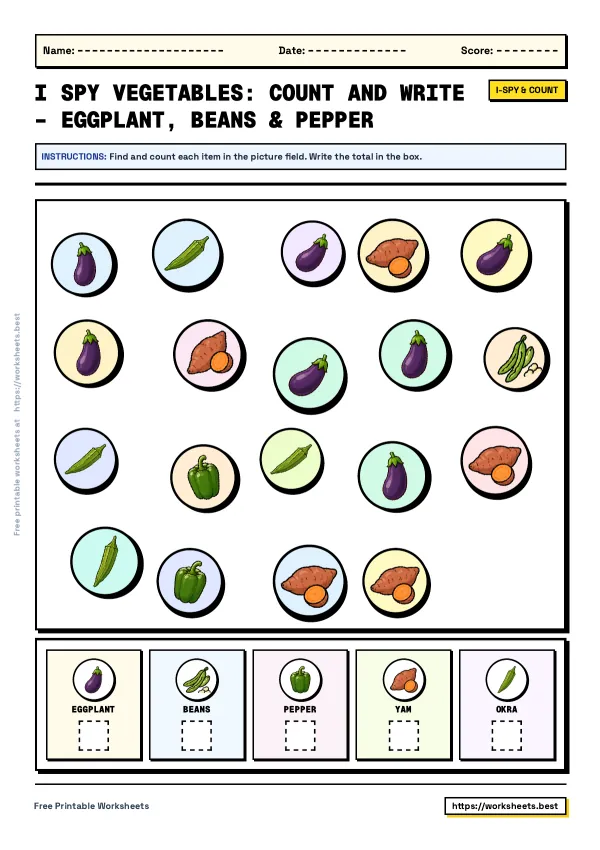
I Spy Vegetables: Count and Write – Eggplant, Beans & Pepper
Pre-K–KI Spy Counting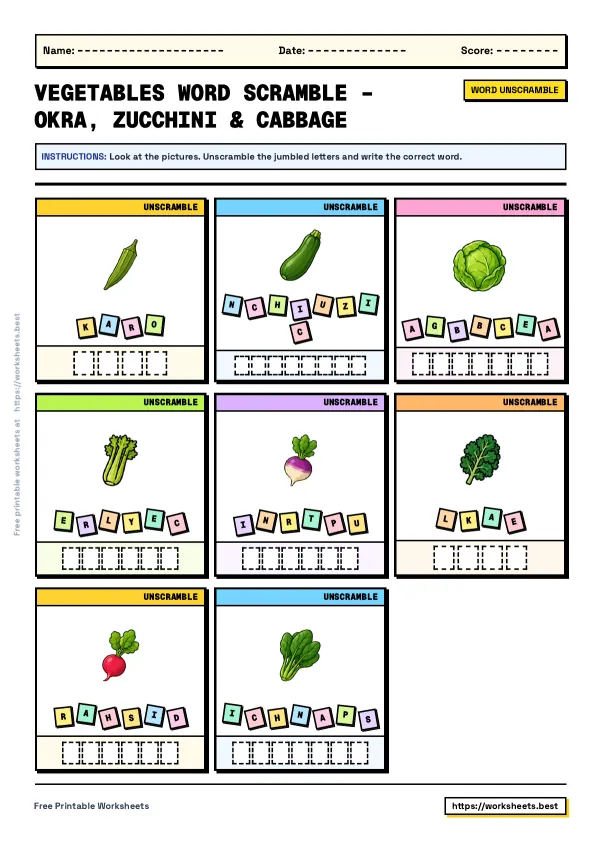
Vegetables Word Scramble – Okra, Zucchini & Cabbage
1st–2nd GradeWord Scramble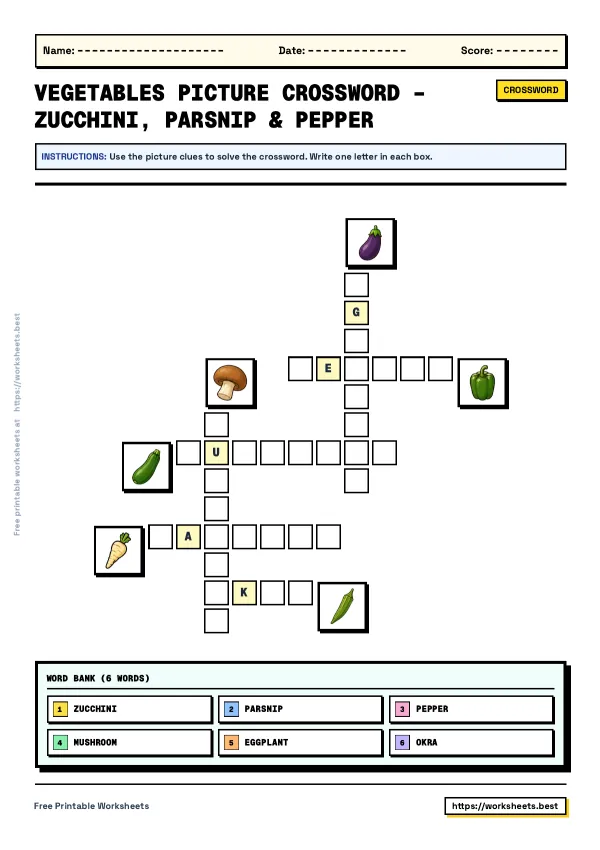
Vegetables Picture Crossword – Zucchini, Parsnip & Pepper
2nd–3rd GradeCrossword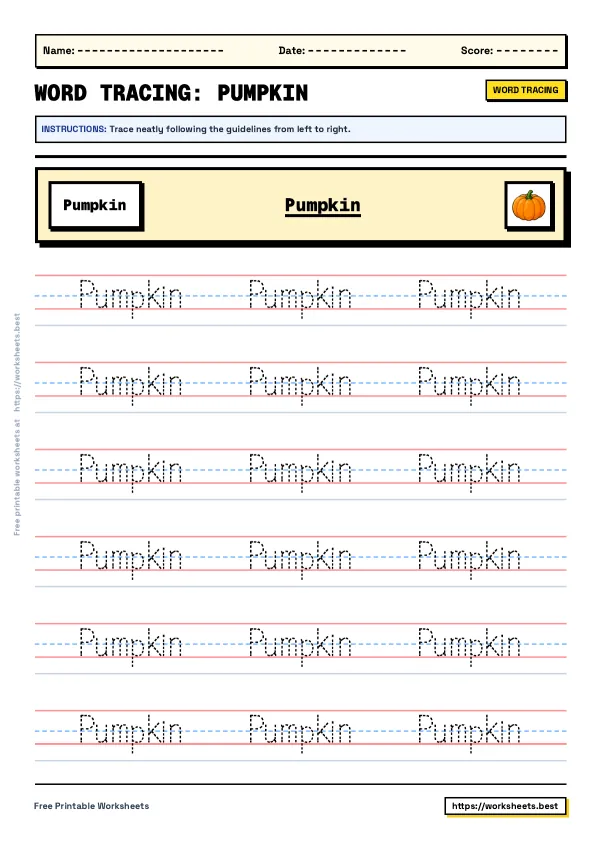
Word Tracing: Pumpkin
1st GradeTracing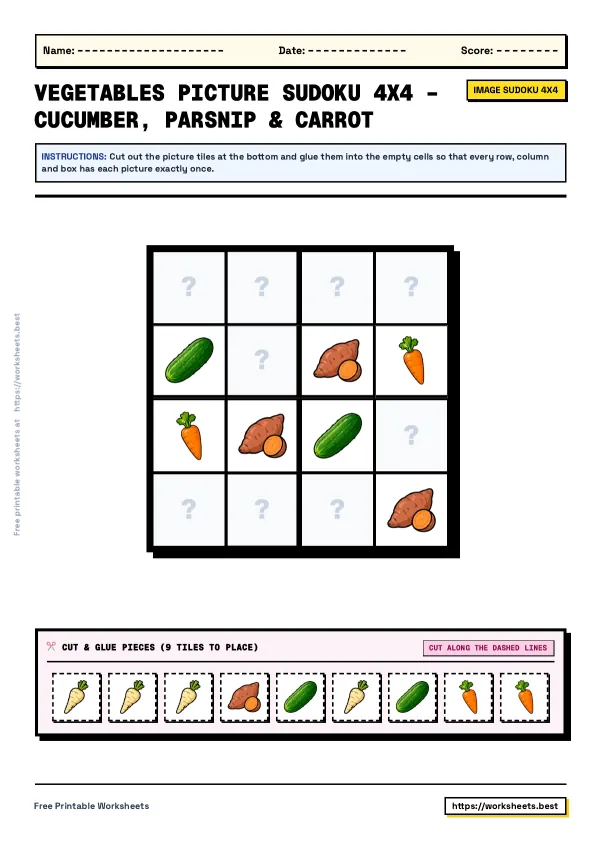
Vegetables Picture Sudoku 4x4 – Cucumber, Parsnip & Carrot
K–1st GradePicture Sudoku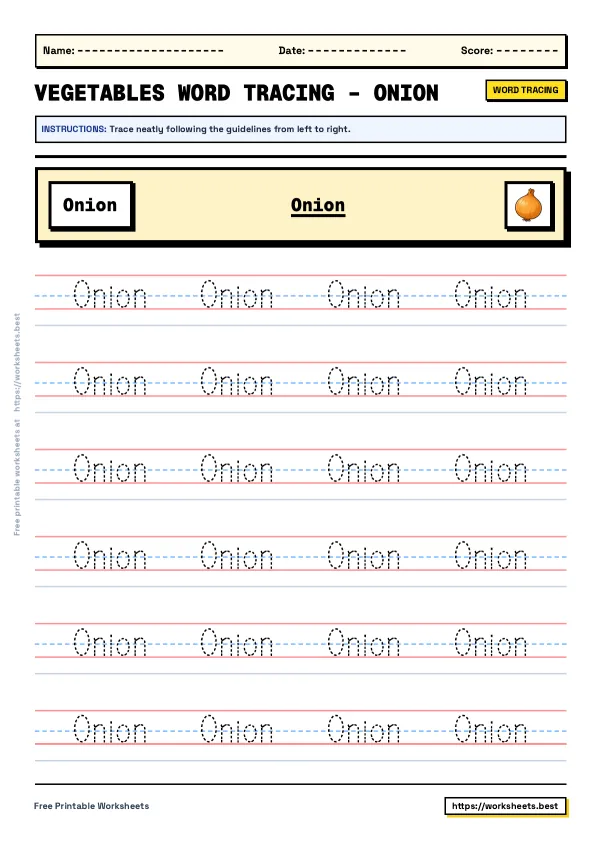
Vegetables Word Tracing – Onion
Pre-K–KTracing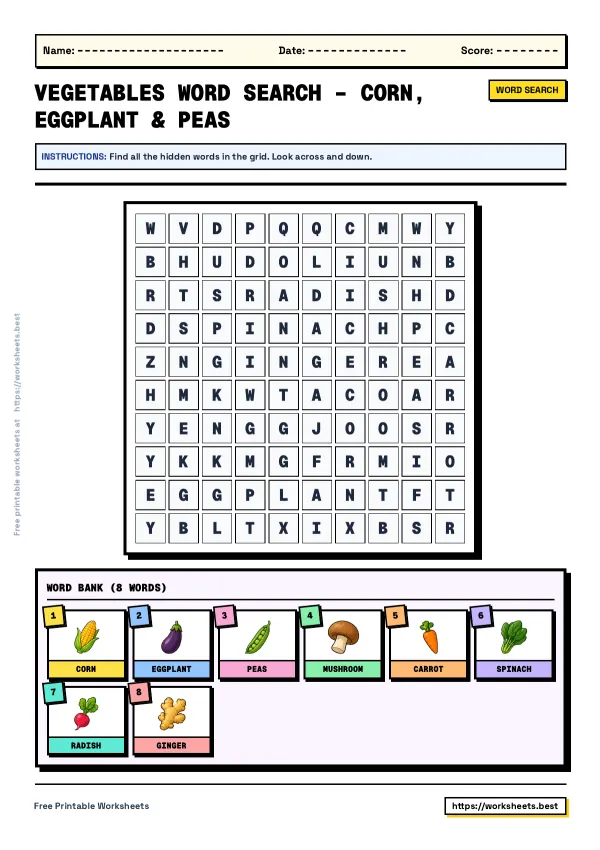
Vegetables Word Search – Corn, Eggplant & Peas
1st–2nd GradeWord Search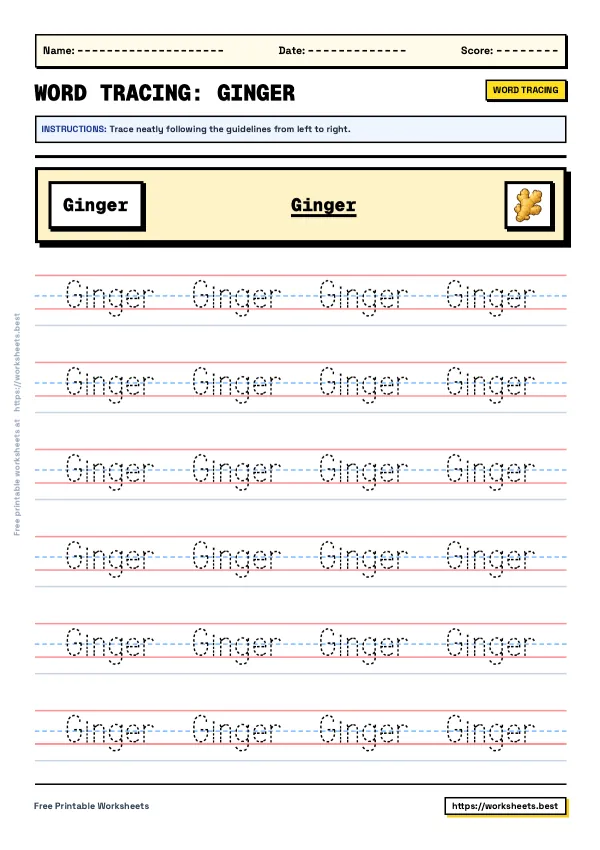
Word Tracing: Ginger
1st GradeTracing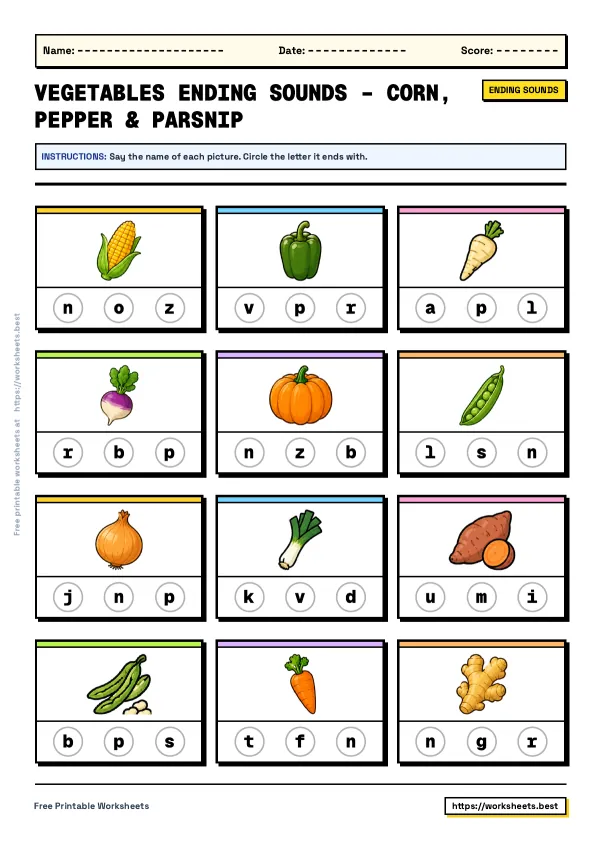
Vegetables Ending Sounds – Corn, Pepper & Parsnip
K–1st GradeLetter Sounds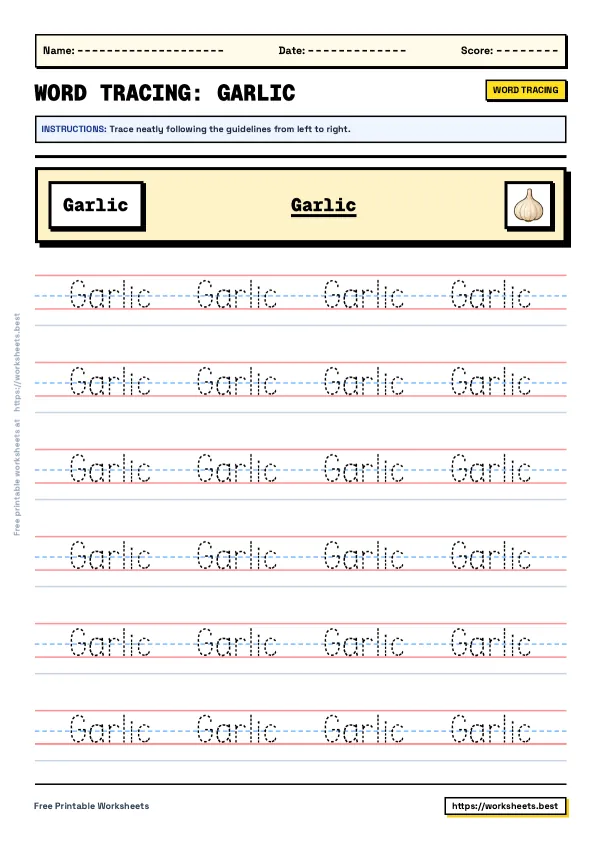
Word Tracing: Garlic
1st GradeTracing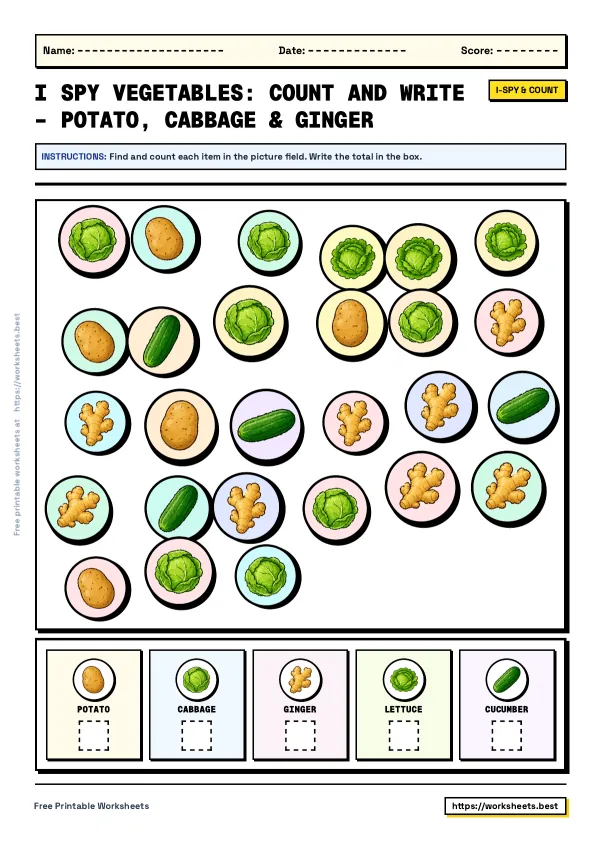
I Spy Vegetables: Count and Write – Potato, Cabbage & Ginger
Pre-K–KI Spy Counting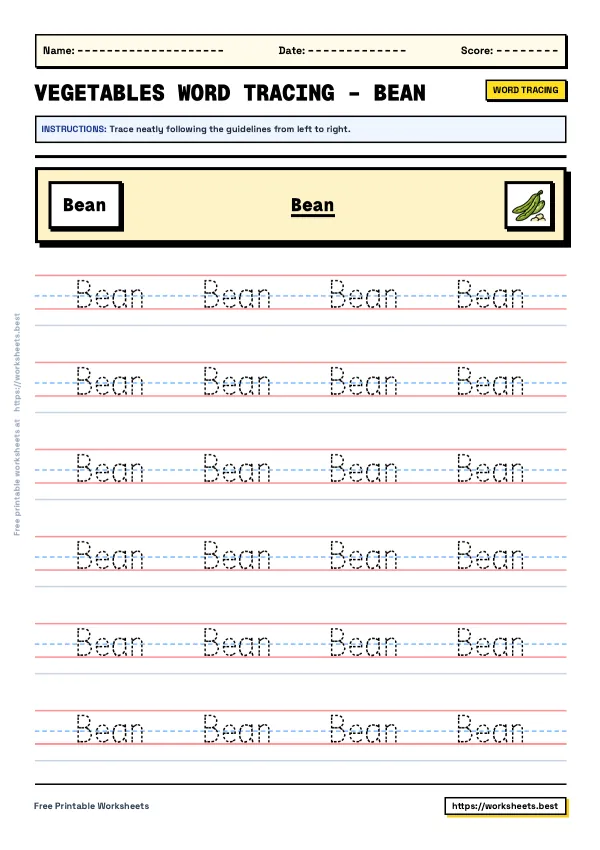
Vegetables Word Tracing – Bean
Pre-K–KTracing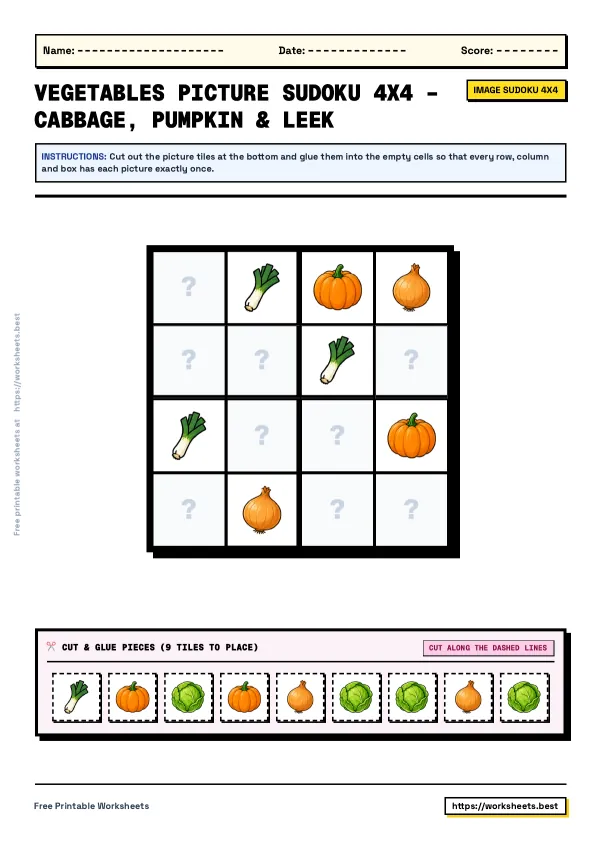
Vegetables Picture Sudoku 4x4 – Cabbage, Pumpkin & Leek
K–1st GradePicture Sudoku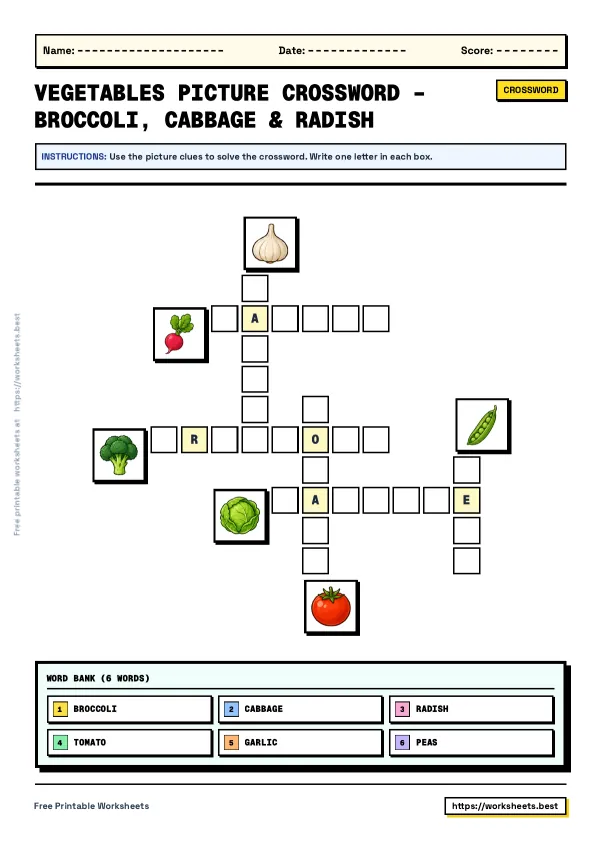
Vegetables Picture Crossword – Broccoli, Cabbage & Radish
2nd–3rd GradeCrossword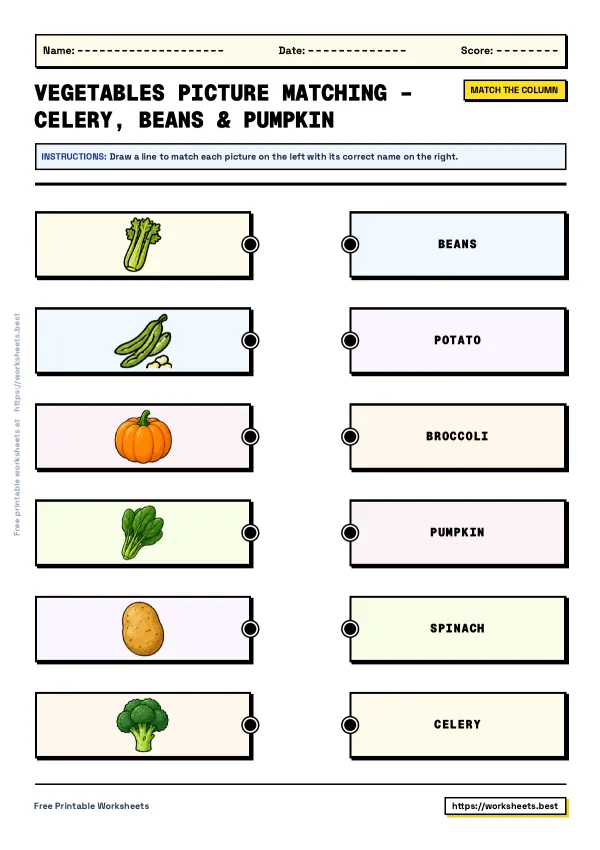
Vegetables Picture Matching – Celery, Beans & Pumpkin
K–1st GradePicture Matching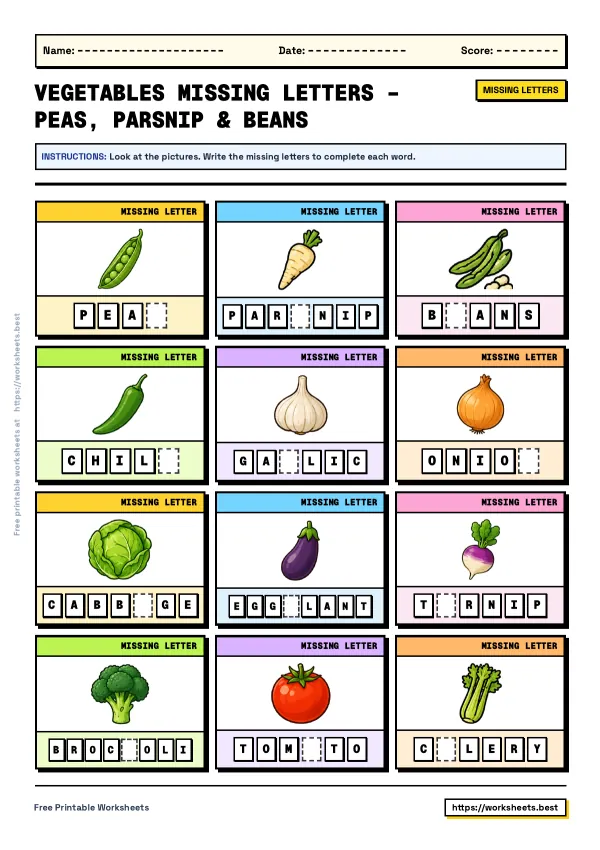
Vegetables Missing Letters – Peas, Parsnip & Beans
1st–2nd GradeMissing Letters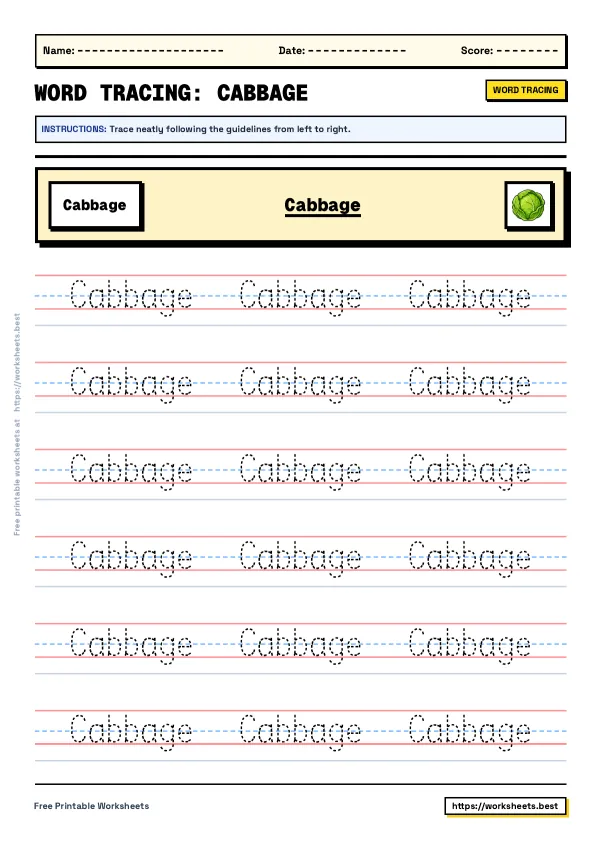
Word Tracing: Cabbage
KindergartenTracing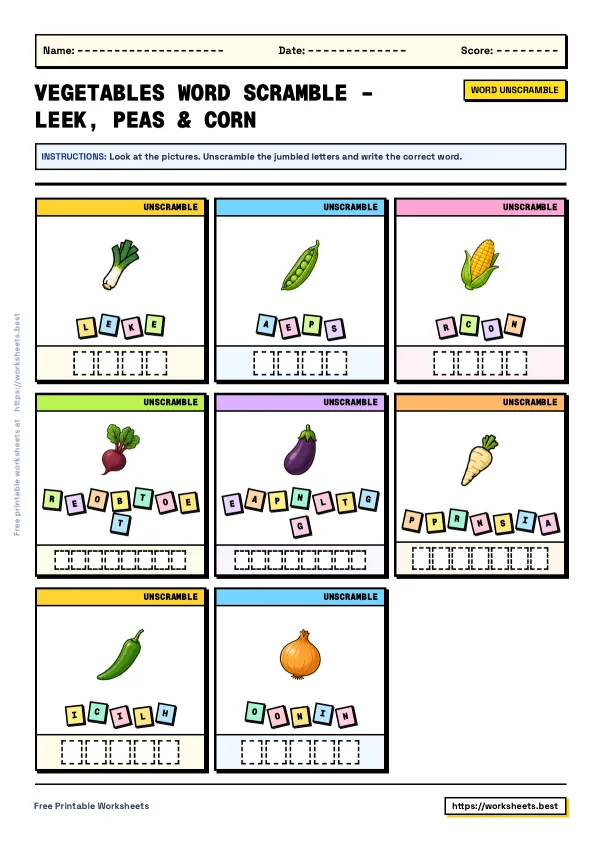
Vegetables Word Scramble – Leek, Peas & Corn
1st–2nd GradeWord Scramble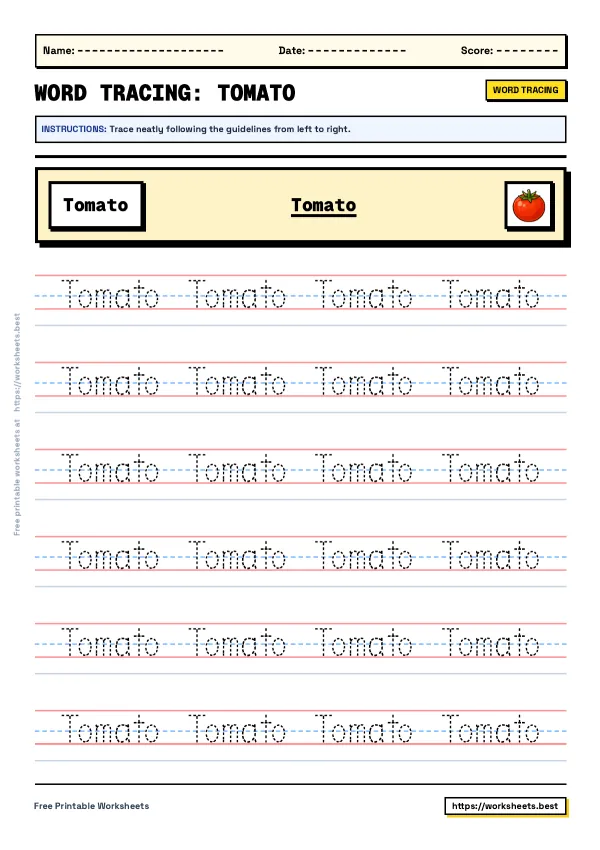
Word Tracing: Tomato
KindergartenTracing
dig deeper
More Vegetable worksheets
By worksheet type
from teachers
Tips for parents and teachers
- Trace first, write second: let a child run a finger over the dotted word, then a pencil, then write it once unaided on the back of the sheet.
- For picture sudoku, cover the grid with a hand and say the rule out loud, one of each picture in every row and column, before filling in any square.
- Say each vegetable name aloud as children find it in a word search or crossword; linking the printed word to the spoken one does more for vocabulary than silent copying.
- Pair an I Spy counting page with a small tray of real or toy vegetables so children can move and count objects instead of only marking paper.
Questions parents ask
What ages are vegetable worksheets best for?
They span Pre-K to 3rd grade. Pre-K and kindergarten children do best with the tracing, picture matching and I Spy counting pages, while 1st through 3rd graders are ready for the crossword, word scramble and word search.
Do these sheets help with spelling and phonics?
Yes. The missing letters and beginning sounds pages ask children to listen for the first or middle sound in a word. The word scramble and crossword then make them recall the full spelling rather than copy it.
How does picture sudoku work for young children?
Each 4x4 grid uses four vegetable pictures, and the rule is one of each picture in every row and column. Children who are new to it can cut out the picture tiles first and slide them around before committing to pencil.
Which vegetable words appear on the pages?
The word lists stay close to what children see in a kitchen or garden. Beginners get short three-letter words, and the harder sheets move to longer, less familiar names.
Can teachers use these in a literacy or math center?
Yes. A single sheet works as morning work, a quiet center rotation or a take-home task, and the tally and I Spy pages fit naturally into a math center.