People Worksheets
Tracing the word dad or finding girl in a small grid helps a child connect spoken family words with print. The People Worksheets set gives Pre-K, 1st grade and 2nd grade children short, easy practice with the words for the people around them. The pages stay simple, so a young child can finish one with a little help while an older child works alone.
Read more +
The tracing sheets ask children to follow dotted letters for words like mom and baby, which builds handwriting, spelling and fine motor control at the same time. The word searches use the same vocabulary in a different way: a child scans a small grid to spot a familiar person word, practicing word recognition and visual scanning. Some pages include answer keys.
Use a tracing page as a quiet morning task or a word search as a five-minute filler before lunch. Read each word aloud together first, then let the child trace or circle it. Send a finished sheet home for extra practice, or keep a small stack in a classroom center for early finishers.
start with these
Featured worksheets
every sheet
All People worksheets
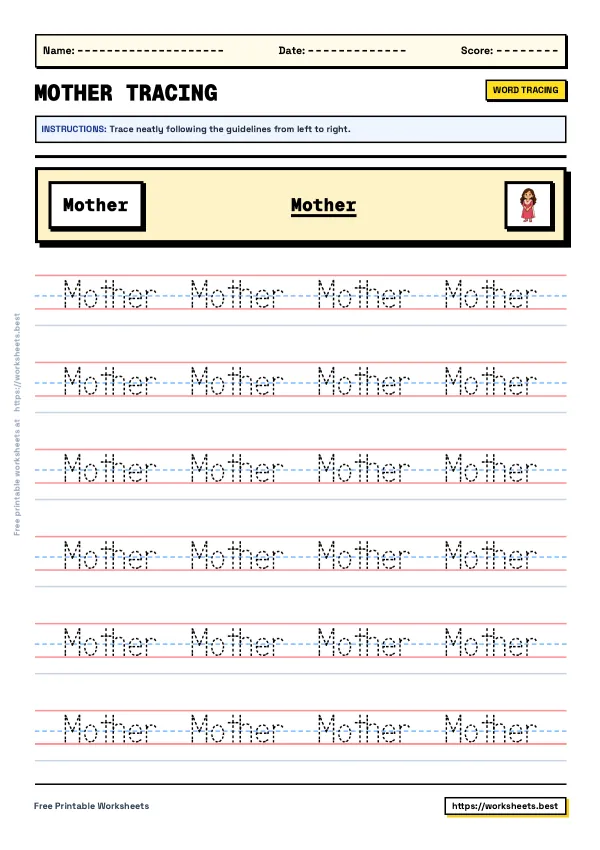
Mother Tracing
1st GradeTracing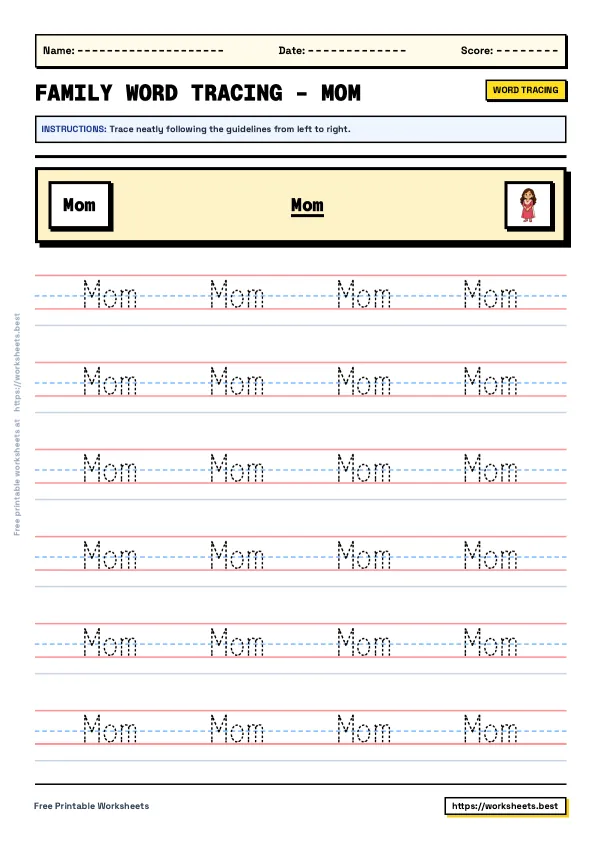
Family Word Tracing – Mom
Pre-KTracing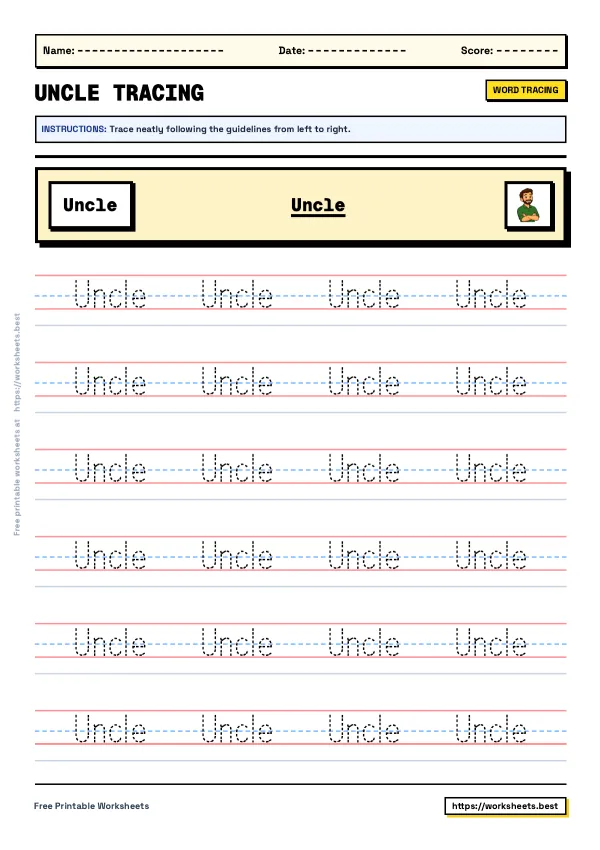
Uncle Tracing
1st GradeTracing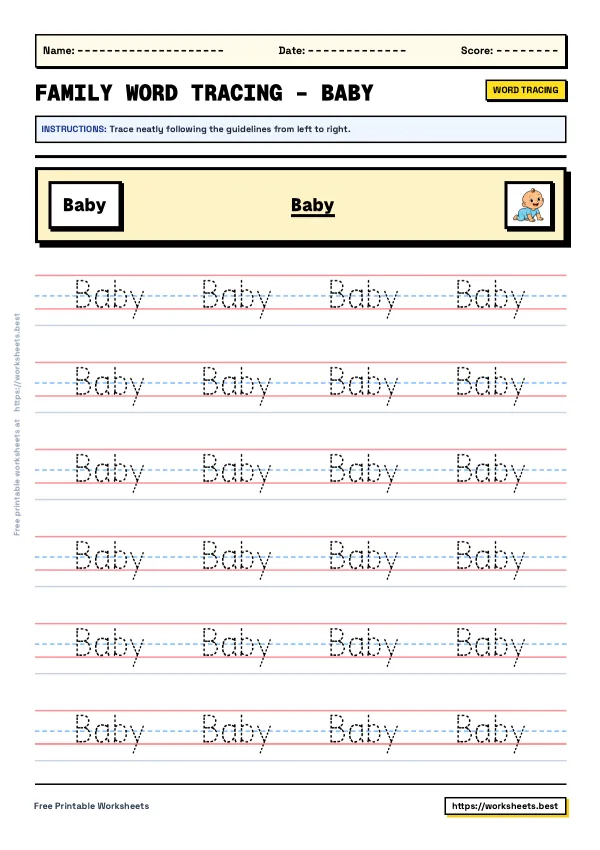
Family Word Tracing – Baby
Pre-KTracing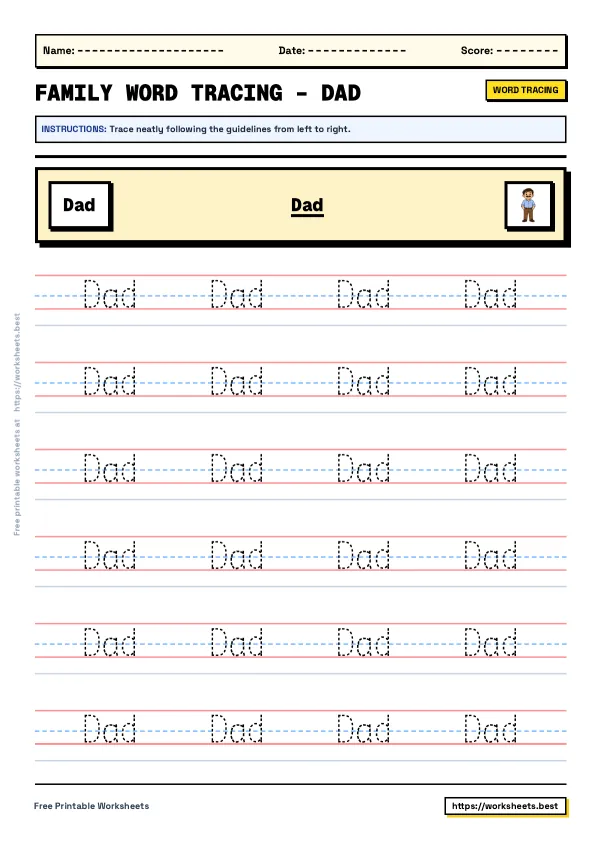
Family Word Tracing – Dad
Pre-KTracing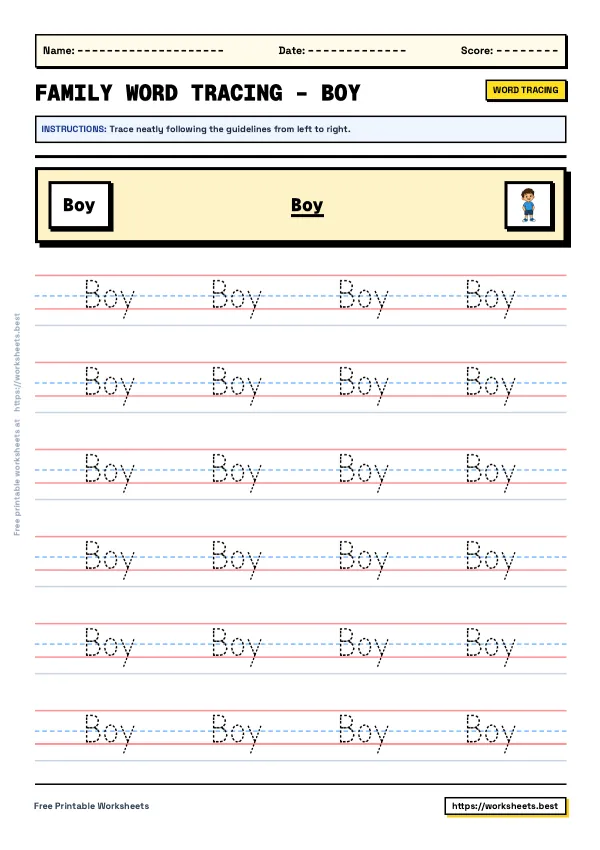
Family Word Tracing – Boy
Pre-KTracing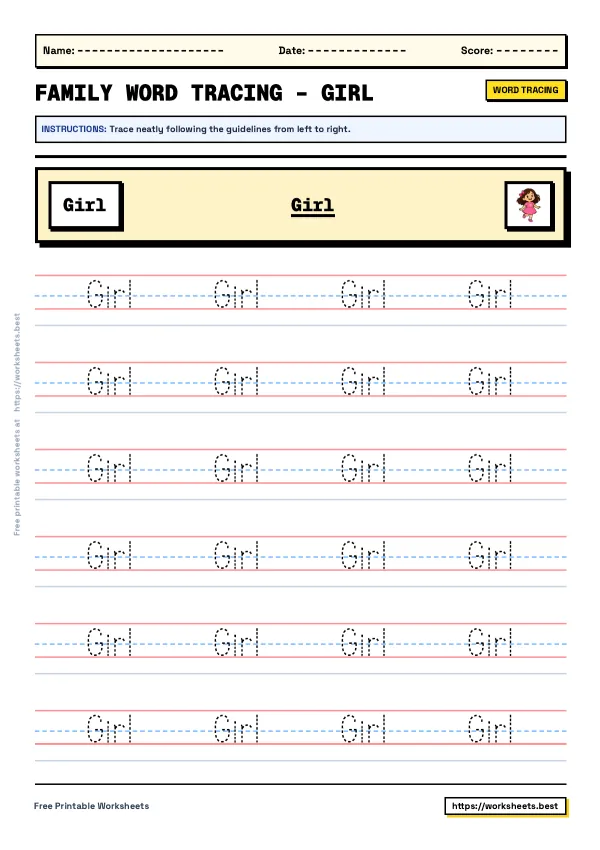
Family Word Tracing – Girl
Pre-KTracing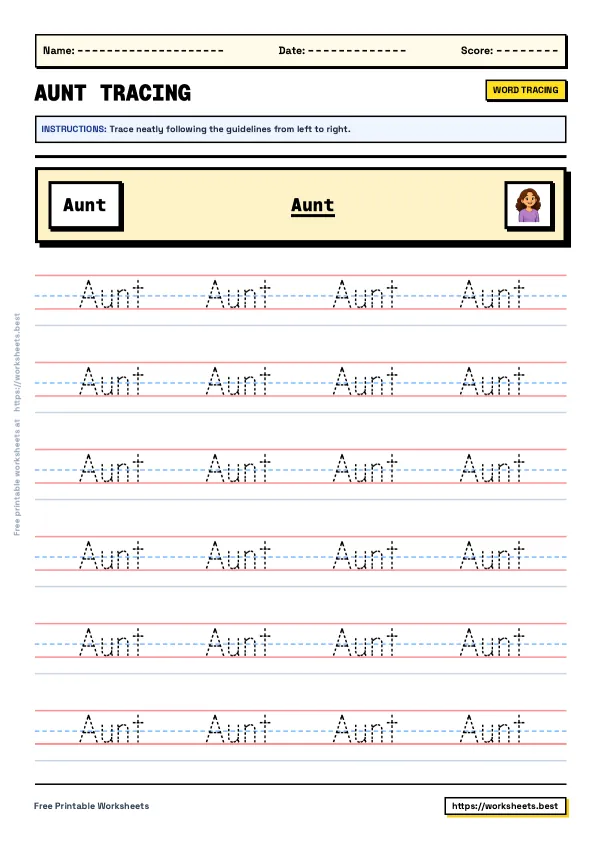
Aunt Tracing
1st GradeTracing
Grandpa Tracing
1st GradeTracing
Father Tracing
1st GradeTracing
dig deeper
More People worksheets
By worksheet type
from teachers
Tips for parents and teachers
- Say the word out loud before your child traces it, then have them say it back. Hearing and saying the word first helps the spelling stick.
- Keep tracing sessions short: one page at a time is plenty for a Pre-K child. Fine motor muscles tire quickly, and a calm five minutes beats a long session.
- For the word searches, show your child how to move a finger along each row before marking anything. This builds the left-to-right scanning habit that reading needs.
- Talk about who each word belongs to in your family, since the uncle on the page can be a real uncle. Linking a printed word to a person the child knows makes the vocabulary meaningful.
Questions parents ask
What age should a child start tracing words?
Most children are ready around age four or five, once they can hold a crayon or pencil with a steady grip. Pre-K pages with large dotted letters suit this stage, and 1st and 2nd grade pages add smaller letters and longer words.
How do word searches help beginning readers?
They train a child to scan left to right and notice letter patterns, which supports word recognition. A small grid with familiar family words keeps the task manageable for a young child.
Should my child trace with a pencil or a marker?
Either works. A pencil gives more control for handwriting practice, while a marker can make the first tries feel less fussy for a Pre-K child. What matters is that the child forms each letter in the right order.
How can I help a child who reverses letters?
Trace the word slowly together and point out where each letter begins and which way it turns. A few minutes of daily practice with the same short words helps the correct form become automatic.
Can these worksheets be used in a classroom center?
Yes. A small stack of tracing pages and word searches works well as a quiet table activity for early finishers. Children can work through one sheet independently while you help another group.