Pre-K Number Sense Worksheets
This set of Pre-K number sense worksheets gives young children a gentle start with comparing numbers and putting them in order. The activities use simple pictures and groups of objects, so children can count and compare without needing to read. Skills include number sense, comparing numbers, and number order, all at a Pre-K level. A typical worksheet, for example, asks a child to look at two sets of pictures—like three apples and five apples—and decide which group has more or fewer. Another might involve ordering numbers from 1 to 10.
Read more +
These worksheets work well at home for a few minutes of practice, or in a classroom center. Print a sheet and let your child point, count, and circle answers. Answer keys are included so you can check quickly. The pages align with Common Core standards K.CC.C.6 and K.CC.C.7. You can use them as a warm-up, a quiet time activity, or a way to see which number ideas your child is ready for next.
start with these
Featured worksheets
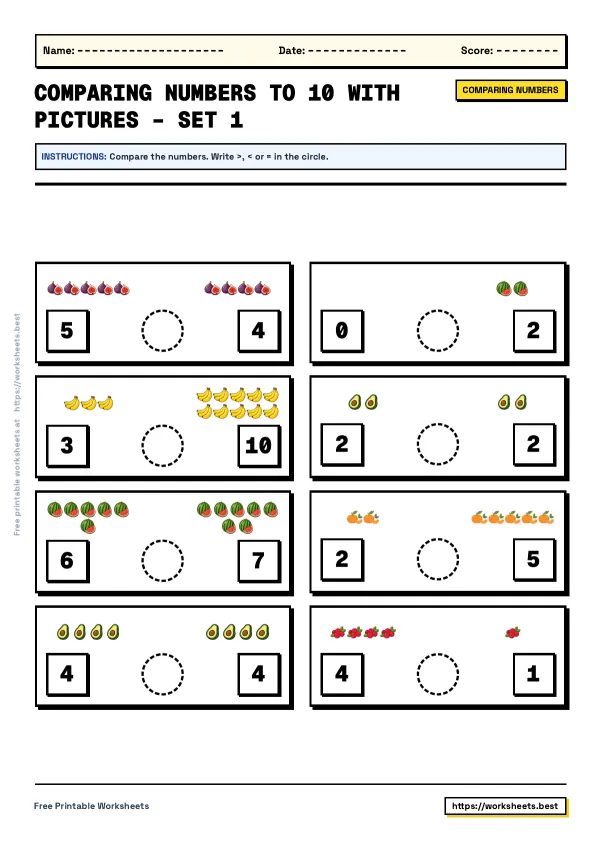
Comparing Numbers to 10 with Pictures – Set 1
Pre-K–KNumber Sense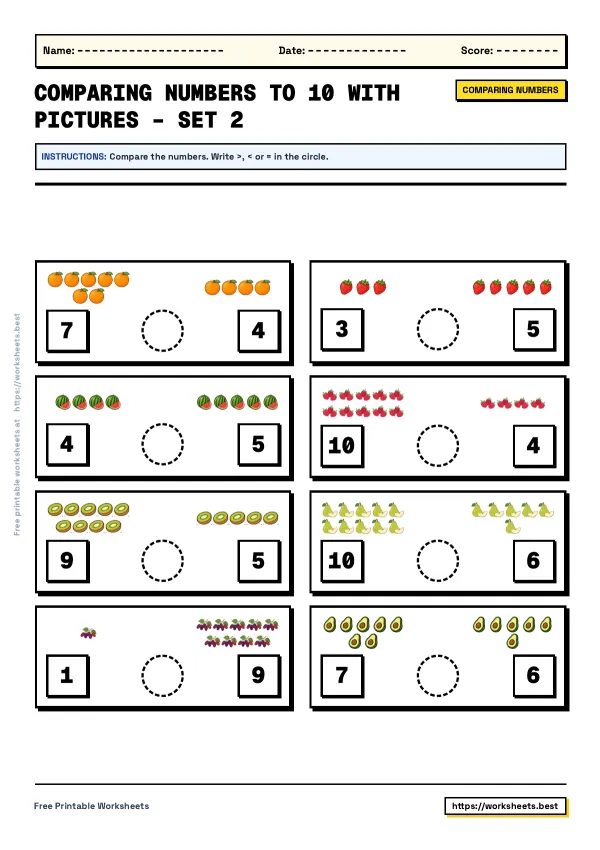
Comparing Numbers to 10 with Pictures – Set 2
Pre-K–KNumber Sense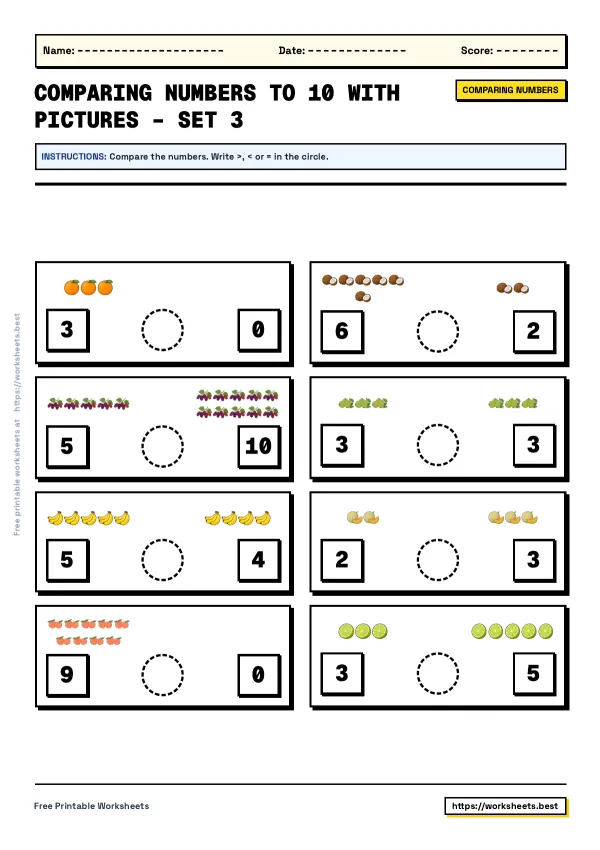
Comparing Numbers to 10 with Pictures – Set 3
Pre-K–KNumber Sense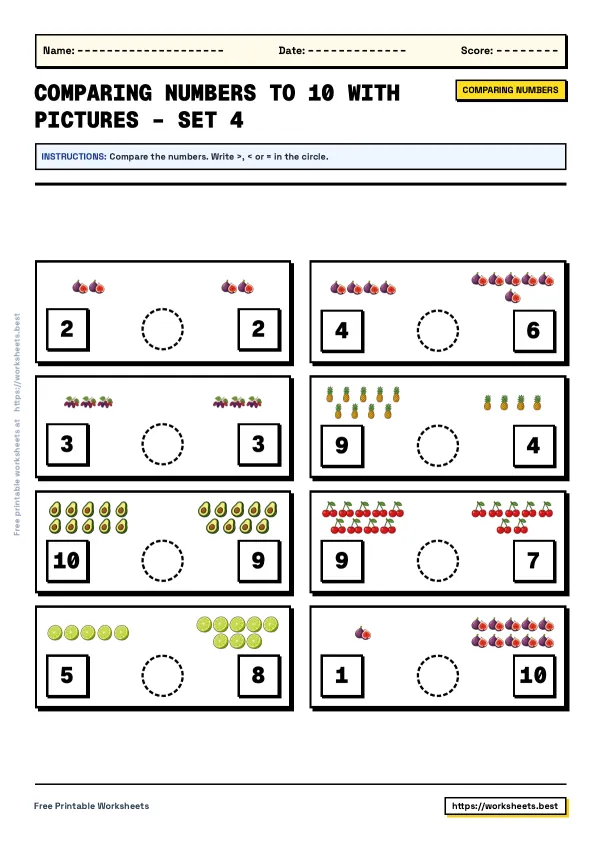
Comparing Numbers to 10 with Pictures – Set 4
Pre-K–KNumber Sense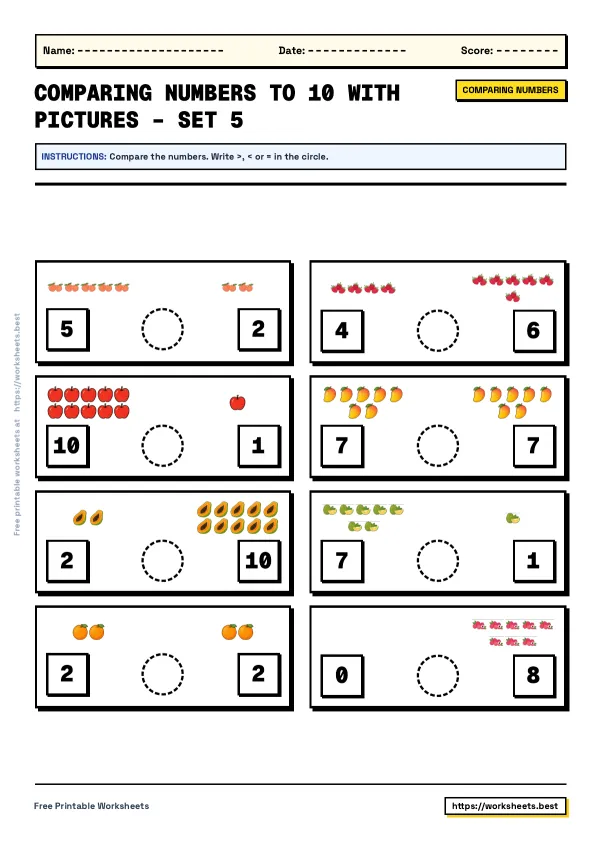
Comparing Numbers to 10 with Pictures – Set 5
Pre-K–KNumber Sense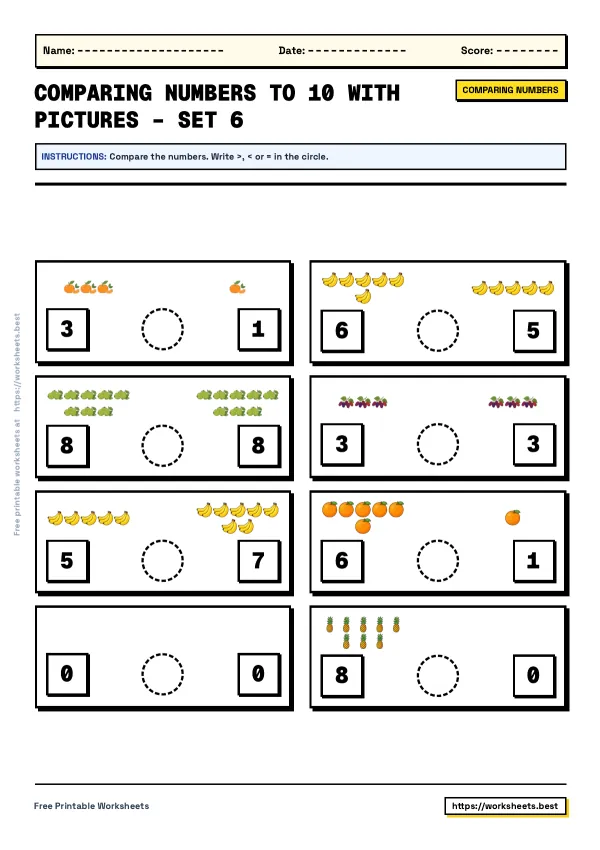
Comparing Numbers to 10 with Pictures – Set 6
Pre-K–KNumber Sense
every sheet
All Pre-K Number Sense worksheets
Comparing Numbers to 10 with Pictures – Set 2
Pre-K–KNumber SenseComparing Numbers to 10 with Pictures – Set 1
Pre-K–KNumber SenseComparing Numbers to 10 with Pictures – Set 5
Pre-K–KNumber SenseComparing Numbers to 10 with Pictures – Set 6
Pre-K–KNumber SenseComparing Numbers to 10 with Pictures – Set 4
Pre-K–KNumber SenseComparing Numbers to 10 with Pictures – Set 3
Pre-K–KNumber Sense
from teachers
Tips for parents and teachers
- Before using a worksheet, gather small objects like buttons, blocks, or crackers and have your child count two groups and say which has more. This hands-on step makes the pictures on the page easier to understand.
- For number order, write numbers 1 to 10 on sticky notes and let your child arrange them in a line. Sing a counting song as they place each number.
- Keep practice short—five to ten minutes—and stop before your child gets tired. A little practice often works better than one long session.
- After your child circles an answer, ask them to explain how they know which group has more. Talking about their thinking builds number sense.
Questions parents ask
What is number sense for a Pre-K child?
Number sense is understanding what numbers mean and how they relate. At Pre-K, it includes counting objects, knowing that the last number tells how many, and comparing groups to see which has more or fewer.
How can I teach comparing numbers to 10 at home?
Use everyday items like snacks or toys. Put two groups on a table and ask your child which group has more, which has fewer, or if they are the same. Keep it playful and brief.
What number order activities suit a 4-year-old?
A 4-year-old can practice putting numbers in order with a simple number line or cards from 1 to 5, then 1 to 10. Sing counting songs and point to numbers as you count together.
Should my child know number order before comparing numbers?
It helps to have some counting experience first, but children can learn to compare groups by matching one-to-one even before they can order all numbers to 10. Both skills develop together.
How do I know if my Pre-K child is ready for number sense worksheets?
If your child can count a few objects and shows interest in numbers, they are ready. Start with a picture-based sheet that asks them to compare small groups, and offer help as needed.