Sight Word Worksheets
Children from Pre-K through 3rd Grade can practice reading, writing and spelling high-frequency words with sight word worksheets. The collection includes hundreds of worksheets built around the Dolch word lists, from pre-primer through third grade, so you can match the right level to your child or class. Each page focuses on reading and handwriting, with spelling practice that helps children remember words such as a, an, at.
Read more +
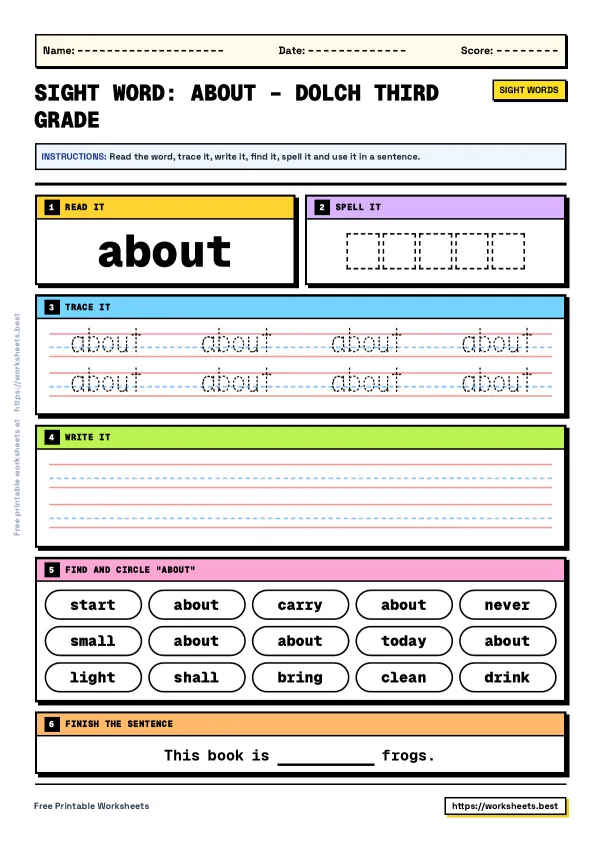
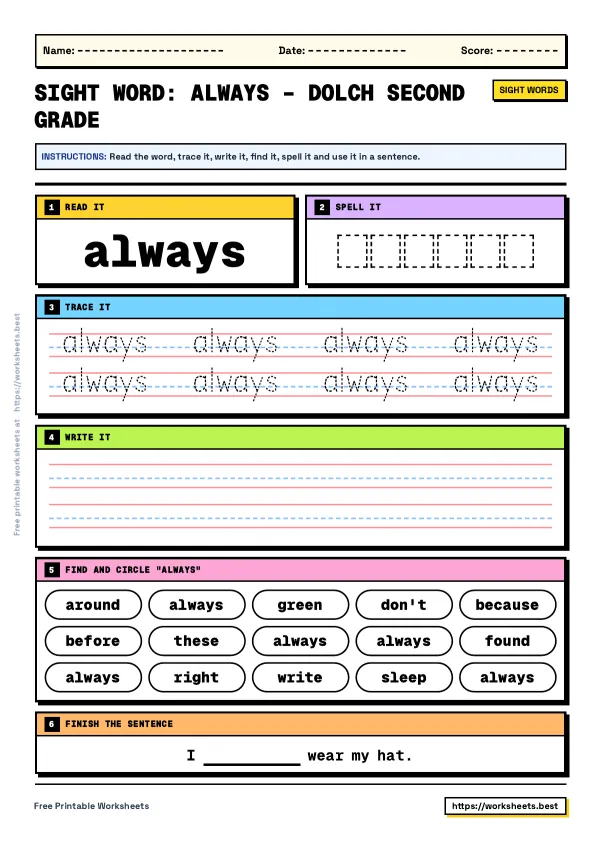
One pre-primer page asks children to trace and write very short words, while a third grade page gives practice with longer words like about and always. The simple format works for morning work, literacy centers, homework or extra practice at home. Teachers can print a set for the whole class, and parents can use a few pages at a time to build confidence.
The worksheets cover handwriting, reading, sight words and spelling. They connect to foundational reading skills, including Common Core standards RF.K.3.C and RF.1.3.G. Answer keys are included so checking work is quick. Print the pages that fit your child's level, and repeat them as needed.
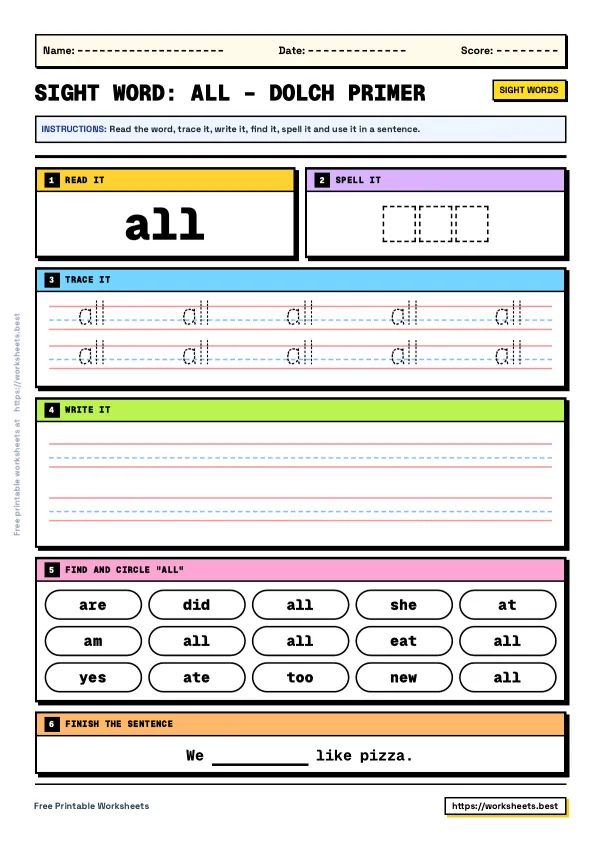
every sheet
All Sight Word worksheets
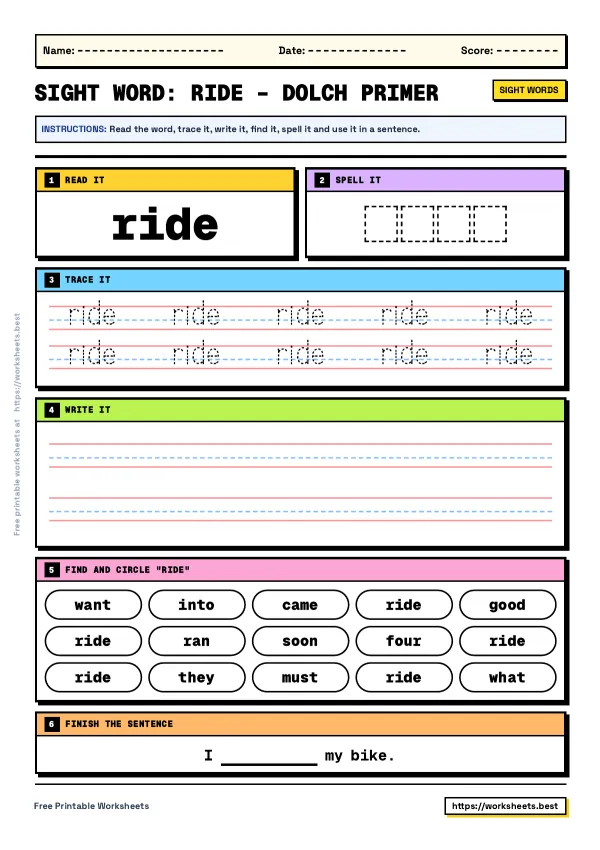
Sight Word: Ride – Dolch Primer
KindergartenSight Words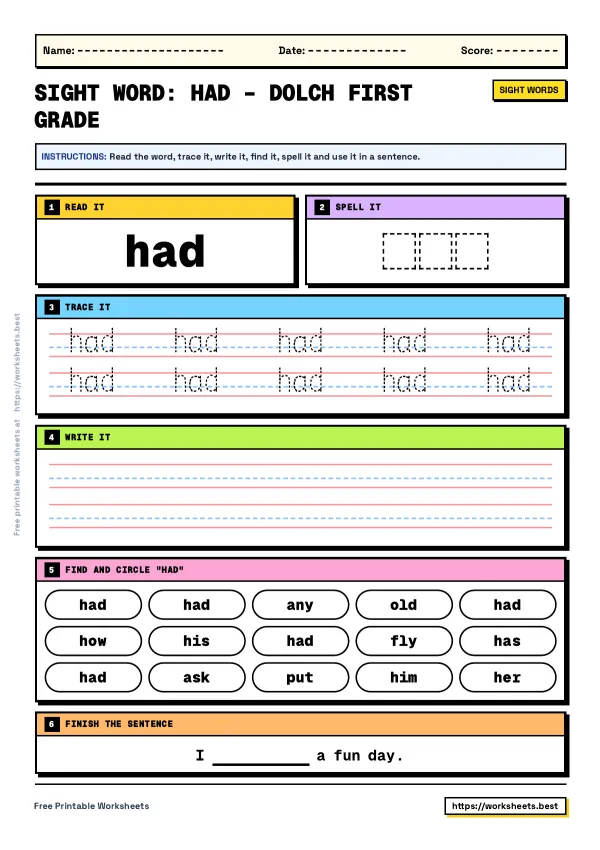
Sight Word: Had – Dolch First Grade
1st GradeSight Words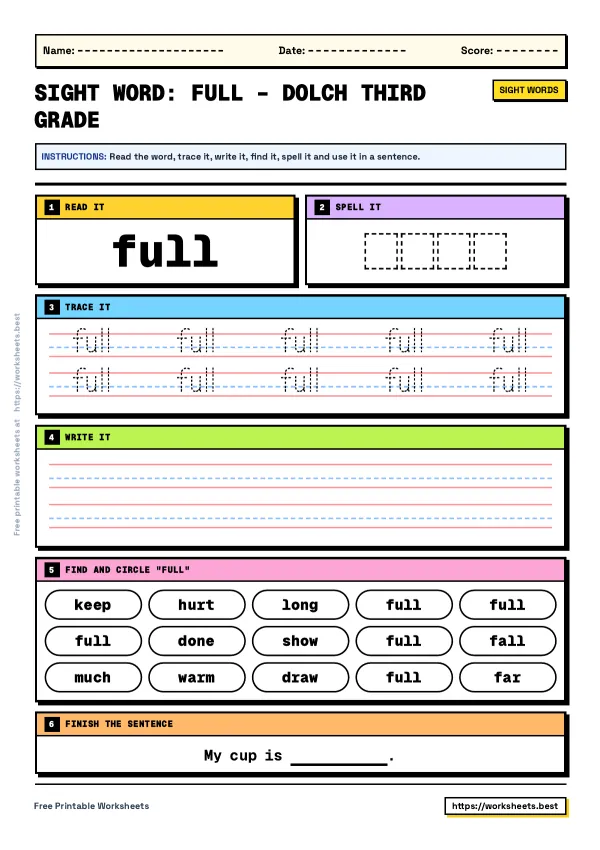
Sight Word: Full – Dolch Third Grade
3rd GradeSight Words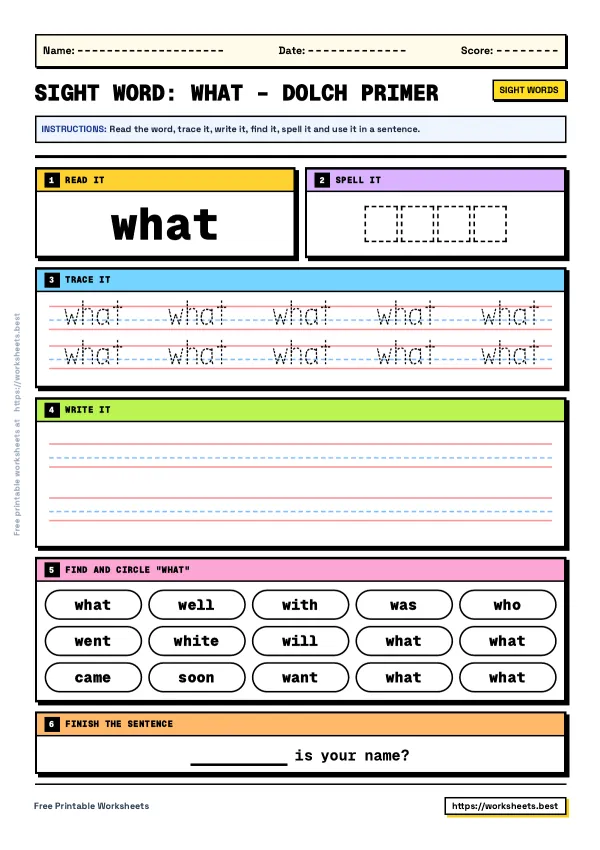
Sight Word: What – Dolch Primer
KindergartenSight Words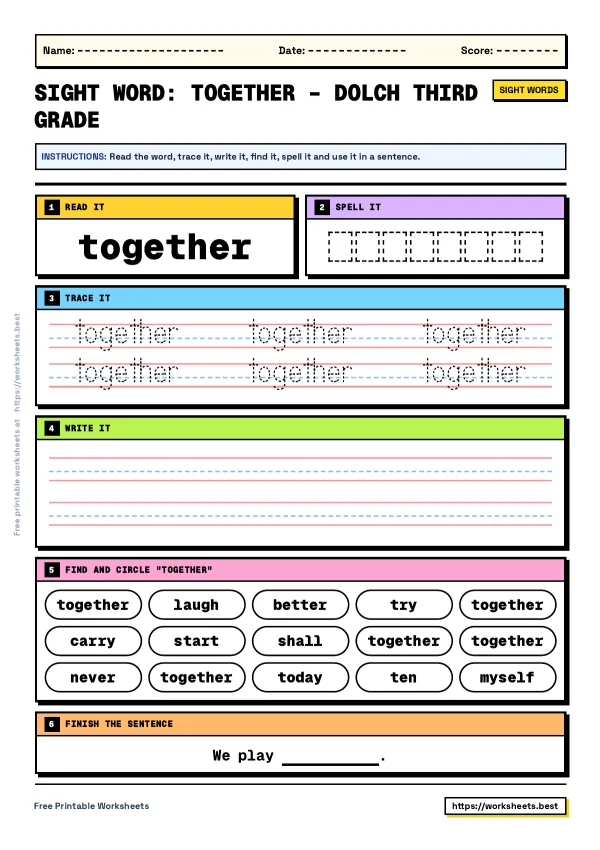
Sight Word: Together – Dolch Third Grade
3rd GradeSight Words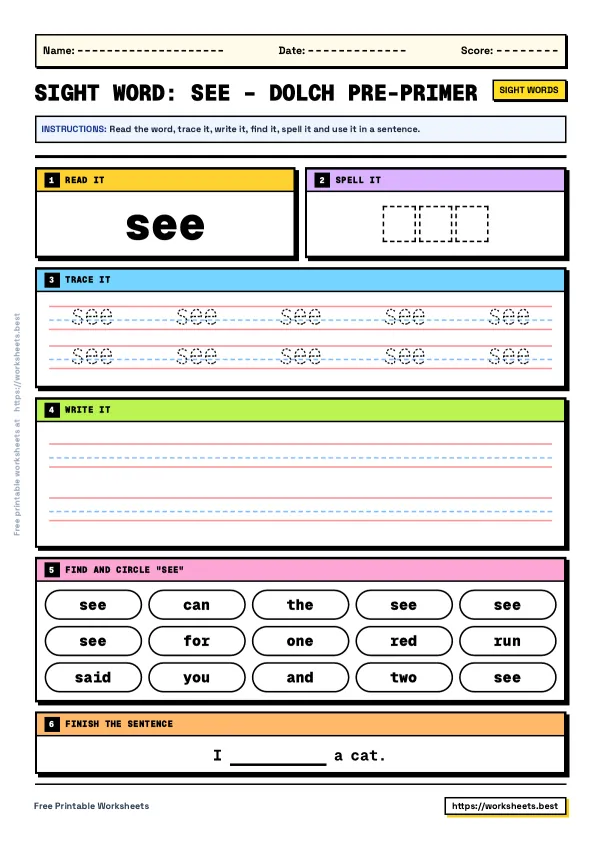
Sight Word: See – Dolch Pre-Primer
Pre-K–KSight Words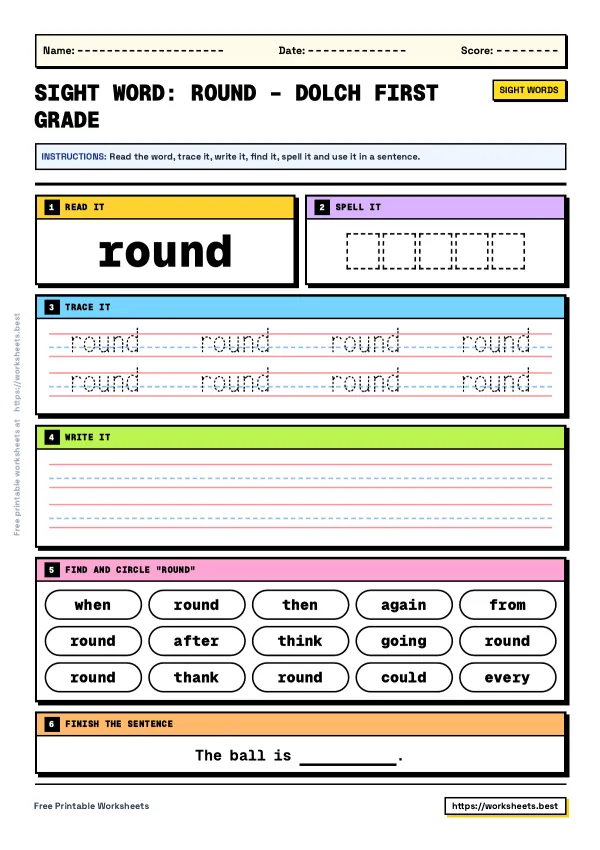
Sight Word: Round – Dolch First Grade
1st GradeSight Words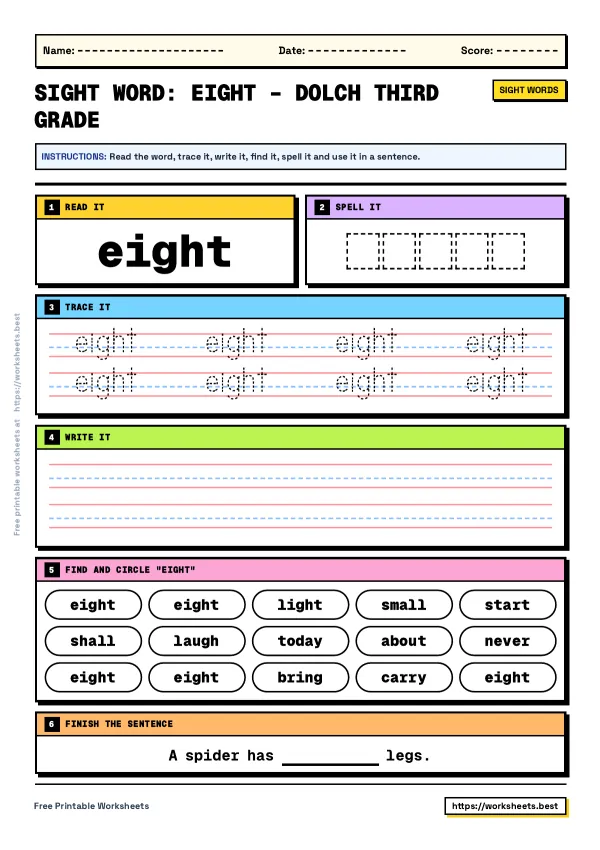
Sight Word: Eight – Dolch Third Grade
3rd GradeSight Words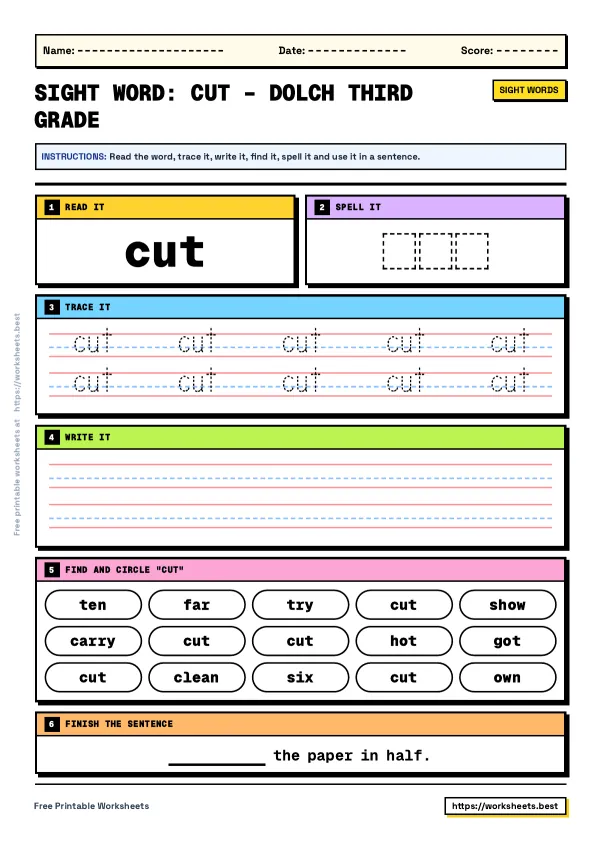
Sight Word: Cut – Dolch Third Grade
3rd GradeSight Words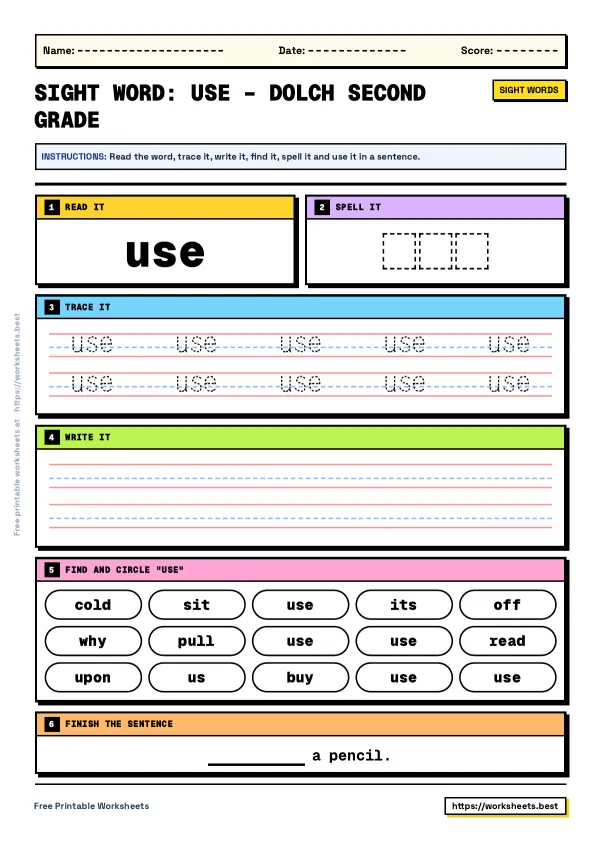
Sight Word: Use – Dolch Second Grade
2nd GradeSight Words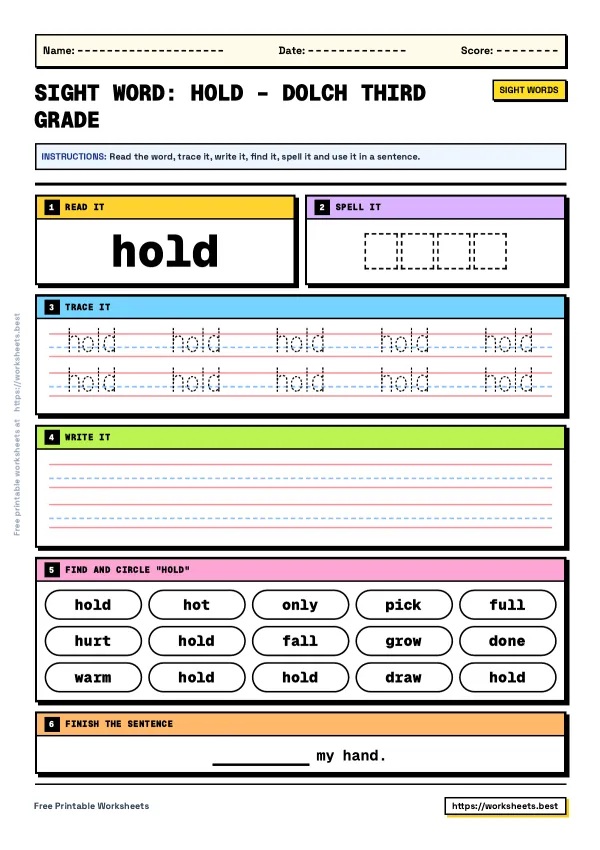
Sight Word: Hold – Dolch Third Grade
3rd GradeSight Words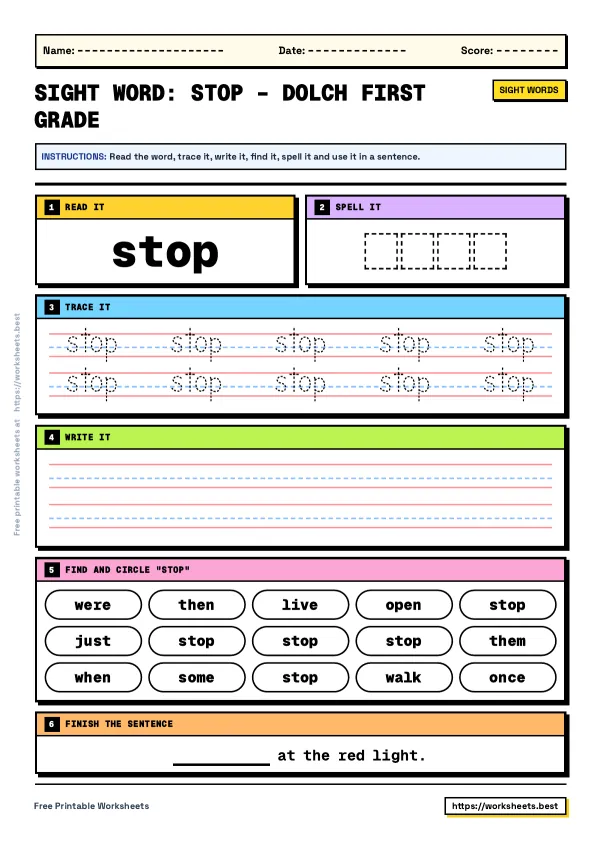
Sight Word: Stop – Dolch First Grade
1st GradeSight Words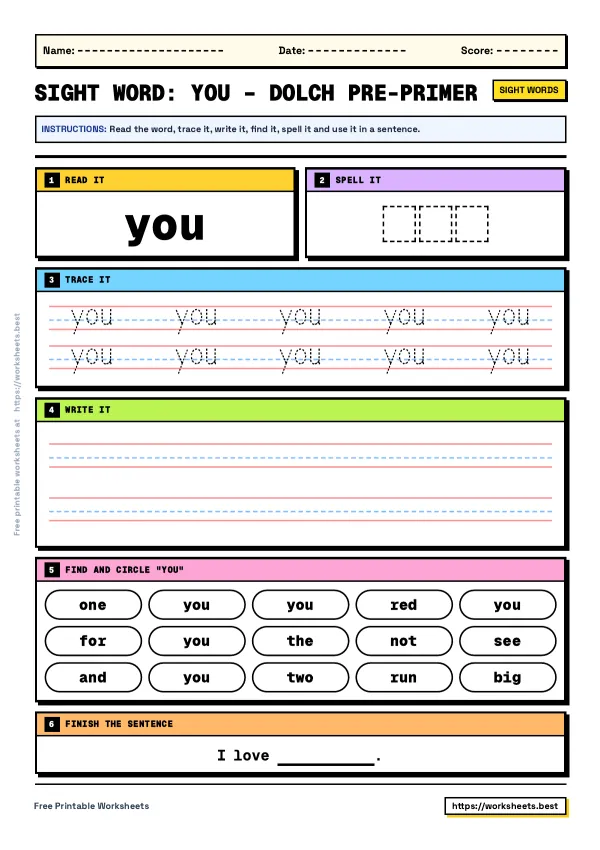
Sight Word: You – Dolch Pre-Primer
Pre-K–KSight Words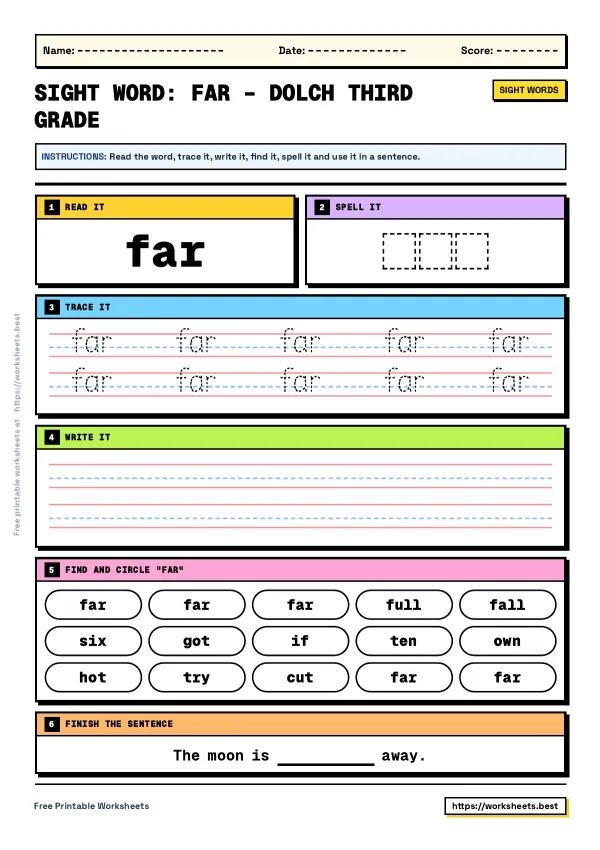
Sight Word: Far – Dolch Third Grade
3rd GradeSight Words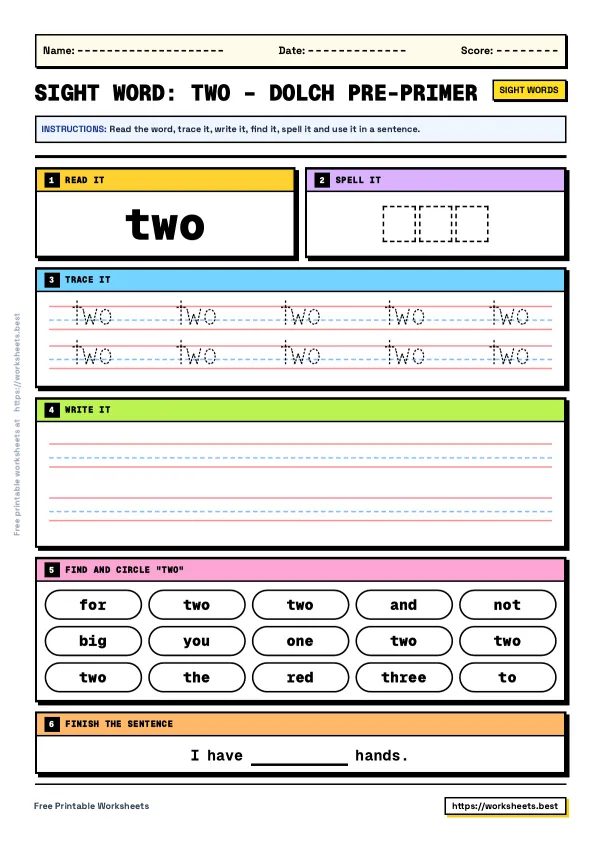
Sight Word: Two – Dolch Pre-Primer
Pre-K–KSight Words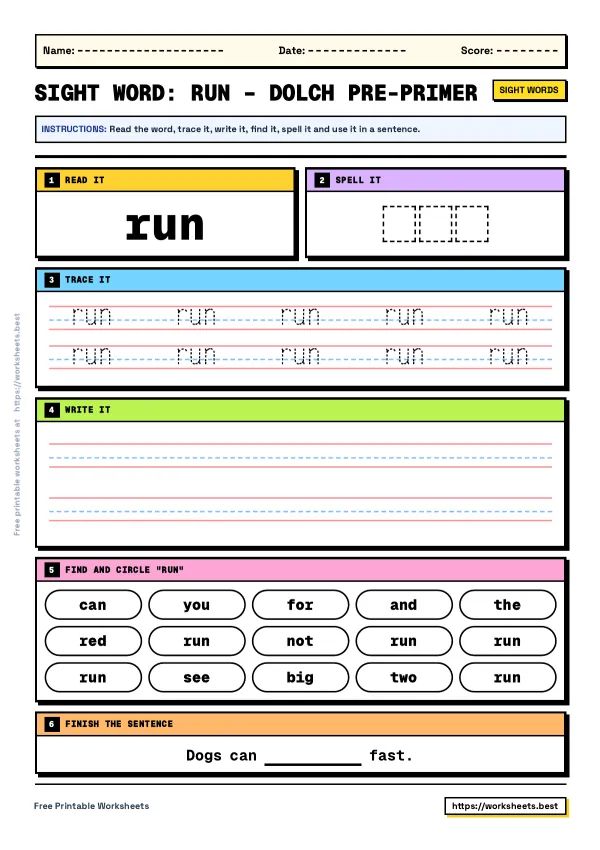
Sight Word: Run – Dolch Pre-Primer
Pre-K–KSight Words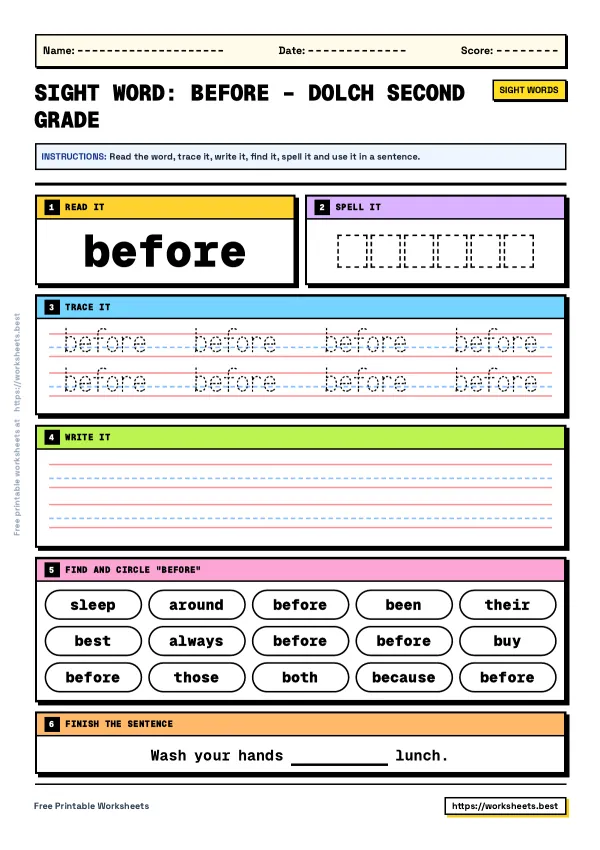
Sight Word: Before – Dolch Second Grade
2nd GradeSight Words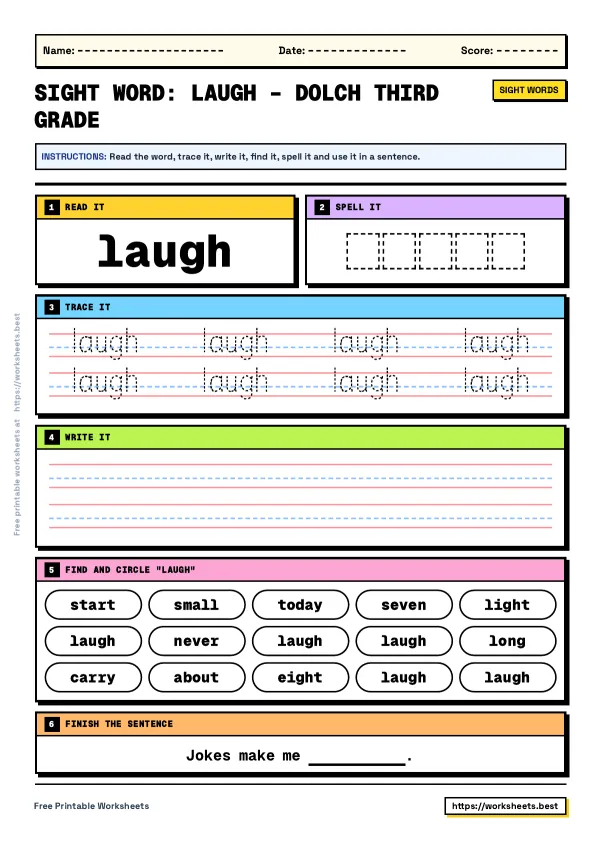
Sight Word: Laugh – Dolch Third Grade
3rd GradeSight Words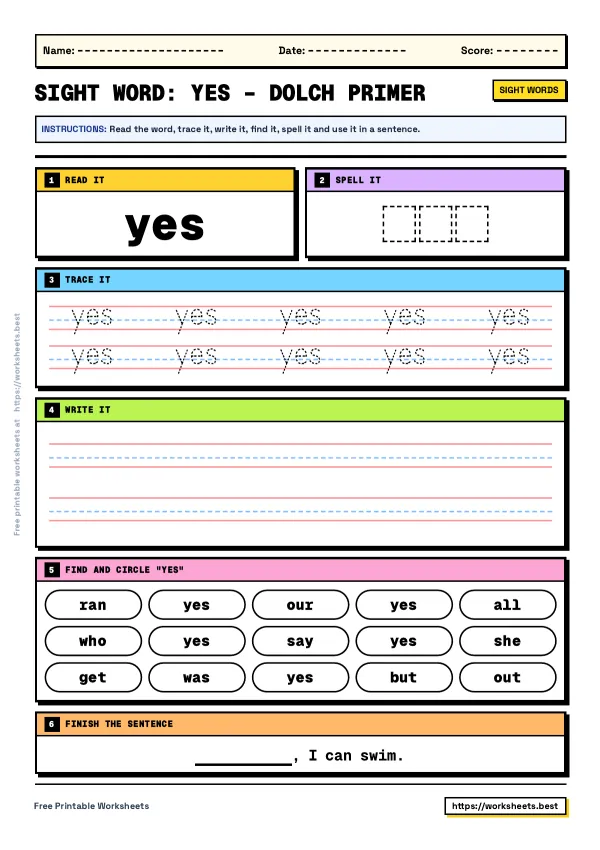
Sight Word: Yes – Dolch Primer
KindergartenSight Words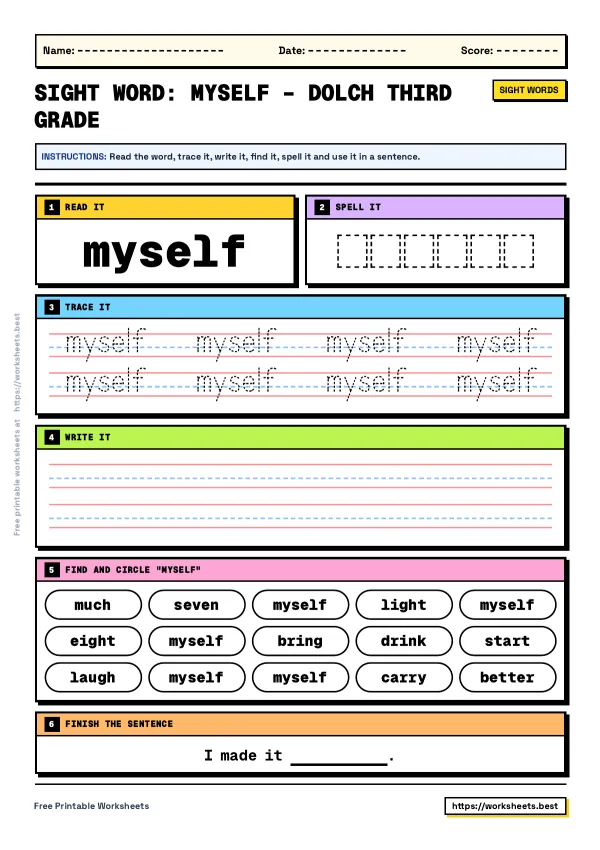
Sight Word: Myself – Dolch Third Grade
3rd GradeSight Words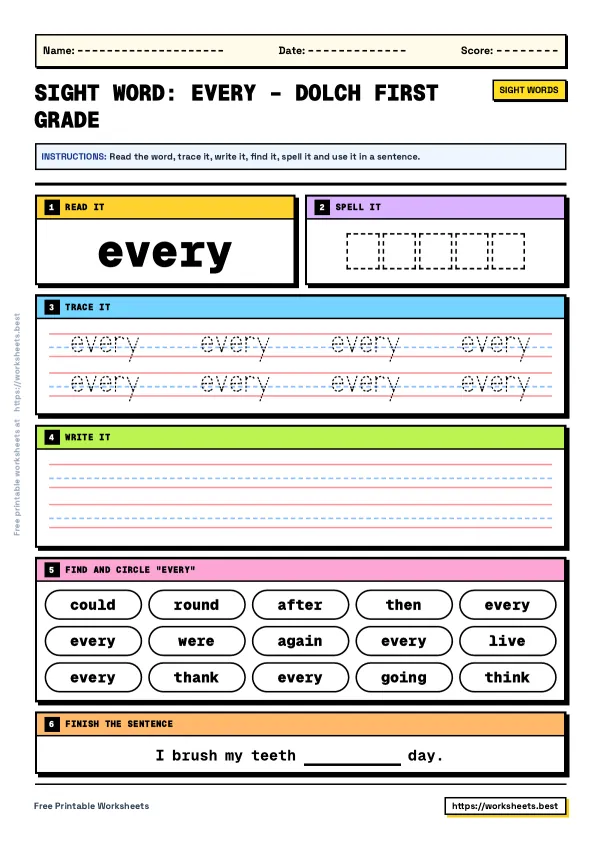
Sight Word: Every – Dolch First Grade
1st GradeSight Words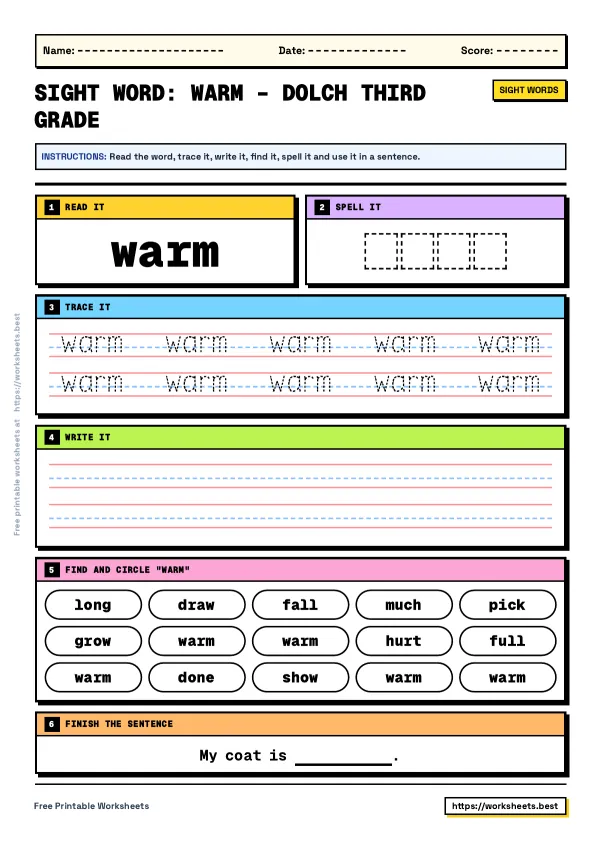
Sight Word: Warm – Dolch Third Grade
3rd GradeSight Words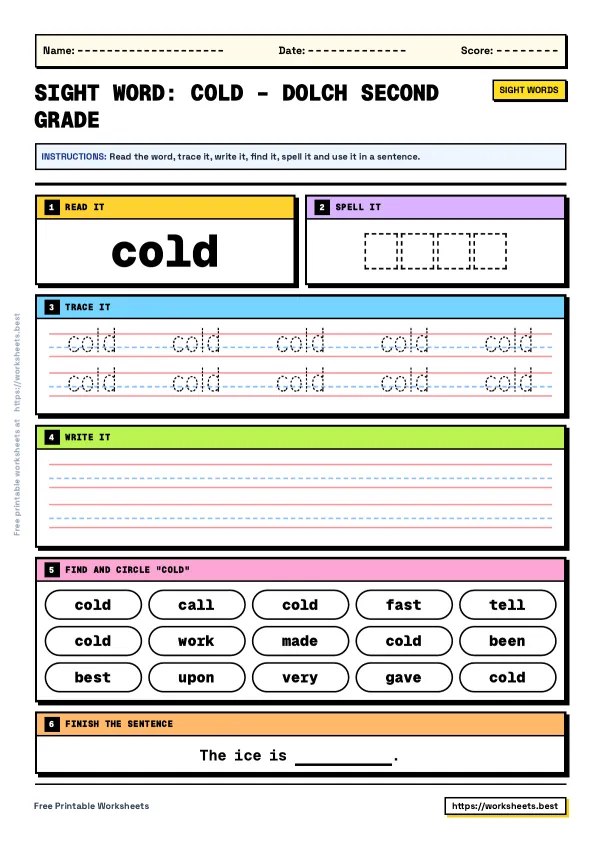
Sight Word: Cold – Dolch Second Grade
2nd GradeSight Words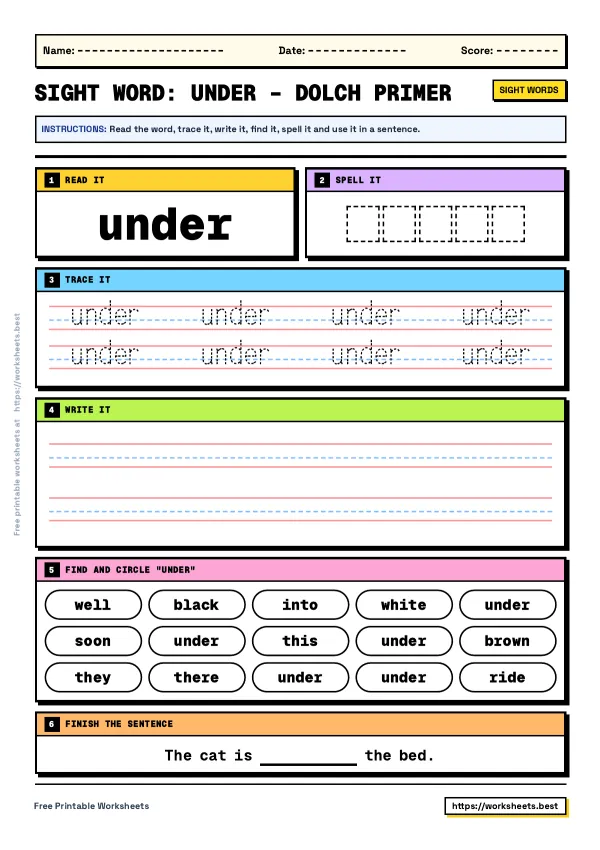
Sight Word: Under – Dolch Primer
KindergartenSight Words
dig deeper
More Sight Word worksheets
from teachers
Tips for parents and teachers
- Start with the pre-primer Dolch list for Pre-K and kindergarten children, and move to the next list only after they can read the current words without sounding them out.
- Have children trace each word with a finger first, then write it with a pencil, and finally spell it aloud to connect handwriting and spelling practice.
- Use a few pages at a time and review previously learned words in short daily sessions. Brief, regular practice is more effective than one long session.
- In class, place a set in a literacy center with answer keys so children can check their own work or a partner's work; at home, keep completed pages in a folder to show progress.
Questions parents ask
What are sight words?
Sight words are common words that children learn to recognize instantly, without sounding them out. The Dolch lists group these words by grade level, from pre-primer through third grade.
Which grade level should my child start with?
Most children start with the pre-primer Dolch list in Pre-K or kindergarten, then move to primer, first grade, second grade and third grade lists as they become ready. You can use the grade labels on each worksheet to choose a starting point.
How can I use sight word worksheets with a kindergarten class?
Print a set for a literacy center and have children trace, write and read each word aloud. You can also send a few pages home for extra practice.
What skills do these worksheets practice?
They cover handwriting, reading, sight words and spelling. Children trace and write each word, read it in context, and practice spelling it from memory.