Pre-K Sight Word Worksheets
A child's first sight words open the door to simple sentences, and Pre-K Sight Word Worksheets offer a gentle way to practice them. The collection includes dozens of worksheets built around the Dolch Pre-Primer list, so young learners meet high-frequency words such as a, and, away, big, and blue. Each sheet asks children to trace, write, read, and spell one word at a time. This repeated format helps handwriting and word recognition grow together.
Read more +
Most pages are ready to print and use with Pre-K children, whether at home or in a classroom. A typical worksheet, like an easy Dolch pre-primer page, gives a child space to trace the word, write it independently, and recognize it in a short sentence. Answer keys are included when you want to check work quickly. The pages also support Common Core standard RF.K.3.C. Use them for morning work, small group practice, or a quiet activity at the kitchen table. Print only the words your child needs, then revisit the same sheet a few days later to build fluency.
start with these
Featured worksheets
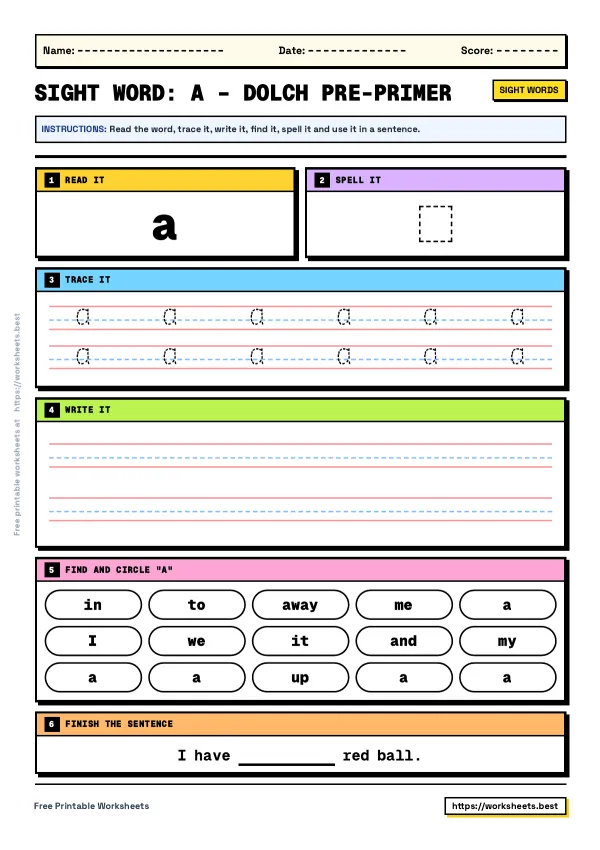
Sight Word: A – Dolch Pre-Primer
Pre-K–KSight Words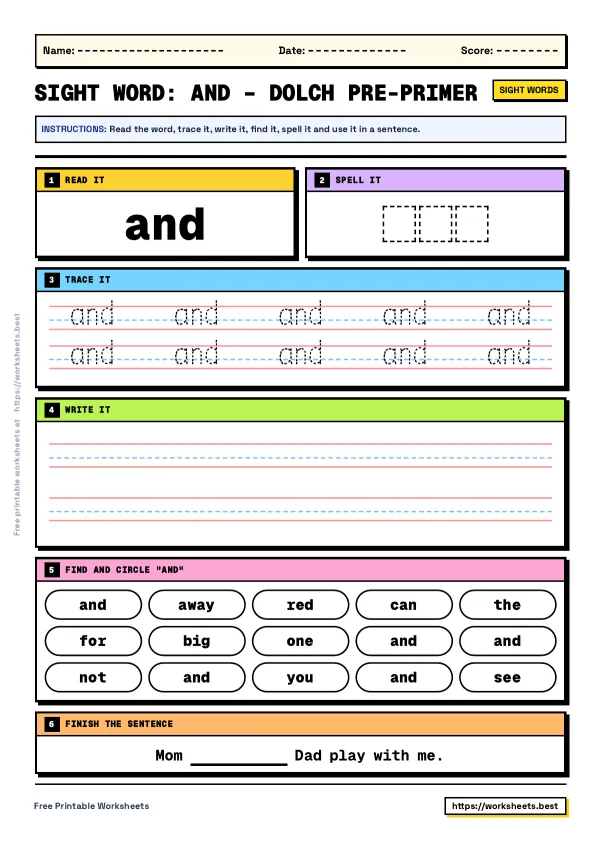
Sight Word: And – Dolch Pre-Primer
Pre-K–KSight Words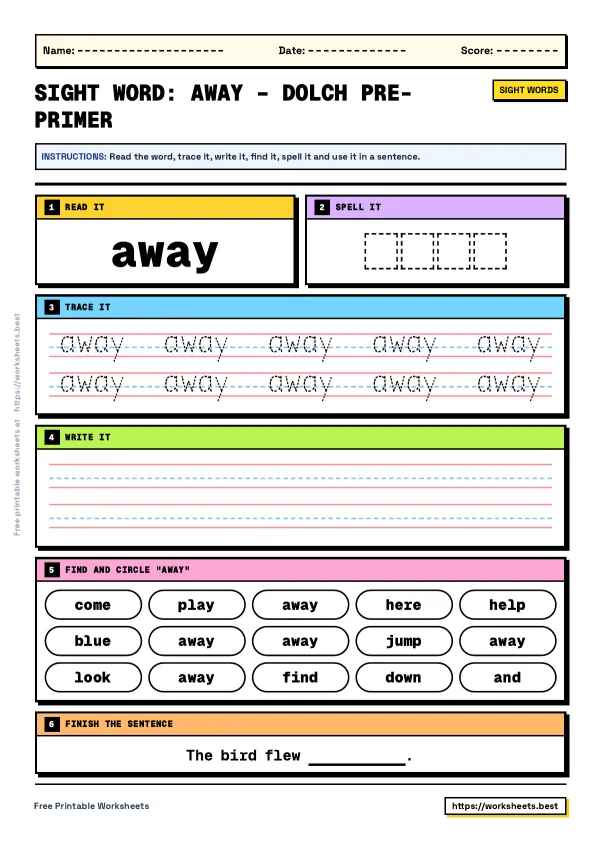
Sight Word: Away – Dolch Pre-Primer
Pre-K–KSight Words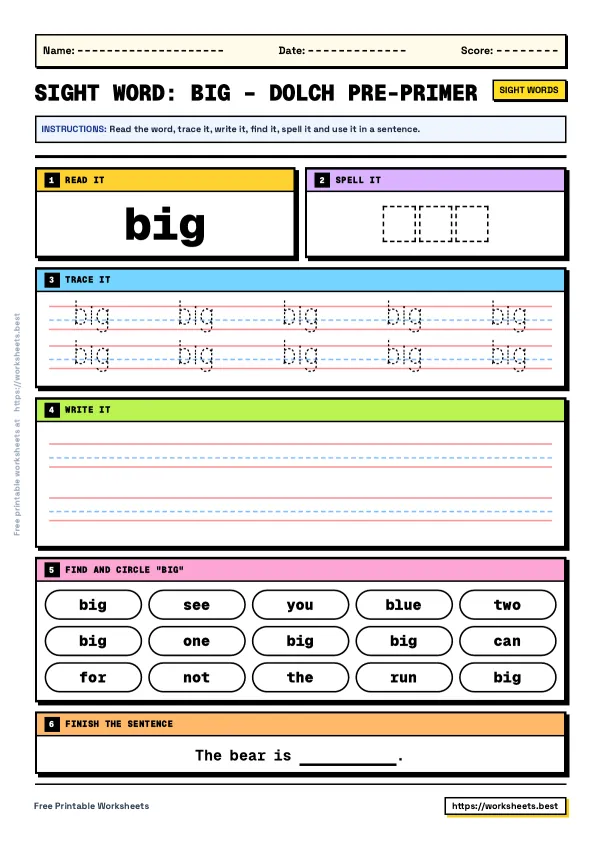
Sight Word: Big – Dolch Pre-Primer
Pre-K–KSight Words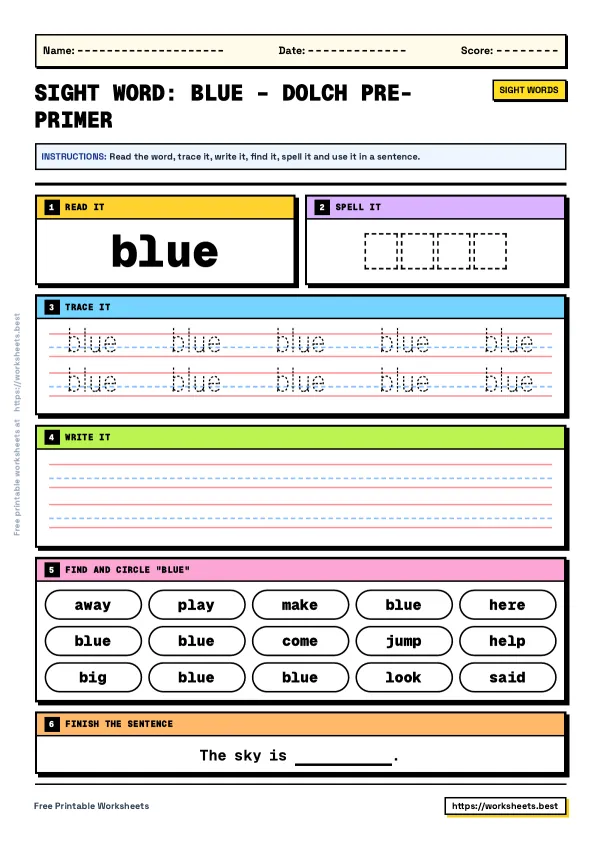
Sight Word: Blue – Dolch Pre-Primer
Pre-K–KSight Words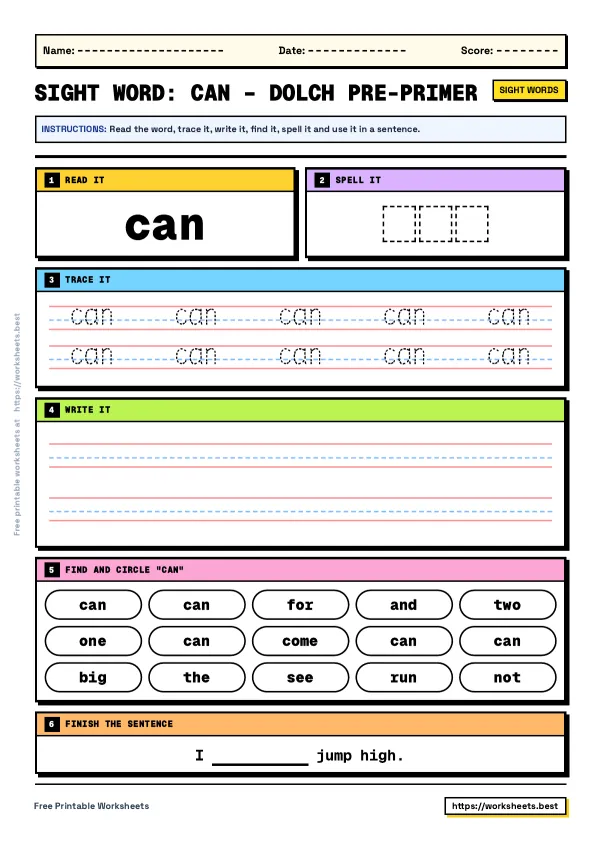
Sight Word: Can – Dolch Pre-Primer
Pre-K–KSight Words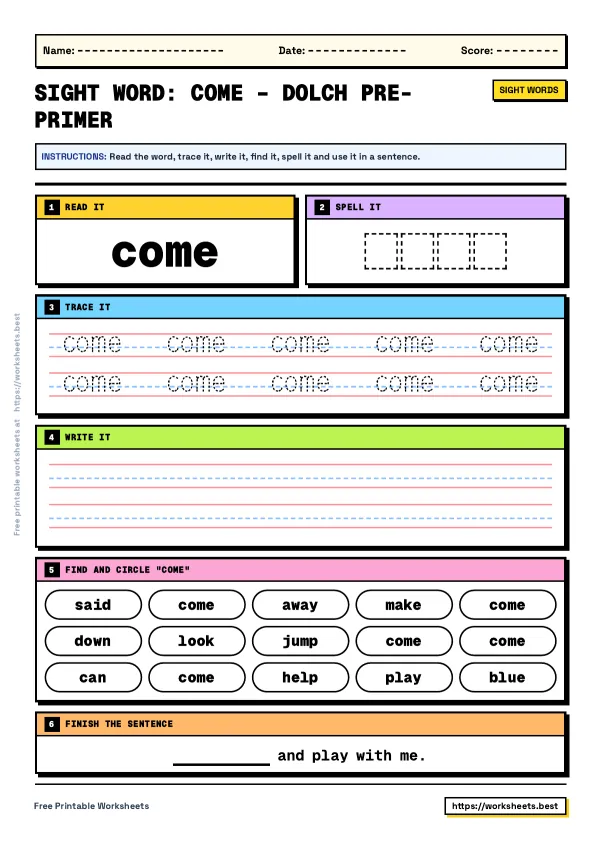
Sight Word: Come – Dolch Pre-Primer
Pre-K–KSight Words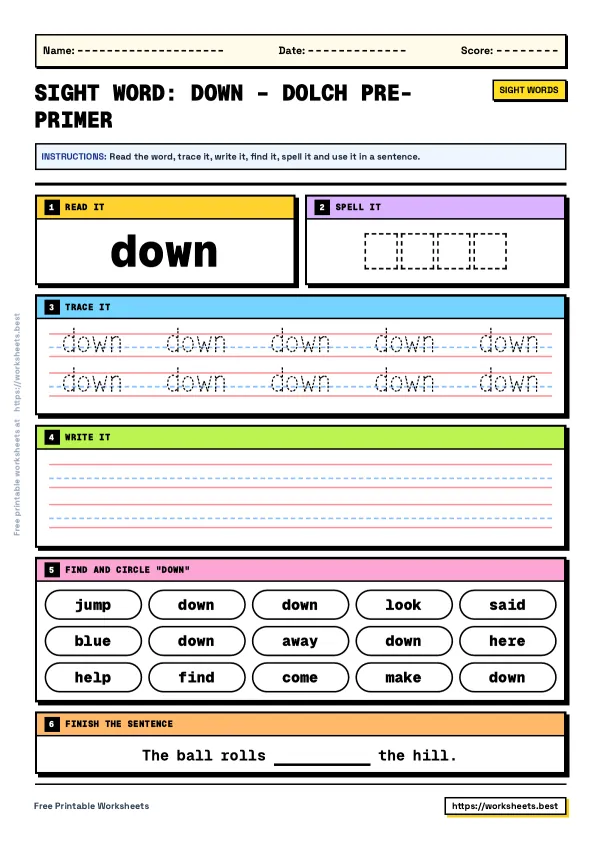
Sight Word: Down – Dolch Pre-Primer
Pre-K–KSight Words
every sheet
All Pre-K Sight Word worksheets
Sight Word: Down – Dolch Pre-Primer
Pre-K–KSight Words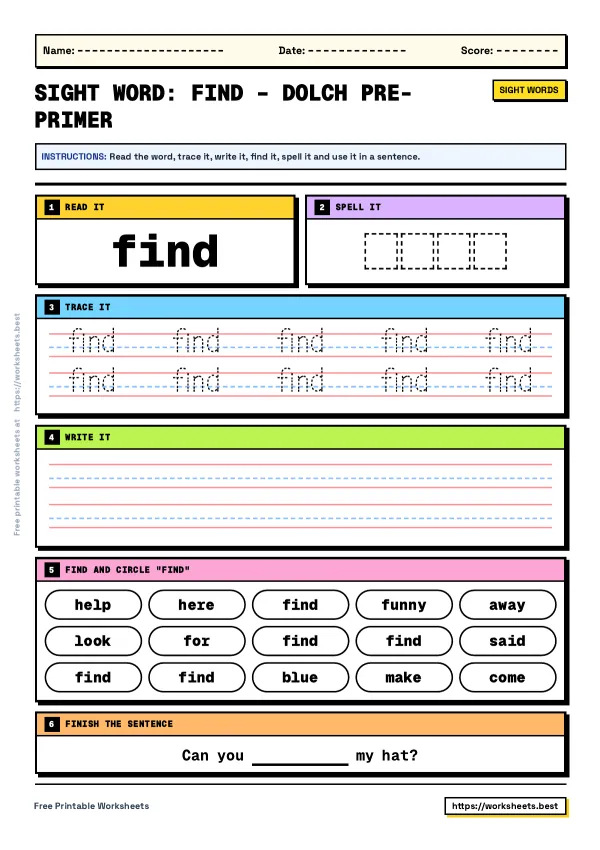
Sight Word: Find – Dolch Pre-Primer
Pre-K–KSight WordsSight Word: Come – Dolch Pre-Primer
Pre-K–KSight Words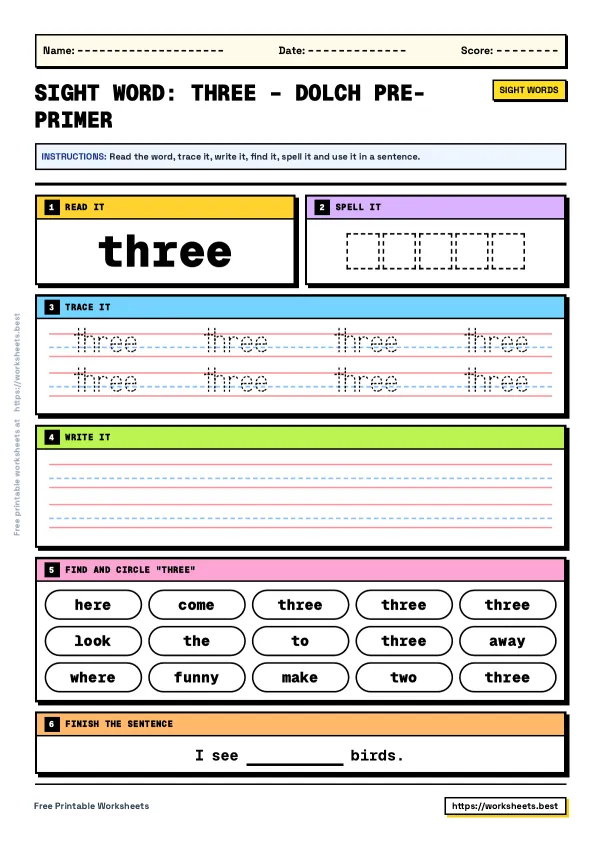
Sight Word: Three – Dolch Pre-Primer
Pre-K–KSight Words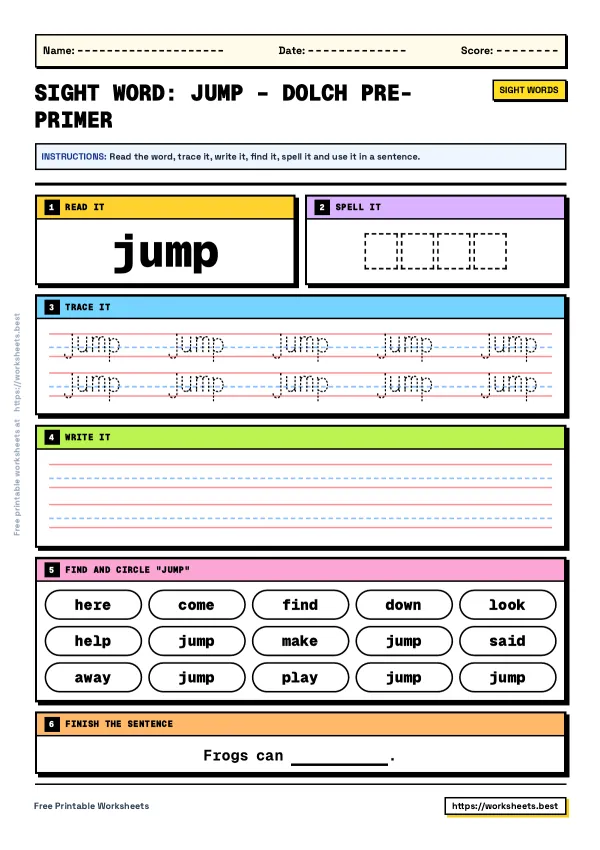
Sight Word: Jump – Dolch Pre-Primer
Pre-K–KSight Words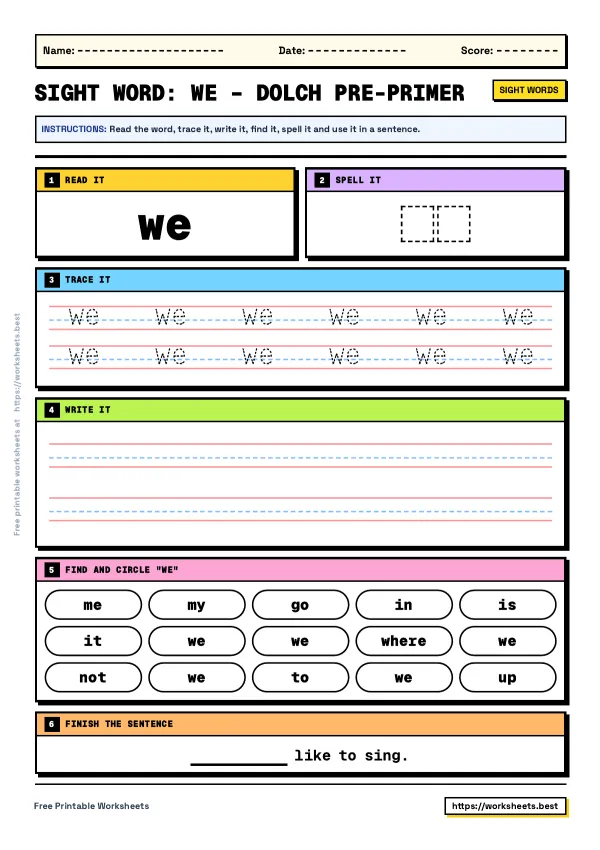
Sight Word: We – Dolch Pre-Primer
Pre-K–KSight Words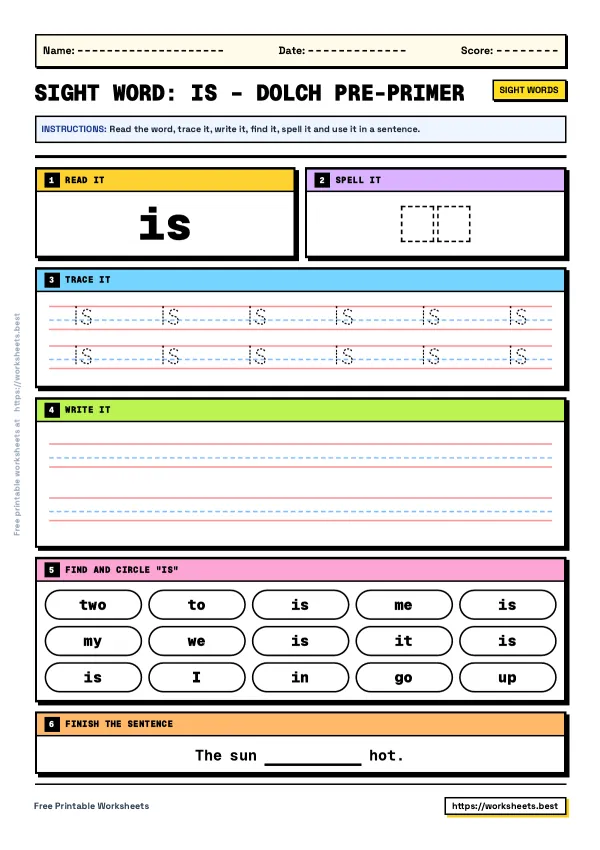
Sight Word: Is – Dolch Pre-Primer
Pre-K–KSight WordsSight Word: And – Dolch Pre-Primer
Pre-K–KSight Words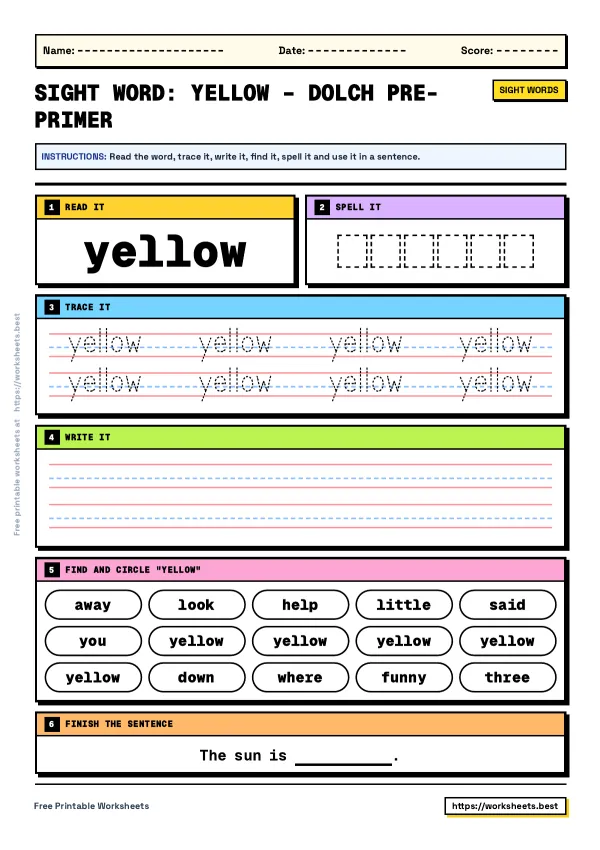
Sight Word: Yellow – Dolch Pre-Primer
Pre-K–KSight Words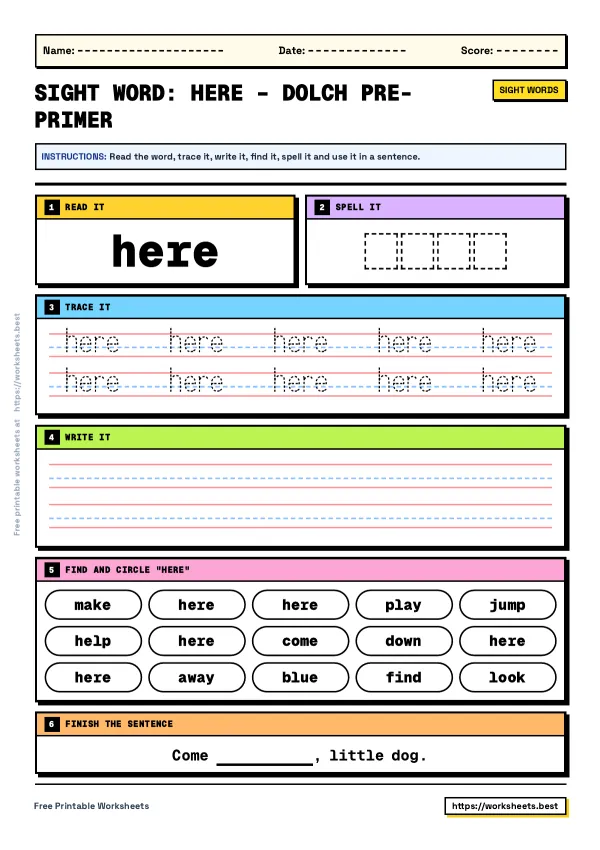
Sight Word: Here – Dolch Pre-Primer
Pre-K–KSight Words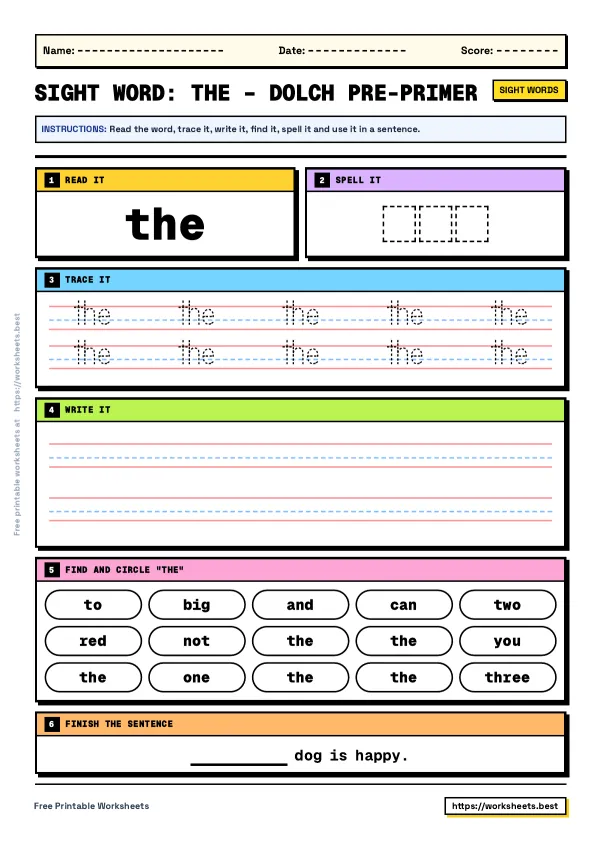
Sight Word: The – Dolch Pre-Primer
Pre-K–KSight Words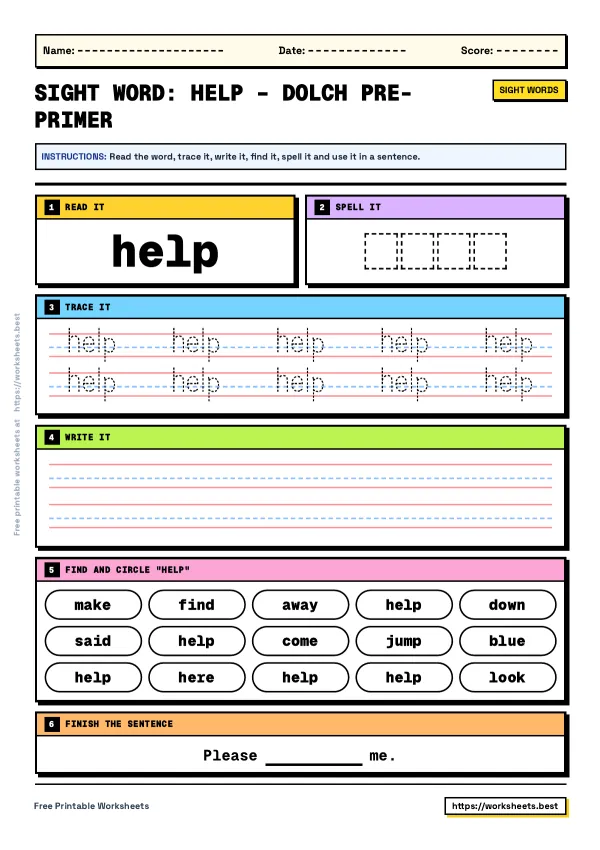
Sight Word: Help – Dolch Pre-Primer
Pre-K–KSight WordsSight Word: Can – Dolch Pre-Primer
Pre-K–KSight Words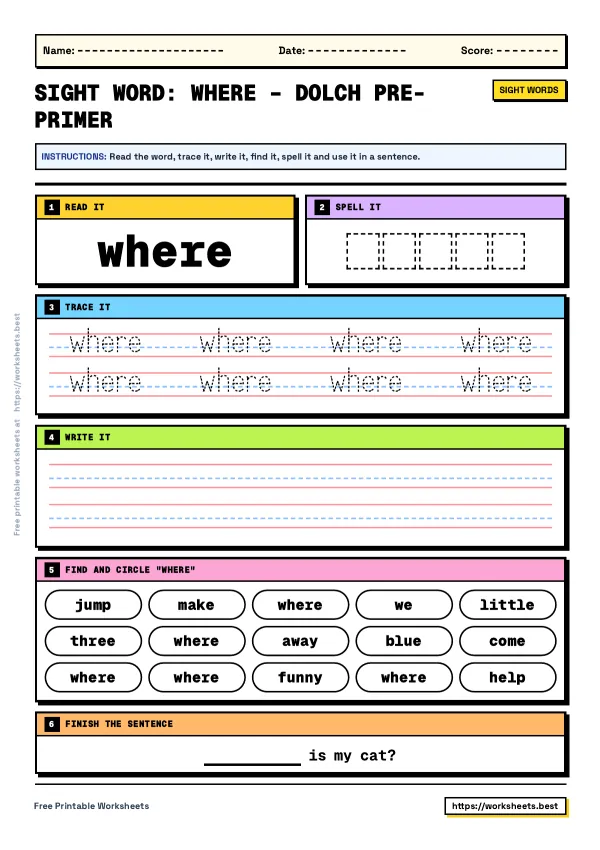
Sight Word: Where – Dolch Pre-Primer
Pre-K–KSight Words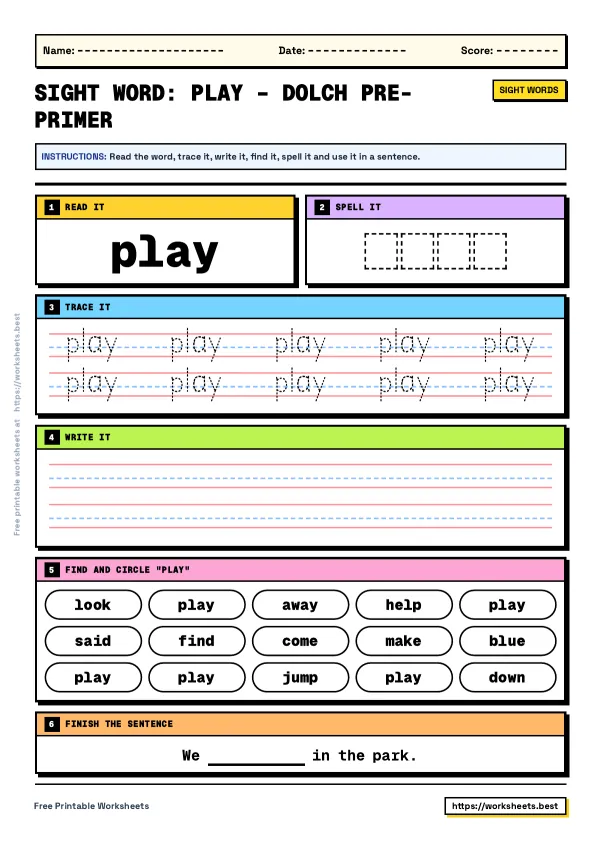
Sight Word: Play – Dolch Pre-Primer
Pre-K–KSight Words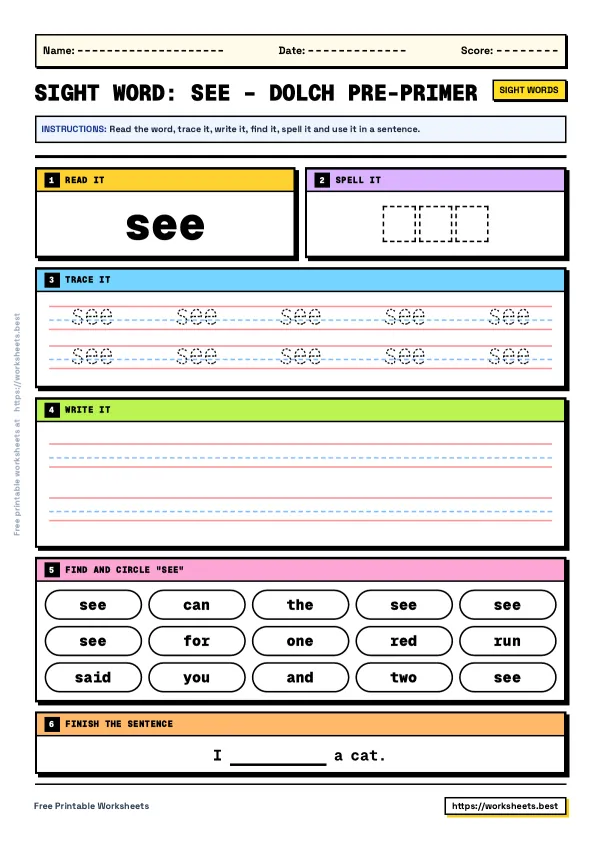
Sight Word: See – Dolch Pre-Primer
Pre-K–KSight Words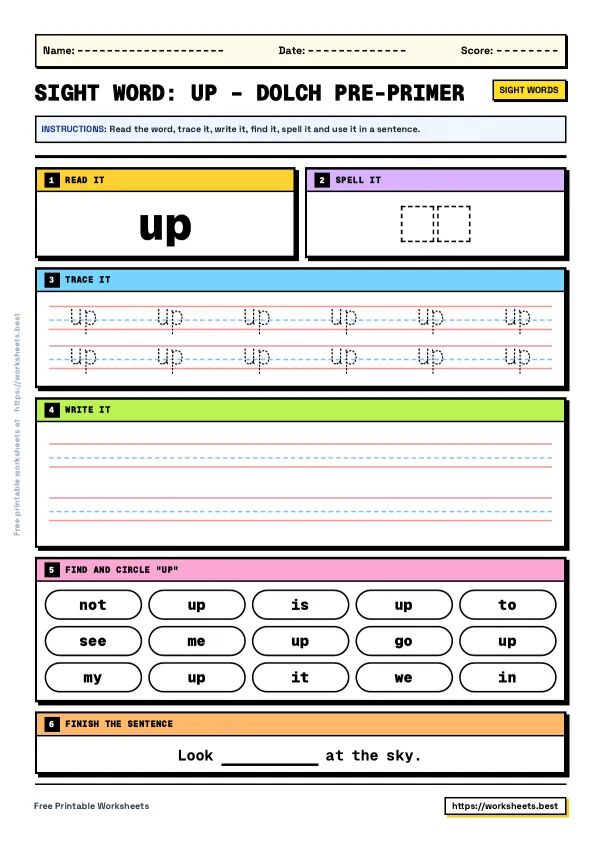
Sight Word: Up – Dolch Pre-Primer
Pre-K–KSight Words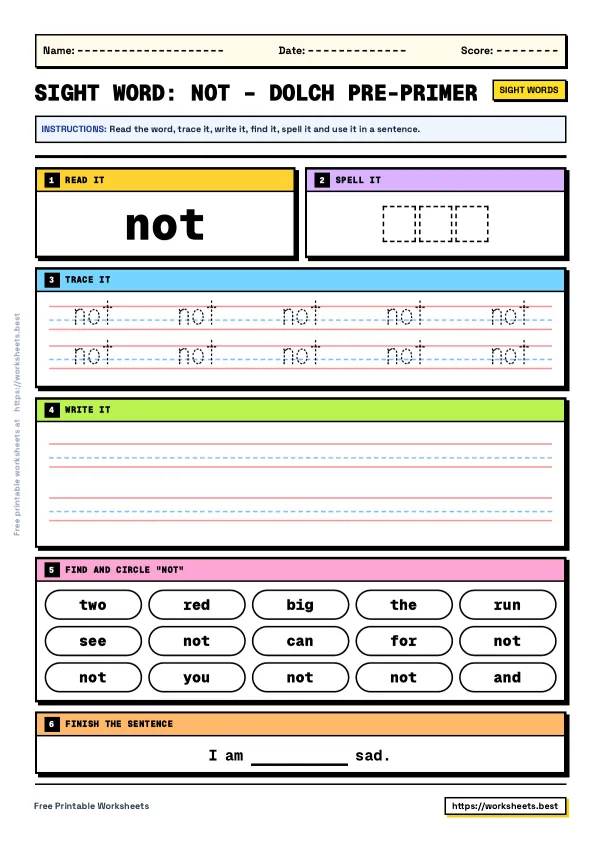
Sight Word: Not – Dolch Pre-Primer
Pre-K–KSight Words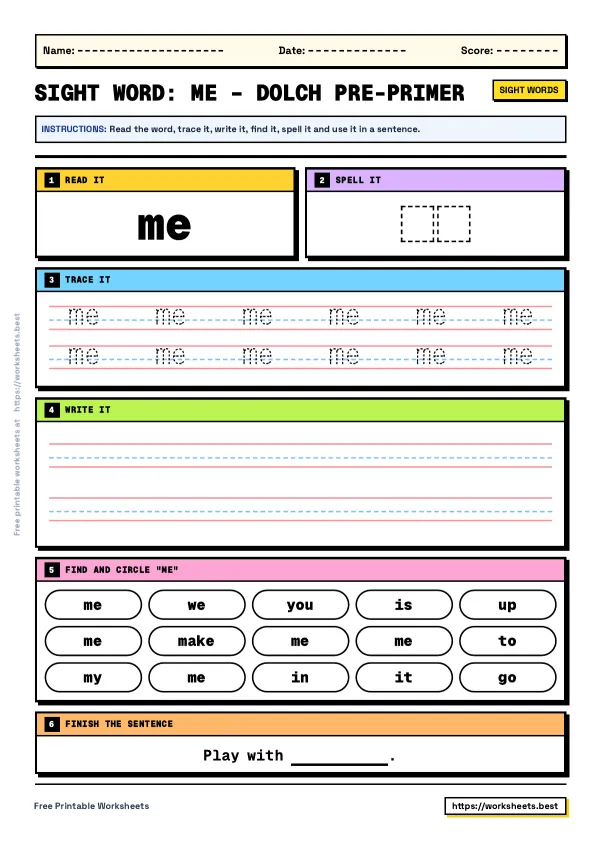
Sight Word: Me – Dolch Pre-Primer
Pre-K–KSight WordsSight Word: Big – Dolch Pre-Primer
Pre-K–KSight WordsSight Word: Away – Dolch Pre-Primer
Pre-K–KSight Words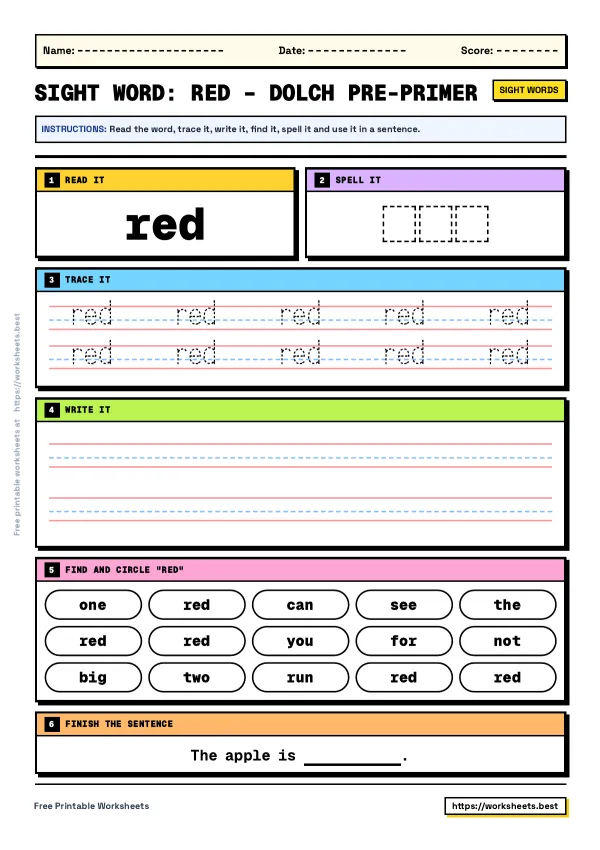
Sight Word: Red – Dolch Pre-Primer
Pre-K–KSight Words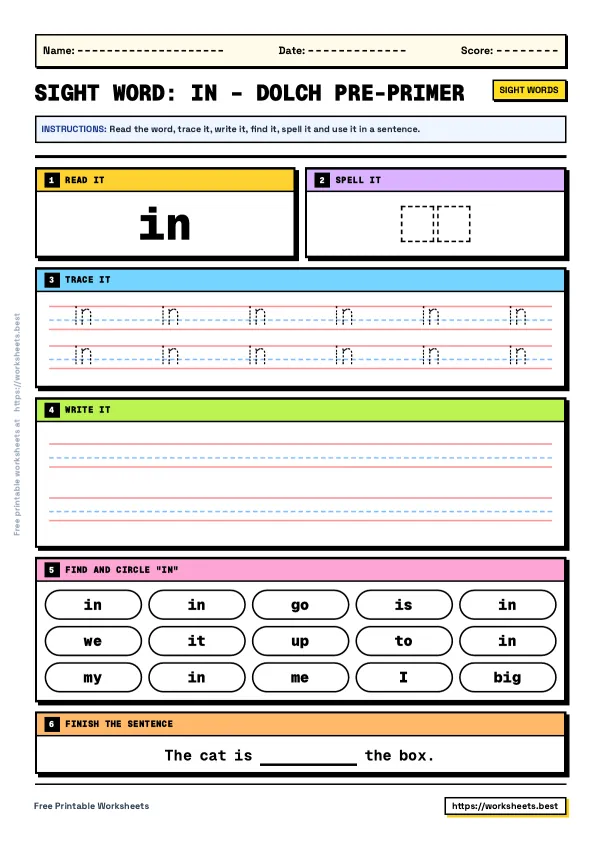
Sight Word: In – Dolch Pre-Primer
Pre-K–KSight WordsSight Word: Blue – Dolch Pre-Primer
Pre-K–KSight Words
from teachers
Tips for parents and teachers
- Point to the word and say it aloud before your child traces it. Hearing the word while seeing and writing it helps Pre-K children connect the spoken sound to the printed word.
- Keep sessions short, around five to ten minutes, and stop while your child still wants more. One word practiced calmly is better than a whole page rushed.
- Use the answer keys to check handwriting and spelling, but let your child self-correct by comparing their letters with the model. Praise the effort, not just the finished word.
- Review earlier words by hiding the model and asking your child to write the word from memory. Add a new Dolch pre-primer word only when the old ones feel easy.
Questions parents ask
What sight words should a Pre-K child know?
The Dolch pre-primer list is a common starting point for Pre-K readers. These worksheets focus on that list, one word at a time, so children can build recognition before reading full sentences.
How often should we practice sight words at home?
Short, regular practice works better than long sessions. Try five to ten minutes a day, a few days a week, and review old words before adding new ones.
What skills do these worksheets cover?
They combine handwriting, reading, spelling, and sight word practice. A child traces and writes the word, then reads it in context, which reinforces several skills at once.