Sea Animal Maze Worksheets
Sea Animal Maze Worksheets give children a calm, pencil-and-paper way to practice fine motor skills, problem solving and visual planning. On each sheet, a child follows a path across the page from one ocean creature to another, keeping the line inside the route and thinking ahead before drawing.
Read more +
The set comes in two levels. In the easy mazes, a child might lead a beluga through open water to a seal, with wider paths and fewer wrong turns. The hard mazes tighten the routes and add more dead ends, so a goldfish has to work its way to a salmon. Most Pre-K and kindergarten children do well with the easy version, while 2nd and 3rd graders often prefer the challenge of the harder pages. Answer keys are included for every maze.
Print a few sheets for a quiet afternoon at home, a long car trip or a waiting room. Teachers can add them to an ocean unit, a center rotation or a morning warm-up. Slip the pages into plastic sleeves and hand over a dry-erase marker so the same maze can be tried again, or let children color the sea animals once the path is finished.
start with these
Featured worksheets
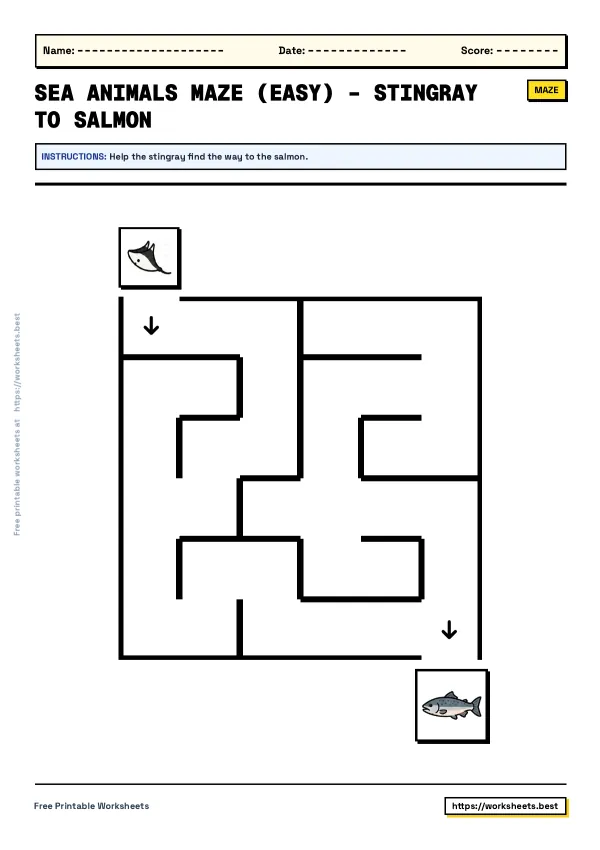
Sea Animals Maze (Easy) – Stingray to Salmon
KindergartenMazes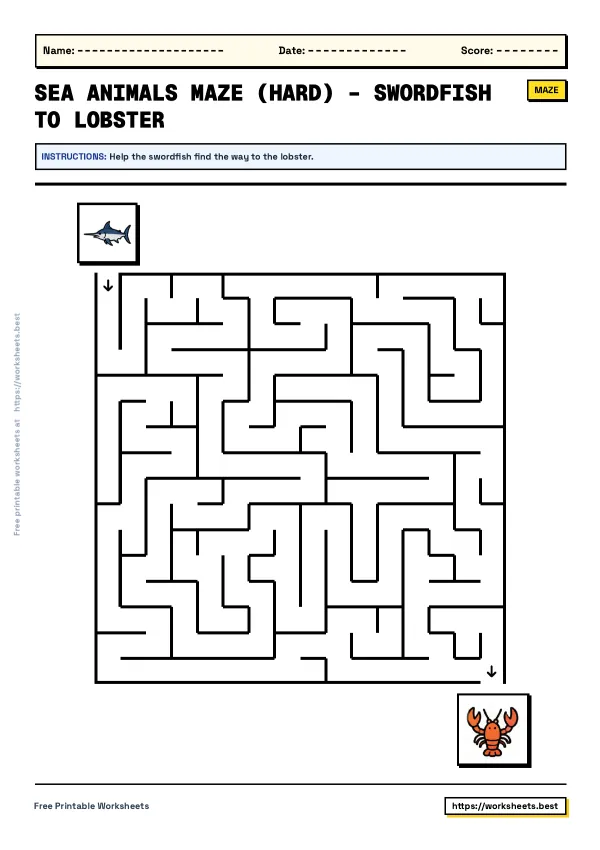
Sea Animals Maze (Hard) – Swordfish to Lobster
4th GradeMazes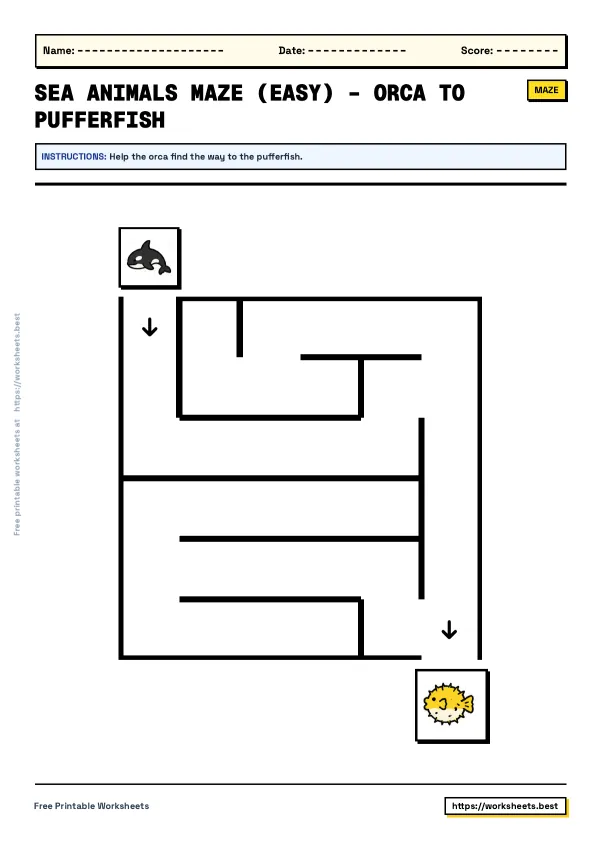
Sea Animals Maze (Easy) – Orca to Pufferfish
KindergartenMazes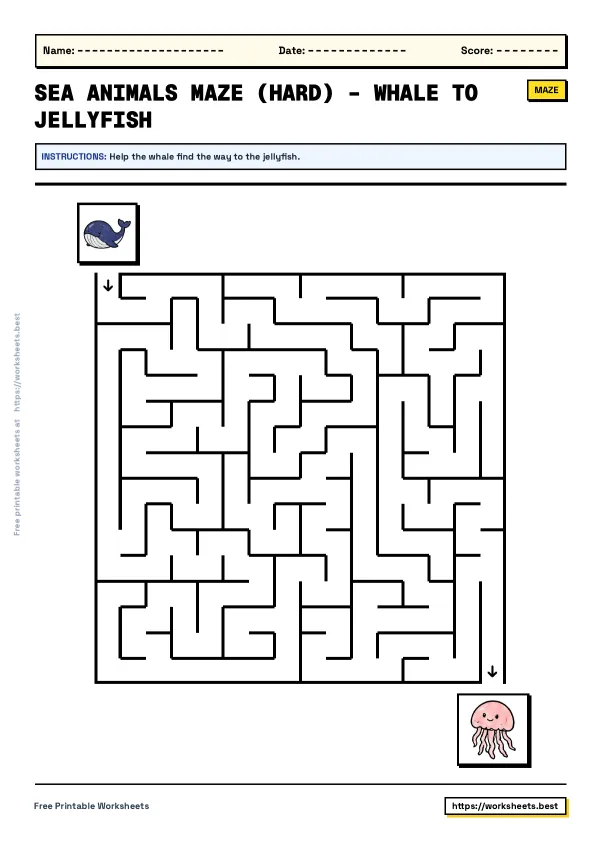
Sea Animals Maze (Hard) – Whale to Jellyfish
4th GradeMazes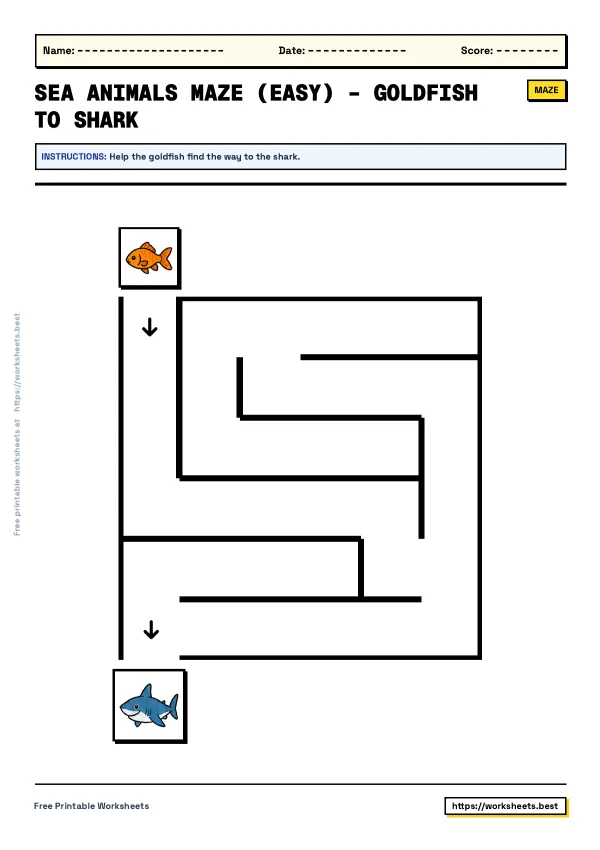
Sea Animals Maze (Easy) – Goldfish to Shark
KindergartenMazes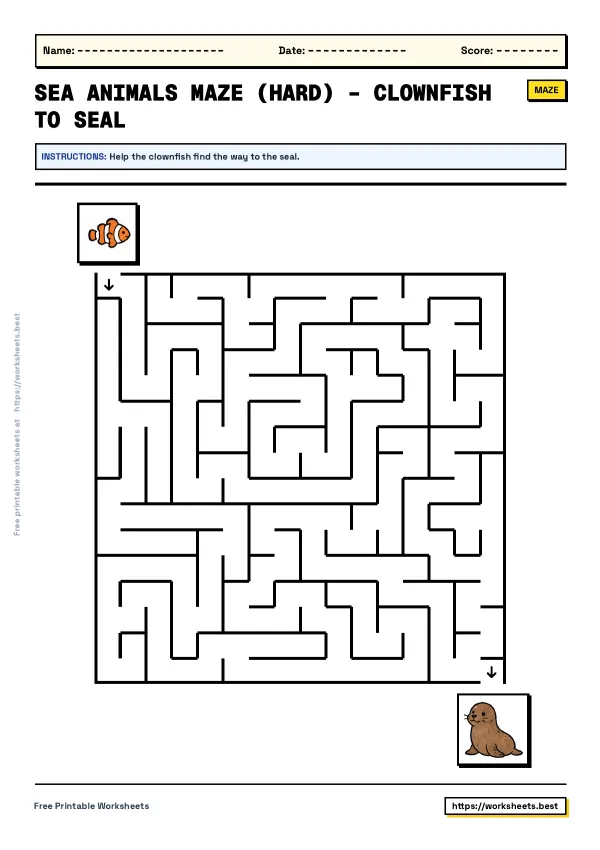
Sea Animals Maze (Hard) – Clownfish to Seal
4th GradeMazes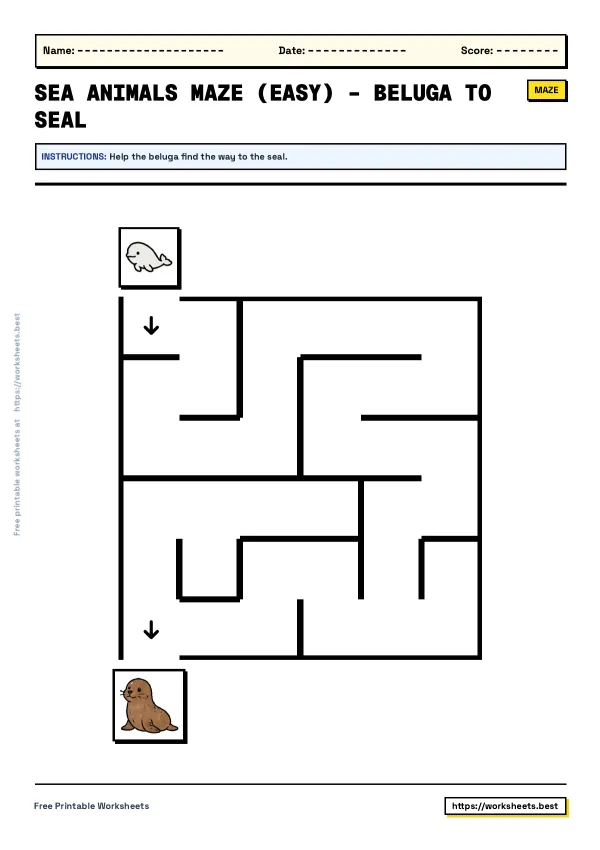
Sea Animals Maze (Easy) – Beluga to Seal
KindergartenMazes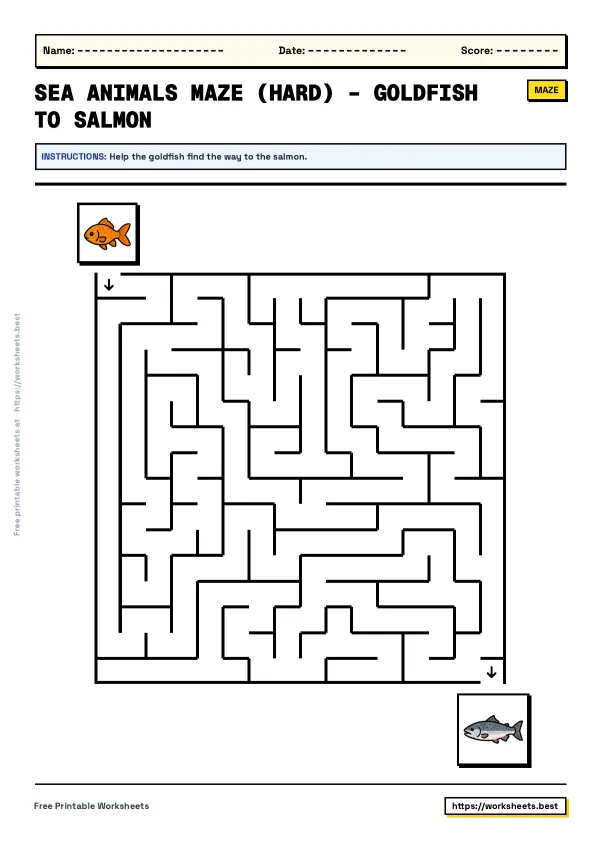
Sea Animals Maze (Hard) – Goldfish to Salmon
4th GradeMazes
every sheet
All Sea Animal Maze worksheets
Sea Animals Maze (Hard) – Whale to Jellyfish
4th GradeMazes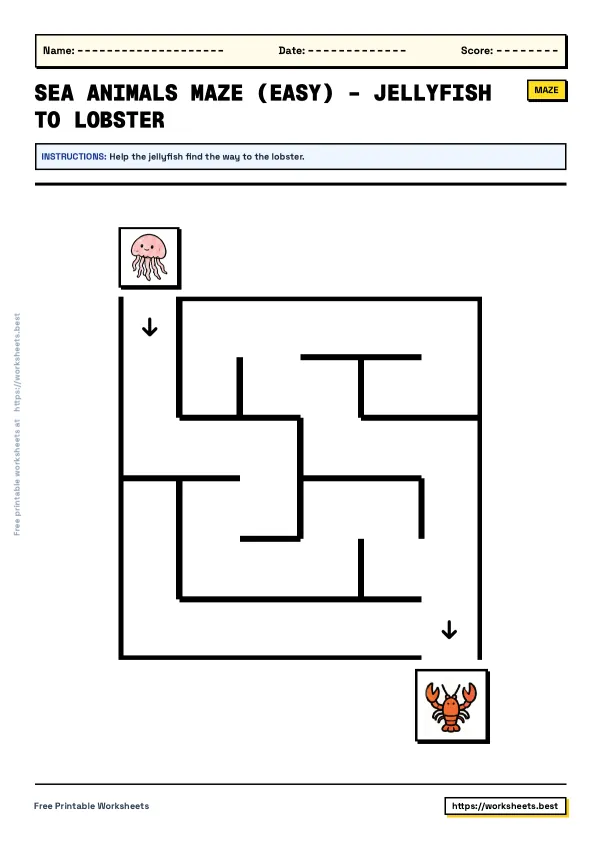
Sea Animals Maze (Easy) – Jellyfish to Lobster
KindergartenMazesSea Animals Maze (Easy) – Goldfish to Shark
KindergartenMazes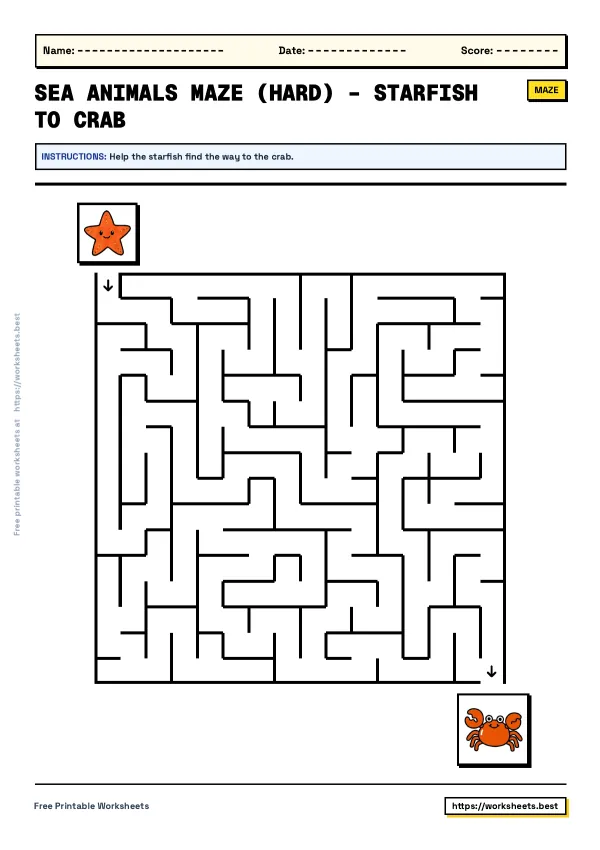
Sea Animals Maze (Hard) – Starfish to Crab
4th GradeMazesSea Animals Maze (Easy) – Orca to Pufferfish
KindergartenMazesSea Animals Maze (Easy) – Beluga to Seal
KindergartenMazes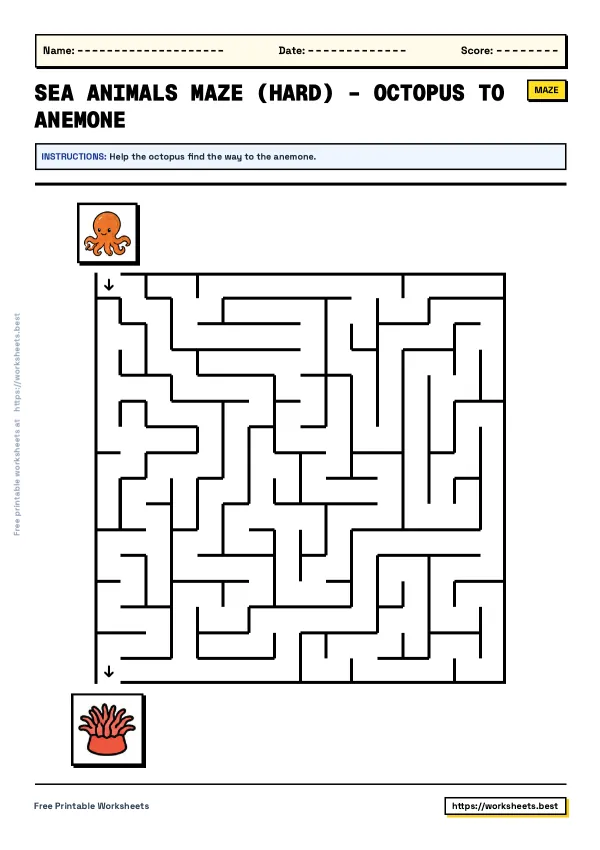
Sea Animals Maze (Hard) – Octopus to Anemone
4th GradeMazes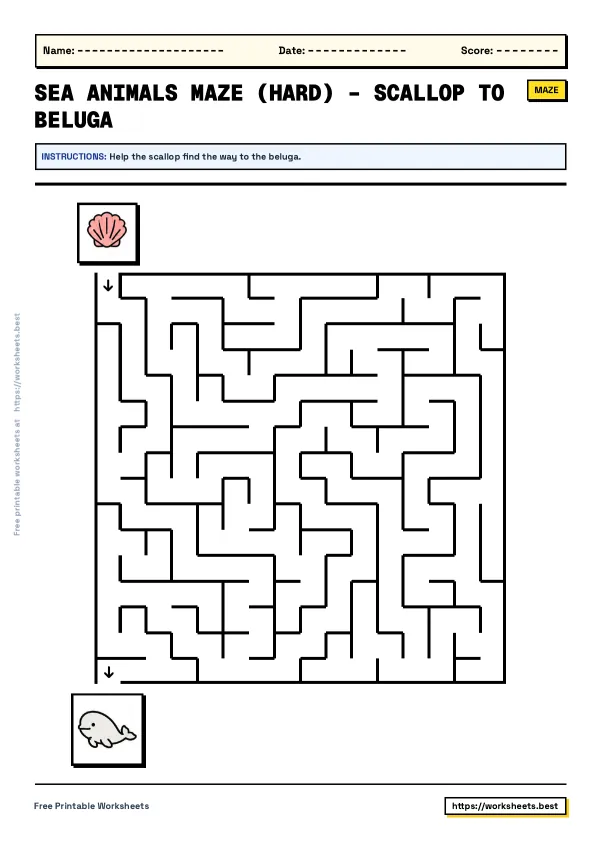
Sea Animals Maze (Hard) – Scallop to Beluga
4th GradeMazes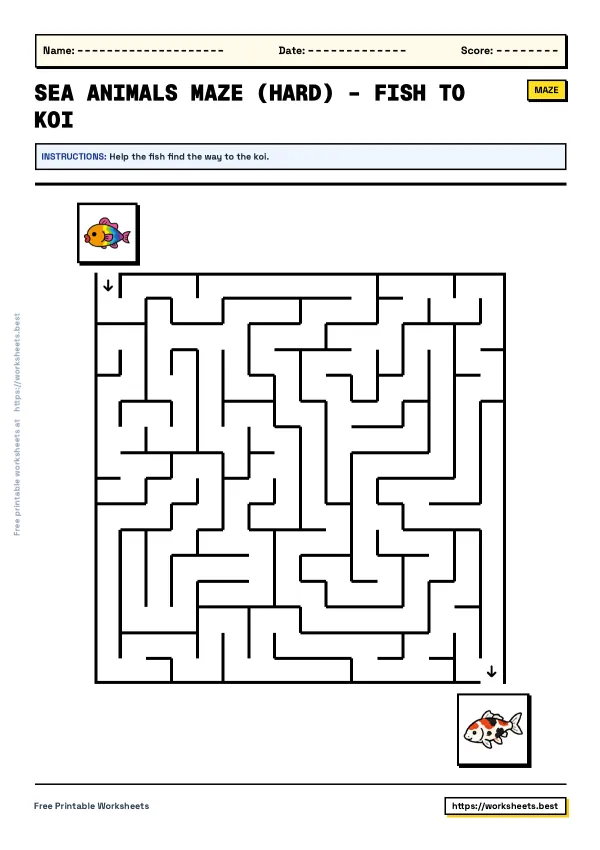
Sea Animals Maze (Hard) – Fish to Koi
4th GradeMazesSea Animals Maze (Hard) – Goldfish to Salmon
4th GradeMazesSea Animals Maze (Hard) – Clownfish to Seal
4th GradeMazes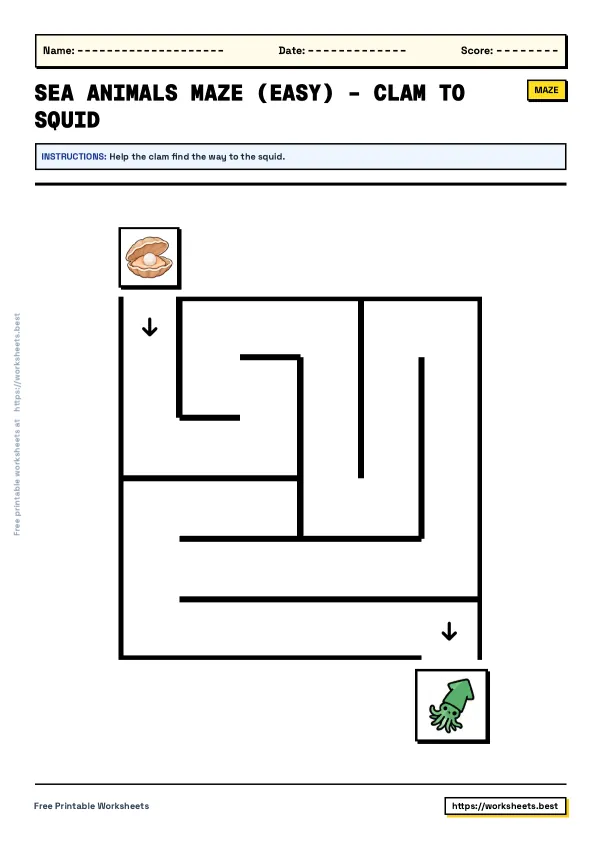
Sea Animals Maze (Easy) – Clam to Squid
KindergartenMazes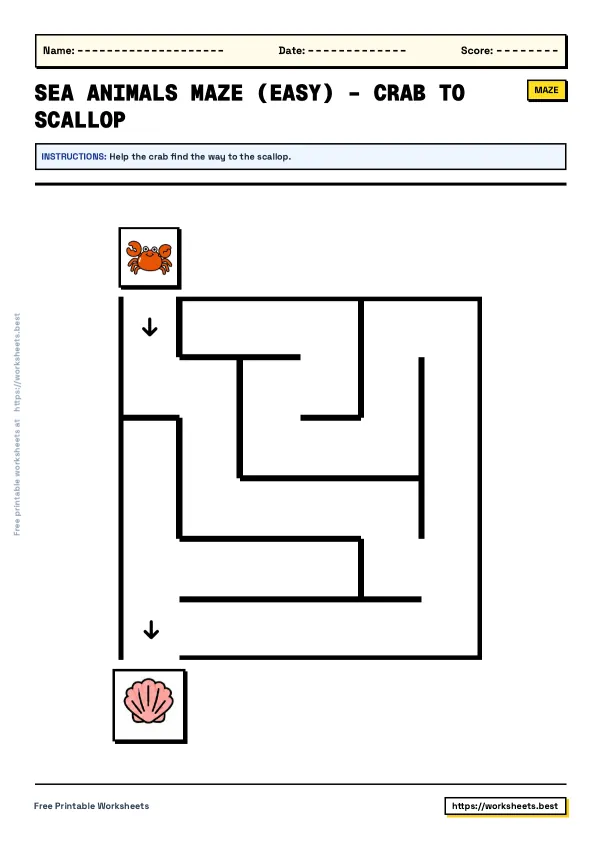
Sea Animals Maze (Easy) – Crab to Scallop
KindergartenMazes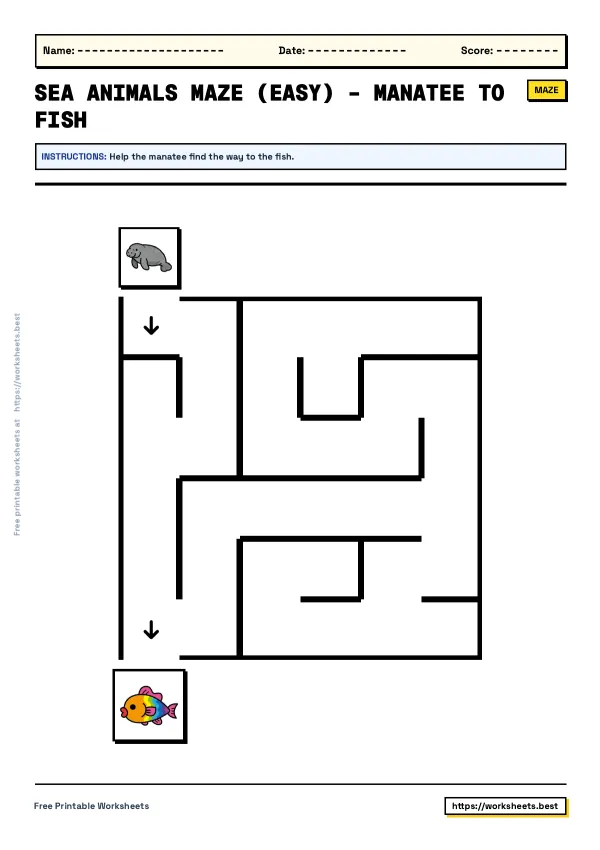
Sea Animals Maze (Easy) – Manatee to Fish
KindergartenMazesSea Animals Maze (Easy) – Stingray to Salmon
KindergartenMazesSea Animals Maze (Hard) – Swordfish to Lobster
4th GradeMazes
from teachers
Tips for parents and teachers
- Begin with the easy mazes and let your child trace the route with a finger before using a pencil. Finger tracing builds visual planning before the hand has to commit to the page.
- Watch for a tight, tense pencil grip, and offer a crayon or marker if the hand gets tired. Short sessions work better than a long stack of pages for Pre-K and kindergarten children.
- For 2nd and 3rd graders, ask them to mark dead ends with a small dot before drawing the final path. It turns a quick maze into real planning practice.
- Let children color the sea animals after the path is complete. The coloring extends the fine motor work and gives each sheet a second purpose on a rainy day.
Questions parents ask
At what age can children start doing maze worksheets?
Mazes with wide paths and few turns suit most Pre-K and kindergarten children, especially if an adult traces the first one alongside them. The harder mazes, with more dead ends and longer routes, fit 2nd and 3rd graders who can scan ahead and plan a route.
How do mazes help with fine motor skills?
Following a narrow path asks a child to control the pencil with small, steady hand movements, which is the same control used in handwriting. Slow, careful tracing on a maze page transfers well to forming letters later.
My child gets frustrated with a hard maze. What should I do?
Drop back to an easy page and let your child finish it successfully first, then try a harder one together. Tracing with a finger before using a pencil also helps children see the route and feel less stuck.
Should my child trace the path with a finger first?
Yes, finger tracing is a useful first step. It lets children plan the route and notice dead ends without worrying about pencil marks, and it strengthens the visual planning that mazes are meant to build.
Do mazes help with problem solving?
They do. A child has to look ahead, spot blocked paths and decide where to turn, then adjust when a route does not work. That same trial-and-error thinking shows up in math and reading tasks.