Insect Maze Worksheets
Insect Maze Worksheets give kindergarten and 1st grade children a small set of medium mazes, each one leading a bug from a start point to a partner at the other end. In one puzzle a pencil line travels from a beetle to a housefly; in another, a bee has to reach a hornet. Only one route works start to finish, so children look ahead, test a turn, and back out when the path closes off. The work is calm and absorbing, and it builds the patience and problem solving that five-, six- and seven-year-olds are just beginning to develop.
Read more +
Every maze prints on plain paper and comes with an answer key, so an adult can check a finish in seconds. The tracing also works the small muscles in the hand, and choosing a route asks for visual planning: a child has to keep the whole path in mind, not just the next inch. A sheet slips easily into morning work, a center activity or a quiet few minutes after recess, and at home it fills a rainy afternoon or a restaurant wait. A dry-erase pocket lets one maze be solved again.
start with these
Featured worksheets
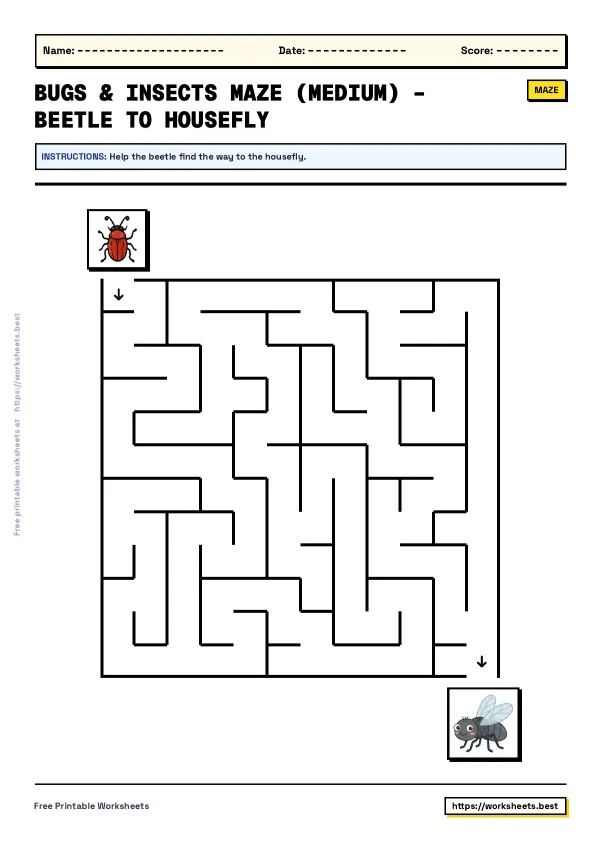
Bugs & Insects Maze (Medium) – Beetle to Housefly
3rd GradeMazes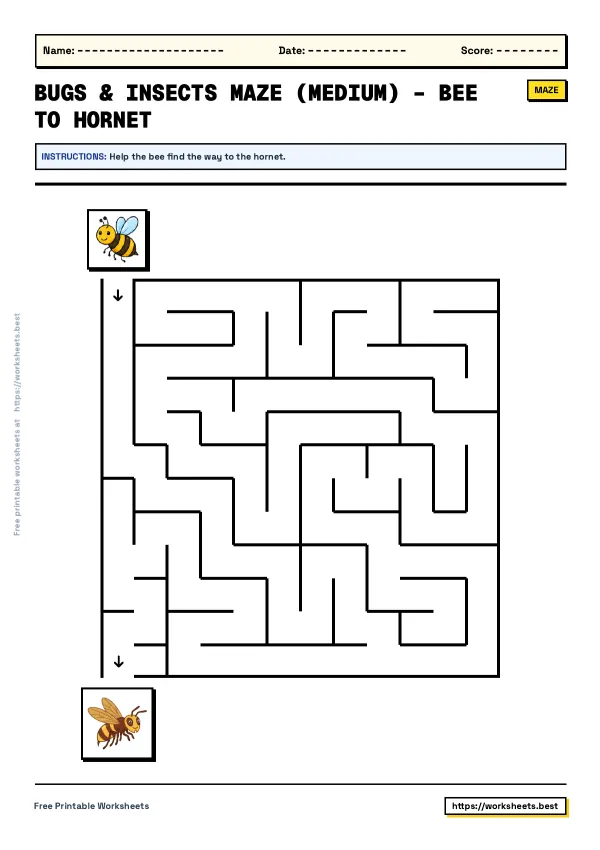
Bugs & Insects Maze (Medium) – Bee to Hornet
3rd GradeMazes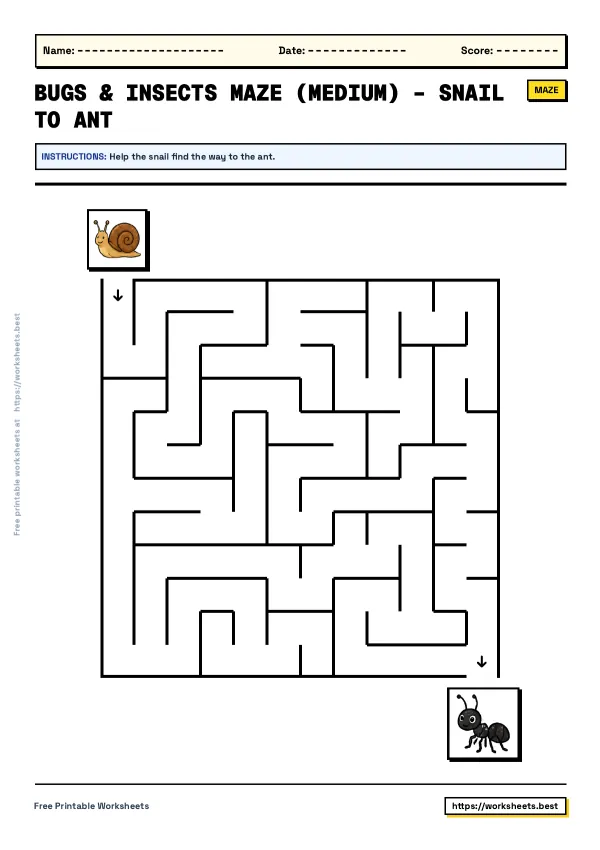
Bugs & Insects Maze (Medium) – Snail to Ant
3rd GradeMazes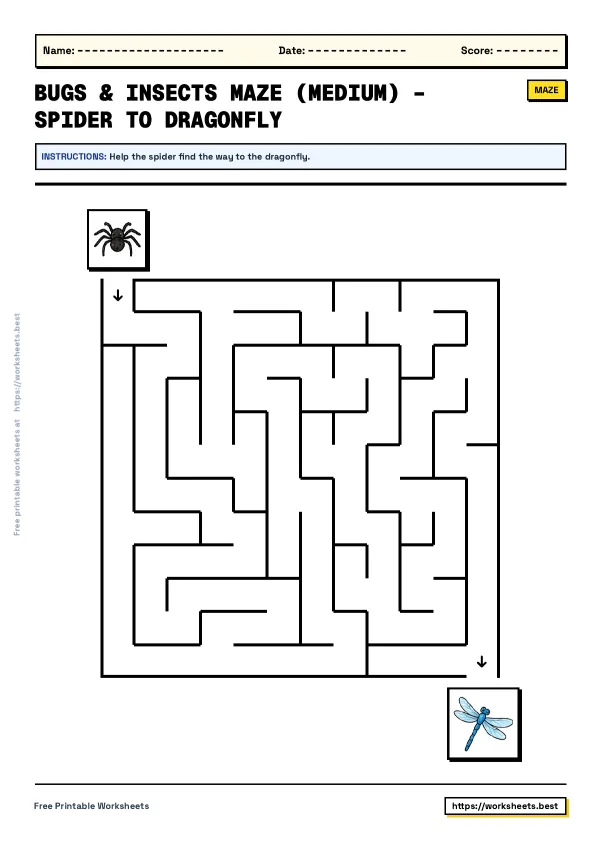
Bugs & Insects Maze (Medium) – Spider to Dragonfly
3rd GradeMazes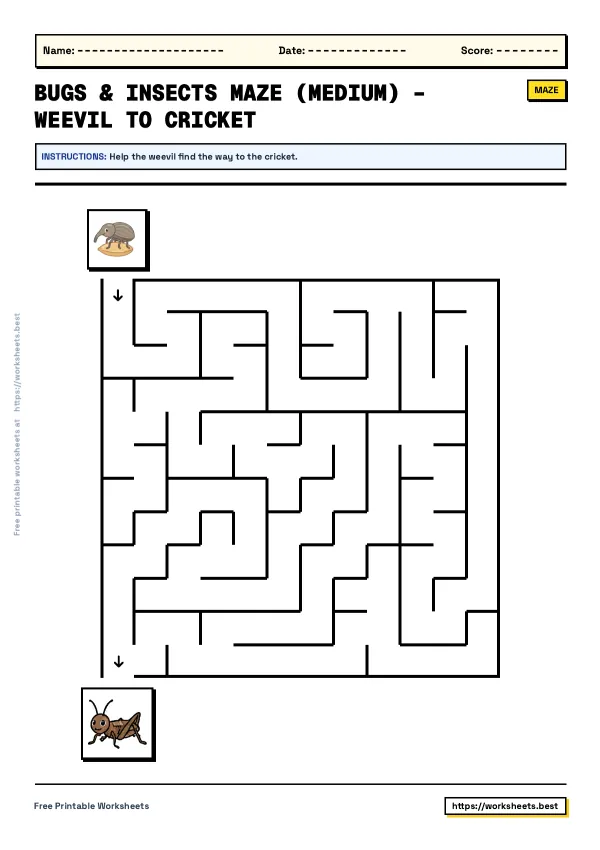
Bugs & Insects Maze (Medium) – Weevil to Cricket
3rd GradeMazes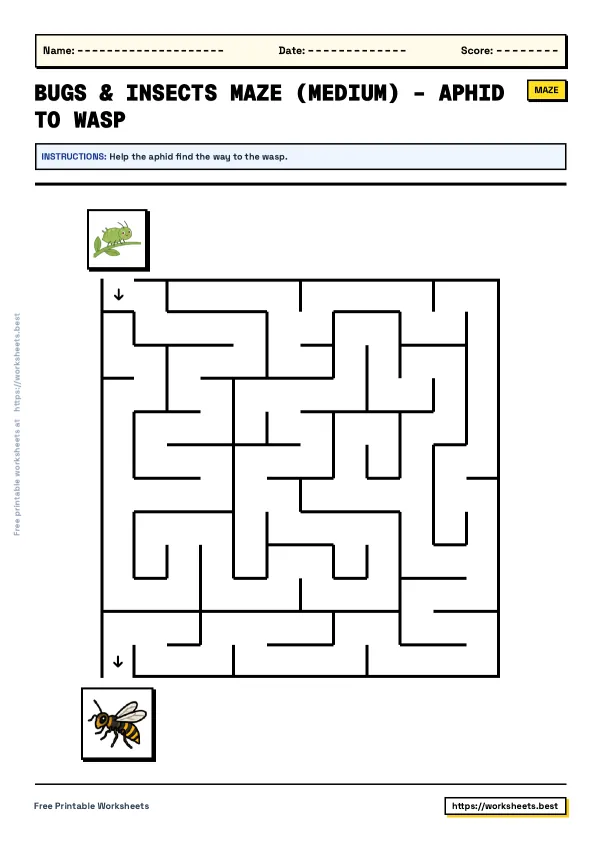
Bugs & Insects Maze (Medium) – Aphid to Wasp
3rd GradeMazes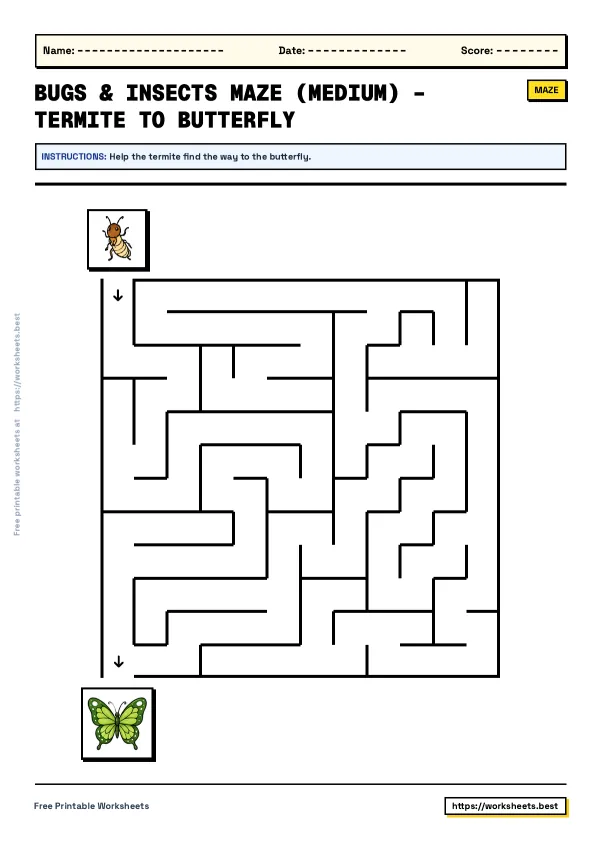
Bugs & Insects Maze (Medium) – Termite to Butterfly
3rd GradeMazes
every sheet
All Insect Maze worksheets
Bugs & Insects Maze (Medium) – Bee to Hornet
3rd GradeMazesBugs & Insects Maze (Medium) – Weevil to Cricket
3rd GradeMazesBugs & Insects Maze (Medium) – Spider to Dragonfly
3rd GradeMazesBugs & Insects Maze (Medium) – Termite to Butterfly
3rd GradeMazesBugs & Insects Maze (Medium) – Aphid to Wasp
3rd GradeMazesBugs & Insects Maze (Medium) – Beetle to Housefly
3rd GradeMazesBugs & Insects Maze (Medium) – Snail to Ant
3rd GradeMazes
from teachers
Tips for parents and teachers
- Have children trace the route with a finger before touching a pencil. Planning with a finger lets them test turns and back out of dead ends without erasing, which keeps the page neat and the frustration low.
- Offer a sheet protector and a dry-erase marker for the first attempt, then let the child use a pencil on the paper copy once the path is familiar.
- When a child hits a dead end, ask where the line got blocked and which turn they would try next instead of pointing to the right route. Naming the problem is the problem-solving part of the worksheet.
- Say each insect name aloud as children arrive at the start and finish. The words stretch science vocabulary while the pencil work strengthens the small hand muscles needed for handwriting.
Questions parents ask
What age are these insect mazes best for?
They are written for kindergarten and 1st grade, so most children using them are five to seven years old. Younger children can trace with a finger or a highlighter, and older children can try two in a sitting.
What skills do maze worksheets build?
Following a maze asks for fine motor control, problem solving and visual planning, since a child has to hold the whole route in mind while the pencil moves. Those are the same skills that support letter formation and handwriting later on.
How can I help a child who gets stuck or upset when the path dead-ends?
Suggest they trace back to the last turn and try the other branch rather than starting over. With medium mazes a wrong turn is normal, and pointing out that only one route works can take the sting out of it.