Home Worksheets
Vocabulary practice works best when it starts with words a child already knows by sight, and Home Worksheets organize that practice around familiar household objects. In the picture matching sheets, a child draws a line from a mirror or a sofa to its printed name, and the missing letters pages take a word such as pantry and blank out a letter or two, so children weigh spelling as well as meaning.
Read more +
The collection holds dozens of worksheets across seven formats: odd one out, crossword, word search, letter sounds, picture matching, word scramble and missing letters. Each is marked easy or medium, so a Pre-K child can begin with beginning sounds and picture matching while a 2nd or 3rd grader works through a crossword or a trickier odd one out page. Themes reach past the house into animals, birds, community helpers, flowers, fruits, insects and nature. Answer keys are included for every sheet, which keeps checking quick at the kitchen table or at a literacy center.
Classification pages ask children to sort and justify, which lines up with Common Core standard L.1.5.A on sorting words into categories, and the range of formats covers vocabulary, spelling, phonics, letter sounds, visual scanning and word recognition. Print a single sheet for after-school practice or a small stack for a mixed-ability class; the easy and medium versions of a format let you hand two children the same task at different levels.
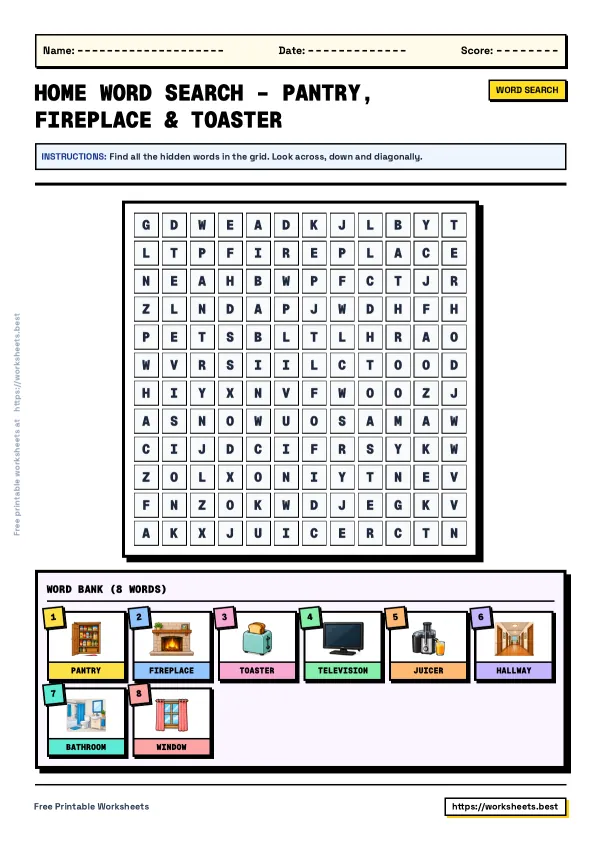
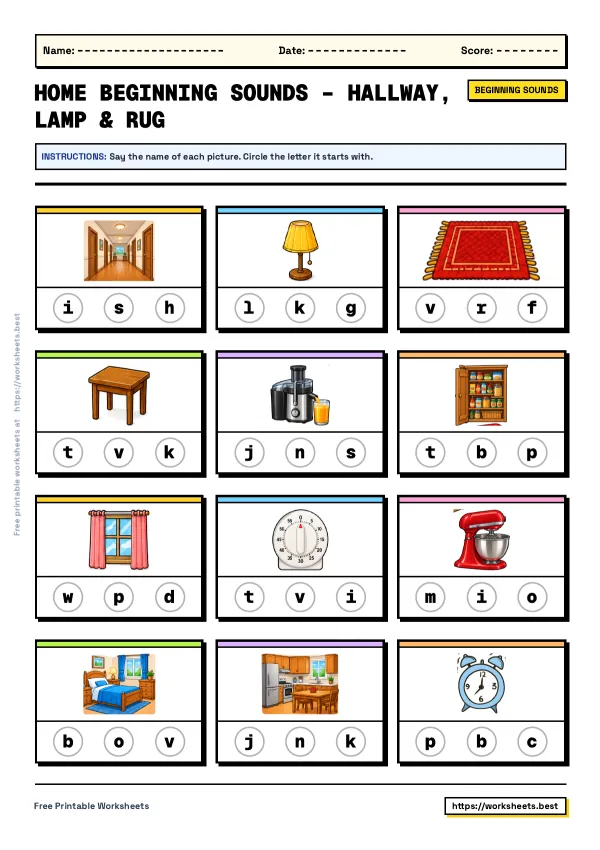
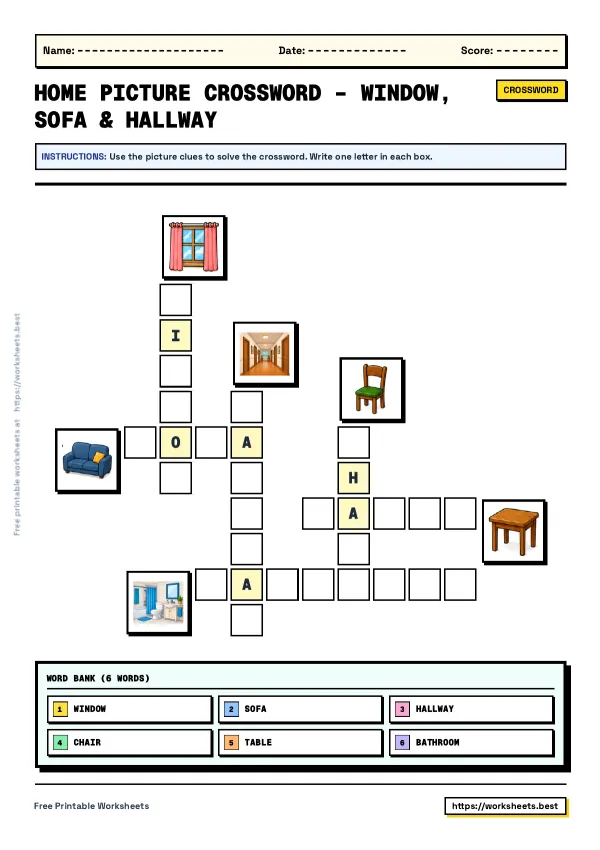
start with these
Featured worksheets
every sheet
All Home worksheets
from teachers
Tips for parents and teachers
- Name the picture out loud before your child matches it, and ask what the object is used for; hearing the word makes the printed version easier to recognize.
- On the missing letters sheets, have the child say the word slowly and write the sounds they hear before filling in blanks, then read the finished word back to you.
- For odd one out, ask the child to explain why a word does not belong, and accept any answer they can defend — a fan could be the odd one out in a group of things that stay still.
- Before a word scramble, point out a familiar ending or vowel pair in the jumbled letters; spotting the pattern narrows the choices far faster than guessing.
Questions parents ask
What words do these worksheets cover?
Mostly household vocabulary, such as objects found in the kitchen, bathroom and living room, plus themed sets on animals, birds, community helpers, flowers, fruits, insects and nature. A toaster and a bird can easily turn up in the same week.
Which grade should my child start with?
Pre-K and kindergarten children usually do best with beginning and ending sounds and picture matching, since those ask them to connect a sound or picture to a word. By 1st through 3rd grade, most children are ready for crosswords, word scrambles and the trickier odd one out pages.
How does an odd one out worksheet teach classification?
The child looks at a short group of words or pictures and decides which one does not fit the others, then explains the reason. That reasoning step is what builds category vocabulary and sorting skills rather than simple word recall.
Do these sheets help with phonics and spelling?
The beginning and ending sounds pages focus on the sounds letters make, which is the phonics side. Missing letters and word scrambles then ask children to place letters in the right order and notice common spelling patterns.
How long does one worksheet usually take?
A picture matching or beginning sounds page is often finished in about ten minutes, which suits a quick after-school session. A crossword or a tricky odd one out sheet can fill a 20-minute literacy center rotation.