Clothes Worksheets
A closet full of everyday words is the starting point for the Clothes Worksheets collection, a set of dozens of printables for children in Pre-K, kindergarten, 1st grade and 2nd grade. Kids practice naming what they wear while they trace letters, sort pictures, count and spell on paper.
Read more +
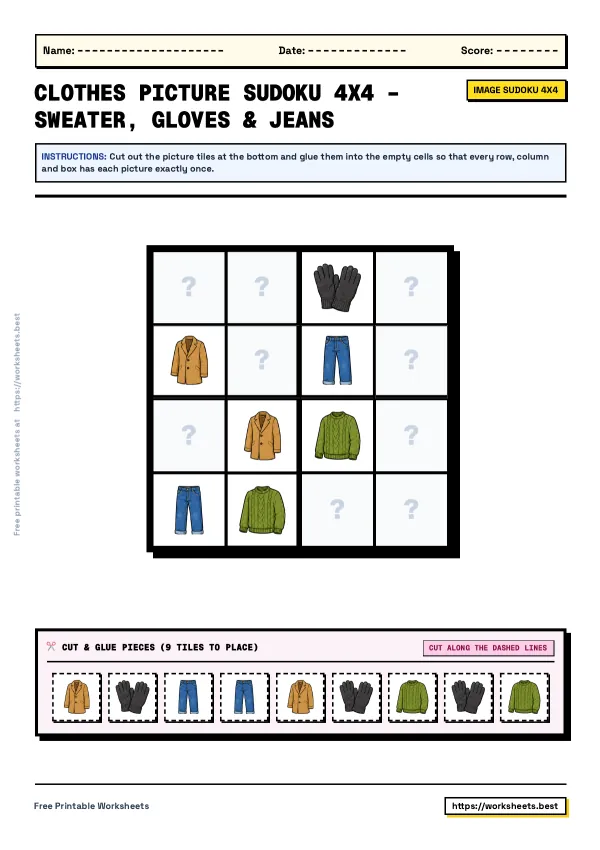
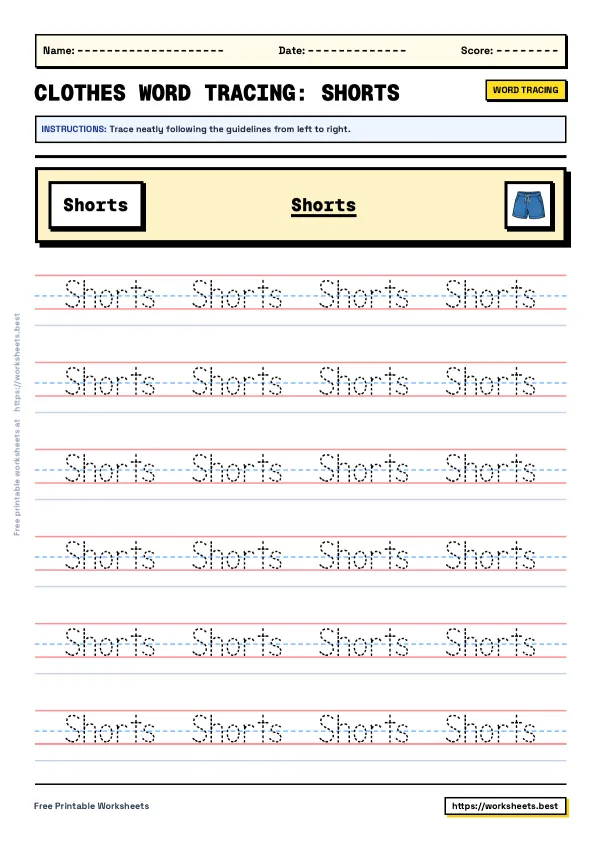
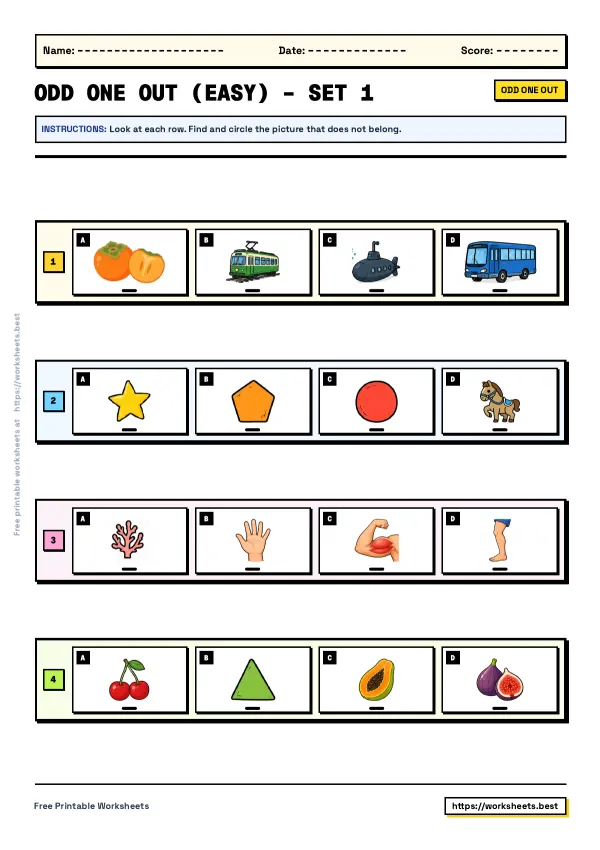
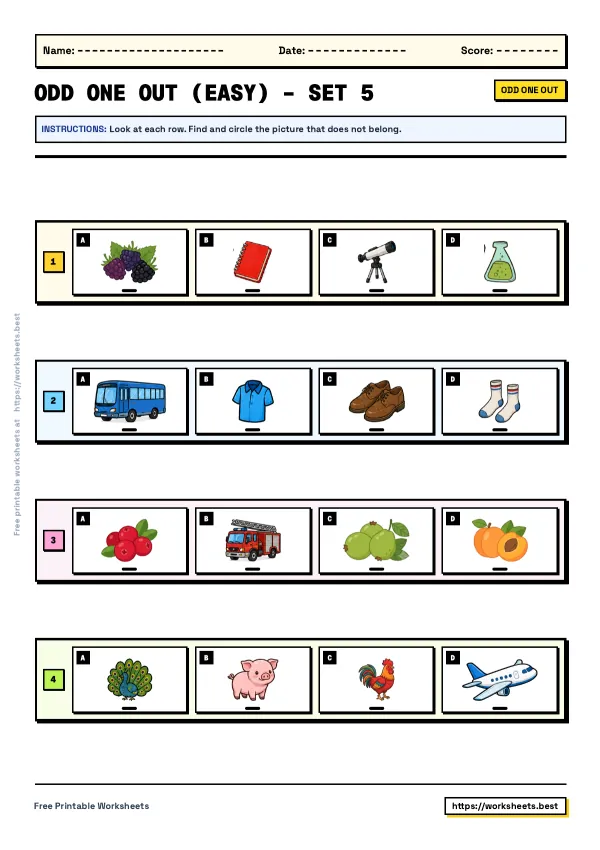
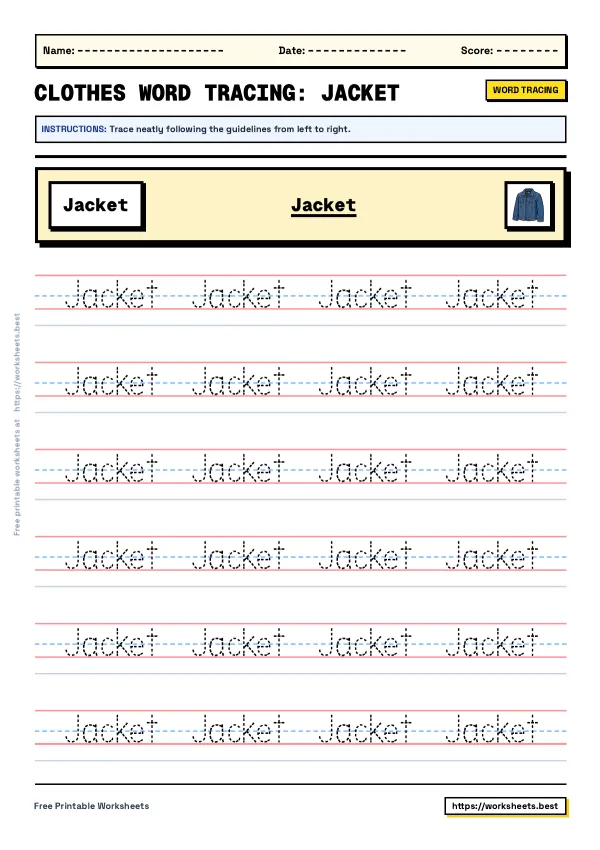
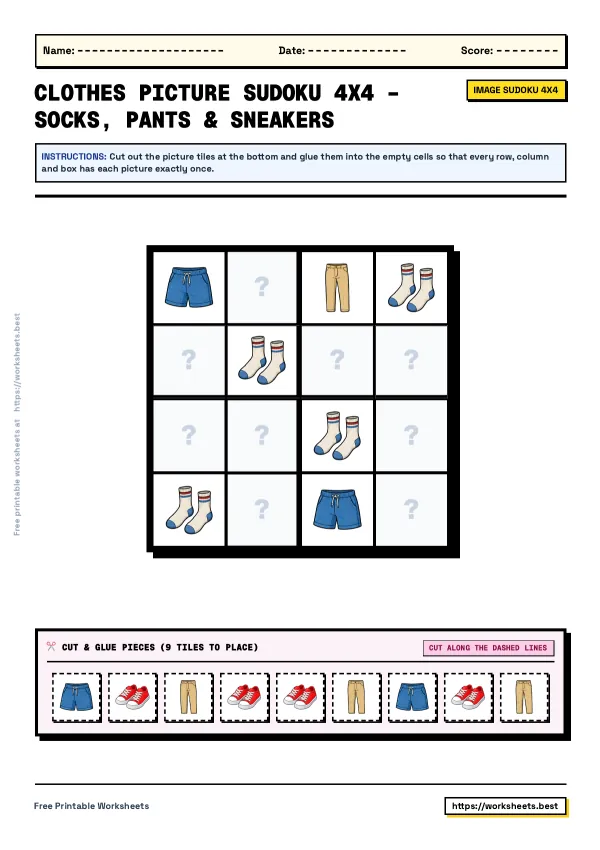
The formats stay simple so children can work with little help. An Odd One Out page asks a child to pick the picture that does not belong, which builds classification and reasoning; a tracing page lets them write out items such as boots and practice handwriting and fine motor skills at once. A four-by-four picture sudoku holds a sweater, gloves and jeans, and children work out where each picture belongs using logic and problem solving. I Spy counting turns word recognition into a counting game, picture matching pairs words with images, and the crossword, word scramble and letter sounds sheets stretch spelling and phonics for older children.
Use a sheet at home as a quiet ten-minute task before dinner, or in class as a center rotation, morning work or a vocabulary warm-up. Answer keys come with most worksheets, so a parent or teacher can check the work quickly and talk through answers with the child. Sorting the Odd One Out pictures also supports L.K.5.A, and the set stays at an easy to medium level.
every sheet
All Clothes worksheets
dig deeper
More Clothes worksheets
By worksheet type
from teachers
Tips for parents and teachers
- Name each picture out loud before your child picks up a pencil. Saying the word first makes the tracing, matching and spelling pages easier, because children are writing words they have already used.
- After an Odd One Out choice, ask your child to explain why that picture does not belong. Any reasonable answer counts, and putting the reason into words is where the classification and reasoning practice happens.
- Keep tracing and handwriting sessions short, around ten minutes, and offer a short pencil or a crayon so small hands stay steady and fine motor practice does not turn into a struggle.
- In picture sudoku, work one row at a time and have your child check each picture already in place before adding a new one. That turns the grid into simple logic and problem solving rather than a guessing game.
Questions parents ask
What clothes words should a kindergartener know?
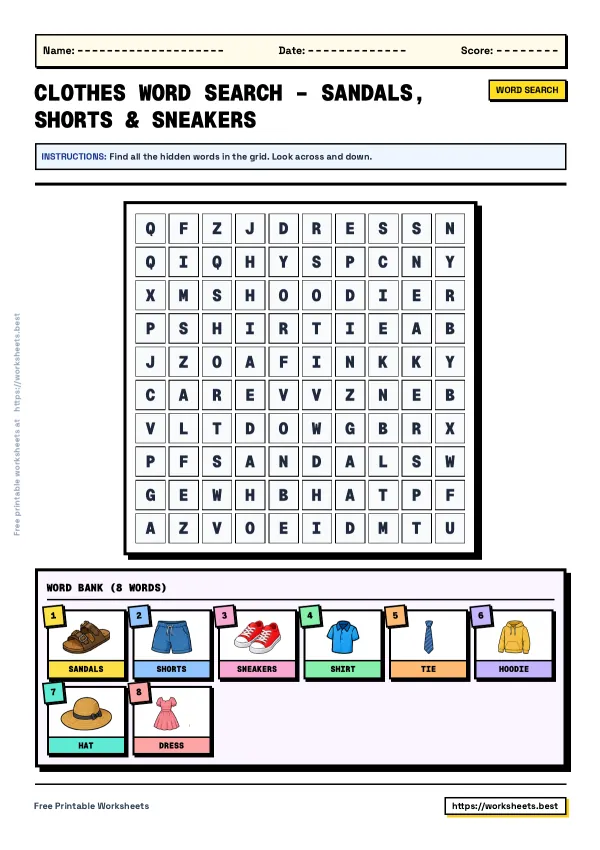
Most kindergarteners already say the names of what they put on each morning, so build from there and add weather and occasion words as they come up. Picture matching, tracing and word search pages give the same words several chances to stick.
How do I explain picture sudoku to a young child?
In a four-by-four grid, each picture appears once in every row and once in every column. Cover the rest of the page, point to one row, and ask which picture is missing.
What does an Odd One Out worksheet teach?
A child compares the pictures, decides which one does not belong and explains the reason, which practices classification and reasoning. It is one of the easier formats, so it suits Pre-K and kindergarten children who are not reading yet.
Which sheets work for a child who cannot read yet?
Picture matching, I Spy counting and Odd One Out pages rely on pictures and spoken words, so a Pre-K child can do them with an adult nearby. Letter sounds and tracing pages come next, once the child recognizes the pictures.
Are word scrambles and crosswords too hard for 1st grade?
Many 1st graders can handle them with the word list in view, and 2nd graders often finish them alone. Try a scramble first, since unscrambling letters gives more clues than filling in blanks from a written clue.