Body Parts Worksheets
A child who can point to a body part already has something to read, trace and spell. The Body Parts Worksheets collection gives children in Pre-K through 2nd grade dozens of pages that turn that everyday knowledge into vocabulary, handwriting and phonics practice, all in easy formats.
Read more +
The pages cover vocabulary, word tracing, missing letters, phonics and spelling, in formats such as picture matching, crosswords, word searches, word scrambles and beginning and ending sounds. One crossword asks children to write eye, muscle and leg into the grid, and a picture matching sheet has them draw a line from neck and lip to the right picture. Tracing pages build fine motor skills and handwriting, while missing letters and scrambles push spelling, reasoning and problem solving.
Answer keys come with most pages, so an adult can check work quickly or a child can self-check after finishing. At home, a tracing sheet makes a calm warm-up before homework; in class, a word search works as a center activity and a crossword closes out a lesson about the body. The letter sounds pages support early reading standards such as RF.K.3.A.
start with these
Featured worksheets
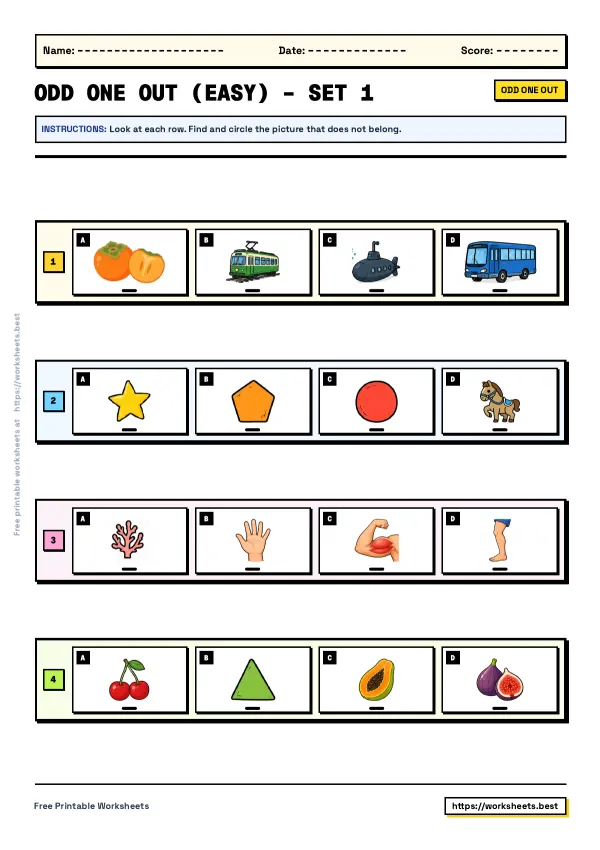
Odd One Out (Easy) – Set 1
Pre-K–KOdd One Out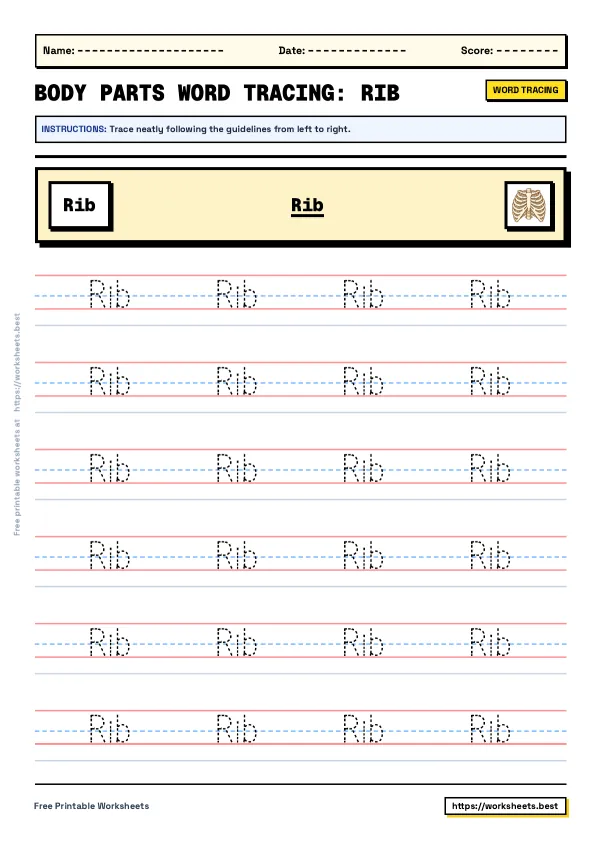
Body Parts Word Tracing: Rib
K–1st GradeTracing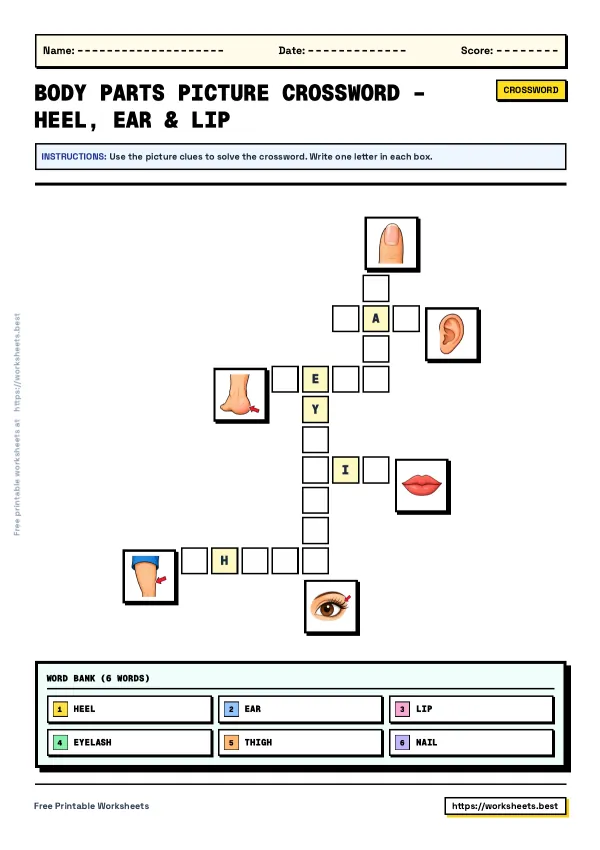
Body Parts Picture Crossword – Heel, Ear & Lip
1st–2nd GradeCrossword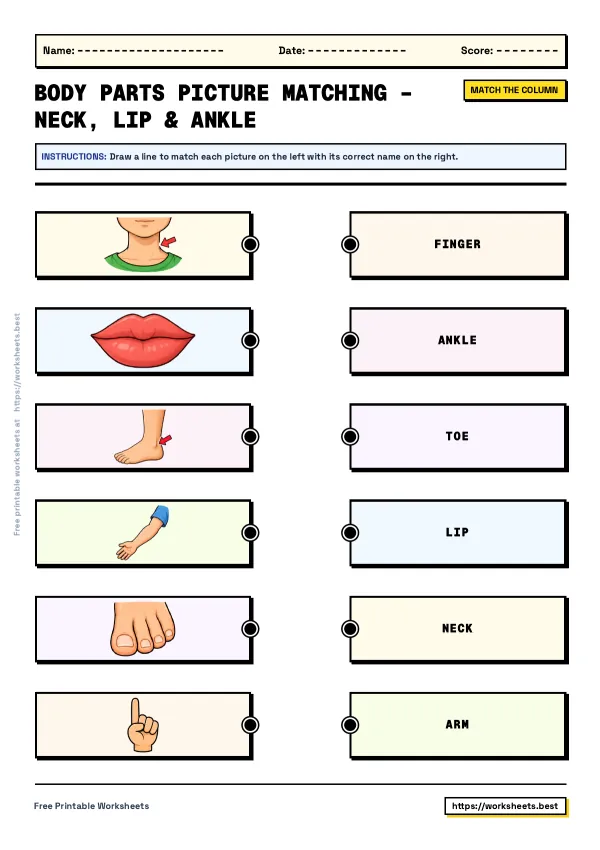
Body Parts Picture Matching – Neck, Lip & Ankle
K–1st GradePicture Matching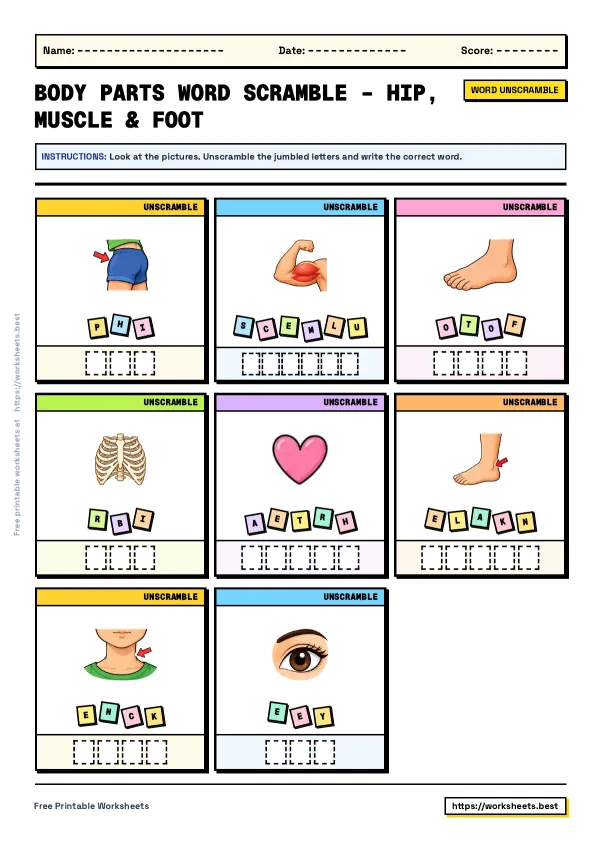
Body Parts Word Scramble – Hip, Muscle & Foot
1st–2nd GradeWord Scramble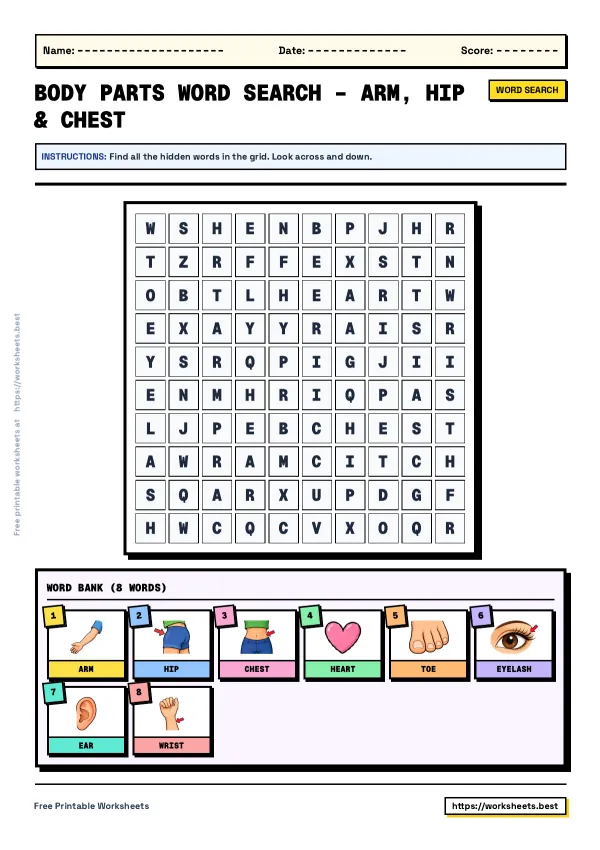
Body Parts Word Search – Arm, Hip & Chest
1st–2nd GradeWord Search
every sheet
All Body Parts worksheets
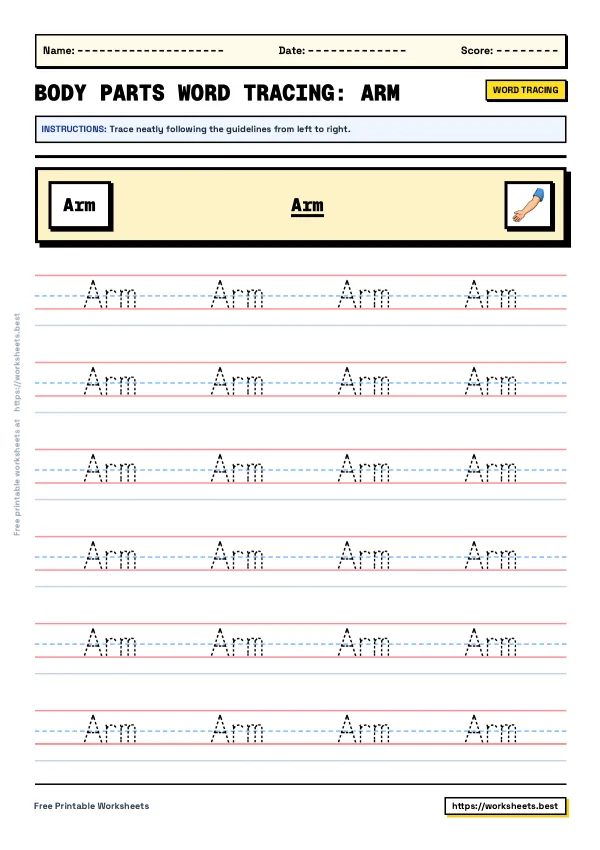
Body Parts Word Tracing: Arm
K–1st GradeTracingOdd One Out (Easy) – Set 1
Pre-K–KOdd One Out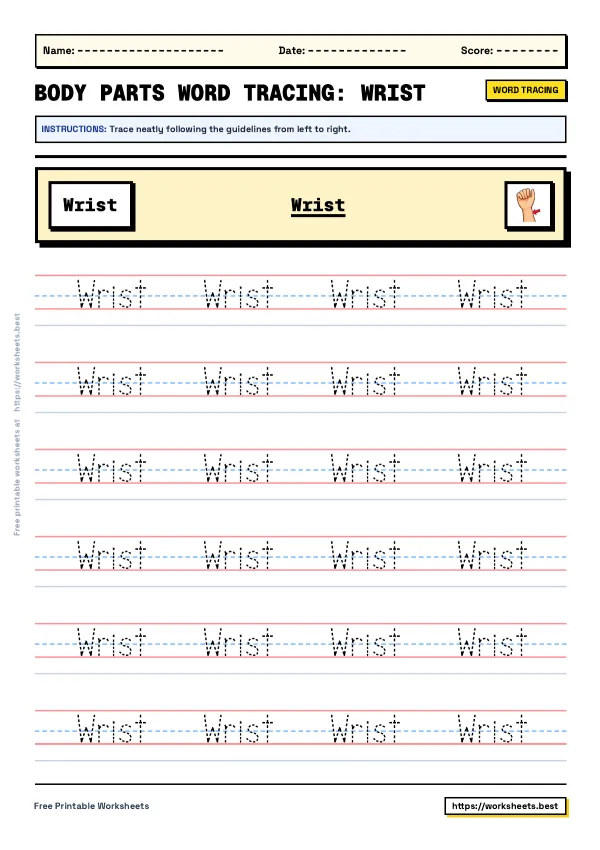
Body Parts Word Tracing: Wrist
K–1st GradeTracing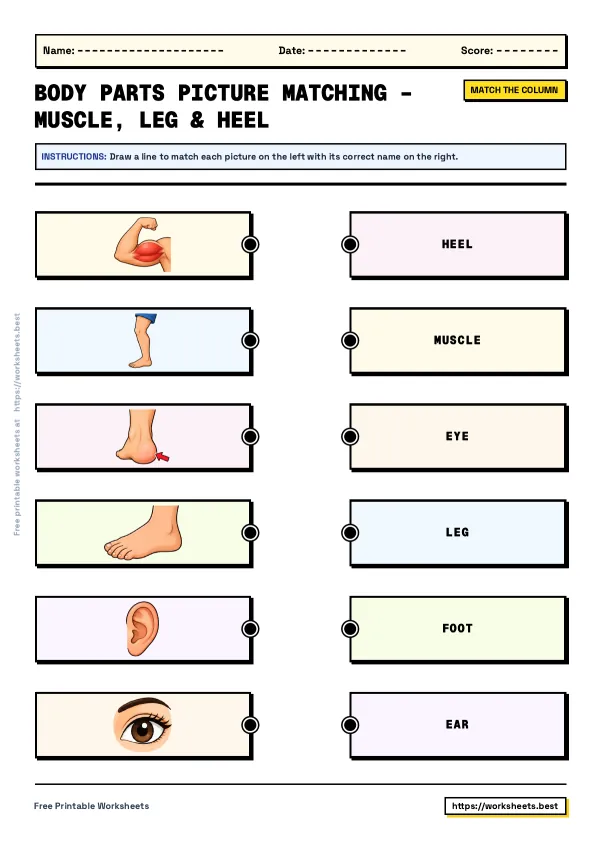
Body Parts Picture Matching – Muscle, Leg & Heel
K–1st GradePicture MatchingBody Parts Word Scramble – Hip, Muscle & Foot
1st–2nd GradeWord Scramble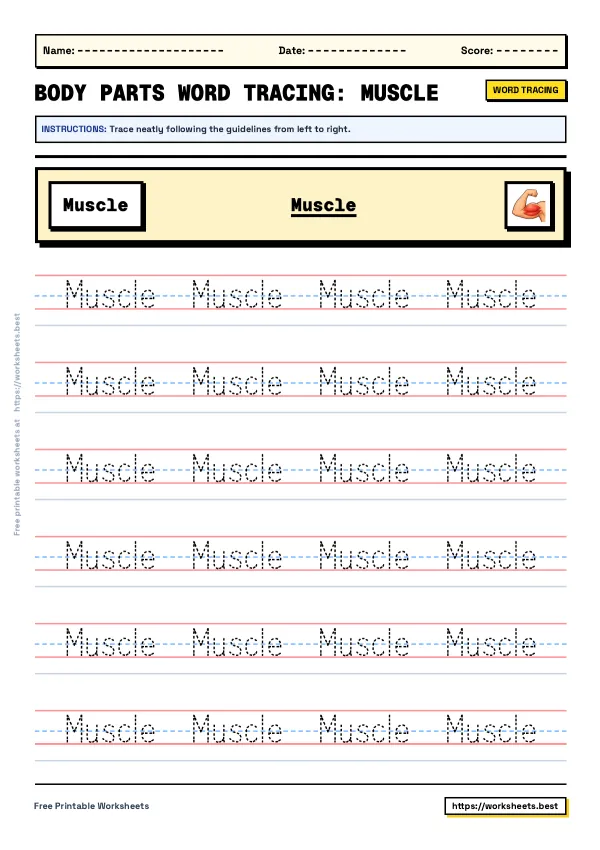
Body Parts Word Tracing: Muscle
K–1st GradeTracing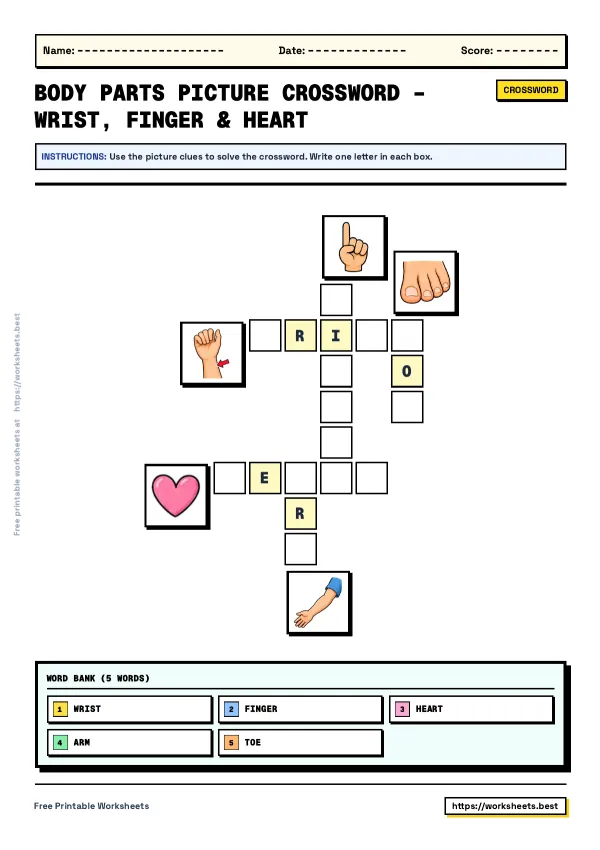
Body Parts Picture Crossword – Wrist, Finger & Heart
1st–2nd GradeCrossword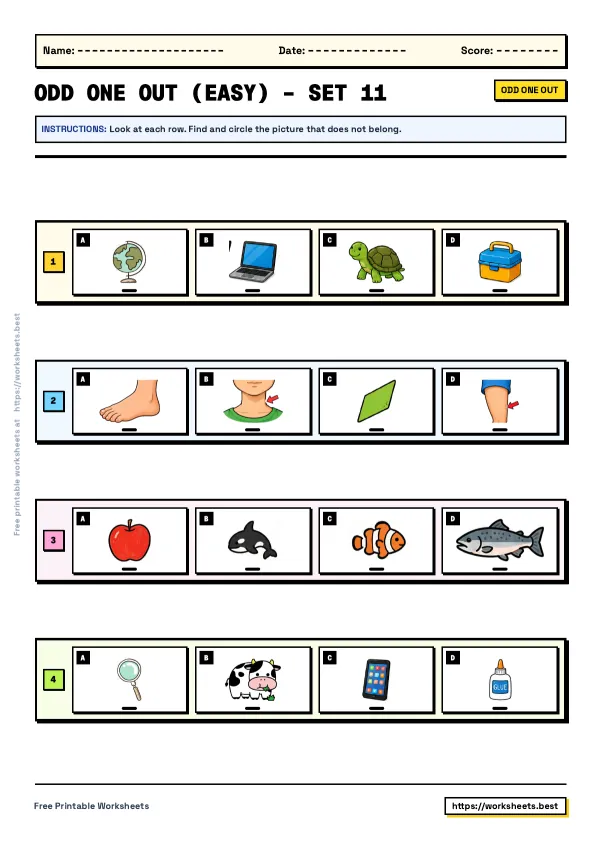
Odd One Out (Easy) – Set 11
Pre-K–KOdd One OutBody Parts Word Tracing: Rib
K–1st GradeTracingBody Parts Word Search – Arm, Hip & Chest
1st–2nd GradeWord Search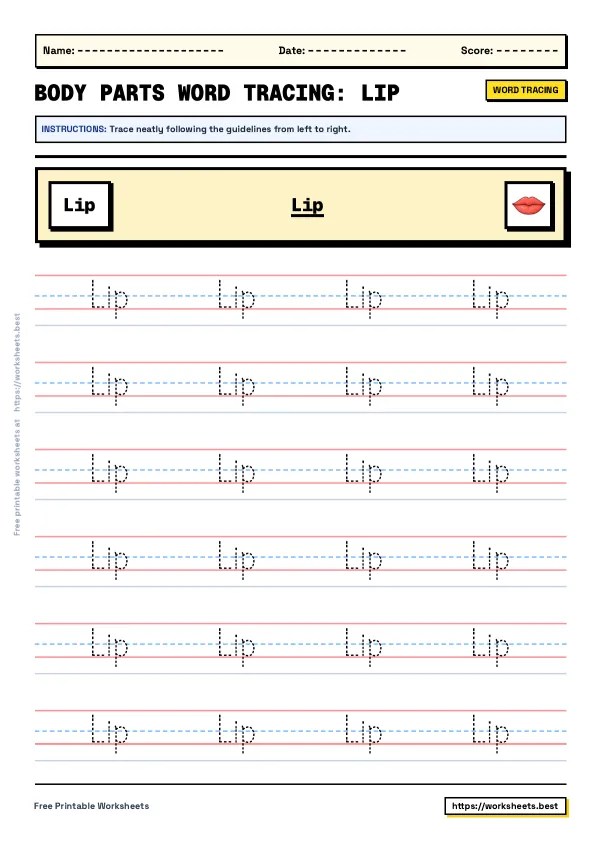
Body Parts Word Tracing: Lip
K–1st GradeTracingBody Parts Picture Matching – Neck, Lip & Ankle
K–1st GradePicture Matching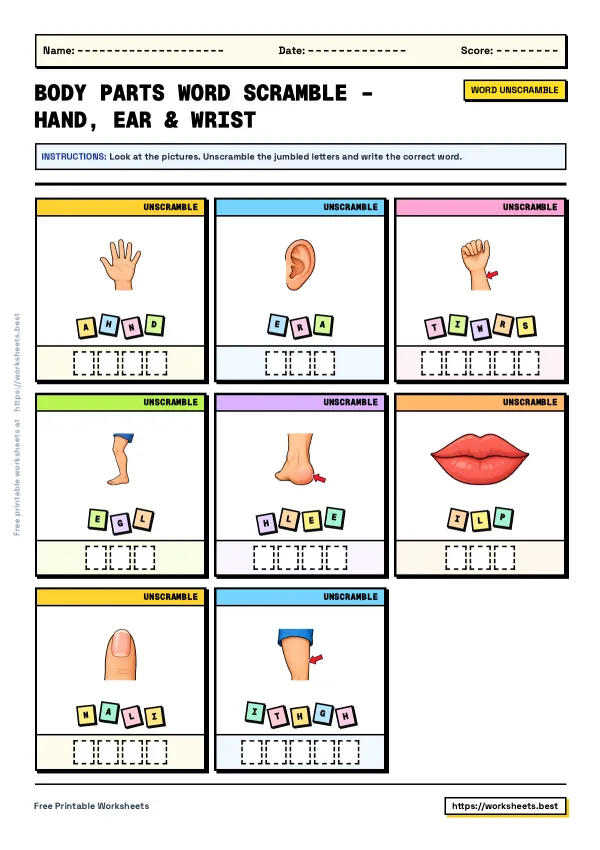
Body Parts Word Scramble – Hand, Ear & Wrist
1st–2nd GradeWord Scramble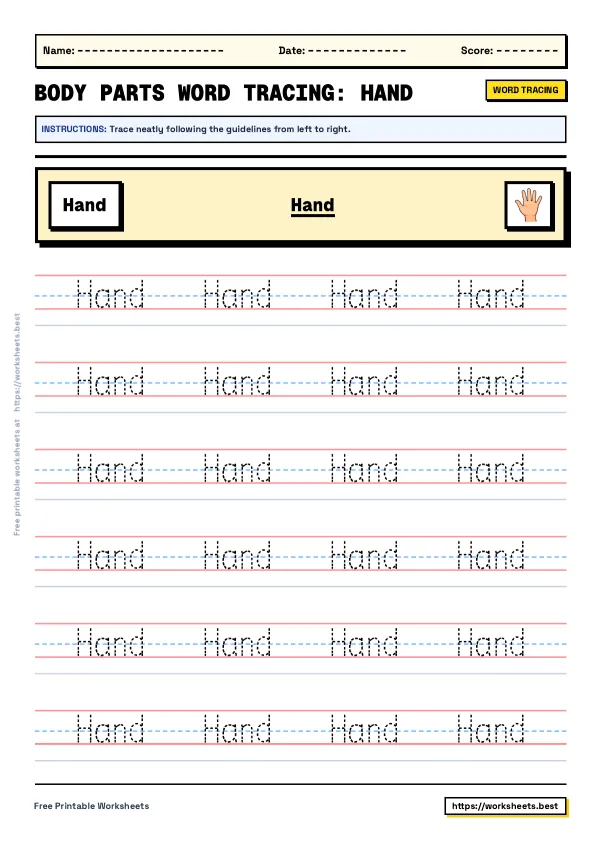
Body Parts Word Tracing: Hand
K–1st GradeTracing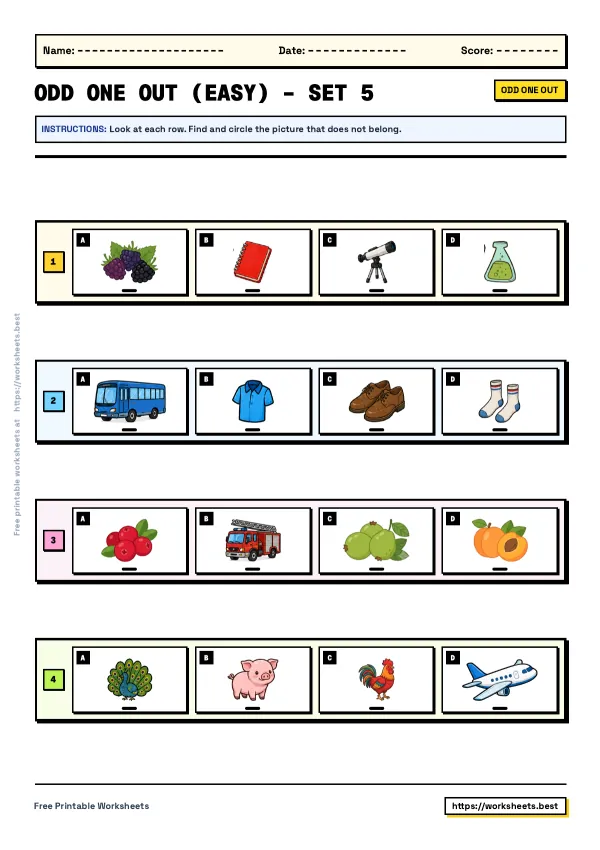
Odd One Out (Easy) – Set 5
Pre-K–KOdd One OutBody Parts Picture Crossword – Heel, Ear & Lip
1st–2nd GradeCrossword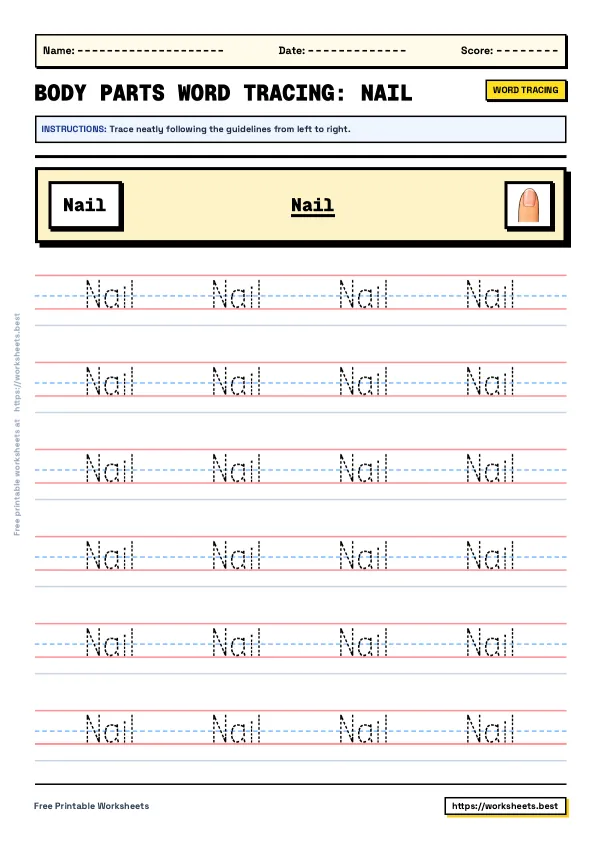
Body Parts Word Tracing: Nail
K–1st GradeTracing
dig deeper
More Body Parts worksheets
By worksheet type
from teachers
Tips for parents and teachers
- Have the child touch and name the body part before writing the word, so the spelling stays tied to meaning rather than to a picture alone.
- On missing letters pages, ask children to say the word slowly and listen for the sounds behind each blank instead of guessing from the picture.
- Trace first, then cover the model and let the child write the word from memory to build handwriting and word recognition together.
- With a small group, read the odd one out pages as a talking game and ask why a picture does not belong, which practices classification and reasoning aloud.
Questions parents ask
What ages are body parts worksheets suitable for?
They fit Pre-K through 2nd grade. Younger children start with picture matching and tracing, and older children move on to crosswords, word scrambles and spelling practice.
How do these worksheets help with reading?
They pair vocabulary with phonics. Beginning and ending sounds pages ask children to listen for the first and last sound in a word, and missing letters pages ask them to write the letter that matches the sound they hear.
Should my child trace the words or write them freehand?
Start with tracing, which builds the muscle memory for letter shapes. Once a child can trace a word neatly, cover the model and let them write it from memory.
Can I use these pages in a classroom center?
Yes. Picture matching and word searches work well as independent center tasks, while crosswords and odd one out pages suit pairs who talk through their answers together.
Does spelling have to be correct on the easier pages?
On picture matching and odd one out pages the focus is vocabulary and classification, so close spelling is enough. Save exact spelling for tracing, missing letters and scramble pages.