Math Worksheets
Building math confidence starts with steady practice, and the Math Worksheets on this page give children from Pre-K through 5th grade plenty of it: counting and number sense first, then addition, subtraction, multiplication and division as they get older. The collection runs to hundreds of sheets, and practice comes in several formats, including number sense pages, math drills, I Spy counting searches, clock reading practice and tracing. A set of tracing pages takes a preschooler through the digits 0 to 9 one at a time, and a Christmas I Spy counting sheet asks children to find and count the nutcrackers, snowflakes and penguins hidden in the picture.
Read more +
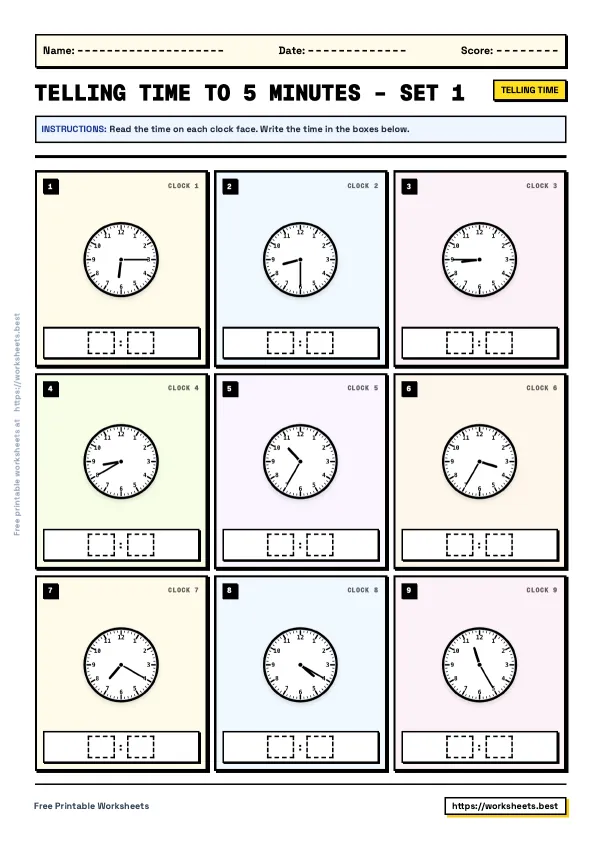
Older children build their telling time skills in small steps, from the simplest clock faces through to five-minute intervals, and other sheets ask them to name the number that comes just before or just after one they are given, up to 20 and up to 100. Telling time practice connects to Common Core standard 1.MD.B.3. Answer keys come with most worksheets, so a parent or a teacher can check the work quickly and children can correct their own mistakes.
Use one sheet as a warm-up before a math lesson, or print a short stack for quiet practice at home. The seasonal sets for Christmas, Thanksgiving, winter and Halloween suit party weeks and half days, and the animal, fruit and sea animal themes give younger children familiar things to count and compare.
every sheet
All Math worksheets
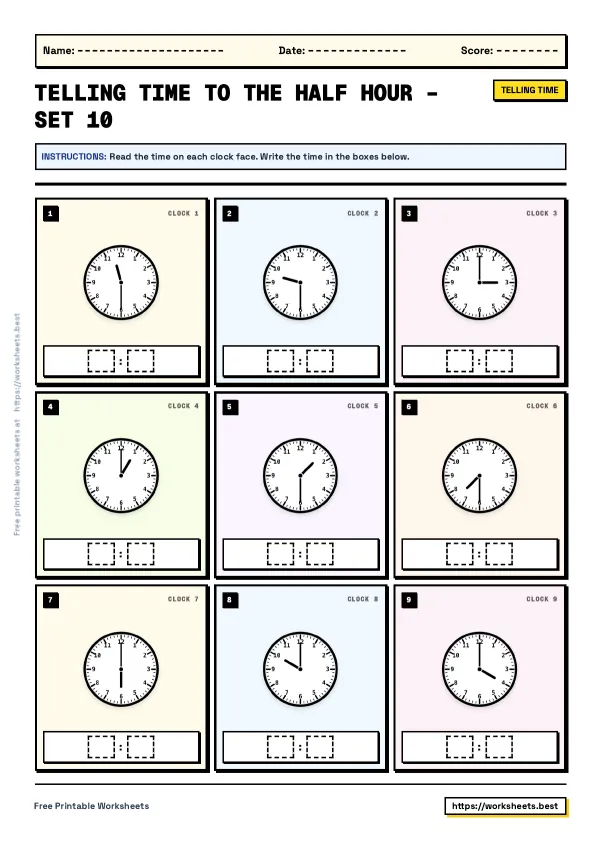
Telling Time to the Half Hour – Set 10
1st GradeClock Reading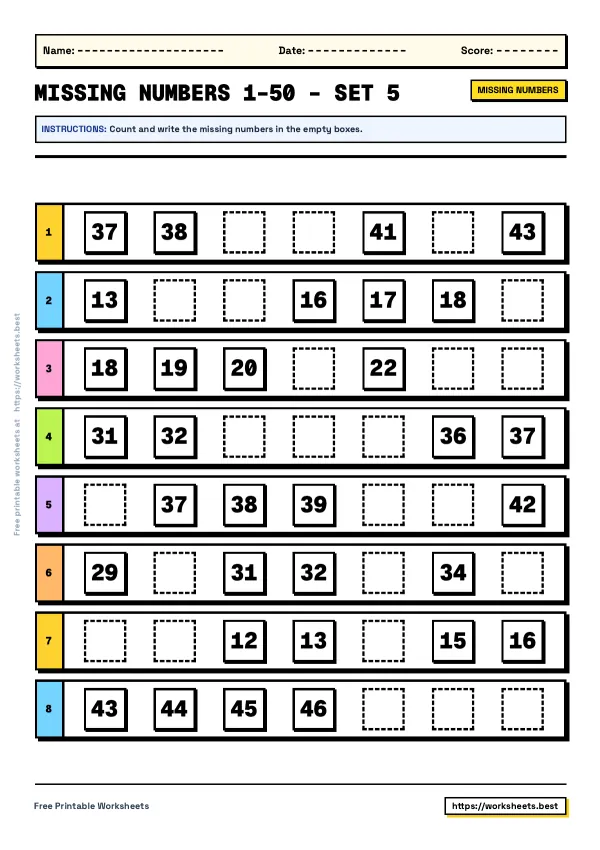
Missing Numbers 1–50 – Set 5
K–1st GradeNumber Sense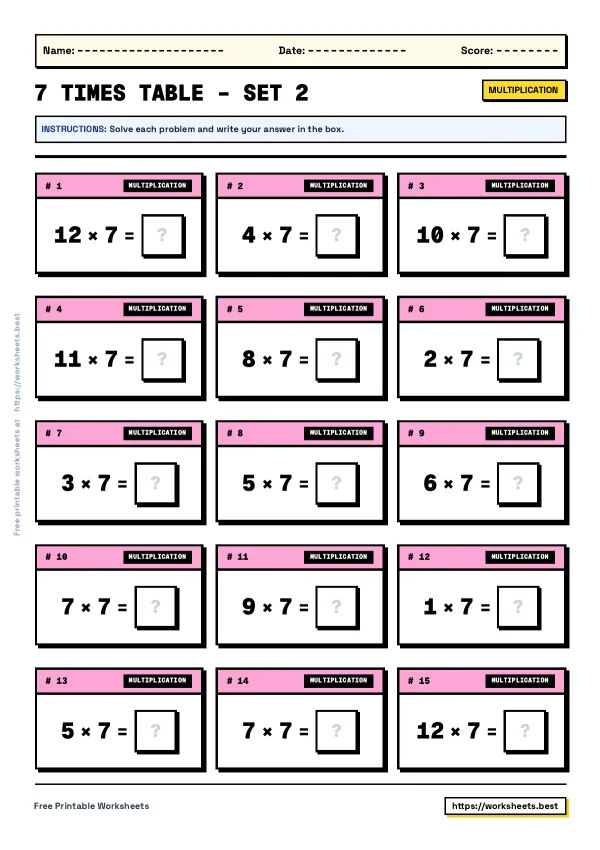
7 Times Table – Set 2
3rd GradeMath Drills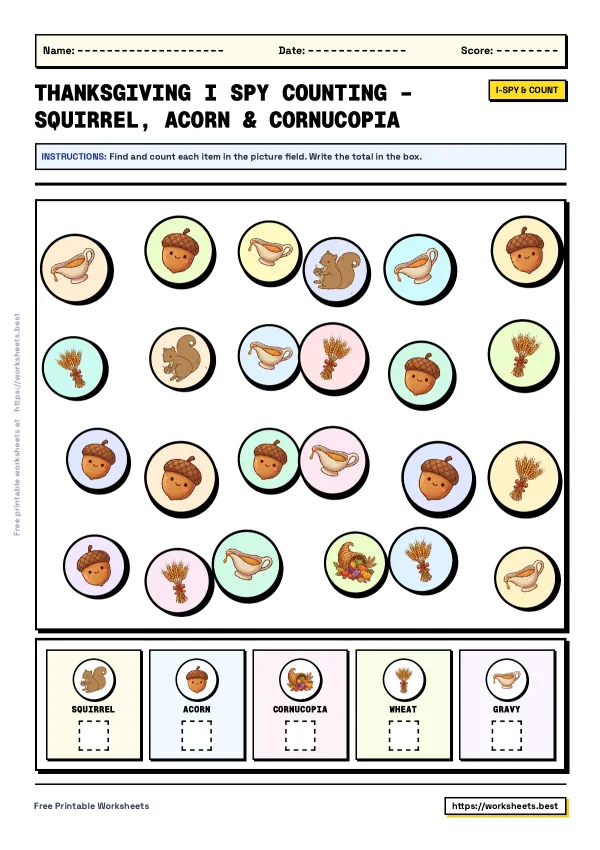
Thanksgiving I Spy Counting – Squirrel, Acorn & Cornucopia
Pre-K–KI Spy Counting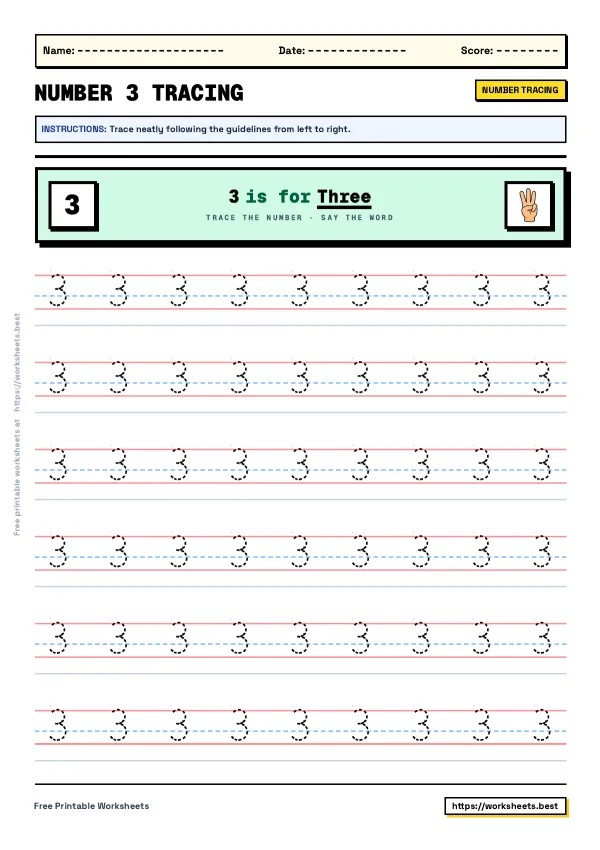
Number 3 Tracing
Pre-K–KTracing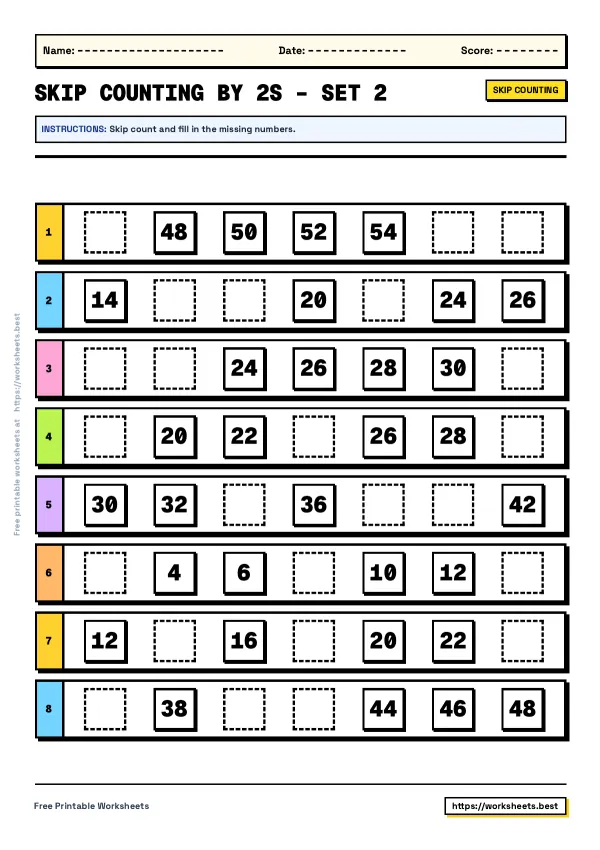
Skip Counting by 2s – Set 2
1st–2nd GradeNumber Sense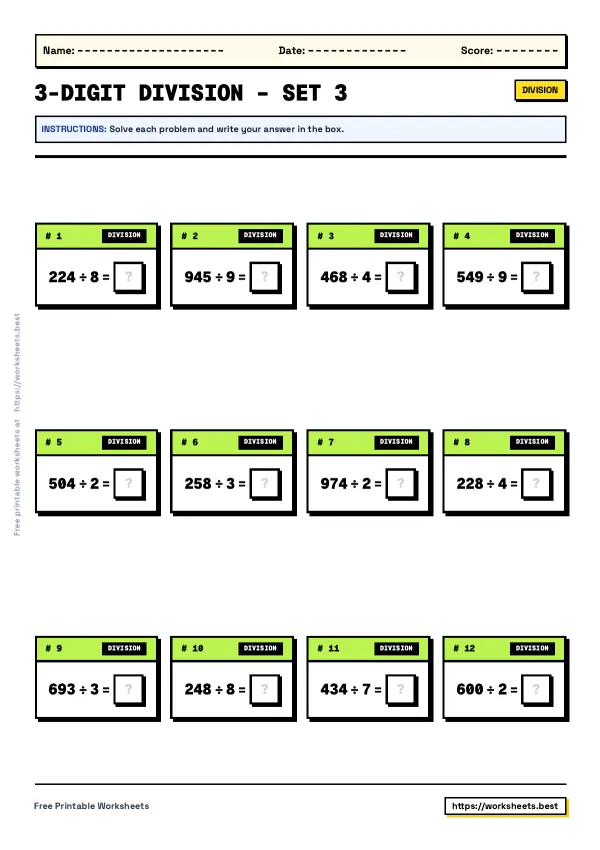
3-Digit Division – Set 3
4th–5th GradeMath Drills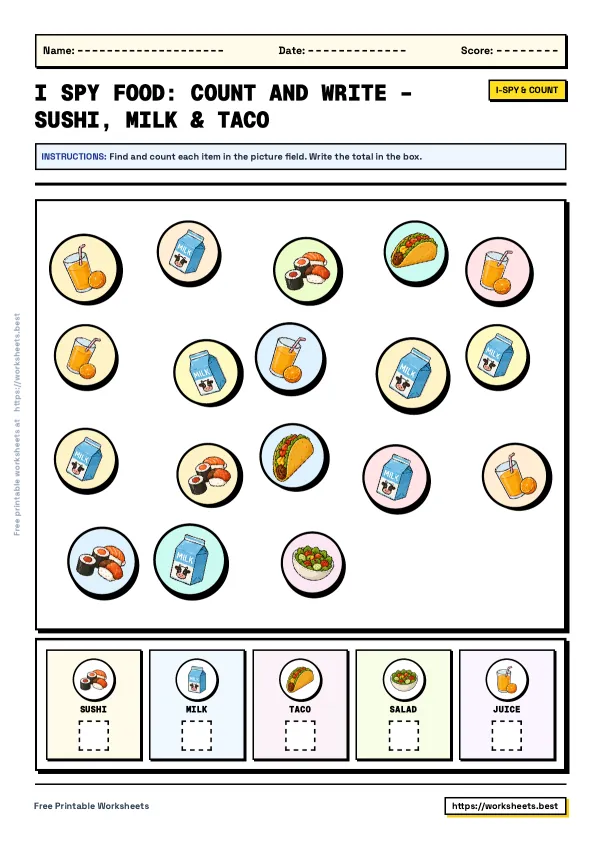
I Spy Food: Count and Write – Sushi, Milk & Taco
Pre-K–KI Spy Counting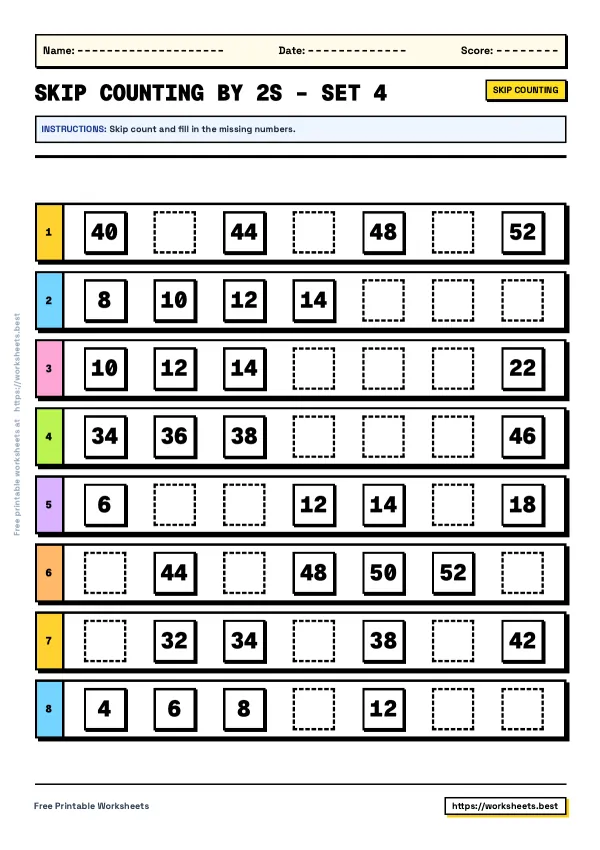
Skip Counting by 2s – Set 4
1st–2nd GradeNumber Sense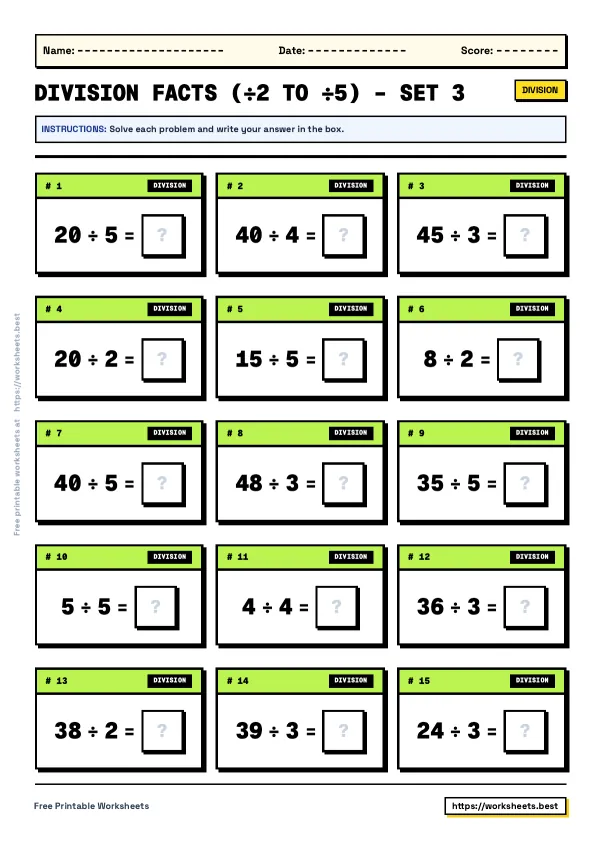
Division Facts (÷2 to ÷5) – Set 3
3rd GradeMath Drills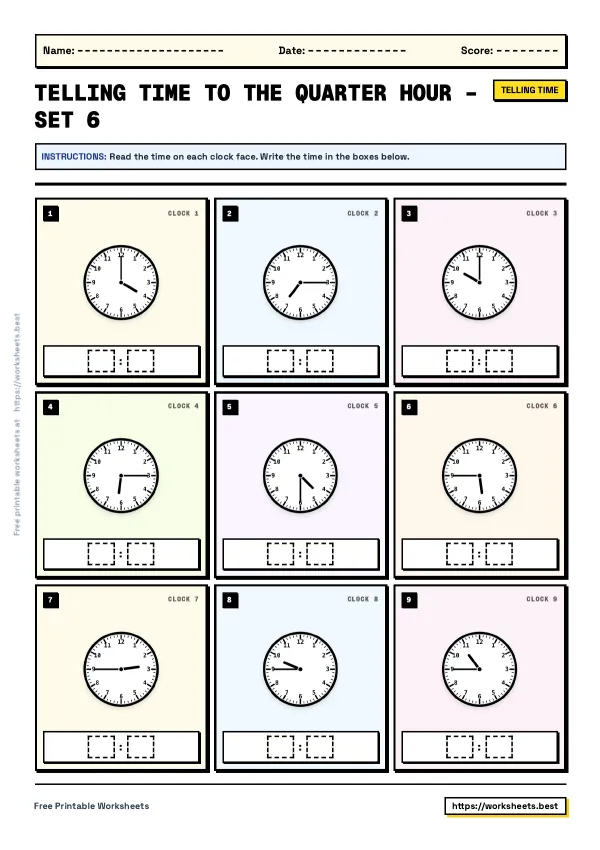
Telling Time to the Quarter Hour – Set 6
2nd GradeClock Reading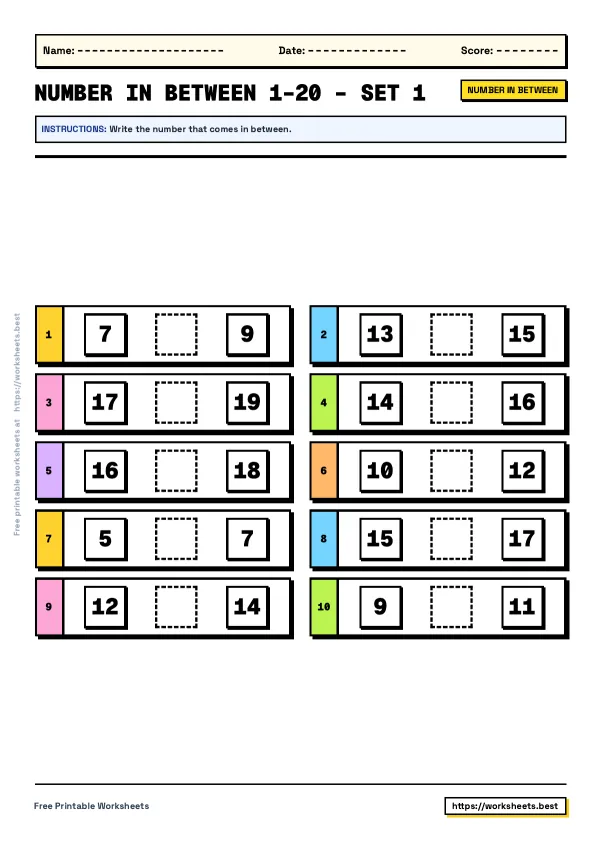
Number in Between 1–20 – Set 1
KindergartenNumber Sense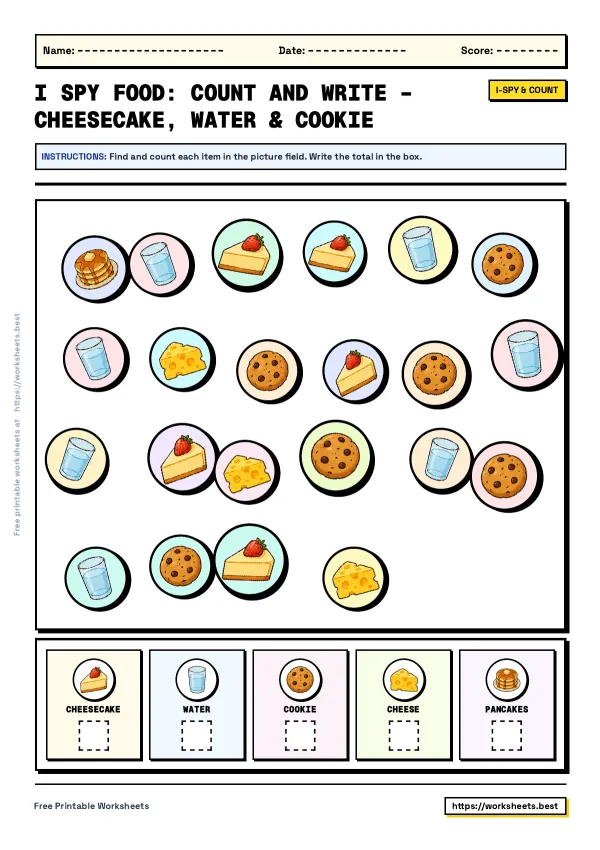
I Spy Food: Count and Write – Cheesecake, Water & Cookie
Pre-K–KI Spy Counting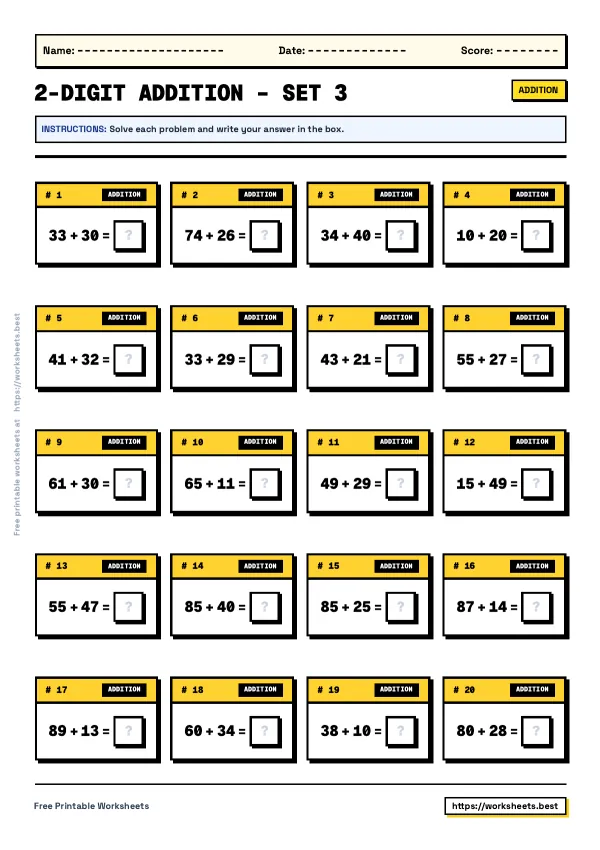
2-Digit Addition – Set 3
2nd GradeMath Drills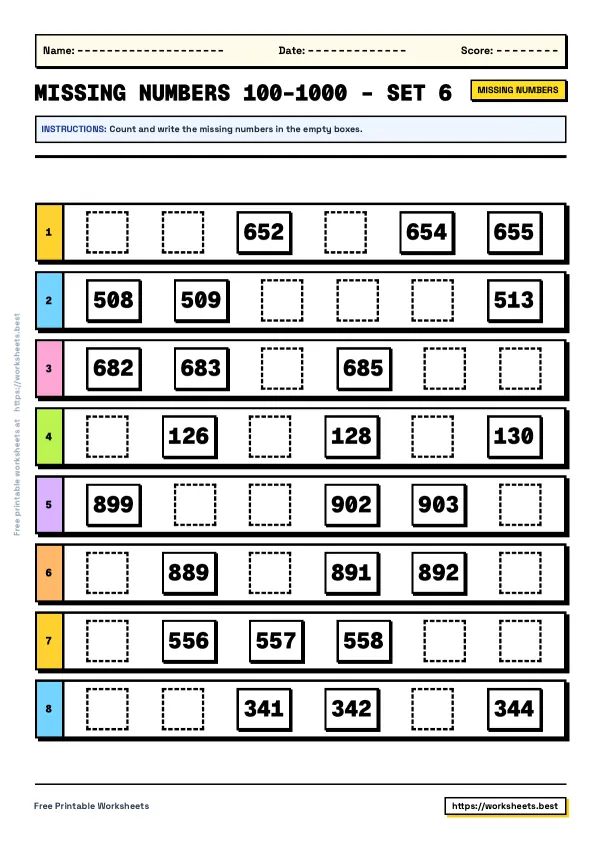
Missing Numbers 100–1000 – Set 6
2nd GradeNumber Sense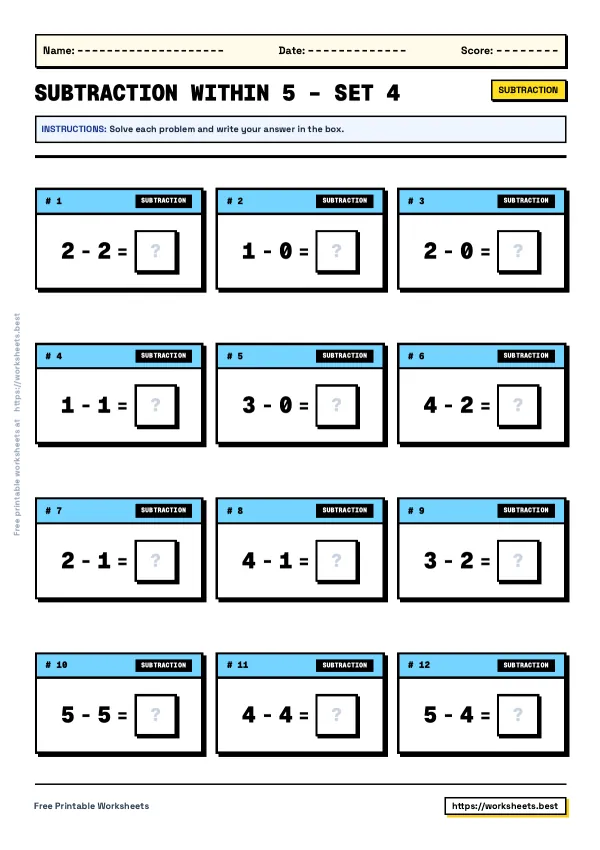
Subtraction Within 5 – Set 4
KindergartenMath Drills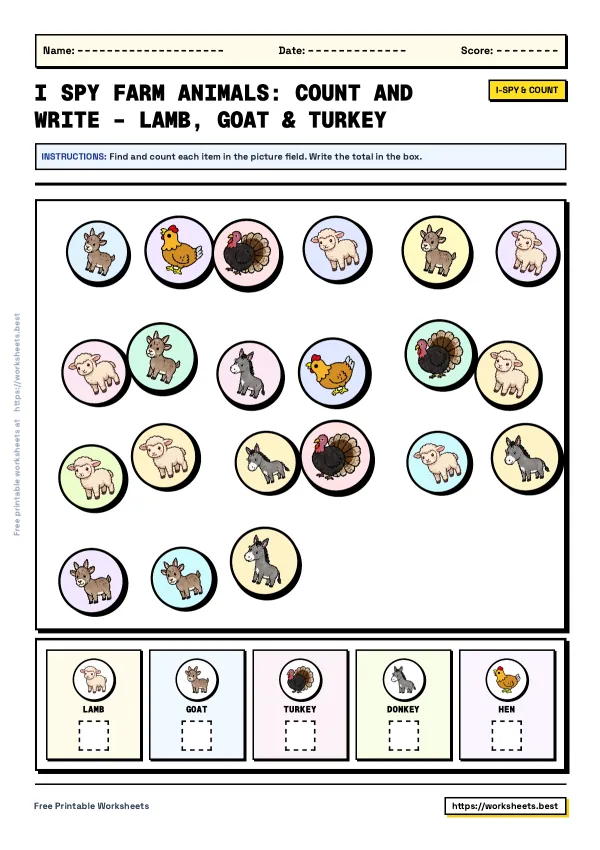
I Spy Farm Animals: Count and Write – Lamb, Goat & Turkey
Pre-K–KI Spy Counting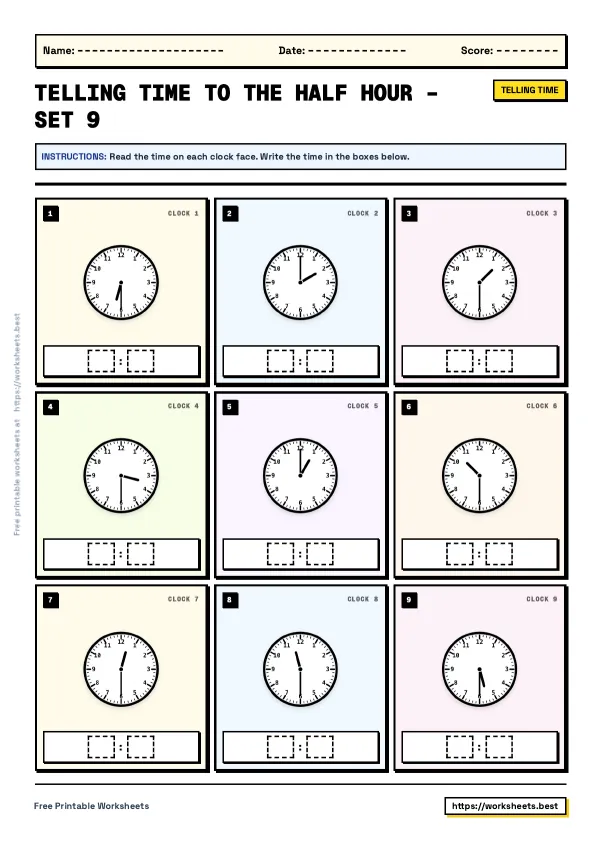
Telling Time to the Half Hour – Set 9
1st GradeClock Reading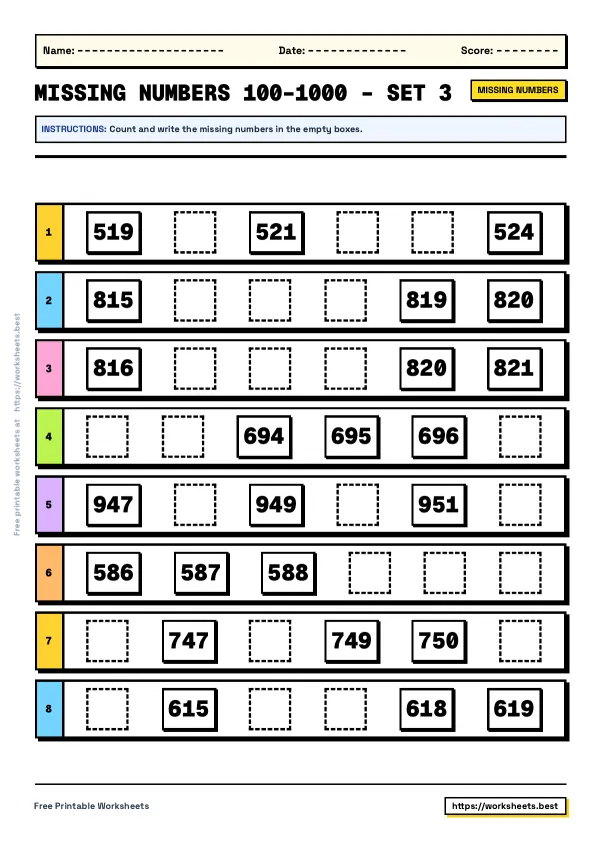
Missing Numbers 100–1000 – Set 3
2nd GradeNumber Sense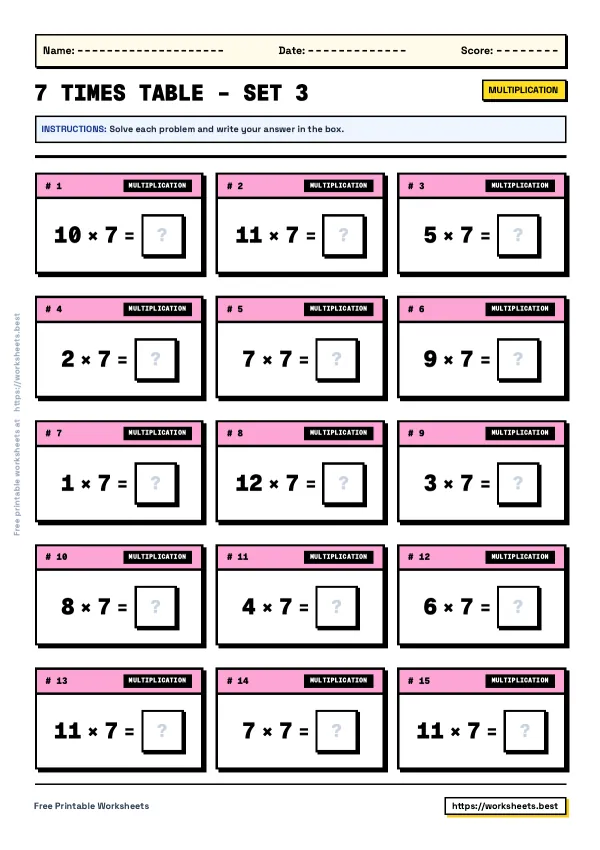
7 Times Table – Set 3
3rd GradeMath Drills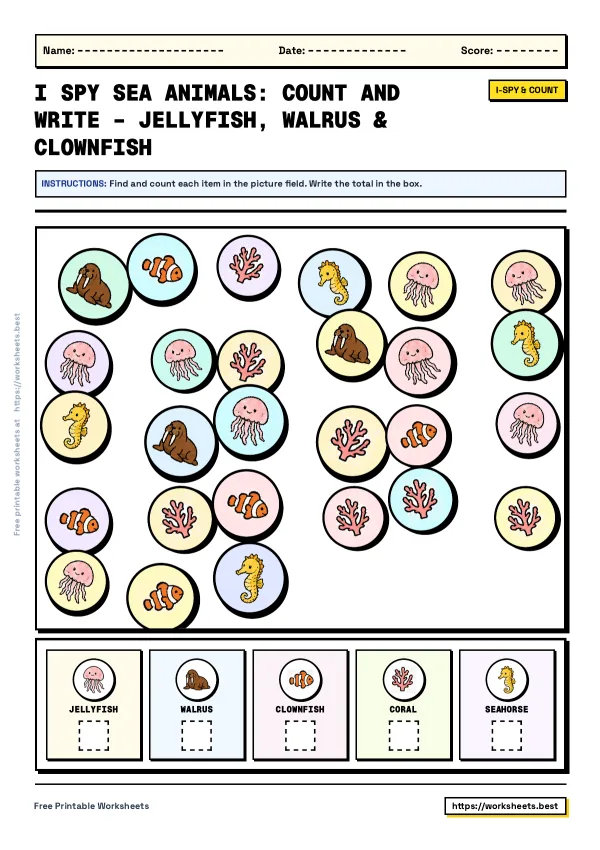
I Spy Sea Animals: Count and Write – Jellyfish, Walrus & Clownfish
Pre-K–KI Spy Counting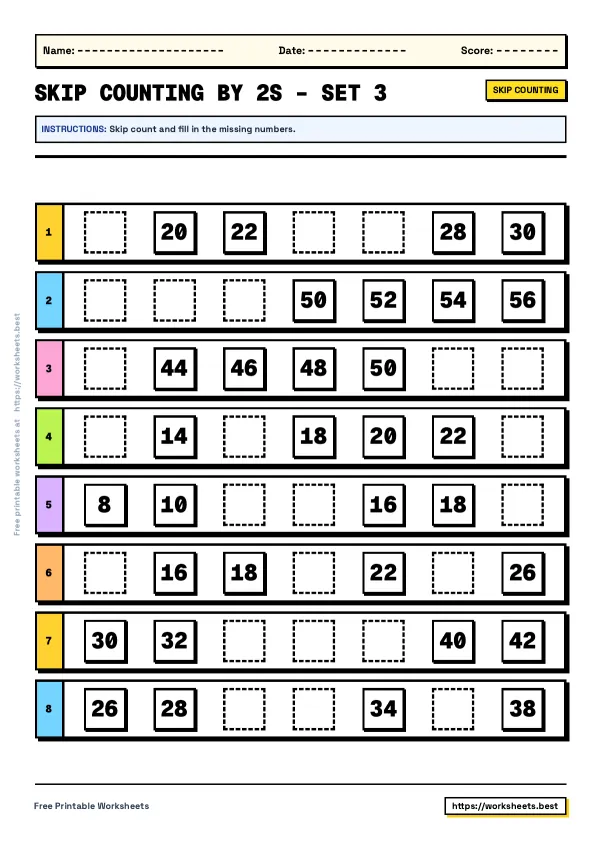
Skip Counting by 2s – Set 3
1st–2nd GradeNumber Sense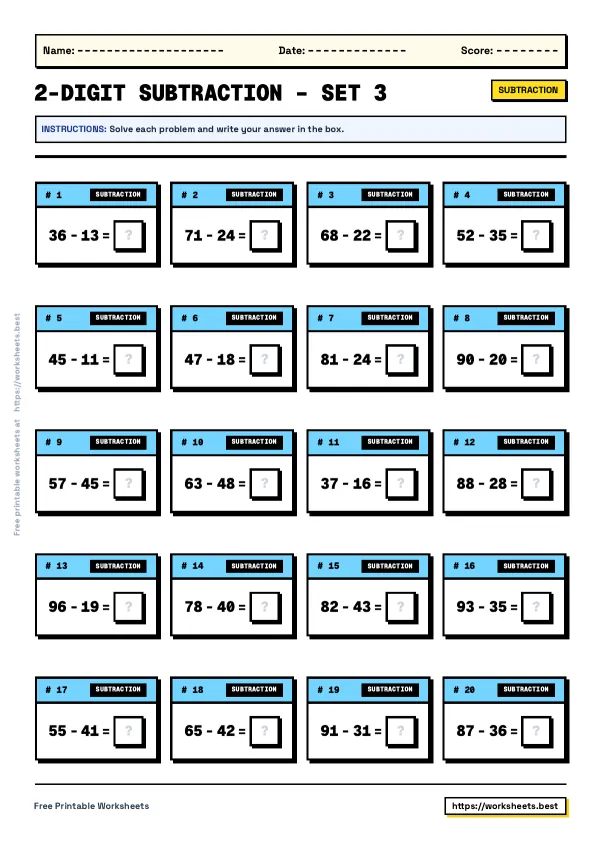
2-Digit Subtraction – Set 3
2nd GradeMath Drills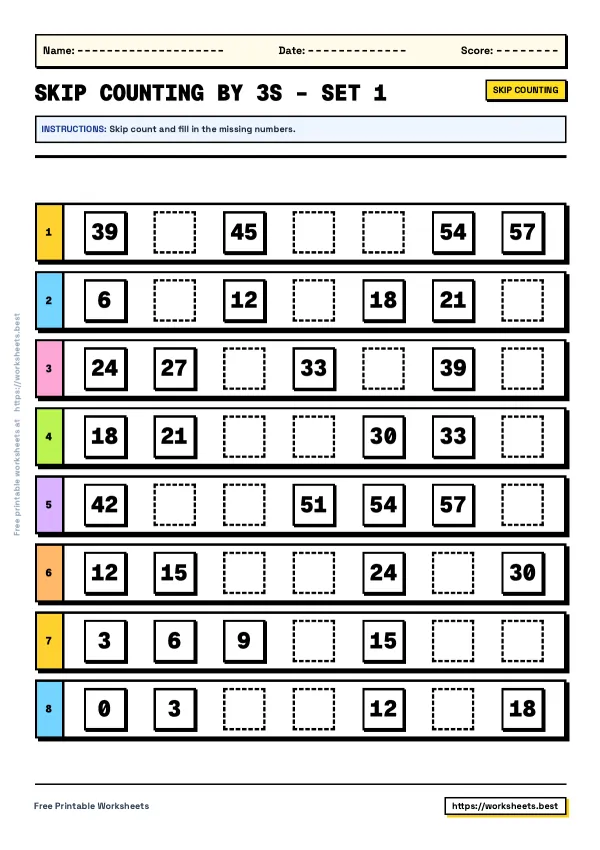
Skip Counting by 3s – Set 1
3rd GradeNumber Sense
dig deeper
More Math worksheets
from teachers
Tips for parents and teachers
- On counting and I Spy sheets, have children touch each picture as they count and say the number out loud, so one number lands on exactly one object.
- Slip tracing pages into a clear plastic sleeve and use a dry-erase marker, and the same digit sheet can be practiced again the next day.
- Keep written math drills to about five minutes at a sitting; short, frequent recall practice builds math facts memory better than one long session.
- For clock reading, keep a real clock or a paper clock face nearby so children can move the hands to match the time printed on the sheet.
Questions parents ask
What math skills should a kindergartener be working on?
Most kindergarten practice centers on counting and number sense: counting groups of objects, writing numbers, and comparing amounts up to 10. Knowing what comes just before and just after a number is a good next step.
Is it normal for my child to still count on their fingers?
Yes, finger counting is a typical stage in early number sense. Pair it with picture counting sheets so children see the quantity as well as count it, and expect fingers to fade as facts become automatic.
When do children usually start multiplication and division?
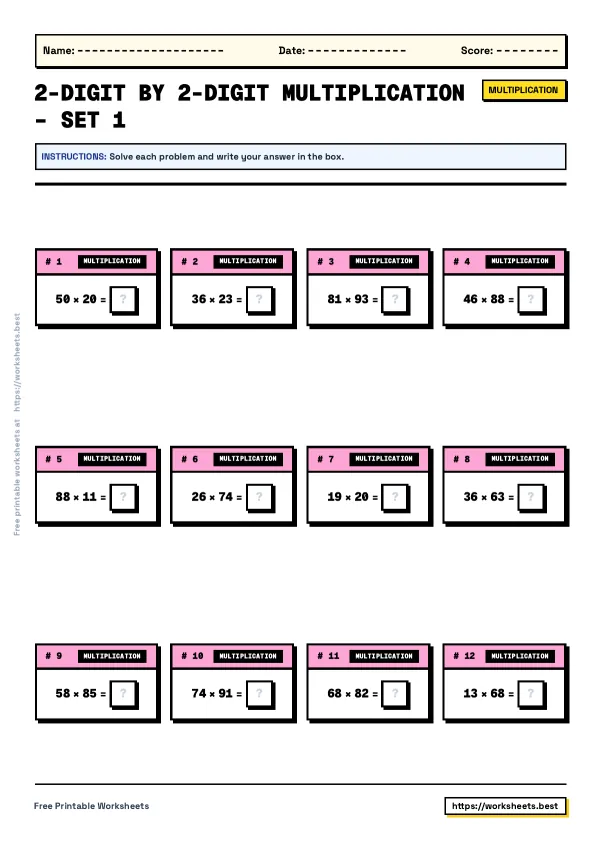
Multiplication usually appears in 3rd grade, once addition and subtraction facts are secure, and division follows after multiplication facts are solid. A child who still counts up for basic facts often benefits from a few more weeks of drill practice first.
How long should a child spend on one math worksheet?
Ten minutes is plenty for Pre-K and kindergarten, and 15 to 20 minutes suits most 2nd and 3rd graders. Stopping while attention is still good keeps practice positive.
How do the telling time sheets move from easier to harder?
Reading a clock face is a set of steps: matching the position of the hands, then the half and quarter positions, then counting the minute marks in fives. Working through the levels in order keeps a child from being handed a sheet they are not ready for.