Kindergarten Number Sense Worksheets
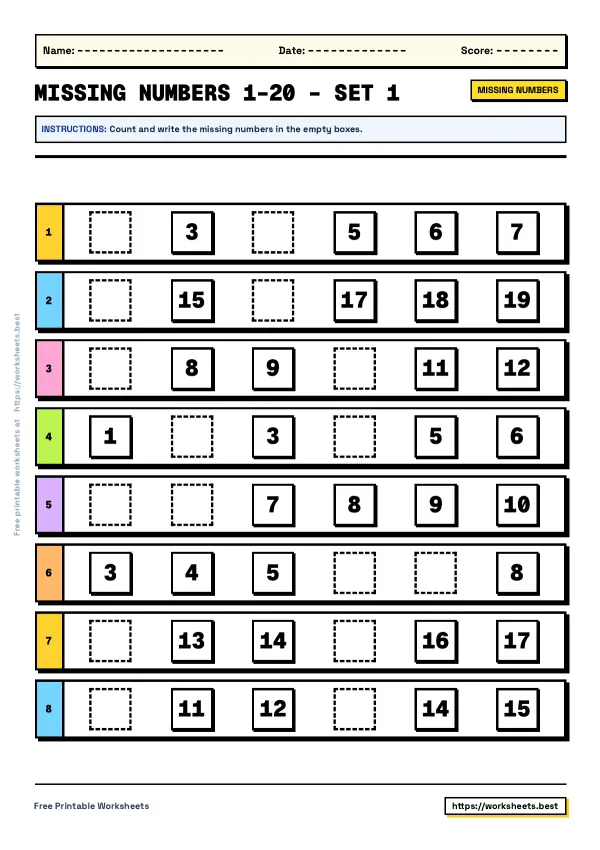
Early number work begins with putting numbers in order, noticing what comes before and after, and comparing amounts with confidence. Our kindergarten number sense worksheets give children in kindergarten plenty of practice with those ideas, using clear number-sense activities that keep the focus on counting, number order and comparing numbers. The sheets move from simple before-and-after tasks to missing-number puzzles and picture comparisons, with versions for numbers to 20 and a set for numbers to 50. A skip-counting set by 10s adds another useful step.
Read more +
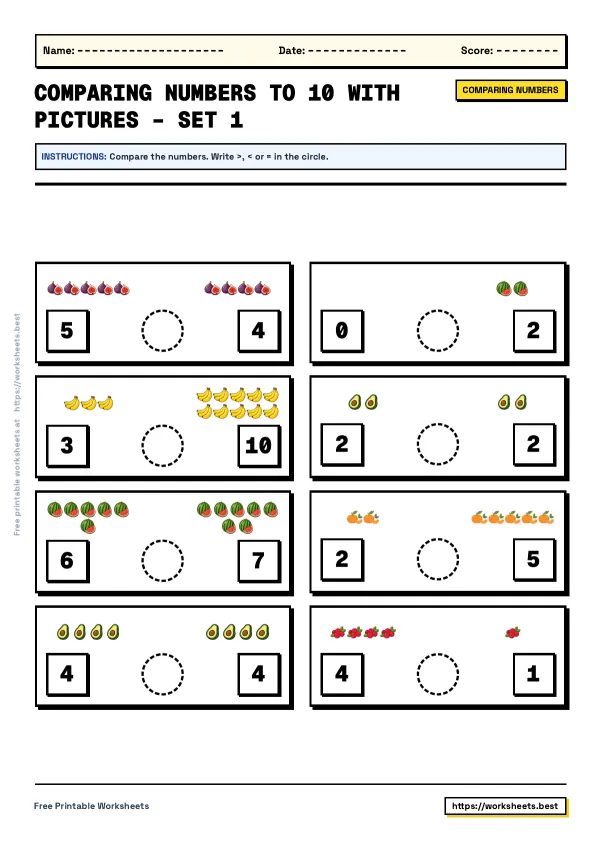
One page asks children to write the numbers that come before and after a given number up to 20, while another uses groups of pictures so children can compare quantities to 10. Children can work on ordering, counting and comparing numbers at home with a short daily page, or teachers can use the same sheets for morning work, small-group practice or a quick check. Answer keys are included for every page, so adults can review responses quickly and talk through any mix-ups.
Keep sessions short and let children say the number sequence aloud as they write. The pages suit kindergarten, and the sheets with larger numbers and the skip-counting pages can stretch children who are ready. Pair a written page with counters, a number line or a hundreds chart so children can check their thinking. Teachers following Common Core can connect the before-and-after practice to K.CC.A.2.
every sheet
All Kindergarten Number Sense worksheets
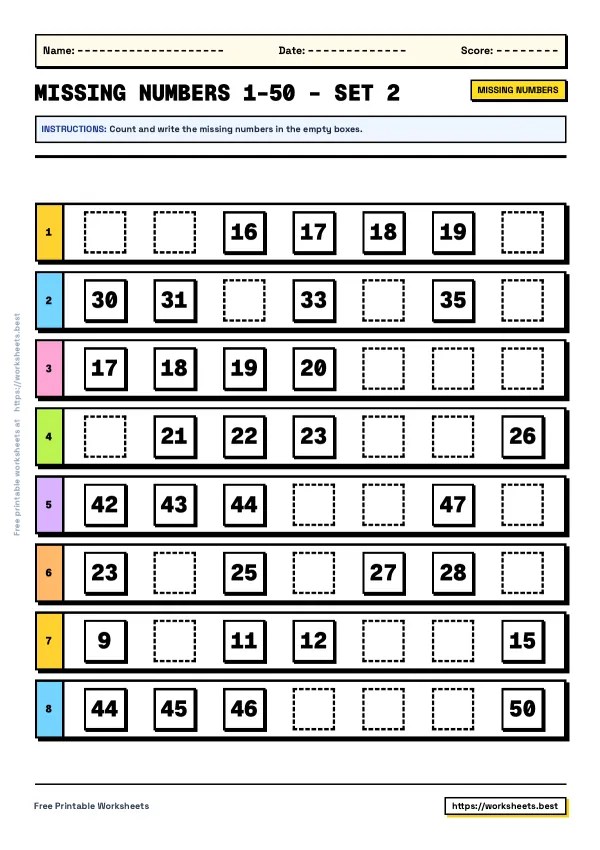
Missing Numbers 1–50 – Set 2
K–1st GradeNumber Sense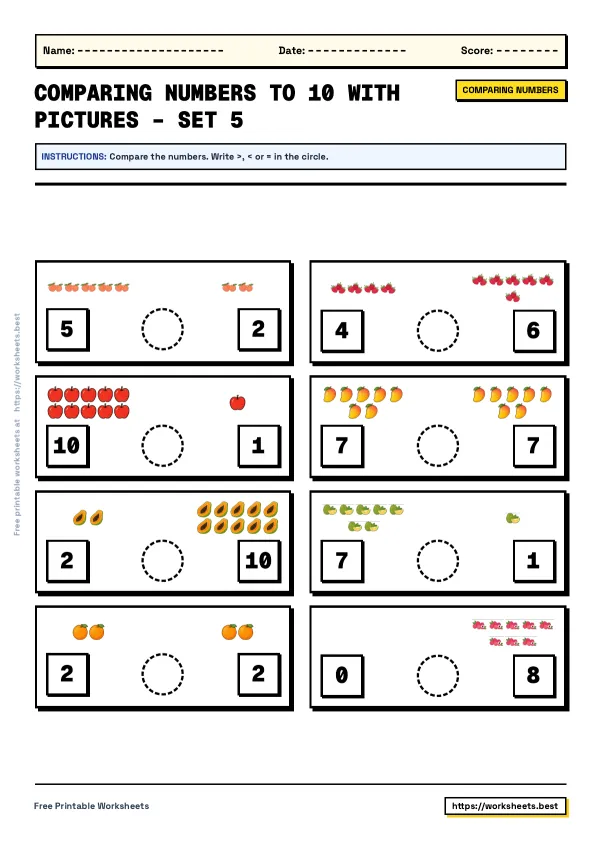
Comparing Numbers to 10 with Pictures – Set 5
Pre-K–KNumber Sense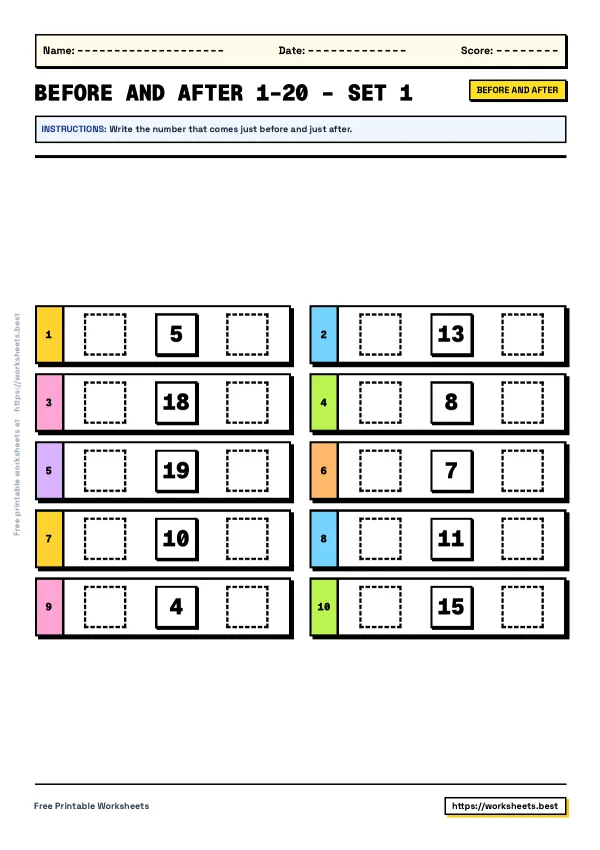
Before and After 1–20 – Set 1
KindergartenNumber Sense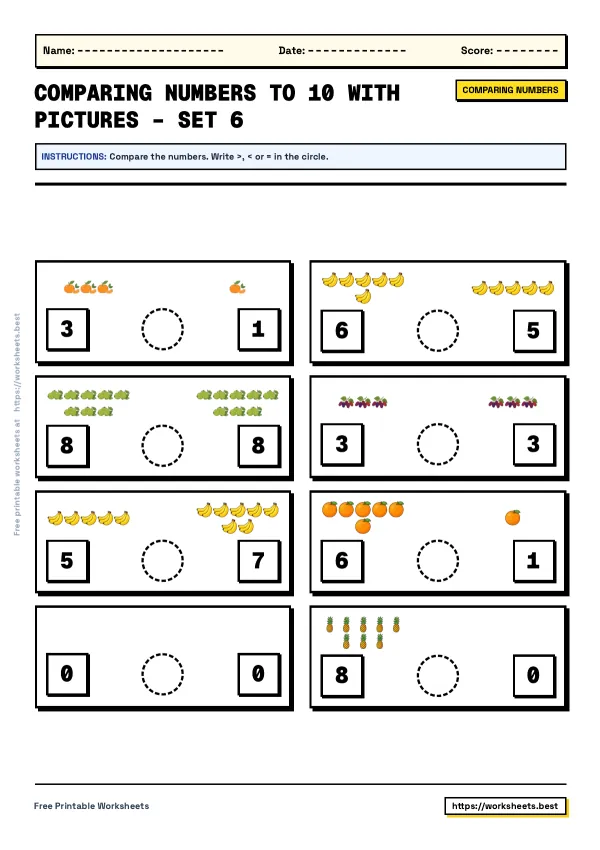
Comparing Numbers to 10 with Pictures – Set 6
Pre-K–KNumber Sense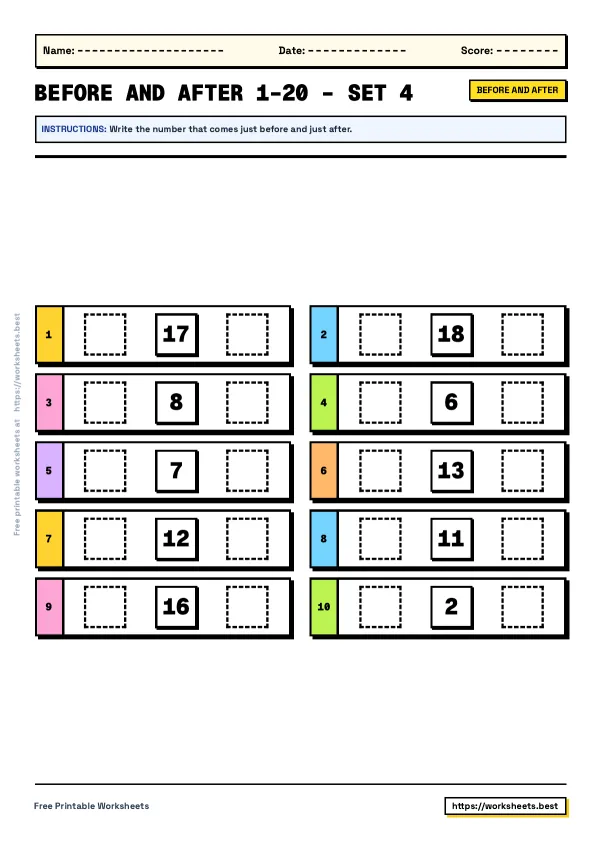
Before and After 1–20 – Set 4
KindergartenNumber Sense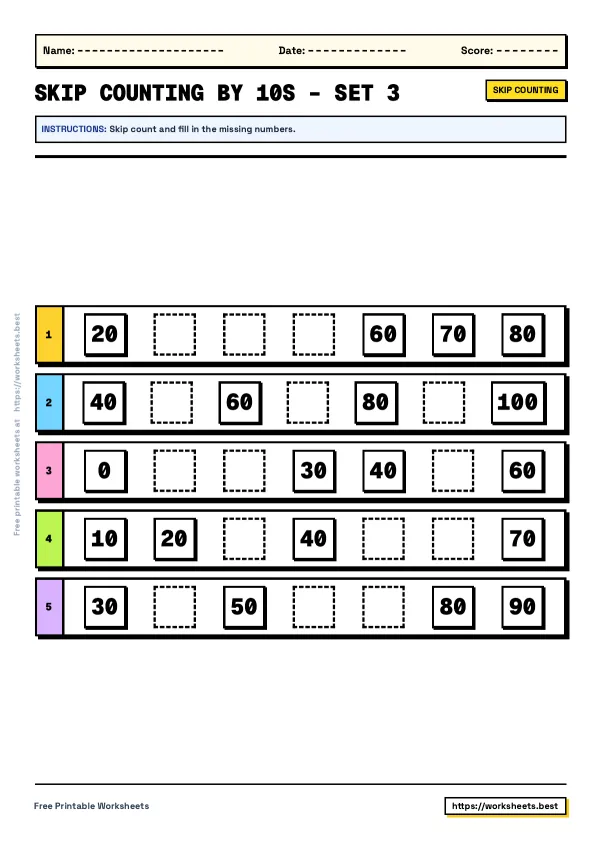
Skip Counting by 10s – Set 3
K–1st GradeNumber Sense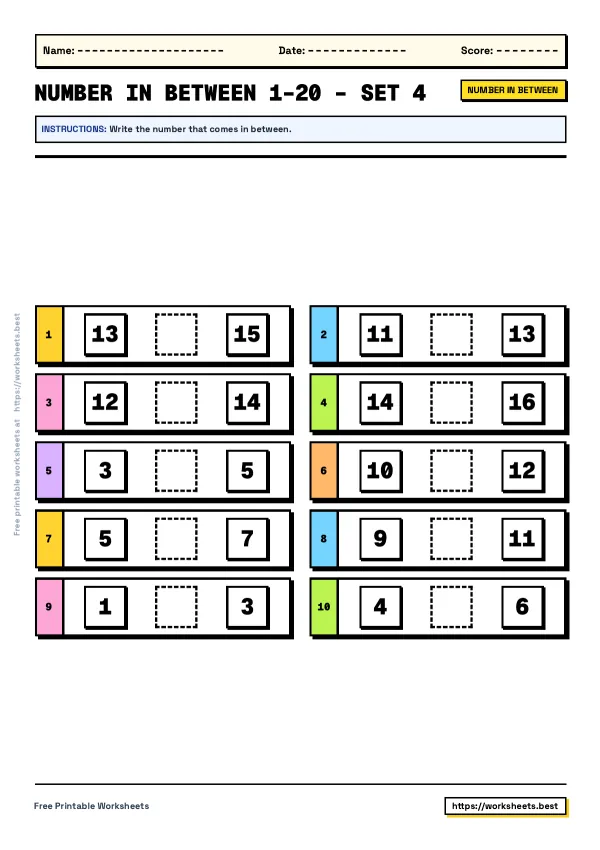
Number in Between 1–20 – Set 4
KindergartenNumber Sense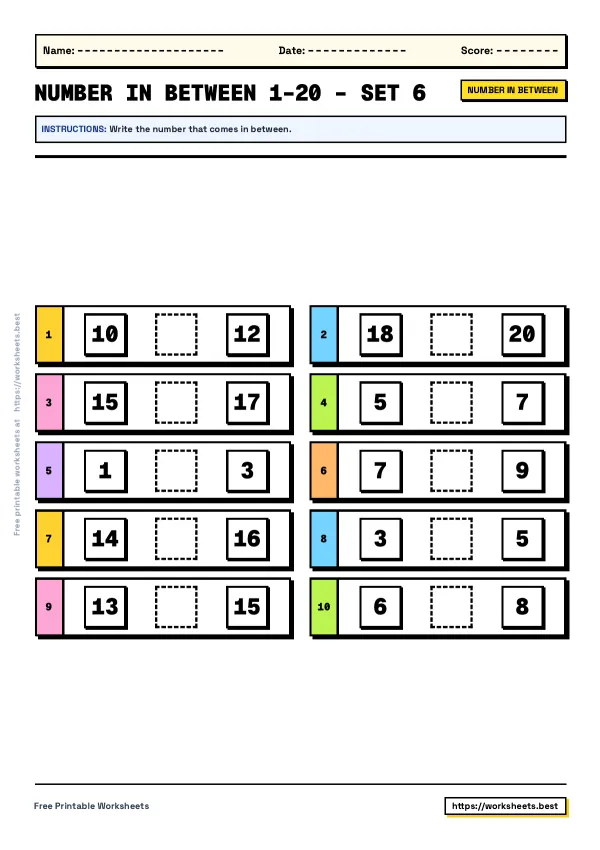
Number in Between 1–20 – Set 6
KindergartenNumber Sense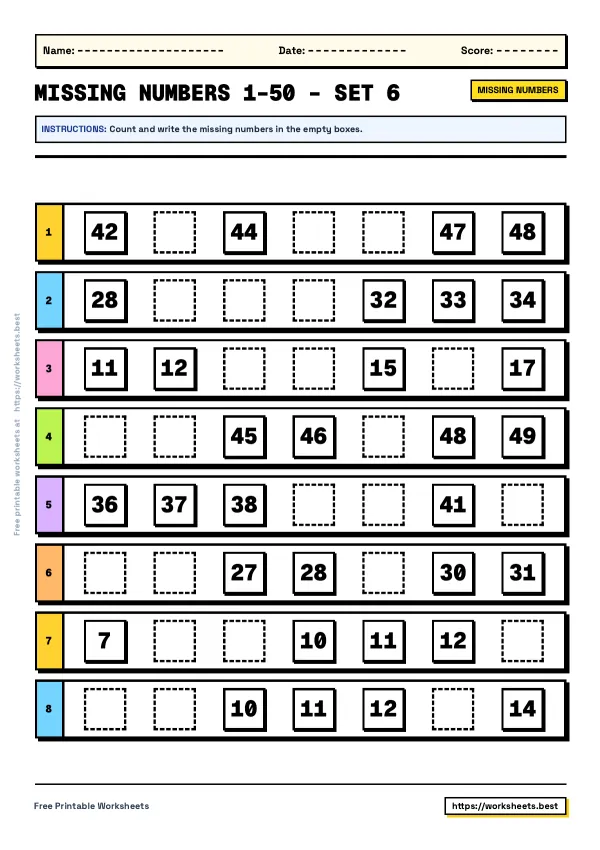
Missing Numbers 1–50 – Set 6
K–1st GradeNumber Sense
from teachers
Tips for parents and teachers
- Use a number line or hundreds chart alongside before-and-after pages so children can point to the number and its neighbors before writing.
- For missing-number pages to 20, have children count aloud from 1 and pause at the blank; this turns a fill-in task into a spoken sequence check.
- When comparing pictures, ask children to match one object to one object first, then say which group has more or fewer. This builds one-to-one correspondence before they rely on counting.
- For skip counting by 10s, clap or tap each decade number together and then let the child write the numbers; repeat the same pattern on another day.
Questions parents ask
What number sense skills should a kindergartner practice?
Kindergartners benefit from counting objects, ordering numbers, comparing groups, and naming what comes before and after a number. Short practice with numbers to 20 builds fluency without turning the task into a long drill.
How can I help my child with missing numbers up to 20?
Start with a number line or a written 1–20 sequence and ask the child to read the numbers aloud before filling blanks. Pointing to each number as they count helps them notice the pattern rather than guess.
Should kindergarten children practice skip counting by 10s?
Yes, skip counting by 10s is a useful early pattern that supports later place-value work. Keep it oral and visual first with a hundreds chart, then move to a written page.
What is the difference between counting and number sense?
Counting is saying or writing numbers in order; number sense includes knowing what a number means, how numbers compare, and how they fit in a sequence. The before-and-after and picture-comparison pages practice both ideas together.
How do I teach before and after numbers at home?
Say a number and ask your child what comes just before and just after it, using a number line if needed. Then let them write the pair on a before-and-after page and say the sequence aloud once more.