I Spy Counting Worksheets
A single question — how many can you find? — keeps young children counting pictures without any sense that they are practicing. The I Spy Counting Worksheets turn that game into dozens of printable pages for Pre-K and kindergarten, where a child searches a busy picture, counts each object, writes the number, and checks the work against the answer key.
Read more +
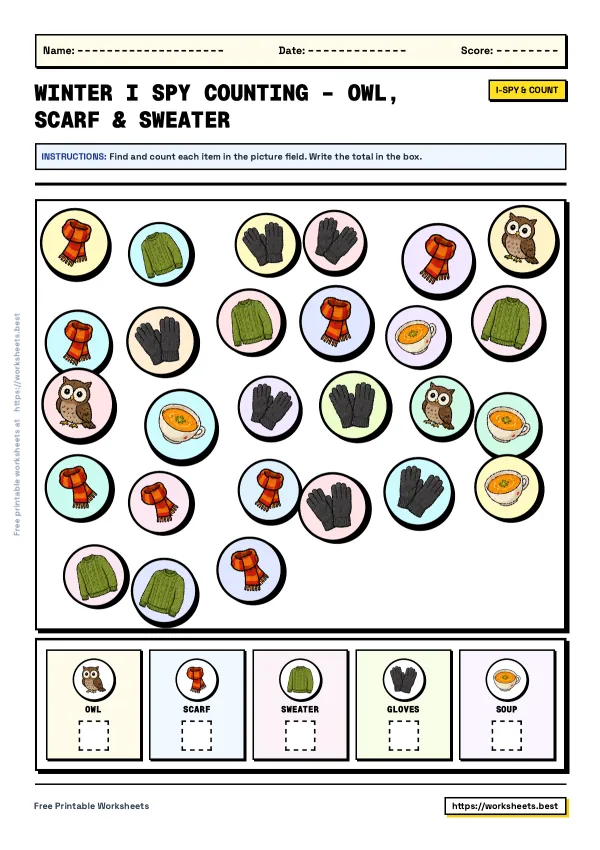
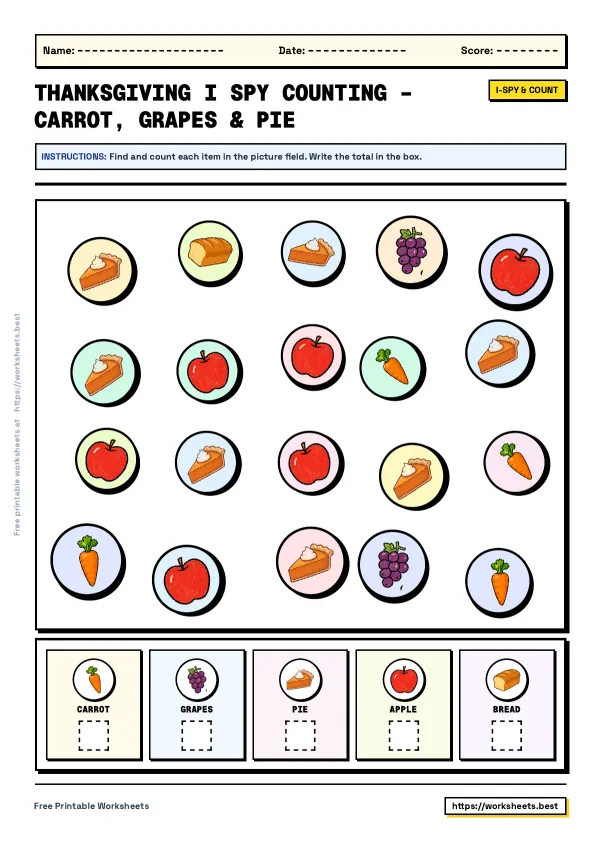
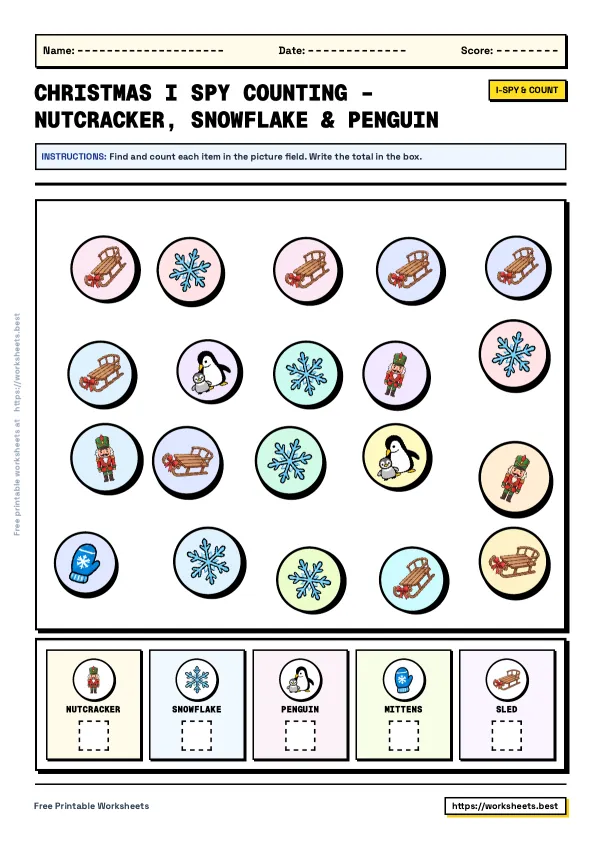
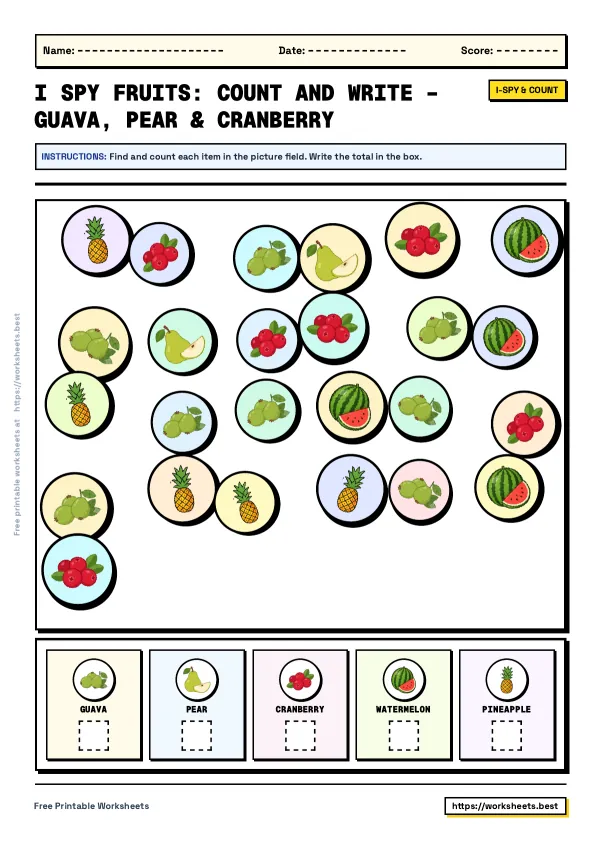
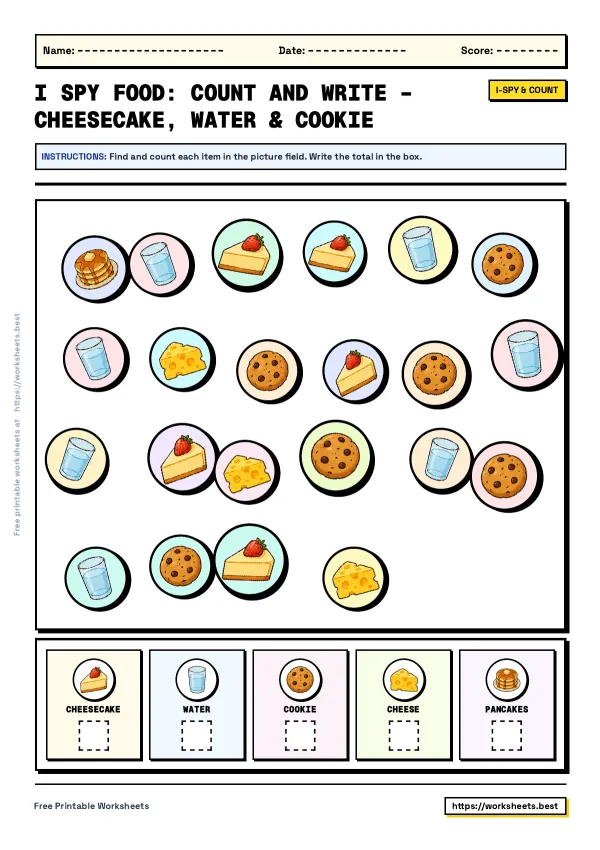
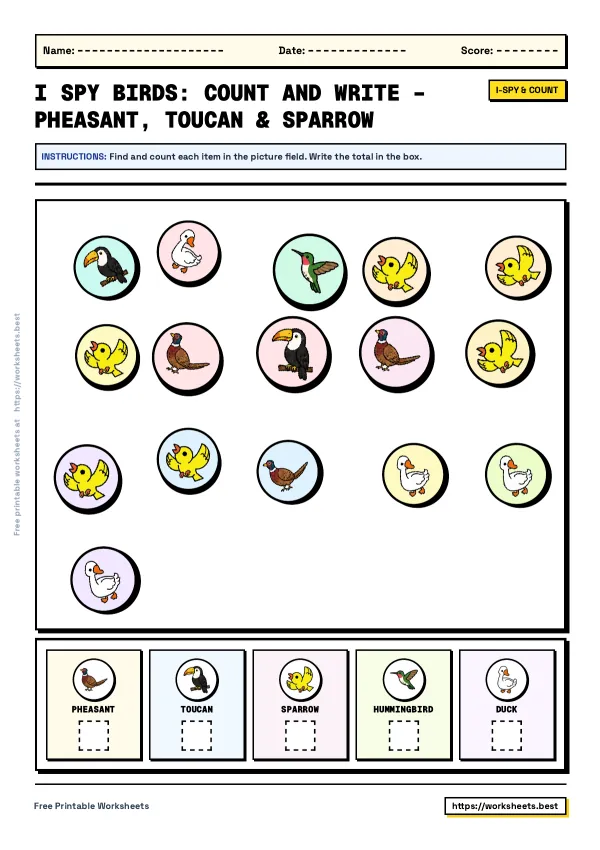
Each sheet follows the same routine: hunt for one item, count how many times it appears, then write that numeral in the box beside it. The repetition builds counting, number writing and visual discrimination — telling a chick from a duck. Themes cover holidays and seasons, animals, birds, bugs, sea animals, food, fruits, vegetables, clothes and transport. A winter page might hide an owl and a scarf among mittens and snow, while a Thanksgiving page sends children looking for a turkey, a pumpkin and a slice of pie.
Print the pages on plain paper for a math center, a morning warm-up, or a quiet half hour at the kitchen table. Children can color the pictures once the counting is done, and because every sheet has an answer key, a grown-up can check a stack quickly or a child can check their own work. For children just starting out, count each picture out loud and touch it as you go; for kindergarteners, cover the box and have them write the numeral from memory. This kind of picture counting sits behind Common Core standard K.CC.B.5.
every sheet
All I Spy Counting worksheets
dig deeper
More I Spy Counting worksheets
from teachers
Tips for parents and teachers
- Start with a theme your child already loves, such as a sea animal page or a Christmas page, so counting is the only new thing to think about. Familiar pictures let a four-year-old focus on one-to-one counting instead of working out what the object is.
- Have children touch or cross off each picture as they count it, moving left to right and top to bottom. This keeps the count accurate on a crowded page and builds the same visual scanning they will need for reading.
- Keep a pencil and the answer key nearby so children can check their own totals when they finish. With kindergarteners, ask them to write the numeral first, then say the number name out loud.
- Slip the pages into a dry-erase sleeve or print them on card stock to use them more than once. A page that took several minutes at first gets faster as counting becomes automatic, so keep a few in a folder for waiting rooms and restaurant tables.
Questions parents ask
What ages are I Spy counting worksheets best for?
They are written for Pre-K and kindergarten, so most children using them are about four to six years old. Older children who rush and lose track while counting can also use them as a quick accuracy warm-up.
How can I stop my child from losing count on a busy page?
Ask them to touch or cross off each picture as they count it, and to go in a set order, such as left to right across each row. Counting the same item twice is the most common mistake, and the answer key shows what the total should be.
Do these sheets help with writing numbers, or only counting?
Each page pairs finding and counting an object with writing that numeral in the box, so children practice forming numbers as well as counting. Visual discrimination gets a workout too, since a chick and a duck have to be told apart.
Should I let my child color the pictures?
Yes, coloring after the counting is finished gives extra fine-motor practice and makes the page feel like their own. Keep counting first so it stays the focus, and hand out crayons once the numbers are written.
Can my child check the answers alone?
All of the sheets come with an answer key, so a child who can read numerals can compare their totals and correct them independently. If they would rather be checked by an adult, that works too.