3rd Grade Multiplication Worksheets
Third grade is when multiplication facts start to stick, and these 3rd grade multiplication worksheets give children the repeated practice that makes recall automatic. Every sheet is a math drill: a column of facts to answer, one after another, until the times tables come back without counting on fingers.
Read more +
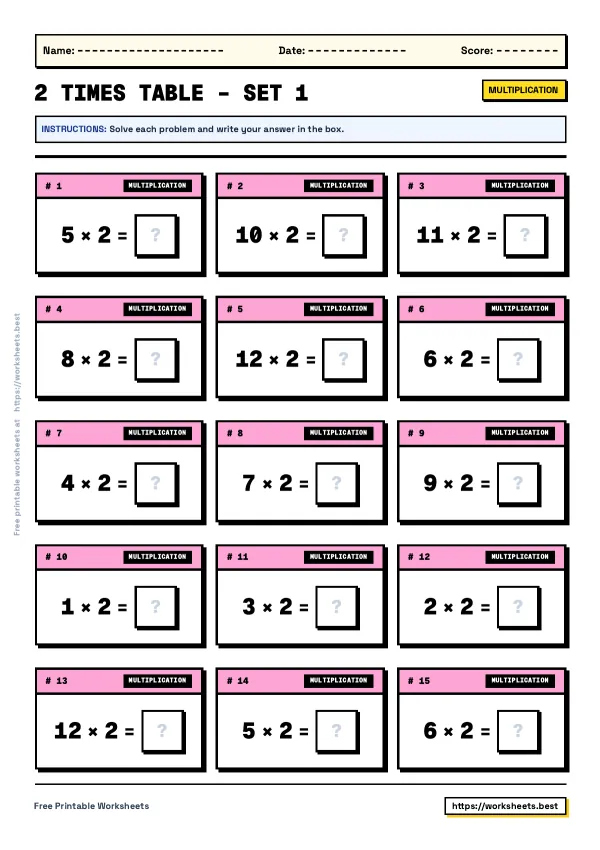
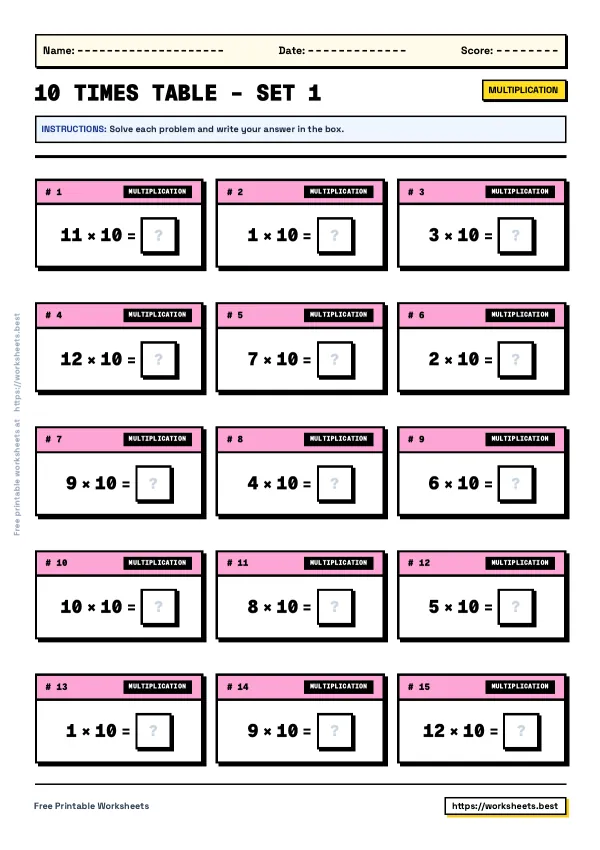
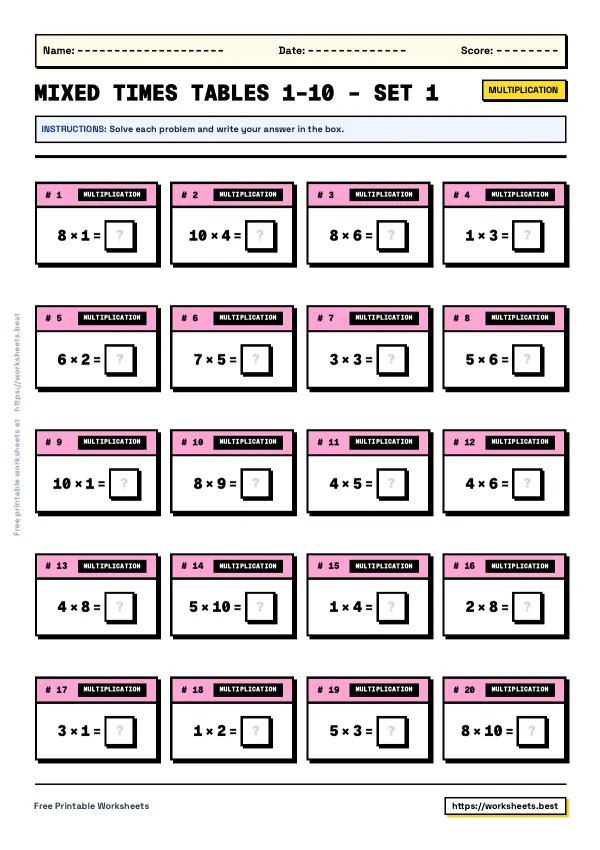
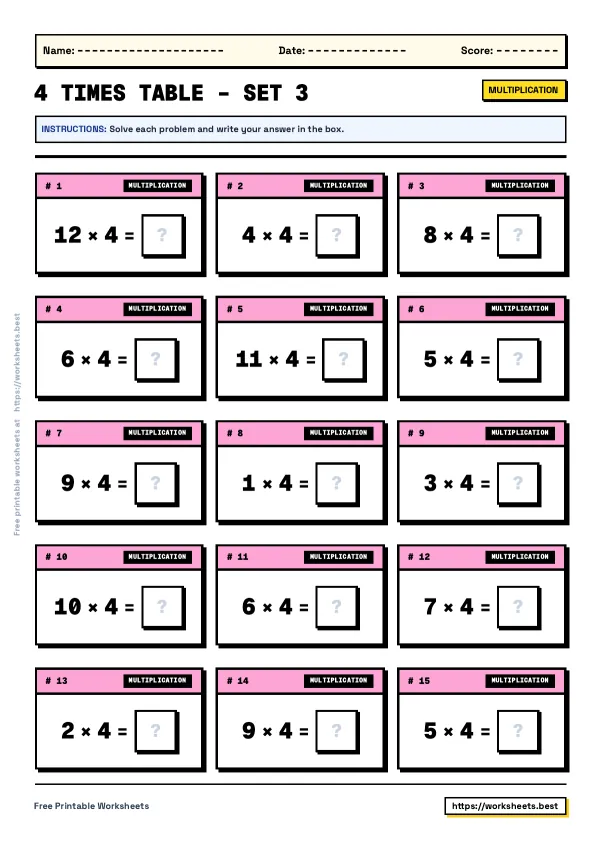
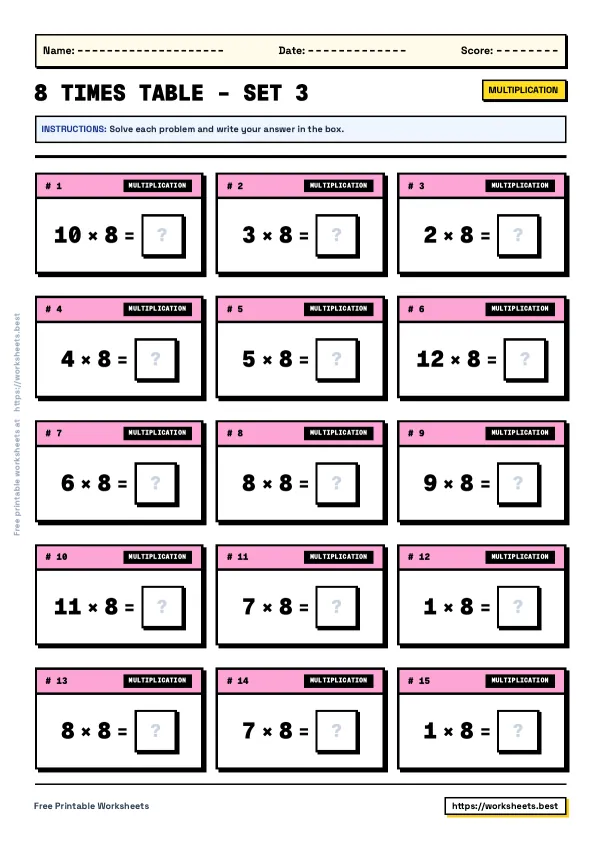
Start with the mixed sheet that cycles through tables 1 to 10, so children switch between facts the way real recall works. When one table needs extra attention, a single-table sheet keeps practice narrow — a page of 10s facts makes the pattern obvious, and the rest of the tables follow the same layout. A set of dozens of sheets means there is always another round ready.
The drills suit 3rd graders working at grade level, plus 2nd graders ready for a head start and 4th graders firming up facts before multi-digit multiplication. At home, one drill page fits into ten minutes before dinner; in class, print a set for a warm-up, a center, or a quick check. Answer keys are included for all sheets, so marking takes seconds, and the practice supports Common Core standard 3.OA.C.7.
every sheet
All 3rd Grade Multiplication worksheets
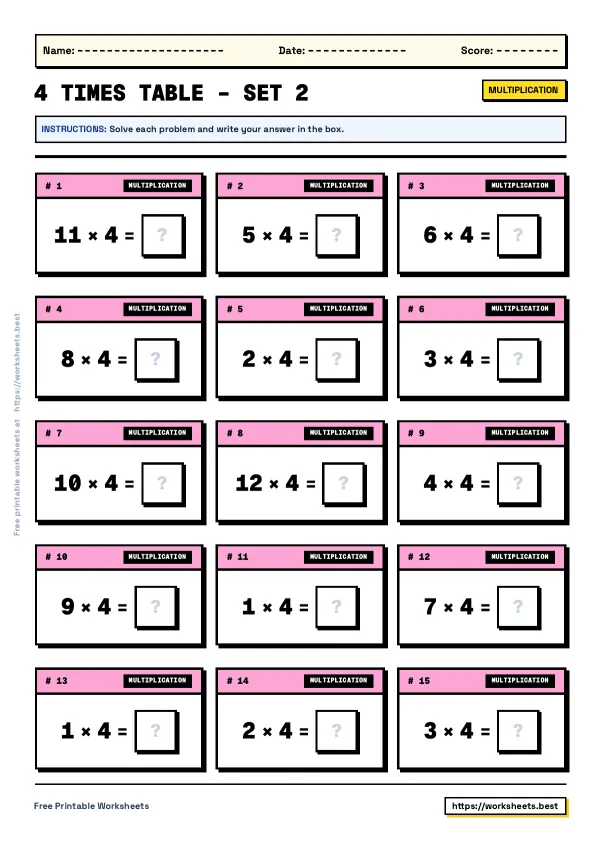
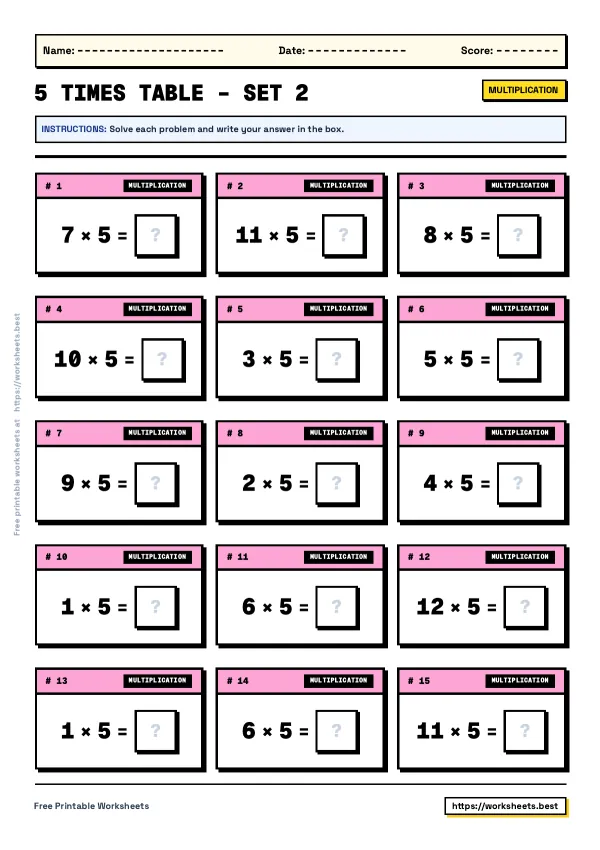
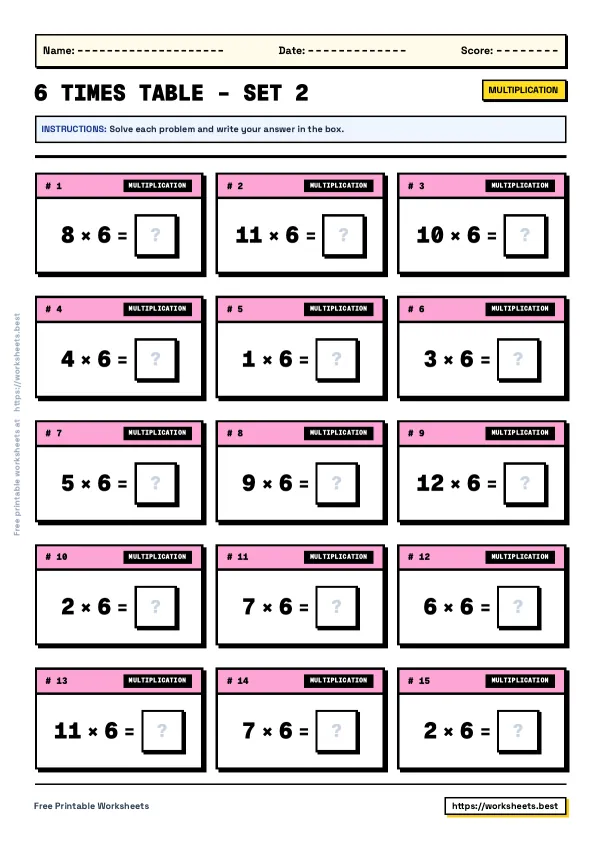
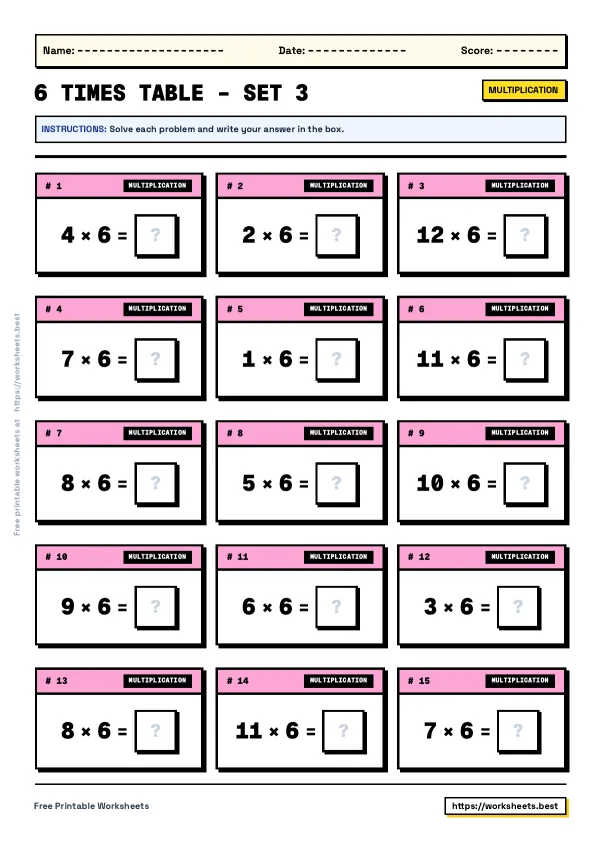
from teachers
Tips for parents and teachers
- Keep drills to about five minutes and stop while answers still come quickly; short daily practice builds facts faster than one long weekly session.
- Practice a single table until it feels automatic, then fold it back into the mixed 1–10 drill so your child has to pick that fact out of a crowd.
- Ask your child to say the whole fact aloud as they write the answer, such as six sevens are forty-two; saying and writing together gives two routes to the same fact.
- Let children mark their own sheet with the answer key and circle anything they missed; the circled facts show exactly which table to practice next.
Questions parents ask
What times tables should a 3rd grader know by the end of the year?
Most 3rd grade programs aim for fluent recall of facts through 10 × 10, which is the range these drills cover. Fluency means answering within a few seconds without counting on fingers, not just getting the right answer eventually.
Should my child practice one times table at a time or all of them mixed?
Both, in that order. Spend a few days on a single table until it feels easy, then return to the mixed 1–10 sheet so the fact stays available alongside the others instead of being stored as a separate list.
How long should a multiplication drill take?
Three to five minutes is plenty for a 3rd grader. Short, daily drills build recall faster than one long session, and stopping while the answers still come quickly keeps practice positive.
My child still counts on fingers during drills. Is that a problem?
It is a normal stage, and it usually fades with repetition. If a child is stuck on one table, work on that table alone for a few days, then mix it back in so the fact gets practiced in different orders.
Which times table should we start with?
The 2s, 5s, and 10s are usually easiest because they follow clear patterns, which makes the 10 times table sheet a gentle place to begin. Save the 6s, 7s, and 8s for after those are solid, since they share fewer obvious shortcuts.