3rd Grade Cursive Writing Worksheets
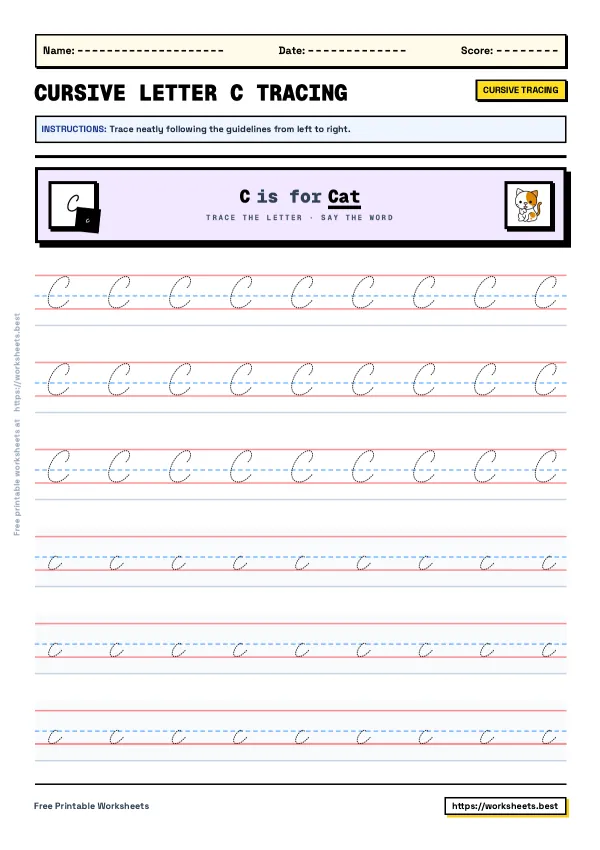
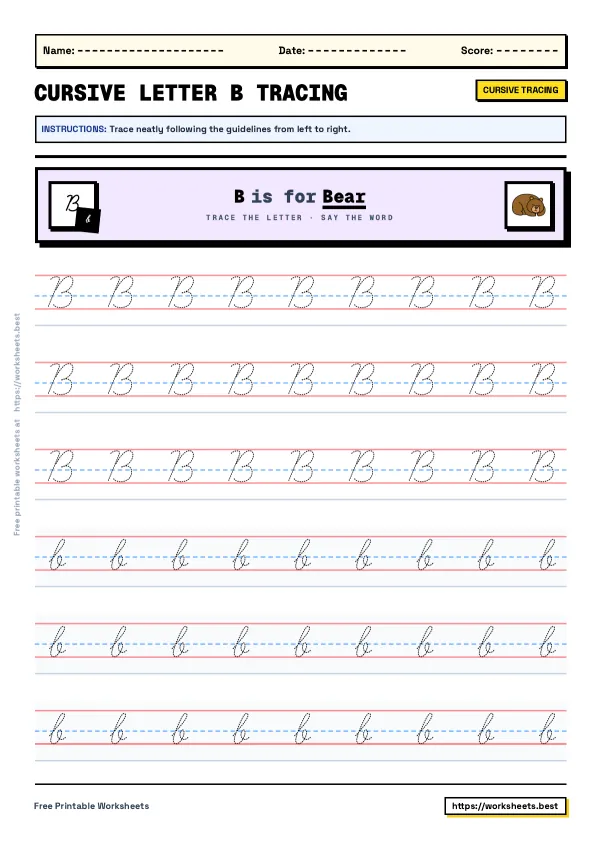
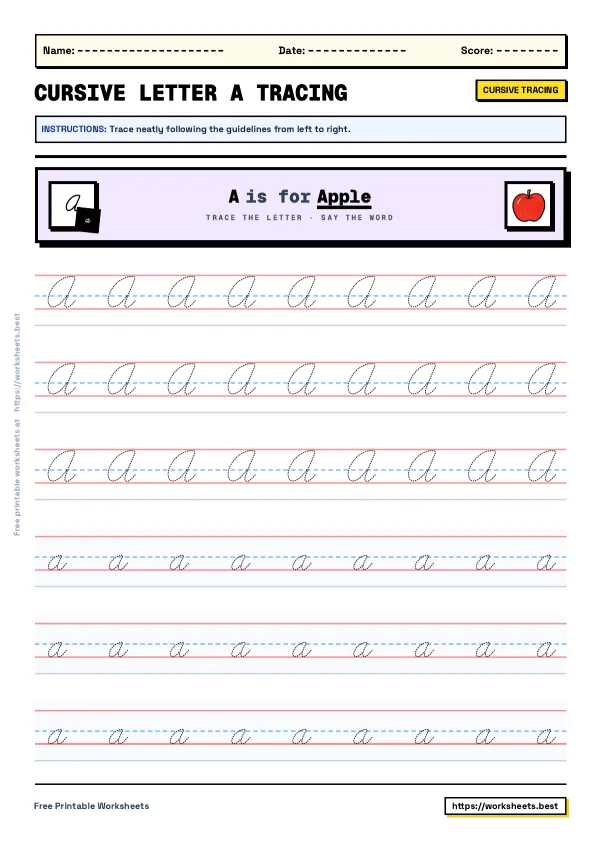
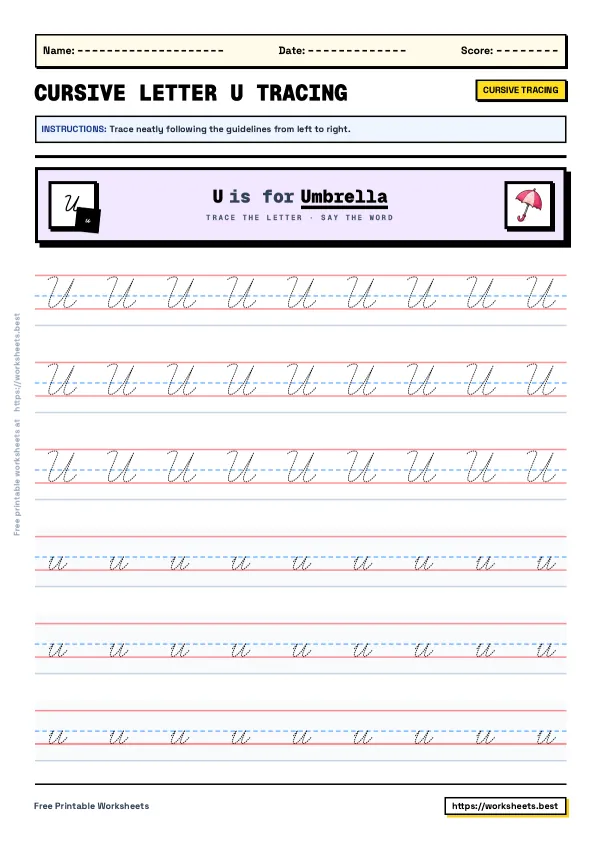
A calm, repeatable way to build joined-up handwriting is the goal of these third grade cursive writing worksheets. At this age, many children are ready to practice letter shapes, joins and spacing without rushing, and the tracing format keeps the focus on steady pencil control and fine motor skills. The set includes tracing pages that pair a lowercase letter with a familiar word such as apple, bear, cat, dog or elephant, so children also connect handwriting practice with letter recognition. Following the model and forming each letter again and again helps children build control and confidence.
Read more +
Use the sheets at home for a short daily session, or in class as a warm-up before longer writing work. A third grader can trace one letter family at a time, say the letter sound, and then try the same shape freehand on the back of the page. Because the worksheets are simple and uncluttered, they work well for independent practice, small groups, or a quiet moment after recess. Teachers can add them to a handwriting center, while parents can keep the sheets in a folder for car rides, waiting rooms, or after-school calm-down time. Keep sessions brief and praise careful strokes more than speed; the goal is confident, readable cursive, not a finished page in record time.
every sheet
All 3rd Grade Cursive Writing worksheets
from teachers
Tips for parents and teachers
- Set up a comfortable writing spot with feet flat on the floor and the paper angled slightly toward the writing hand. Good posture makes it easier for a third grader to control the pencil during tracing.
- Trace slowly and say the letter sound or word aloud as your child writes. This links the shape of the letter to its sound and helps letter recognition stick.
- Keep practice short—five to ten minutes—and stop while your child is still feeling successful. A little tracing done often works better than a long session that ends in frustration.
- After tracing a line, ask your child to try the same letter once freehand nearby, then compare the two shapes together. Point out one detail that improved, such as a smooth curve or a clear join.
Questions parents ask
What cursive skills should a third grader practice first?
Start with lowercase letter shapes and simple joins, then move to spacing and size. Tracing pages let children repeat those shapes while building fine motor control.
How can I tell if my child is ready for cursive writing?
Most children are ready around 3rd grade, when they can hold a pencil steadily and copy simple shapes. If tracing feels hard, shorten the session and practice pencil control with big loops and lines first.
Should my child trace or write freehand first?
Tracing gives a clear model for letter shape and direction, so it is a useful first step. Follow up with a freehand attempt so your child can apply the movement without the guide.
How often should we practice cursive at home?
Short, regular sessions—about three to five times a week—are more helpful than one long session. Ten minutes of focused tracing can be enough for a third grader.
Which cursive letters should a third grader practice first?
Lowercase letters are the usual starting point, since they make up most of the words children write. Tracing pages that pair a letter with a short, familiar word give repeated practice with each letter shape before children move on.