2nd Grade Number Sense Worksheets
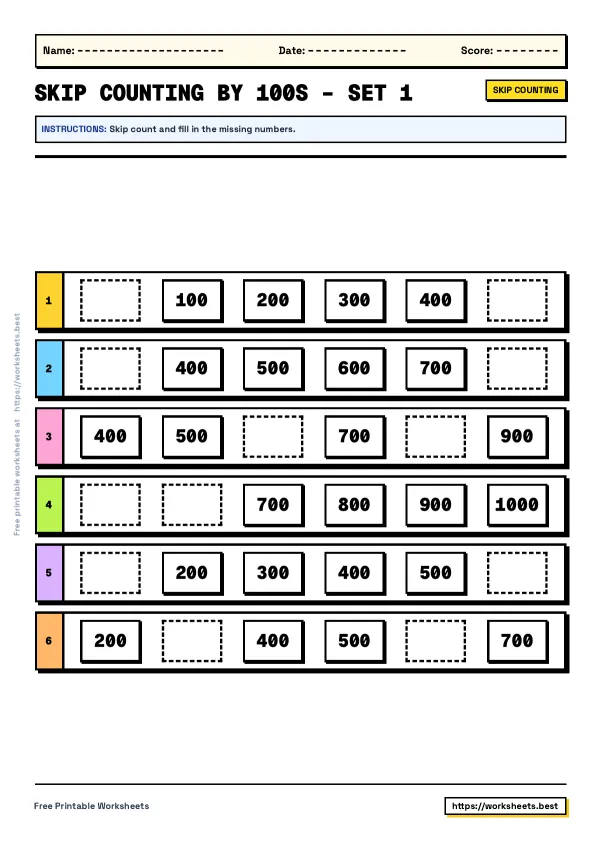
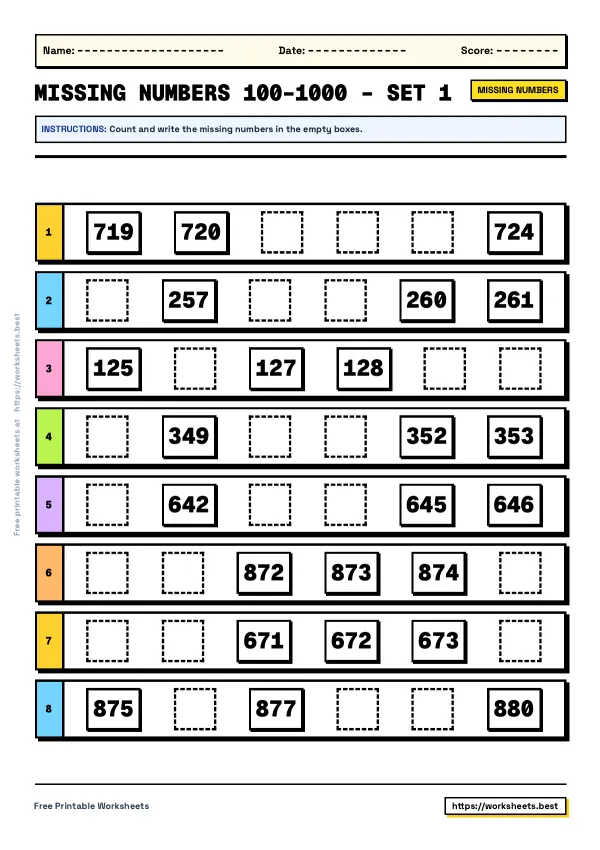
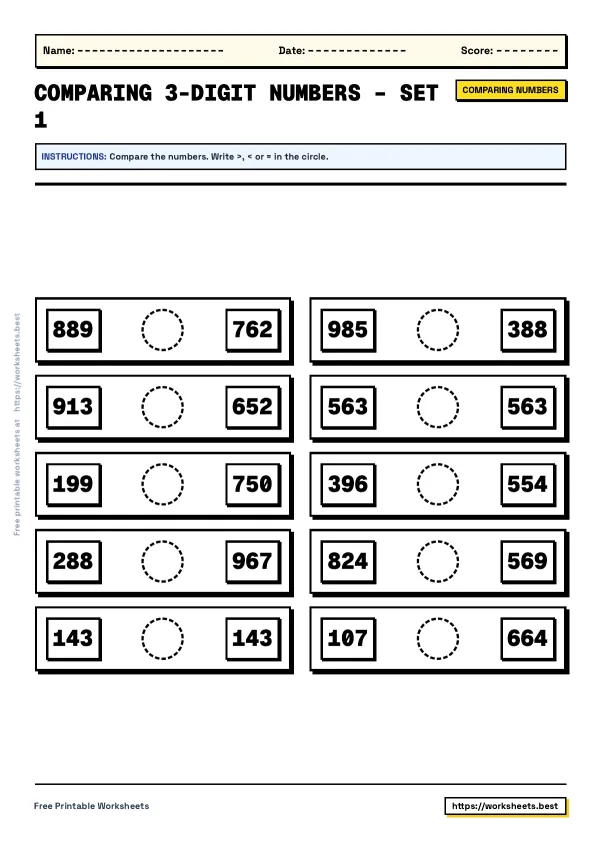
Children in 2nd grade can build stronger number sense with 2nd Grade Number Sense Worksheets that give repeated practice with counting, number order, skip counting and comparing numbers. In one sheet, children compare pairs of three-digit numbers and decide which is greater. In another, they fill in missing numbers in sequences from 100 to 1000. The practice comes in straightforward printable formats that keep the focus on the math, so a child can work independently or with a quick reminder from an adult. Answer keys are included for every sheet.
Read more +
The collection suits 2nd grade, when children are stretching from two-digit to three-digit numbers and need many chances to notice patterns. Alongside the comparison and missing-number sheets, the practice includes skip counting by 2s, 5s and 100s and other counting work. Use a page as a short morning warm-up, a math center task, or a short homework task. In class, children can solve a few problems, explain their thinking to a partner, and then finish the rest. At home, an adult can ask which digit helped them decide or what pattern they see, turning a quiet worksheet into a brief conversation.
every sheet
All 2nd Grade Number Sense worksheets
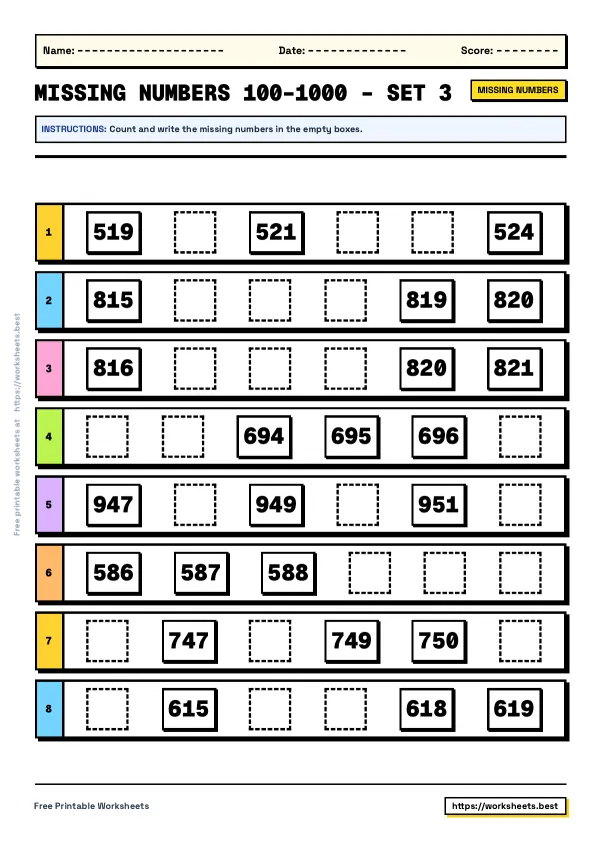
Missing Numbers 100–1000 – Set 3
2nd GradeNumber Sense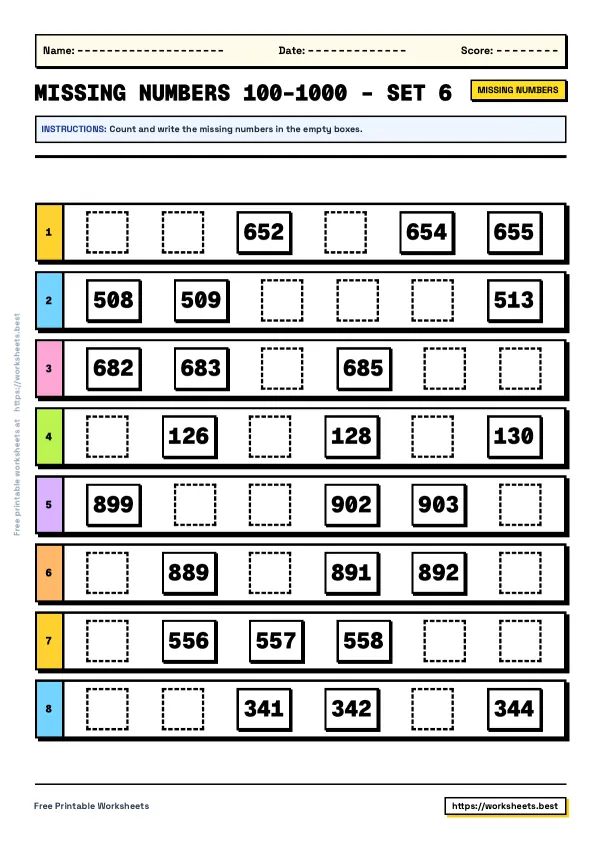
Missing Numbers 100–1000 – Set 6
2nd GradeNumber Sense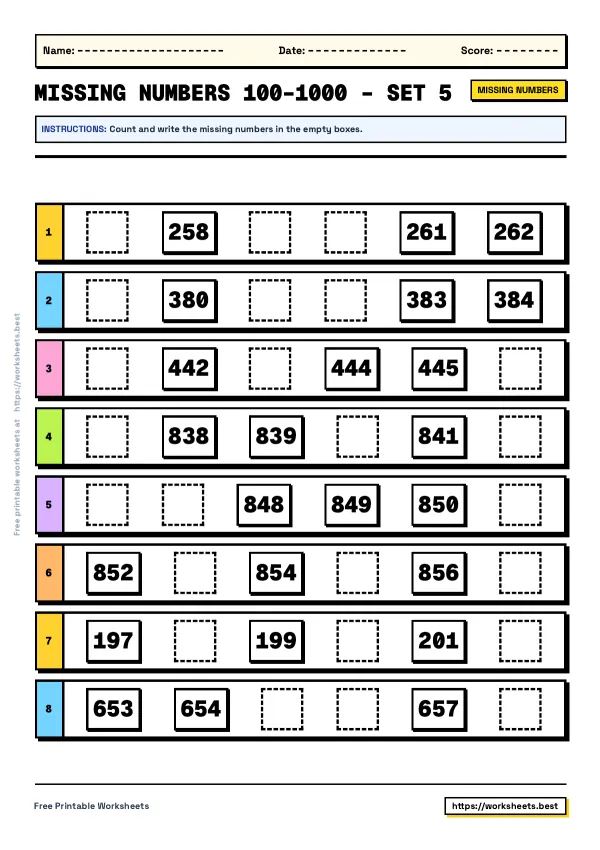
Missing Numbers 100–1000 – Set 5
2nd GradeNumber Sense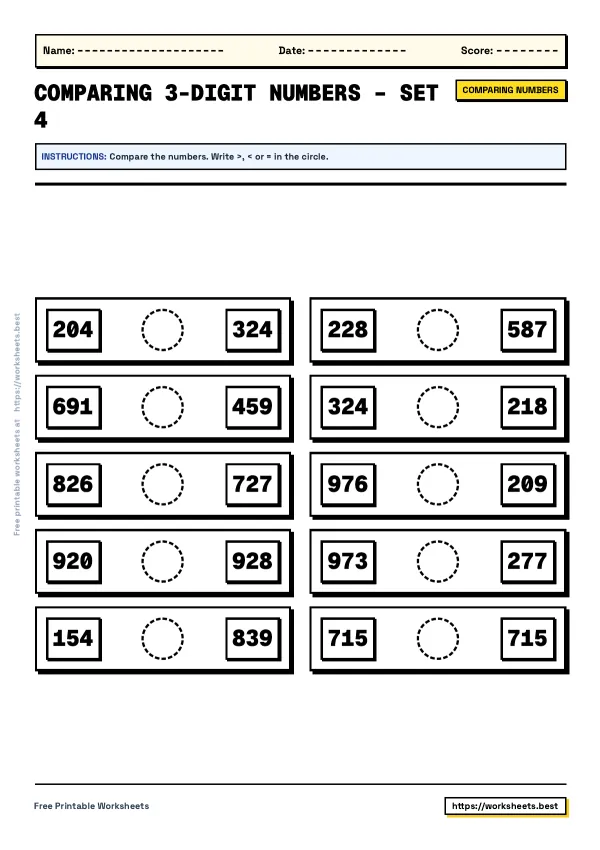
Comparing 3-Digit Numbers – Set 4
2nd GradeNumber Sense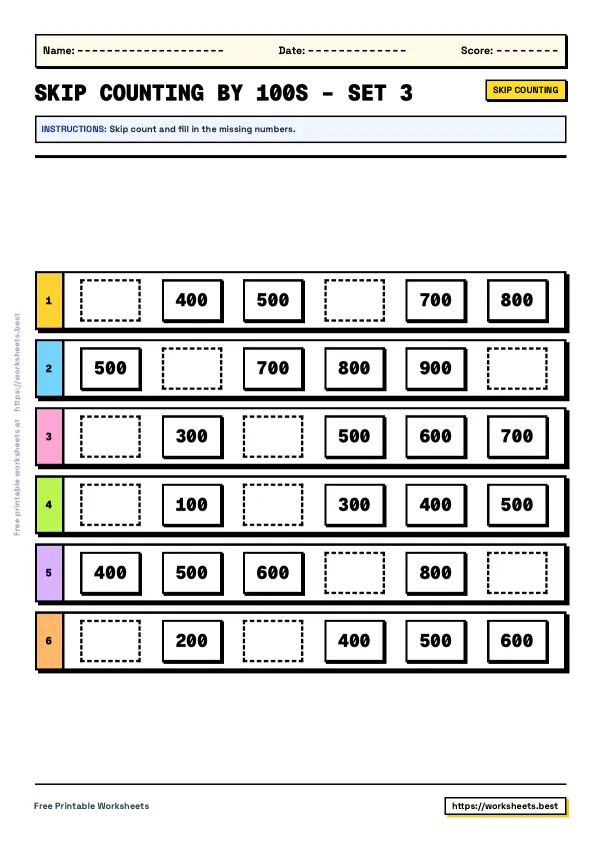
Skip Counting by 100s – Set 3
2nd GradeNumber Sense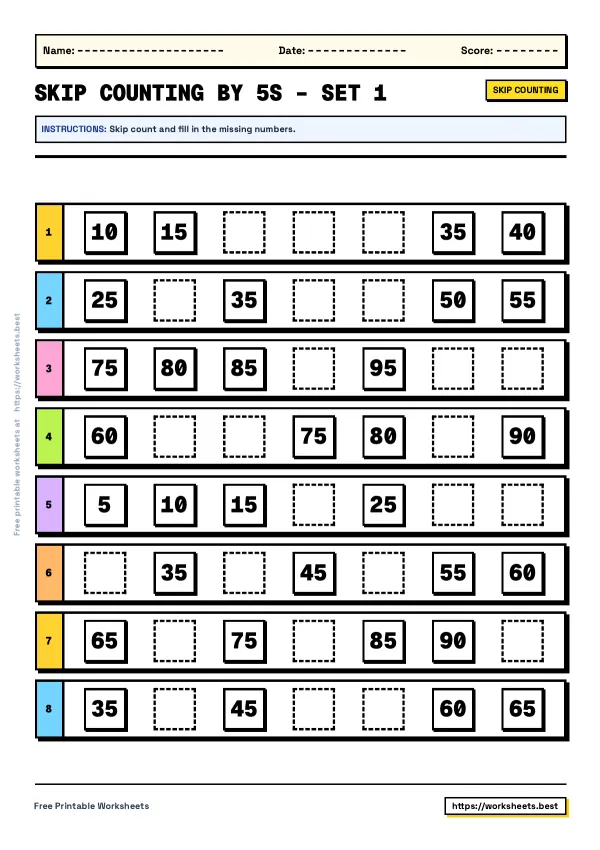
Skip Counting by 5s – Set 1
1st–2nd GradeNumber Sense
from teachers
Tips for parents and teachers
- Before comparing three-digit numbers, have children build each number with base-ten blocks or bundled straws. Seeing four hundreds beside three hundreds makes the greater number easier to explain.
- For missing-number sequences, ask children to read the known numbers aloud and name the step before they write. A number line can help them check whether the sequence is counting by ones, tens, or hundreds.
- Practice skip counting by 2s, 5s and 100s with a quick oral warm-up. Clap or tap the pattern together, then move to the printed page so the written numbers connect to the rhythm.
- After a few answers, ask the child to explain why one number is greater or what comes next in a sequence. A sentence beginning with because or the pattern is shows whether the child is using number sense or only guessing.
Questions parents ask
What number sense skills should a 2nd grader practice?
Second graders benefit from counting, skip counting, and comparing numbers. These sheets focus on those skills with two- and three-digit numbers, including sequences from 100 to 1000.
How can I help my child compare three-digit numbers?
Start with the hundreds digit, then compare tens and ones if the hundreds are the same. Ask your child to build or draw the numbers when the answer is not clear.
Why is skip counting by 2s, 5s and 100s useful?
Skip counting helps children see number patterns and prepares them for addition, subtraction and later multiplication. Counting by 100s also strengthens place value with three-digit numbers.
What should my child do when a missing-number sequence is hard?
Encourage your child to say the known numbers aloud and look for the step between them, such as one, ten or one hundred. Covering part of the sequence or using a number line can make the pattern easier to see.
Do these worksheets match what 2nd graders learn in school?
The sheets practice Common Core skills 2.NBT.A.2 and 2.NBT.A.4, which cover skip counting and comparing three-digit numbers.