1st Grade Number Sense Worksheets
First grade is where counting turns into real number sense, and these 1st Grade Number Sense Worksheets give children dozens of practice pages to build it. The collection covers number order, counting, skip counting and comparing numbers, all written for the 1st grade range.
Read more +
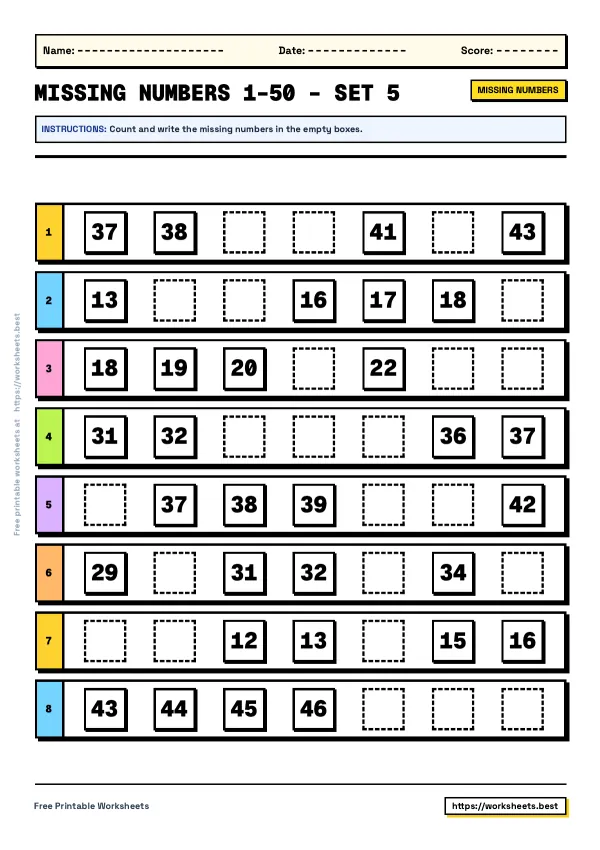
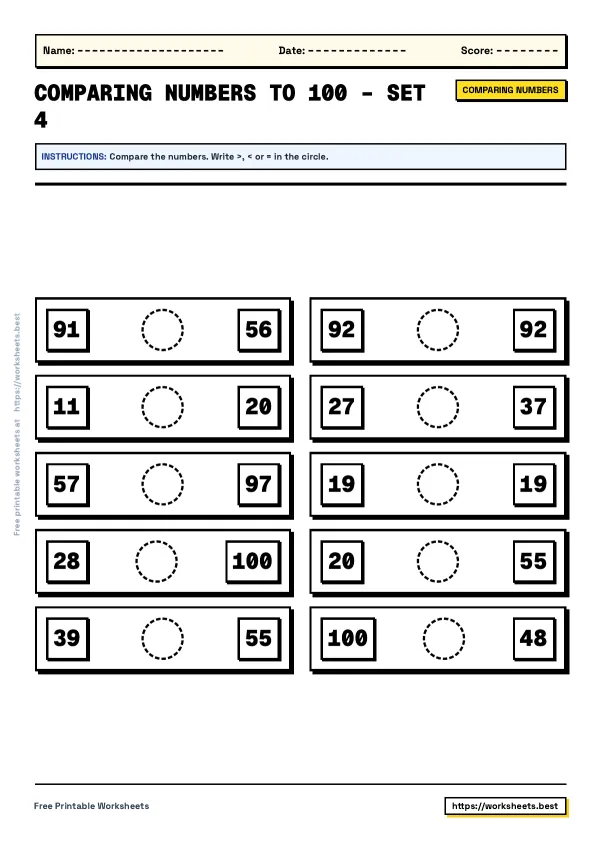
Many sheets ask a child to read a sequence and fill in what is missing. One chart runs all the way to 120 with gaps scattered through it, so a child has to notice where a number belongs instead of counting from one every time. A page that counts forward two at a time works the same skill at a faster rhythm. Comparing pairs up to 20 and up to 100, deciding what comes just before and just after, and finding the number that sits between two others round out the set. Every sheet comes with an answer key, so checking takes a minute at the kitchen table or at your desk after school.
Use a sheet as a warm-up before a math lesson, or send one home for short nightly practice. In class, a comparing page works well as a partner activity: children read the pair aloud, say which number is greater, and explain how they know.
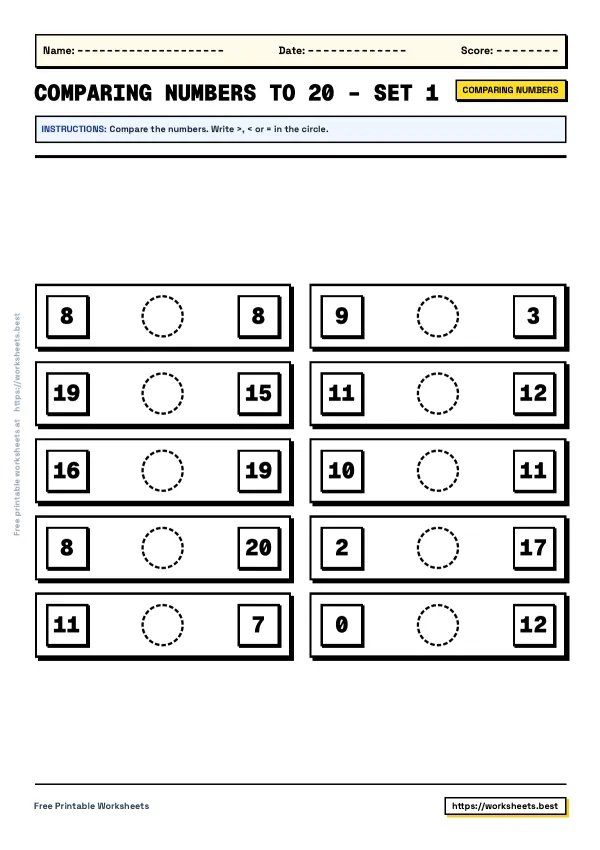
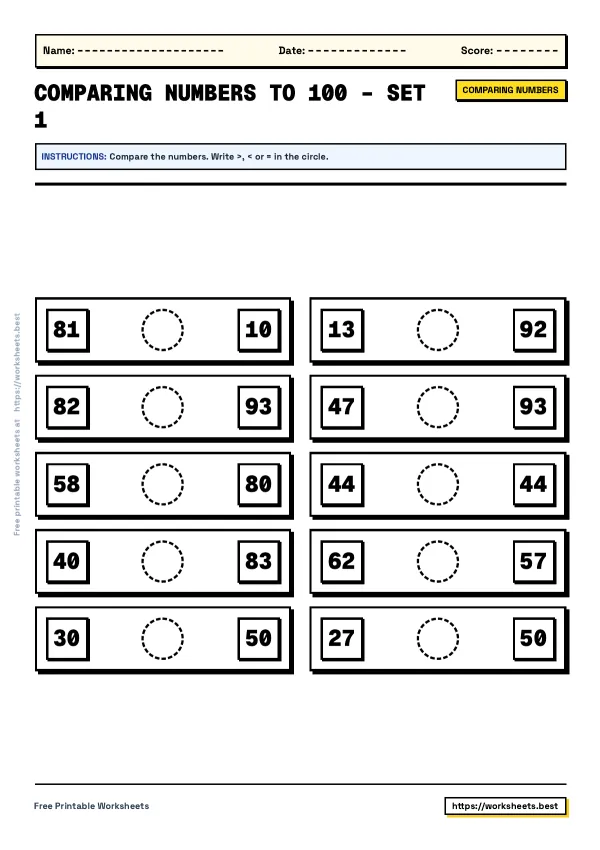
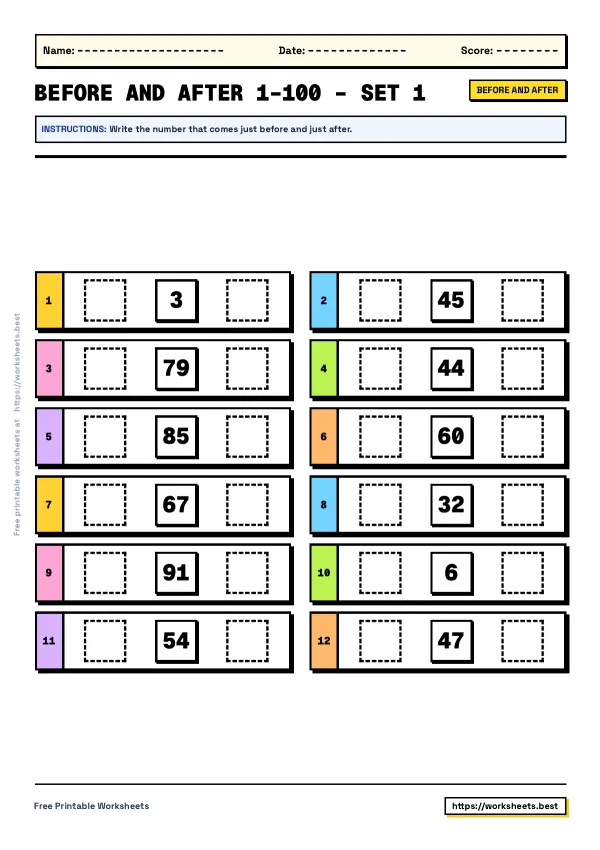
every sheet
All 1st Grade Number Sense worksheets
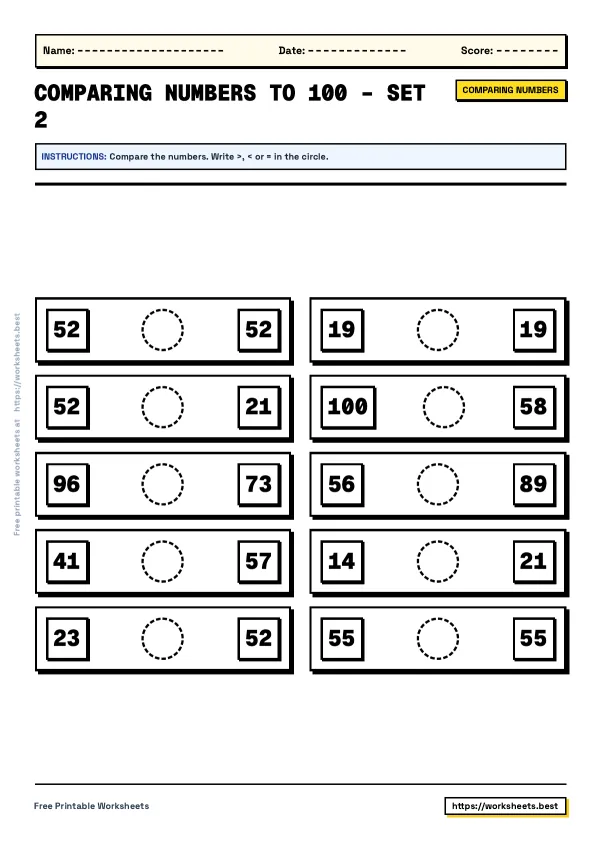
from teachers
Tips for parents and teachers
- Count aloud together before anything gets written. A child who says 84, 85, 86 while tracing the chart is far more likely to land on the right number than one who stares at the gap in silence.
- Keep a hundred chart or number line nearby as a checking tool rather than a crutch. Let your child fill what they can first, then compare against the chart and talk through any misses.
- Turn comparing into a quick card game. Deal two number cards and ask which is greater, how your child knows, and what number sits between them.
- Practice skip counting in short bursts out loud, on the walk to school or while setting the table. Two minutes of counting by 2s, then 5s, then 10s keeps the patterns fresh without turning it into a long drill.
Questions parents ask
What number sense skills should a first grader be working on?
At this age the focus is number order, counting forward and back, skip counting by 2s, 5s and 10s, and comparing numbers up to 100. Knowing that 47 comes after 46 and before 48 matters more than speed.
My child writes 12 for 21. Is that normal in 1st grade?
Reversals like this are common at this age and usually fade with practice. Reading numbers aloud, building them with tens and ones blocks, and comparing pairs side by side help children separate the digits.
Do these worksheets match what my child is learning in school?
The number order and comparing pages line up with Common Core standards 1.NBT.A.1 and 1.NBT.B.3, which cover counting to 120 and comparing two-digit numbers.
How long should a 1st grader spend on one worksheet?
Ten to fifteen minutes is plenty for most first graders. If your child is still working after that, split the sheet across two sittings rather than pushing through.
Does counting on fingers slow children down?
Not at this age. Fingers give young children something concrete to count, and most move to mental strategies on their own once they notice patterns in numbers up to 100.