Clock Reading Worksheets
A child who can glance at an analog clock and say the time has a skill that lasts. Our Clock Reading Worksheets give 1st, 2nd and 3rd graders plenty of practice with that skill, using dozens of worksheets built around one clear format: a printed clock face with hands to read.
Read more +
Children start where time units usually begin — the hour and the half hour — then move on to the quarter hour and to five-minute steps. One sheet asks a child to read a clock face and write the time shown to the half hour; another mixes times at five-minute intervals so a second grader has to look closely at where the minute hand sits between two numbers. Every sheet comes with an answer key, so a parent or teacher can check work quickly or hand the key to a child for self-checking.
Use a single sheet as a warm-up before a math lesson, or print a few for a math center where pairs quiz each other with one child pointing at a clock and the other saying the time aloud. The sheets also address Common Core standards 1.MD.B.3 and 2.MD.C.7, so the practice lines up with what children are expected to master in 1st and 2nd grade.
every sheet
All Clock Reading worksheets
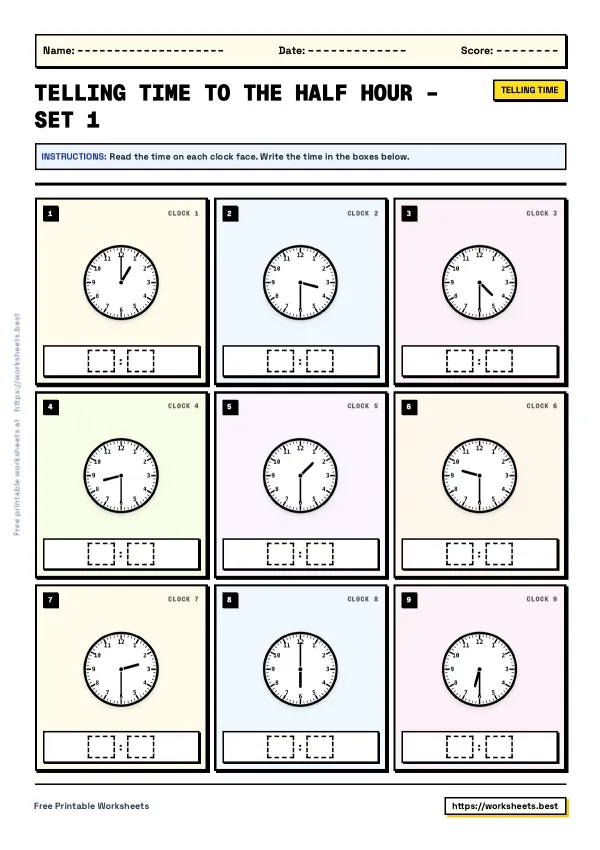
Telling Time to the Half Hour – Set 1
1st GradeClock Reading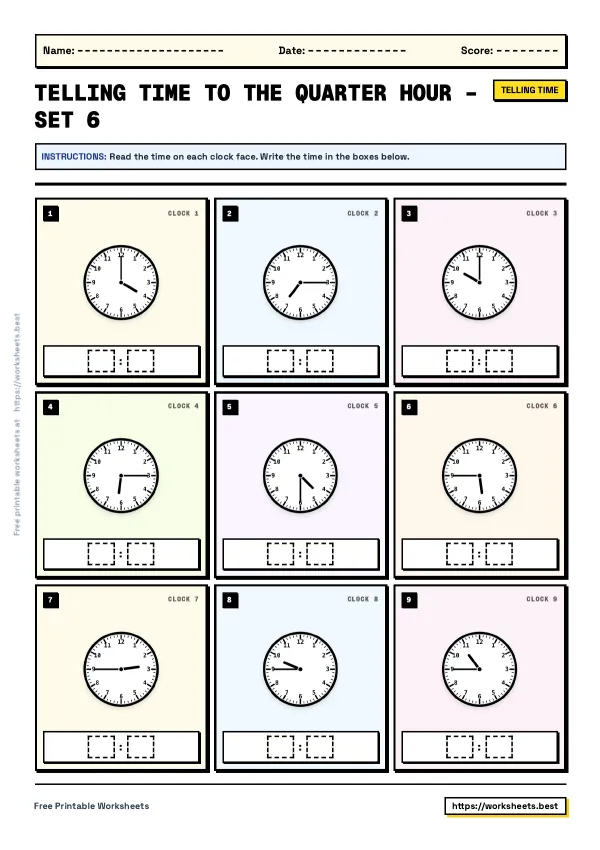
Telling Time to the Quarter Hour – Set 6
2nd GradeClock Reading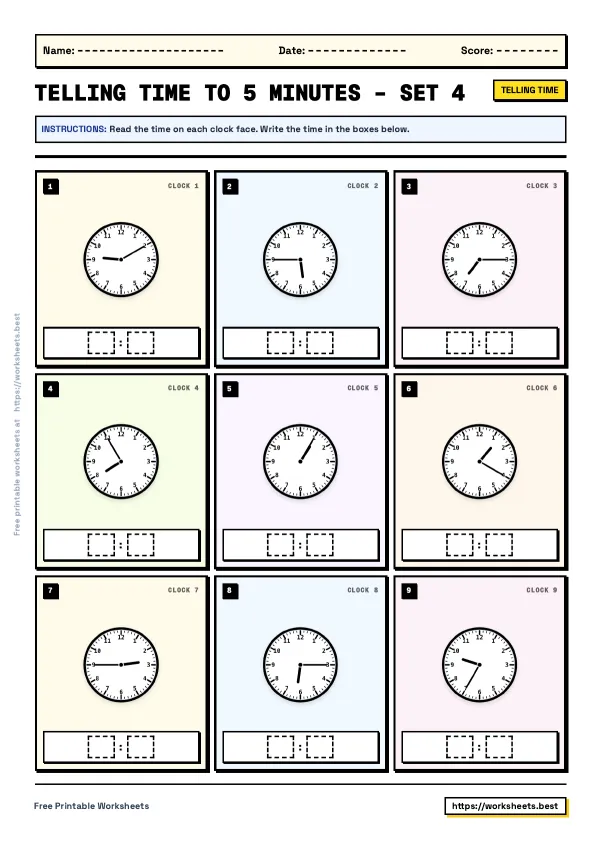
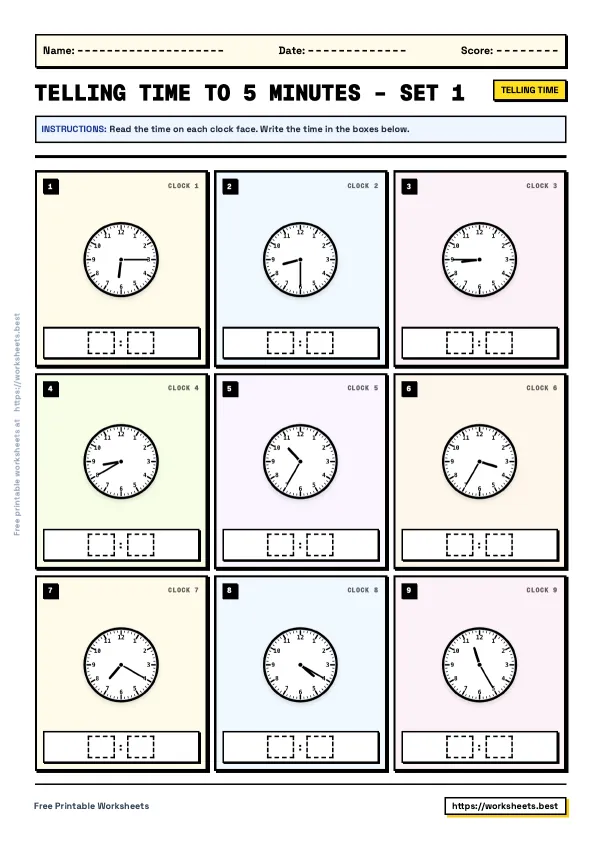
Telling Time to 5 Minutes – Set 4
2nd–3rd GradeClock Reading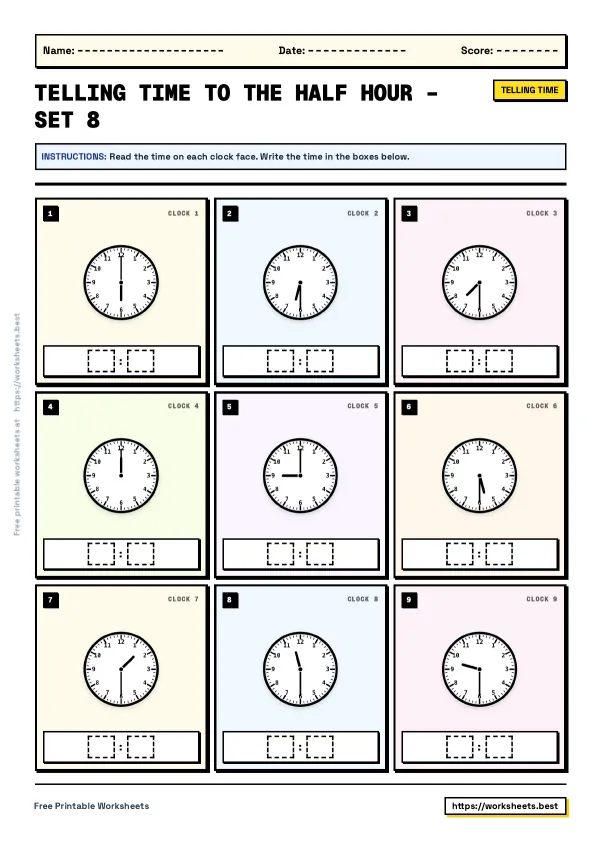
Telling Time to the Half Hour – Set 8
1st GradeClock Reading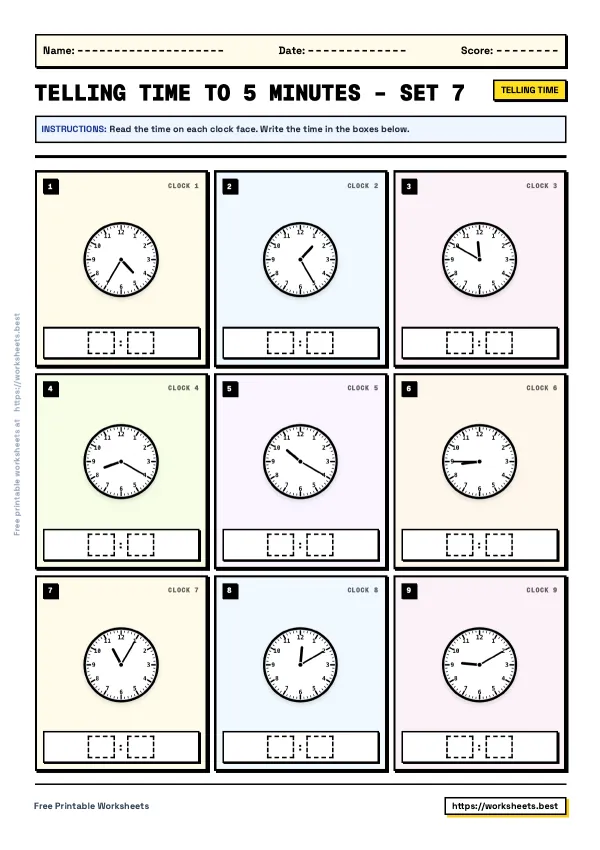
Telling Time to 5 Minutes – Set 7
2nd–3rd GradeClock Reading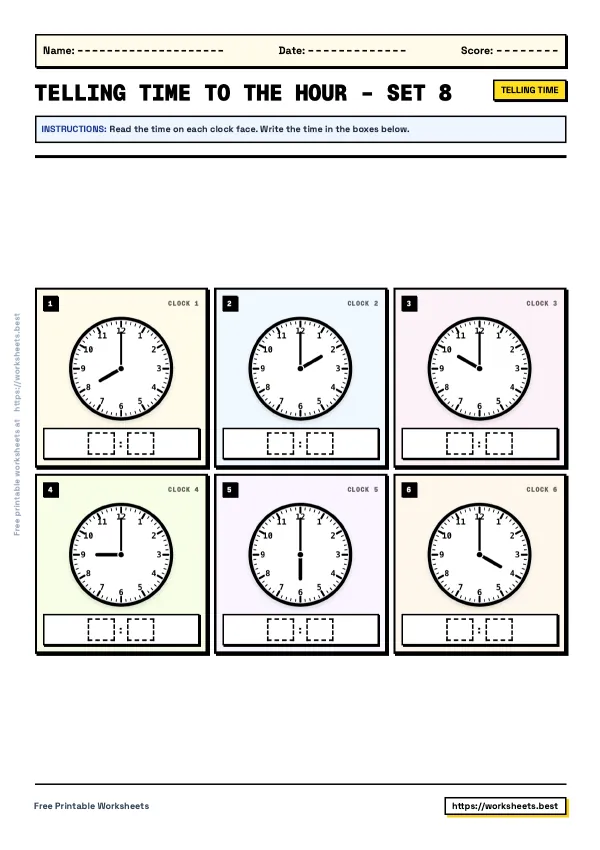
Telling Time to the Hour – Set 8
1st GradeClock Reading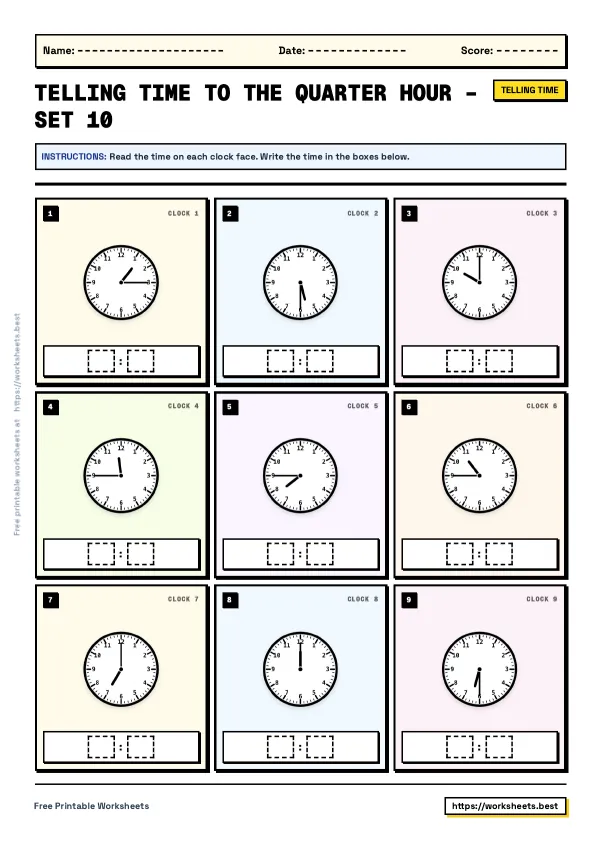
Telling Time to the Quarter Hour – Set 10
2nd GradeClock Reading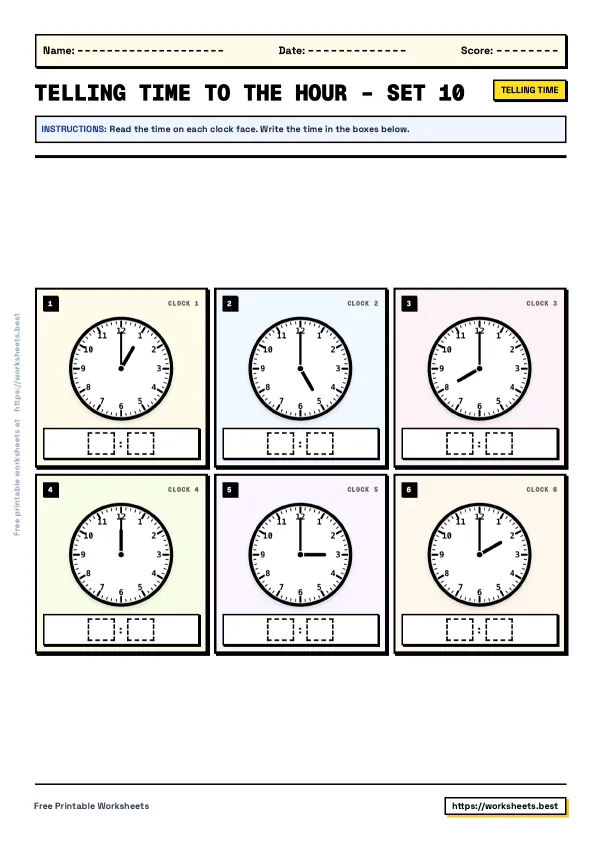
Telling Time to the Hour – Set 10
1st GradeClock Reading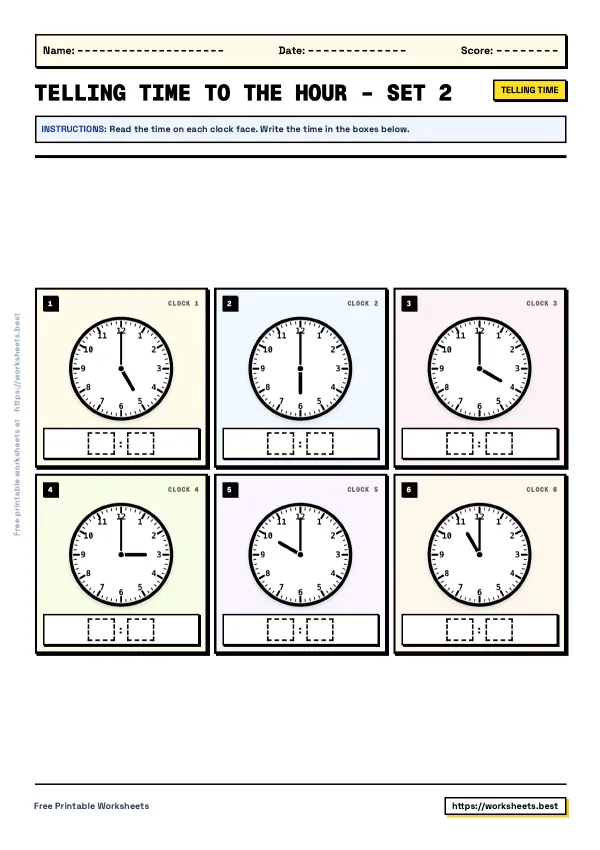
Telling Time to the Hour – Set 2
1st GradeClock Reading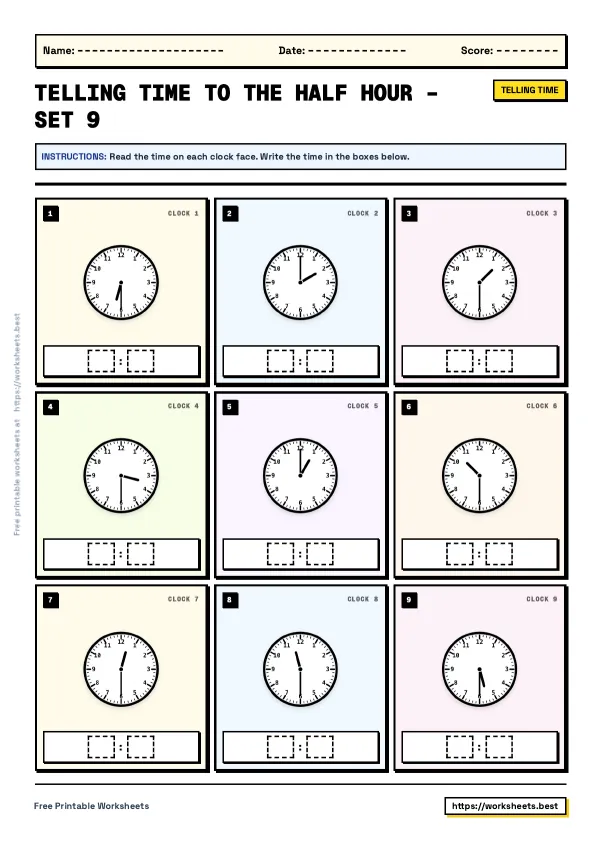
Telling Time to the Half Hour – Set 9
1st GradeClock Reading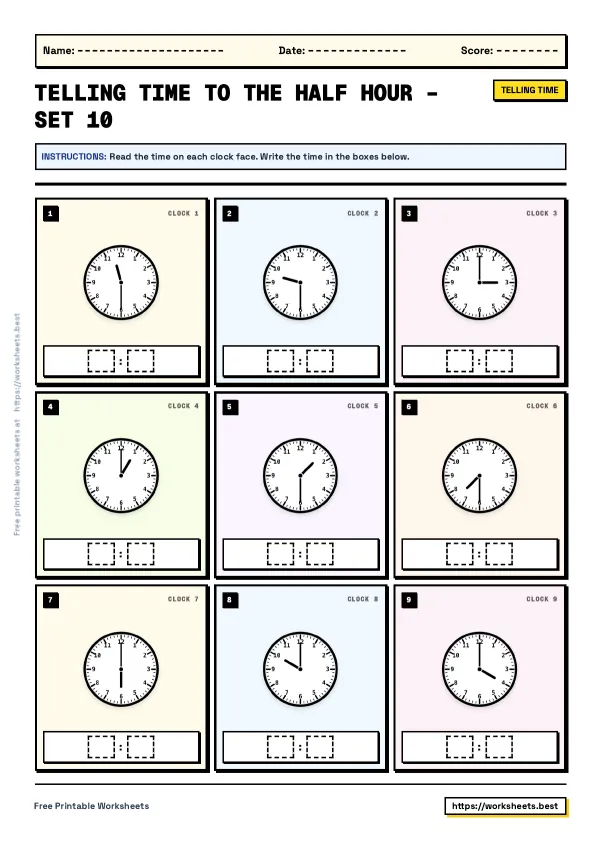
Telling Time to the Half Hour – Set 10
1st GradeClock Reading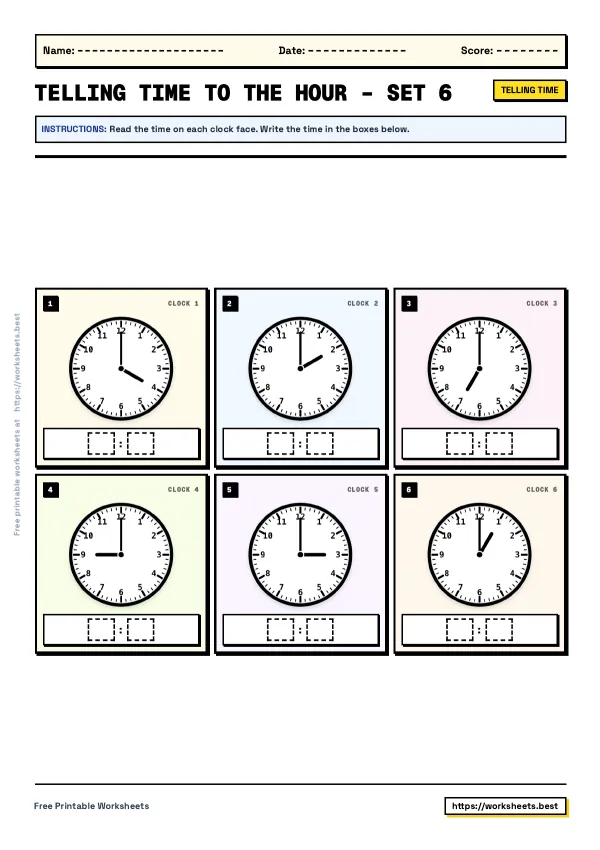
Telling Time to the Hour – Set 6
1st GradeClock Reading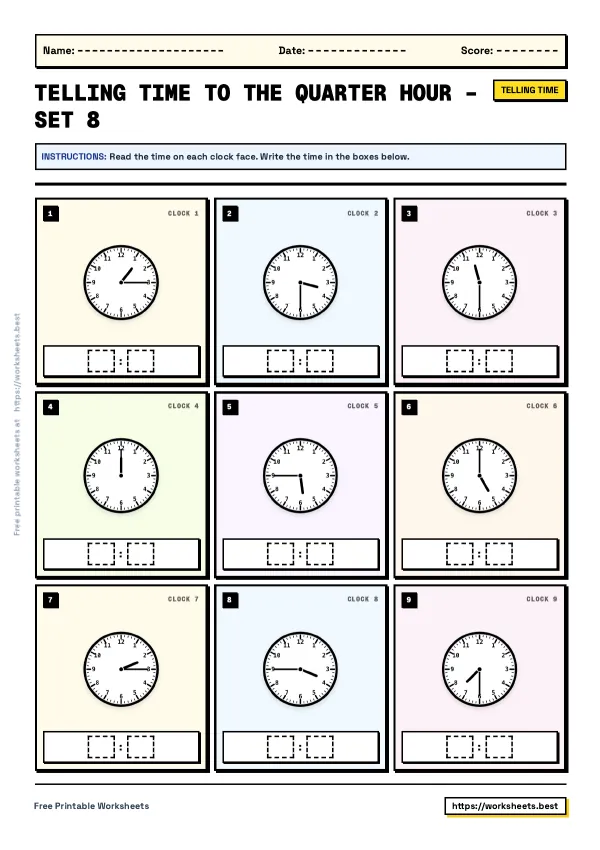
Telling Time to the Quarter Hour – Set 8
2nd GradeClock Reading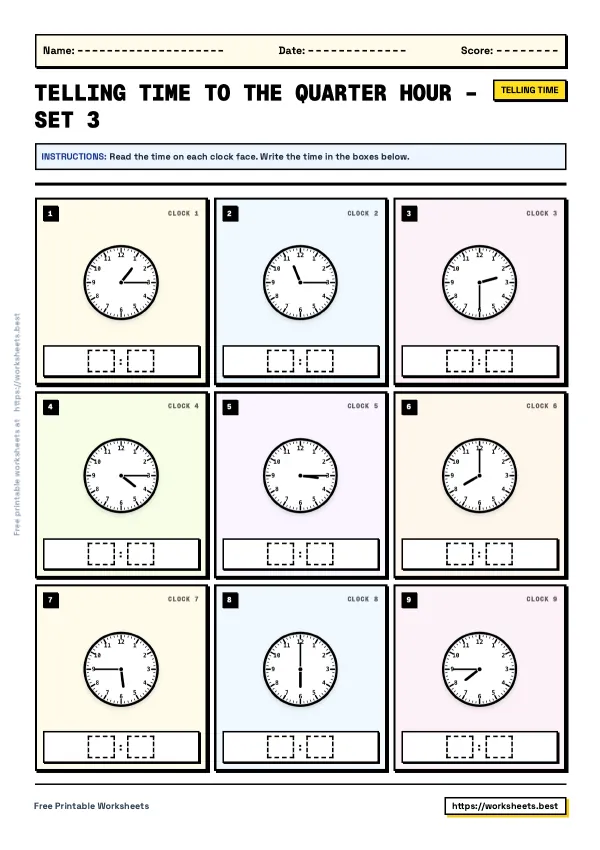
Telling Time to the Quarter Hour – Set 3
2nd GradeClock Reading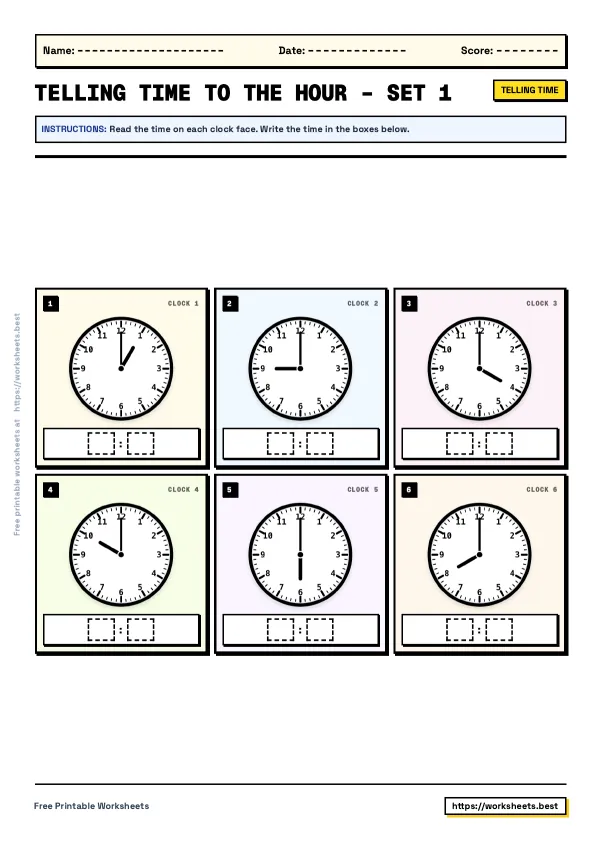
Telling Time to the Hour – Set 1
1st GradeClock Reading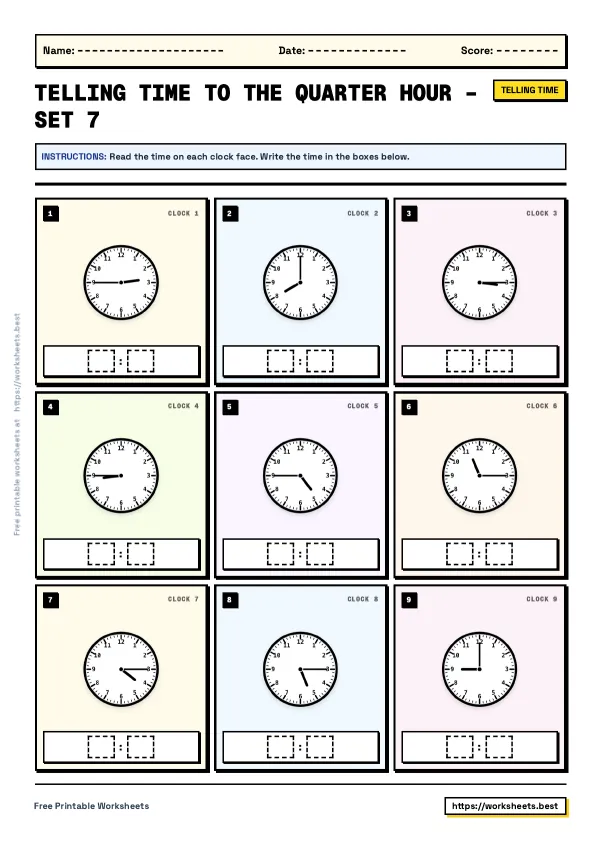
Telling Time to the Quarter Hour – Set 7
2nd GradeClock Reading
from teachers
Tips for parents and teachers
- Begin with the hour sheet and talk through the short hand first: point to the number it has just passed, not the one it is closest to. Children who rush often read 7:55 as 8:55.
- Pair each printed clock with a real one in the room and have your child set the same time on both. Moving the hands themselves makes the difference between the hour and minute hand stick.
- When you reach five-minute intervals, count around the face together in fives before writing anything down. Saying 'half past' and 'quarter past' aloud alongside the numbers builds the vocabulary children hear at home.
- Keep sessions to about ten minutes and finish with one clock your child can read easily, so the last minute of practice feels successful rather than frustrating.
Questions parents ask
What age do children learn to tell time on an analog clock?
Most children begin reading analog clocks in 1st grade, starting with the hour and the half hour. By 2nd and 3rd grade they move on to quarter-hour and five-minute times, which is the order these sheets follow.
Why does my child mix up the hour and minute hands?
The hands look similar, and the hour hand moves so slowly that children often read the number it points toward instead of the number it has already passed. Point out that the short hand sits between two numbers for most of the hour, and that confusion usually clears up.
How can I help my child tell time to five minutes?
Practice counting around the clock face in fives — 5, 10, 15 — until those numbers come easily, then read the minute hand first and the hour hand second. A sheet with mixed five-minute times gives repetition without a timer.
Should we start with the hour hand or the minute hand?
Start with the hour only, using times like 3:00 and 7:00, because then a child has just one hand to track. Add the half hour next, and bring in the minute hand once the hour hand feels secure.
How long should a 1st or 2nd grader spend on time practice?
Ten to fifteen minutes at a stretch is plenty for young children, and short sessions a few days a week work better than one long sitting. One worksheet plus a quick question about the clock on the wall is usually enough.